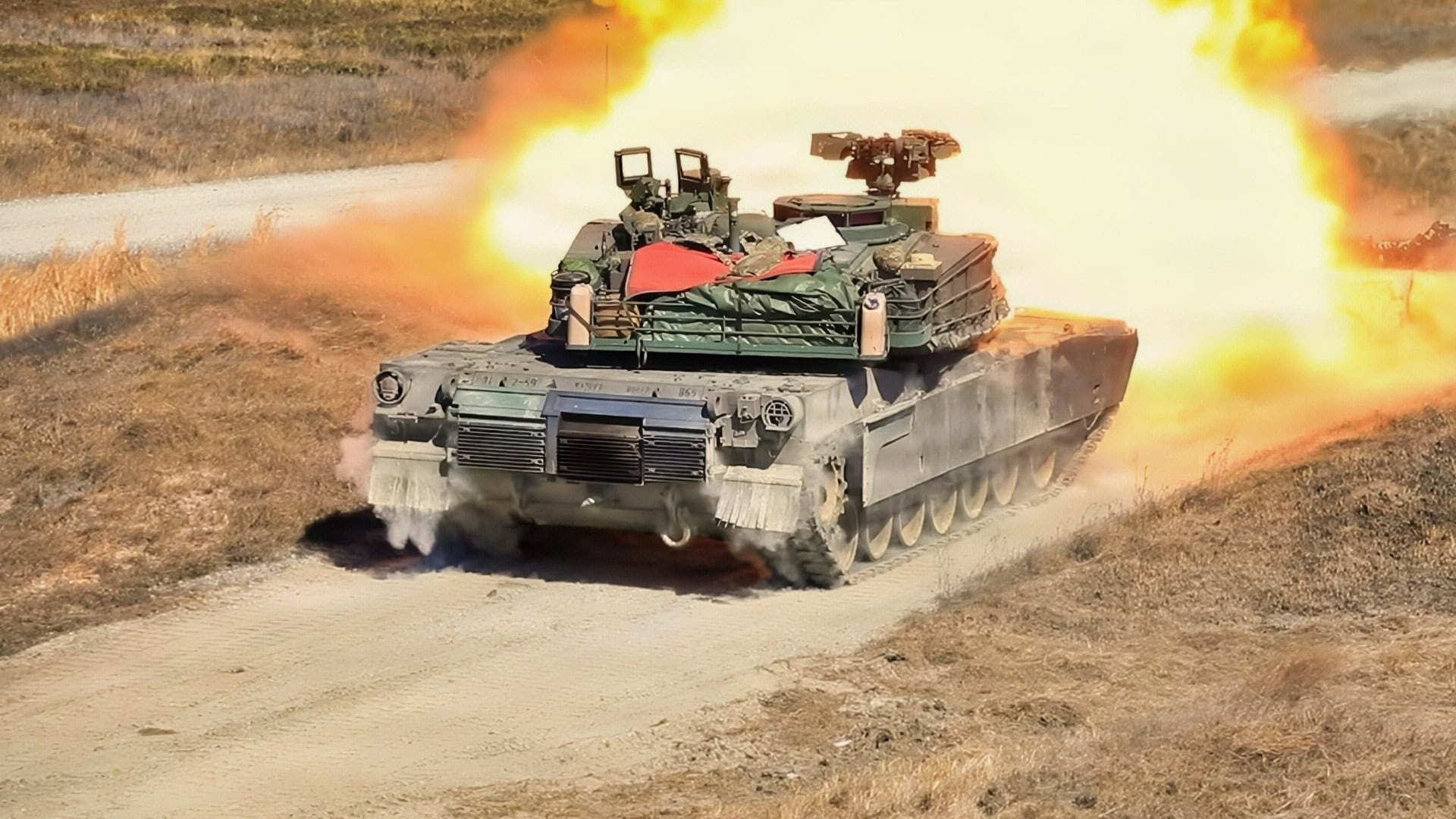
Cheap Drones vs. Billion-Dollar Armor: The Fall of the M1 Abrams in Ukraine
The M1 Abrams Main Battle Tank (MBT) is one of the greatest MBTs ever made. It effectively defeated the fourth-largest army in the world during Desert Storm—and it made it look easy.
An incredible piece of equipment, designed to fight the Soviet Red Army if it had ever attempted an invasion of NATO in Europe, the Abrams has enjoyed legendary status among tankers worldwide.
The M1 Abrams was Built for the Cold War—Not the Drone War
Yet, as with any platform, there are limits to these war machines—especially when they have been in service for decades, and the face of warfare has naturally changed.
No place like the frontlines of the ongoing Ukraine War has demonstrated just how diminished the role MBTs play in modern warfare. Specifically, how increasingly obsolete the US M1 Abrams is in fighting modern warfare.
Back in 2023, after much consternation, the United States handed over some older variants of the M1 Abrams to the Ukrainian Armed Forces to use against the Russians.
After three years of running the tanks, it is obvious that the Abrams have failed to achieve any serious gains for Ukraine in its war with Russia. A tank is a large piece of equipment that requires a reliable logistics chain to keep it supplied as it moves against the enemy.
But in the highly contested, muddy, and bloody killing fields of Ukraine, it turned out that maintaining these monstrosities proved harder than they were worth to the Ukrainians.
The Abrams uses a turbine engine to propel it forward, which means these tanks are fuel hogs. What’s more, they require specialized training and maintenance. In the field conditions of the Ukrainian front, the Abrams proved far too difficult for the strapped Ukrainian Armed Forces to maintain.
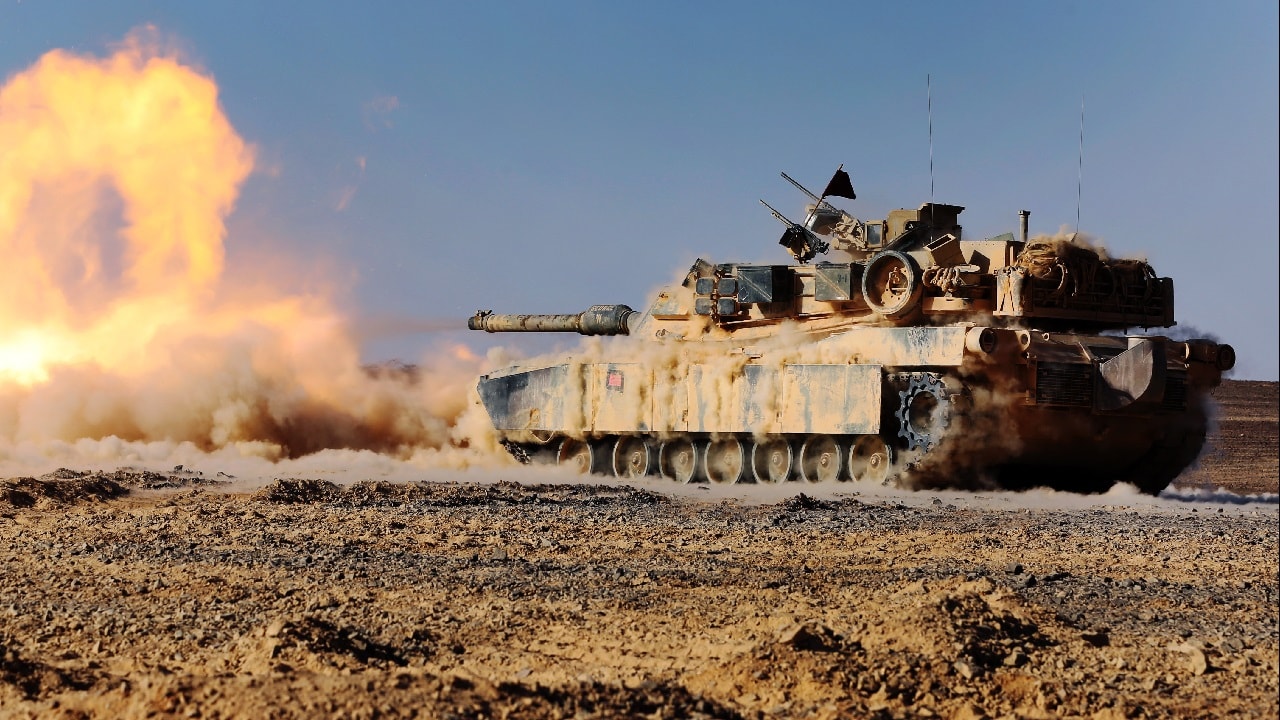
(U.S. Marine Corps photo by Sgt. Devin Nichols/Released)
Cheap Drones are Beating Billion-Dollar Armor
Plus, specially trained crews were needed to run these systems.
While some Ukrainian troops did receive specialized training, the cycles were long and could not ultimately be sustained due to the strain on the Ukrainians from the Russians.
Unlike the Gulf War, where the Abrams proved so effective, these systems were never meant to act alone or in tiny numbers. Modern tank warfare, even before the advent of the nightmarish drones, required combined-arms support. Most notably, the Americans had reliable air superiority over Iraq in 1991 in ways that the Ukrainians never enjoyed in their current war with Russia.
Then there were the relatively small number of Abrams that were sent to Ukraine. At around 31 units, plus additional M1A1s from allies, these numbers proved insufficient at the frontline. Losses quickly reduced Ukraine’s usable Abrams MBT fleet.
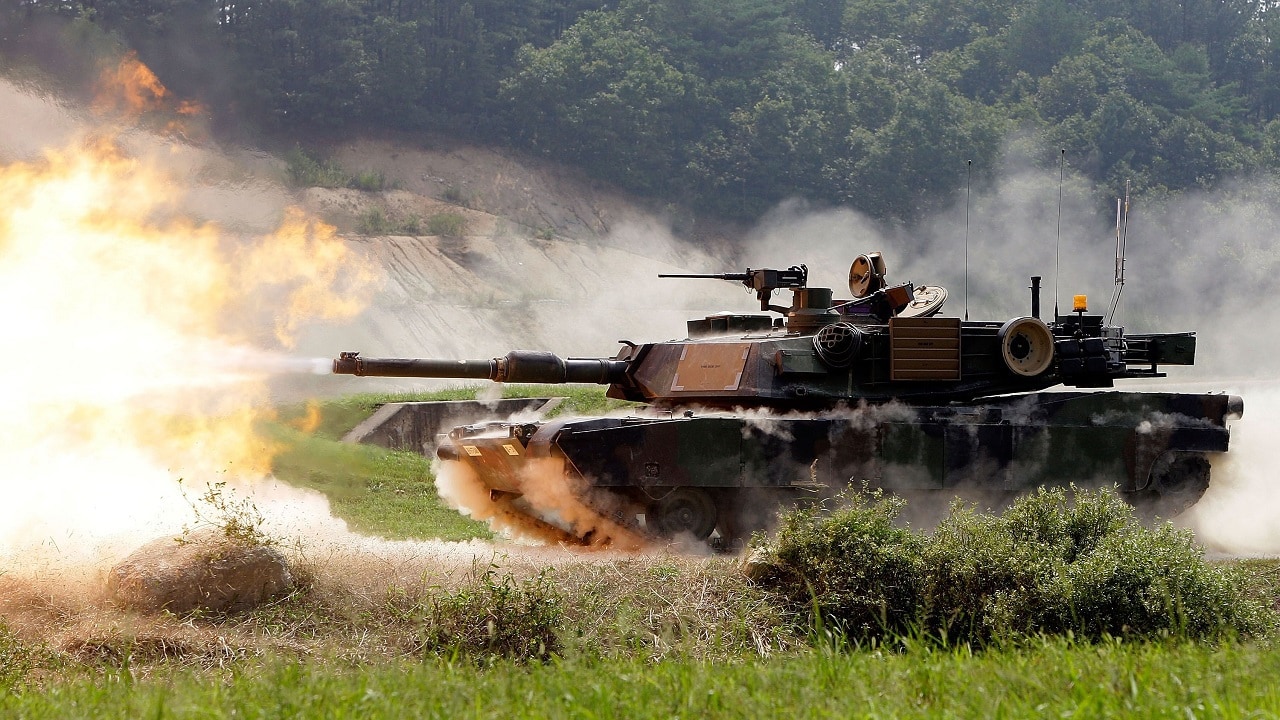
M1 Abrams Main Battle Tank. Image Credit: Creative Commons.
When one has only a small number of MBTs, regardless of their make or utility in modern war, they become easy targets on which the enemy fixates. That is precisely what has occurred with Ukraine’s Abrams force.
Logistics Killed the Abrams as Much as Russian Firepower
Those rapid losses also reduced Ukraine’s usable fleet.
In that paradigm, every loss matters.
What’s more, you cannot use these tanks in mass attacks if there are too few of them and they’ve become the fixation of enemy counterattacks.
This is the exact opposite of Cold War doctrine, as even older Soviet tanks survive partly because there are thousands of them, not because they are better. Here we have the M1 Abrams, which, as noted above, was designed to fight the Cold War, built to perform mission sets that would have run counter to how the Cold War would have been fought had it turned hot.
Of course, the biggest challenge the Abrams was ill-suited to respond to came from the mass-produced, cheap drones that the Russians launched in swarms at the finite number of MBTs in Ukraine’s arsenal. In fact, the drone swarms became so problematic for the Ukrainian Abrams force that Kyiv ordered the Abrams withdrawn from the frontline because the Ukrainian tankers had trouble detecting the drones or defending against them.
Among the most problematic classes of drones the Ukrainians faced came from Russian first-person view (FPV) drones, loitering munitions, and top-attack weapons, which could hit the roof and rear of the Abrams MBTs. These were among the weakest parts of the Abrams tanks, which is why the attrition rate among these iconic tanks was so high during the Ukraine War.
Herein lies a tough lesson for American war planners who intend to rely on the Abrams MBT in any future combat situation.
Too Few Tanks, Too Much Attention
These systems cannot be reliably and safely operated on a modern battlefield that is dominated by hundreds, if not thousands, of fast, hard-to-see, lethal drones. As the United States considers deploying Marine Expeditionary Units (MEUs) to the Iranian coastline for sea-control missions, armor will play a role in the US military’s combat operations there. That armor might run into the same complications from drones that Ukrainian tanks hit in their war with Russia.
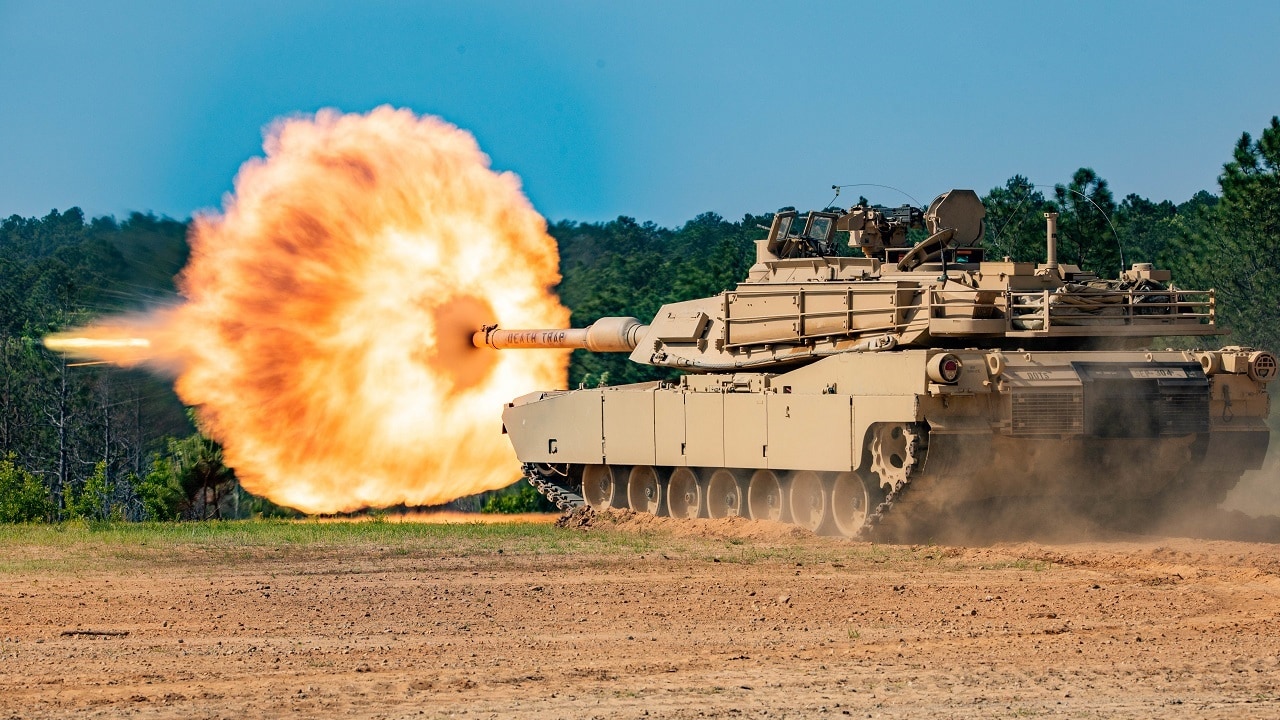
M1 Abrams. Image Credit: Creative Commons.
It would be easy to assert that tanks are obsolete today. But they’re not. Their role and importance have just changed. No longer can they reliably be used to punch through enemy frontlines. Instead, they are more useful as mobile artillery, patrolling the periphery of the battle and providing heavy cover for attacking units.
Ukraine is a Preview of the Next Great-Power War
The key takeaways from the Abrams experience in the Ukraine War are that armor always needs active protection, counter-drone systems, which have been in development in the West, must be streamlined and are required for all armor units, electronic warfare (EW) is actually as important as the armor protecting a tank itself, and logistics—as always—win wars.
Ukraine is the first real preview of a great-power war in the 21st century.
About the Author: Brandon J. Weichert
Brandon J. Weichert is the Senior National Security Editor at 19FortyFive.com. Recently, Weichert became the editor of the “NatSec Guy” section at Emerald. TV. He was previously the senior national security editor at The National Interest. Weichert is the host of The National Security Hour on iHeartRadio, where he discusses national security policy every Wednesday at 8 pm Eastern. He hosts a companion show on Rumble entitled “National Security Talk.” Weichert consults regularly with various government institutions and private organizations on geopolitical issues. His writings have appeared in numerous publications, among them Popular Mechanics, National Review, MSN, and The American Spectator. And his books include Winning Space: How America Remains a Superpower, Biohacked: China’s Race to Control Life, and The Shadow War: Iran’s Quest for Supremacy. Weichert’s newest book, A Disaster of Our Own Making: How the West Lost Ukraine, is available for purchase wherever books are sold. He can be followed via Twitter/X @WeTheBrandon.