
A 70-Year-Old Bomber Circled Over Southampton at 10,000 Feet with a Distress Signal
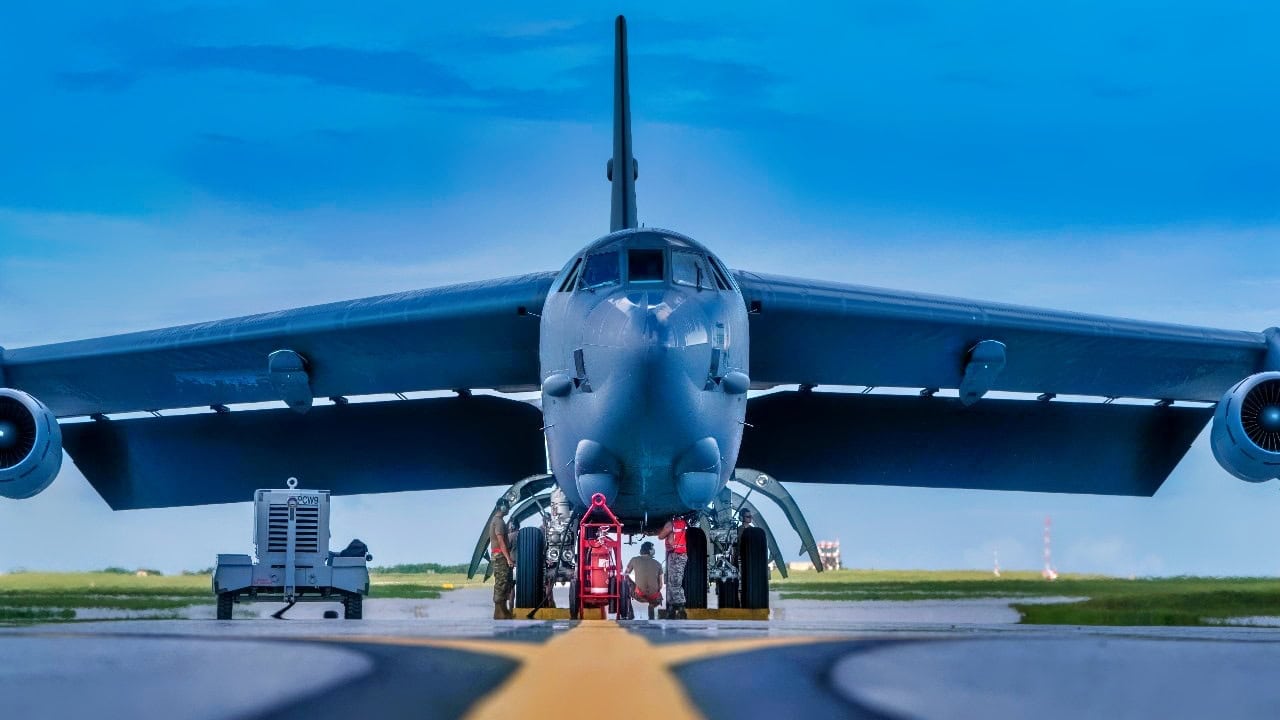
A B-52H Stratofortress operating from RAF Fairford declared an in-flight emergency over southern England on March 24, issuing a “7700” distress signal before returning safely to base. The aircraft had departed the Gloucestershire airfield the previous evening and was observed circling near Southampton at around 10,000 feet before descending in a controlled landing.
A 7700 code is a universal aviation signal indicating a general emergency, often linked to mechanical faults such as depressurisation or onboard system failures. In this case, flight-tracking observers suggested a possible cabin-pressure issue, though no official cause has been confirmed.
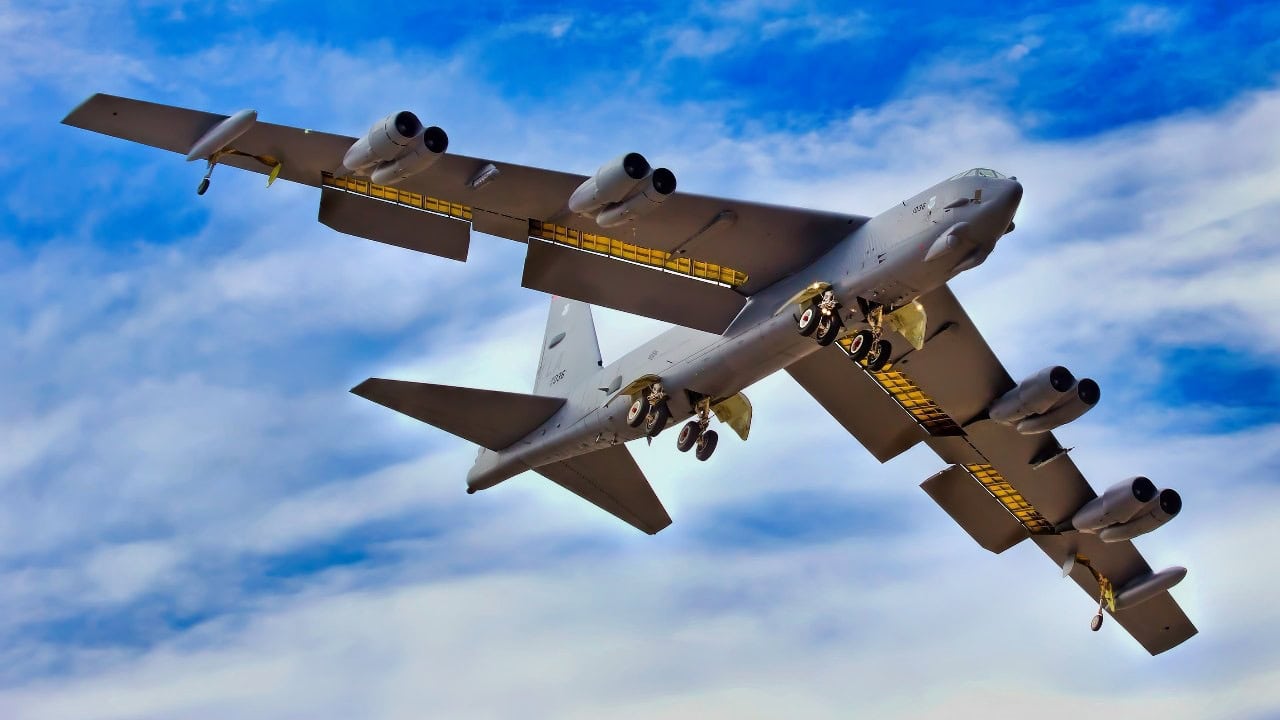
B-52 Bomber. Image Credit: Creative Commons.
In isolation, the incident was minor – but it occurred at a moment when RAF Fairford had become a central hub for U.S. long-range bomber operations connected to the ongoing campaign in Iran.
The UK government approved the use of British bases for U.S. strikes on Iranian missile sites earlier in March, placing aircraft like the B-52 directly into an active operational cycle.
That context matters because the emergency occurred during a high-tempo campaign that relies, in part, on aging aircraft operating far from home bases.
RAF’s Role in Iran Strikes
RAF Fairford is the only forward operating location in Europe designed to support U.S. heavy bombers with a runway and infrastructure capable of handling fully loaded aircraft. That capability has made it a recurring launch point for U.S. operations for decades, spanning the Gulf War, Kosovo, Iraq, and Afghanistan.
It is now playing that same role in the 2026 Iran War.
The base’s importance came into focus in early March when the British government approved U.S. use of Fairford and Diego Garcia for strikes targeting Iranian missile infrastructure. The decision was controversial in the United Kingdom, and delays in providing concrete assistance to the U.S. military have caused tension between Washington and London.
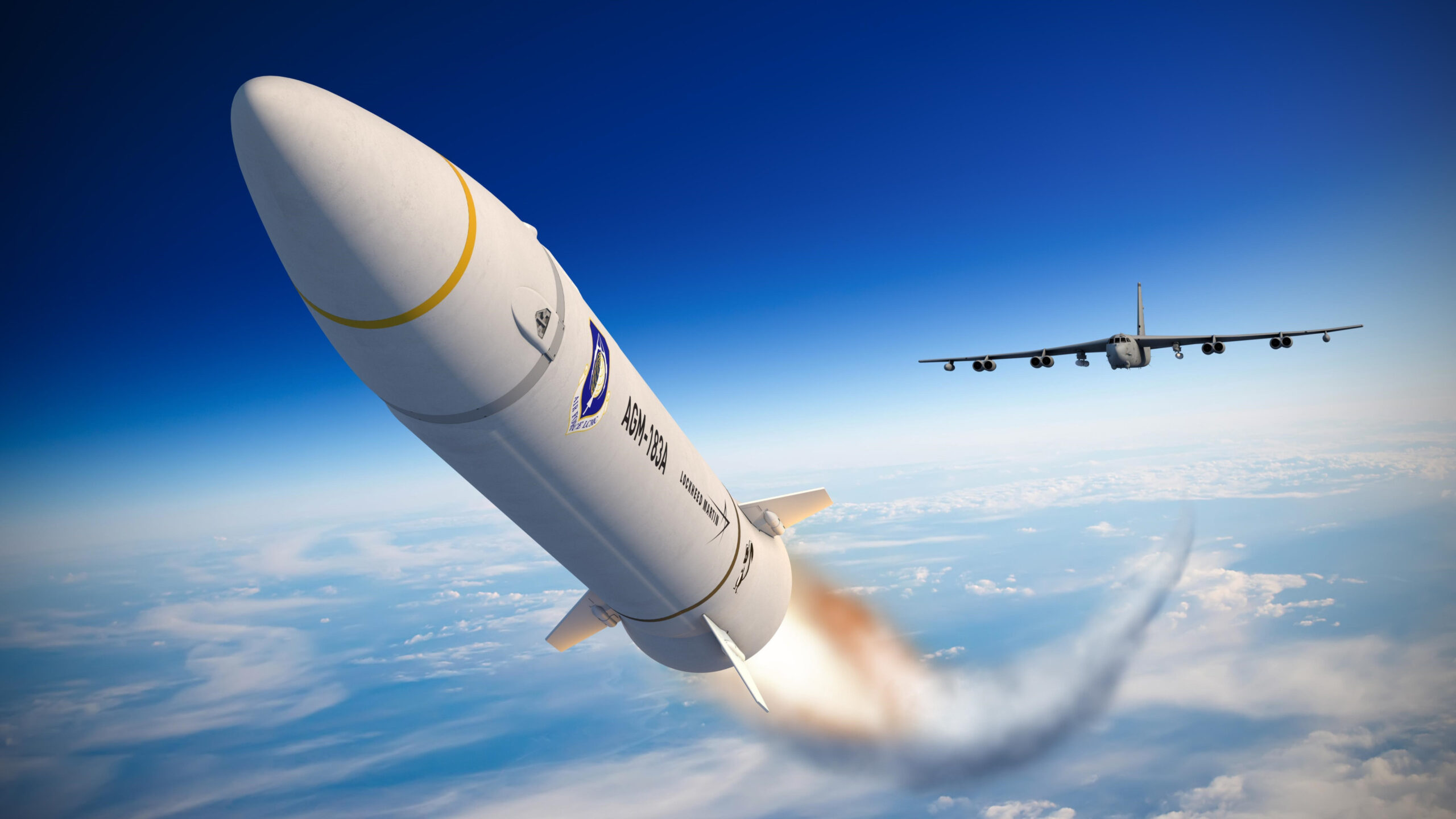
Hypersonic Missiles fired from B-52. Image Credit: Creative Commons.
Since the decision to allow U.S. bombers to operate from the bases, multiple deployments have been confirmed. B-1B Lancers and B-52s have operated from the base, supporting what U.S. officials described as some of the most intense strike days of the campaign. The U.S. is distributing this strike capability across global bases, with aircraft launching from the United States, Europe, and the Indian Ocean, supported by aerial refuelling. Fairford, as part of this network, is a critical link that enables sustained operations without forcing the U.S. Air Force to depend on vulnerable regional bases.
Why the B-52 Remains Central to Modern Strike
Despite first entering service in the 1950s, the B-52 remains one of the most heavily used aircraft in the current conflict. The H-model variant still in service today is expected to operate into the 2050s.
Today, it remains relevant because it has been heavily upgraded and continues to serve a crucial role. The aircraft is not used as a penetrating stealth platform like the B-2 Spirit, but rather as a high-capacity standoff strike platform capable of carrying 70,000 pounds of mixed ordnance.
In Iran, that role is very important indeed. Iranian air defenses – or what’s left of them – still present a risk. The B-52 allows the U.S. to launch cruise missiles and precision-guided munitions from outside the threat envelopes.

PHILIPPINE SEA (Feb. 24, 2024) A U.S. Air Force B-52 Stratofortress, attached to the 5th Bomb Wing, and aircraft attached to Carrier Air Wing (CVW) 11, fly in formation over the Nimitz-class aircraft carrier USS Theodore Roosevelt (CVN 71), Feb. 24, 2024. Theodore Roosevelt, flagship of Carrier Strike Group Nine, is underway conducting routine operations in the U.S. 7th Fleet area of operations. U.S. 7th Fleet is the U.S. Navy’s largest forward-deployed numbered fleet, and routinely interacts and operates with allies and partners in preserving a free and open Indo-Pacific region. (U.S. Navy photo by Mass Communication Specialist 1st Class Thomas Gooley)
The aircraft has already been used in the conflict to strike missile sites and command infrastructure in the same way that it has been used in previous conflicts. That makes the platform a central component of modern long-range strike capability despite its incredible age.
How the B-52 Remains Relevant
The B-52s in use today fly very different missions than they did in the mid-to-late 20th century – and they do so with the support of a series of changes that have been made over the years. The U.S. Air Force is in the middle of a massive modernization effort that continues a long history of the platform being upgraded, with a new variant – the B-52J – expected to incorporate entirely new systems and improved structural durability.
The most significant upgrade is the Commercial Engine Replacement Program, which will replace the original 1960s-era engines with Rolls-Royce F130 engines. These are designed to improve fuel efficiency, extend range, and reduce maintenance demands – critical factors for long-duration strike missions.
What’s more, the aircraft is receiving a new AESA radar (AN/APQ-188), replacing legacy systems that the Air Force has described as outdated.
The new radar significantly improves target detection, navigation, and electronic warfare resilience, bringing the aircraft closer to modern fighter-level sensor capability.
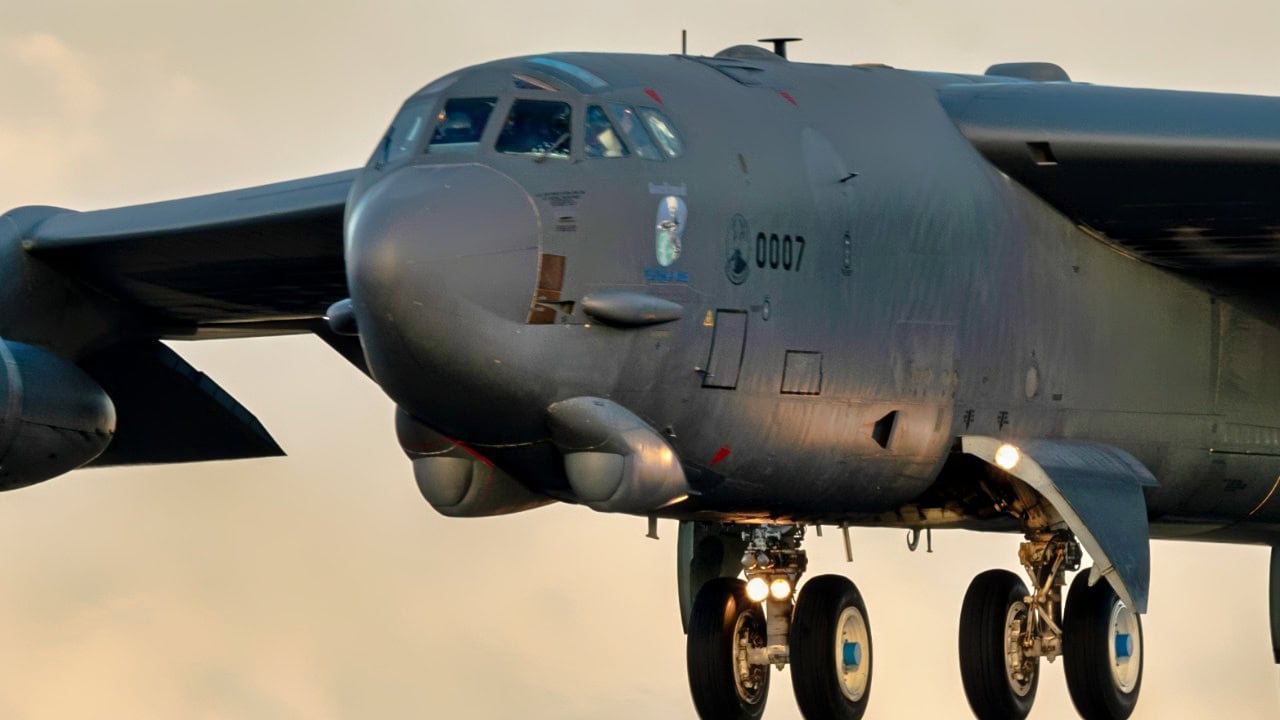
U.S. Air Force B-52H Stratofortress lands at RAF Fairford, England, following a sortie in support of Bomber Task Force 25-2, Feb. 27, 2025. The U.S. maintains a strong, credible strategic bomber force that enhances the security and stability of Allies and partners. (U.S. Air Force photo by Airman 1st Class Luis Gomez)
Other upgrades include digital avionics and improved communications, as well as a “digital backbone” that will enable integration with modern command-and-control networks and weapons systems.
The March 25 emergency does not indicate that the most recent upgrades have failed or that there has been a loss of capability. Aircraft declaring 7700 emergencies routinely return to service after inspection. In this case, the bomber landed safely, and there is no indication it has been removed from operations.
About the Author: Jack Buckby
Jack Buckby is a British researcher and analyst specialising in defence and national security, based in New York. His work focuses on military capability, procurement, and strategic competition, producing and editing analysis for policy and defence audiences. He brings extensive editorial experience, with a career output spanning over 1,000 articles at 19FortyFive and National Security Journal, and has previously authored books and papers on extremism and deradicalisation.

