
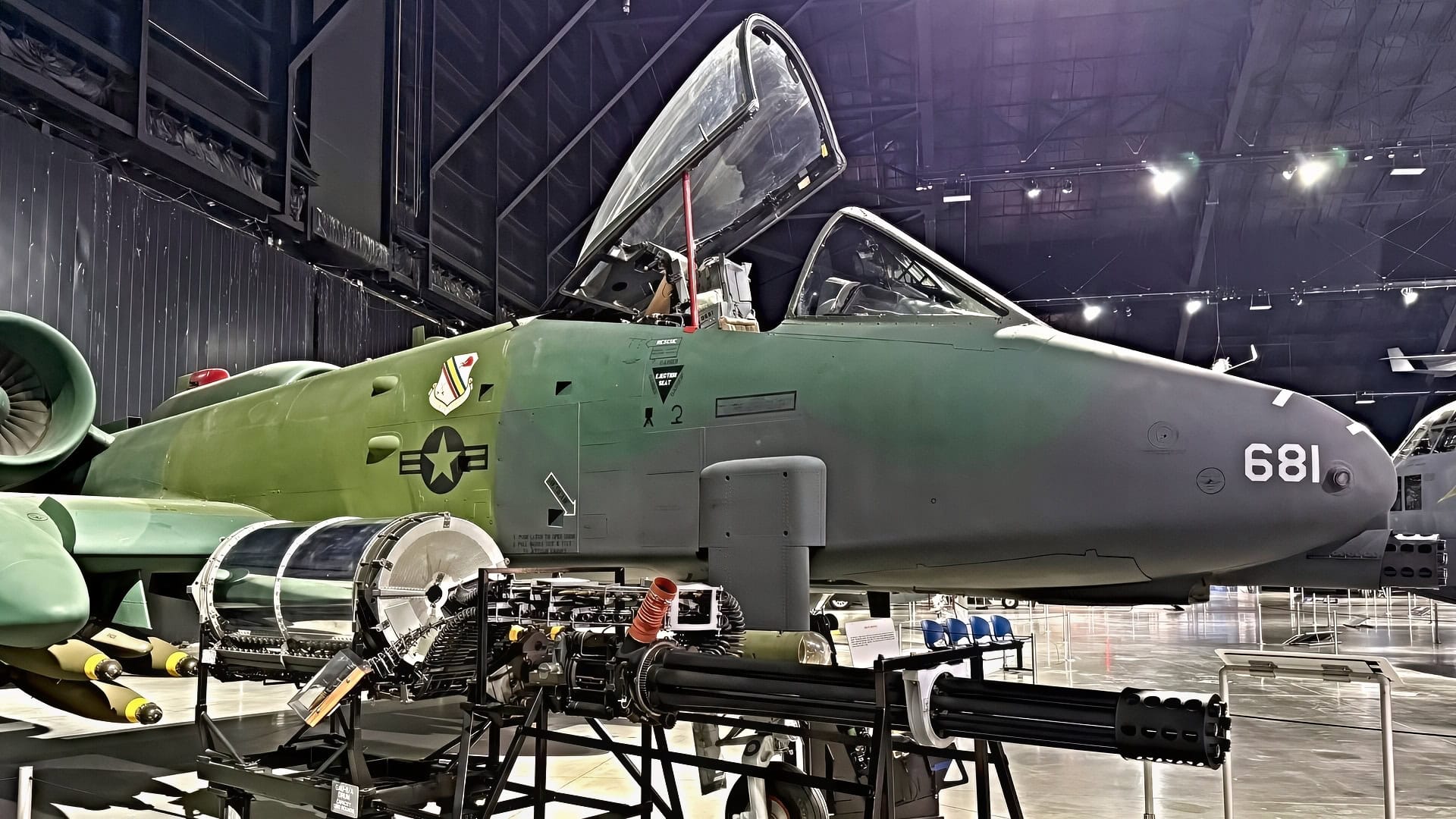
It Seems Like Nothing Can Make the A-10 Warthog Retire
The BBC reported on April 1 that crowds gathered at RAF Lakenheath in Suffolk after 12 A-10C Thunderbolt II aircraft landed on Monday evening in two batches of six, with another contingent expected the following night.
The report said some of the aircraft, known as Warthogs, carried markings linked to the Michigan Air National Guard, and that U.S. officials declined to comment on their mission.

A-10 Warthog.
The news is visible evidence that the United States is still moving specialized attack aircraft toward Iran even as President Donald Trump says the war could be over in “two, maybe three weeks.”
Trump claimed on March 31 that the U.S. campaign could also end without Iran signing a deal first, reiterating that the Americans’ objective was to leave once Iranian capabilities had been so badly degraded that it could not soon build a nuclear weapon or create a conventional defensive force that would allow it to restart development.
Additional A-10s are therefore being moved because the Pentagon still sees a need for an aircraft that can loiter and deliver accurate fire against small boats and coastal threats, as well as other relatively exposed targets.
According to the BBC, hundreds of aviation enthusiasts gathered around the base to watch the arrivals. Open-source aviation reporting provided additional details, with public flight-tracking data suggesting that A-10s were crossing the Atlantic, with KC-135 tankers launching from RAF Mildenhall to support the transit.
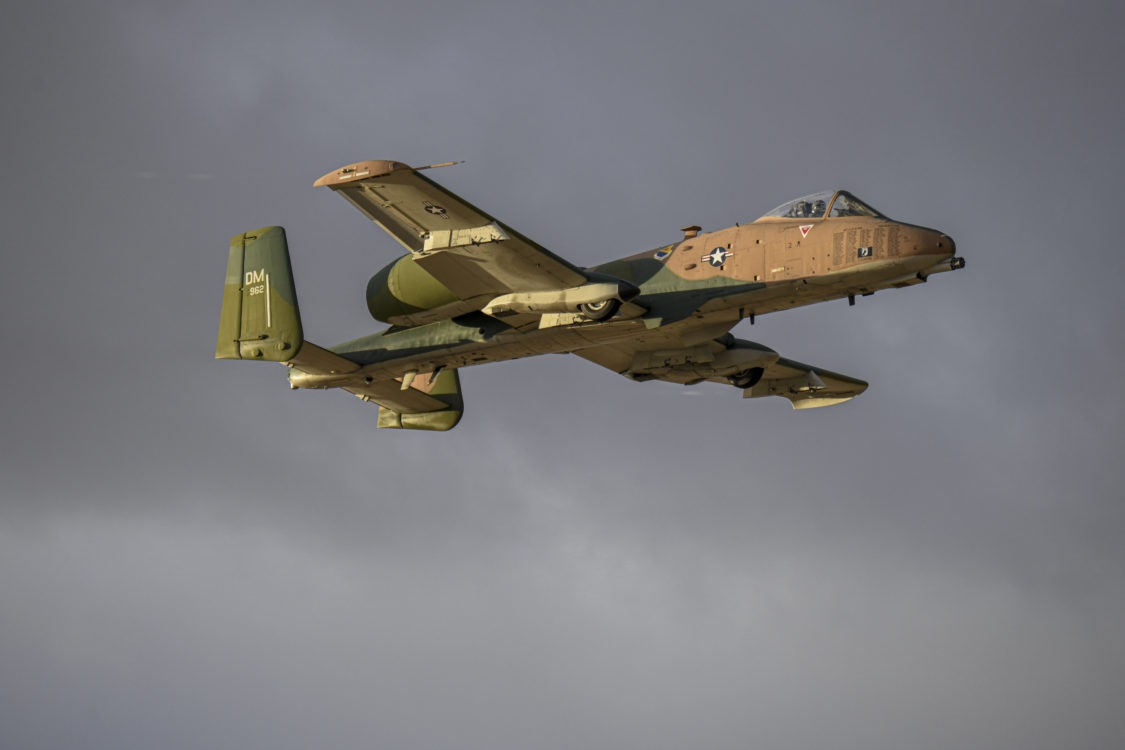
A U.S. Air Force A-10 Thunderbolt II flies over Davis-Monthan Air Force Base, Arizona, Feb. 17, 2022. The A-10 Demonstration Team’s jet has a heritage paint job to pay tribute to the 355th Tactical Fighter Wing’s contributions in the Vietnam War, including special dedication to personnel who were killed in action or became prisoners of war. (U.S. Air Force photo by Senior Airman Jacob T. Stephens)
A-10 Warthog: Already Fighting In Iran
It’s important to note that the news does not mean the A-10 is being introduced to Operation Epic Fury; these aircraft are already being used.
During a Pentagon briefing on March 19, Chairman of the Joint Chiefs of Staff Gen. Dan Caine said that A-10 aircraft were “in the fight” and operating across the southern flank of the conflict, specifically targeting Iranian fast attack boats in the Strait of Hormuz.
“We continue to hunt and kill mine storage facilities and naval ammunition depots. We continue to hunt and kill afloat assets, including more than 120 vessels and 44 mine layers, and the pressure will continue,” Caine said in the briefing.
“The A-10 Warthog is now in the fight across the southern flank and is hunting and killing fast attack watercraft in the Straits of Hormuz. In addition, AH-64 Apaches have joined the fight on the southern flank, and they continue to work on the southern side. And that includes some of our allies who are using Apaches to handle one-way attack drones,” he added.
Those operations are directly connected to efforts to reopen and secure maritime traffic through the Strait of Hormuz – an objective that was once widely recognized as a critical part of the operation but which, in recent days, looks like it may be abandoned. In a statement issued on Truth Social on March 31, President Donald Trump cast doubt on the possibility of U.S. forces securing the strait, telling the United Kingdom and Europe that it was their responsibility to ensure vessels could safely pass.
“All of those countries that can’t get jet fuel because of the Strait of Hormuz, like the United Kingdom, which refused to get involved in the decapitation of Iran, I have a suggestion for you: Number 1, buy from the U.S., we have plenty, and Number 2, build up some delayed courage, go to the Strait, and just TAKE IT,” the president said, adding that Europe must “start learning how to fight for yourself.”
The specific intended use for the A-10s moving toward the theater, therefore, is in some ways unclear.
So far, Operation Epic Fury has inflicted significant damage on Iranian military infrastructure, with the commander of the U.S. Central Command, Admiral Brad Cooper, claiming that over 10,000 targets have been struck, including missile launch sites and targets connected to Iran’s defense industrial base.
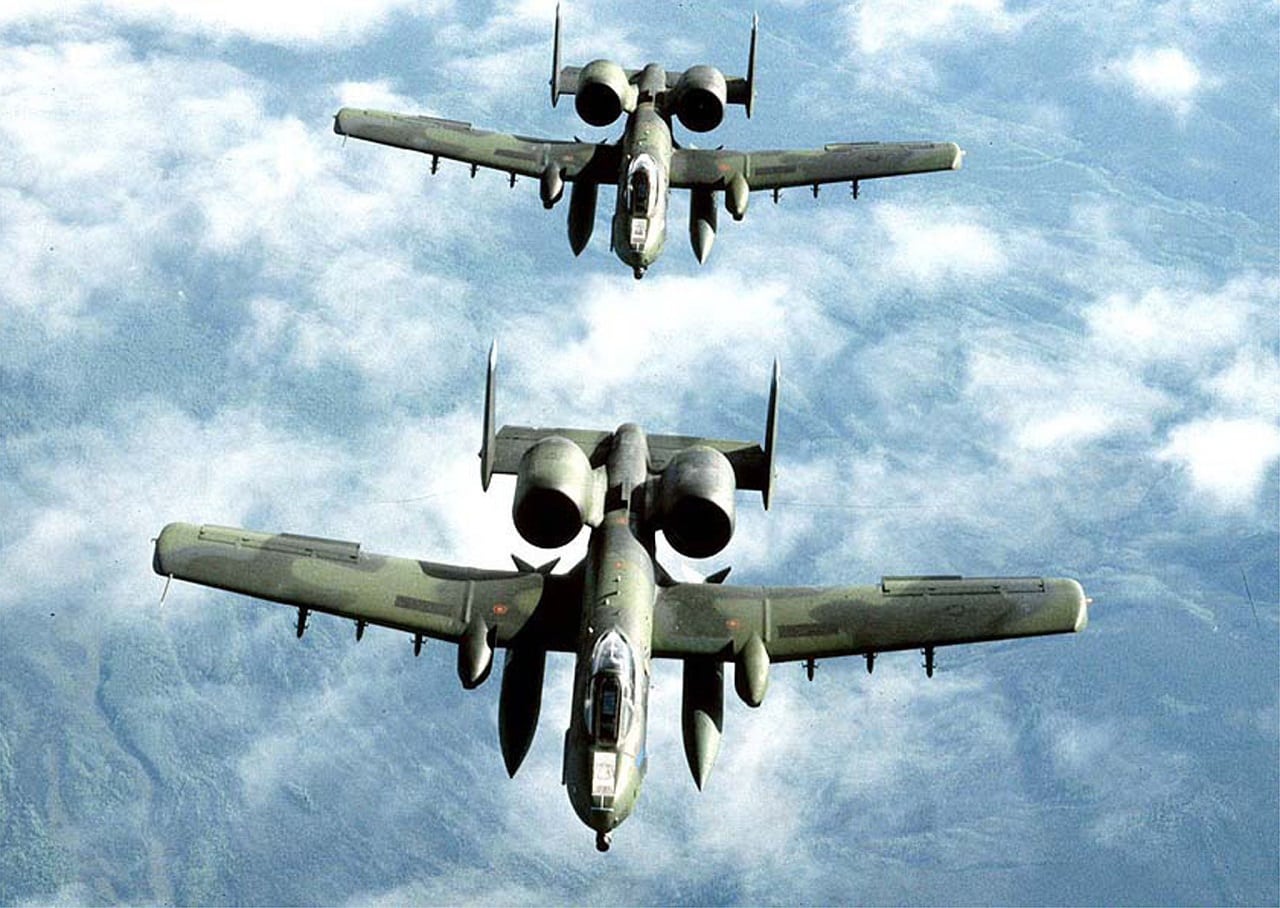
A-10 Warthog.
In that context, the arrival of additional A-10s could be understood as reinforcement of the existing mission set, with the aircraft already performing specific roles in the war.
More aircraft increase the number of sorties that can be flown against those same targets, particularly in areas where persistent coverage is required – and that would also make sense in the context of Washington indicating that the intention is to end the war as quickly as possible.
A Late-Career Deployment
Notably, the A-10 is an aircraft the U.S. Air Force has been trying to retire for years, but which has been brought back into combat multiple times because there are still missions that require it.
The Warthog first entered service in the 1970s, designed specifically for close air support against Soviet armored formations in Europe. Its defining feature is the GAU-8/A Avenger 30mm cannon mounted to the aircraft, capable of firing up to 3,900 rounds per minute.

A U.S. Air Force A-10 Thunderbolt II flies a routine mission over the U.S. Central Command area of responsibility Dec. 23, 2024. A-10 Thunderbolt II pilots train and operate under night vision, allowing them to conduct presence patrols critical to regional security at any time and under any conditions. (U.S. Air Force photo)
The aircraft was, in fact, built around the gun, with a titanium casing that protects the pilot. It can carry a mix of weapons, including AGM-65 Maverick missiles, JDAMs, laser-guided bombs, and AIM-9 Sidewinders, all while deliberately operating at relatively low speeds and altitudes.
That design gives the aircraft a very specific set of strengths, including a long loiter time over target areas and the ability to visually identify and engage targets. It is intended to be survivable in environments where air defenses may be present but not fully intact, reinforcing the Pentagon’s claims that Iranian defenses have been largely degraded.
As a result, it does come with some limitations: the A-10 is not stealthy, it is slow, and it is vulnerable in heavily contested airspace against modern integrated air defense systems. Those constraints are the primary reason the Air Force has argued for retiring the fleet in favor of platforms better suited to high-end conflict.
Despite that, the aircraft remains in service in significant numbers. As of 2026, the U.S. Air Force operates just over 280 A-10C aircraft, with Congress mandating that the fleet not fall below 103 aircraft in FY2026 under the National Defense Authorization Act.

US A-10 Warthog aircraft landing on a highway in Estonia during exercise.
The A-10’s use in Operation Epic Fury is tailored to its strengths. It is not being used over Tehran or against heavily defended strategic targets, but in more permissive environments – not just over the Strait of Hormuz and Iran’s coastline, but in parts of Iraq, where U.S. and allied forces are degrading Iranian air defenses and targeting Iranian-aligned militia operations. In those conditions, the aircraft’s lack of stealth is less relevant, while its ability to remain on station and repeatedly engage small and moving targets is valuable.
If President Trump reverses course and decides reopening the Strait of Hormuz is achievable in the next handful of weeks, the A-10 could be central to that effort – but it may also be used to further assist in degrading Iran’s remaining missile infrastructure as the war potentially wraps up this spring.
About the Author: Jack Buckby
Jack Buckby is a British researcher and analyst specializing in defense and national security, based in New York. His work focuses on military capability, procurement, and strategic competition, producing and editing analysis for policy and defense audiences. He brings extensive editorial experience, with a career output spanning over 1,000 articles at 19FortyFive and National Security Journal, and has previously authored books and papers on extremism and deradicalisation.