
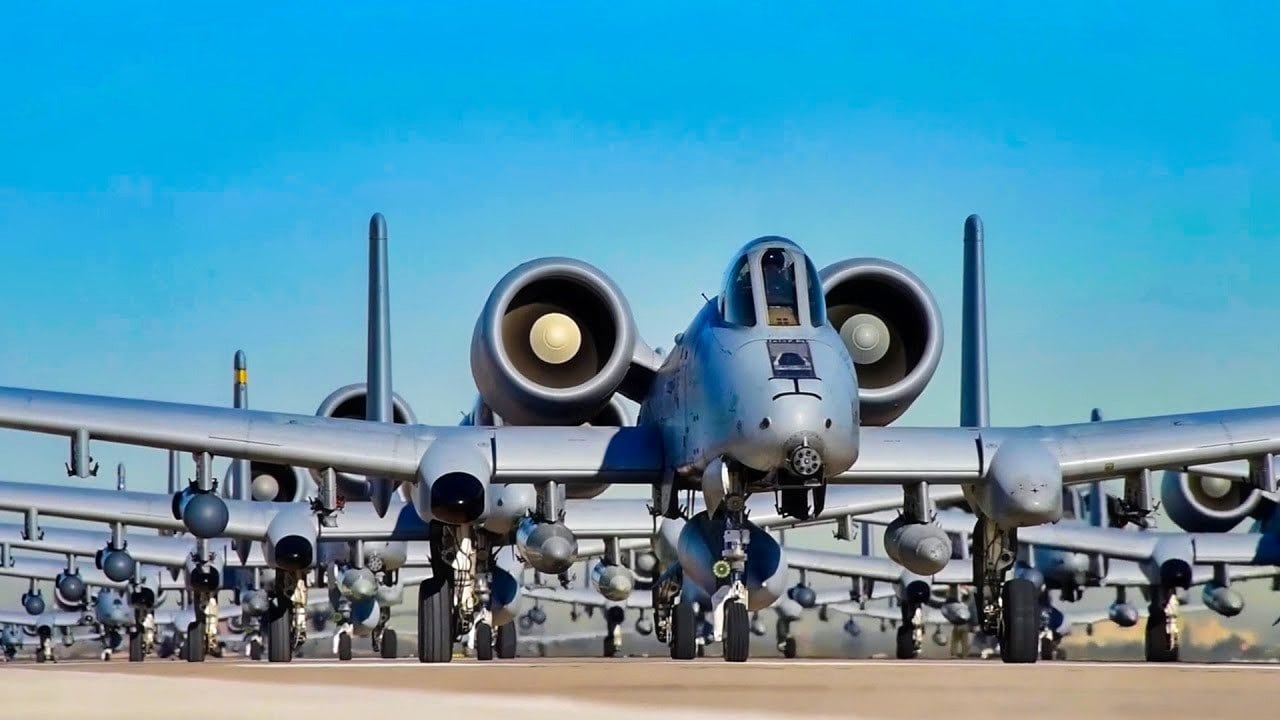
Summary and Key Points: Drawing on his expertise in military capability and strategic competition, British defense analyst Jack Buckby examines the tactical significance of deploying the A-10 Thunderbolt II to the Strait of Hormuz. While the “A-10Warthog” is famous for its devastating 30mm rotary cannon, it is notably slow and lacks modern stealth, making it highly vulnerable to advanced surface-to-air missiles.
-Buckby argues that the Pentagon’s decision to use these aircraft to hunt Iranian fast-attack boats and minelayers proves a critical strategic reality: Iran’s integrated air defense network has been severely degraded, allowing non-stealth U.S. assets to operate safely in a highly permissive environment.
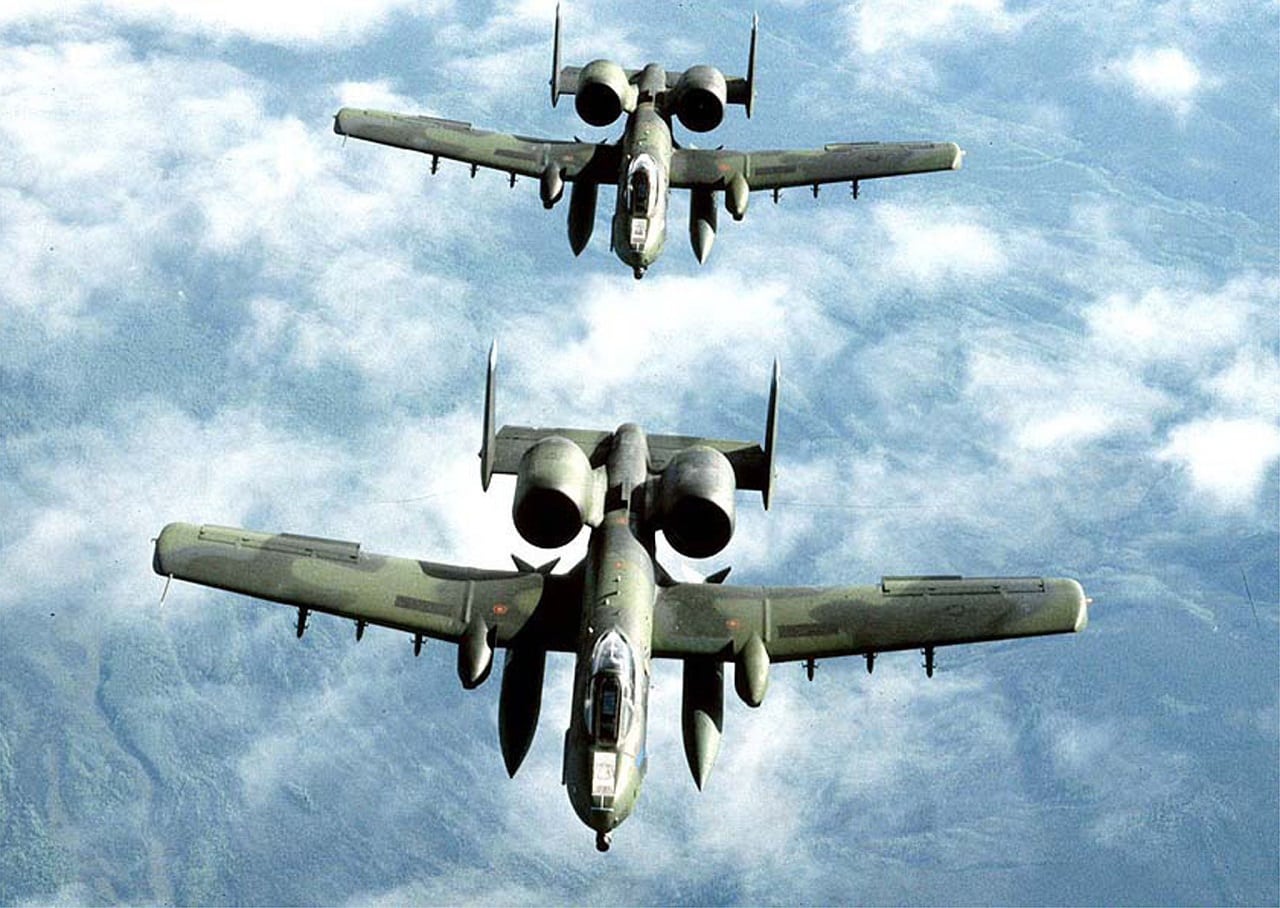
A-10 Warthog.
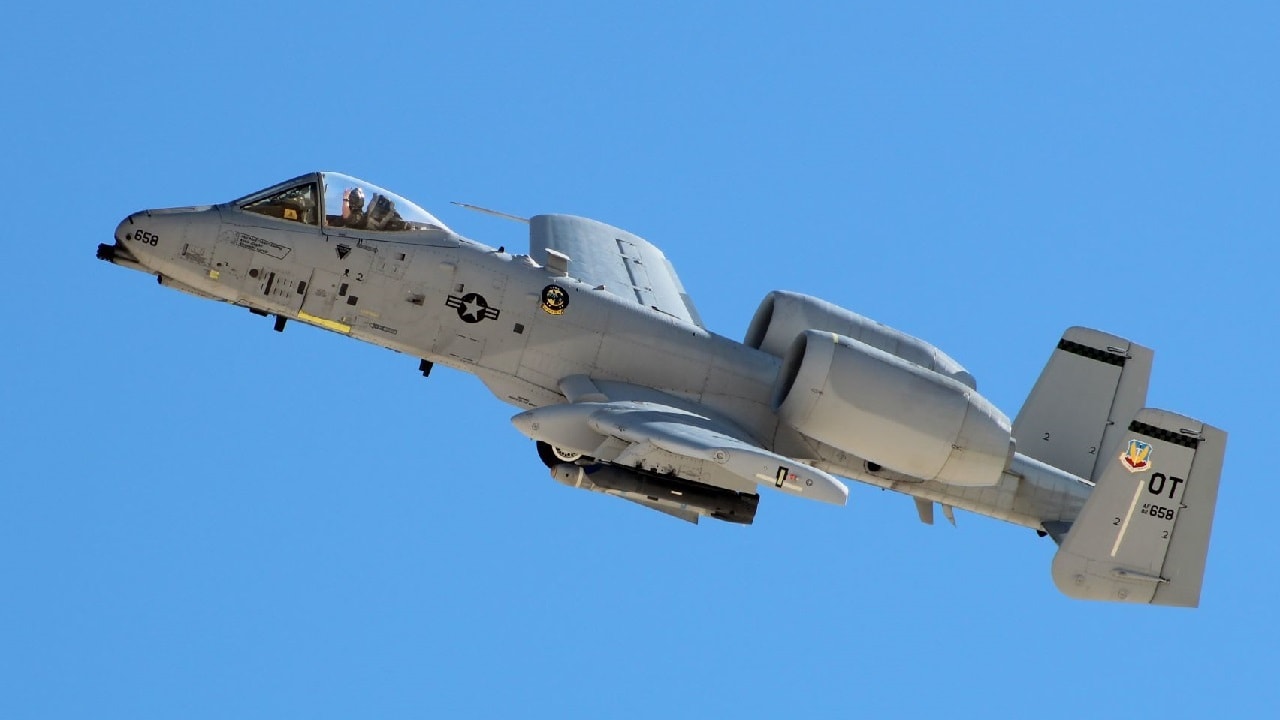
A-10 Warthog munitions render Explosive Reactive Armored tanks inoperative during test

A-10 Warthog. Image Credit: Creative Commons.

US A-10 Warthog aircraft landing on a highway in Estonia during exercise.
Why the U.S. Deployed the A-10 Warthog to Iran
On March 19, 2026, U.S. officials confirmed that A-10 Thunderbolt II attack aircraft had been deployed into operations around the Strait of Hormuz, where they are actively targeting Iranian fast-attack boats and mine-laying vessels, as well as drone infrastructure. The aircraft’s deployment is notable for multiple reasons.
The A-10 is not a stealth aircraft and is not designed to survive inside heavily defended airspace. Its presence near Iran, and in some cases operating inside Iranian territory, indicates that the airspace in the region is now permissive enough for low-altitude attack aircraft like this to safely function.
What the A-10 is doing in the Strait of Hormuz, and why it is being used there, provides a clear window into how the U.S. is fighting in this phase of the conflict – and Iran’s limited ability to fight back.
Why the Strait of Hormuz Matters
The Strait of Hormuz is one of the most important maritime chokepoints in the world. It is a narrow waterway connecting the Persian Gulf to the Gulf of Oman, and roughly 20% of global oil supplies pass through it each day.
Since early March, Iran has attempted to use drones, fast-attack boats, other vessels, and naval mines to disrupt shipping through the strait. These tactics are designed to make the waterway unsafe – an asymmetric tactic that is one of the only ways Iran can realistically fight back after the U.S. massively degraded its naval capabilities.
U.S. forces have therefore been tasked with reopening and securing the strait to minimize disruption to the global energy market, which includes destroying Iranian vessels and mine-laying capabilities. More than 120 Iranian boats and dozens of minelayers are already understood to have been targeted by U.S. forces. And this is the environment in which the A-10 now operates: a highly congested and risky maritime battlespace that is defined by difficult-to-detect threats.
The A-10 Warthog Was Built for Close-Range Fights
The A-10 Thunderbolt II – commonly known as the Warthog – is a dedicated close air support (CAS) aircraft designed during the Cold War to destroy ground targets at low altitude. Its defining feature is the GAU-8/A Avenger, a 30mm rotary cannon capable of firing up to 3,900 rounds per minute, designed originally to penetrate Soviet armor. Those features allow the aircraft to take out lightly armored vessels and equipment with extreme precision.
The A-10’s key strengths are its visibility and persistence. It can loiter over an area for extended periods, fly at relatively low and slow speeds, and visually identify targets – something that fast jets cannot easily do. But there are limitations, and they are equally important.
This is not a stealthy aircraft by any measure, and it has limited speed. It is also vulnerable to modern integrated air defense systems such as surface-to-air missiles. That’s why A-10s are typically only used in environments where enemy air defenses have been degraded or are not actively contesting airspace. And that context is critical to understand why it is now being used near Iran.
What A-10s are Doing near Iran
U.S. officials have confirmed that A-10s are actively hunting and killing Iranian fast-attack boats operating in the Strait. Those boats – or indeed what’s left of them – are a central part of Iran’s naval strategy and are often used to swarm larger vessels or deploy naval mines – of which around a dozen are now understood to have been laid in the strait.
In addition, A-10s have been involved in strikes on drone infrastructure and other targets linked to Iran’s asymmetric warfare strategy.
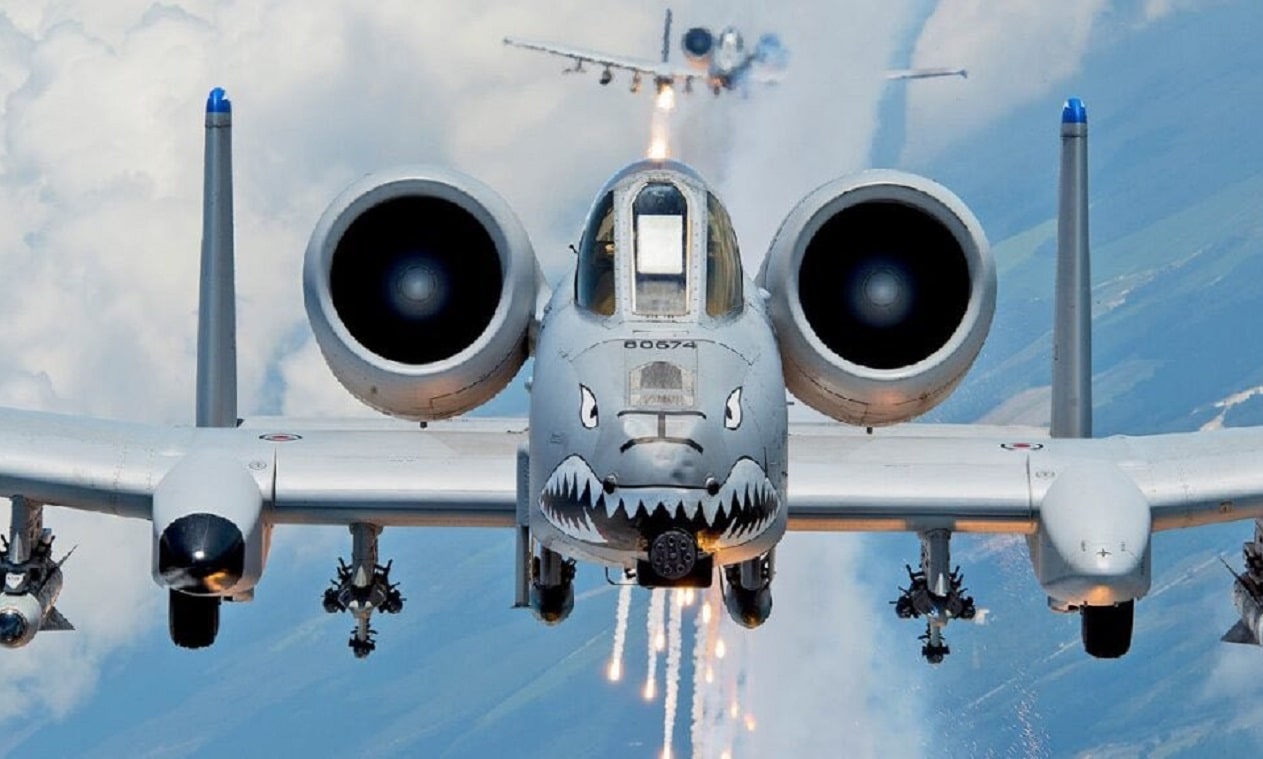
A-10 Warthog. Image Credit: Creative Commons.
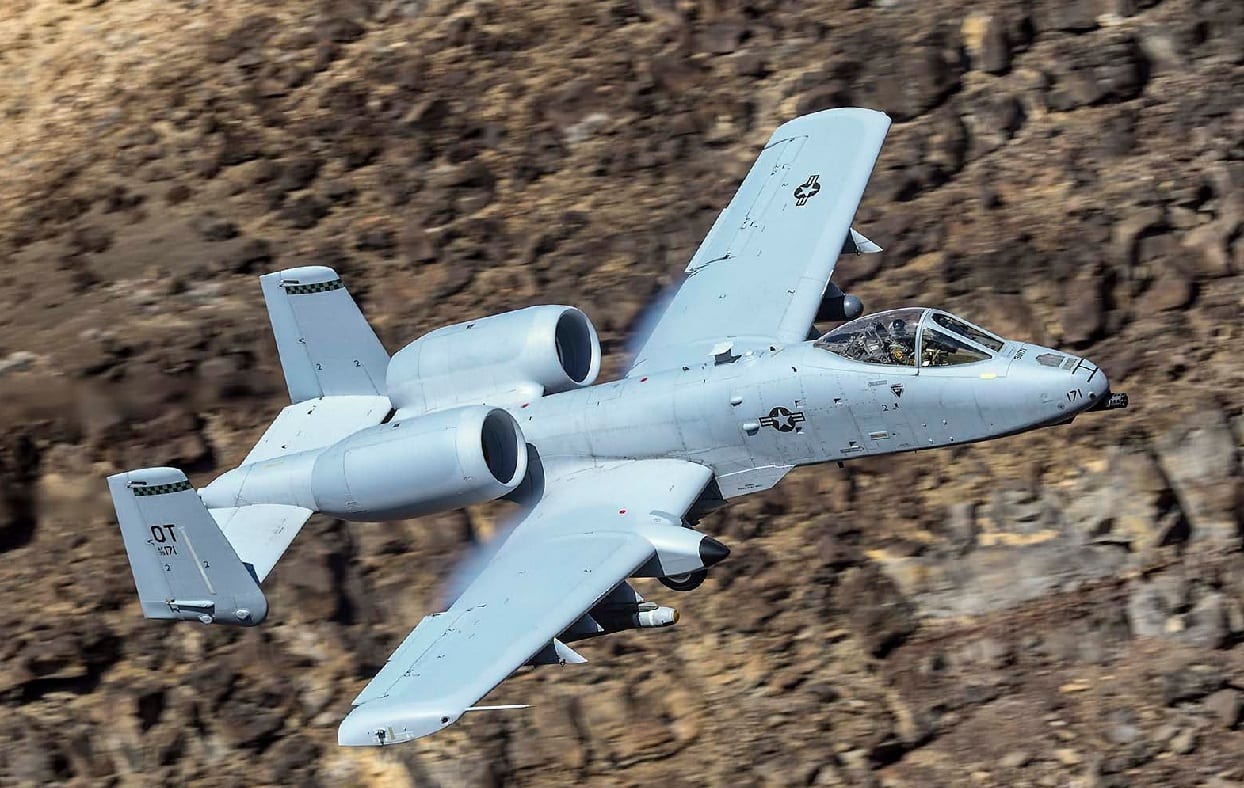
A-10 Warthog. Image: Creative Commons.
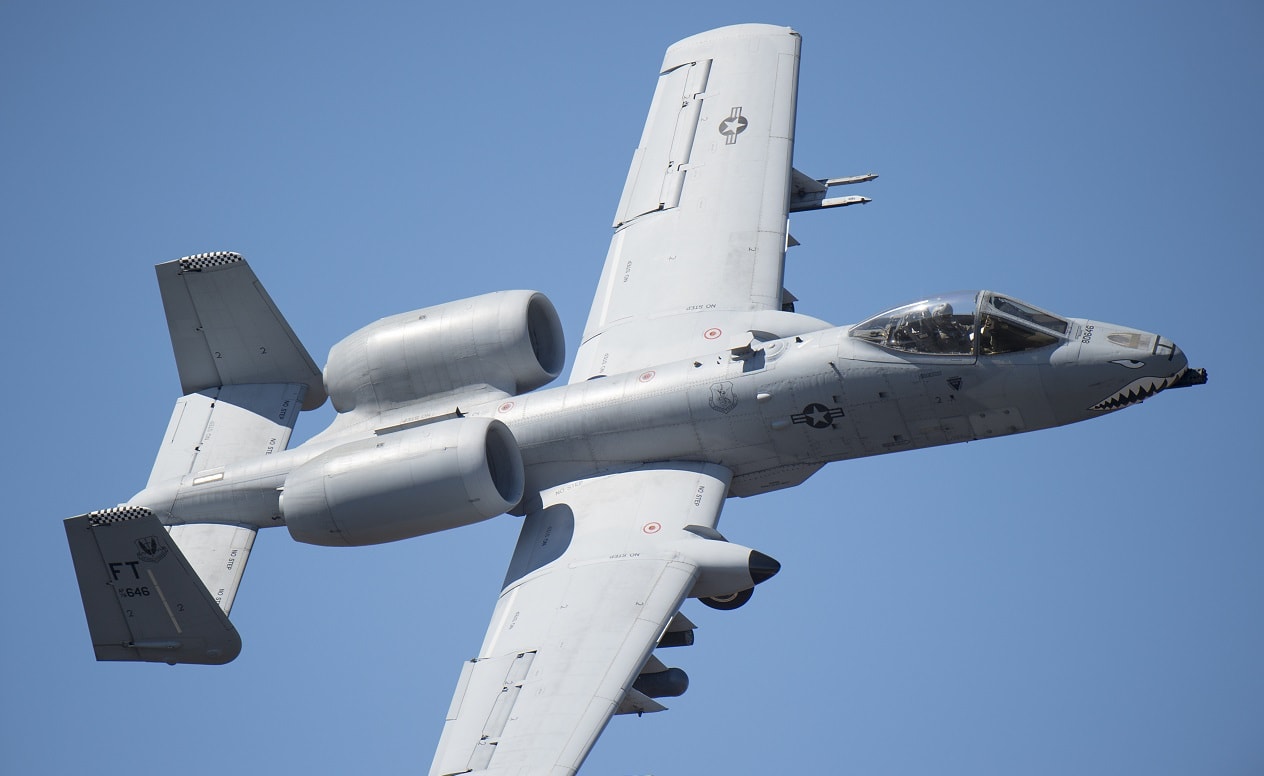
An A-10 Thunderbolt II flies over Grand Bay Bombing and Gunnery Range at Moody Air Force Base, Ga., Feb. 18, 2016. Multiple U.S. Air Force aircraft within Air Combat Command conducted joint aerial training that showcased the aircrafts tactical air and ground maneuvers, as well as its weapons capabilities. (U.S. Air Force photo by Staff Sgt. Brian J. Valencia/Released)
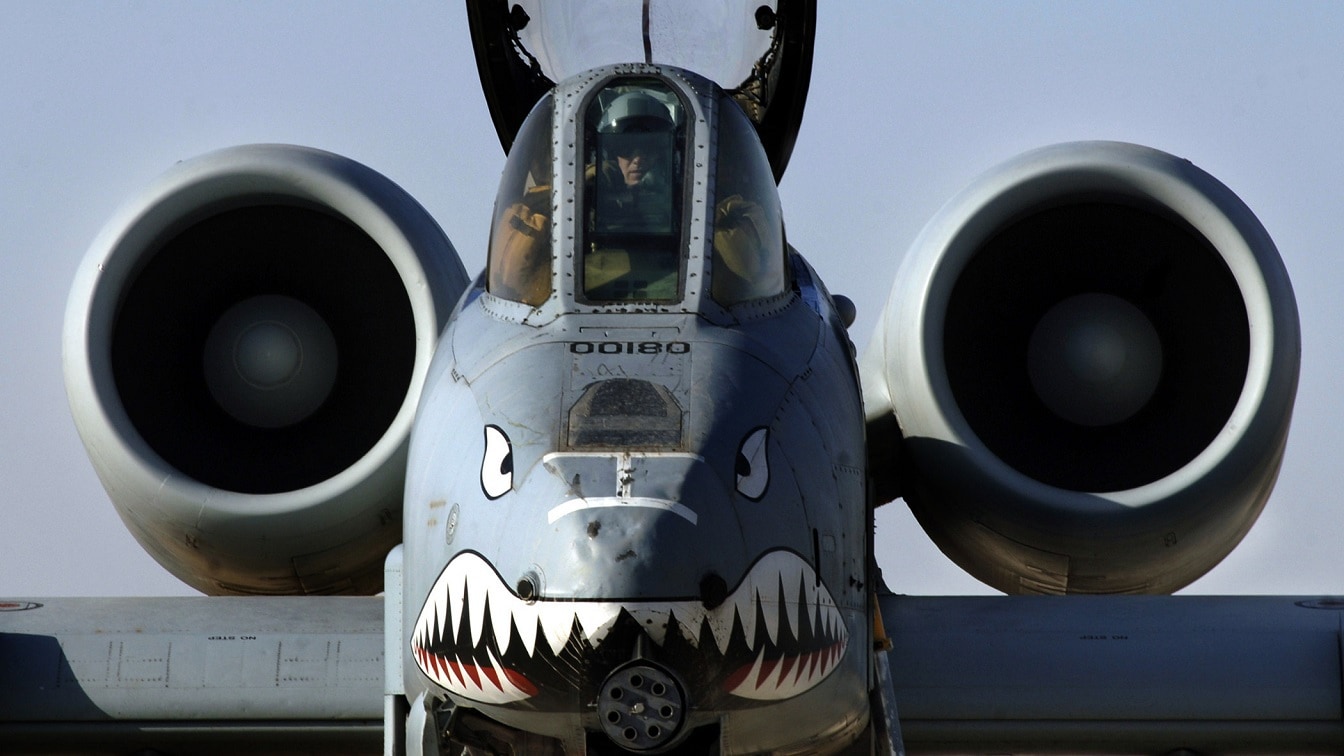
An A-10 Warthog prepares to take off from Al Asad Air Base to provide close air support to ground troops in Iraq. The 438th Air Expeditionary Group A-10 jets perform 10 sorties daily.
That mission set plays directly to this aircraft’s strengths: its ability to loiter over shipping lanes enables it to monitor activity in real time, distinguish between civilian and hostile vessels, and even engage small targets when necessary.
What Their Presence Says About Iran
The deployment of the A-10 to Iran is a clear signal that indicates the airspace over the Strait of Hormuz and nearby areas is permissive enough for non-stealth aircraft to operate. The A-10 would not be used in areas where advanced air defense systems were actively engaging U.S. aircraft. This can only happen when air defenses have been degraded, and Iran’s clearly have been.
This does not mean, however, that the U.S. has entirely uncontested air superiority and that there is zero risk. After all, the U.S. has deployed other assets that can provide support where necessary. It is clear, however, that Iranian capabilities have been degraded so much that even vulnerable craft like this can operate relatively safely.
The A-10 is also unusually well-suited to the fact that the U.S. is not primarily focused on large-scale naval engagements in the Strait. The main concern here is asymmetric warfare in the form of mines, drones, and small boats. The A-10 can visually track these threats and engage targets without escalating to large-scale strikes that involve cruise missiles or bombers.
The A-10’s presence means the U.S. is confident it has sufficiently degraded Iranian capabilities. Put simply, the A-10 would not be there if Iran still had the capability to shoot it down.
About the Author: Jack Buckby
Jack Buckby is a British researcher and analyst specialising in defence and national security, based in New York. His work focuses on military capability, procurement, and strategic competition, producing and editing analysis for policy and defence audiences. He brings extensive editorial experience, with a career output spanning over 1,000 articles at 19FortyFive and National Security Journal, and has previously authored books and papers on extremism and deradicalisation.

