
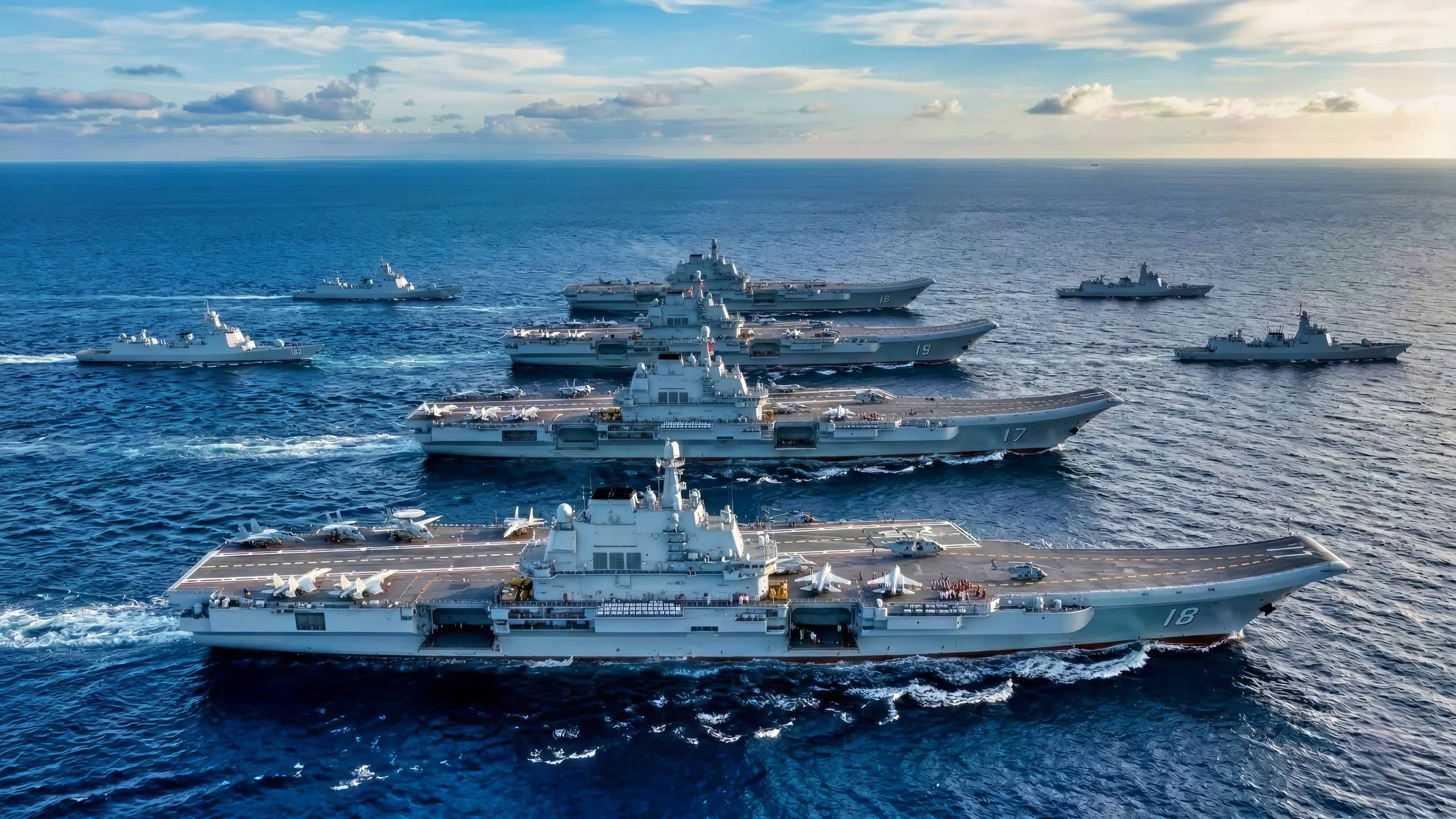
When the People’s Liberation Army Air Force (PLAAF) inducted the J-20 into service in 2017, the aircraft marked China’s entry into fifth-generation airpower. But it remained a single platform, focused primarily on long-range air dominance and operating within a relatively narrow doctrinal role. The unveiling of the J-35A at the Zhuhai Airshow in November 2024 changed that. It signaled that China is now expanding its stealth fleet into multiple mission sets, including carrier aviation, and doing so in a way that mirrors how the United States structured its own fifth-generation force.
The J-35 program exists, in part, to support China’s newest aircraft carrier, Fujian, and the PLA’s efforts to advance its capabilities for future fights. The aircraft are being developed because China is preparing for sustained operations beyond its coastline, going well beyond its anti-access/area denial strategy.
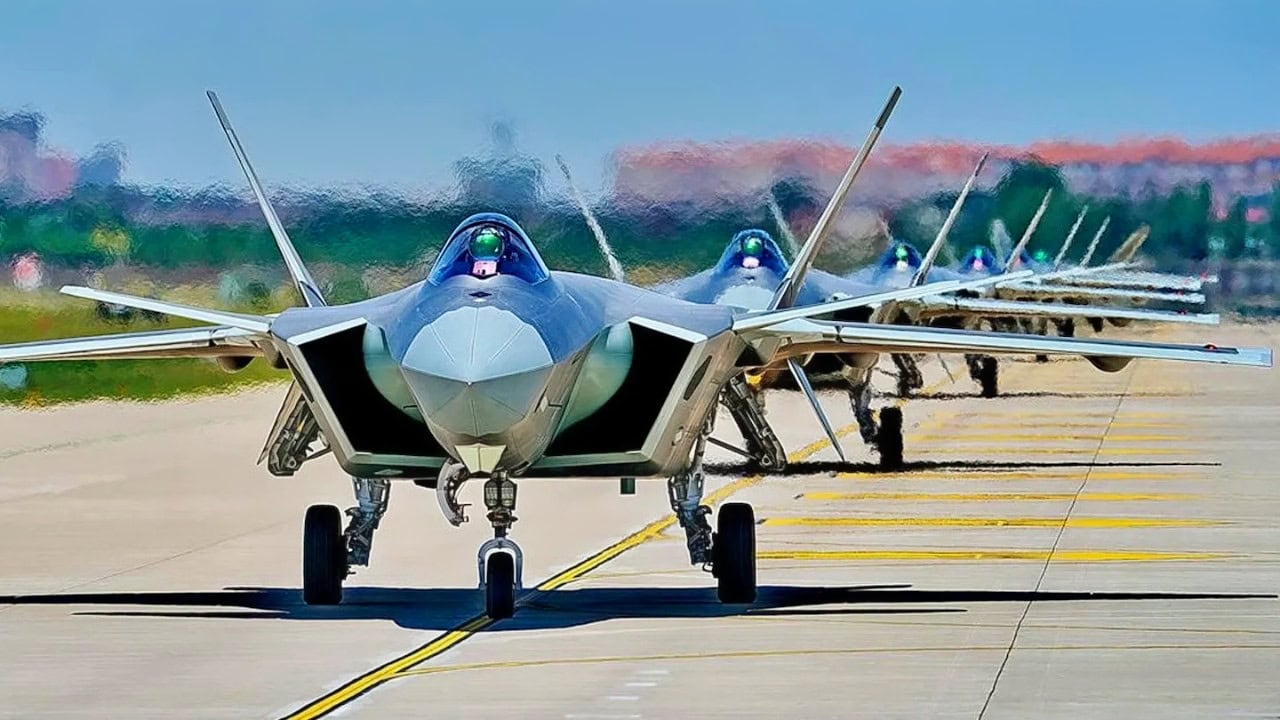
J-20 Fighter from PLAAF China. Image Credit: Creative Commons.
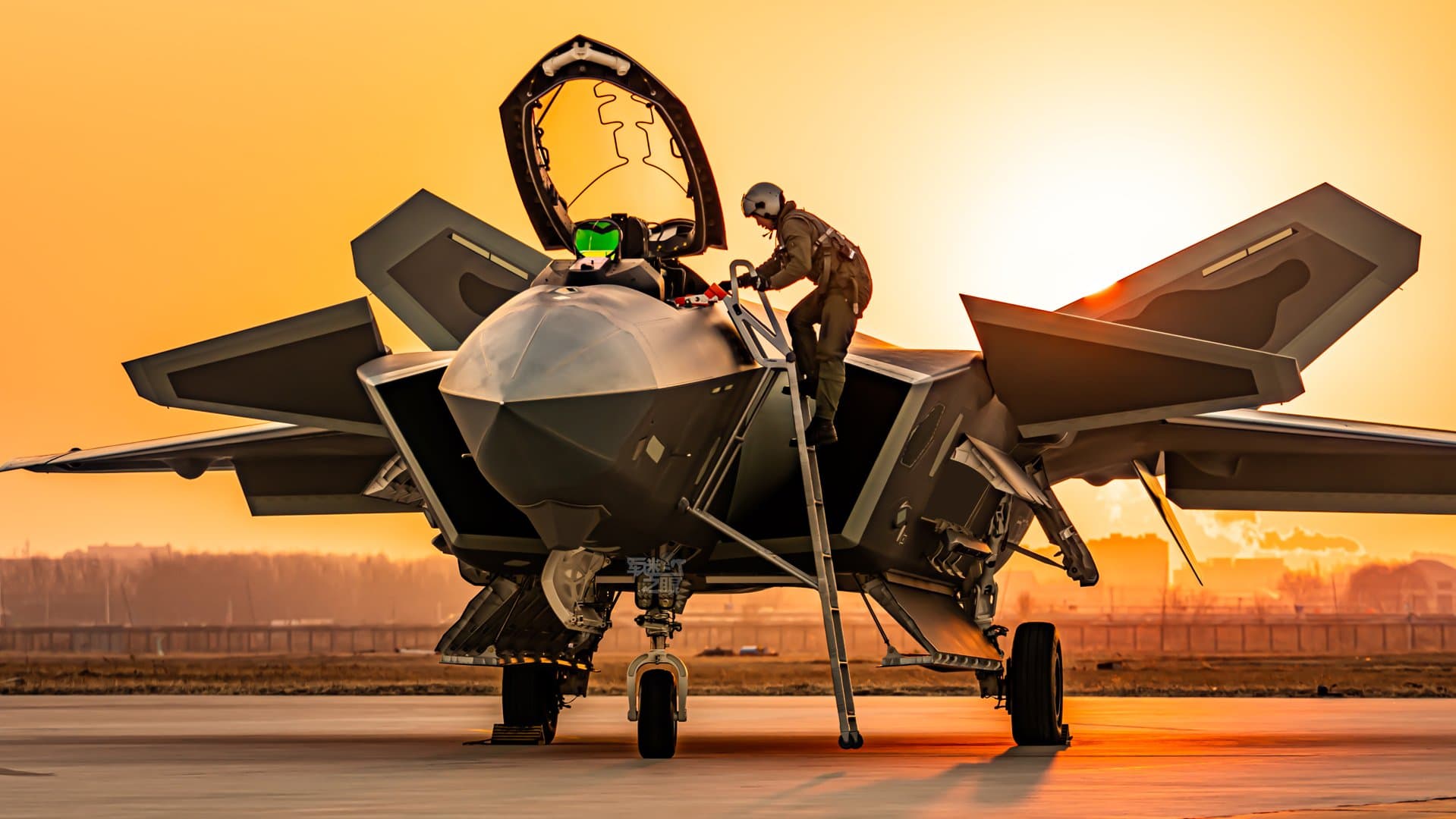
J-20 Fighter. Image Credit: Chinese Internet.
What the J-35 and J-35A Are
The J-35 and J-35A are two variants of the same concept, adapted for different purposes. The J-35 is the carrier-based version used by the PLA Navy, while the J-35A is the land-based variant designed for the PLAAF.
China formally unveiled the J-35A at the Zhuhai Airshow in November 2024, marking the first official confirmation that the aircraft is an operational program rather than a developmental one.
The aircraft was displayed alongside the naval J-35, reinforcing Beijing’s view that this is a family of platforms rather than a one-off design.
Much is unknown about the J-35 because China has not released detailed performance data. For that reason, it is often referred to as a “black box.” We do, however, know a lot about its intended role.
The aircraft is smaller than the J-20 and likely has a shorter range, but it is designed to be produced in greater numbers and used in a more flexible way. That mirrors the way the United States employs the F-35 alongside the F-22.
The J-20 remains China’s high-end air superiority platform, while the J-35/J-35A appears to be positioned as a multirole stealth aircraft that can operate across both land and sea-based missions.
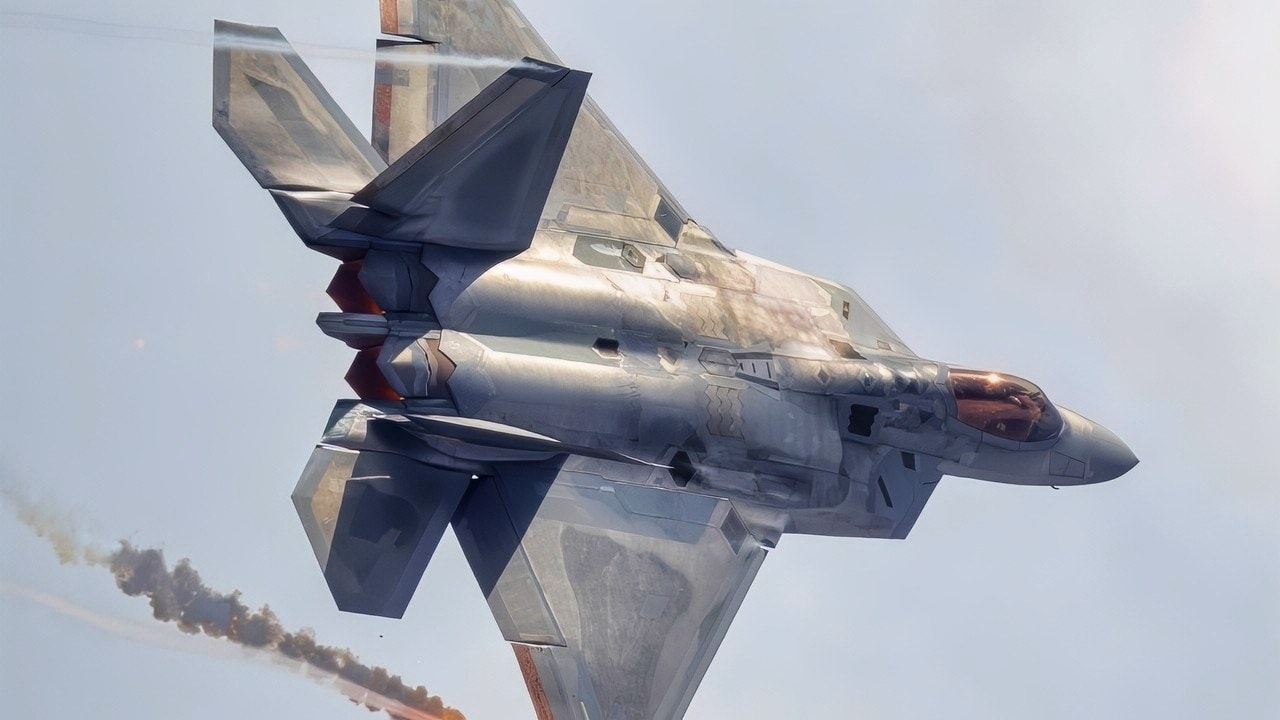
An F-22 Raptor releases flares during an aerial demonstration at Naval Air Station Oceana, Virginia, Sept. 21, 2025. The display highlights the aircraft’s defensive systems and advanced capabilities, demonstrating both its agility and readiness in complex flight operations. (U.S. Air Force photo by Staff Sgt. Lauren Cobin)
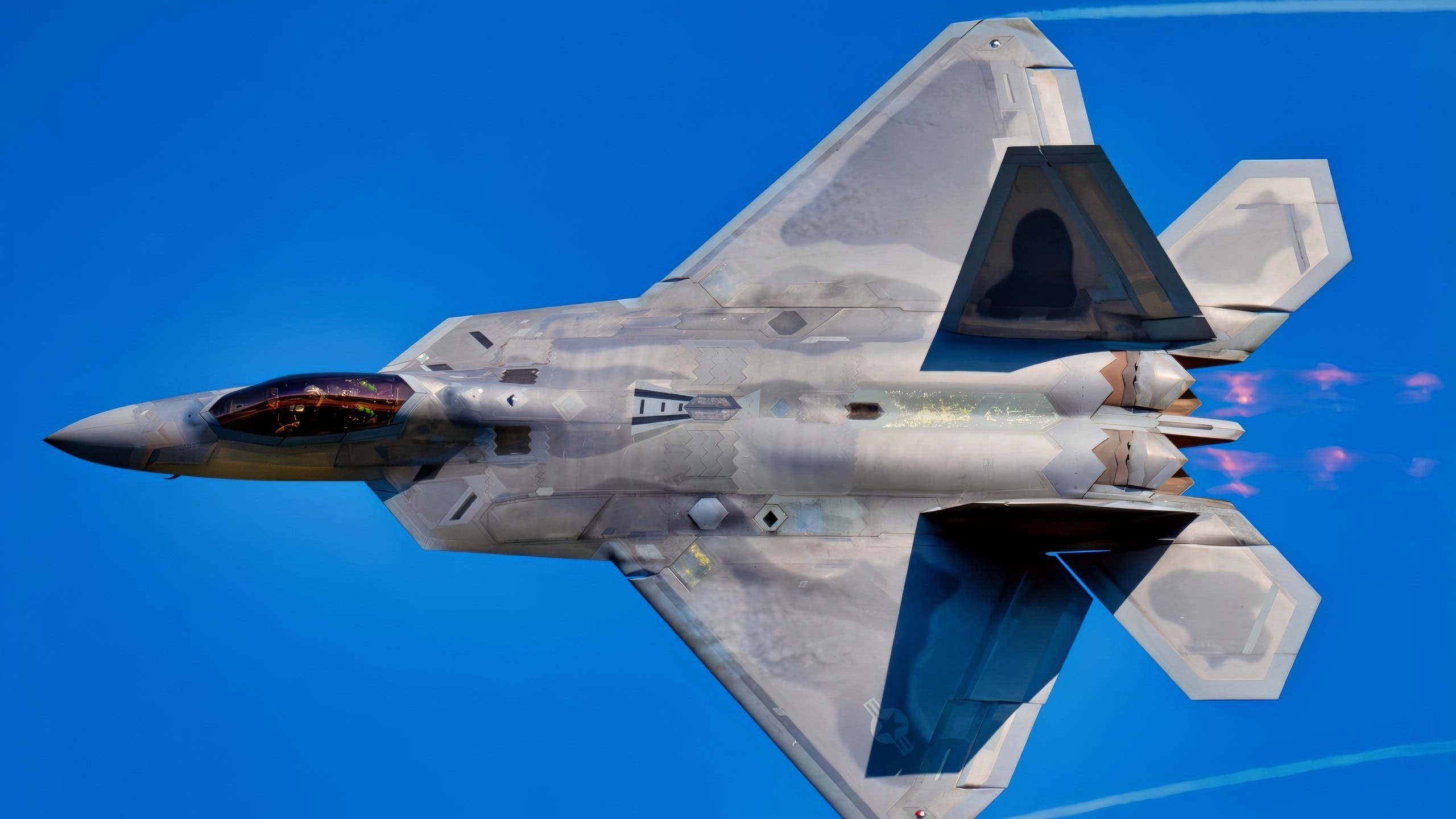
USAF Capt. Nick “Laz” Le Tourneau, F-22 Raptor Aerial Demonstration Team pilot and commander, performs a practice demonstration at Joint-Base Langley-Eustis, 17 March, 2025. Laz is the only F-22 Raptor pilot in the world certified to fly the demonstration. (U.S. Air Force photo by Staff Sgt. Michael Bowman)
How China Got Here
For decades, the PLAAF was structured primarily for territorial defense. Its inventory was built around Soviet-derived designs, including variants of the MiG-21 and Su-27, and its doctrine focused on protecting Chinese airspace rather than projecting power.
That began to change in the 2000s with the introduction of indigenous fourth-generation aircraft, such as the J-10, and upgraded versions of the J-11. But the real inflection point came with the J-20, which entered service in March 2017, making China the second country to field an operational fifth-generation fighter.
The J-20 was a major milestone – not just technologically, but because it represented a shift in how China intended to operate. It became clear that Beijing wanted to focus on long-range operations, integrated air defense suppression, and networked warfare.
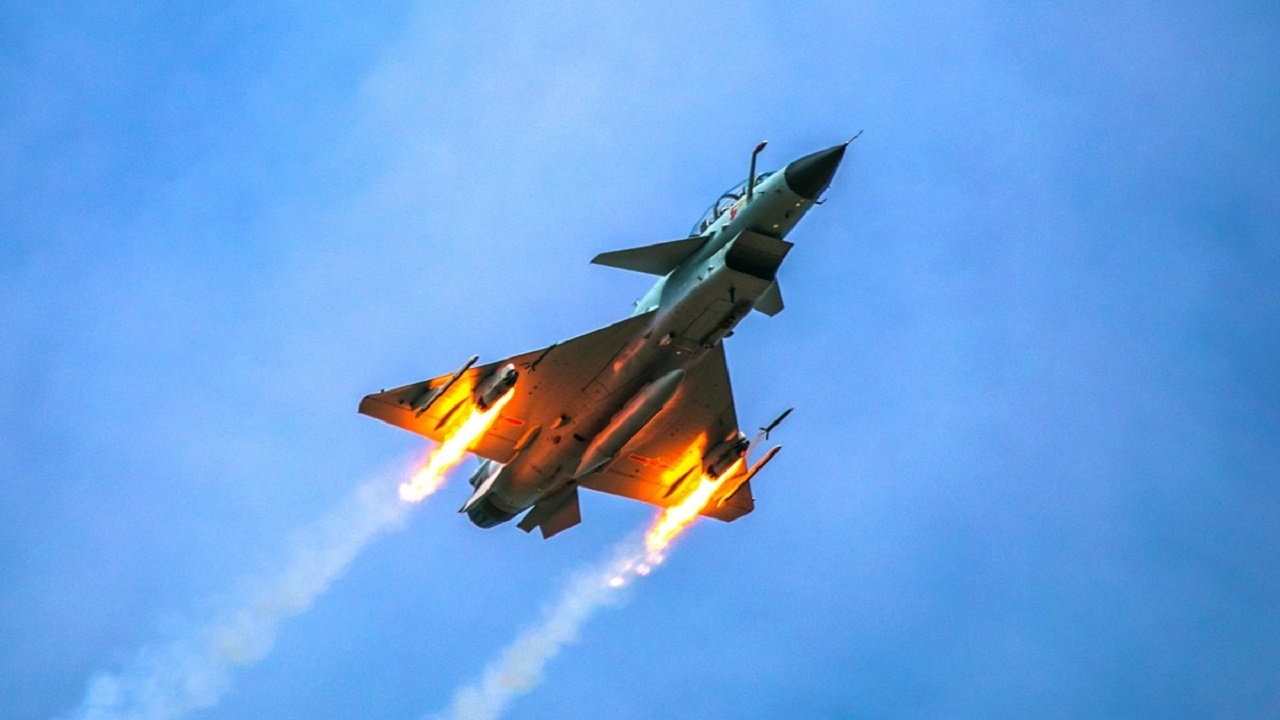
J-10 Fighter. Image Credit: Creative Commons.
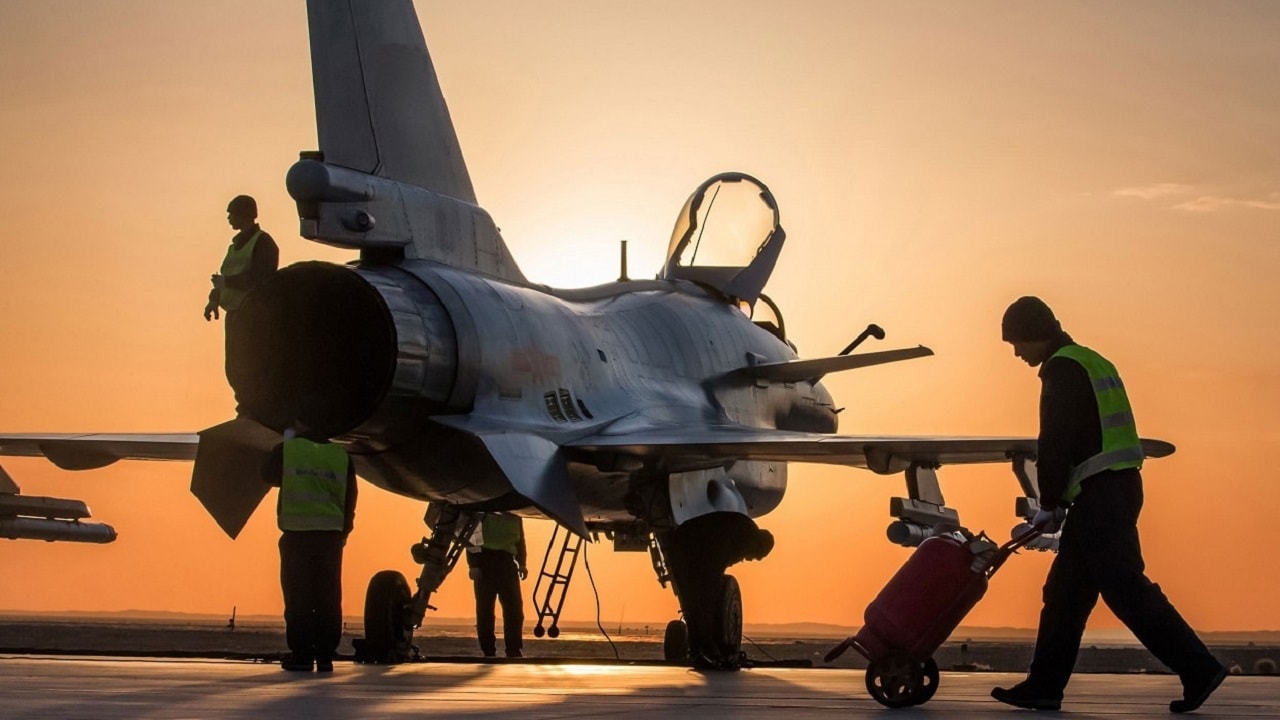
Chinese J-10 fighter. Image Credit: Creative Commons.
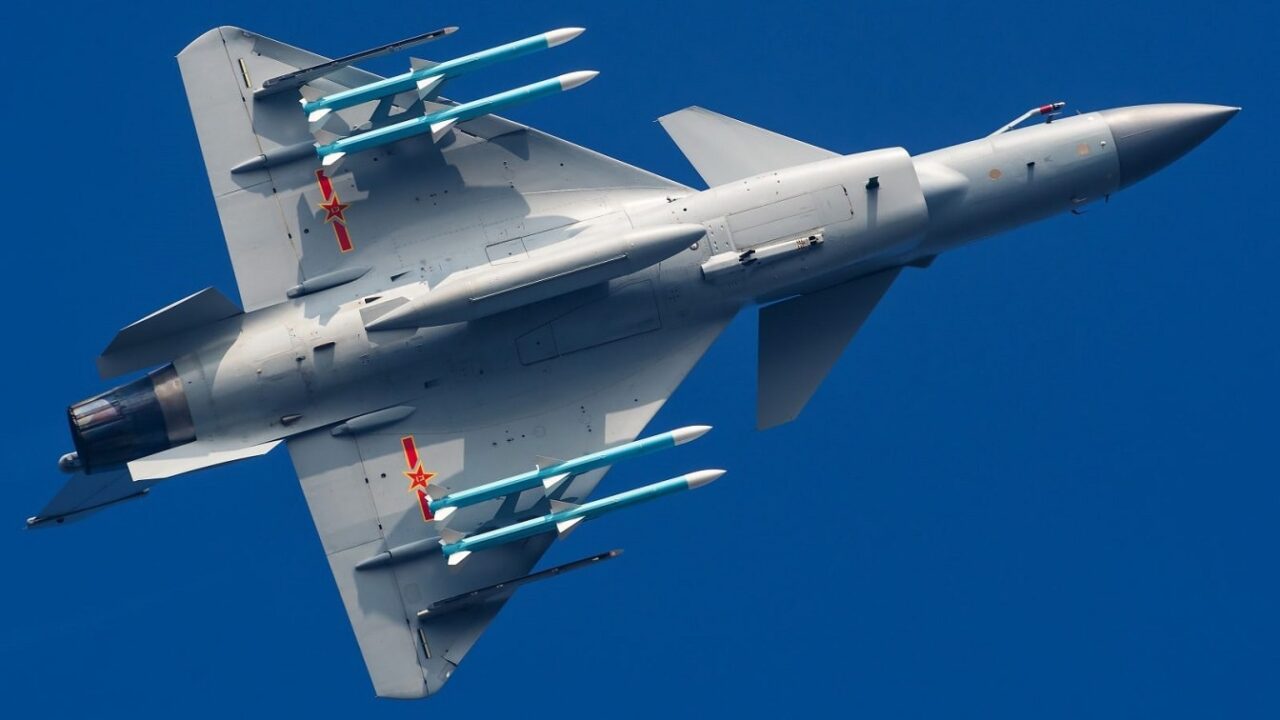
Chengdu J-10 Fighter Jet. Image Credit: Creative Commons.
This has been recognized by the U.S. Department of Defense on many occasions, with its annual reports repeatedly pointing to the PLA’s move toward joint operations and expanding its ability to operate beyond its immediate periphery.
At the same time, China began investing heavily in naval aviation. Earlier carriers, such as Liaoning and Shandong, used ski-jump launch systems, which limited the weight and performance of the aircraft they could deploy. That constrained the types of missions those air wings could perform.
The development of the J-35, then, should be looked at as a parallel endeavor to the development of its carrier force.
It is not strictly isolated but part of a coordinated effort to build a new force capable of sustaining operations in contested maritime environments, including in the Western Pacific.
Closing the Gap With U.S. and Naval Power
The United States did virtually the same thing: it built its fifth-generation fleet around an entire system that supports it. The F-22 provides air dominance, and the F-35 is a multirole aircraft that serves the Air Force, Navy, and Marine Corps. Carrier aviation integrates those aircraft with airborne early warning and long-range strike capabilities. China now appears to be moving in this direction as well.
The most important recent development for the J-35 is the Fujian, China’s third aircraft carrier.
Unlike earlier carriers, Fujian is equipped with electromagnetic catapults, enabling it to launch heavier, more capable aircraft. Fujian isn’t the last one, either, with a Type 004 and Type 005 also on the way.
Reports last year indicated that the J-35 is expected to form part of Fujian’s air wing alongside aircraft like the KJ-600 airborne early warning platform.
That combination brings Chinese carrier aviation closer to the United States Navy’s model, which relies on integrated air wings rather than standalone fighter operations.
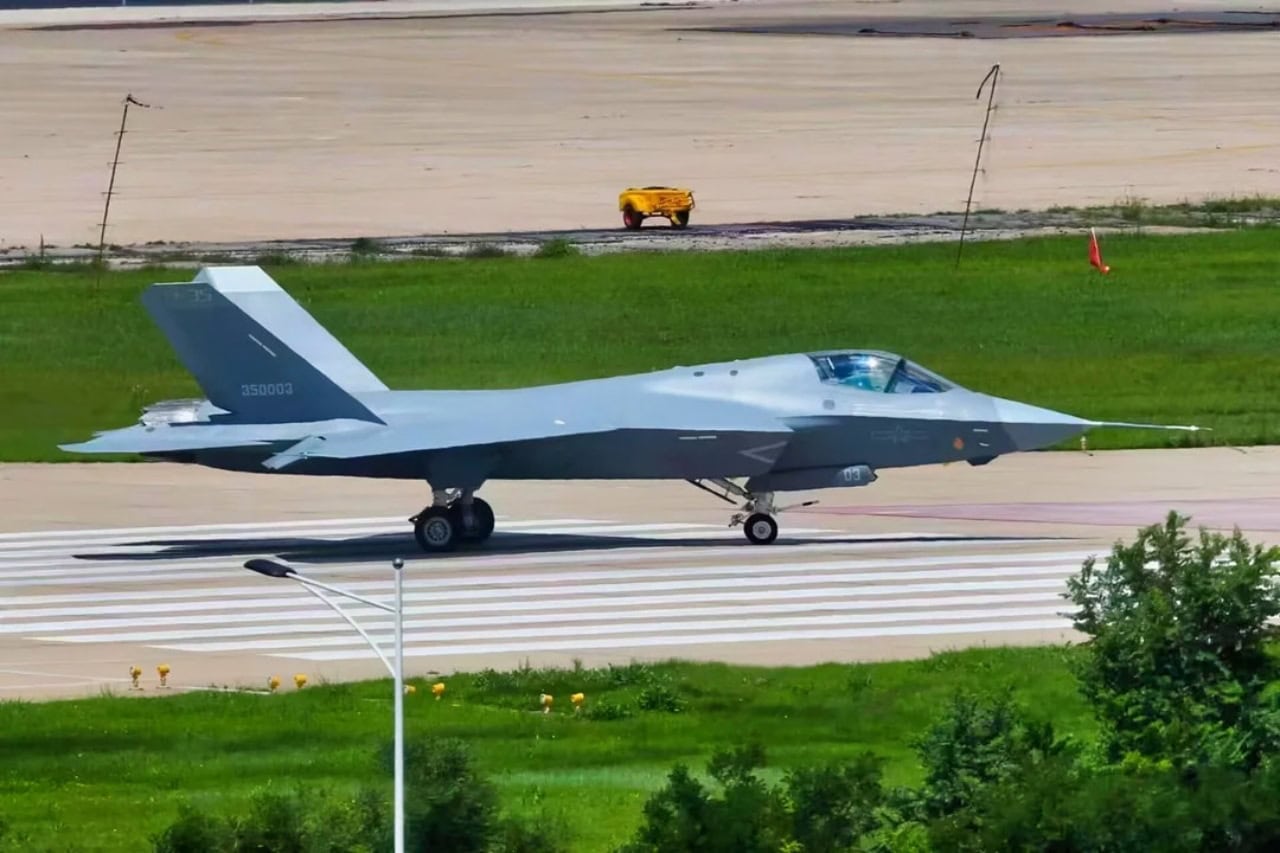
J-35 Fighter. Image Credit: Chinese Internet.
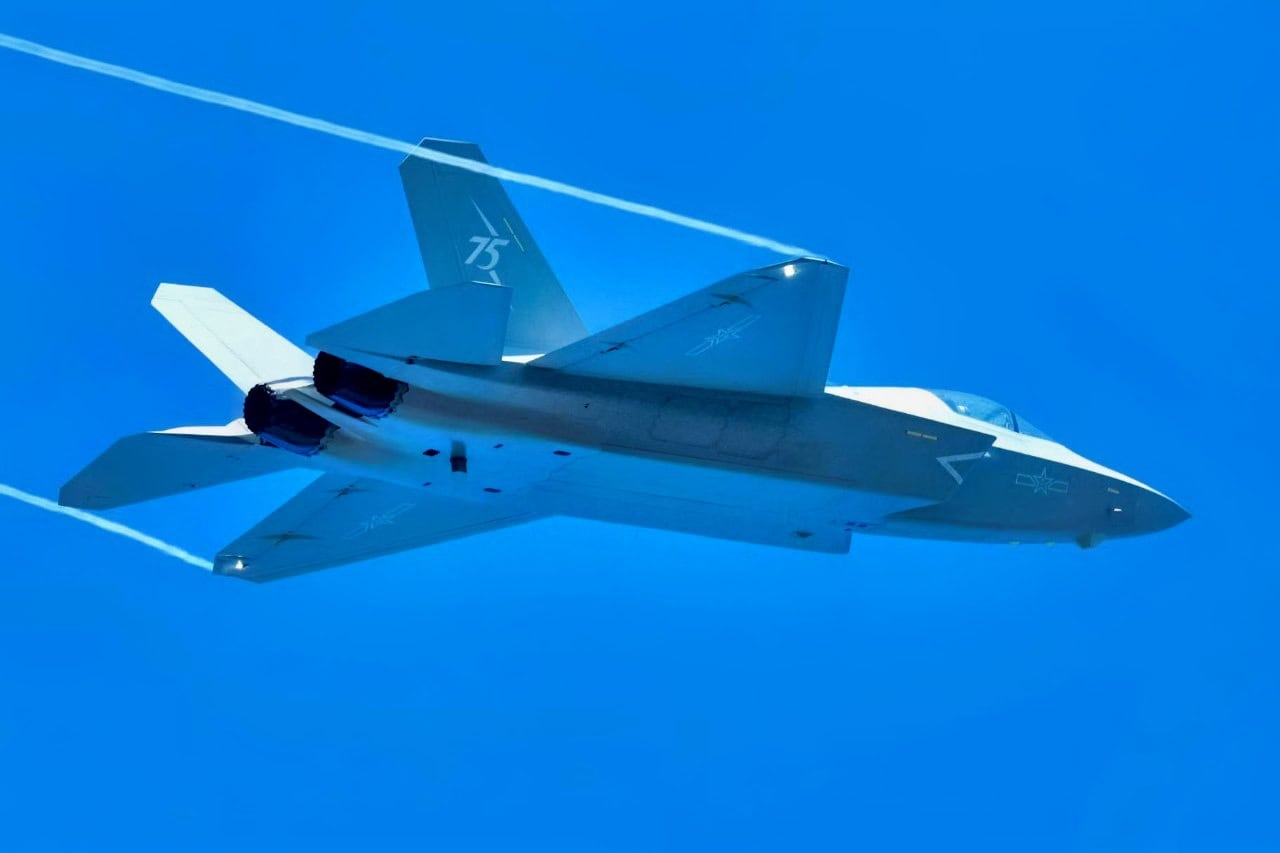
J-35 Fighter. Image Credit: Chinese State Media.
The implications are thus: a Chinese carrier equipped with stealth fighters and supported by early warning aircraft can significantly extend its defensive perimeter. It can improve its ability to detect and engage threats and operate more effectively in contested environments.
In other words, China is looking beyond its own shores and plans to project power much further, and that is particularly relevant to a potential conflict in Taiwan. A stealth-capable carrier air wing complicates U.S. and allied operations by extending the range at which Chinese forces can operate and by reducing the effectiveness of traditional air defense systems.
What’s Happening Now and What Happens Next
The appearance of the J-35A at the 2024 Zhuhai Airshow was a sign that China is now confident in its ability to develop and field these technologies. And since then, attention has shifted away from the aircraft itself and toward its integration into operational units.
Once Fujian becomes fully operational, it will represent a step change in China’s ability to deploy air power at sea.
At the same time, China is already looking beyond the current generation of aircraft. New advanced aircraft designs have been spotted in Chinese skies, including tailless configurations, indicating that work is ongoing on its next-generation systems. Rapid changes in the designs being tested also indicate that Chinese engineers are iterating on them quickly.
In December 2024, images circulated online showing a large, tailless stealth aircraft flying over Chengdu, widely linked by analysts to a next-generation program often referred to as the “J-36.”
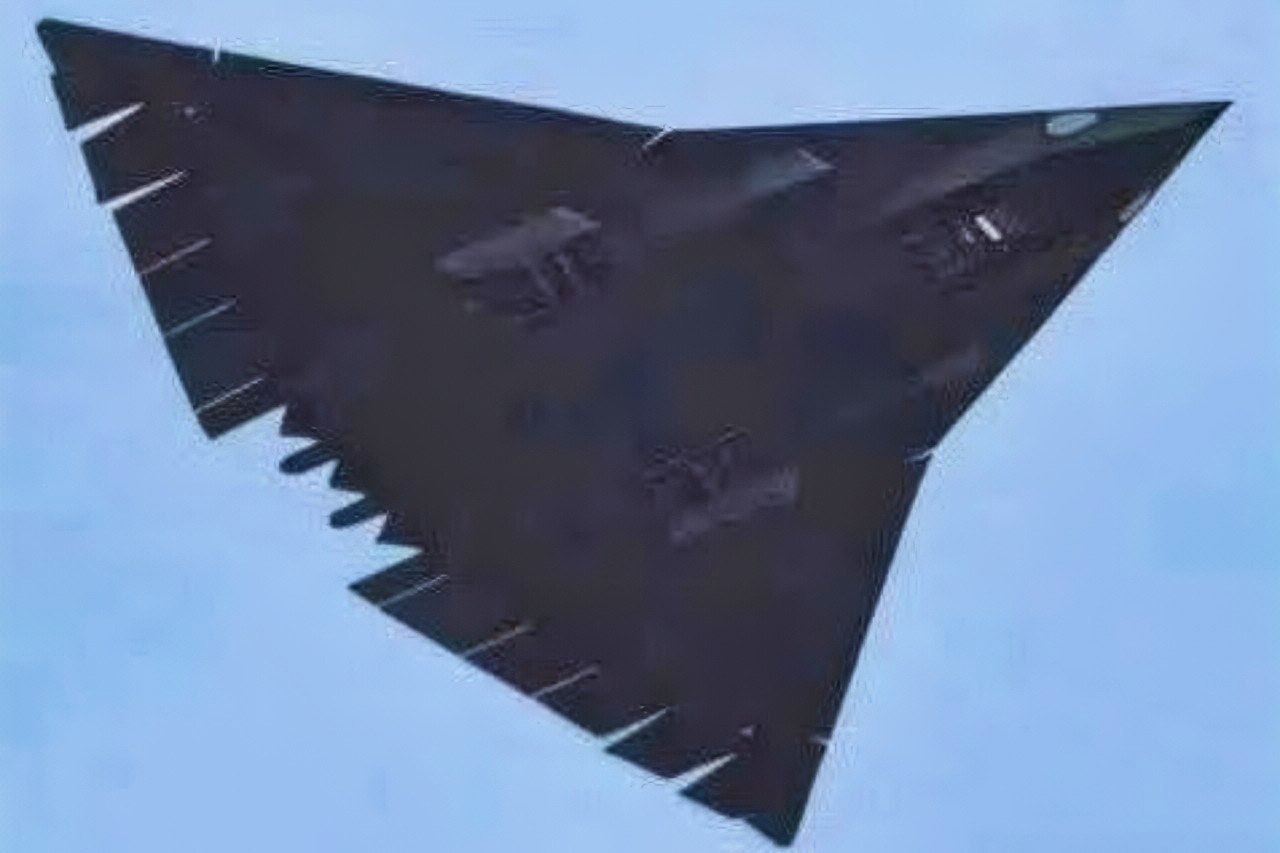
J-36 X Screenshot
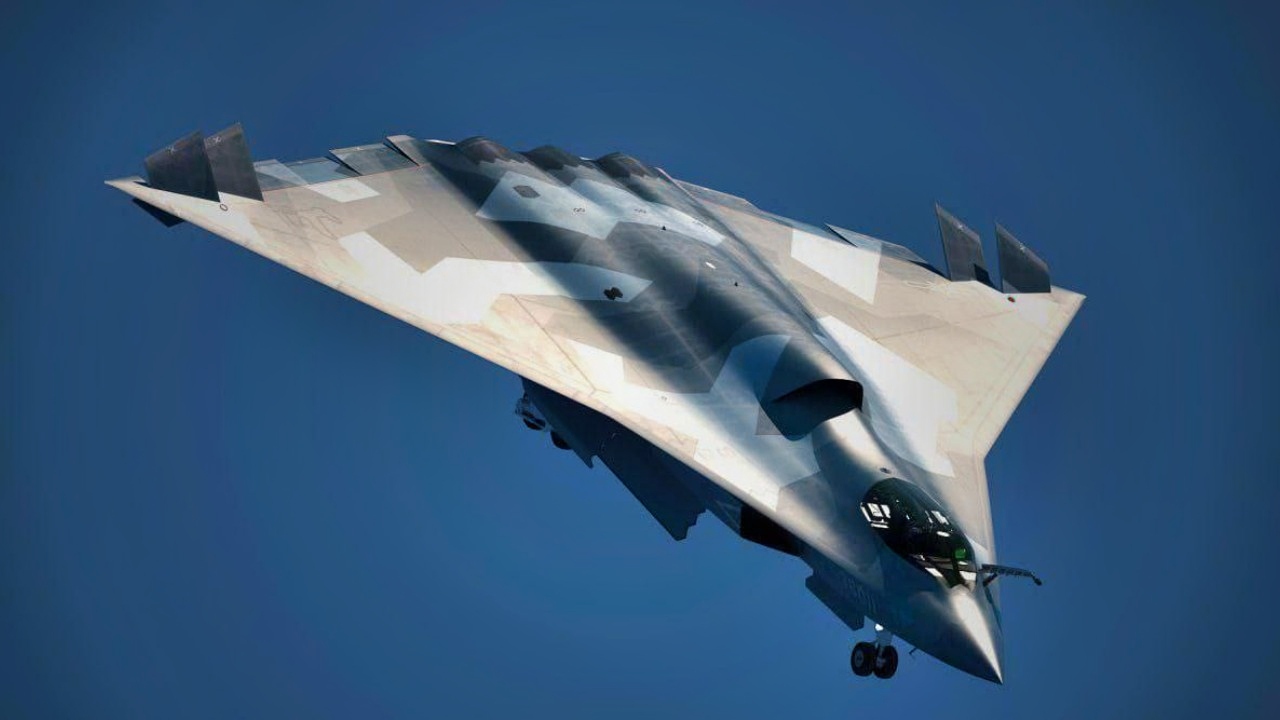
J-36 Fighter Artist Rendition. X Screenshot.
The aircraft’s lack of vertical stabilizers and blended wing-body design point toward a focus on reduced radar cross-section and improved aerodynamic efficiency at long range.
Additional imagery appeared online, alongside reporting pointing to a second advanced design under development, suggesting that China may be pursuing multiple sixth-generation concepts in parallel rather than a single program.
The changes being observed included tailless airframes and larger fuselages. China appears to be prioritizing survivability and integration into combat networks, much as the United States’ next-generation stealth aircraft efforts do.
That means China’s current advances are already changing how the United States operates, and that further changes will arrive once China fields its own sixth-generation platform that flies alongside networked drones. China may not fully close the technological gap with the U.S. for some time, but it is certainly getting close.
About the Author: Jack Buckby
Jack Buckby is a British researcher and analyst specializing in defense and national security, based in New York. His work focuses on military capability, procurement, and strategic competition, producing and editing analysis for policy and defense audiences. He brings extensive editorial experience, with a career output spanning over 1,000 articles at 19FortyFive and National Security Journal, and has previously authored books and papers on extremism and deradicalization.

