
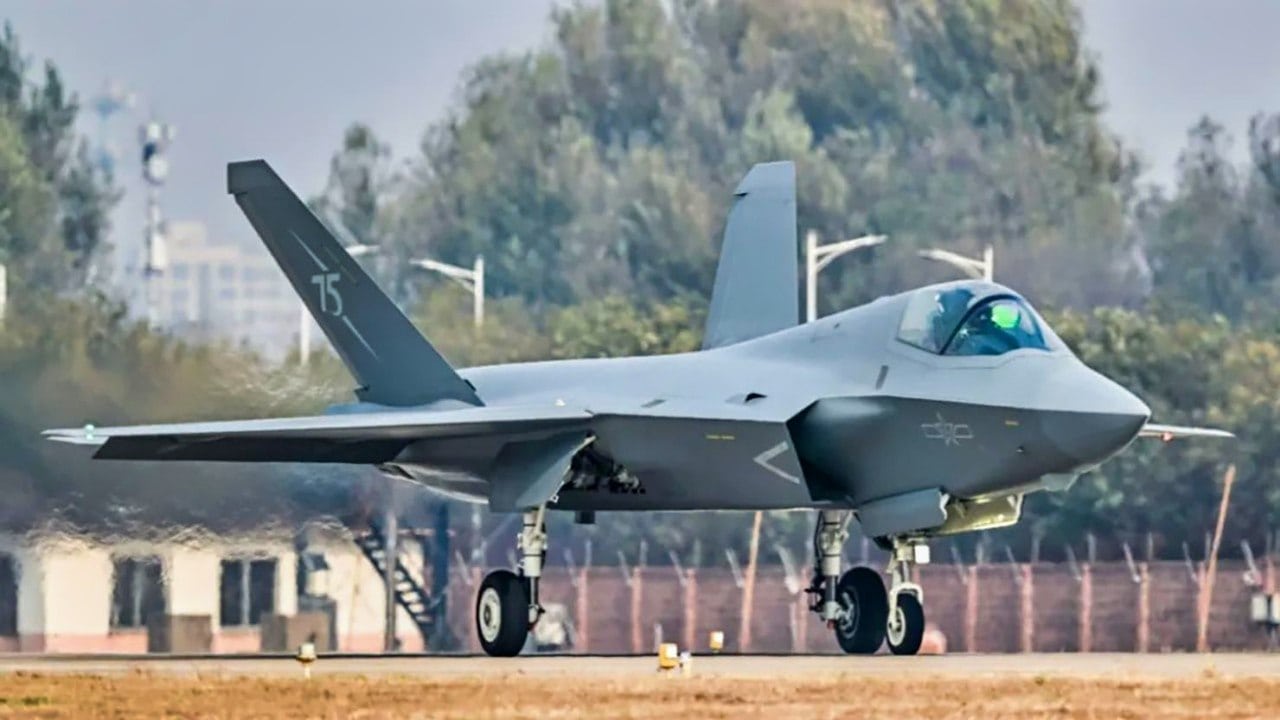
Summary and Key Points: National Security Columnist Steve Balestrieri evaluates the Shenyang J-35A, China’s land-based fifth-generation stealth fighter.
-Officially adopted by the PLAAF in late 2024, the J-35A features a twin-engine design using WS-13E powerplants, achieving speeds of Mach 1.8.
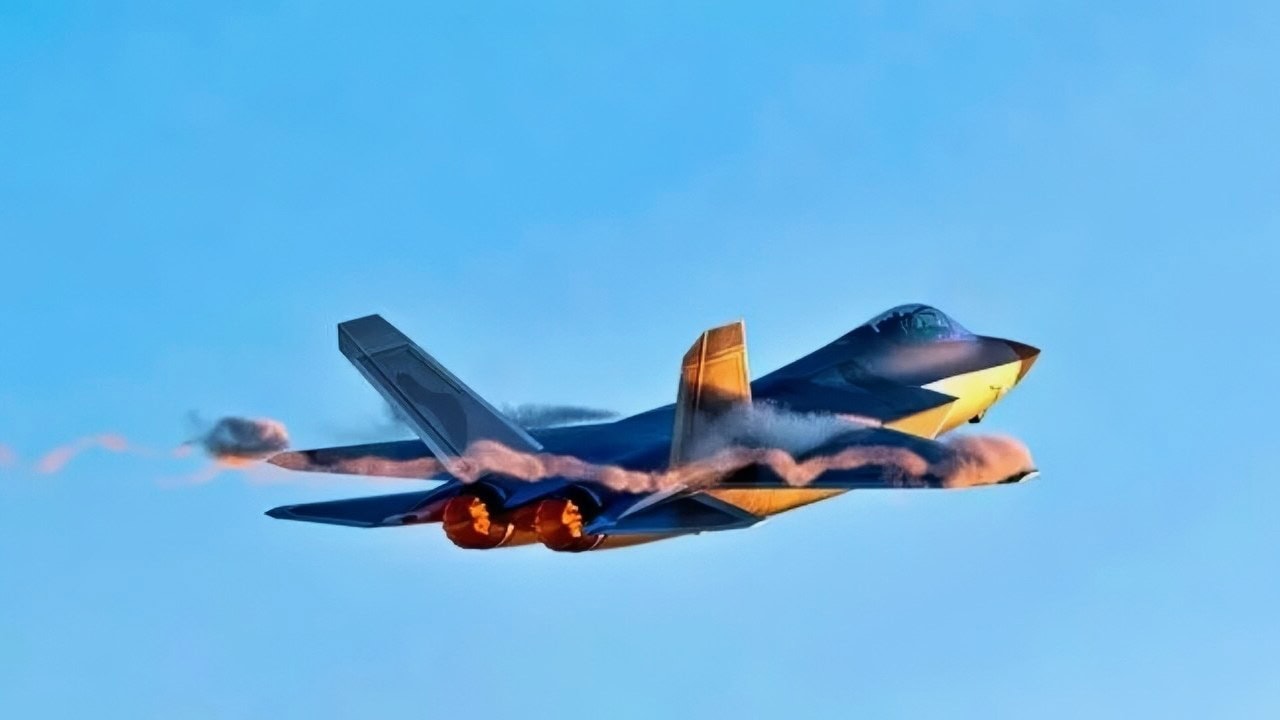
J-35A Fighter from China PLAAF. Image Credit: Creative Commons.
-This report analyzes the 2025 export breakthrough to Pakistan and the technical similarities to the U.S. F-35, which General David Allvin noted suggests a heavy reliance on shared “blueprints.”
-Balestrieri explores the J-35A’s 750-mile combat radius, concluding that while agile, its sensors remain inferior to the F-35’s AN/APG-81 radar and forthcoming Block 4 upgrades.
Comparing China’s J-35A Stealth Fighter To The US F-35
The Chinese were hyping their new J-35A fifth-generation stealth fighter at the Paris Air Show last summer. But thus far, they haven’t managed to create much of a market for their latest stealth fighter.
In November 2024, the People’s Liberation Army Air Force (PLAAF) officially announced it would adopt the sleek J-35A medium-weight multi-role stealth fighter “mainly for air combat operations,” the PRC announced.
It now joins the U.S. as the only two countries to operate two distinct stealth fighter types.
China has been offering the J-35A for sale to countries that the United States has barred from buying the F-35, in an effort to drum up support for the export of its fighter.
In June 2025, Bloomberg and other media outlets reported that Pakistan had agreed to buy the Shenyang J-35A stealth fighter. The reports described Pakistan as the first overseas buyer of the aircraft.
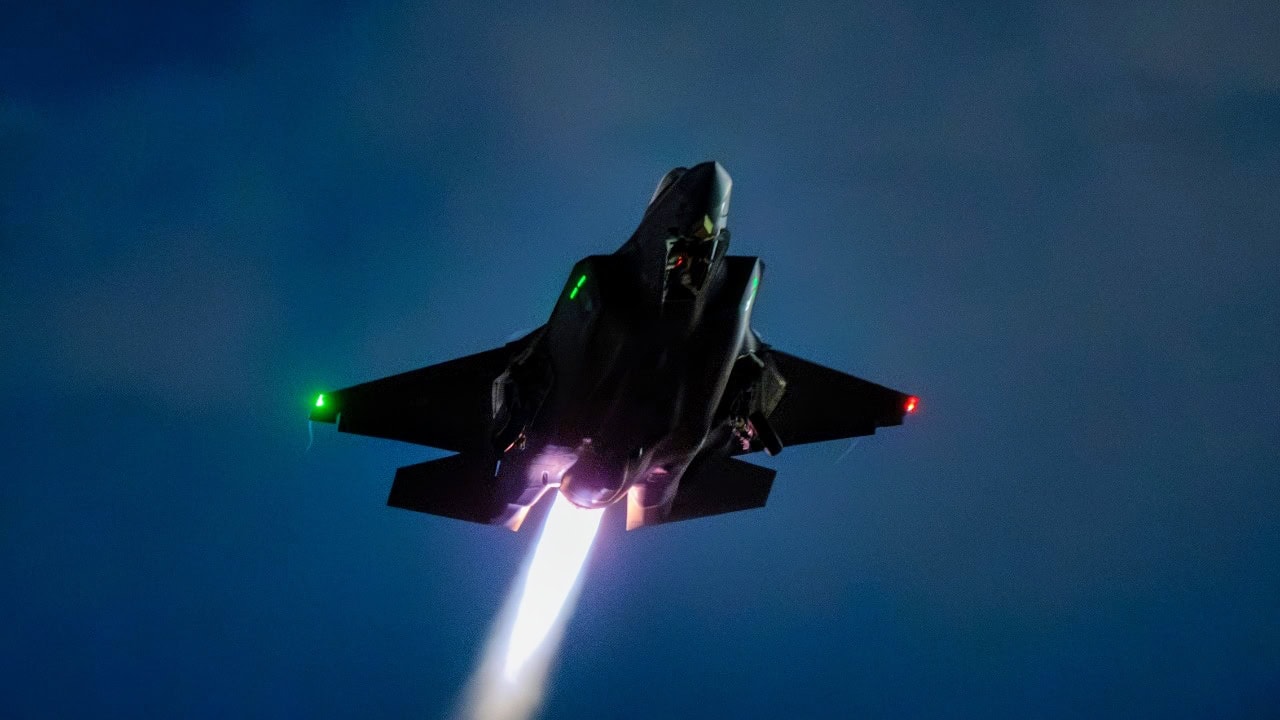
An F-35A Lighting II takes off for a Red Flag-Nellis 24-2 night mission at Nellis Air Force Base, Nevada, March 18, 2024. The presence of the F-35s offers the U.S., Allies, and partners a versatile and highly capable system, enhancing collective defense measures while reinforcing the NATO Alliance’s commitment to leveraging top-tier military capabilities for regional security and deterrence. (U.S. Air Force photo by 1st Lt. Jimmy Cummings)
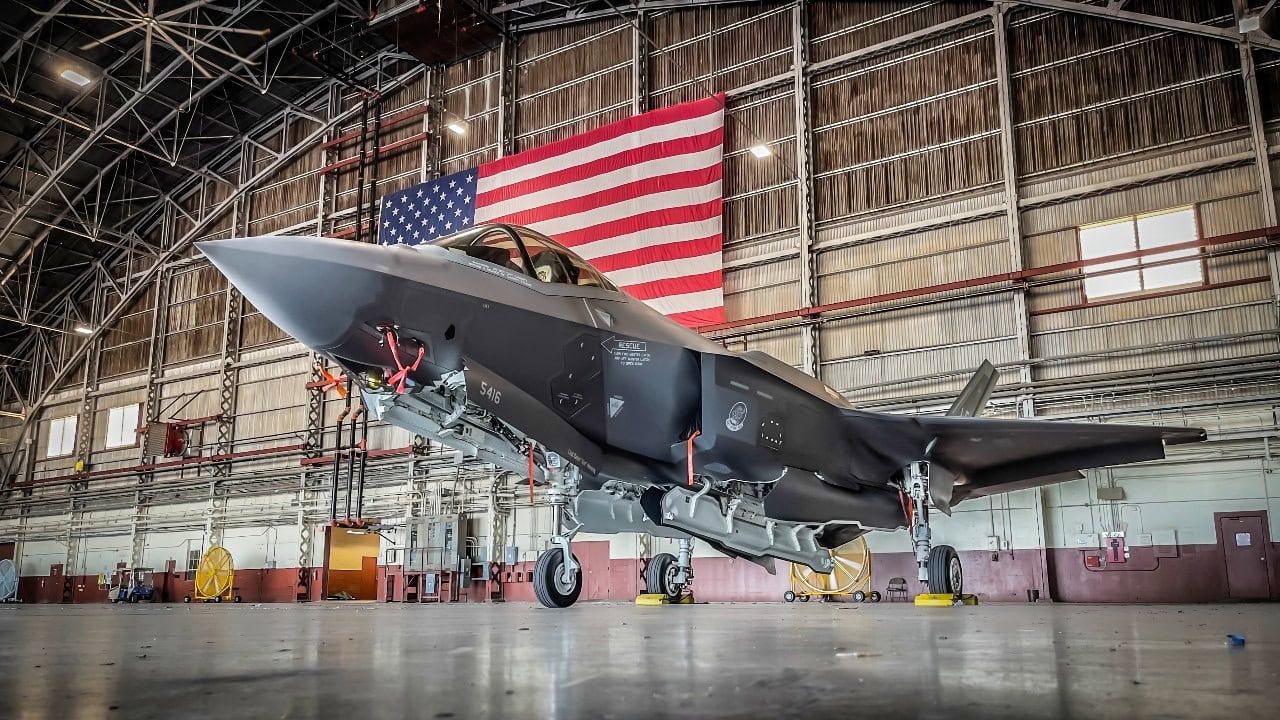
An F-35 Lightning II assigned to the 62nd Fighter Squadron, Luke Air Force Base, Ariz., sits in a hangar ahead of operations for the F-35 Lightning II TDY, Oct. 28, 2021, at Joint Base San Antonio-Kelly Field, Texas. The 62nd FS will be training with F-16s from the 149th Fighter Wing and the 301st Fighter Wing, along with T-38s from the 301st Fighter Wing. The multi-role capabilities of the F-35 allows them to perform missions which traditionally required numerous specialized aircraft. The complimentary air superiority capabilities of the F-35 will augment our air superiority fleet and ensure we continue to “own the skies” over future battlefields. (U.S. Air Force photo by Brian G. Rhodes)
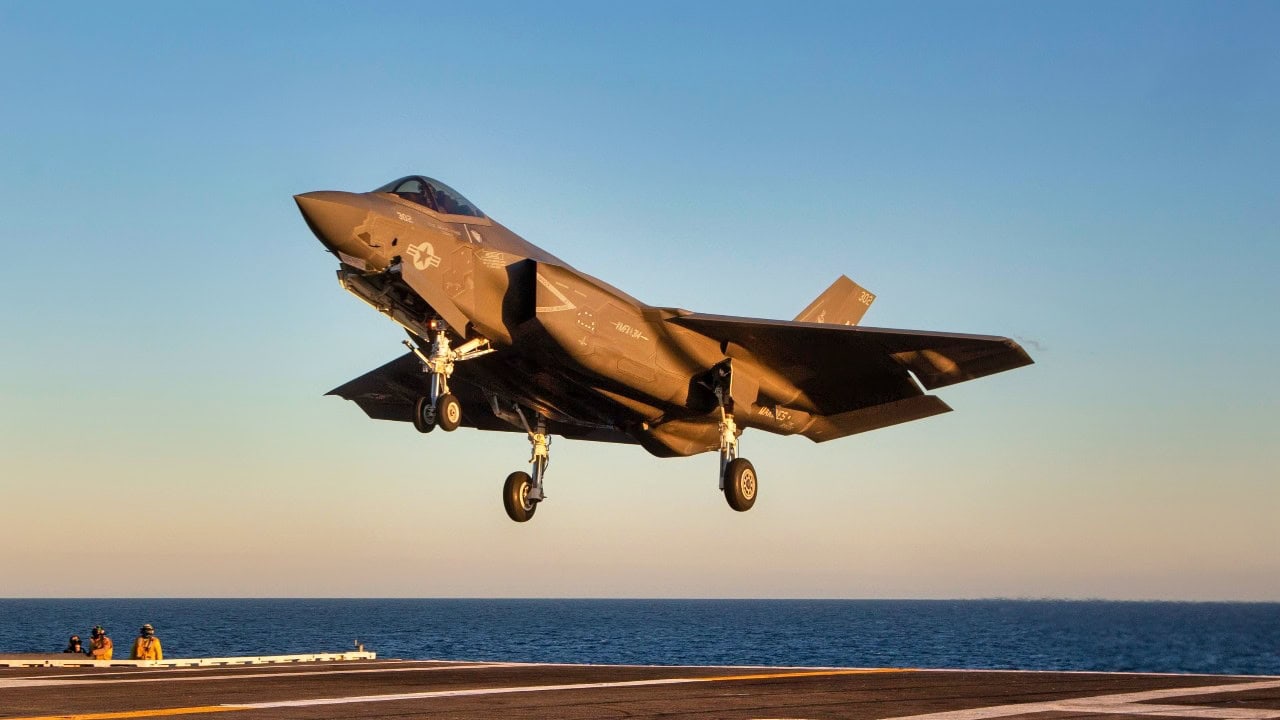
F-35 Fighter.
Following the news, shares of AVC Shenyang Aircraft Corporation rose 10 percent, suggesting positive market sentiment around a potential breakthrough in China’s defense exports.
The J-35 is the carrier-based fighter with foldable wings, while the J-35A is the land-based Air Force stealth fighter.
When China unveiled the “new” J-35 Gyrfalcon, many commented on its great-looking fifth-generation stealth aircraft design. The first thing that stands out is how the aircraft looks strikingly similar to the US F-35, and its dimensions are identical. Give Beijing credit; if you are going to steal a design, you might as well steal the very best.
Late last month, Air Force Chief of Staff Gen. David W. Allvin said in an interview with Air & Space Forces Magazine, “It’s still fairly new, “But, yes, it’s pretty clear; you could put it side-by-side and see, at least, where we believe they got their blueprints from, if you will.”
Meet the Chinese Shenyang J-35A
The Shenyang J-35A, also known as the FC-31 or J-31, is a multi-role fighter aircraft developed by the Chinese government. It is designed for the military and intended to serve as a fifth-generation combat aircraft. The FC-31 is designed for various missions, including air superiority, ground attack, and reconnaissance.
“The Chinese development of their capabilities is something we need to respect and be able to account for,” Allvin said. “One thing that they’ll never catch up on us is the quality of our force, the quality of our entire total force, the quality of our [noncommissioned officer corps], the quality of our aviators, the maintainers, all of that. But I don’t want to make it a close fight.”
A variant, the J-35, is designed for aircraft carrier duty. One difference between the two aircraft is that the F-35 has one engine, and the J-35 has two. Not much is known about the J-35’s capabilities.
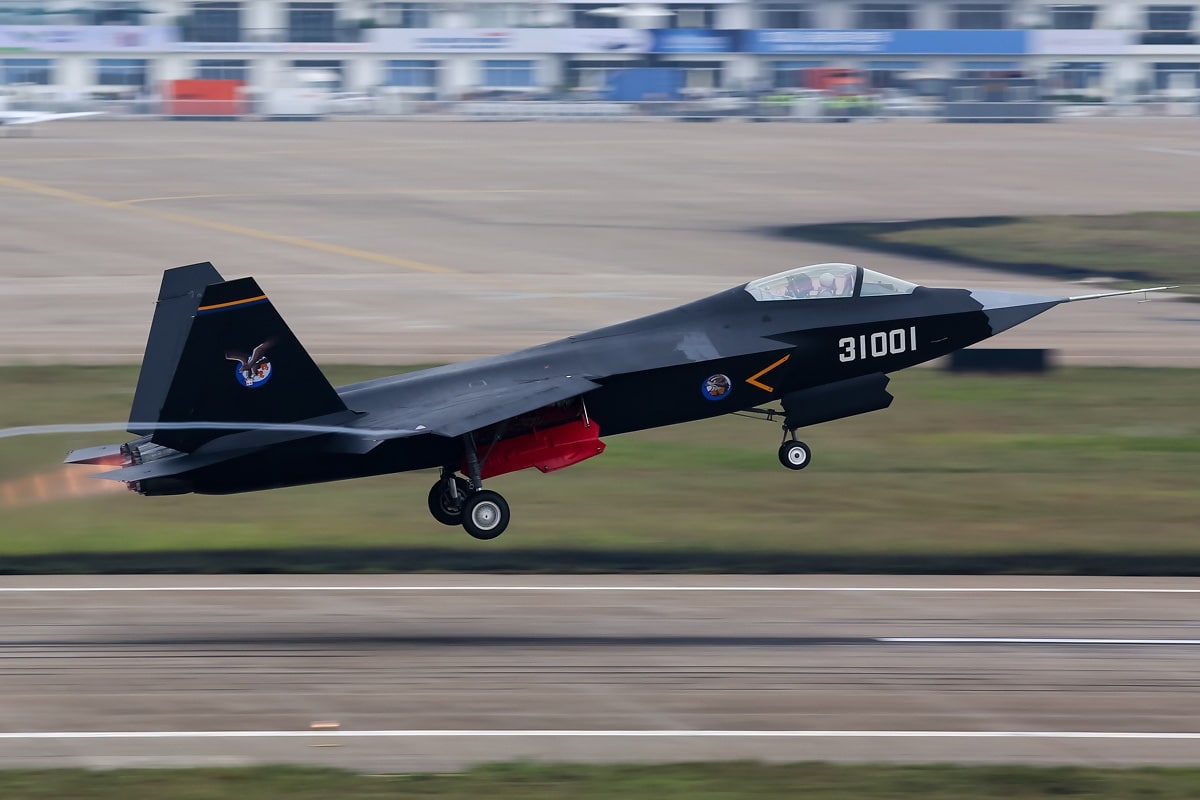
Image: Creative Commons.
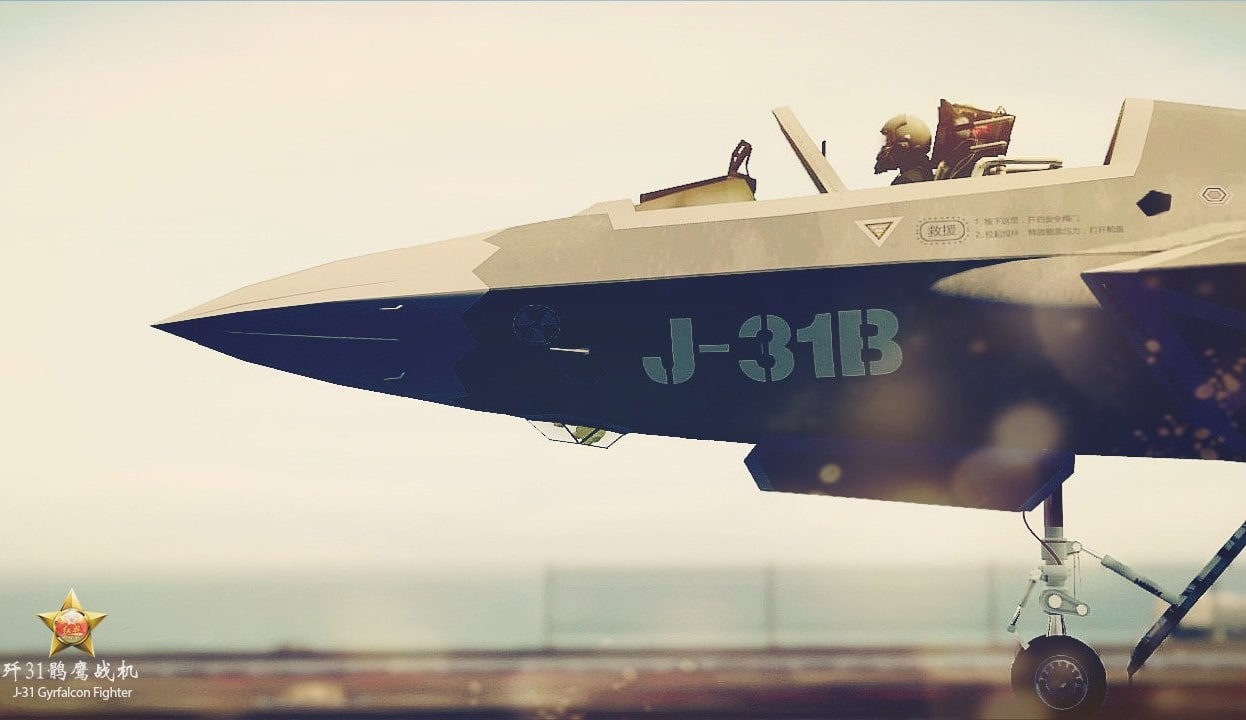
China J-31 Fighter. Image: Chinese Internet.
The aircraft carries two Chinese-made WS-13E engines, each of which can reportedly produce approximately 25,000 lbs of thrust. Thetop speed of the aircraft is reported to be around Mach 1.8 (1,400 miles per hour).
Colin Koh, of the S. Rajaratnam School of International Studies, in Singapore, said, “Because of the black box typically surrounding PLA miltech developments, we won’t be too certain of the J-35’s performance,”
The Shengdu J-35 is the 8th most expensive plane to build, with an estimated cost of around $70 million. Once the aircraft becomes operational, it is believed that it will outclass the US 4th generation fighters, for example, the F-15 Eagle, F-16 Fighting Falcon, and F/A-18E/F Super Hornet.
However, ultimately the true of the aircraft’s capabilities rest on the training and skill of its combat pilots, and the radar and other sensors.
A great video to check out is from “Airpower” by Alex Hollings who did a breakdown of the J-35.
Key Differences Between the Aircraft
The J-35A is generally considered faster and potentially more agile due to its twin-engine, sleeker design. The F-35 boasts more mature sensor fusion, advanced electronics (EW), and, critically, thousands of hours of operational experience, whereas the J-35A is still maturing.
Stealth profiles favor the F-35. The J-35A is designed with a very low-observable airframe, but its slightly less aggressive angular edges may result in a slightly higher radar signature than the F-35, though they are in the same general class.
While both are multirole, the J-35A is designed to serve as a “point guard” or “quarterback” for the larger J-20 in air-to-air combat, while the F-35 often prioritizes deep-strike missions.
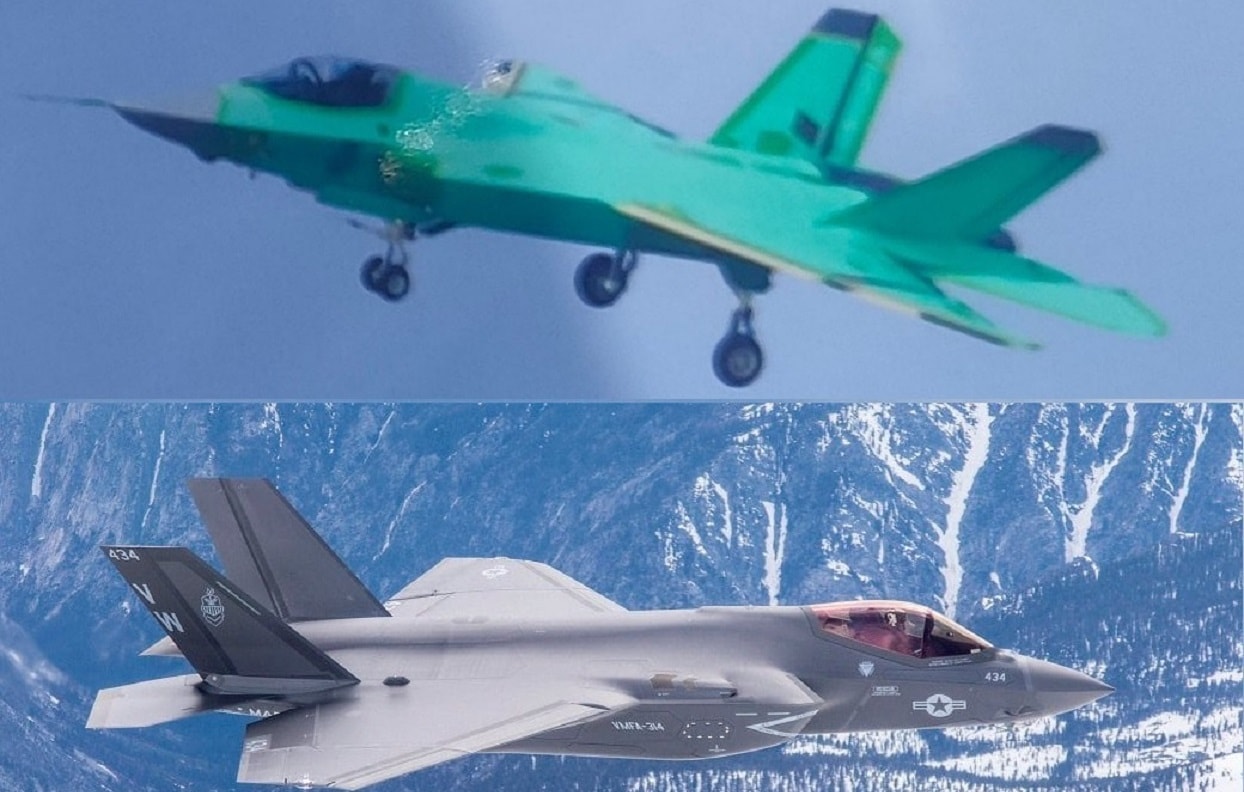
J-35 vs. F-35 Comparison. Image by Twitter User RupprechtDeino.
The J-35A’s shorter range of 750 miles is on par with the American fighters, but the US has nearly 600 air-refueling tankers. The Chinese, however, don’t have as much currently.
China currently has about 24 old, obsolete H6 tankers and a trio of the Ukrainian IL-78 tankers. They’re still developing their YY-20 tankers, which coincidentally are strinkingly similar to the US KC-135 tanker
The speed and weapons capability are about the same. However, the avionics on the F-35 are far superior. The F-35 carries the AN/APG-81, the most technologically advanced and powerful radar array ever; in even better news, that system is due for replacement in the forthcoming Block IV upgrade to the AN/APG-85.
When China’s J-35 becomes operational, it will be using an avionics package about two generations behind the American one in the F-35.
While the J-35 is expected to be another worthy adversary for American airpower, the US F-35 remains ahead of it.
Which is possibly why Beijing is having difficulties finding an export market for the J-35A. The aircraft is considered “unproven” and a potentially “unfinished” product, without the combat success of the F-35, thereby hindering export success, despite China’s strong marketing push.
About the Author: Steve Balestrieri
Steve Balestrieri is a National Security Columnist. He served as a US Army Special Forces NCO and Warrant Officer. In addition to writing on defense, he covers the NFL for PatsFans.com and is a member of the Pro Football Writers of America (PFWA). His work was regularly featured in many military publications.