
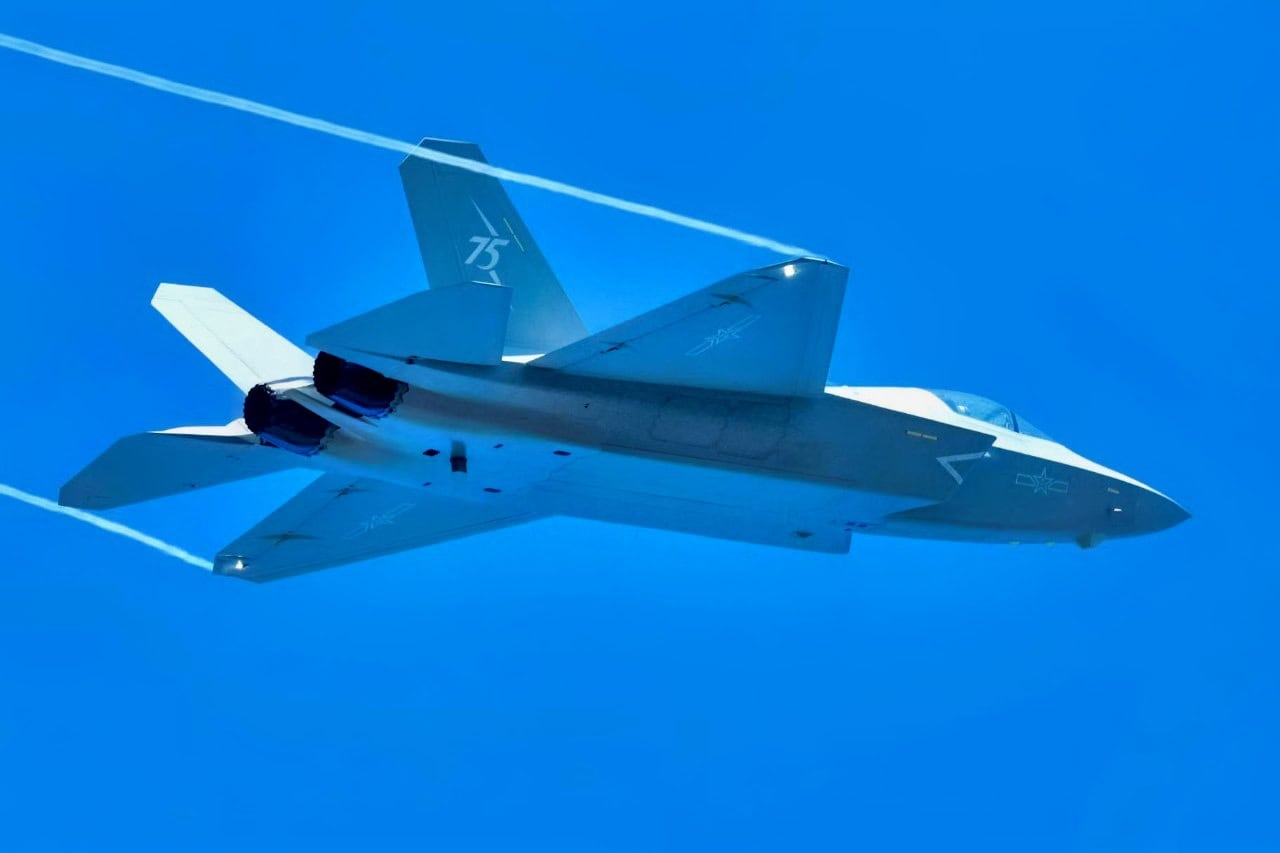
Summary and Key Points: China is ramping up stealth aviation, fielding hundreds of J-20s and moving the newer, twin-engine J-35A toward production.
-That sets up a looming matchup with America’s F-22 Raptor: stealth against stealth, with beyond-visual-range missiles and long-range sensors likely deciding the first shots.
-The J-35A is framed as having “first-detect, first-strike” advantages, modern cockpit computing, and improved range and payload.
-The F-22 counters with extreme low observability, Mach 2.25 supercruise, thrust-vector agility, and a U.S. pilot corps shaped by rigorous training and combat experience.
-AMRAAMs versus China’s PL-15 becomes the decisive calculus, with Taiwan’s F-16Vs a likely early test case.
Mach 2.25 vs. Mach 2: F-22 Raptor and J-35A Showdown
You have to hand it to China for developing stealth flight. The Chinese may have stolen the technology with nefarious deeds, but they use the “by any means necessary” mantra that allows Xi Jinping’s military to keep up with the Americans.
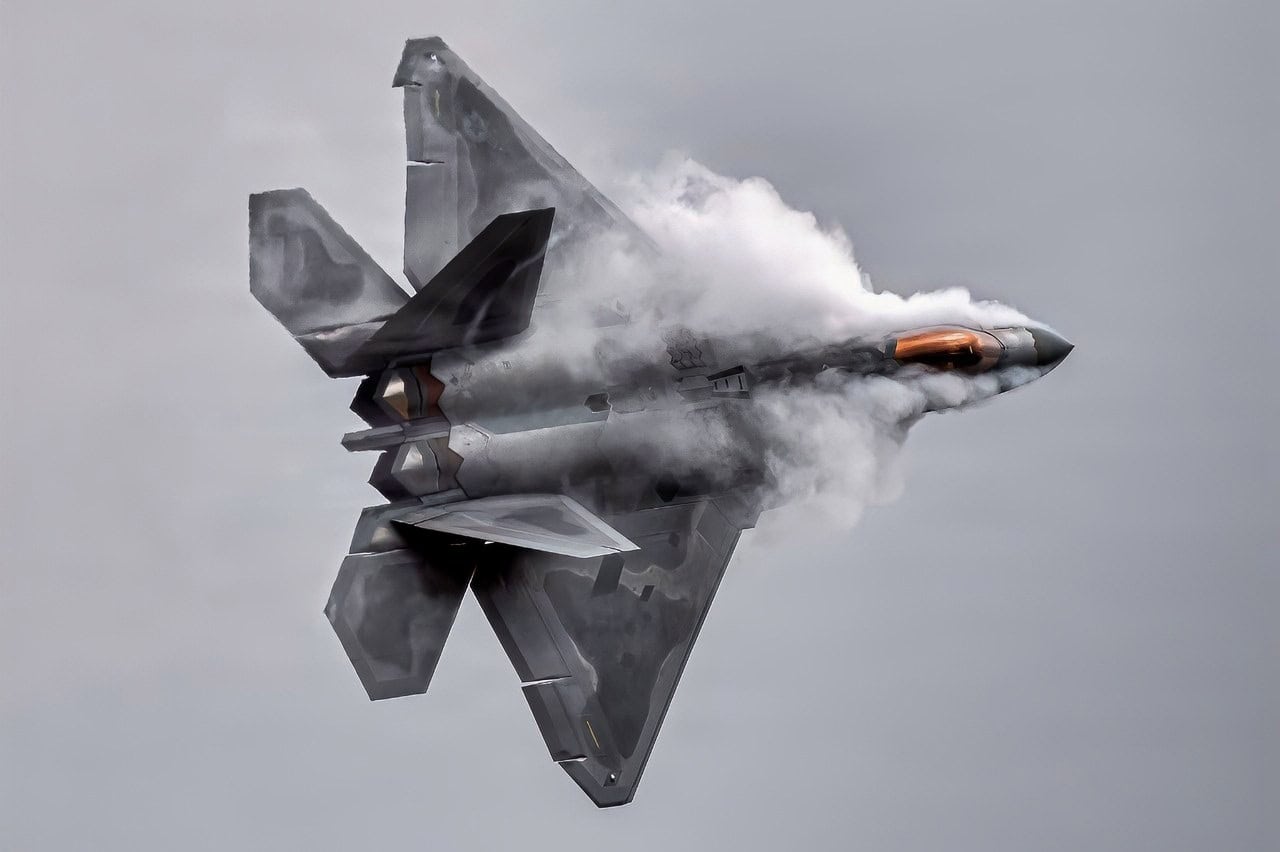
U.S. Air Force Capt. Samuel “RaZZ” Larson, F-22 Raptor Aerial Demonstration Team pilot and commander, performs at the United States Air Force Academy, Colorado Springs, CO, April 14th, 2023. The F-22 Raptor Aerial Demonstration showcases the unmatched maneuverability of the airframe by executing a series of combat maneuvers to inspire Americans and their allies, and deter foreign adversaries. (U.S. Air Force video by Staff Sgt. Michael Bowman)
China produces the J-20 Mighty Dragon at a high rate. There could be anywhere from 250 to 500 fifth-generation fighters.
The production line is ramping up, and many more are on the way.
The new J-35A is a marvel, too, and this shows that China’s aerospace industrial base is as healthy as ever.
Unlike Russia, Beijing’s defense industry is not suffering under sanctions or a lack of resources. The priorities in defense run the gamut, including not only new airplanes but also additional ships and submarines, as well as ballistic missiles, both conventional and nuclear.
Which Air Force Has the Ultimate Stealth Fighter?
Which country has the advantage in stealth flight – China or the United States? To answer this question, let’s analyze a head-to-head match-up between the F-22 and the J-35A. Maybe the Chinese could own the future. They have already criticized Boeing’s F-47 NGAD as being “outdated” before it even flies.
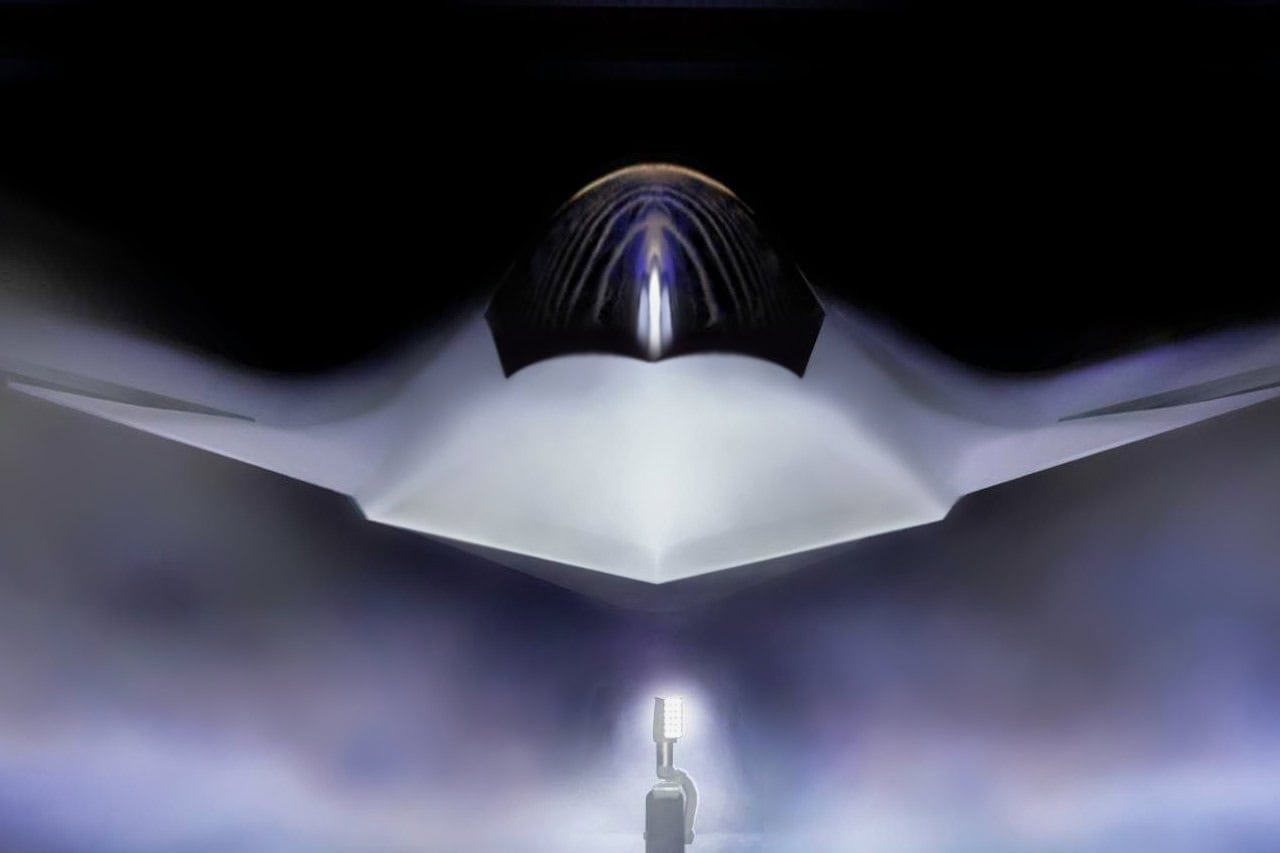
Shown is a graphical artist rendering of the Next Generation Air Dominance (NGAD) Platform. The rendering highlights the Air Force’s sixth generation fighter, the F-47. The NGAD Platform will bring lethal, next-generation technologies to ensure air superiority for the Joint Force in any conflict. (U.S. Air Force graphic)
That’s par for the course for Chinese propaganda organs.
State-run media is never afraid to brag, and the general public loves news about prestige aerospace programs like the J-35A.
Improvements Over the J-20
The Shenyang J-35A could enter low-rate production, and the jets might soon be built at scale.
The J-35A also has improved range and payload over the F-22. However, pilots make a difference.
The Americans have combat experience, especially with close air support.
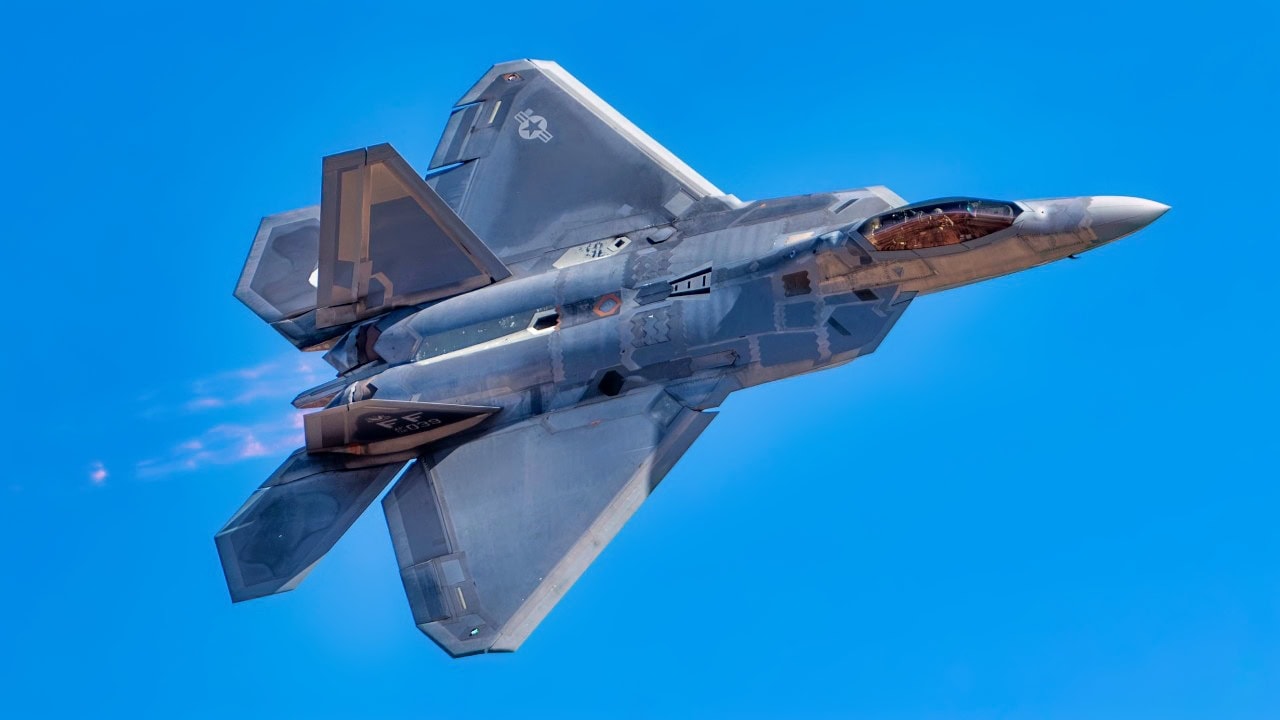
A U.S. Air Force F-22 Raptor performs an aerial demonstration at Davis-Mothan Air Force Base, Ariz. for the 2025 Heritage Flight Training and Certification Course, March 1, 2025. The Heritage Flight Training and Certification Course is an annual event where military and civilian pilots train together to fly in formations to showcase both modern and vintage military aircraft. These flights are often performed at airshows across the country to honor U.S. military aviation history and service members. (U.S. Air Force photo by Staff Sgt. Lauren Cobin).
They are better at finding targets, aerial refueling, and air policing. Chinese pilots lack this background. The training of a Chinese aviator is long and arduous, but Americans also rigorously train individuals in the finer aspects of flight.
The J-35As Are Flying High
China has already test-flown two J-35A fighters on one mission. They will soon be taking on operations with the J-20, which gives an effective stealth one-two punch that could be decisive in a war against Taiwan.
The J-35A will soon be active in “grey zone” operations against Taiwan, in which they encroach on the island’s airspace and rehearse a shooting war.
The J-35A is the land version of the aircraft, while the People’s Liberation Army Navy flies the J-35. The J-35A is lighter, without the heavy landing gear the carrier-borne fighter needs, so it may be faster and more maneuverable.
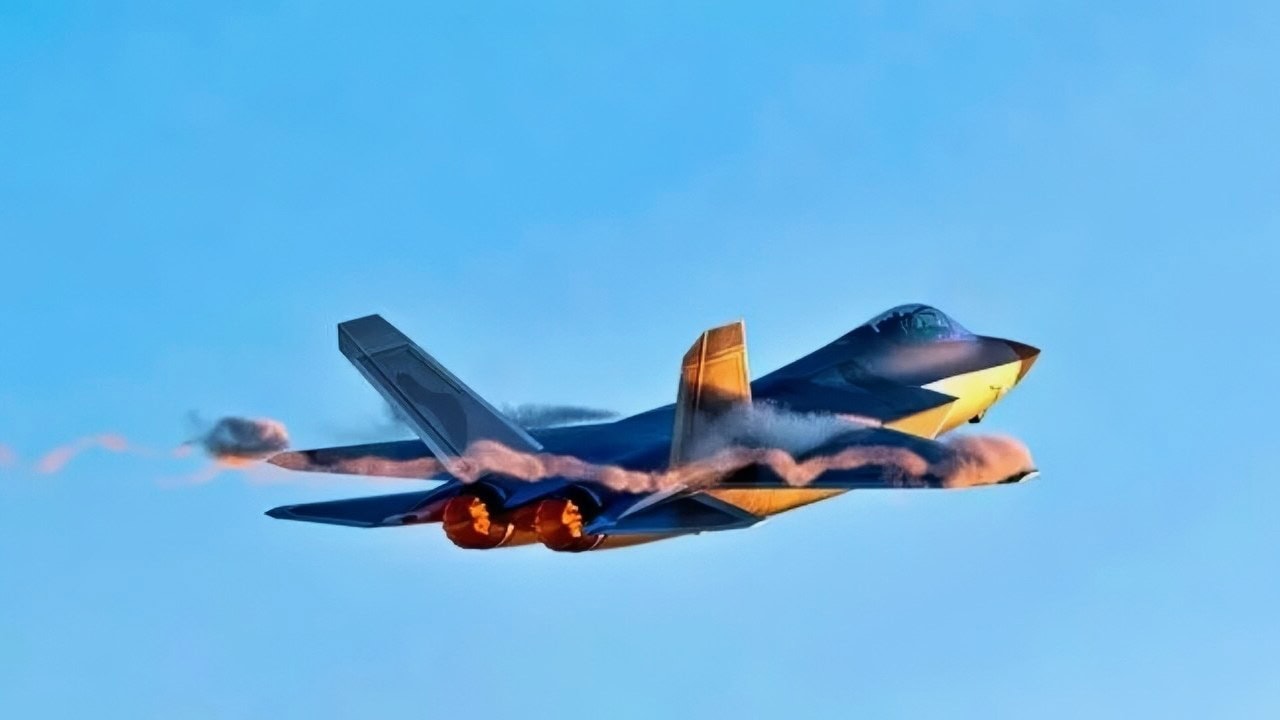
J-35A Fighter from China PLAAF. Image Credit: Creative Commons.
More Details on the J-35A
“The J-35A is a twin-engine, fifth-generation multirole stealth fighter designed for air superiority, precision strike, and battlefield interdiction missions in high-threat environments. It incorporates internal weapons bays, radar-absorbent materials, diverter-less supersonic inlets, and advanced shaping techniques to reduce radar cross-section,” according to ArmyRecognition.com.The J-35A will be even more improved in future years.
It will likely be nuclear-capable and able to control a Loyal Wingman drone for better intelligence, surveillance, and reconnaissance collection, plus these unmanned “buddies” could launch hypersonic missiles.
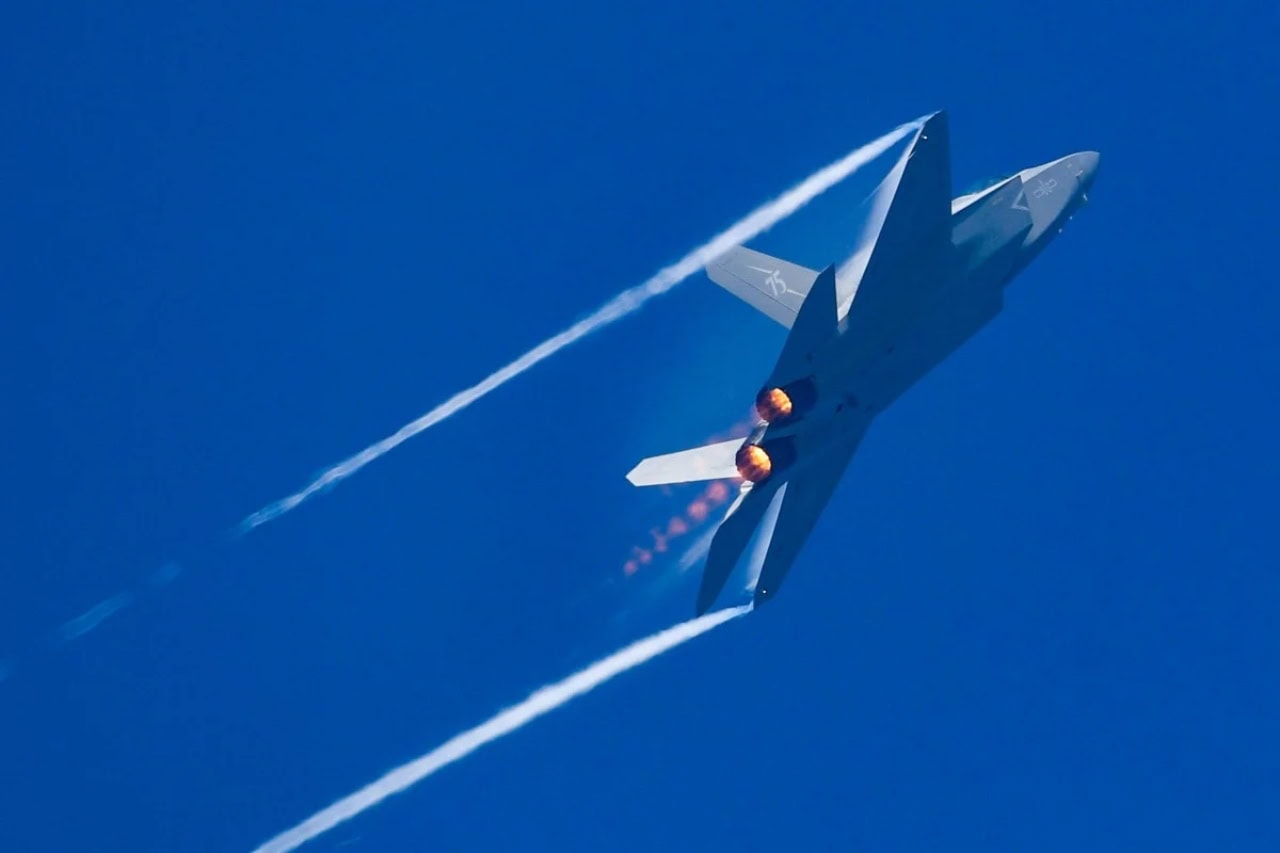
J-35. Image Credit: Chinese State Media.
The new Chinese fifth-generation fighter is supposed to be stealthy, with a low radar cross-section, making it as radar-evasive as a sparrow.
The J-35A is an air superiority warbird like the F-22, but it may not be as stealthy as the Raptor, which is usually considered the world’s most radar-evasive fighter jet.
Beyond-Visual-Missiles Are Critical
Both airplanes can carry beyond-visual-range (BVR) missiles, and the Americans love their AMRAAMs. At the same time, the Chinese are excited about the PL-15 that was so successful when fielded by the Pakistanis in a large dogfight against India last year. J-35As and F-22s both have excellent long-range radar.
As Kris Osborn wrote in Warrior Maven, “the F-22 also has the most advanced thrust to weight ratio in the world, and is therefore able to maneuver, vector, and out-run enemy air-to-air and air-to-ground missiles in ways that are likely to be unrivaled.”
The J-35A may have better targeting and long-range sensing than the F-22. This would give it an advantage in aerial combat. But could a Chinese pilot react quickly enough to fire missiles against an F-22 aviator?
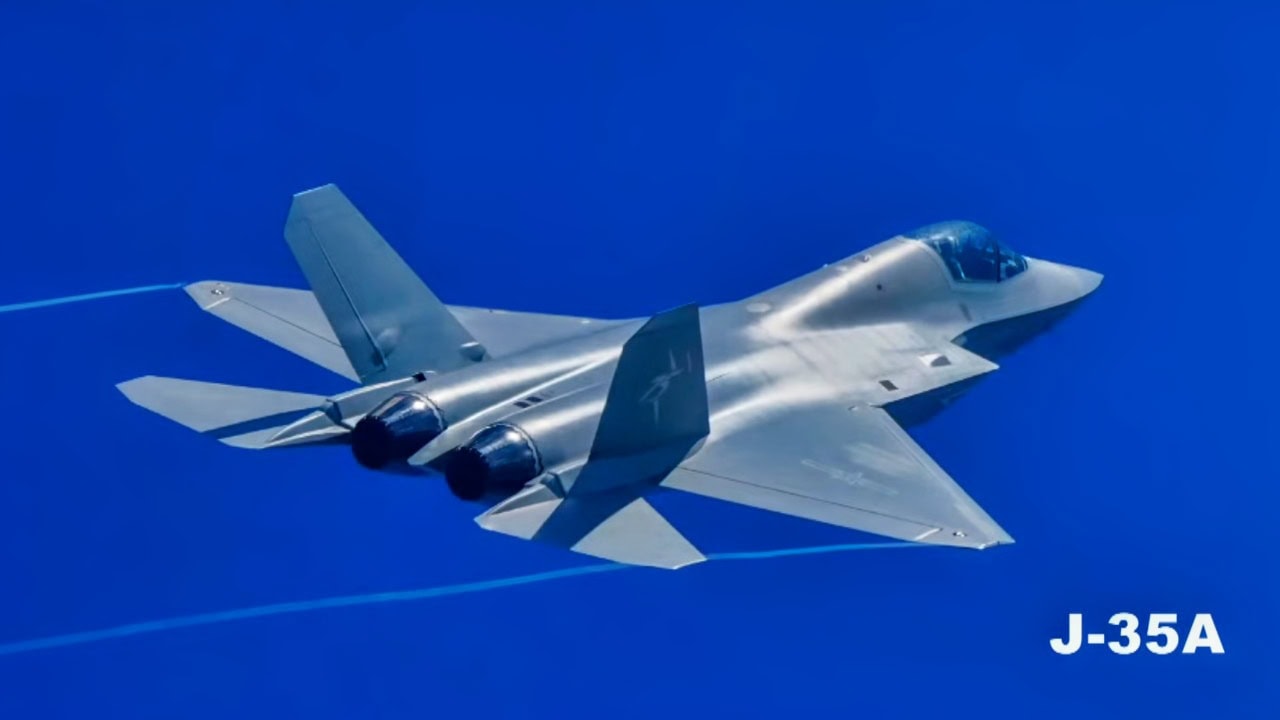
J-35 flying at Zhuhai Airshow 2024.
My money is on the Americans, of course, and I admit to being biased because of the US Air Force’s edge in prior combat experience.
Speed and Engine Comparison
The Raptor can reach MACH 2.25 with Super Cruise. There are “two Pratt & Whitney F119-PW-100 turbofan engines with afterburners and two-dimensional thrust vectoring nozzles,” the Air Force explained in a profile.
The J-35A is slower at MACH 1.8-2 with twin WS-19 turbofan engines. These are quality powerplants and the Chinese have spent much time and effort perfecting them.
The Chinese may have improved the avionics and computing power in the J-35A cockpit, giving pilots an advantage in combat.
The Raptor Is Becoming ‘Super’
My money, though, is on the greater stealthiness of the F-22. The Americans keep updating it, and there is even a “Super” Raptor in mind. The J-35A is a quality airplane too, and the Chinese should be given credit for developing two stealth fighters to keep up with the F-35 and F-22.
The J-35A Could Also Go Head-to-Head Against Taiwan’s F-16Vs
The first combat test with the J-35A will probably come from the non-stealth Taiwanese F-16V Viper. That will be an important match-up, too, if Xi Jinping orders a blockade or an all-out attack against the island.
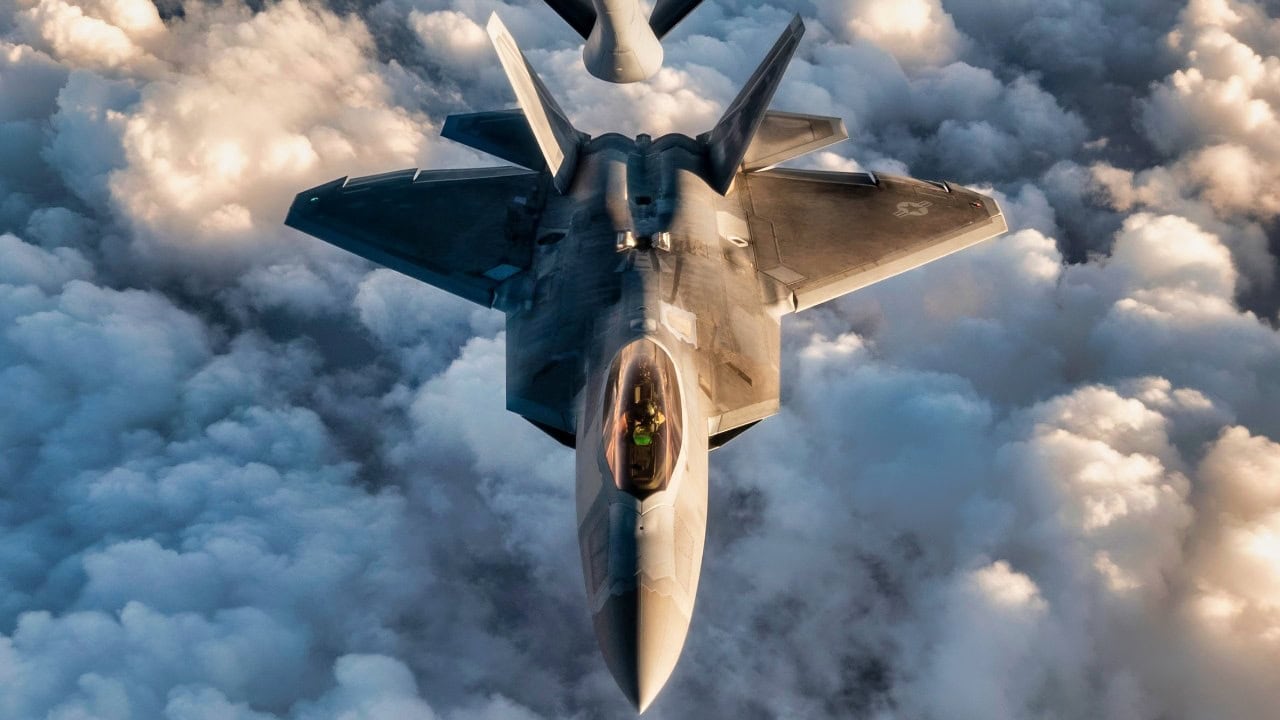
A U.S. Air Force F-22 Raptor departs after being refueled by a KC-135 Stratotanker over the U.S. Central Command area of responsibility November 5, 2024. Raptors provide air dominance and conduct missions delivering airpower within the region. (U.S. Air Force photo)
The Chinese would have to enforce a no-fly zone over Taiwan, and it is not clear how the Americans or the Taiwanese would respond to that eventuality.
The F-22 is still the stealthiest fighter jet on planet Earth, despite what the Chinese say. It is faster and more maneuverable, thanks to better engines. The J-35A is newer, though, with better computing power and other cockpit technologies.
Let’s just hope that the United States can continue to deter the Chinese from attacking Taiwan and that the F-22 will never have to fight a real battle against the J-35A. These two stealth warbirds could tear each other apart in a head-to-head match-up.
About the Author: Brent M. Eastwood
Author of now over 3,000 articles on defense issues, Brent M. Eastwood, PhD is the author of Don’t Turn Your Back On the World: a Conservative Foreign Policy and Humans, Machines, and Data: Future Trends in Warfare plus two other books. Brent was the founder and CEO of a tech firm that predicted world events using artificial intelligence. He served as a legislative fellow for US Senator Tim Scott and advised the senator on defense and foreign policy issues. He has taught at American University, George Washington University, and George Mason University. Brent is a former US Army Infantry officer. He can be followed on X @BMEastwood.