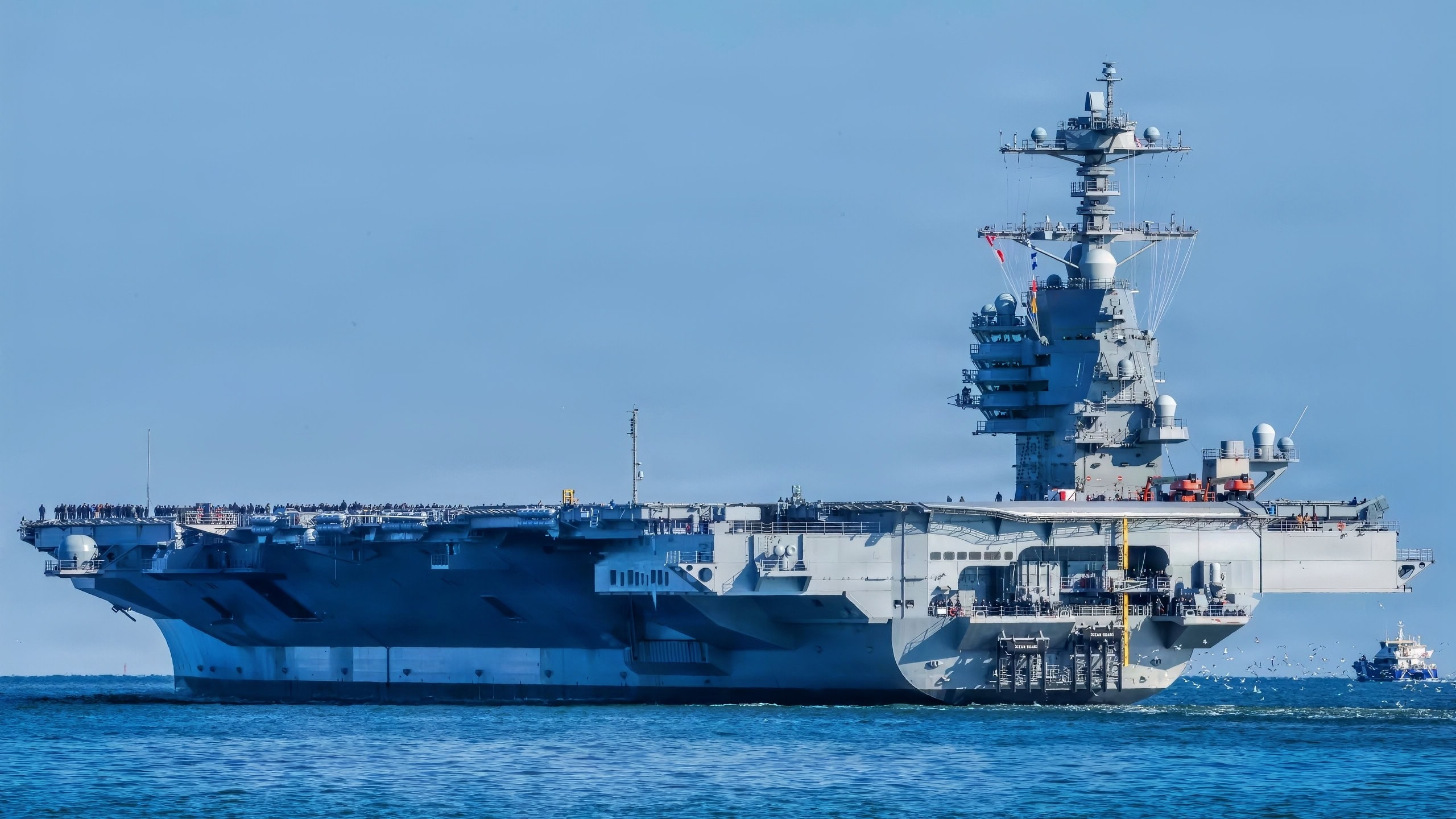
The Ford-Class Debate, Explained: Cost overruns, schedule delays, and technology development problems were widely associated with the U.S. Navy’s pioneering USS Gerald R. Ford for many years. Yet the first-of-its-kind next-generation powerhouse carrier is now projecting U.S. power, security, and safety on a regular basis worldwide.
One could call the USS Ford an emblem of U.S. leadership and deterrence posture, a reality obscured over the years by criticisms during the carrier’s development.
The USS Gerald R. Ford now steams across the ocean with a new generation of maritime warfare technologies, including electromagnetic catapults, advanced weapons elevators, and unprecedented levels of computer automation.
Its larger deck space enables a 33 percent increase in sortie rate possibilities, and its two nuclear reactors generate 78 megawatts of power each.
Years of Drama with the Ford-Class Supercarrier
Few are likely to forget the Congressional concern, budget deliberations, Government Accountability Office (GAO) Reports, and reverberating criticisms about the troubled maturation of its advanced technologies, including its elevators, electromagnetic catapults, and even its toilets.
There is, however, a lesser-known reality about the USS Ford’s history that, upon reflection, accounts for much of the ship’s current success.
More than 10 years ago, during the height of criticism and skepticism about the USS Ford, the U.S. Navy did what it could to defend its ambitious effort to pioneer a collection of unprecedented technologies at once.
Part of the cost overruns, developers explained as far back as 2013, were due to billions in non-recurring research and development costs necessary to support a “first-in-class” new kind of carrier.
Much of the dollars expended in the development of the USS Ford were, by design, expected to help propel an entire new class of Ford carriers.
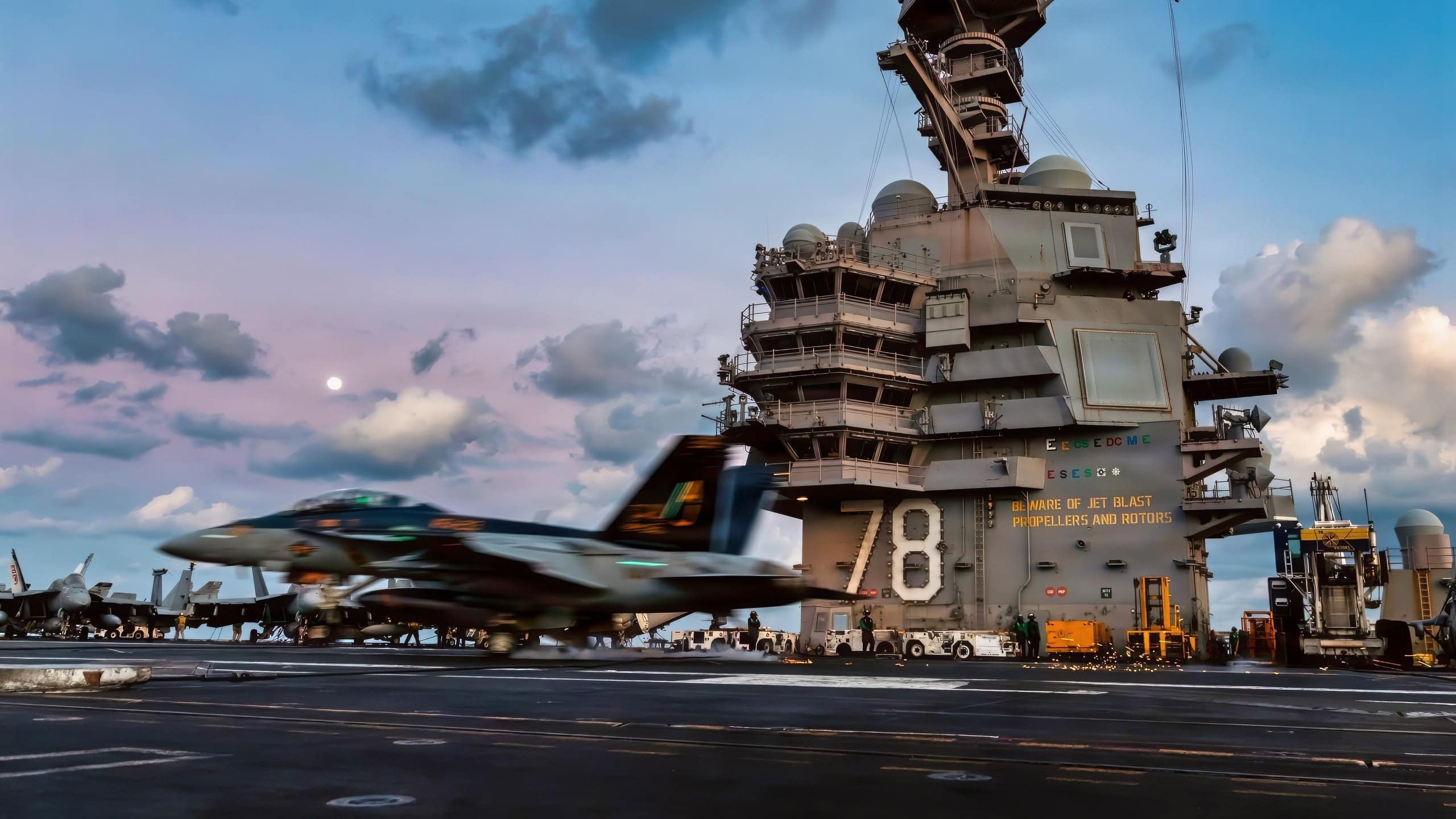
An F/A-18F Super Hornet aircraft, attached to Strike Fighter Squadron 213, lands on the flight deck of the world’s largest aircraft carrier, USS Gerald R. Ford (CVN 78), while operating in the Eastern Mediterranean Sea in support of Operation Epic Fury, March 2, 2026. (U.S. Navy photo)
The concept is that, once developed, integrated, and operational, a new class of technologies would more seamlessly support a growing fleet of Ford-class carriers.
There was also a lesser-recognized long-term cost-control goal associated with the USS Ford’s development: the use of new computer automation technologies throughout the ship for electronics, maintenance, measurements, and operations enables the Ford-class carriers to perform their missions with 900 fewer sailors on board successfully.
This saves as much as $4 billion per ship throughout its entire lifespan, something largely overlooked 10 to 12 years ago, when the USS Ford development was under heavy scrutiny.
Ford-Class Was Worth It
In retrospect, it seems one might be inclined to consider that the massive growing pains associated with the USS Ford were “worth it.”
Of course, nobody would hope for cost overruns and delays, and certainly some of them could likely have been avoided.
Still, the end result is now greatly benefiting the U.S. Navy, the entire Ford-class fleet, U.S. allies, and the entire United States.
The technological struggles were significant as well, as the now-famous Electromagnetic Launch System (EMALS) struggled to become a first-of-its-kind smoother, steadier carrier-deck electromagnetic takeoff capability that caused much less wear and tear on jet airframes than a traditional steam catapult.
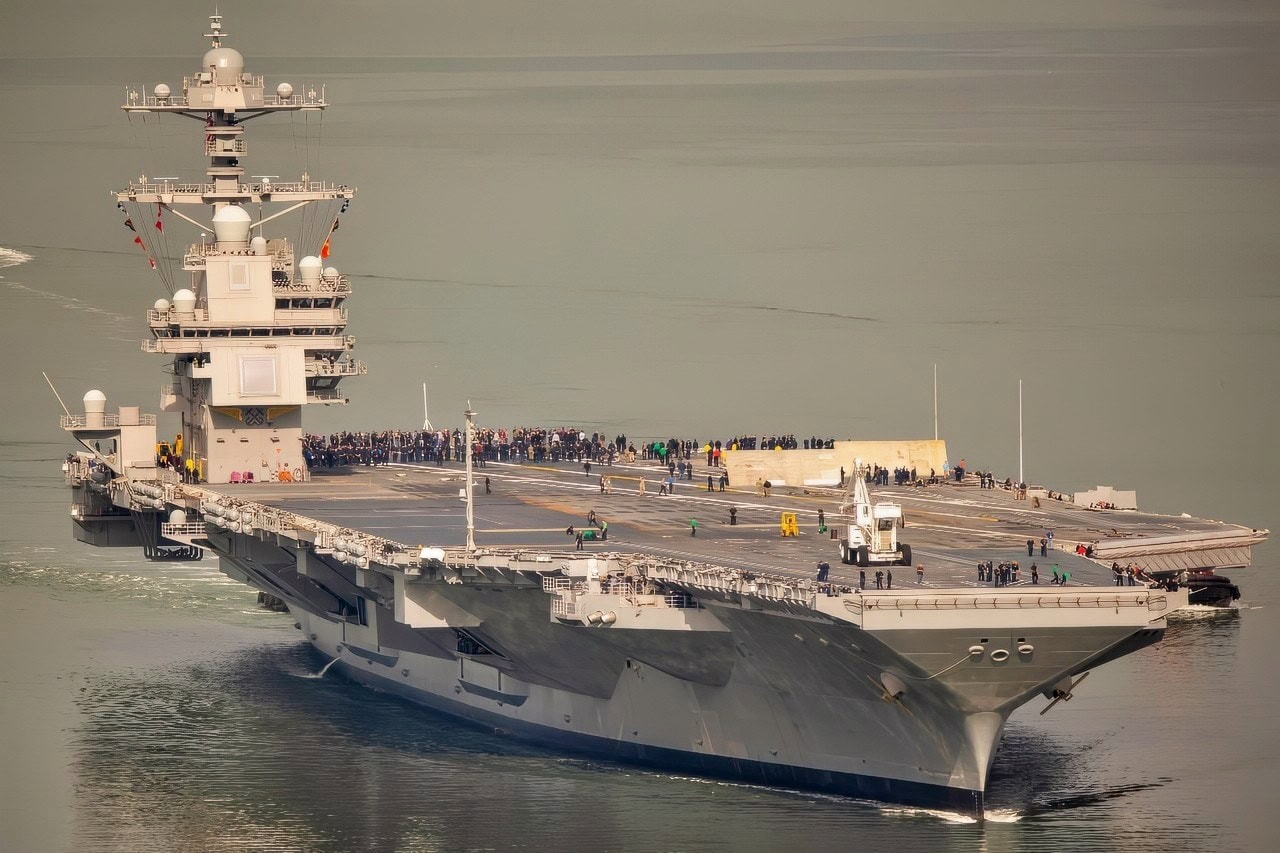
NEWPORT NEWS, Va. (Oct. 25, 2019) USS Gerald R. Ford (CVN 78) gets underway for the first time since beginning its post-shakedown availability July 2018. Ford is currently conducting sea trials, a comprehensive test of the ship’s systems and technologies. (U.S. Navy photo by Mass Communication Specialist 3rd Class Connor Loessin)
The electric weapons elevators also encountered developmental glitches during their development, yet their successful operation enables much faster and more efficient rearm and refuel carrier operations. This increases sortie rate, lethality, and a commensurate ability to project power as needed.
The USS Ford is now finishing up a historic deployment that took it from the coast of Venezuela to the Persian Gulf to support the Iran war.
While the carrier experienced some maintenance and plumbing challenges, including a fire on board, the ship ultimately performed extremely well in support of several combat operations.
Historic Deployment
Before its most recent deployment, the USS Ford steamed into the Mediterranean at various points during the Israeli-Hamas conflict to, among other things, leverage deterrence to ensure the conflict did not expand throughout the Middle East and the world. Ford’s higher sortie rate and ability to deploy as many as 90 combat aircraft support the projection of massive 5th-generation air power, something likely considered critical in the event of a conflict with China in the Pacific.
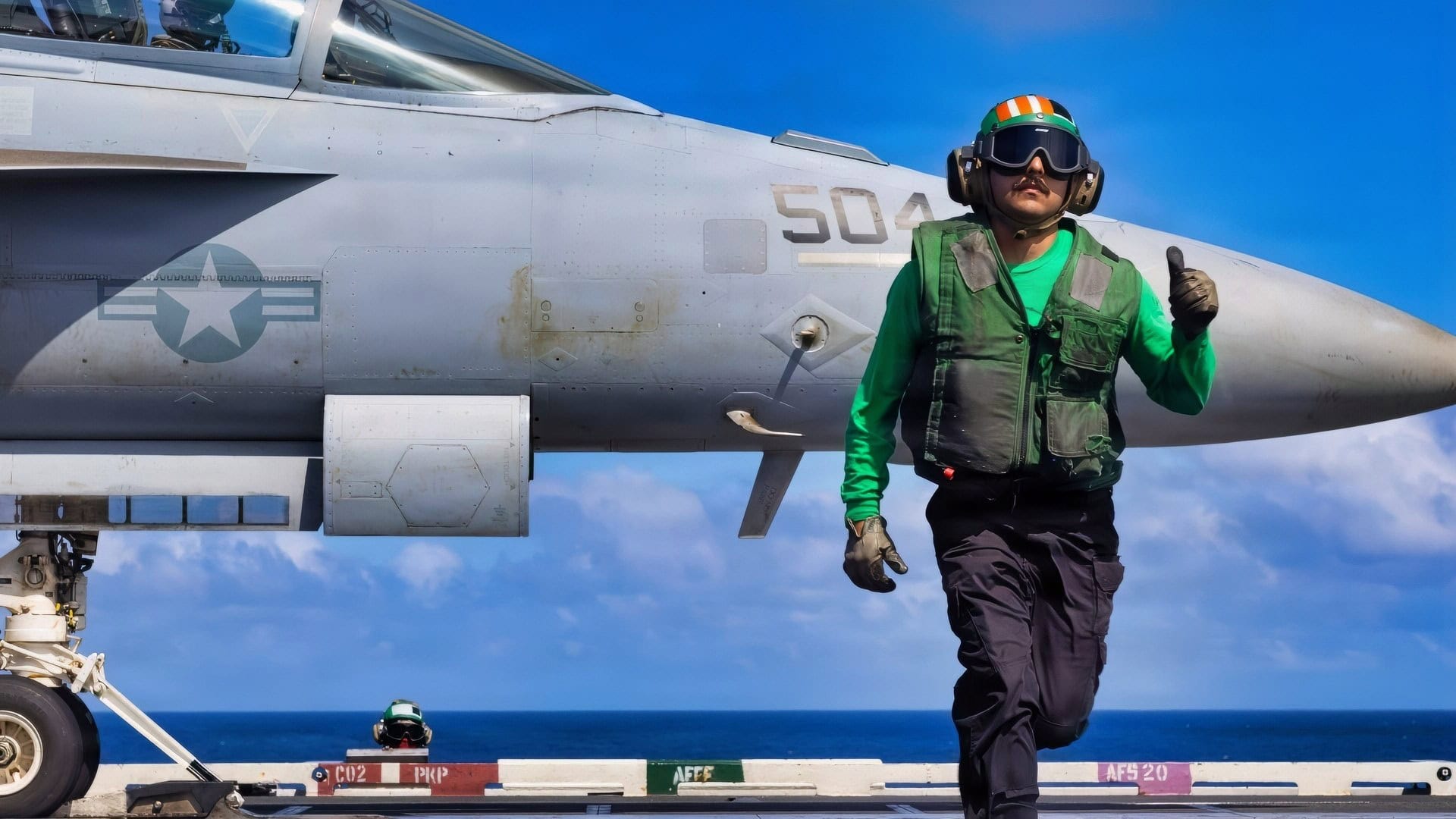
A U.S. Sailor signals the launch of an E/A-18G Growler aircraft, attached to Electronic Attack Squadron 142, from the flight deck of the world’s largest aircraft carrier, Ford-class aircraft carrier USS Gerald R. Ford (CVN 78), while underway in the Caribbean Sea, Jan. 31, 2026. U.S. military forces are deployed to the Caribbean in support of the U.S. Southern Command mission, Department of War-directed operations, and the president’s priorities to disrupt illicit drug trafficking and protect the homeland. (U.S. Navy photo)
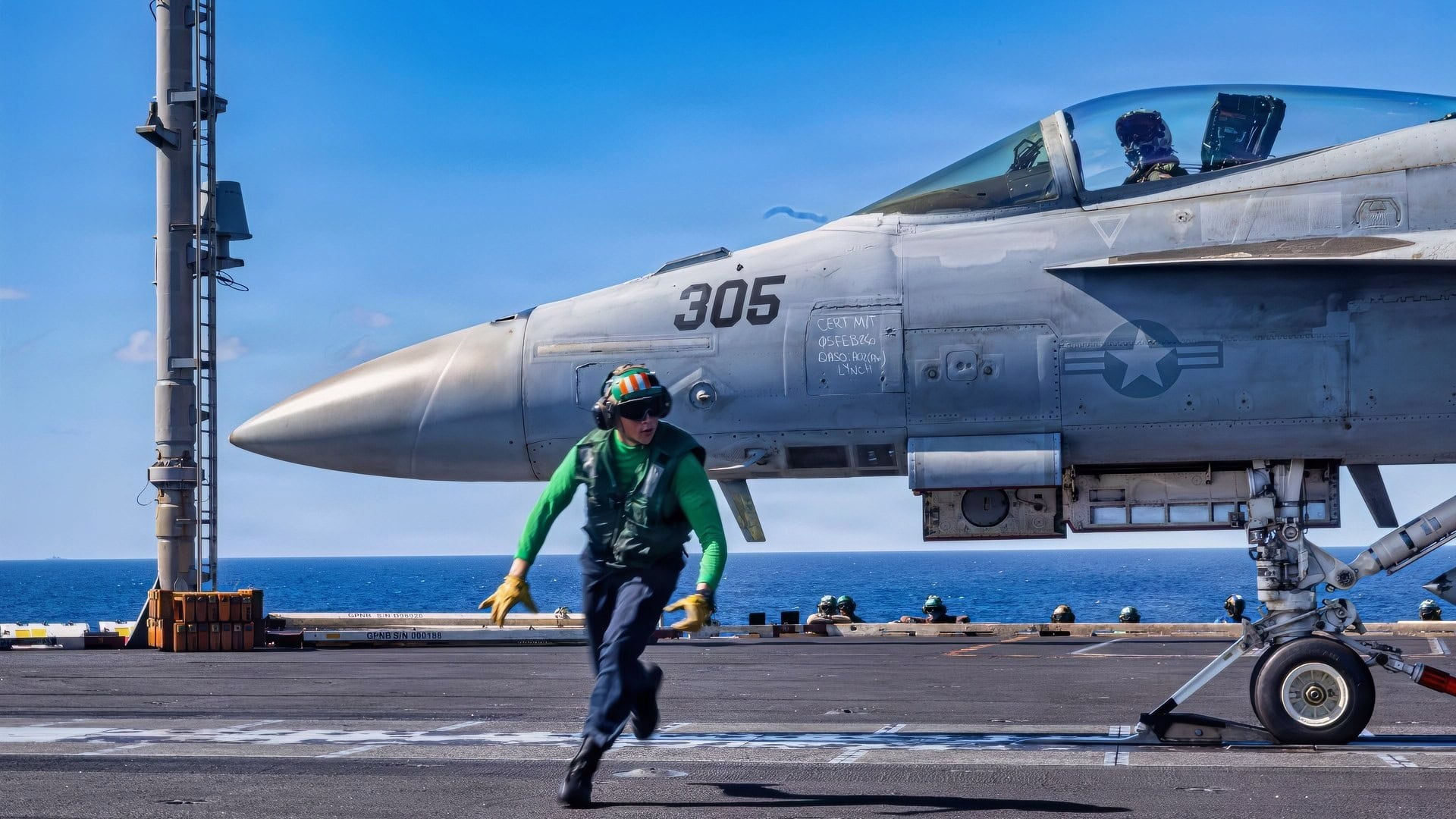
A U.S. Sailor moves behind a flight deck foul line before the launch an F/A-18E Super Hornet aircraft, attached Strike Fighter Squadron 31, from the flight deck of the world’s largest aircraft carrier, Ford-class aircraft carrier USS Gerald R. Ford (CVN 78), while underway in the Caribbean Sea, Feb. 5, 2026. U.S. military forces are deployed to the Caribbean in support of the U.S. Southern Command mission, Department of War-directed operations, and the president’s priorities to disrupt illicit drug trafficking and protect the homeland. (U.S. Navy photo)
An ability to mass, scale, and sustain a large-scale air attack from the ocean would likely prove critical in any war in the Pacific.
In fact, the U.S. Navy has conducted dual-carrier training and integration exercises to flex its ability to launch and sustain a massive, large-scale air attack campaign from the ocean in the Pacific.
About the Author: Kris Osborn
Kris Osborn is the Military Technology Editor of 19FortyFive. Osborn is also President of Warrior Maven – Center for Military Modernization. Osborn previously served at the Pentagon as a highly qualified expert in the Office of the Assistant Secretary of the Army—Acquisition, Logistics & Technology. Osborn has also worked as an anchor and on-air military specialist at national TV networks. He has appeared as a guest military expert on Fox News, MSNBC, The Military Channel, and The History Channel. He also has a Masters Degree in Comparative Literature from Columbia University.