
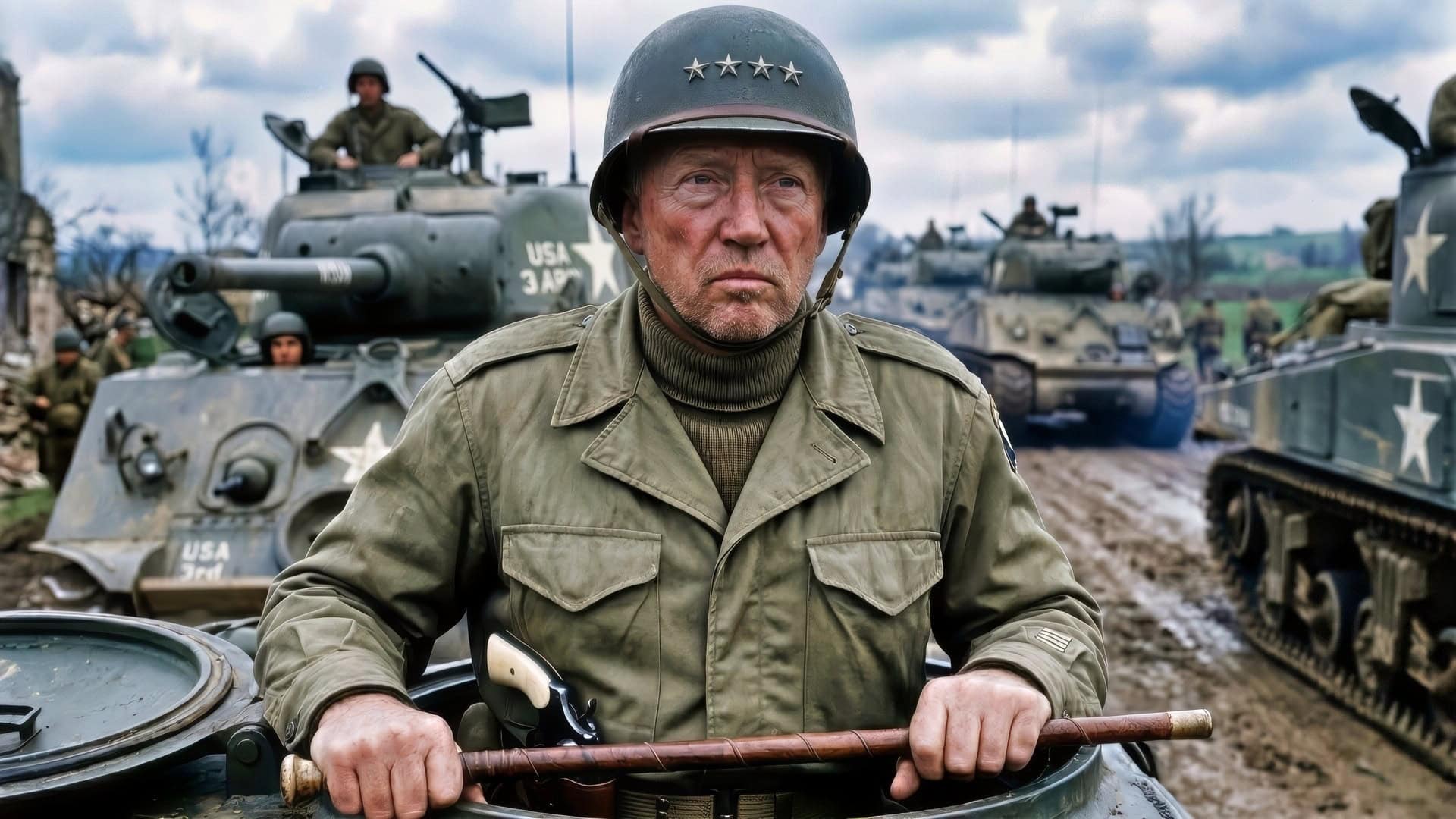
Few American generals remain as recognizable decades after their death as George S. Patton Jr.
He was feared by enemies and admired by many troops, but disliked by some peers and generally remembered as a hard-driving commander who believed momentum could win wars. He also became one of America’s most quoted military figures.
But as with any historical figure like Patton, it can sometimes be tough to prove that his most widely known quotes were actually made by him.
General George Patton Was A Quote Machine
Here is one such quote that is well known, but with origins that are difficult to prove:
“Better to fight for something than live for nothing.” – U.S. Army General George S. Patton
The quote is widely attributed to Patton across quotation websites and popular culture. Yet a clear primary source – such as a speech transcript or a wartime memo – is difficult to pin down.
That doesn’t mean Patton didn’t say it, but it’s important to note – and regardless, the sentiment behind the words closely matches the man whose name is attached to it.
Is the Quote Real?
The line appears repeatedly in modern quote collections and motivational lists, usually credited to Patton – but these sites provide no original wartime source document. That’s curious, because Patton left extensive records behind.
His speeches, letters, diaries, and memoir, “War as I Knew It,” have been extensively studied.
But whether the quote is real or not almost doesn’t matter.
The substance is consistent with Patton’s worldview.
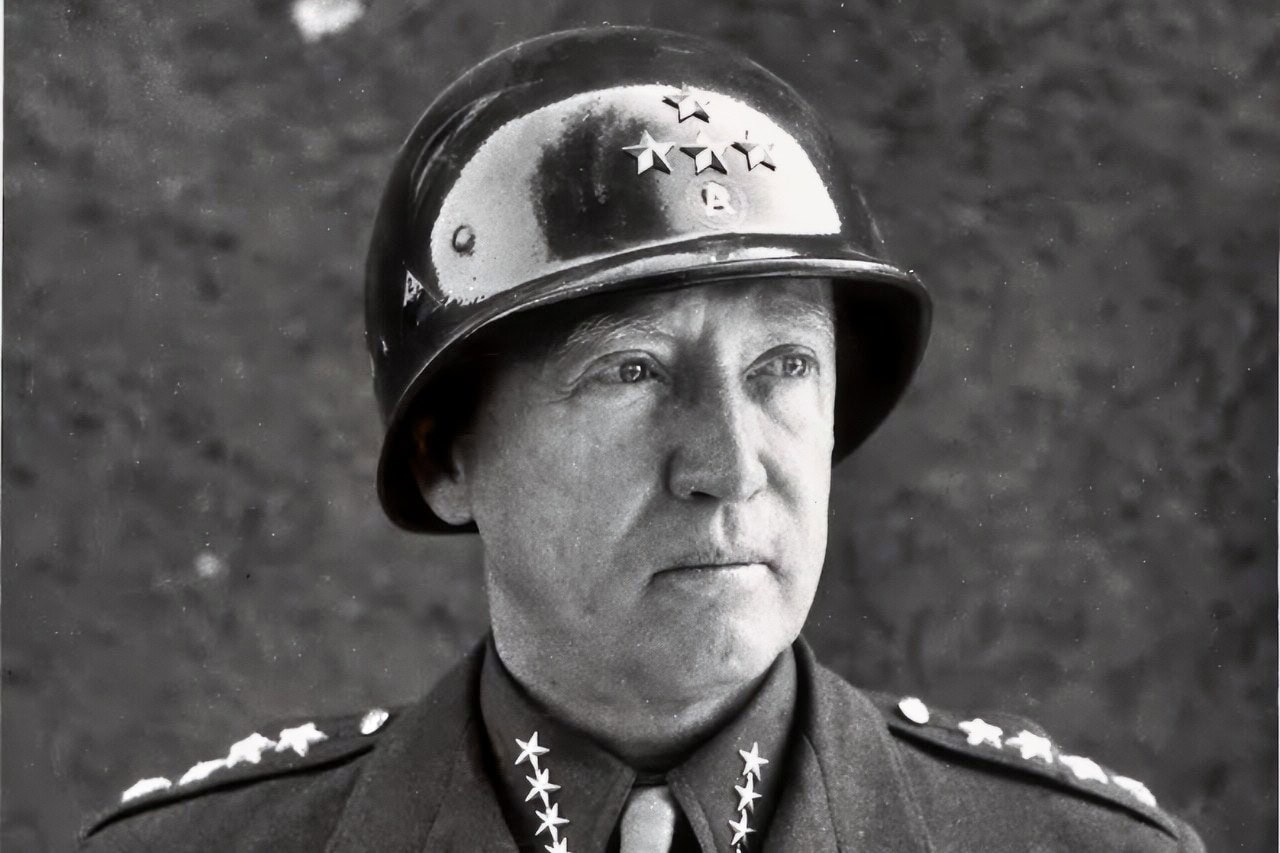
U.S. Army General George Patton
He believed that passivity invited defeat, that courage really mattered, and, indeed, that nations could only survive by defending their principles rather than drifting into decline. Patton’s public remarks often emphasized the duty of every American citizen and the idea that all should be willing to make sacrifices.
The meaning of the quote is simple: a life without conviction is hollow, while struggle in the defense of purpose gives life meaning.
Who Was George Patton?
Patton was born on November 11, 1885, in San Gabriel, California. He graduated from West Point and built his early reputation as a gifted horseman and athlete, competing in the 1912 Olympic pentathlon.
He later served in the U.S. Army’s early tank forces during World War I.
During the interwar years, Patton became a strong advocate for mechanized warfare. It was a time when many armies still thought in terms of horses and trenches, but Patton understood that engines and armor would dominate future battlefields and that the United States should adapt.
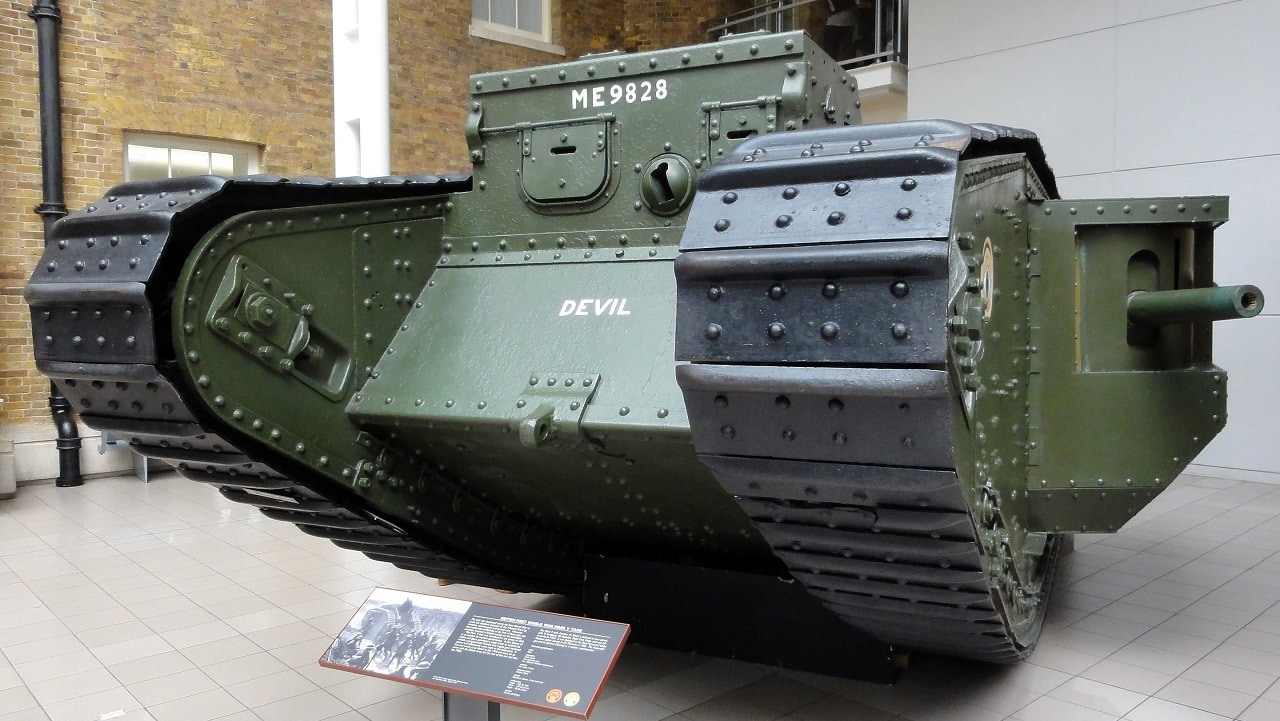
Mark V Tank on display on the ground floor of the Imperial War Museum. This tank was used in the First World War and could hold a crew of 8.
Patton was also theatrical. He loved ivory-handled pistols and polished helmets, and he believed that strict discipline created true warriors.
Troops nicknamed him “Old Blood and Guts” – sometimes admiringly, but sometimes sarcastically. Patton’s legacy is a combination of bravado and real skill.
He understood logistics and the nuances of operational tempo and was a master of keeping large formations moving faster than the enemy expected.
Patton’s World War II Record
Patton’s first major World War II command came in Operation Torch, the Allied landings in French North Africa in November 1942.
He led the Western Task Force that landed in Morocco, giving the United States valuable experience in large-scale amphibious warfare.
Next, he commanded the U.S. Seventh Army in Sicily in 1943. During this time, his forces captured Palermo and raced toward Messina – and it was this campaign that really showcased Patton’s aggression.
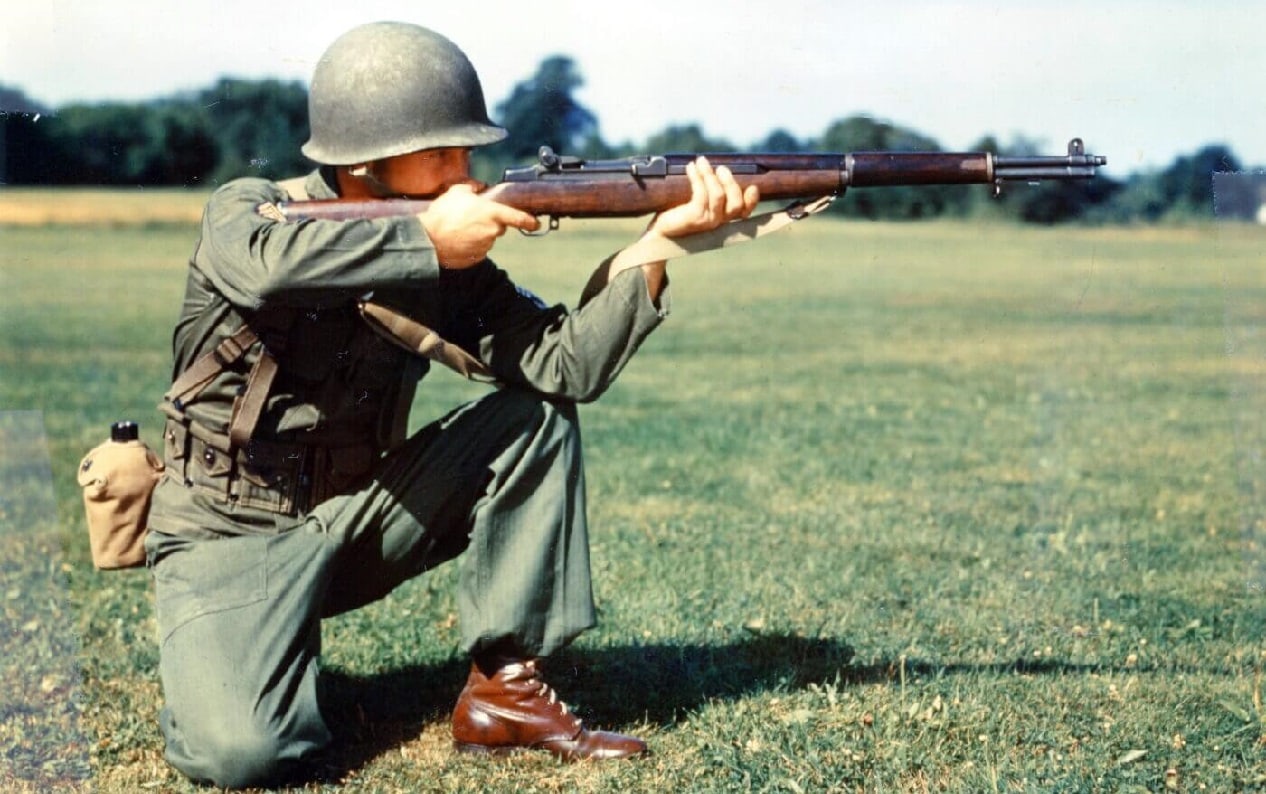
M1 Garand. Image Credit: Creative Commons.
It also produced one of the darkest controversies of his career when he struck soldiers suffering from combat exhaustion in field hospitals.
Patton is said to have struck two enlisted soldiers in separate field hospital visits in Sicily in August 1943, after accusing the men of cowardice.
The men were both suffering from what was then called “battle fatigue,” but which would now be understood as combat stress reactions.
Witnesses reported that he slapped one soldier, grabbed another by the collar, and berated them in front of medical staff. When the incidents reached Gen. Dwight D. Eisenhower, Patton was ordered to apologize and was denied a major field command for months.
His Final Campaign
Patton returned to prominence in 1944 when he was given command of the U.S. Third Army after the Normandy breakout.
Activated on August 1, the Third Army surged across France with extraordinary speed, liberating towns and forcing German forces to retreat across a broad front. During the Battle of the Bulge in December 1944, Patton famously pivoted his forces north in freezing winter conditions to relieve besieged American troops at Bastogne.
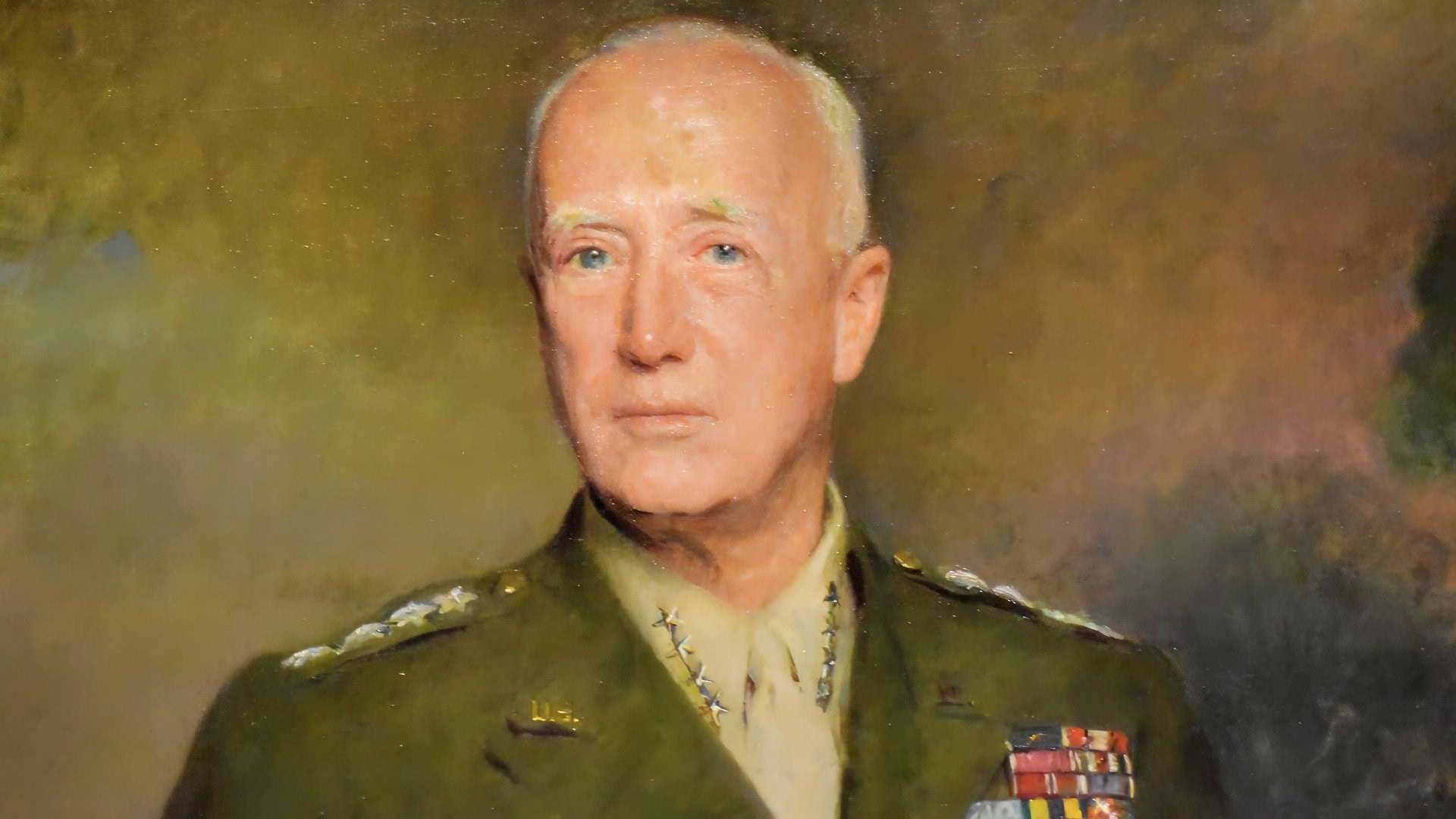
General George Patton at the National Portrait Gallery. Image Taken by 19FortyFive.com in Washington, DC, 1/23/2026 by Dr. Brent M. Eastwood.
It was one of the most celebrated maneuvers of the war, and by May 1945, his army had pushed deep into Germany and Czechoslovakia.
When Patton died, it was not during combat. On December 9, 1945, while in occupied Germany, the staff car carrying him collided with a U.S. Army truck near Mannheim. Patton suffered severe spinal injuries and was paralyzed
. He died in Heidelberg on December 21, aged 60. He was buried at Luxembourg American Cemetery among the soldiers of the Third Army he had led across Europe.
About the Author: Jack Buckby
Jack Buckby is a British researcher and analyst specializing in defense and national security, based in New York. His work focuses on military capability, procurement, and strategic competition, producing and editing analysis for policy and defense audiences. He brings extensive editorial experience, with a career output spanning over 1,000 articles at 19FortyFive and National Security Journal, and has previously authored books and papers on extremism and deradicalization.