Few American military figures remain as recognizable decades after their death as George S. Patton Jr. He was feared by his enemies and admired by many troops. He was also disliked by many of his peers. Regardless, he is remembered as a commander who believed that a combination of aggression and momentum could decide wars.
Even being as controversial as he was, he has become one of America’s most quoted military figures – but some quotes are easier to attribute than others.
One line widely attributed to Patton has endured because it captures something central to both military leadership and life in general.
Weekend Quote to Consider By Army General George Patton
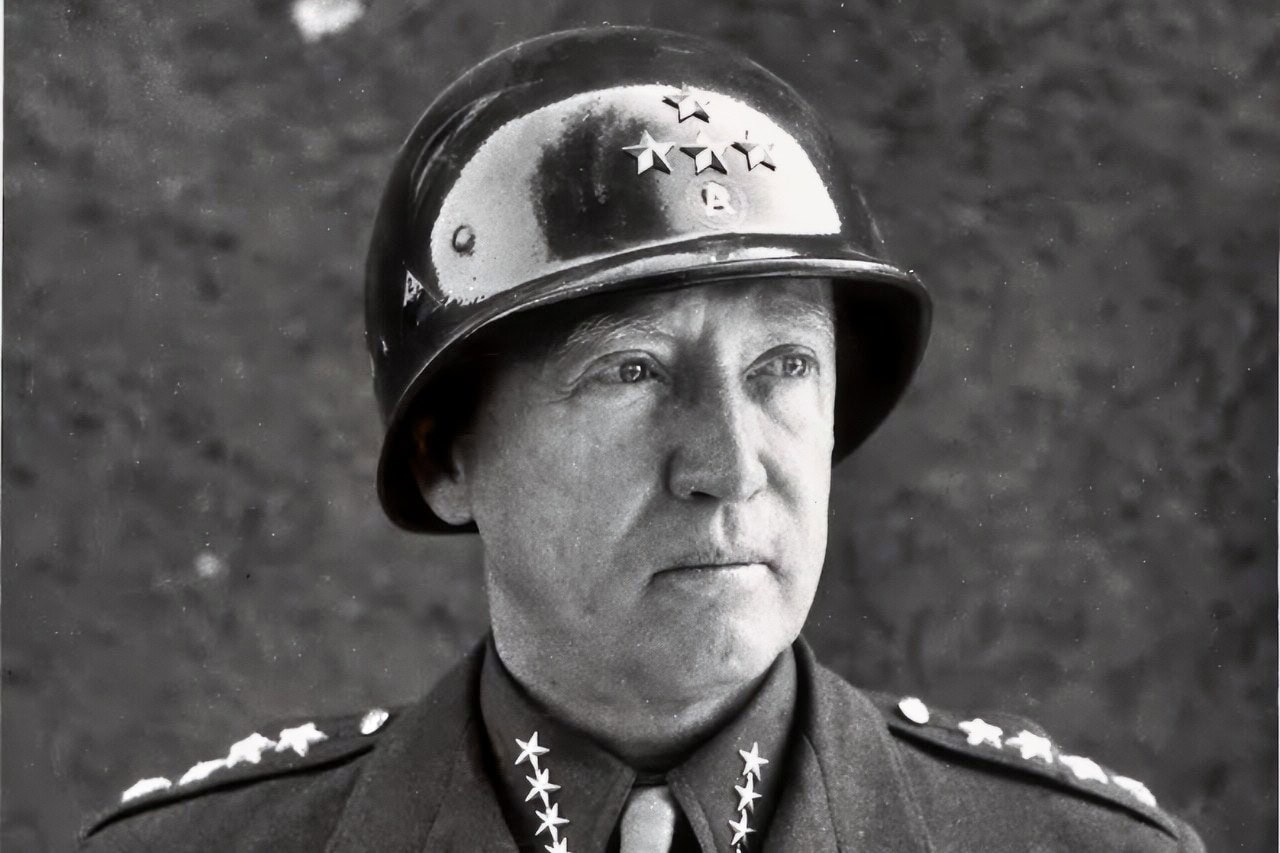
U.S. Army General George Patton
“I don’t measure a man’s success by how high he climbs, but by how high he bounces when he hits bottom.” – Army General George S. Patton
The quote appears across leadership books and military social media pages. It is also widely attributed to Patton in modern quote databases.
Yet, as with many famous Patton sayings, locating a definitive primary source, such as a dated speech transcript or a diary entry, can be difficult.
That does not mean Patton never said it, of course, but it’s important to note that the wording may have changed over the years.
Still, whether spoken exactly in that form or later adapted, the message closely fits the man to whom it is attached.
Is the Quote Real?
The line has circulated for years and has even been reposted by institutions such as the United States Military Academy’s social media accounts, helping cement its association with Patton.
Regardless of its origins, the substance of the quote is unmistakably Patton-esque.
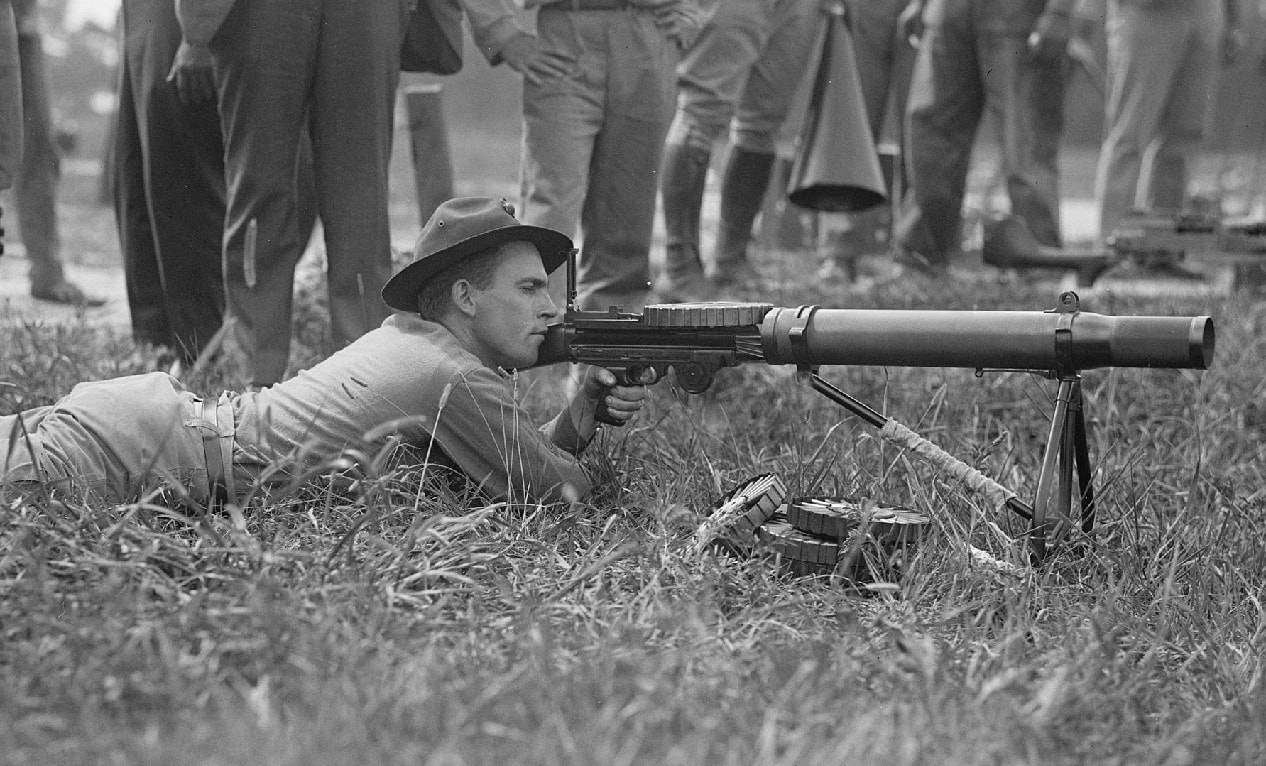
Lewis Gun. Image Credit: Creative Commons.
He believed adversity exposed character. He demanded that units recover quickly from mistakes, reorganize under pressure, and keep moving. To Patton, defeat was often temporary unless a commander accepted it. The meaning of the quote is this: making advances does not define success; real success is measured by resilience in the face of humiliation or failure.
Patton Before World War II
Patton was born on November 11, 1885, in San Gabriel. He attended Virginia Military Institute briefly before entering the United States Military Academy, graduating in 1909. He also competed in the 1912 Olympic pentathlon in Stockholm, which may have contributed to his obsession with fitness and discipline.
He also served as aide-de-camp to Major General John J. Pershing during the 1916 Punitive Expedition into Mexico, gaining early experience in mobile operations and high-level command circles.
During the years before America entered World War I, Patton served in cavalry assignments when horses still dominated military thinking and planning. Yet like several forward-looking officers of his generation, he became interested in mechanization and mobility. That interest would shape the rest of his career, particularly during WWII.

M4 Sherman Tank from WWII Image: Creative Commons.
Patton In World War I
Patton’s World War I service is often overshadowed by his later fame, but it was decisive in shaping who he became. In 1917, after the United States entered the war, he was assigned to the newly created U.S. tank force under John J. Pershing.
He trained with French Renault FT tanks and became one of the first American officers to seriously study armored warfare. Patton then commanded the 1st Provisional Tank Brigade during the Meuse-Argonne Offensive, the largest operation ever undertaken by the American Expeditionary Forces.
On September 26, 1918, the offensive began, with more than one million U.S. troops eventually involved. Patton personally led tanks forward near Cheppy and later reconnoitered (surveyed and explored an area to gather information about enemy positions or geographical features) on foot under fire.
On September 28, he was wounded in the thigh by machine gun fire, but continued directing his men before being evacuated. He received the Distinguished Service Cross for his bravery.
That experience left a lasting impression on Patton. He saw firsthand how engines and armor could change the battlefield, and how machinery could break the static trench warfare and move armies forward.
The Years After World War I
After the war, Patton spent the years before the outbreak of WWII arguing for modernization in an Army that was often underfunded and resistant – or slow – to change. By World War II, he would command armored formations across North Africa, Sicily, France, and Germany.
His own career also repeatedly illustrated the message in the famous “bounce back” quote. He recovered from his own academic struggles at West Point and later rose from being a tank officer to one of America’s best-known commanders.
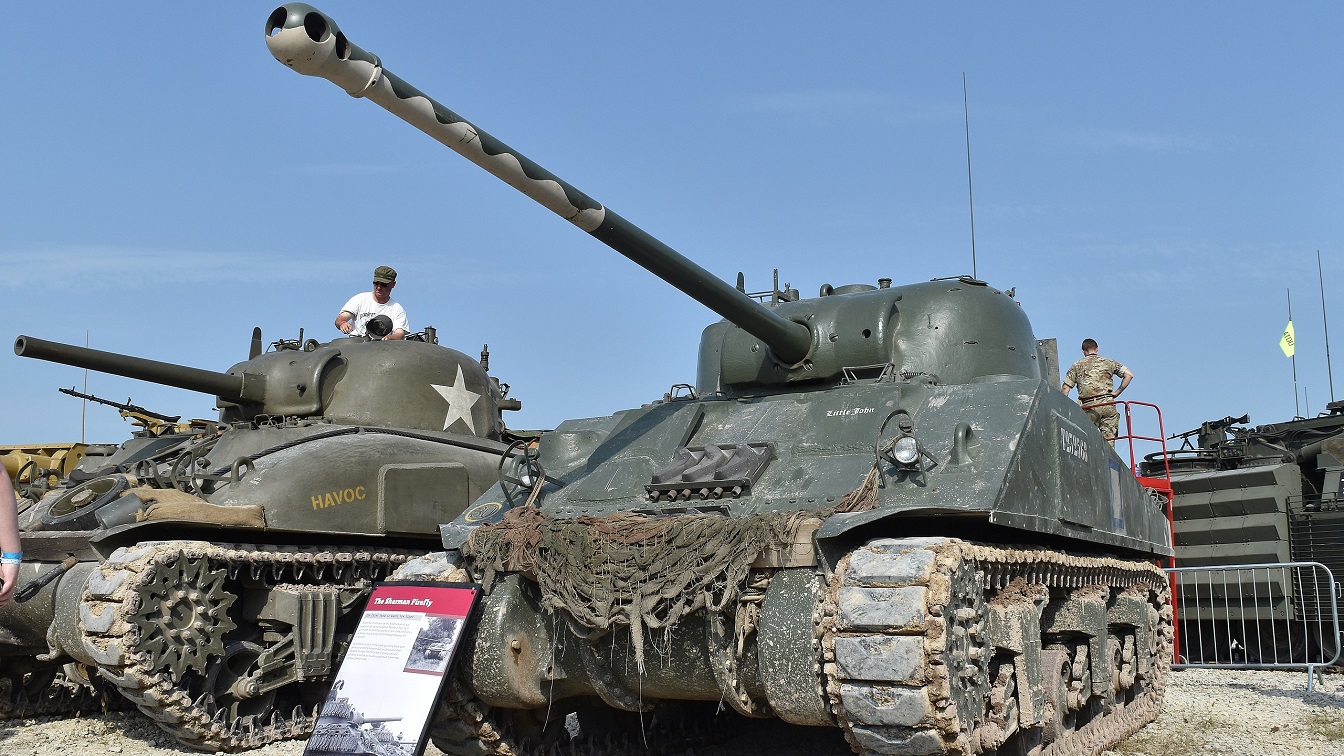
Serial No:- 16912 Official designation:- M4A4 Tank Medium 17Pdr. Total production:- 2,100-2,200 Main armament:- QF 17-pounder Anti-tank Gun The Firefly was a British modification of the M4 Sherman, with a 17 pounder gun replacing the usual 75mm. This gun was able to puncture the armour of a Tiger I or Panther, making the Firefly one of the few Allied tanks genuinely feared by Axis forces. This example comes from the Bastogne Barracks in Belgium, part of the Belgian Royal Military Museum. It was manufactured in the USA in 1942 and delivered to Europe in 1943 carrying the running number ‘USA 3017218’. It was converted to a Firefly in early 1944 and saw British service as ‘T232568’. She is fully operational and is seen in the ‘Tank Park’ after making a guest appearance at TankFest 2019. The Tank Museum, Bovington Camp, Dorset, UK.
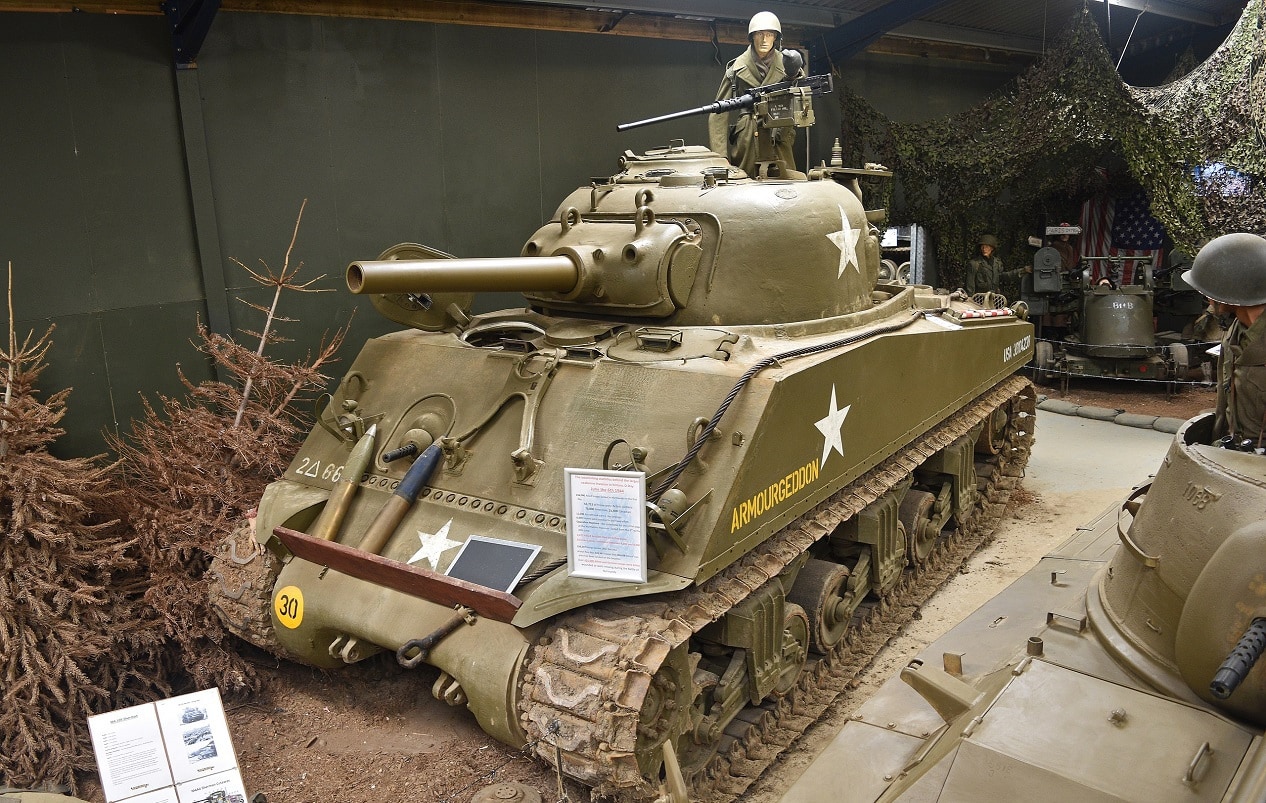
M4 Sherman Tank.
And even during his WWII scandal that involved him slapping exhausted soldiers in Sicily, who he accused of weakness, he bounced back and returned to command the U.S. Third Army in 1944, advancing soldiers across France at extraordinary speed.
And, he has since remained one of the most consequential and widely quoted military figures in American history.
Patton’s incredible record is likely why this quote has endured the way it has.
About the Author: Jack Buckby
Jack Buckby is a British researcher and analyst specializing in defense and national security, based in New York. His work focuses on military capability, procurement, and strategic competition, producing and editing analysis for policy and defense audiences. He brings extensive editorial experience, with a career output spanning over 1,000 articles at 19FortyFive and National Security Journal, and has previously authored books and papers on extremism and deradicalization.