The Stealth B-21 Raider Bomber Isn’t a Solution for Australia: In 2021, the Australian government made a radical decision that it believed would enhance its long-term security: Canberra opted to break its deal for new diesel-electric submarines from France in favor of entering the Australia-United Kingdom-United States (AUKUS) deal.
Essentially, the three Anglosphere nations would pull their resources together to build new nuclear-powered submarines for the Royal Australian Navy. All this was part of a broader push to ensure greater interoperability among the United States, Britain, and Australia to better confront the rising challenge posed by the People’s Republic of China in the Indo-Pacific.
Here’s the problem, though. Not only did the United States, the UK, and Australia alienate France by meddling in what was a done deal between Canberra and Paris, but they also did so. But the Australians have hitched their proverbial wagon to two powers, the United States and the United Kingdom, with sclerotic defense industrial bases.
In fact, Australia itself has a broken defense industrial base. In other words, the one thing the AUKUS agreement was supposed to provide–nuclear-powered subs–it will likely never provide in any meaningful way.
A Growing Capability Gap
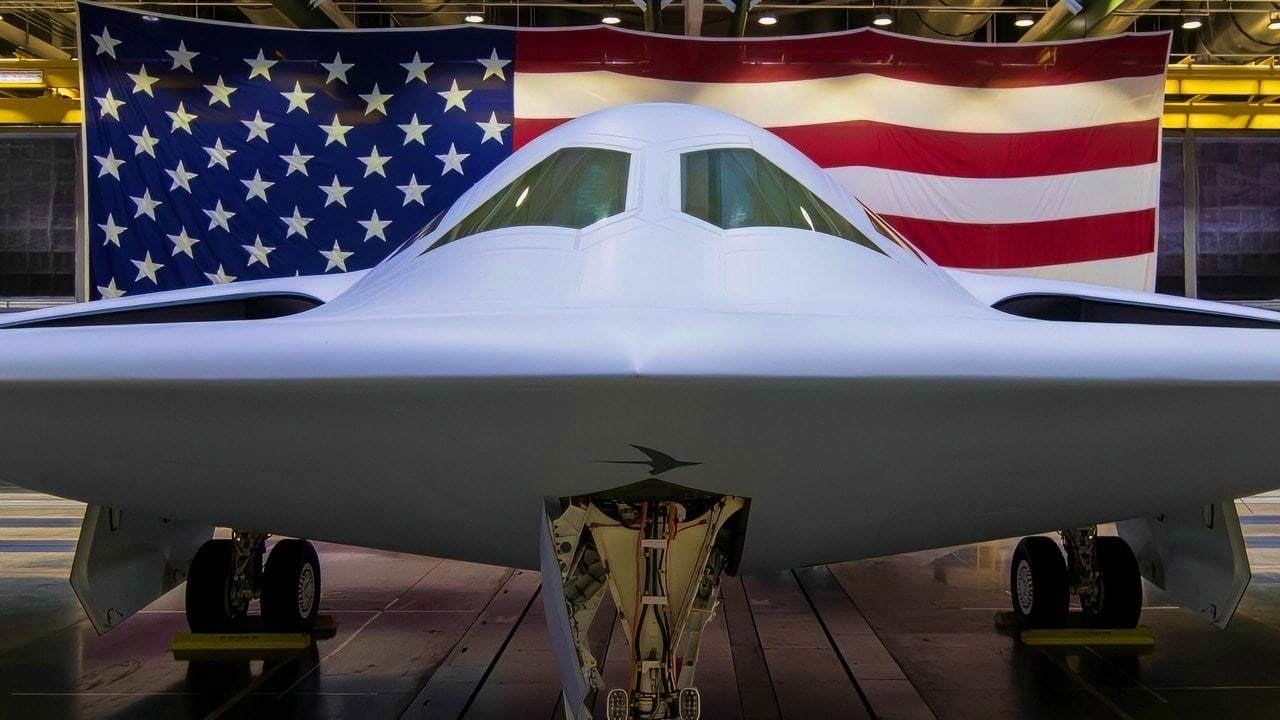
To address the growing “capability gap” in Australia, there is now talk of Australians using AUKUS to procure advanced stealth warplane technology, notably the B-21 Raider, from the United States.
Already, though, Australia’s future military power is now backloaded into the 2030-40s, because of the massive failures of the AUKUS deal. But threat timelines are, in fact, frontloaded into the 2020s-30s. As it stands, Australia likely lacks credible long-range strike and deterrence capabilities.
The B-21 “Fix” is a Mirage
So, Australia’s Shadow Defense Minister James Paterson is talking about using AUKUS as a backdoor for Australia gaining access to the B-21. But using the AUKUS agreement as a framework for this potential acquisition is ridiculous.
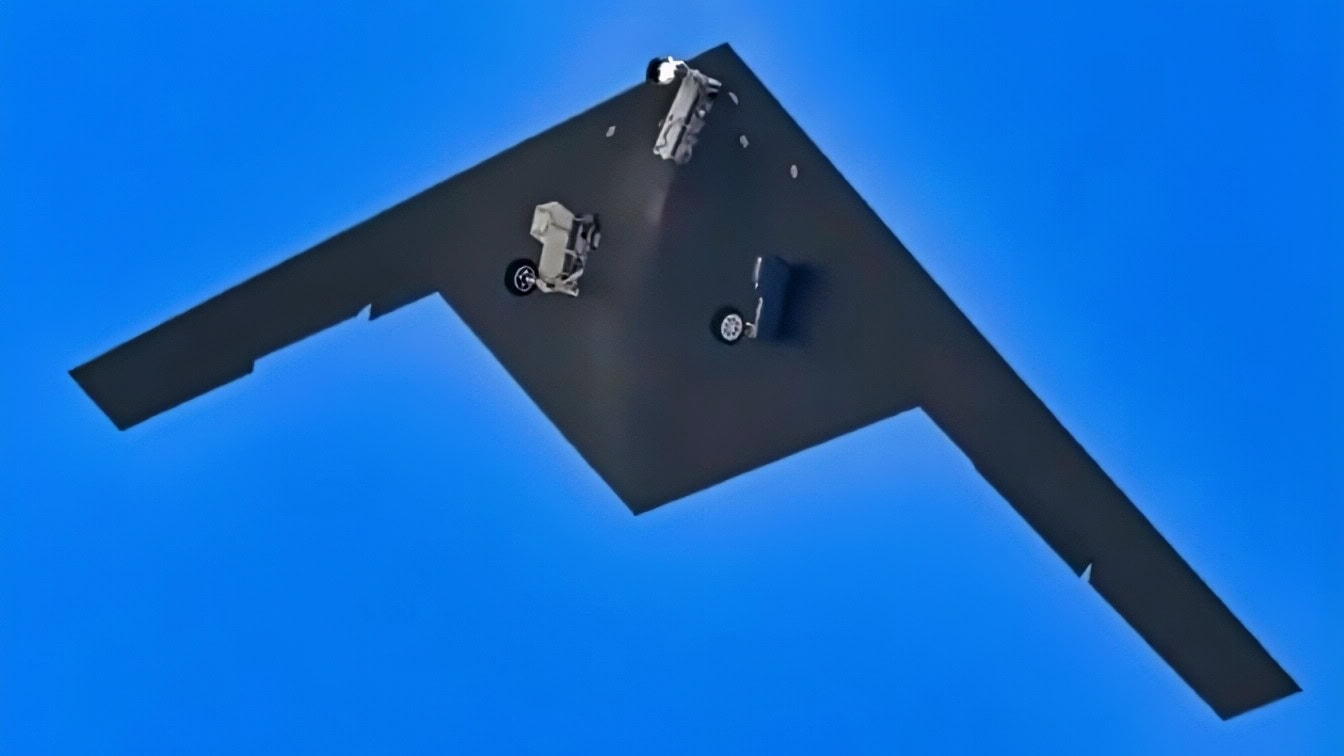
RQ-180 Mini Stealth Drone Like B-21 Raider. Image Credit: X Screenshot.
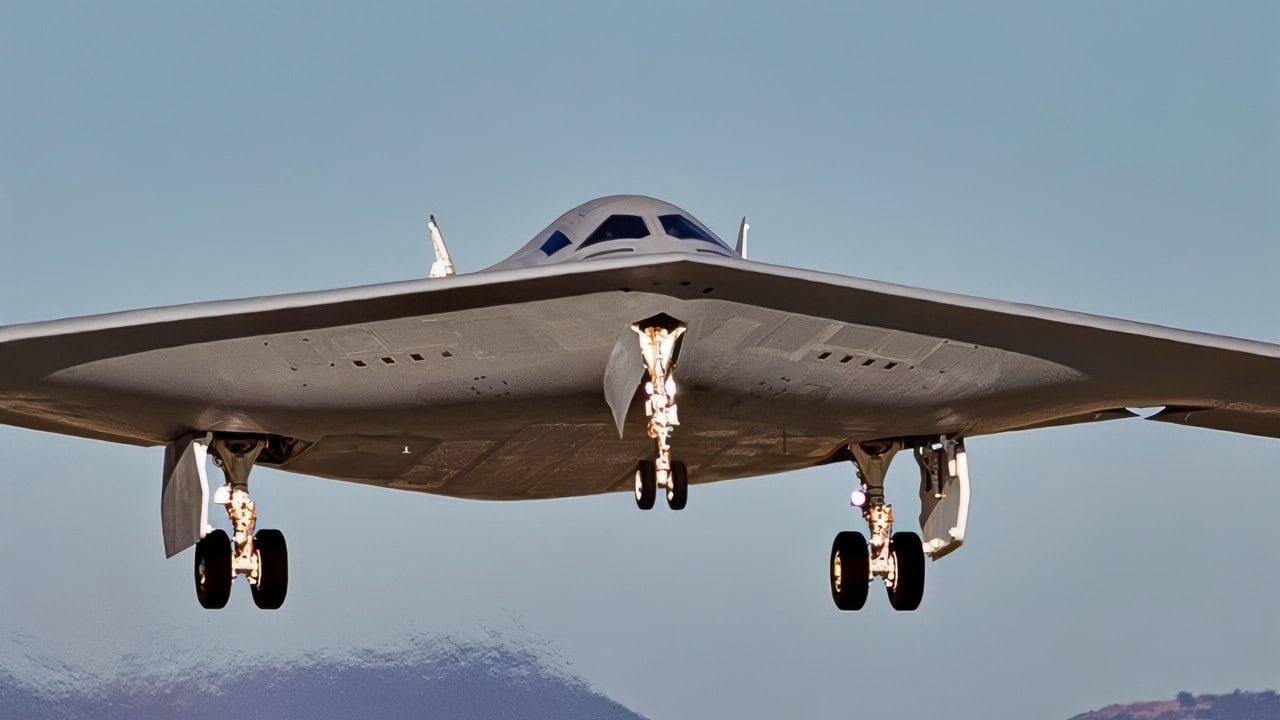
A second B-21 Raider test aircraft takes off, Sept. 11, from Palmdale, Calif., to join the Air Force’s flight test campaign at Edwards Air Force Base, Calif. The addition of the second test aircraft expands mission systems and weapons integration testing, advancing the program toward operational readiness. (Courtesy photo)
The B-21 Raider is faster to field than nuclear-powered submarines; it would give Australia immediate strategic reach and is flexible across missions.
Then again, the downsides of acquiring B-21s include the fact that they are not as persistent as submarines. B-21s require bases that are highly vulnerable to enemy attack and disruption. What’s more, the US doesn’t intend to export the B-21. They were designed specifically for US strategic needs and comply only with US airpower doctrine.
No Subs, No Doctrine, No Time
Even if the Americans could produce enough of these systems to sell to Australia (clearly, rather than the lagging Virginia-class submarines that the AUKUS agreement has failed to provide), the Australian military would need to adapt its entire strategic doctrine to embrace them. That’s not to mention that Australia still won’t have the submarines AUKUS promised them.
At its core, though, Paterson’s comments are not about getting stealth bombers for Australia.
They’re a strategic admission by Australia’s leadership that the AUKUS deal isn’t working out as planned. Australia now believes it may need to shift toward deterrence by strike.
Yet it highlights how Canberra’s alliance dependency problem is intensifying.
They’ve got little alternative to the US alliance, but that alliance structure is fraying amidst political friction, economic hardship, and geopolitical realities.
Systems War is Coming–and Australia Isn’t Ready
Paterson’s comments also indicate that Canberra is painfully aware of how exposed Australia is to the looming systems-war model between the United States and China.
You see, Washington is not interested in fighting Beijing in a direct conflict. Washington clearly believes it can prevent China from becoming a true military threat to the United States and its partners by kneecapping its industry, its global trade, and its energy profile.
Beijing, meanwhile, understands that its control over the world’s rare earth mineral processing is the greatest leverage that China holds over the West.
By denying America and its partners access to these rare-earth minerals, Beijing will squeeze the West’s economies and military-industrial complexes at a crucial moment.
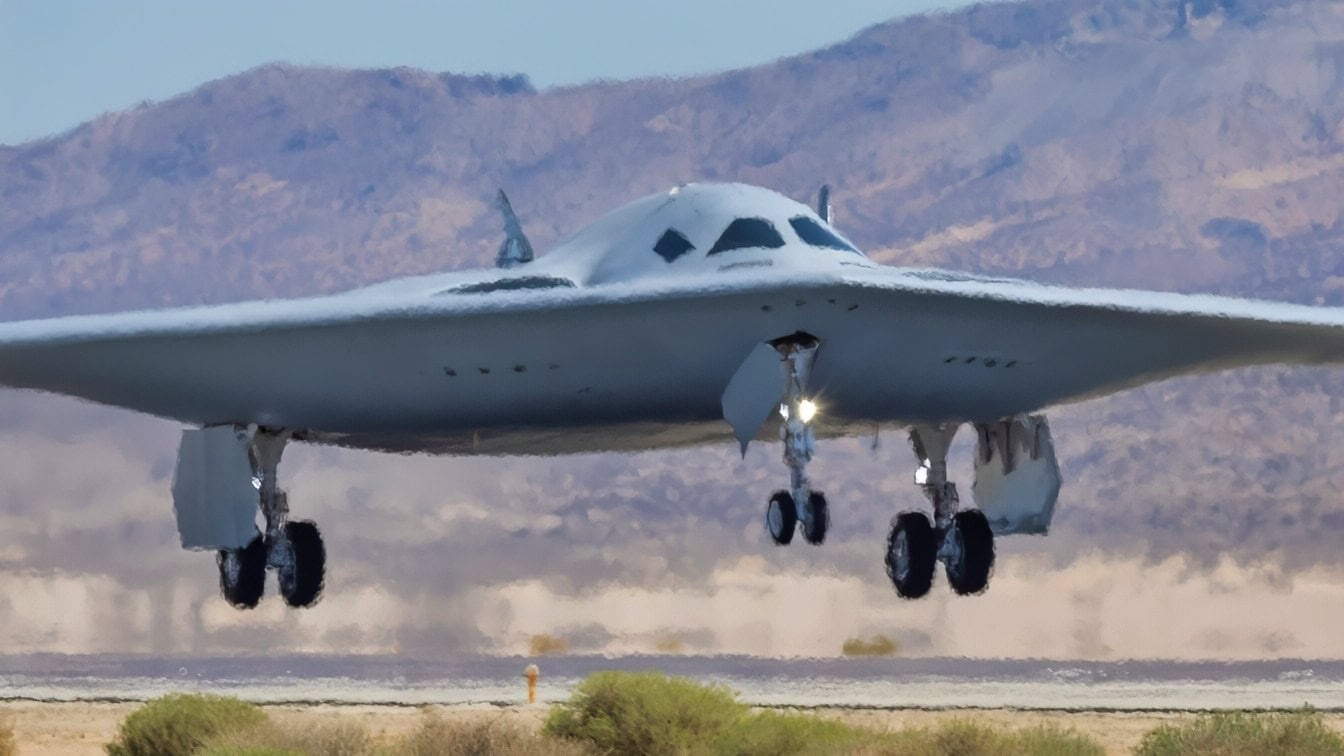
A B-21 Raider test aircraft lands at Edwards Air Force Base, Calif., during ongoing developmental flight testing, Sept. 11, 2025. The B-21 will be the backbone of the bomber fleet; it will incrementally replace the B-1 Lancer and B-2 Spirit bombers. (U.S Air Force photo by Todd Schannuth)
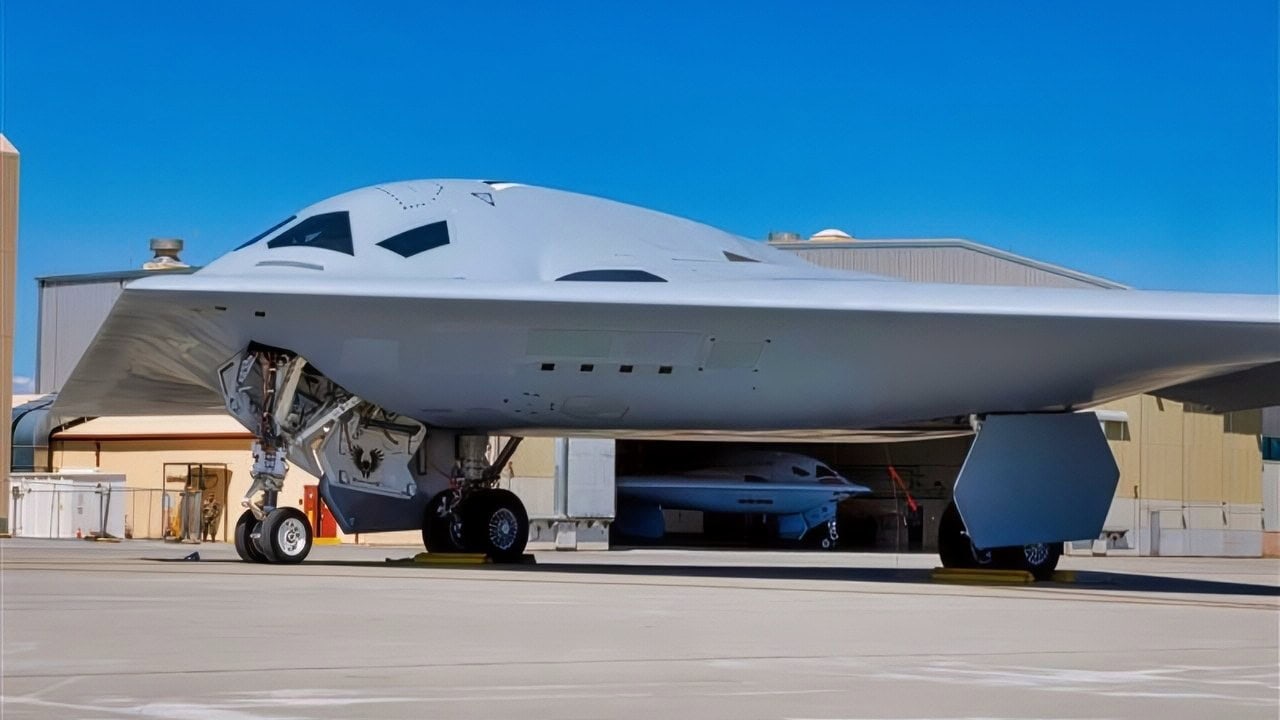
A second B-21 Raider, the world’s sixth-generation stealth bomber, test aircraft arrives at Edwards Air Force Base, Calif., Sept. 11, 2025. The addition of the second test aircraft expands mission systems and weapons integration testing, advancing the program toward operational readiness. (Courtesy photo)
Thus, the systems-type war would become a battle of wills; a game of geopolitical chicken, as the Chinese and American systems began to seize, with smaller powers like Australia thrown into the fray against their will and wholly unprepared.
Paterson points to the ongoing Strait of Hormuz blockage nd warns that China could similarly close the Strait of Malacca, showing how poorly positioned Australia is to survive a world torn apart by systems warfare with the United States.
Since AUKUS apparently cannot deliver the platforms Australia thinks it needs now, Paterson believes the B-21 Raider might be a useful stopgap.
No Easy Fix Exists
Yet there is little evidence that such a solution would be viable in the near term. And the near-term is the real problem.
Threats today are accelerating, while Western capabilities, notably in countries like Australia, are severely delayed. Do the Australians wait for AUKUS to catch up on their submarines (which may never happen), or does Australia work to bring in B-21s?
It all sounds good on paper. But AUKUS sounded great on paper. It did not work as advertised.
With the Americans still ramping up B-21 production, the high cost of these systems and their lack of interoperability with allied forces make them an unrealistic alternative.
Plus, there is really no substitute for the kind of extended deterrence that submarines provide–especially in a region like the Indo-Pacific.
The bottom line is that AUKUS has missed the mark, and trying to paper over that failure by talking about acquiring the B-21 Raider from the United States is absurd. Canberra must make fundamental strategic adjustments if it is to survive the crisis currently brewing in the Indo-Pacific.
About the Author: Brandon J. Weichert
Brandon J. Weichert is the Senior National Security Editor at 19FortyFive.com. Recently, Weichert became the editor of the “NatSec Guy” section at Emerald. TV. He was previously the senior national security editor at The National Interest. Weichert is the host of The National Security Hour on iHeartRadio, where he discusses national security policy every Wednesday at 8 pm Eastern. He hosts a companion show on Rumble entitled “National Security Talk.” Weichert consults regularly with various government institutions and private organizations on geopolitical issues. His writings have appeared in numerous publications, among them Popular Mechanics, National Review, MSN, and The American Spectator. And his books include Winning Space: How America Remains a Superpower, Biohacked: China’s Race to Control Life, and The Shadow War: Iran’s Quest for Supremacy. Weichert’s newest book, A Disaster of Our Own Making: How the West Lost Ukraine, is available for purchase at any bookstore. Follow him via Twitter/X @WeTheBrandon.