
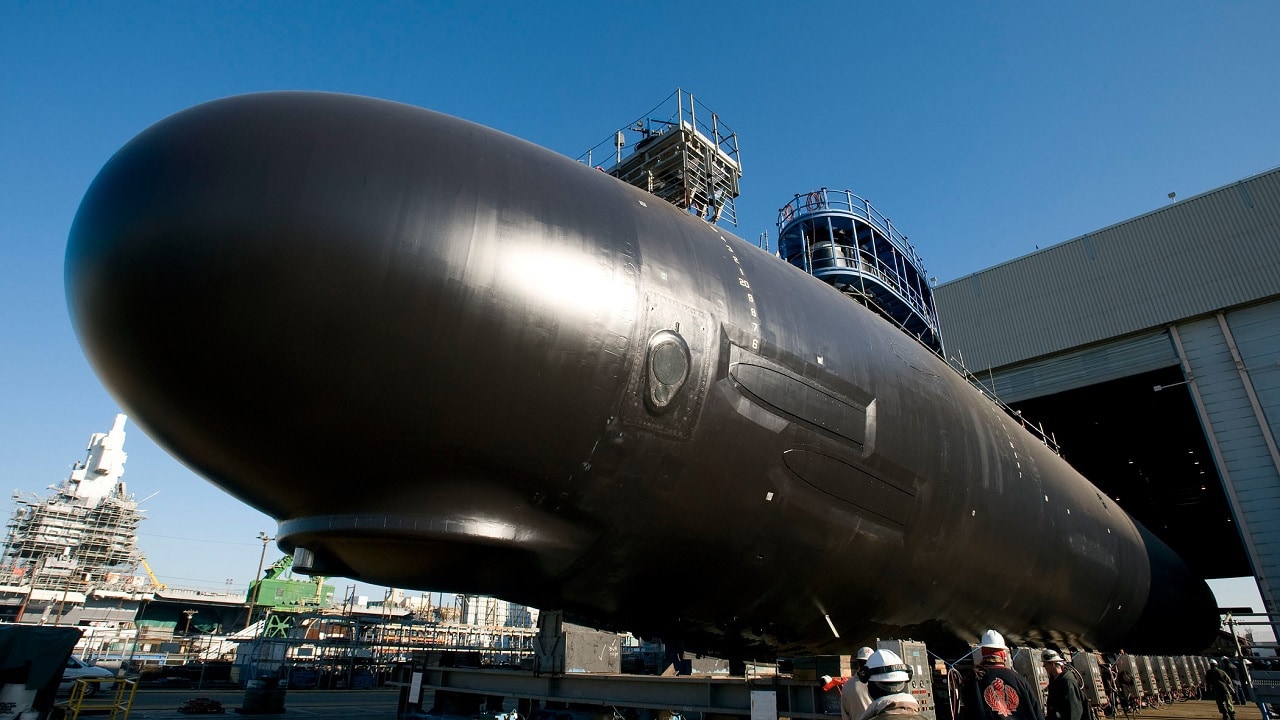
Summary and Key Points: Critics often cite the strained U.S. submarine industrial base—currently prioritized for Columbia-class SSBNs—as proof that AUKUS will fail.
-However, AUKUS is structured as an industrial expansion pact, not a platform transfer. Australian capital is currently flowing into U.S. infrastructure, scaling up specialized nuclear supply chains and training pipelines.
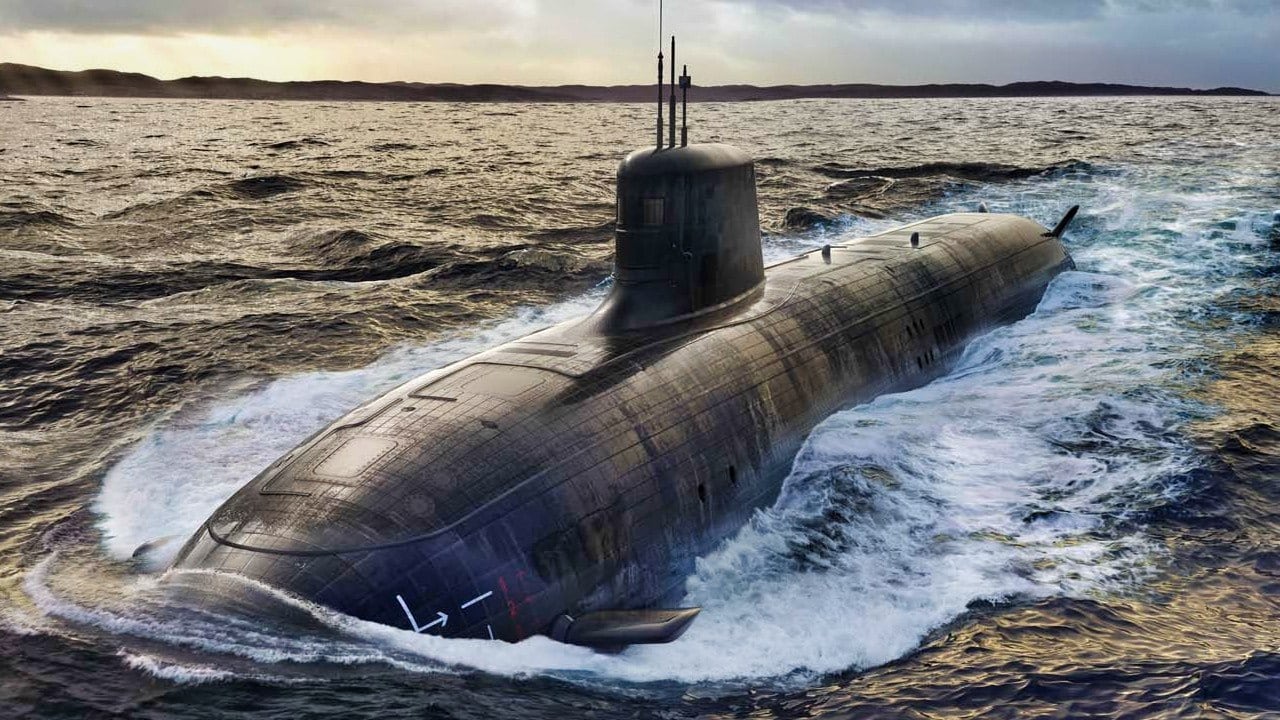
SSN-AUKUS Submarine. Image is Creative Commons Artist Rendering.
-By establishing Adelaide as a third production node alongside U.S. and UK yards, the alliance is creating new capacity rather than borrowing it.
-This distributed model ensures a persistent, survivable undersea presence in the Indo-Pacific that stealth bombers or autonomous systems can augment but never replace.
The “Capacity” Pivot: Why the AUKUS Submarine Deal Summed Up in 2 Words
The AUKUS submarine deal looks dead on paper.
American shipyards are maxed out building Columbia-class ballistic missile boats. The Royal Navy can barely maintain its own SSN fleet.
Australia has never operated a nuclear reactor, let alone built one into a submarine hull. Critics line up the industrial constraints, point to the shipyard data, and declare the program impossible.
They’re reading the numbers correctly. What they miss is what AUKUS actually does. It doesn’t borrow existing capacity. It builds new capacity.
That’s not a semantic distinction.
That’s the entire architecture.
The Capacity Problem Is Real for More Nuclear Attack Submarines
Start with the constraint, because critics aren’t wrong about the numbers.
The U.S. submarine industrial base operates at the edge of what it can sustain. Columbia-class SSBN production sits at the top of the Navy’s strategic priority stack.
The gravitational pull is enormous. Virginia-class attack boat output gets compressed.
Look where the strain shows up. Skilled welders remain scarce across every major yard. Specialized suppliers delivering castings, propulsion components, nuclear-grade systems — they work on quarterly timelines, not weekly.
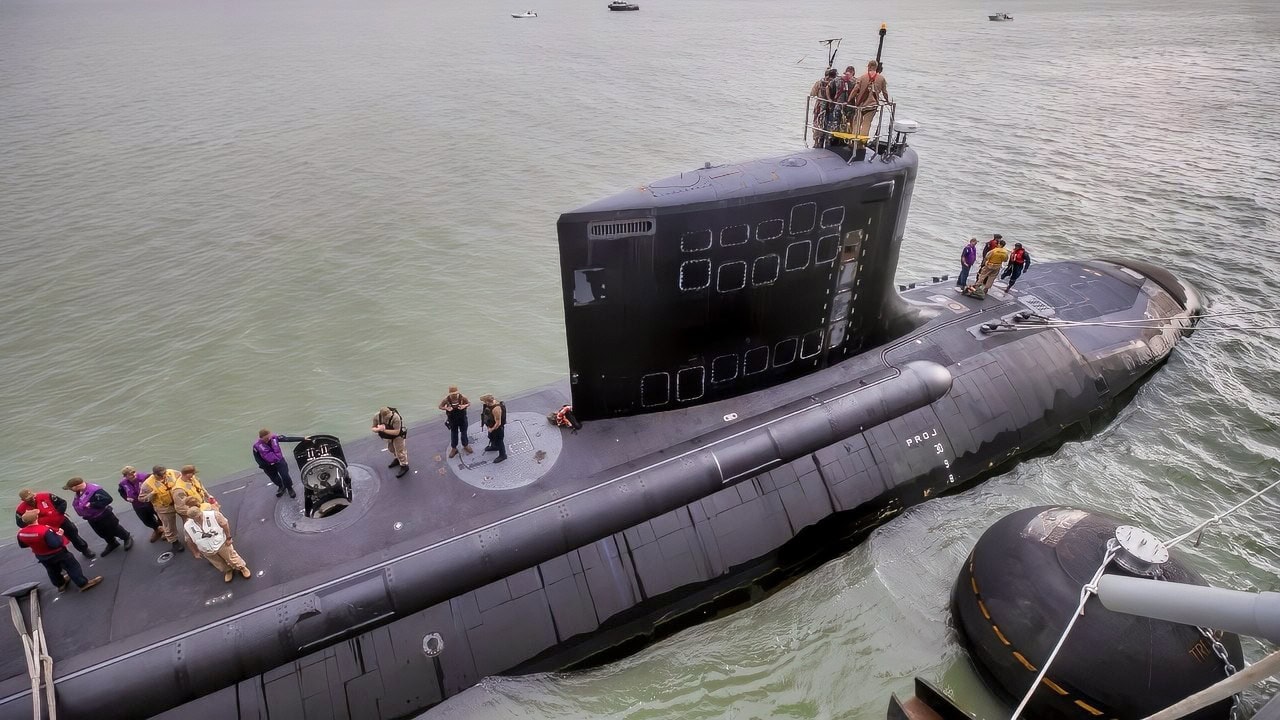
DARWIN, Northern Territory, Australia (March 31, 2025) – The Virginia-class fast-attack submarine USS Minnesota (SSN 783) departs from the submarine tender USS Emory S. Land (AS 39) after a scheduled port visit at Darwin, Northern Territory, Australia, Mar. 31, 2025. Darwin is Emory S. Land’s 17th port call since it departed on deployment May 17, 2024. Emory S. Land and Minnesota are operating in U.S. 7th Fleet, the U.S. Navy’s largest forward deployed numbered fleet, operating with allies and partners in preserving a free and open Indo-Pacific region. (U.S. Navy photo by Mass Communication Specialist Seaman Mario E. Reyes Villatoro)
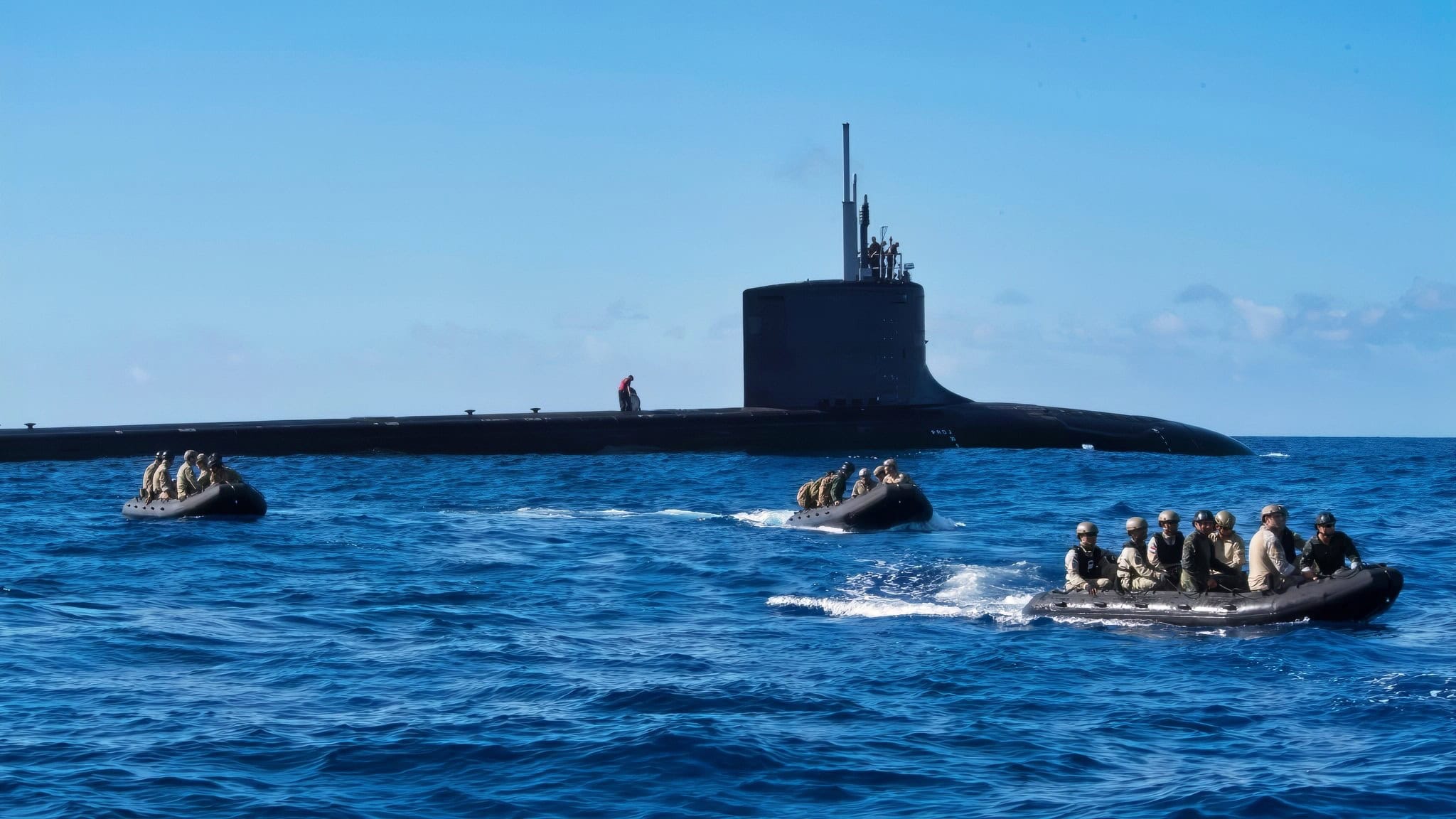
PEARL HARBOR (July 9, 2018) – Multi-national Special Operations Forces (SOF) participate in a submarine insertion exercise with the fast-attack submarine USS Hawaii (SSN 776) and combat rubber raiding craft off the coast of Oahu, Hawaii during Rim of the Pacific (RIMPAC) exercise, July 9. Twenty-five nations, 46 ships and five submarines, about 200 aircraft, and 25,000 personnel are participating in RIMPAC from June 27 to Aug. 2 in and around the Hawaiian Islands and Southern California. The world’s largest international maritime exercise, RIMPAC provides a unique training opportunity while fostering and sustaining cooperative relationships among participants critical to ensuring the safety of sea lanes and security of the world’s oceans. RIMPAC 2018 is the 26th exercise in the series that began in 1971. (U.S. Navy photo by Lt. j.g. Michelle Pelissero)
Maintenance backlogs aren’t projections anymore. They’re visible. Attack submarines sit pier-side, waiting for yard space that never opens.
Navy force-structure projections already show the dip arriving in the 2030s. That shortfall isn’t the product of speculative modeling.
It’s embedded in existing production schedules and yard throughput realities. Anyone working through GAO assessments or budget documents can see the curve forming.
If AUKUS depended on drawing from idle American shipyard capacity, the entire enterprise would collapse under its own assumptions. Critics making that point aren’t wrong about the numbers.
But that isn’t how AUKUS is structured.
AUKUS Expands SSN Capacity, It Doesn’t Consume It
The misunderstanding runs through every analysis, treating AUKUS like a platform transfer deal. Transfer submarines from American yards to Australian service. Except that’s not the structure.
AUKUS is an industrial expansion pact. Australian funding flows into U.S. shipyard infrastructure now — not pledged for later, flowing now.
Joint workforce training pipelines are being built. Supply chains for nuclear components, specialized castings, and propulsion systems are scaling up. UK yards get integrated through the SSN-AUKUS design and production. Adelaide becomes the third allied production node.
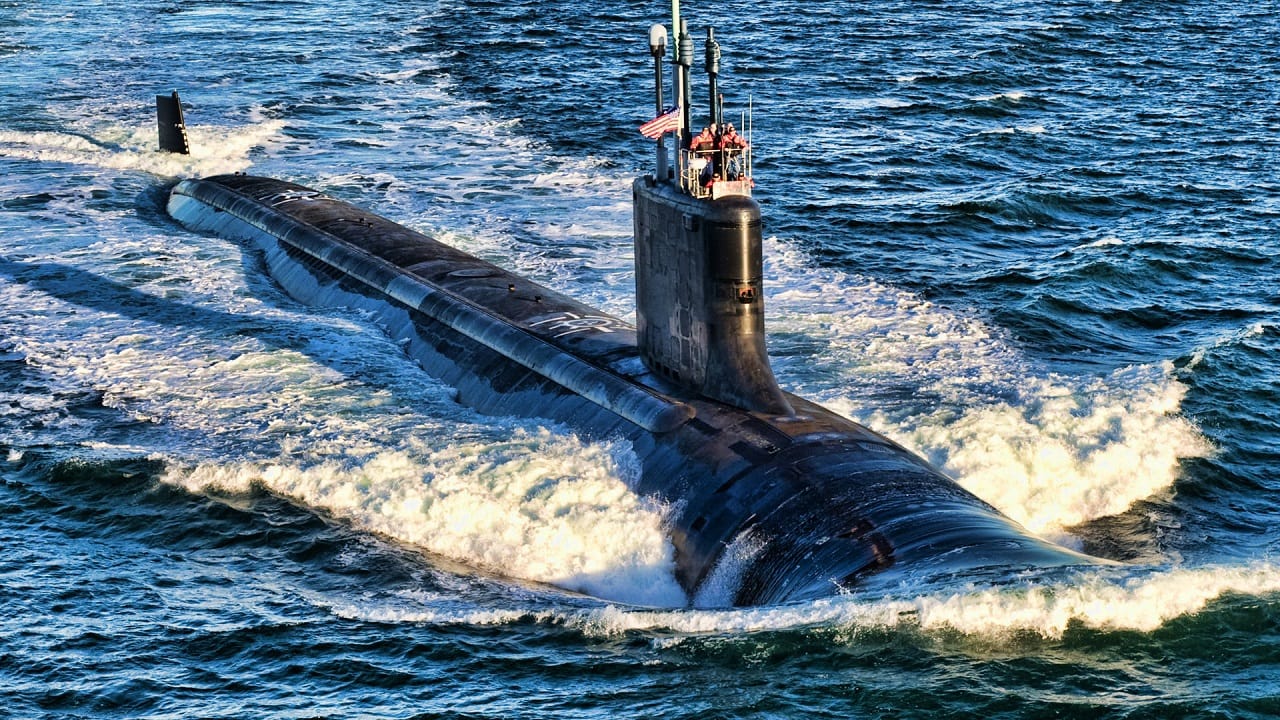
US Navy Attack Submarine. Image Credit: Creative Commons.
This is burden-sharing measured in reactor modules and dry dock tonnage. The investment framework doesn’t pull from existing capacity.
It creates capacity that doesn’t exist yet.
By the early 2040s, SSN production will be distributed across allied industrial bases in ways that haven’t existed since nuclear propulsion became operational. The timeline depends entirely on industrial execution. But the concept addresses the constraint rather than ignoring it.
Why Washington Takes the Naval Risk
The near-term strain is obvious. Why accept it?
Because Australian SSNs operate in Indo-Pacific patrol zones, the U.S. Navy covers alone right now. Forward presence without expanding the sovereign American basing footprint. Increased undersea density along sea lines and chokepoints that matter more each year.
The PLA Navy has to account for allied submarines, complicating anti-access strategies across the first island chain.
It’s geometry. A Royal Australian Navy SSN operating from HMAS Stirling can cover approaches that the Pacific Fleet can’t efficiently reach from Pearl Harbor or Guam. That’s not an alliance charity. That’s distributed deterrence operating from the right coordinates.
The alternative means stretching an already overcommitted undersea force across an expanding operational geography while China’s submarine fleet grows. AUKUS shifts some of that operational burden onto an ally with both strategic interest and financial capacity to shoulder it.
Ditch Subs and Go Stealth Bomber? The B-2 “Alternative” Misses the Point
As submarine timelines stretch, alternative proposals surface. Transfer B-2A Spirit stealth bombers to Australia, as some well meaning scholaars have suggested, while the U.S. transitions to the next-generation B-21 fleet. Long range. Deep strike. Technological prestige.
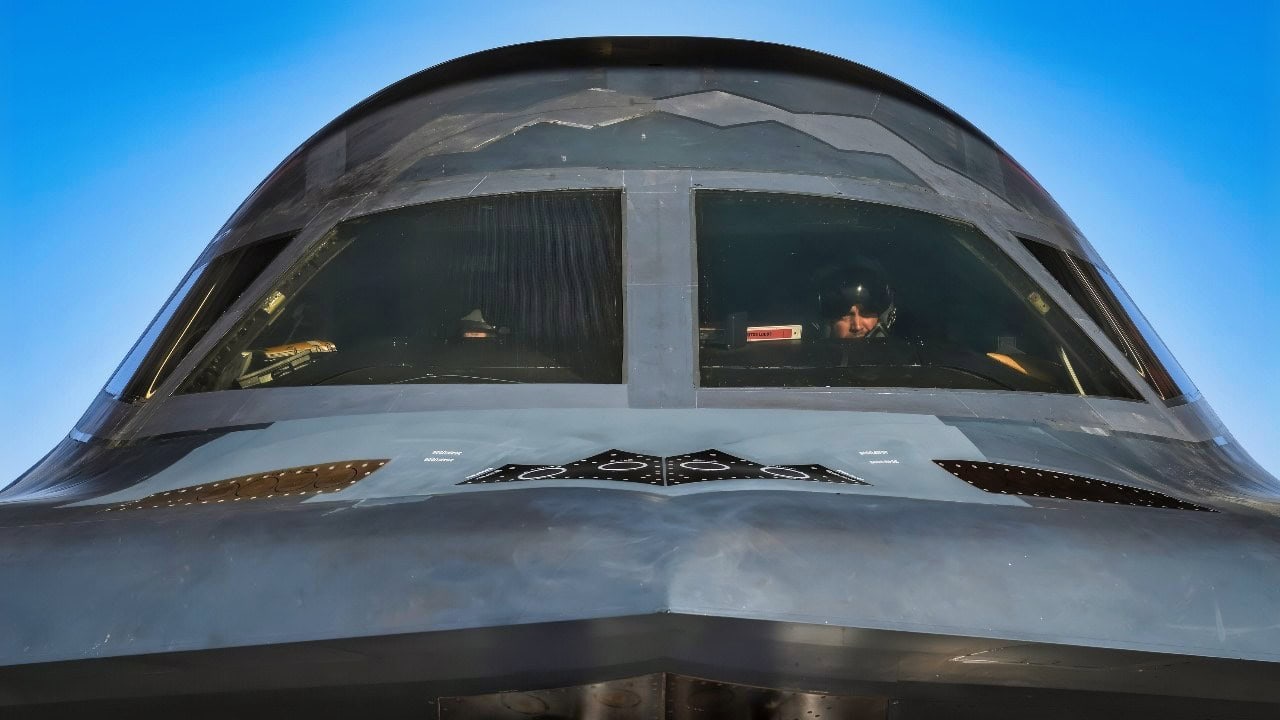
A U.S. Air Force B-2 Spirit aircrew performs pre-flight checks in the cockpit of their aircraft at Whiteman Air Force Base, Missouri, March 8, 2020. The B-2 took off from Whiteman AFB to support U.S. Strategic Command Bomber Task Force operations in Europe. The 131st Bomb Wing is the total-force partner unit to the 509th Bomb Wing. (U.S. Air Force photo by Tech. Sgt. Alexander W. Riedel)

B-2 Spirit Stealth Bomber 19FortyFive Image. Taken By Harry J. Kazianis at U.S. Air Force Museum in 2025.
Sounds elegant until you examine what it actually requires.
The B-2 Spirit carries nuclear certification. Even a hypothetical conventionalized transfer raises treaty complications, command-and-control questions, and deterrence signaling problems that go far beyond standard aircraft sales. Then add stealth technology protection regimes. The materials science, coatings, and signature management architecture built into the airframe rank among the most restricted systems in the American arsenal.
Sustainment makes it worse. B-2s don’t operate from standard airbases. They need climate-controlled hangars, specialized maintenance environments, and logistics ecosystems that already strain American capacity. Look at availability rates — they reflect that operational burden.
Then there’s fleet math. The operational B-2 inventory is small. The B-21 Raider is still entering service. There’s no surplus to redistribute without cutting directly into U.S. strategic bomber capacity during the transition period when bomber availability matters most.
More fundamentally, the platforms solve different strategic problems. Submarines complicate adversary movement at sea. They deny space, shadow fleets, threaten from concealment. Bombers project power inland.
They signal strike intent from the moment they deploy.
Australia’s near-term requirement is a persistent undersea presence, not a sovereign global strike architecture. Swapping one for the other isn’t creative thinking. It’s confusing the requirement.
What Actually Complements AUKUS
Airpower still fits. Expanded bomber rotations through Australian bases work. Joint basing access for next-generation aircraft is already being negotiated. Long-range strike missiles on Australian platforms extend reach. Autonomous undersea systems augment crewed submarines. Integrated ISR and targeting networks multiply effectiveness across all platforms.
These enhance submarine capability. They don’t substitute for it. The submarine addresses the core problem: persistent, survivable presence in contested waters.
Industrial Adaptation Under Pressure
On paper, the submarine timeline looks strained. American yards are already carrying Columbia production. Skilled labor remains tight. Nuclear supply chains move slowly even under sustained demand. Critics pointing to those constraints aren’t misreading the data.
What they miss is how the program is structured to respond to them. AUKUS isn’t built around unused capacity; it’s built to expand capacity across allied industrial bases. Infrastructure upgrades, workforce pipelines, and distributed production lines are already moving from planning into execution. None of it unfolds quickly, but it does change the long-term production baseline.
Undersea presence will thicken before Australia’s first SSN deploys — through rotations, autonomous systems, and expanded patrol coverage.
The question isn’t inevitability. It’s whether allied industry can scale fast enough to match strategic pressure.
About the Author: Dr. Andrew Latham
Andrew Latham is a non-resident fellow at Defense Priorities and a professor of international relations and political theory at Macalester College in Saint Paul, MN. You can follow him on X: @aakatham. Dr. Latham writes a daily column for 19FortyFive.com.