
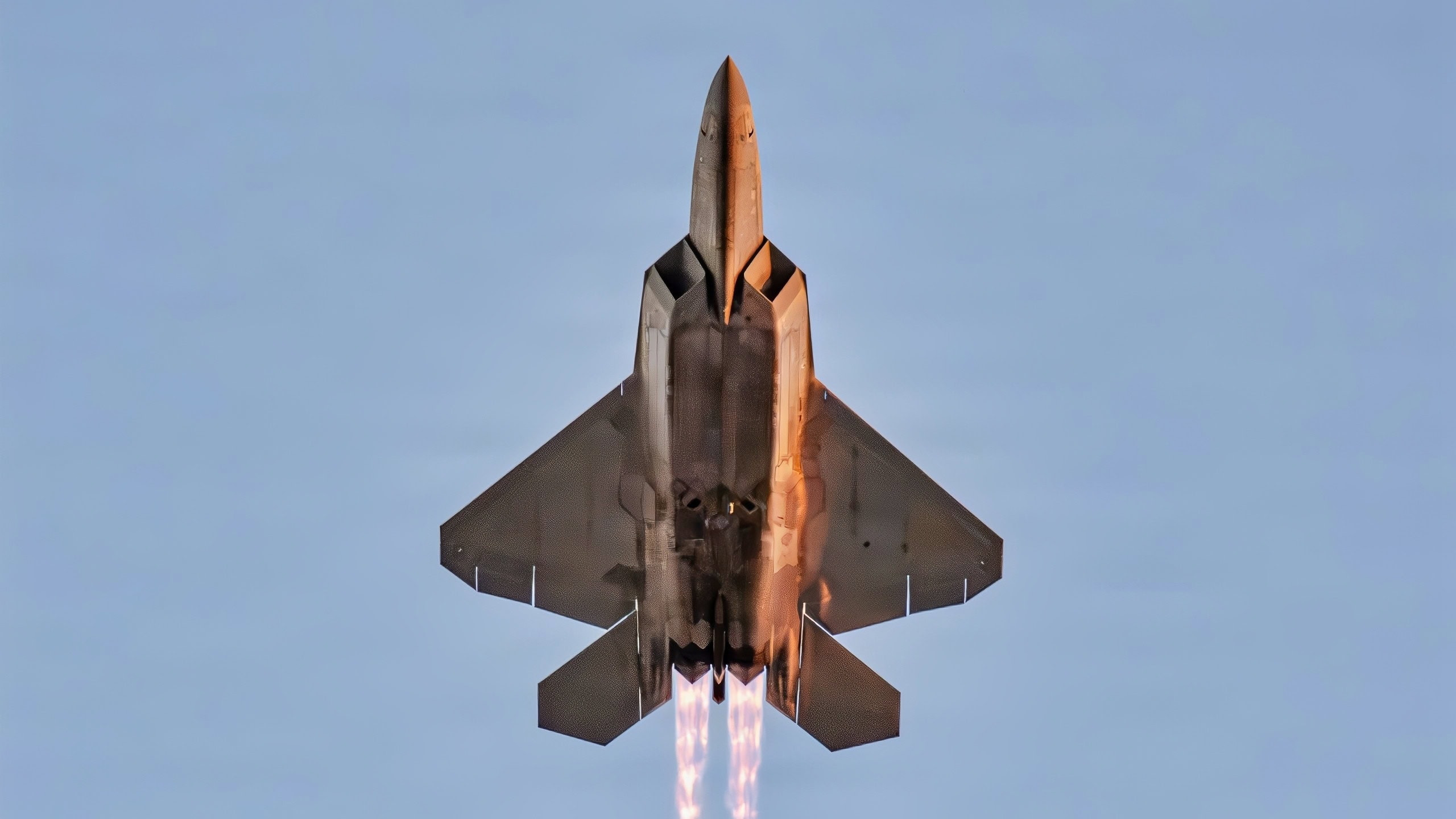
The U.S. Air Force is racing to maintain air superiority as China fields more advanced fighters, with Washington pushing ahead with next-generation programs such as NGAD and the F-47 fighter. Beijing has already deployed more than 200 Chengdu J-20 stealth fighters and is rapidly approaching the official deployment of its Type 003 Fujian carrier and stealth air wing. Beijing is piling the pressure on Washington, but that strain on the current U.S. fleet – spanning aging bombers and advanced F-35 fighter jets – is by no means new.
In fact, this kind of pressure has only been scaling for decades, and is the product of long-term structural decisions – not just recent developments in China. Chief among them was the 2009 decision to cap production of the F-22 Raptor at just 187 operational aircraft, far short of the hundreds originally planned. At the time, the decision made sense.
It worked operationally and satisfied conflicting budget demands. But in hindsight, the decision left the Air Force with a smaller and less flexible air superiority force just as great-power competition began to return, forcing the scramble we see today to rebuild that capacity through new programs.
The F-22 and Why It Was Cut Early
The Lockheed Martin F-22 Raptor was designed as the United States’ premier air dominance platform – a fifth-generation stealth fighter built to defeat advanced enemy aircraft in contested airspace.
Combining low observable stealth, supercruise capability (sustained supersonic flight without afterburners), advanced sensors, and high maneuverability, the F-22 was intended to replace the F-15C Eagle and ensure U.S. control of the skies against peer adversaries.
By the late 2000s, however, the program had already consumed tens of billions of dollars. Congress and Pentagon officials increasingly viewed it as a high-cost system delivering limited relevance to the wars the United States was actually fighting. The aircraft was optimized for high-end air-to-air combat against advanced adversaries, but it had not flown a single combat mission in Iraq or Afghanistan.
In 2009, Defense Secretary Robert Gates recommended halting production at 187 aircraft, arguing that the Pentagon needed to redirect funding toward ongoing conflicts and more flexible systems.
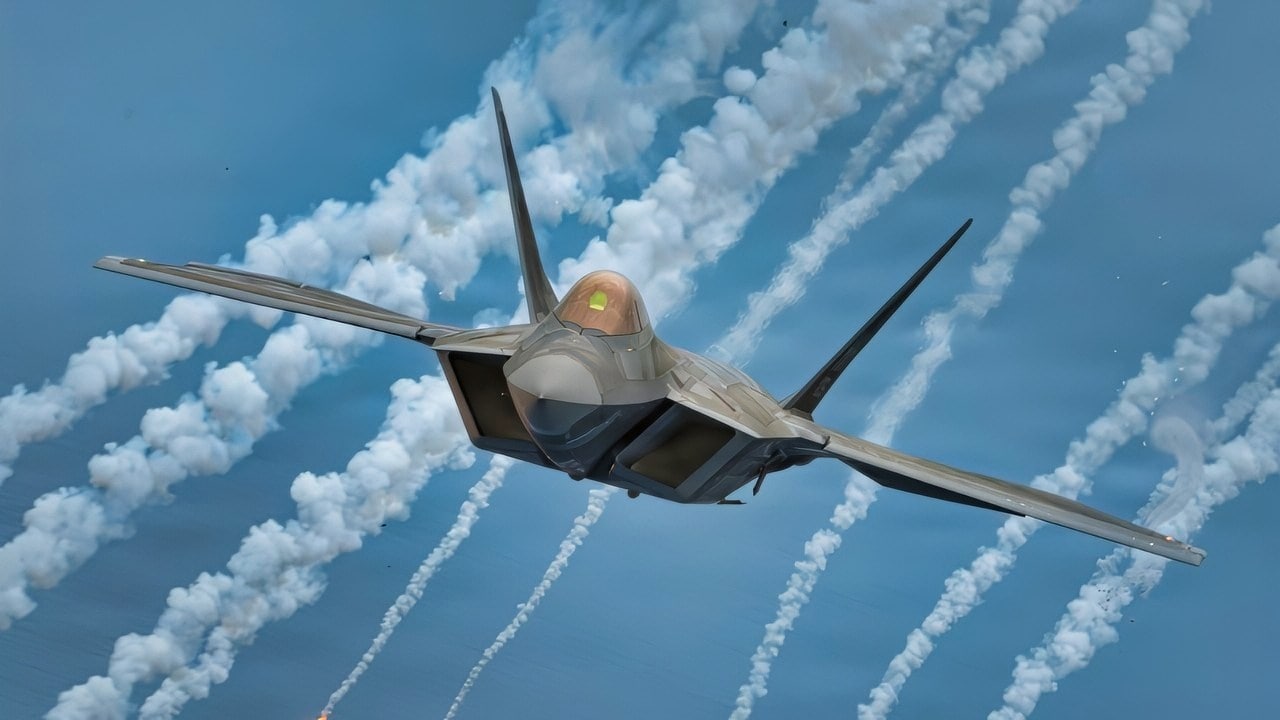
An F-22A Raptor aircraft assigned to the 154th Fighter Wing, Hawaii Air National Guard, completes flight operations during Sentry Aloha 26-1, Jan. 22, 2026. Sentry Aloha 26-1 is a recurring, large-scale training exercise designed to enhance readiness, interoperability and integration across U.S. and partner air forces. (U.S. Air National Guard photo by Senior Airman Michael Swingen)
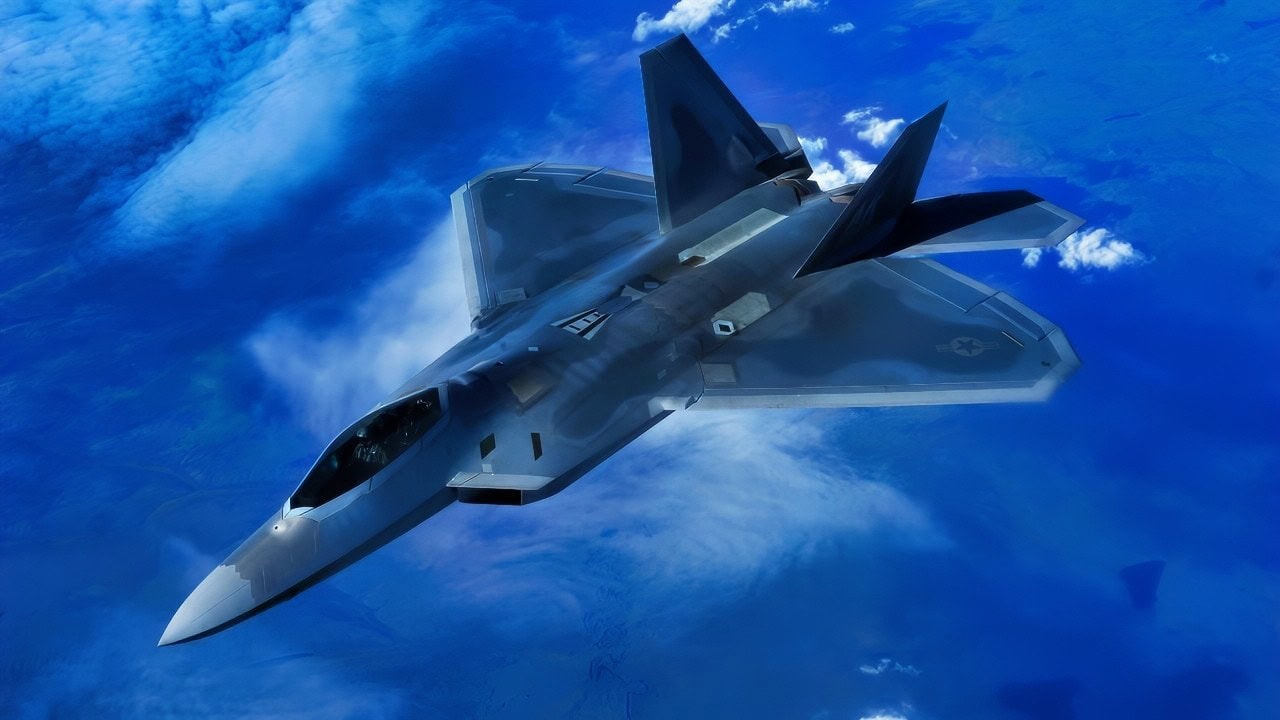
A U.S. Air Force F-22 Raptor assigned to the 90th Fighter Squadron, Joint Base Elmendorf-Richardson, Alaska, flies over clouds during RED FLAG-Alaska 14-3 Aug. 20, 2014, Eielson Air Force Base, Alaska. A combination of sensor capability, integrated avionics, situational awareness and weapons provides first-kill opportunity against threats. (U.S. Air Force photo by Staff Sgt. Jim Araos/Released)
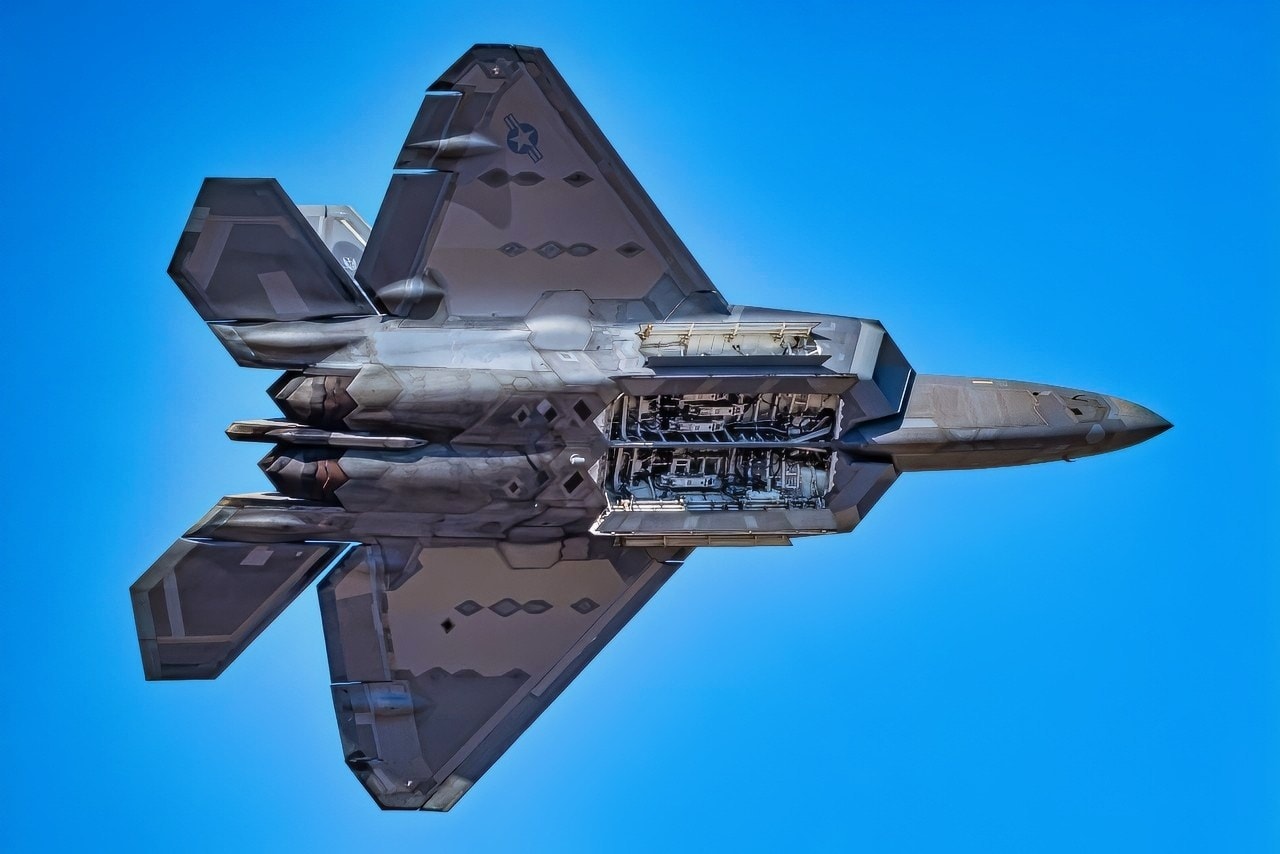
U.S. Air Force Maj. Joshua “Cabo” Gunderson, F-22 Raptor Demonstration Team commander and pilot, preforms the weapons bay door pass during rehearsal for the 2022 FIDAE Air & Trade Show, April 3, 2022 in Santiago, Chile. The F-22 Raptor is a multi-role air dominance stealth fighter that can carry of combination of air-to-air missiles and GPS guided bombs. (U.S. Air Force photo by Staff Sgt. Don Hudson)
Congress ultimately supported his suggestion, with the House and Senate voting to block additional funding despite strong opposition from within the Air Force.
In the end, though, it was hard to argue for the aircraft given the cost. The program cost was expected to exceed $60 billion, and per-unit costs kept climbing into the hundreds of millions when development was included. At the same time, the Pentagon was prioritizing the more versatile F-35 Lightning II and systems better suited to counterinsurgency warfare.
The result was a scarcer fleet of high-end air superiority fighters and a much larger number of multirole platforms.
The Problems Behind the Decision
The F-22’s early termination was partly due to budget pressure, but the biggest influence was the way the U.S. defense procurement system operates. The program ultimately suffered from an economies-of-scale problem: as production numbers dropped from hundreds of planned aircraft to fewer than 200, the cost per jet increased dramatically.
As prices increased, further cuts became justified, which in turn drove costs even higher.
The aircraft was also never exported. U.S. law prohibited the export of the F-22, meaning that even allies could never purchase it. Had that not been the case, unit costs would have been decreased, and sustained production would have become more feasible. Without external demand, the entire financial burden fell on the U.S. government.

An F-35A Lightning II flown by a 65th Aggressor Squadron (AGRS) pilot takes off for its first flight with a new paint scheme at Nellis Air Force Base, Nevada, May 26, 2022. The mission of the 65 AGRS is to know, teach and replicate fifth-generation air adversaries tactics. (U.S. Air Force photo by Airman 1st Class Josey Blades)
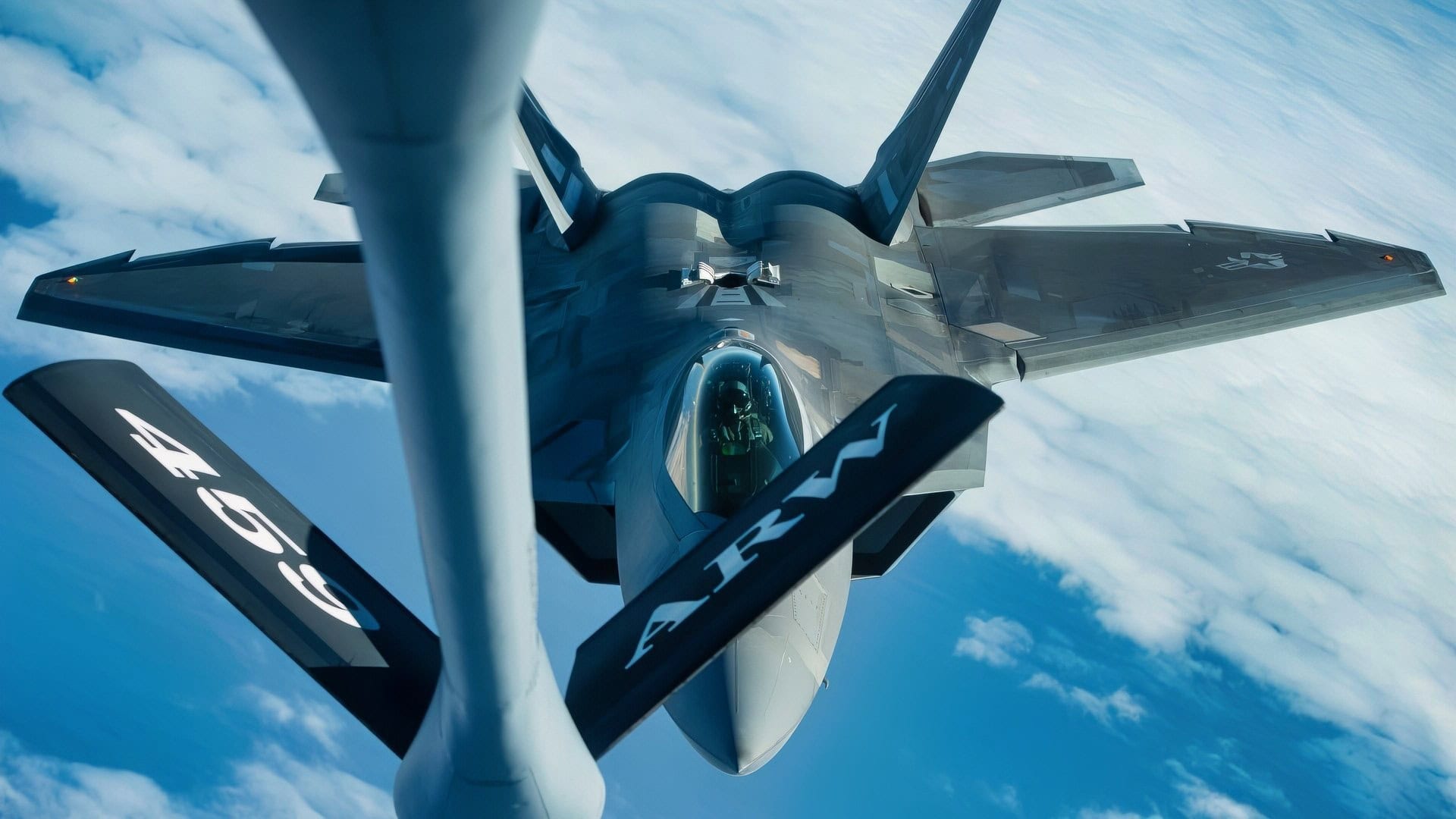
An F-22 Raptor from the Hawaii Air National Guard’s 199th Fighter Squadron, conducts aerial refueling with a KC-135 Stratotanker near Joint Base Pearl Harbor-Hickam, Hawaii, Jan. 15, 2019. The F-22 Raptors conducted interoperability training with the B-2 Spirit bomber deployed here from Whiteman Air Force Base, Missouri. The bombers and more than 200 Airmen are deployed in support of U.S. Strategic Command’s bomber task force mission. Bomber aircraft regularly rotate through the Indo-Pacific region to integrate capabilities with key regional partners and maintain a high state of aircrew proficiency. (U.S. Air Force photo by Master Sgt. Russ Scalf)

An F-22 Raptor from the Hawaii Air National Guard 154th Wing retreats after mid-flight refueling from a KC-135 Stratotanker assigned to the 128th Air Refueling wing of Milwaukee during Sentry Aloha off the coast of Honolulu, Hawaii on January 14, 2026. Sentry Aloha provides cost-effective and realistic, large-scale training scenarios to prepare warfighters and support the Air National Guard’s position as a crucial component of the nation’s operational force.
Third, the program’s timing just didn’t work out. The F-22 was designed to counter Soviet-era threats, but it entered service in 2005 – more than a decade after the Cold War ended. By then, U.S. defense strategy had shifted toward counterterrorism and irregular warfare, where stealth air superiority fighters offered limited utility.
When the F-22 production line was eventually shut down, it also created some long-term constraints. Once the line was closed in 2011, restarting it became prohibitively expensive and complex – meaning the United States effectively locked itself into a fixed fleet size and could not adapt to future needs. Future F-22s became virtually impossible to manufacture, forcing the Air Force to wait for next-generation systems.
Was It A Mistake?
At the time, the decision to end F-22 production was widely seen as rational – and it would have been hard to argue otherwise.
The United States was fighting two wars (Iraq and Afghanistan), facing budget deficits, and at the same time, was not confronting an immediate peer competitor.
President Barack Obama argued in 2009 that defense spending was a “zero-sum game,” and that resources had to be directed toward more pressing needs. Looking at the decision from that perspective, continuing to buy expensive air superiority fighters that were not being used in combat made little sense.
But time has passed, and the strategic environment has now changed. The return of great-power competition – particularly with China – has renewed the importance of high-end air dominance.
The F-22, once seen as excessive, is now a valuable asset.
But that being said, it’s also outdated – and as long as the F-47 arrives soon, and a conflict in the Indo-Pacific doesn’t arrive too soon, the early F-22 termination may be remembered as a calculated risk that paid off.
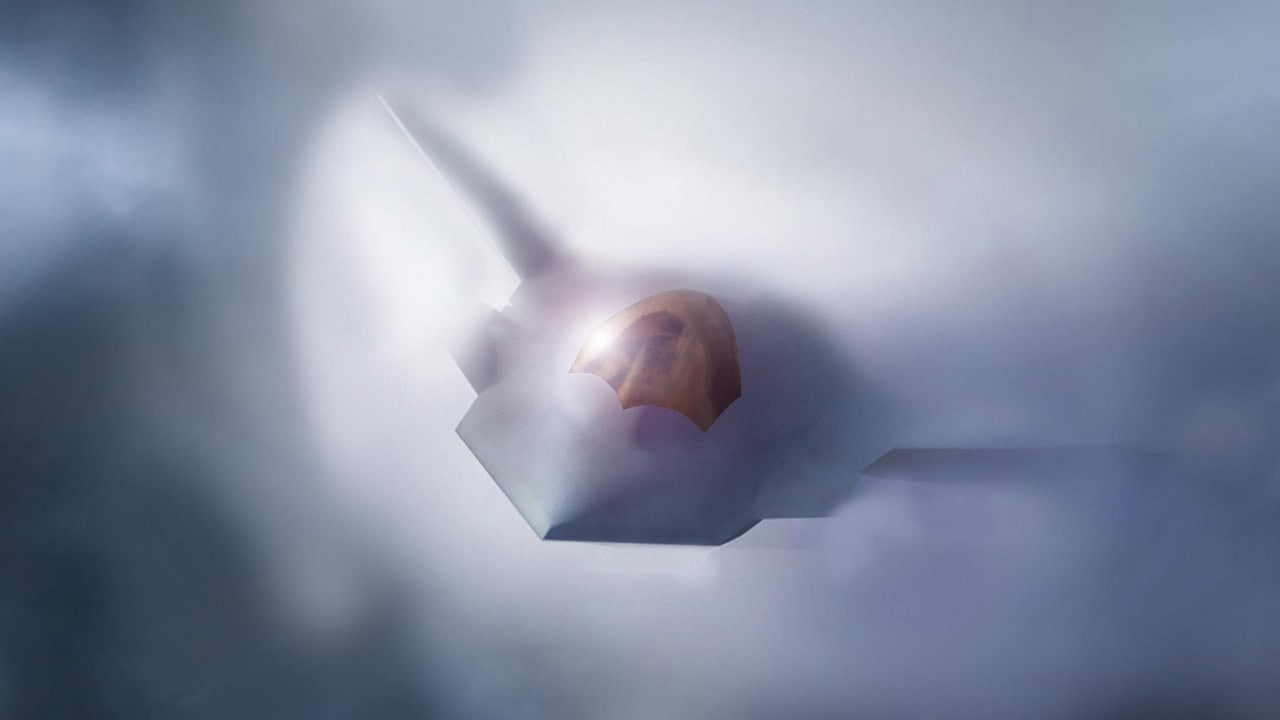
F-47 Fighter. Image Credit: U.S. Air Force.
About the Author: Jack Buckby
Jack Buckby is a British researcher and analyst specializing in defense and national security, based in New York. His work focuses on military capability, procurement, and strategic competition, producing and editing analysis for policy and defense audiences. He brings extensive editorial experience, with a career output spanning over 1,000 articles at 19FortyFive and National Security Journal, and has previously authored books and papers on extremism and deradicalization.

