
U.S. Air Force Seeks Historic Funding for Base Buildout, Nuclear Forces: The Department of the Air Force (DAF) is seeking funding for one of its biggest infrastructure expansions in years, more than doubling its request over 2026. The department is requesting $26.7 billion, up from last year’s $13 billion, with documents revealing the massive scale of the planned expansion. The news comes after the Trump administration announced a historic $1.5 trillion national defense budget for 2027 – one of the largest in Pentagon history. The request seeks $1.15 trillion in discretionary funding, with an additional $350 billion that the White House hopes to secure through separate legislation.
The funding is intended to provide all areas of the military with resources necessary to ramp up defense capabilities, including military modernization, nuclear deterrence, missile defense, shipbuilding, readiness, and next-generation combat systems. The DAF’s request will specifically help prepare bases for the incoming G-47 sixth-generation fighter, B-21 stealth bomber, the Sentinel intercontinental ballistic missile program, and a growing Space Force.
U.S. Air Force Begins Its Rearmament Program
Part of the spending increase reflects years of delayed maintenance across the Air Force. The scale of the problem is significant, according to Assistant Secretary of the Air Force for Energy, Installations, and Environment Michael Borders, who told Congress that the service’s maintenance and repair backlog could now cost up to $55 billion.
The Air Force is now looking to repair aging bases while simultaneously constructing a new generation of systems. Many of its current installations were designed around Cold War fleets and later adapted for post-9/11 operations – not for stealth bombers or sixth-generation fighters.
Those bases will also need to be adapted to accommodate modern digital architecture and provide specialized maintenance to modern platforms.
Family housing is also part of the request, with funding rising from roughly $644 million in 2026 to more than $1.3 billion in 2027.
Housing shortages and deteriorating conditions have become a retention issue across multiple services, particularly at remote bases where private-sector alternatives are limited.
$730 Million for Nellis
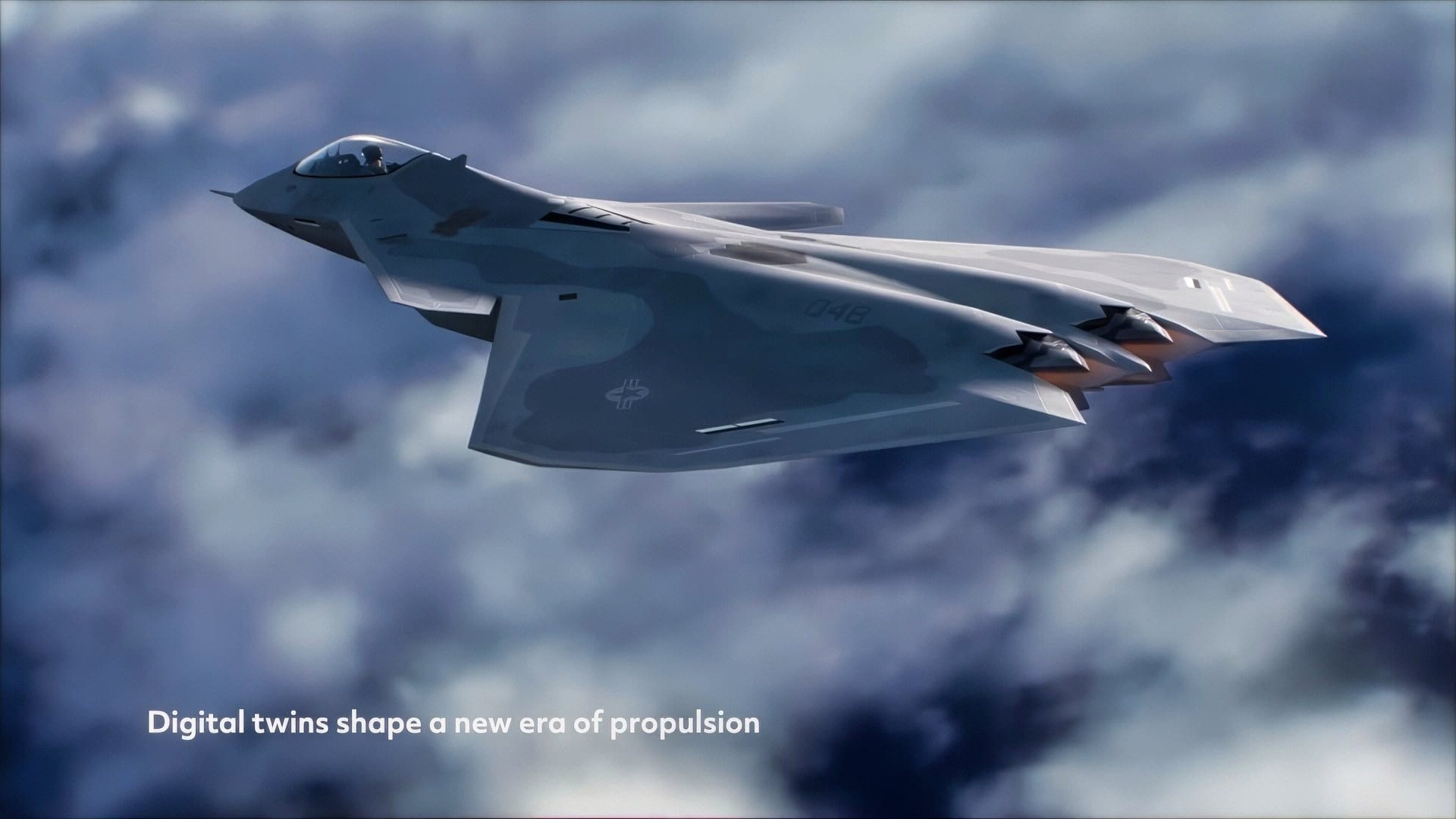
The request includes $730 million for new facilities to support the F-47 fighter at Nellis Air Force Base, Nevada.
Planned construction includes maintenance hangars, weapons storage, fuel systems, simulator facilities, training spaces, a low-observable corrosion repair complex, and a $192.5 million apron complex (a large, paved aircraft parking and servicing area next to the runway).
Nellis Air Force Base is particularly important because it sits adjacent to the Nevada Test and Training Range, the largest contiguous air and ground training space available to the U.S. military for peacetime operations.
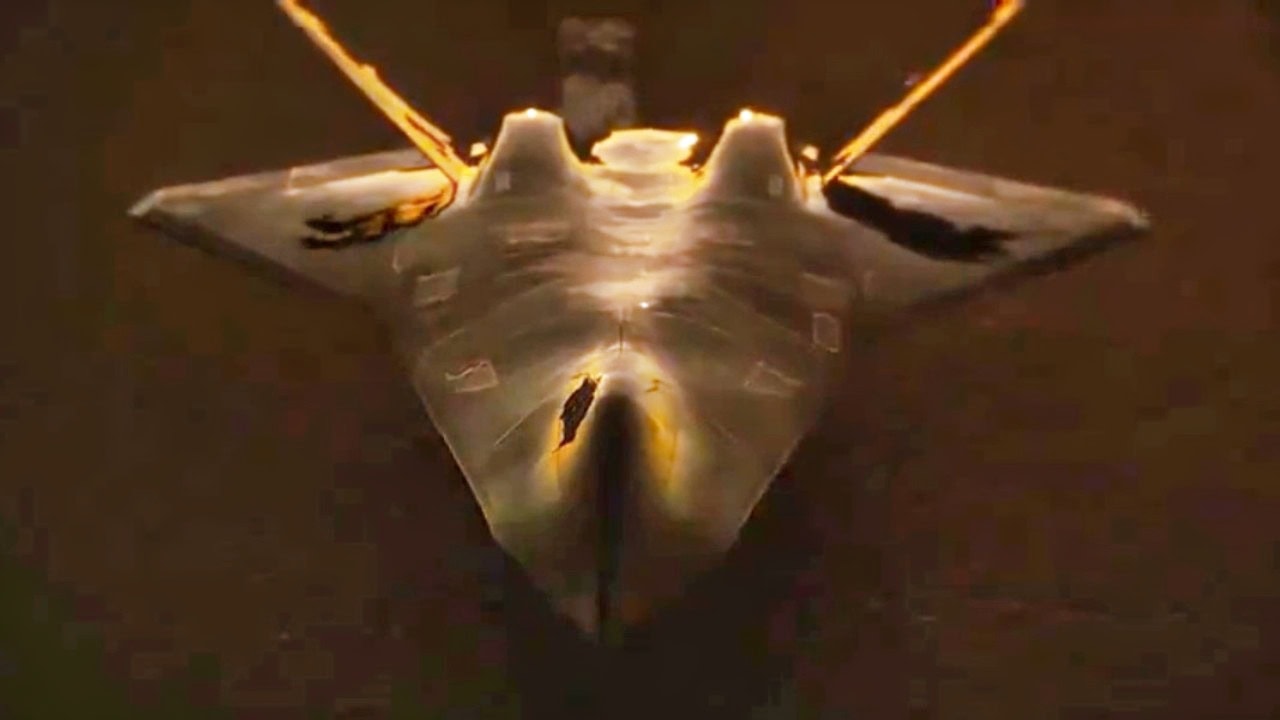
F-47 Fighter from Boeing. Image Credit: U.S. Air Force Screenshot.

Shown is a graphical artist rendering of the Next Generation Air Dominance (NGAD) Platform. The rendering highlights the Air Force’s sixth generation fighter, the F-47. The NGAD Platform will bring lethal, next-generation technologies to ensure air superiority for the Joint Force in any conflict. (U.S. Air Force graphic)
It is the center of advanced air combat exercises such as Red Flag and a logical location for operational testing. The budget’s emphasis on Nellis could indicate that the Air Force wants the F-47 to move rapidly from development into real-world experimentation, with delivery expected to begin next year.
Preparing for the B-21 Raider
The budget request also broadens preparations for the B-21 Raider, the Air Force’s next stealth bomber that is designed to replace the B-1 and B-2 over time. The advanced bomber will not only provide new capabilities but could also be procured in such large numbers that it eventually replaces the entire U.S. bomber fleet.
Ellsworth Air Force Base in South Dakota remains scheduled to be the first operational beddown location, but the fiscal 2027 request expands construction to additional bomber bases years before deliveries are scheduled.
The Air Force is also seeking $169 million for weapons and training facilities at Whiteman Air Force Base, Missouri, which is home to the B-2 Spirit. At Dyess Air Force Base, Texas, currently home to the B-1B bombers, it is seeking $160 million for a simulator and low-observable corrosion-control facilities.
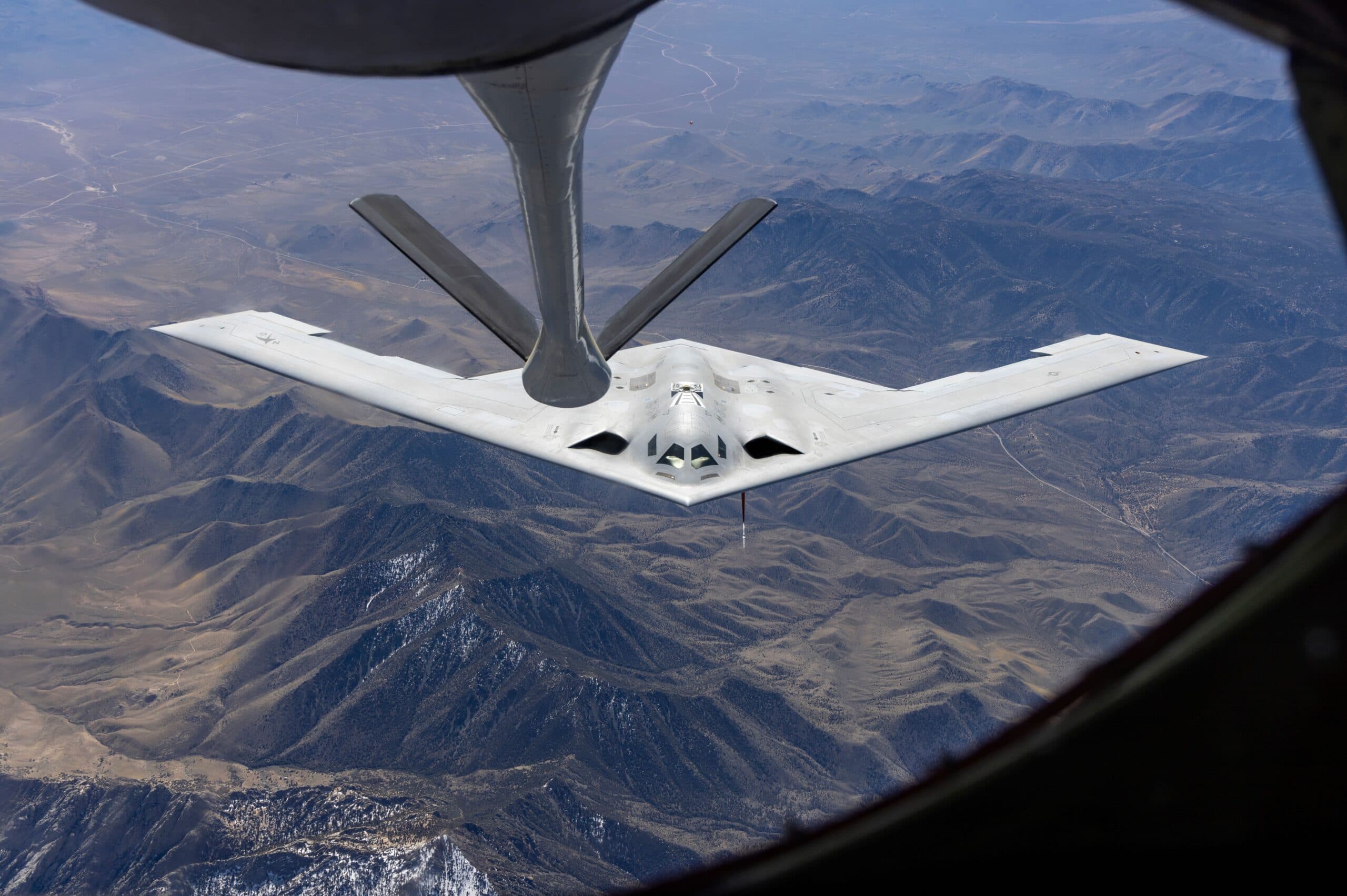
B-21 Raider. Image Credit: USAF.
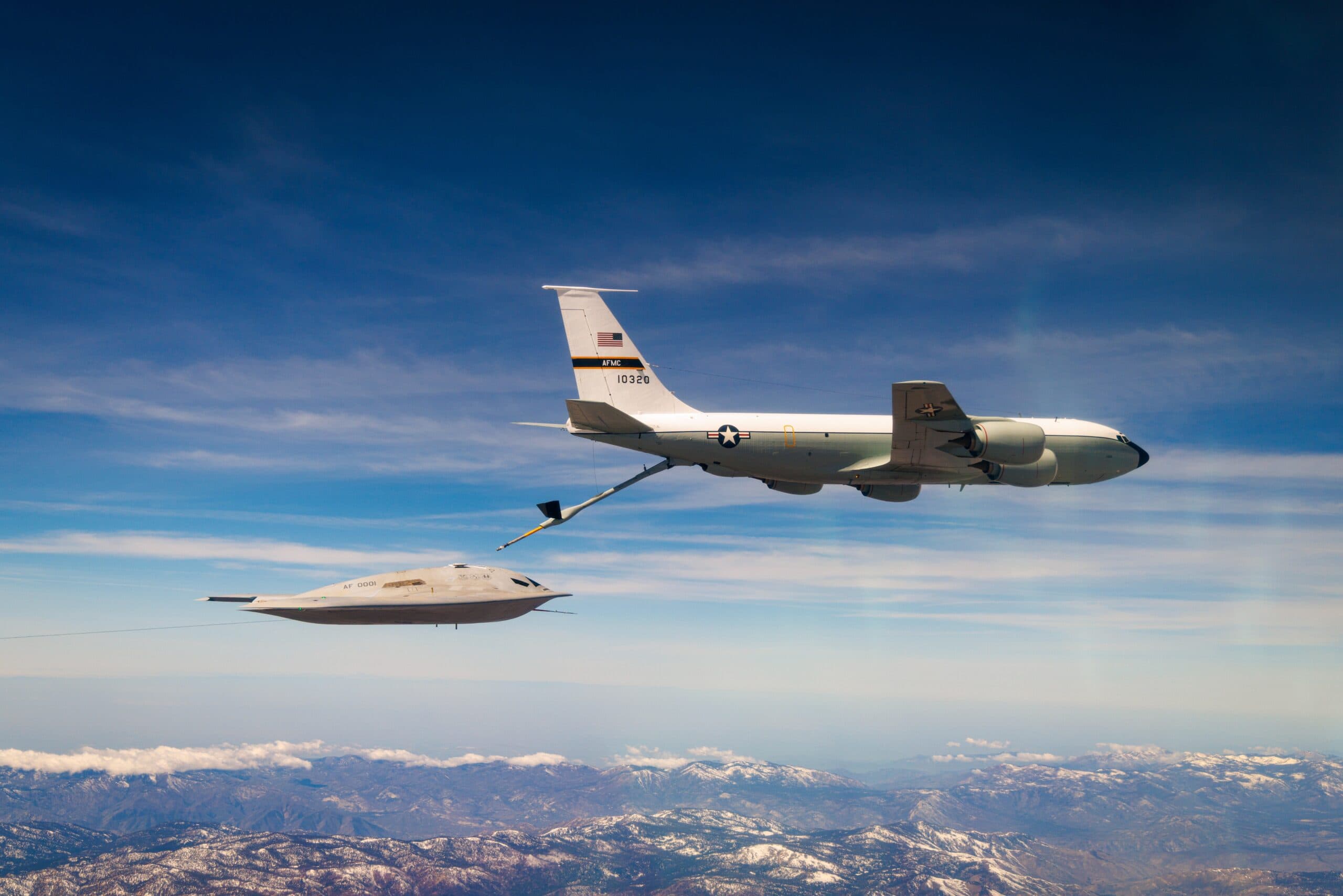
B-21 Raider Taking on Fuel. Image Credit: U.S. Air Force.
The investments are necessary to ensure that the new bombers, once they arrive, can be properly maintained and stored in climate-controlled maintenance areas and secure mission planning spaces.
They will also support the establishment of specialized coatings support (which helps maintain their stealth profile), trained crews, and new operational workflows long before the jets arrive.
The Big Story is Nuclear
While fighters and bombers receive a lot of attention in the budget, the largest long-term construction burden looks to be the Sentinel intercontinental ballistic missile replacement program.
The Air Force has said Sentinel requires 450 new silos and associated facilities across five states, along with hundreds of miles of cabling and utility lines. For FY2027, the department is seeking just over $1 billion tied to Sentinel construction.
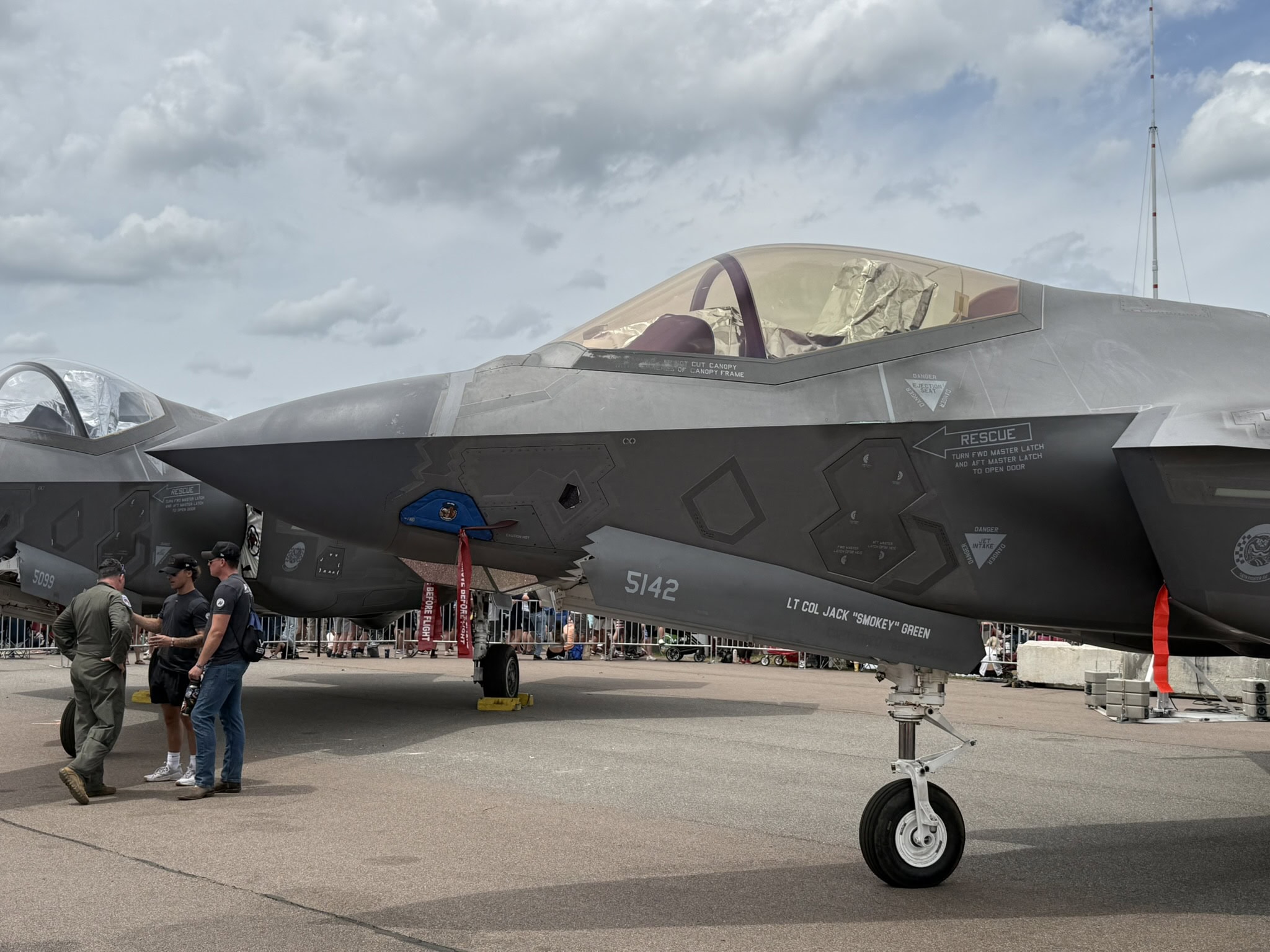
F-35 Stealth Fighter at Lakeland, Florida Air Show. Take on 4/19/2026. Image Credit: 19FortyFive.com
That includes $632 million at F.E. Warren Air Force Base in Wyoming, $232 million at Minot Air Force Base in North Dakota, and $138.5 million at Malmstrom Air Force Base in Montana. The numbers suggest a nationwide rebuild of the land-based nuclear deterrent.
The request also includes approximately $1 billion for new Space Force operations centers, while Space Force sustainment and modernization spending would jump from about $570 million in 2026 to nearly $1.8 billion in 2027.
About the Author: Jack Buckby
Jack Buckby is a British researcher and analyst specializing in defense and national security, based in New York. His work focuses on military capability, procurement, and strategic competition, producing and editing analysis for policy and defense audiences. He brings extensive editorial experience, with a career output spanning over 1,000 articles at 19FortyFive and National Security Journal, and has previously authored books and papers on extremism and deradicalization.