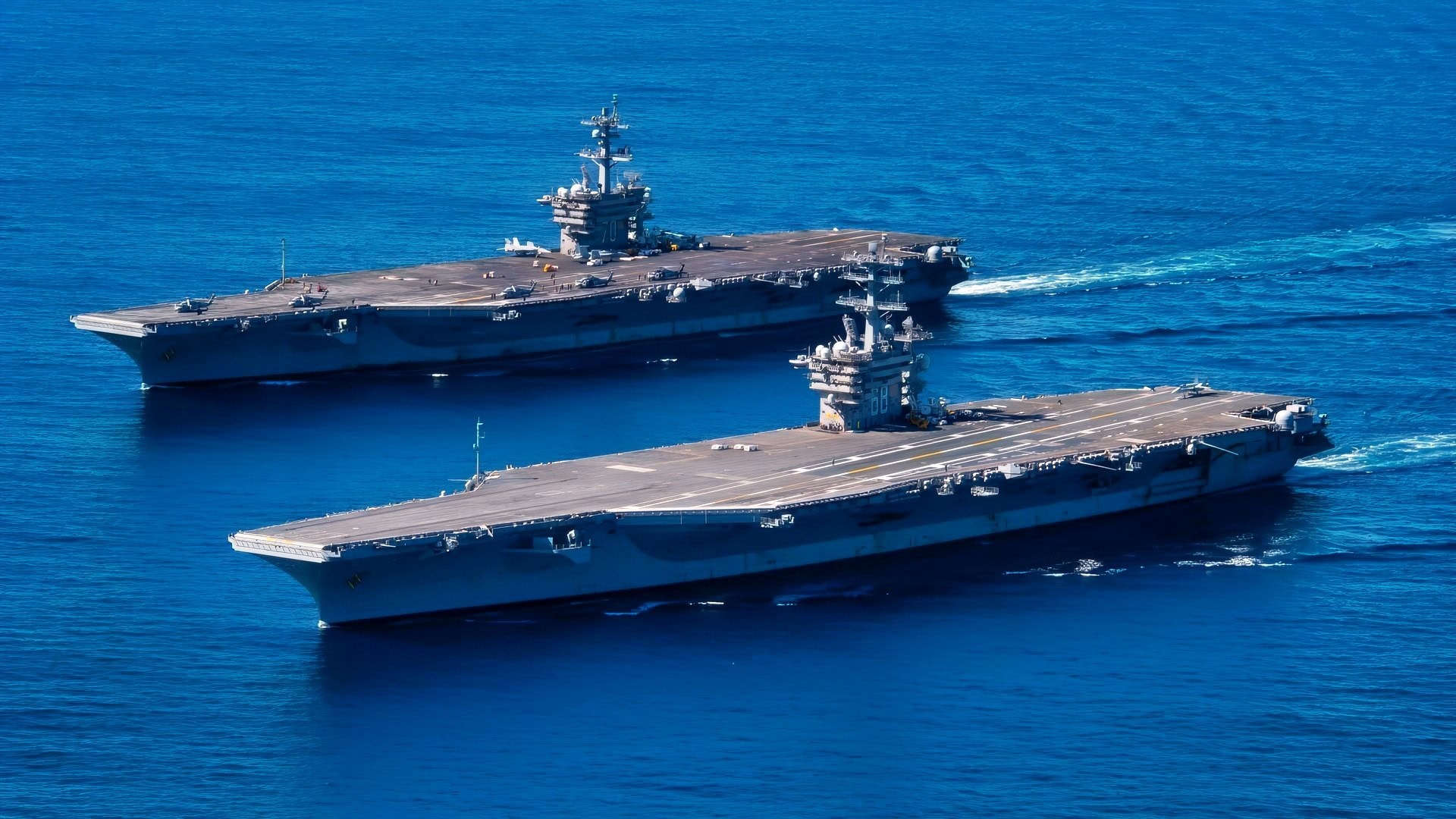
Just moments before he left office, former Navy Secretary John Phelan told USNI the service was considering foreign shipyards to accelerate and strengthen U.S. shipbuilding, something that makes sense given the pace at which the People’s Liberation Army-Navy is adding new ships. Nearly 12 years ago, prognosticators predicted that the sheer size of the PLA Navy would surpass the U.S. Navy by 2020; not only did this happen, but the PLAN appears to have added high-tech, extremely capable warships, such as its emerging Type 055 destroyers and Type 076 Amphibious Assault Ships.
This accelerating China threat is intensifying the U.S. demand to build more warships … faster than before.
The U.S. Navy’s Shipbuilding Crisis, Explained
Scaling ship production to an entirely new level within the U.S. is likely to be difficult for many reasons, so Pentagon and Navy leaders are now intensifying a push to leverage allied shipyard capacity from friendly countries.
The service’s 2027 budget seeks to add $1.8 billion to the shipbuilding endeavor.
“We’ve been directed to take a look at the possibility of having foreign combat ships,” Phelan told USNI. “If we were to go down that path, we would have to look at ships that we think are producible and could hit the fleet fast. That would tend to lead you more to the Korea[s], Japans of the world than the others, just because of producibility.”
Chinese Naval Threat
The Navy has publicly acknowledged the need to grow its fleet to maintain deterrence and operational flexibility, particularly in the Indo-Pacific region.
However, U.S. shipyards are operating at or near capacity, with limited ability to scale up quickly.
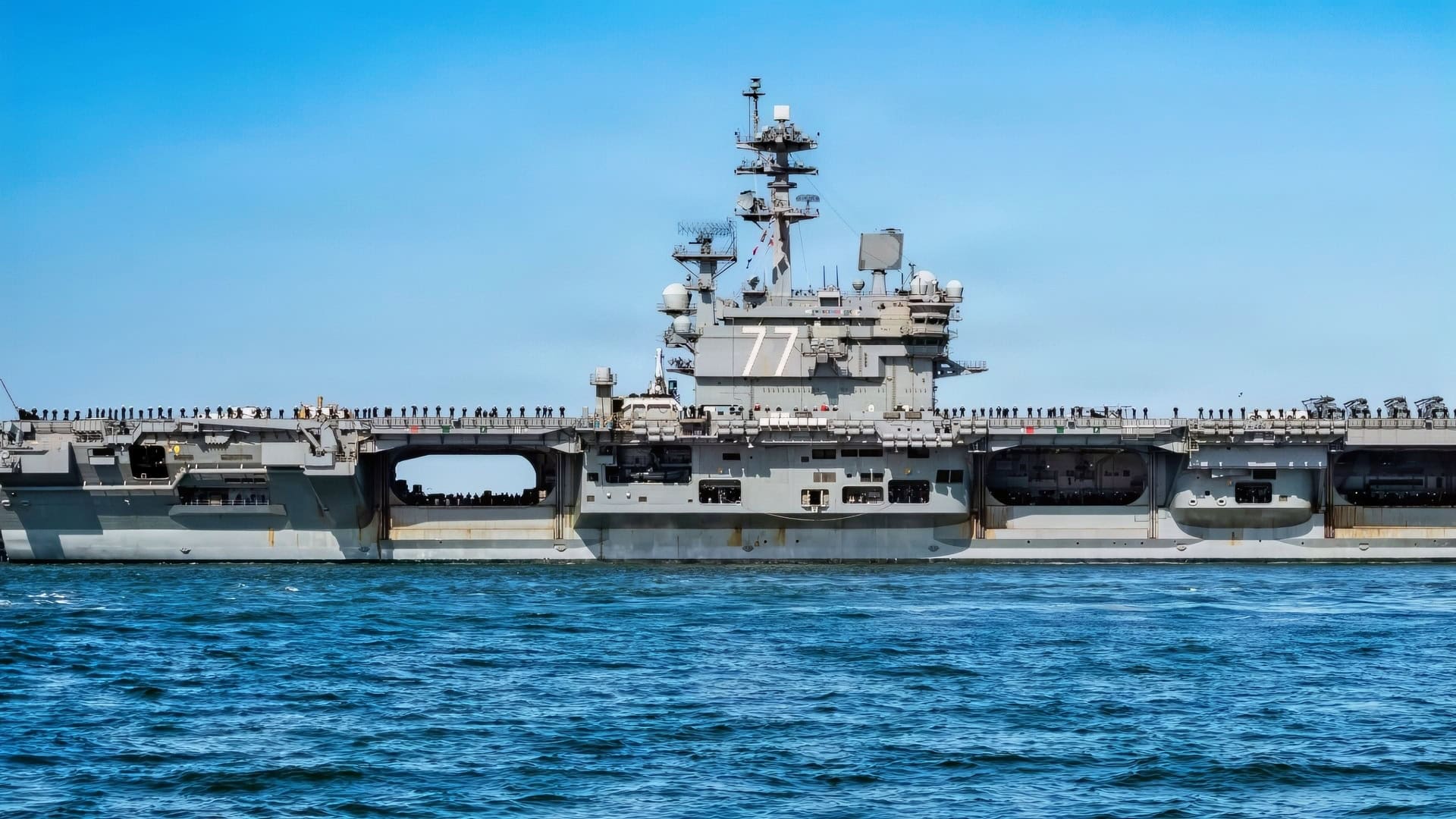
NAVAL STATION NORFOLK (March 31, 2026) The Nimitz-class aircraft carrier USS George H.W. Bush (CVN 77), the flagship of the George H.W. Bush Carrier Strike Group, departs Naval Station Norfolk to begin operations in support of its scheduled deployment, March 31, 2026. More than 5,000 personnel are assigned to the George H.W. Bush Carrier Strike Group. The George H.W. Bush Carrier Strike Group provides combatant commanders and America’s civilian leaders increased capacity to underpin American security and economic prosperity, deter adversaries, and project power on a global scale through sustained operations at sea. (U.S. Navy photo by Mass Communication Specialist 2nd Class Derek Cole)
While China has added additional shipyards with little difficulty and continues to massively produce amphibs, destroyers, and carriers, the U.S. shipyard capacity simply cannot keep pace.
Simple survival in the Naval balance of power would appear to require that the Pentagon find ways to massively increase its shipbuilding output.
Countries such as South Korea and Japan have demonstrated the ability to produce large, complex vessels efficiently and at scale.
Partnering with these shipyards could help bridge the gap between current capacity and strategic needs.
Foreign shipyards, particularly in allied nations with competitive labor markets and streamlined production processes, can often deliver similar vessels at lower cost and in shorter timeframes.
This is not necessarily a reflection of lower quality but rather of different industrial practices, government support structures, and economies of scale. By outsourcing certain types of ships, such as logistics ships or even some surface combatants, the Navy could allocate its domestic resources more strategically.
This could free up more time, space, and production capacity for U.S. Navy highly specialized or sensitive platforms, such as nuclear-powered submarines and aircraft carriers.
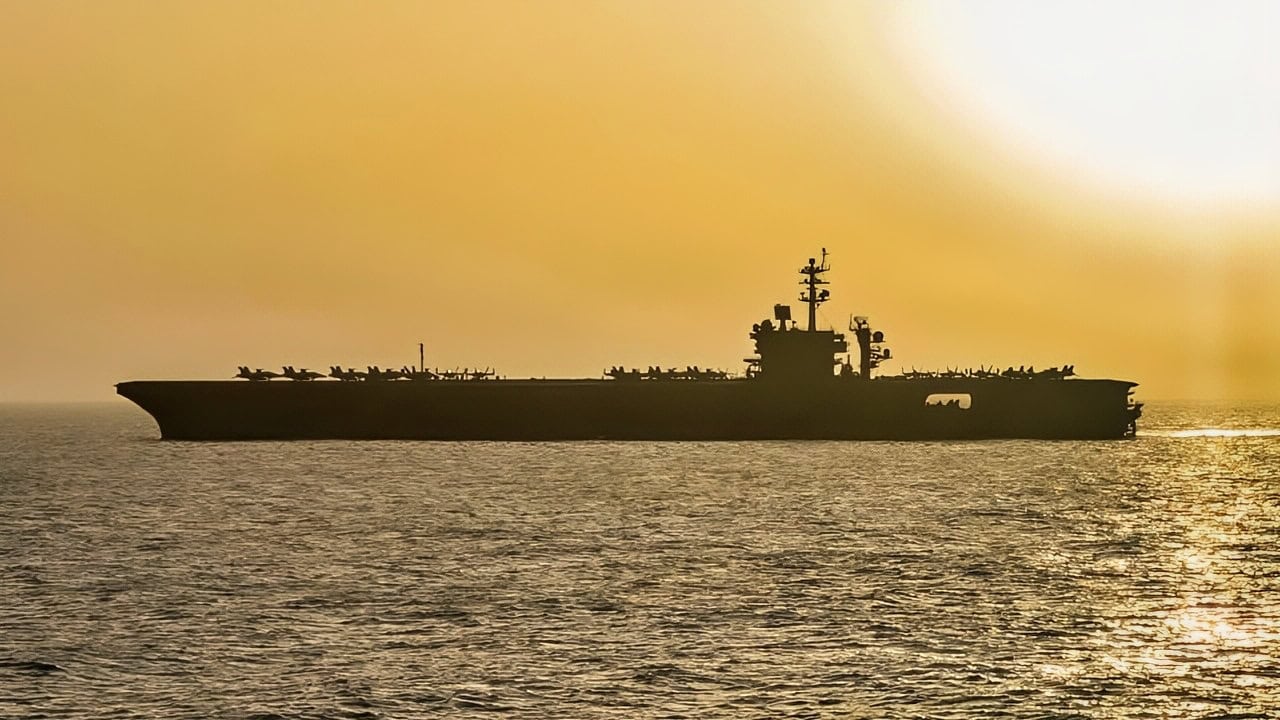
USS Abraham Lincoln (CVN 72) conducts U.S. blockade operations in the Arabian Sea, April 16. The ship’s embarked carrier air wing includes eight F-35C stealth fighters, F/A-18 fighter jets, EA-18G electronic attack aircraft, E-2D command and control planes, MH-60 helicopters and CMV-22B Ospreys for logistics support. (U.S. Navy photo)
Exposing Technology
Foreign shipbuilding cooperation could massively accelerate the scale and volume of U.S. Navy shipbuilding, which also introduces the potential risk of having highly secret and specialized U.S. Navy weapons systems exposed or stolen by non-allied nations.
Security regarding technology exchange and access to foreign docks would need to be carefully maintained, as the U.S. Navy would not want to compromise its warship weapons and technology “edge” among the world’s greatest Navies.
The Navy could adopt a tiered approach, limiting foreign construction to ships with less sensitive systems while ensuring that critical technologies remain protected. Additionally, contracts could stipulate strict security protocols, oversight mechanisms, and the use of U.S.-provided components where necessary.
The more U.S. oversight and the use of “export variant” technologies for foreign partners, the more secure the U.S. advantage is.
Another way to reduce risk is to pursue collaborative production models, in which hulls are built abroad and outfitted domestically, which could further reduce risk while still benefiting from foreign capacity.
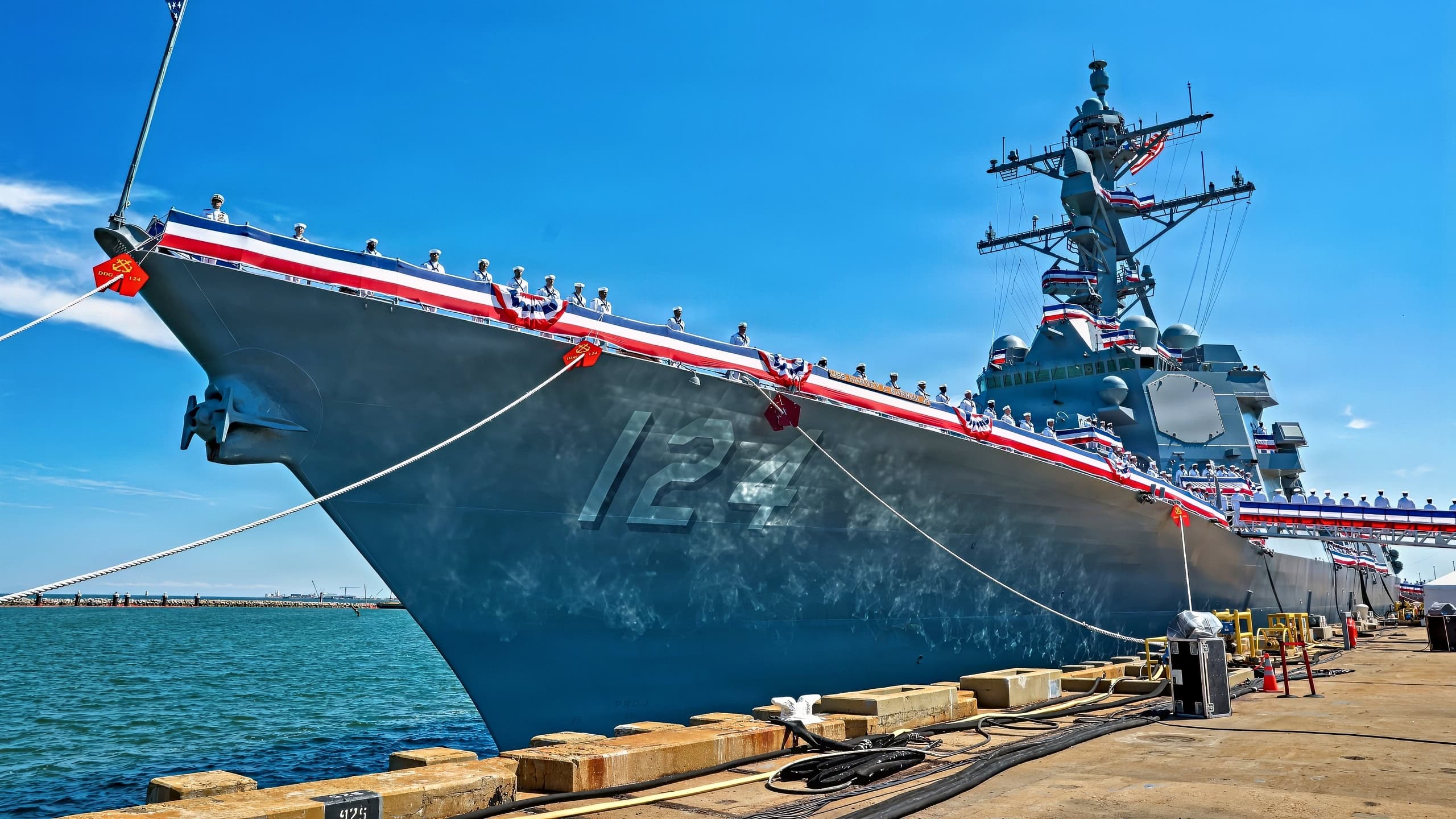
(April 11, 2026) – Sailors man the rails aboard the Navy’s newest Arleigh Burke-class guided-missile destroyer USS Harvey C. Barnum Jr. (DDG 124) during the commissioning ceremony in Norfolk, Virginia, April 11, 2026. The warship bears the name of a living Medal of Honor recipient, retired Col. Harvey C. “Barney” Barnum Jr. (U.S. Navy photo by Mass Communication Specialist 1st Class Theoplis Stewart)
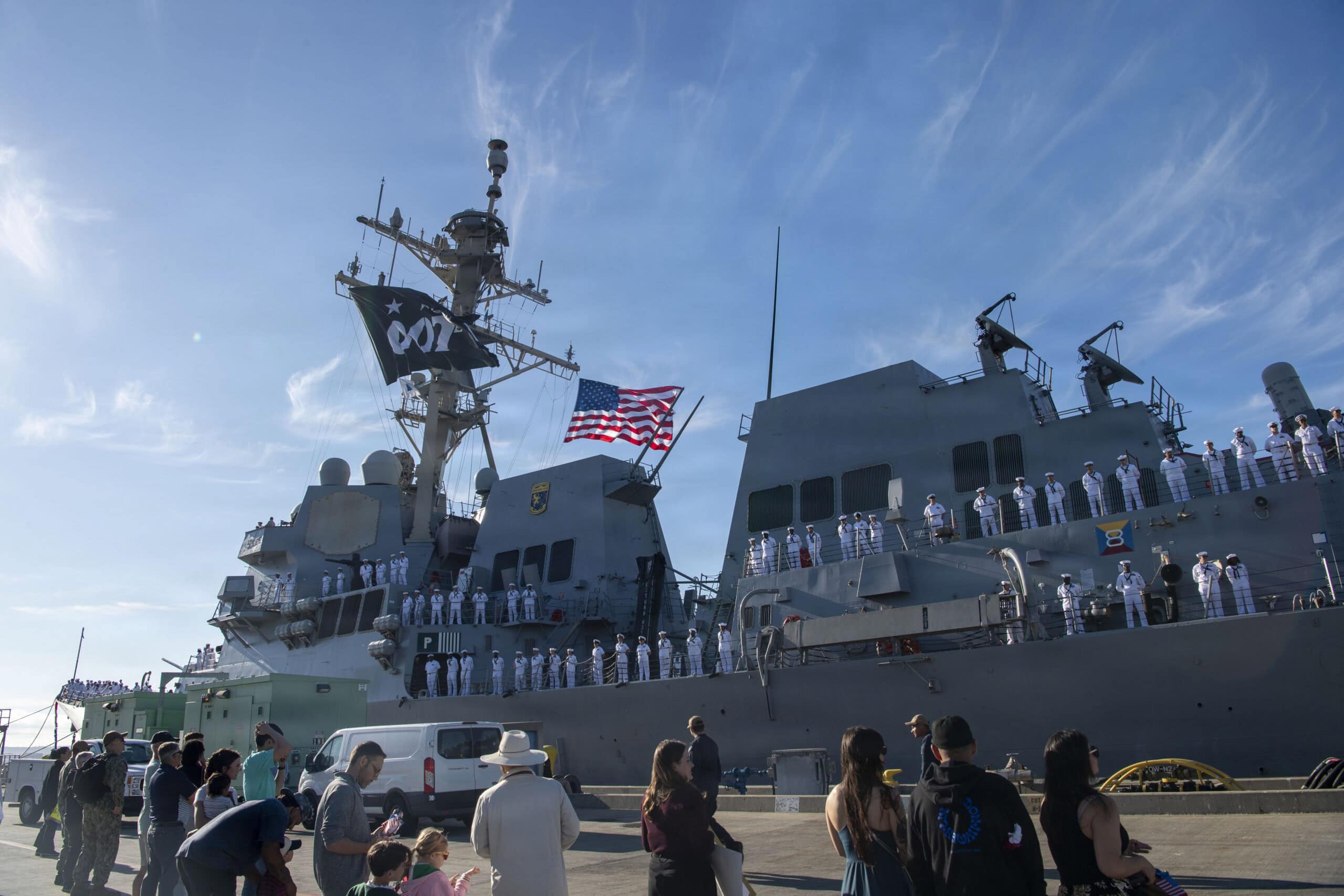
SAN DIEGO, Ca. (April 10, 2026) – Friends and family greet Arleigh Burke-class guided-missile destroyer USS Stockdale (DDG 106) from the pier, as the ship returns to its homeport of Naval Base San Diego following a seven-month underway to the U.S. 4th Fleet area of operations, April 10. Stockdale returns safely home having successfully carried out sustained operations at sea, maintaining peace through strength and sustaining credible deterrence alongside our allies and partners. (U.S. Navy Photo by Mass Communication Specialist 1st Class Sara Eshleman)
Keeping Workers
There is also the issue of the skilled workforce, a culture of highly specialized experts unique to the shipbuilding universe, so some might be inclined to posit that foreign construction could compromise the availability and skill of shipbuilding professionals.
For example, maintaining a steady workforce is considered vital to the U.S. industrial base, and it is one of several reasons why the Navy has, in recent years, been pursuing “block buys” in which several big-platform warships are put on contract at the same time.
This allows the workforce to stabilize and remain intact due to longer-term opportunities, because when contracts are delayed, truncated, or simply inconsistent, the skilled shipbuilding workforce of engineers, welders, and machine operators all “leave” for other opportunities to sustain income.
However, the current demand for U.S. ships exceeds domestic capacity, meaning that foreign construction would fill gaps rather than displace existing work.
Moreover, increased fleet size would likely generate additional demand for maintenance, upgrades, and support services—areas that could continue to be handled domestically. Policymakers could also pair foreign contracts with investments in U.S. shipyards, ensuring long-term competitiveness while addressing immediate needs.
About the Author: Kris Osborn, Warrior Maven President
Kris Osborn is the Military Technology Editor of 19FortyFive. Osborn is also President of Warrior Maven – Center for Military Modernization. Osborn previously served at the Pentagon as a highly qualified expert in the Office of the Assistant Secretary of the Army—Acquisition, Logistics & Technology. Osborn has also worked as an anchor and on-air military specialist at national TV networks. He has appeared as a guest military expert on Fox News, MSNBC, The Military Channel, and The History Channel. He also has a Master’s Degree in Comparative Literature from Columbia University.