
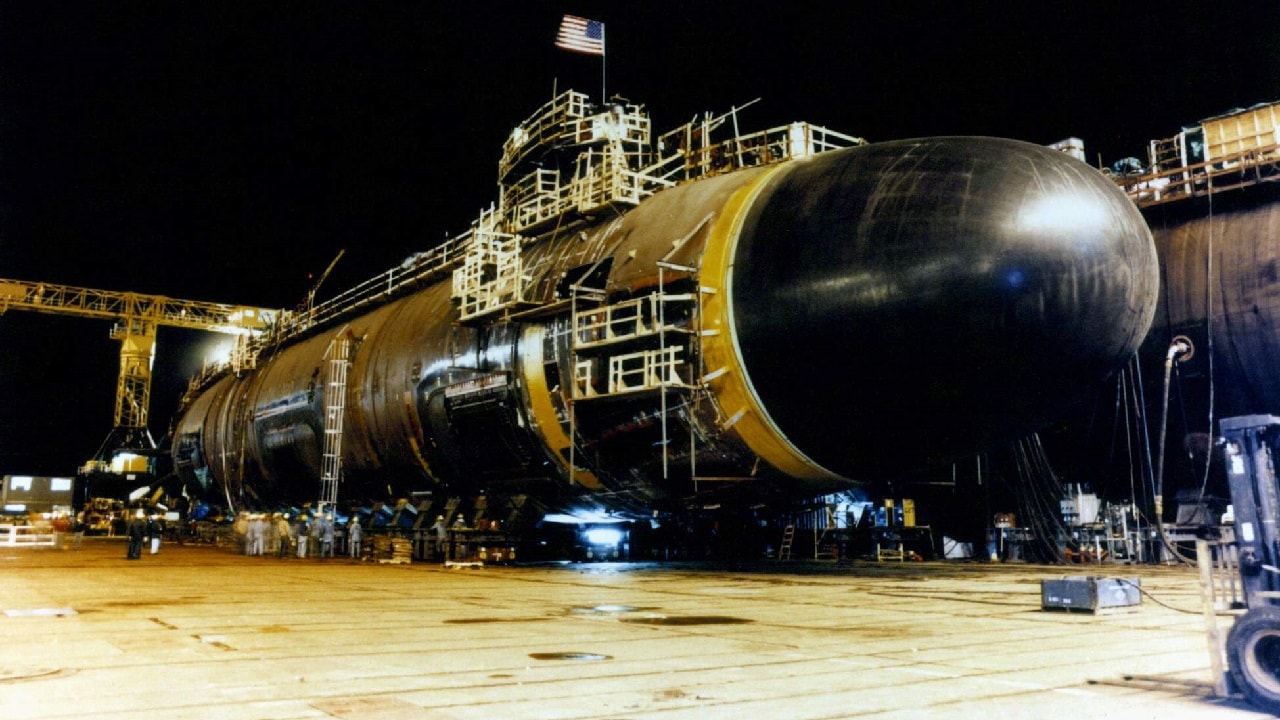
The U.S. Navy’s Seawolf class nuclear-powered fast-attack submarines (SSNs) are extremely impressive warships, and back in the day, they seemed like The Next Big Thing in undersea warfare. However, despite their tremendous potential, only three were built: USS Seawolf (SSN-21), USS Connecticut (SSN-22), and USS Jimmy Carter, commissioned in 1997, 1998, and 2005, respectively. So then, one might reasonably ask: Why were so few of these blockbuster boats built? And how did that impact the U.S. Navy in the long run?
Bottom Line Up Front (BLUF): So, What Went Wrong?
Originally, a fleet of 29 boats was to be built over a decade, but that was reduced to a dozen hulls.
Then came the collapse of the Soviet Union in 1991, which officially ended the Cold War; the resulting “peace dividend” threw a proverbial wrench into the works and cast serious doubts on the future viability of the Seawolf project. As the Seaforces-online website explains, “This, in turn, led to the design of the smaller Virginia class.
The Seawolf class cost about $3 billion per unit ($3.5 billion for USS Jimmy Carter), making it the most expensive SSN submarine and the *second-most-expensive submarine ever*, after the French SSBN Triomphant class… The projected cost for 12 submarines of this class was $33.6 billion.” [Emphasis added.]
The “peace dividend” wound up cutting the U.S. Armed Forces as a whole to pieces, starting under then-President George Herbert Walker Bush and continuing even more intensively under Mr. Bush’s successor, Bill Clinton.
The late, great CDR (USN, Ret.) Richard “Demo Dick” Marcinko (November 21, 1940 – December 25, 2021), founding C.O. of SEAL Team 6 and author of the bestselling Rogue Warrior books, cynically referred to the latter as having an “LFM (Let’s F*ck the Military)” policy.
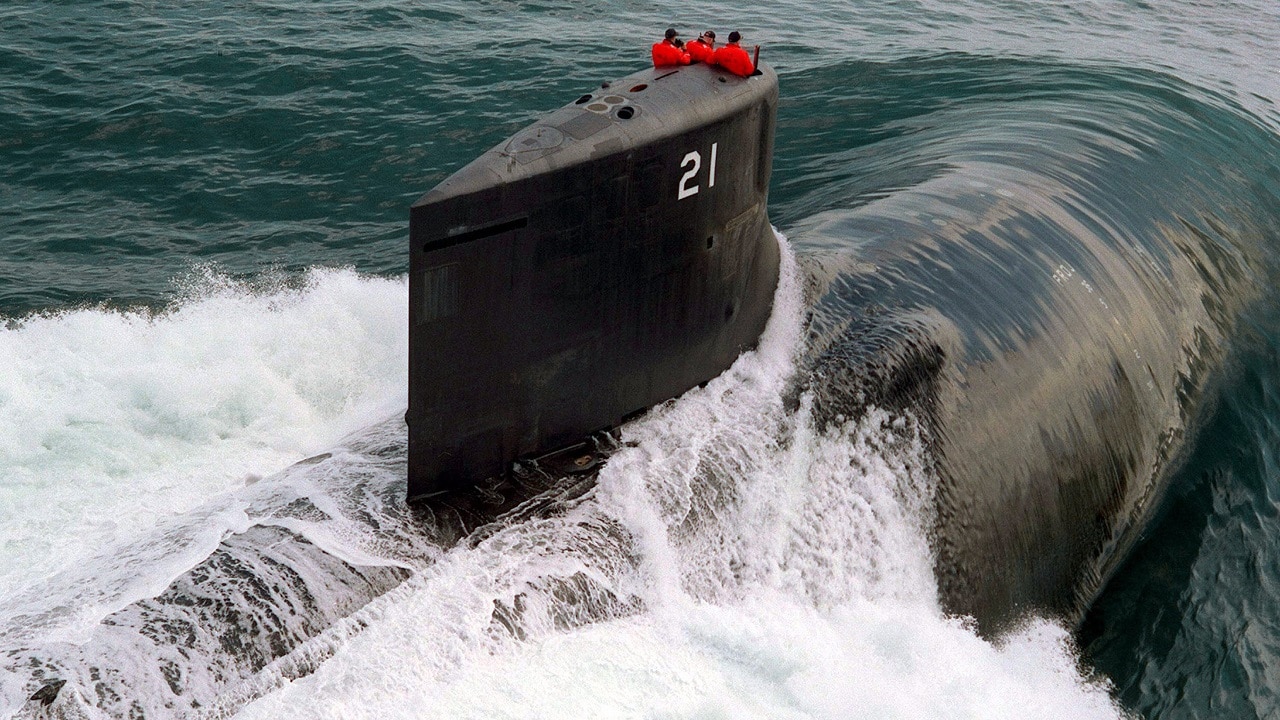
The U.S. Navy’s newest attack submarine, USS Seawolf (SSN 21), conducts Bravo sea trials off the coast of Connecticut in preparation for its scheduled commissioning in July 1997. The aerial image shows the sail from a starboard angle, looking forward, 9/16/1996. Jim Brennan. (OPA-NARA II-9/10/2015).
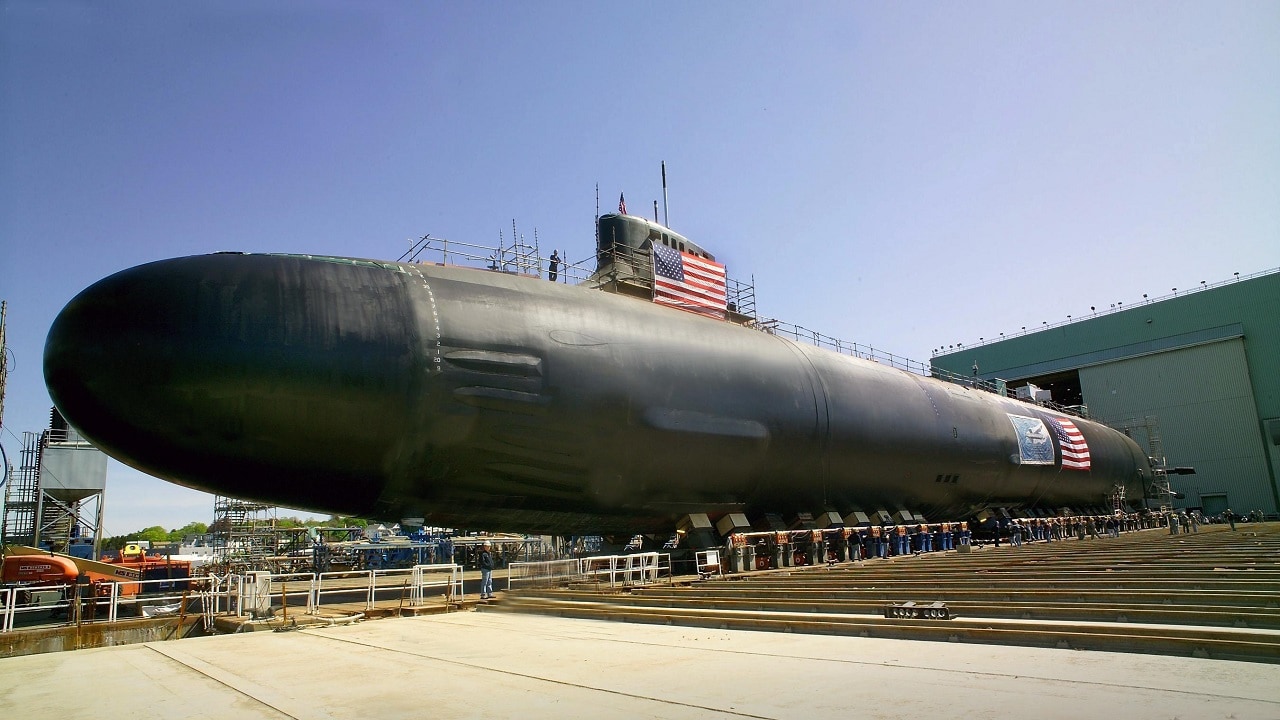
Seawolf-class Submarine. Image Credit: Creative Commons.
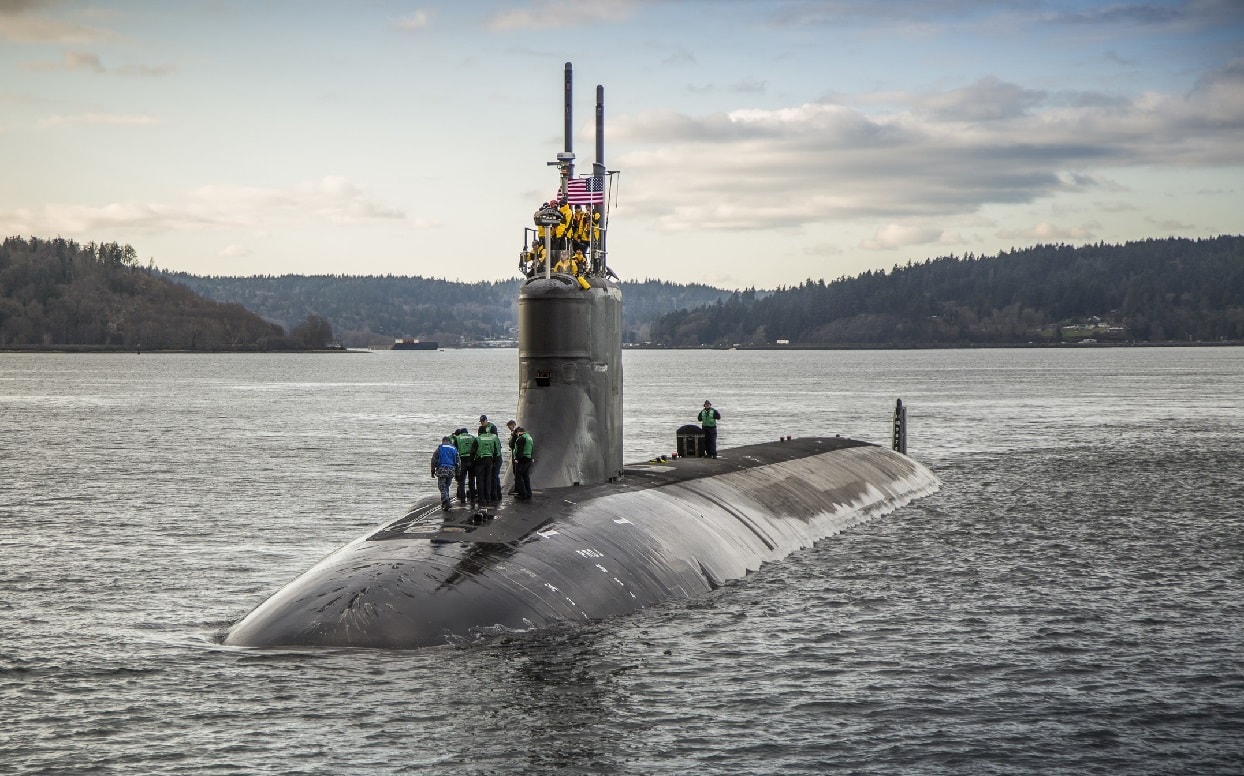
BREMERTON, Wash. (Dec. 15, 2016) – The Seawolf-class fast-attack submarine USS Connecticut (SSN 22) departs Puget Sound Naval Shipyard for sea trials following a maintenance availability. (U.S. Navy photo by Thiep Van Nguyen II/released)
In other words, the Seawolf program was far from the only budgetary casualty of the end of the Cold War, as multiple battle-proven weapons systems and promising new technologies were either put on the chopping block or put out to pasture.
The Iowa-class battleships were a prime example; less than a year before the Cold War ended, i.e., during the 1991 Persian Gulf War AKA Operation Desert Storm, the Iowa BBs once again demonstrated their deadly accuracy and sheer destructive powers against then-Iraqi dictator Saddam Hussein’s forces that were occupying Kuwait (just like they had done during World War II, the Korean War, and the Vietnam War alike), yet as soon as Desert Storm wrapped up, those mighty battlewagons were abruptly and arbitrarily decommissioned and mothballed.
That brings to mind the catchphrase “Penny wise and pound foolish.”
That “peace dividend” turned out to be a relatively short-lived pipe dream, as 20/20 hindsight soberly shows. America’s “near-peer”/Great Power competitors, Russia and China, continue to expand and modernize their submarine fleets, whilst America’s own submarine force is left trying to play catch-up ball:
-Only 23 of the original 62 Los Angeles-class subs currently remain in service, and three more of the venerable boats (USS Scranton [SSN-756]; USS Alexandria [SSN-757]; USS Annapolis [SSN-760]) are in the process of being retired.
-Meanwhile, the Virginia-class SSNs are coming along at a snail’s pace, with only 24 activated thus far out of the 69 planned, with 10 more under construction.
-The Navy is facing a severe shortage of the estimated 100,000 skilled workers needed to build the new boats, so they’ve been running a BuildSubmarines recruiting push since November 2022.
It also reflects on a general shipbuilding crisis that’s negatively affecting America’s maritime industry as a whole, which motivated President Donald John Trump to sign an April 9, 025, Executive Order titled “Restoring America’s Maritime Dominance,” which is wonderful in theory but has a long way to go in practice.
Even a measly baker’s dozen Seawolves (let alone 29) would’ve gone a long way in mitigating the current shortfall of USN SSNs.
To put it bluntly, the Seawolf submarine shortage simply stinks.
Spawning the Seawolf-Class: Initial History and What Might Have Been
The Seawolf-class program showed a lot of promise, envisioned as the better, faster, stronger, and quieter successors to the U.S. Navy’s venerable Los Angeles-class SSNs, commissioned between 1974 and 1996.
The Seawolf-class hulls were constructed from HY-100 steel, which is stronger than the HY-80 steel employed in previous classes, in order to withstand water pressure at greater depths.
The official, unclassified test depth (a sub’s maximum safe operational depth to prevent structural failure) of the Seawolves is 1,600 feet (490 meters), wherein the water pressure is 689 pounds per square inch.
To put some that in some additional “Dr. Science” mathematical perspective, for every 33 feet (10 meters) that an object descends in seawater, the pressure increases 14.6 pounds per square inch; that equates to one “atmosphere.”
So, at 1,600 feet, we’re talking 47.2 atmospheres.
Compared with the “Angelenos,” the Seawolves could also carry more weapons (including up to 50 UGM-109 Tomahawk cruise missiles and have twice as many torpedo tubes.
Design work at General Dynamics Electric Boat (GDEB) began in 1983. The notional intention of the Sealwolves was to hunt down Soviet ballistic missile submarines (SSBNs) such as the Typhoon class and attack submarines such as the Akula-class boats.
Where Are They Now, and What’s the Way Forward?
USS Seawolf is currently homeported at Naval Base Kitsap in Washington; ditto for her two sister ships.
As another proverb goes, “When life deals you lemons, make lemonade!” Despite the financial fickleness, the Navy is making the most of the available Seawolves. Case in point: In July 2020, SSN-21 deployed into the Arctic area of responsibility (AOR), whereupon she conducted special operations and pulled into multiple European ports, thus making history as the first US Navy deployment during the nightmarish and opprobrious days of the COVID-19 pandemic.
As far as this writer can ascertain, there are no plans to retire the Seawolf class. With a current war raging against Iran (albeit on a current uneasy ceasefire), and near-future wars against China, Russia, and North Korea alike remaining a very real possibility, it would make absolutely zero sense to book such retirement plans. Viva Seawolf.
What’s In A Name: Seawolf Semantic Sidenote
In ichthyology (the science of studying fish), “seawolf” is another name for the Atlantic Wolffish (Anarhichas lupus), a gruesome-looking sea creature that makes its home in waters with temperatures as low as 30.2 to 51.8 degrees Fahrenheit (-1 to 11 degrees Celsius), and feeds on hardshell crustaceans, mollusks, and echinoderms.
In the first half of the 20th century, it was common practice for the Navy to name its submarines for fish and other aquatic creatures. Accordingly, there were three USN submarines to bear the Seawolf name even before the Seawolf-class boats came along:
– USS Seawolf (SS-28), renamed USS H-1 before launching as the lead ship of the H-class subs, which was launched & commissioned in 1913, but ran aground and sank in 1920.
-USS Seawolf (SS-197) was a Sargo-class submarine. Commissioned in 1939, she was the most successful sub to bear the Seawolf moniker; according to Keith Wheeler in his excellent 1981 book “War Under the Pacific,” during World War II, she sank 18 Imperial Japanese vessels totaling until she was lost to friendly fire at the hands of Hedgehog rockets launched by the destroyer escort USS Richard M. Rowell (DE-403) on October 30, 1944.
–USS Seawolf II (SSN-575) was the second nuclear submarine—following on the heels of USS Nautilus (SSN-571)—commissioned in 1957 and scrapped 30 years later.
However, sometime during the late 1950s or early 1960s, Adm. Hyman G. Rickover (27 January 1900– 8 July 1986; “the Father of the Nuclear Navy” and the longest-serving member of the U.S armed forces in history, with a grand total of 63 years of active duty service) put the kibosh on that naming convention, with the politically astute assertion and rationalizing that “Fish don’t vote.” Luckily for America’s aquatic animal lovers, Rickover retired in 1982, seven years before the USS Seawolf had her keel laid, thus allowing for an oh-so-brief revival of the old tradition.
However, the remaining two Seawolf-class boats, Connecticut and Carter, still lacked “fishy” individual names.
Old-school video game buffs, meanwhile, might remember the 1976-vintage game Sea Wolf, a submarine warfare-themed game manufactured by Midway, a company that appropriately though coincidentally shared its name with the epic World War II battle.
In one sentence: The end of the Cold War ended the program, but that doesn’t mean it wanted a shortsighted mistake.
About the Author: Christian D. Orr
Christian D. Orr is a Senior Defense Editor. He is a former Air Force Security Forces officer, Federal law enforcement officer, and private military contractor (with assignments worked in Iraq, the United Arab Emirates, Kosovo, Japan, Germany, and the Pentagon). Chris holds a B.A. in International Relations from the University of Southern California (USC) and an M.A. in Intelligence Studies (with a concentration in Terrorism Studies) from American Military University (AMU). He is also the author of the book “Five Decades of a Fabulous Firearm: Celebrating the 50th Anniversary of the Beretta 92 Pistol Series,” the second edition of which was recently published.