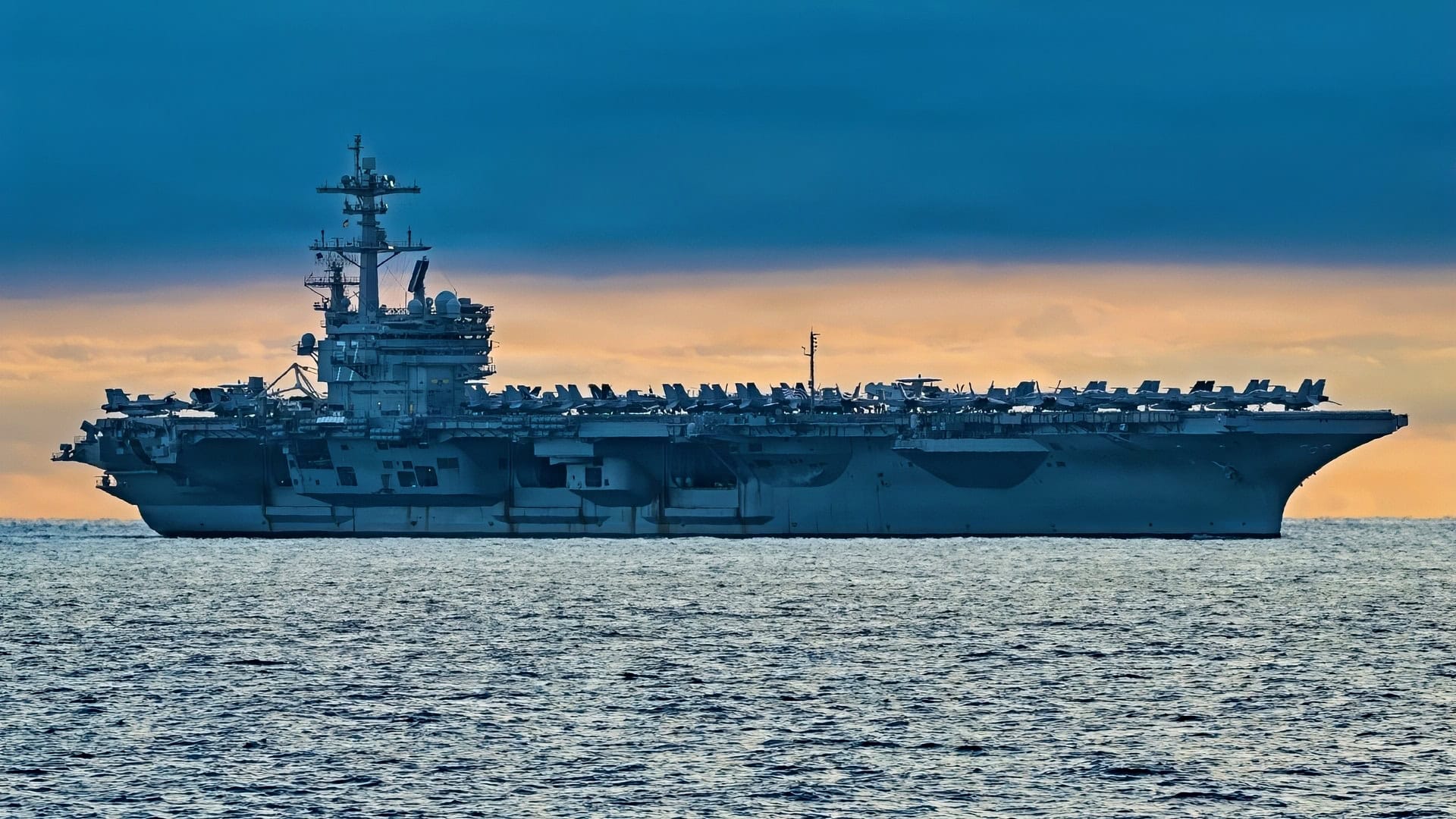
Following the United States’ new plan to restore traffic through the Strait of Hormuz, a pair of merchant ships reportedly sailed through the strait safely. Though a handful of vessels have made their way out of the Strait en route to other destinations worldwide, the Strait has been otherwise seemingly impenetrable to traffic.
Strait of Hormuz Crisis Over?
American President Donald Trump announced a new strategy to break Tehran’s grip on the Strait, announcing that American warships would escort commercial traffic — but Iran has pushed back against the United States forcefully, albeit for now seemingly only rhetorically.
“We warn foreign armed forces, particularly the US aggressor army, that if they attempt to approach or enter the Strait of Hormuz, they will be attacked,” Major General Ali Abdollahi, commander of Khatam al-Anbia Central Headquarters, reportedly said.
And while American warships have fended off Iranian attempted strikes, Iran has struck several civilian commercial vessels, threatening the fragile cease-fire now in place. But despite the danger, at least a couple of vessels have managed to leave the Strait.
Cracks Appearing?
On X (formerly Twitter), U.S. Central Command announced that a pair of commercial vessels had successfully transited the Strait of Hormuz. “U.S. Navy guided-missile destroyers are currently operating in the Arabian Gulf after transiting the Strait of Hormuz in support of Project Freedom,” CENTCOM wrote. “American forces are actively assisting efforts to restore transit for commercial shipping. As a first step, 2 U.S.-flagged merchant vessels have successfully transited through the Strait of Hormuz and are safely headed on their journey.”
American officials encouraged vessels wishing to leave the Strait to use Omani territorial waters. Though the Joint Maritime Information Center, led by the United States, said that it would be part of an “enhanced security area,” it is unclear if the initiative has instilled enough confidence for international shipping companies — as well as the firms that insure them — to stomach the risk posed by attempting a transit.
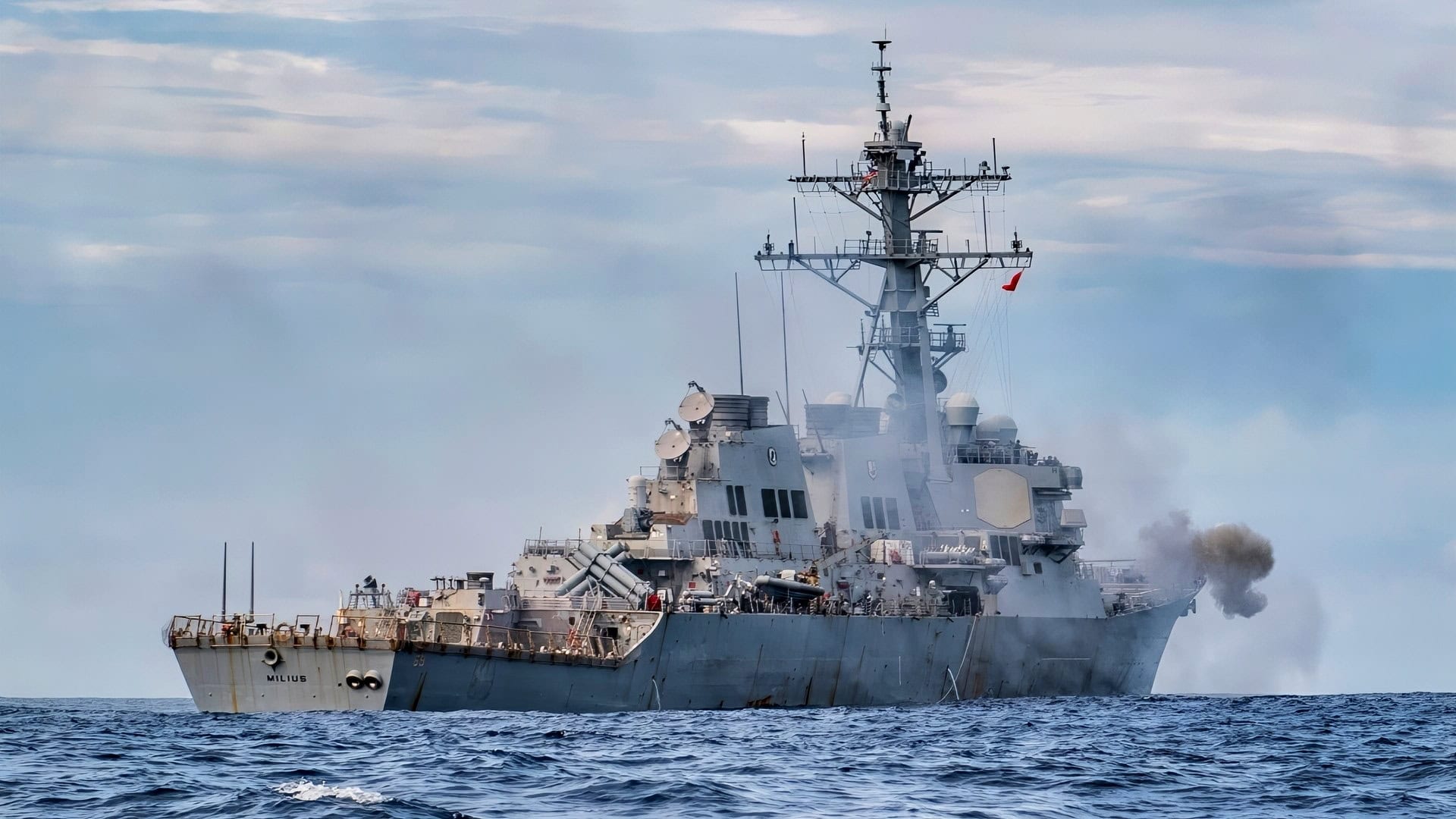
SOUTH CHINA SEA (Nov. 24, 2019) The mark 45 5 inch gun is fired from the forecastle of the Arleigh Burke-class guided-missile destroyer USS Milius (DDG 69) during a live-fire gunnery exercise. Milius is underway conducting operations in the Indo-Pacific region while assigned to Destroyer Squadron (DESRON) 15, the Navy’s largest forward-deployed DESRON and the U.S. 7th Fleet’s principal surface force. (U.S. Navy photo by Mass Communication Specialist 2nd Class Taylor DiMartino)
Project Freedom
Though the American Commander-in-Chief has a wide array of military assets at his disposal with which to force an opening of the Strait of Hormuz, including several Marine Expeditionary Units and Carrier Strike Groups in the Middle East, as well as the airborne elements from the U.S. Army. But the United States has been thus far seemingly loath to attempt a ground operation, opting instead to strike Iranian targets from the air.
Despite the shoot-down of several American aircraft — several of which were friendly-fire incidents — Israeli and American aircraft have managed to fly over Iran with seeming impunity and strike a variety of targets.
But launching a ground operation along the Iranian coast, somewhere inside the country, or against Iranian islands off the coast would be significantly more complex and much more risky than simply prosecuting the war from the air.
Breaking the Blockade
President Trump outlined the role the United States would take at this juncture in hostilities.
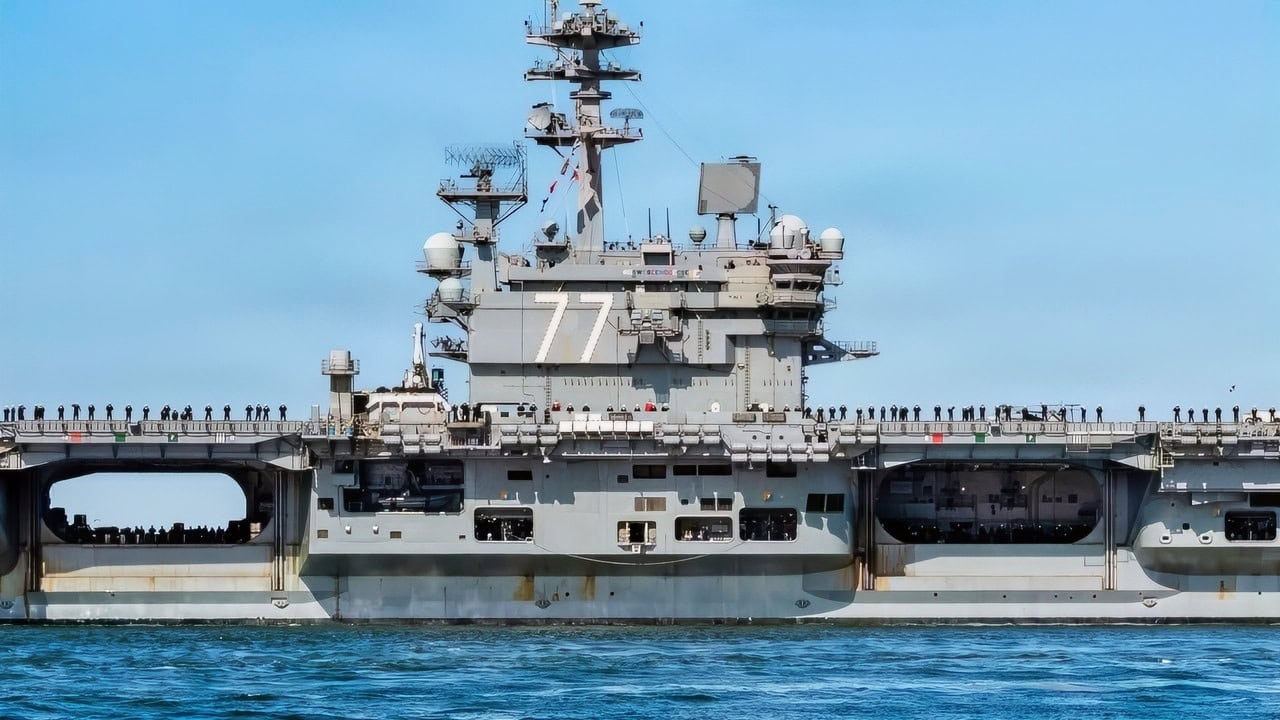
NAVAL STATION NORFOLK (March 31, 2026) The Nimitz-class aircraft carrier USS George H.W. Bush (CVN 77), the flagship of the George H.W. Bush Carrier Strike Group, departs Naval Station Norfolk to begin operations in support of its scheduled deployment, March 31, 2026. More than 5,000 personnel are assigned to the George H.W. Bush Carrier Strike Group. The George H.W. Bush Carrier Strike Group provides combatant commanders and America’s civilian leaders increased capacity to underpin American security and economic prosperity, deter adversaries, and project power on a global scale through sustained operations at sea. (U.S. Navy photo by Mass Communication Specialist 2nd Class Derek Cole)
In a post on Truth Social, the president explained that “for the good of Iran, the Middle East, and the United States, we have told these Countries that we will guide their Ships safely out of these restricted Waterways, so that they can freely and ably get on with their business.”
But, President Trump added, “if, in any way, this Humanitarian process is interfered with, that interference will, unfortunately, have to be dealt with forcefully.” It was not immediately clear what forcefully entails. But on Tuesday, American warships reportedly struck several Iranian fast attack boats following Iranian strikes on South Korean and Emirati merchant ships.
Accusations
Iran has accused the United States of violating the ceasefire by helping ships transit the Strait. If Project Freedom can be implemented on a larger scale, it would remove what is perhaps Iran’s biggest source of leverage in the conflict. With the threat to global markets posed by Iran removed, the country would have few options.
In a post on X, Iranian Parliamentary Speaker Mohammad Bagher Ghalibaf denounced the movement of ships thanks to the efforts of Project Freedom, saying, “The security of shipping and energy transit has been jeopardized by the United States and its allies through the violation of the ceasefire and the imposition of a blockade.”
“We know full well that the continuation of the status quo is intolerable for America,” Ghalibaf added, saying that “we have not even begun yet.”
About the Author: Caleb Larson
Caleb Larson is an American multiformat journalist based in Berlin, Germany. His work covers the intersection of conflict and society, focusing on American foreign policy and European security. He has reported from Germany, Russia, and the United States. Most recently, he covered the war in Ukraine, reporting extensively on the war’s shifting battle lines from Donbas and writing on the war’s civilian and humanitarian toll. Previously, he worked as a Defense Reporter for POLITICO Europe. You can follow his latest work on X.