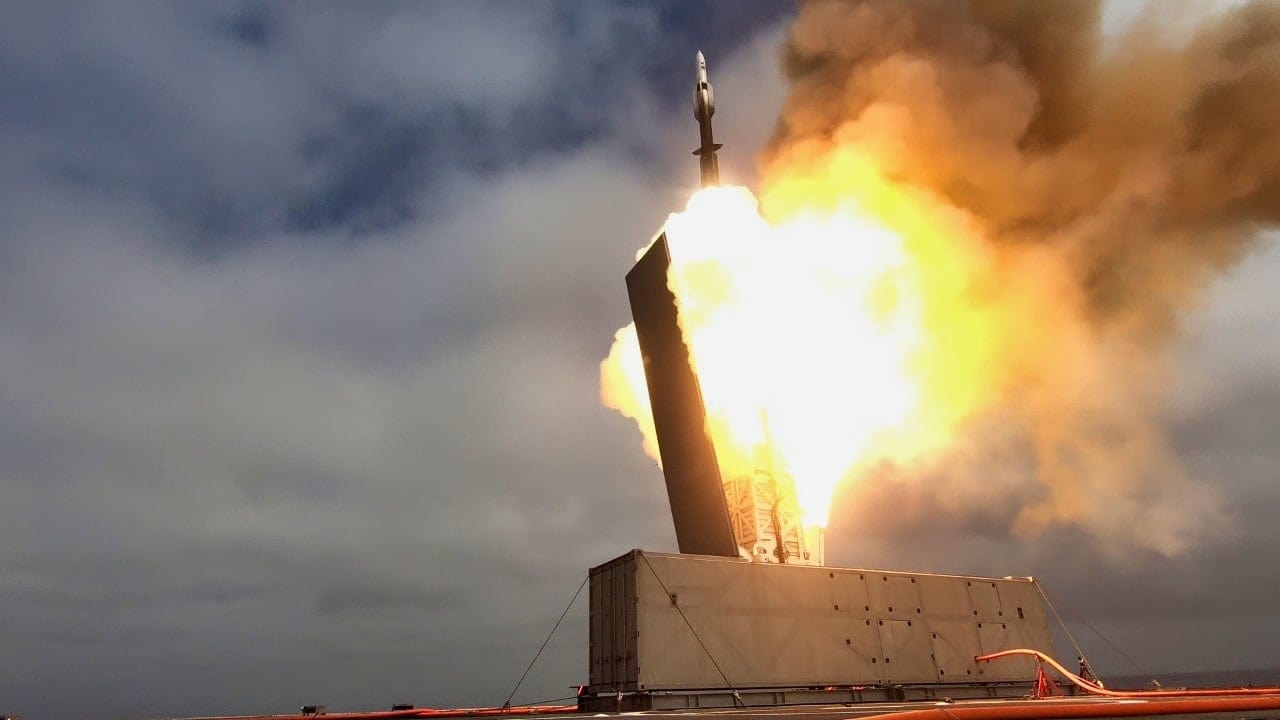
The U.S. war with Iran has now lasted more than two months. Pentagon munitions stockpiles are critically short. The Pentagon recently attempted to reclaim Patriot air-defense missiles already sold and delivered to Poland for use in Iran — and Warsaw refused. Reuben Johnson, reporting from Manila, writes that China is watching the entire conflict closely and learning. “They know that every missile being used in Iran is a missile that can’t be used to deter in the Indo-Pacific,” a former U.S. defense official told Politico. President Trump and Xi Jinping are scheduled to meet next week, with the U.S. munitions crisis as backdrop.
China Is Learning All It Can from the Iran War
MANILA – Washington’s war with Iran has now lasted more than two months, which is at least a month longer than many thought it might. This is bad news for the US military on two levels.
One is that the longer the conflict carries on, the lower the stockpiles of a growing list of US munitions become. Some are already so critically short when compared with demand that the Pentagon has been trying to poach them from export customer nations, as was unsuccessfully tried recently with missiles for the Patriot air and missile defense system that had been sold and delivered by the US to Poland.
Number two is a larger and longer-term dilemma. Production of US munitions might actually someday surge to wartime levels – as hard as that is to believe sometimes – and today’s shortages will be in the past.
What hurts the US’s strategic interests far more and for far longer is that, as the conflict stretches into a third month, US military and strategic vulnerabilities are increasingly being exposed. Operations, logistics, maneuverability, manpower, stresses caused by extended deployment, and an entire host of other issues and the hiccups that the US military experiences in the process – are all on display.
“They [the Chinese] know that every missile being used in Iran is a missile that can’t be used to deter in the Indo-Pacific,” a former US defense official told the US outlet, Politico.
As the sticker on the old-style telephone receiver in an office I used to sit in, which was inside a secure facility, read “the enemy is listening.”
But in the present day, it is not just a case of listening – it also includes photographing, videotaping, recording, decryption, electronic intercepts, analysis, and then layering that data with an AI program to create algorithms that predict future US movements.
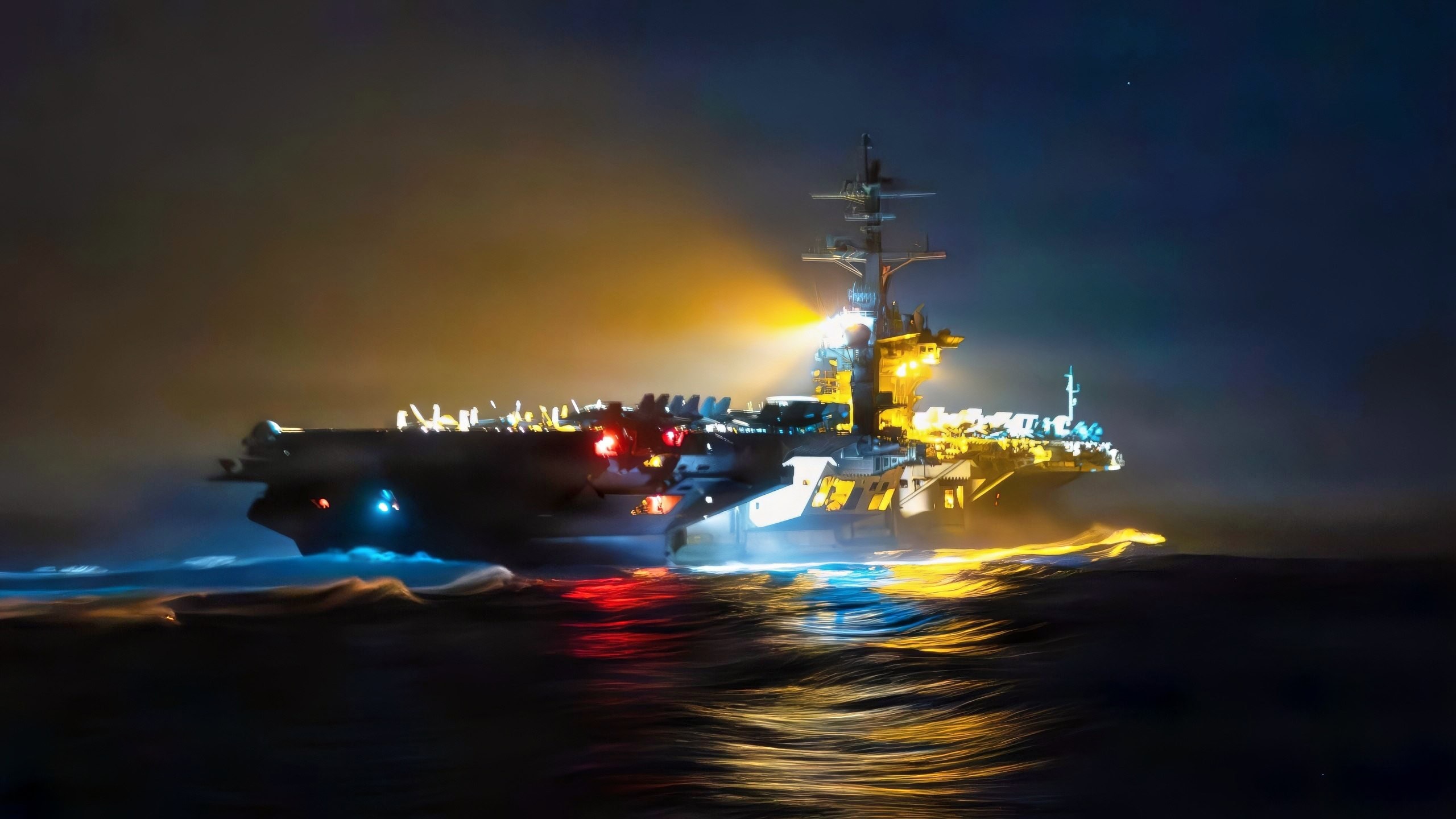
Nimitz-class aircraft carrier USS Abraham Lincoln (CVN 72) departs following a replenishment-at-sea with fleet replenishment oiler USNS Henry J. Kaiser (T-AO-187) during Operation Epic Fury, March 18, 2026. (U.S. Navy photo)
Biggest Rival
Amongst these closely watching these developments are sources who spoke to Politico, which on Friday wrote: “The increasingly intractable conflict between the US and Iran is revealing American military and strategic vulnerabilities — and offering important lessons to its biggest rival.”
“China is watching as the US fails to cut through an Iranian blockade and expends heavy firepower, the Trump administration struggles to extricate itself from an unpopular war, global gas prices soar, and the Pentagon’s strategic documents reveal that warding off Beijing is no longer the top priority.”
It is a two-edged sword, said a former NATO-member nation military intelligence officer who is now retired but once was the “owner” of a major part of his nation’s China analysis shop.
“In the first place, and as so many have pointed out, the Iran war continues to show Beijing just what the US and other allied nations’ game plan could be in the event of a conflict with the PLA over the Republic of China (ROC) on Taiwan,” he said. “Foremost among the lessons being learned by the PLA is just how we might all go about breaking a blockade of the island nation by looking at how the US Navy has gone about trying to control the Strait of Hormuz.”
“But the other issue is that the longer the conflict stretches on, the more it takes the US military’s ‘eye off the ball’, so to speak,” he said. The history of these kinds of conflicts is that as they extend out further than anyone had projected originally, the focus tends to shift and resources get diverted from higher-priority theatres to feed the beast you have on your doorstep at the moment.”
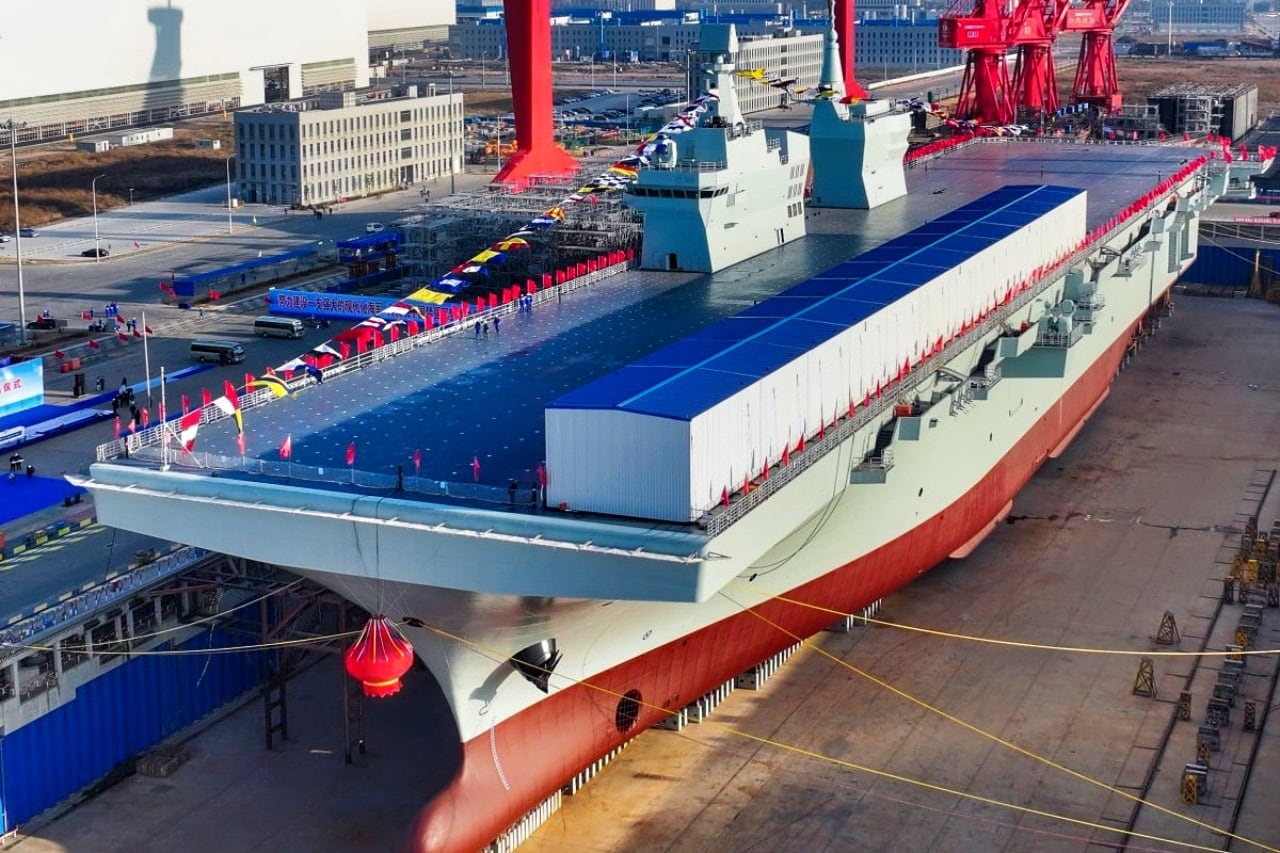
China Type 076 Assault Ship. Image Credit: Chinese State Media.
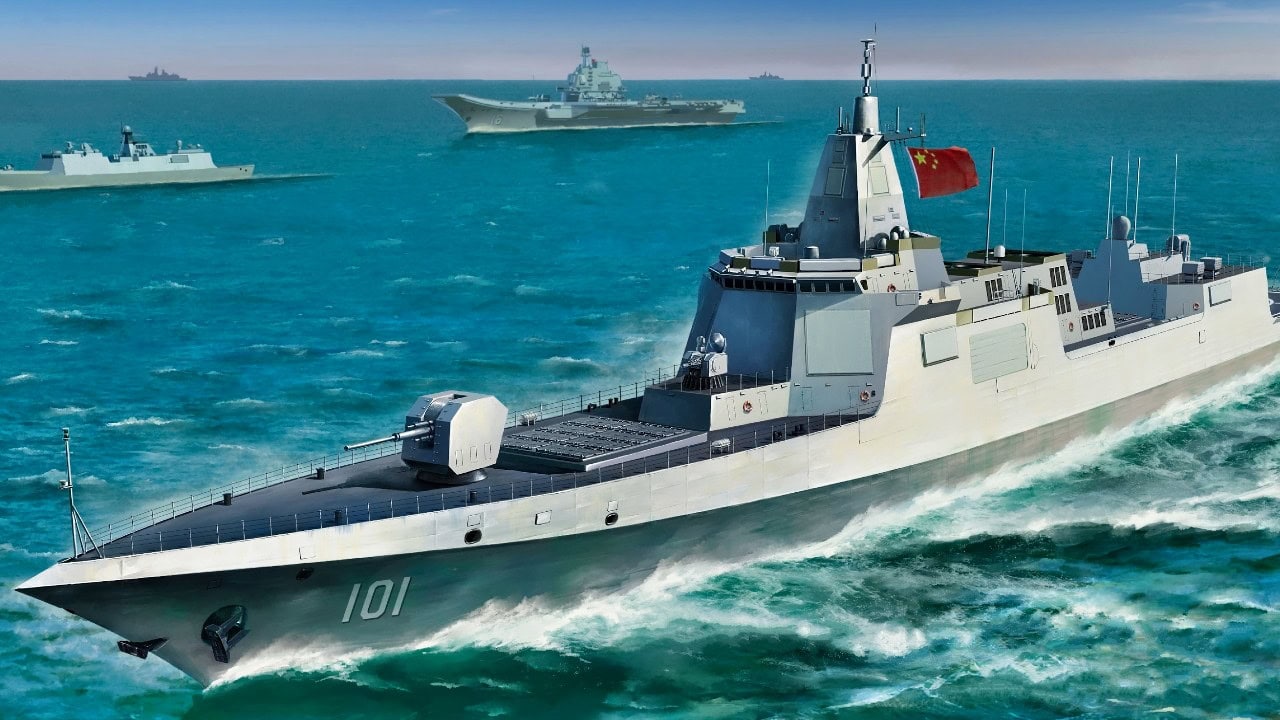
Chinese Navy Warship Created by Artist. Image Credit: Creative Commons.
Will Next Week’s Meeting Change Anything
Iran has long been a major partner for the People’s Republic of China (PRC) – both as a buyer of weapons from Beijing, as well as being one of the Communist nation’s major suppliers of oil. In this situation, the country has conflicting interests as it gains – but also loses – something either way the conflict turns at this point.
“PLA analysts are for sure loving the chance to see what the US will do next in this war. They are also learning a lot when they see the performance of major US weapon systems,” said the same military intelligence officer. “So for them, a longer war is better than a shorter one.”
“But the PRC also has no security of supply when it comes to gas and oil. So, unless they can secure sources that compensate for the flows cut off due to the blockades of the Strait, they will experience some disruption of supply that they do not need now,” he explained.
US President Donald Trump and Chinese Communist Party (CCP) General Secretary Xi Jinping are currently preparing for next week’s encounter, which is increasingly billed as a high-stakes encounter. Washington has a few problems as Trump goes into this interaction – one of the most vexing being an uncertain ceasefire that could break down at any time on any day.
If that were not enough, Trump also has NATO allies that are proving to be less than helpful. Then there are the political and economic headaches that the conflict stirs up as the US now enters the 6-month stretch before the US Congressional mid-term elections in November.
To use language the US President once castigated Ukraine’s Volodymyr Zelenskiy with, Xi could be going into the meeting “having all the cards.”
“The Chinese would be well within their right to say, ‘What do you have left to build deterrence with?’” a former defense official told Politico. “In order for a grand bargain to work, you would have to have the muscle to put behind it. You can’t bluff on this question.”
The Pentagon “is still showing strong tactical performance,” said the defense official in the same Politico interview. “But without a clear policy and strategy, we’re suffering at the operational level of warfare. The question that they have to answer is whether that’s unique to the current [administration] or a broader issue in American warfare.”
About the Author: Reuben F. Johnson
Reuben F. Johnson has thirty-six years of experience analyzing and reporting on foreign weapons systems, defense technologies, and international arms export policy. Johnson is the Director of Research at the Casimir Pulaski Foundation. He is also a survivor of the Russian invasion of Ukraine in February 2022. He worked for years in the American defense industry as a foreign technology analyst and later as a consultant for the U.S. Department of Defense, the Departments of the Navy and Air Force, and the governments of the United Kingdom and Australia. In 2022-2023, he won two consecutive awards for his defense reporting. He holds a bachelor’s degree from DePauw University and a master’s degree from Miami University in Ohio, specializing in Soviet and Russian studies. He lives in Manila.