
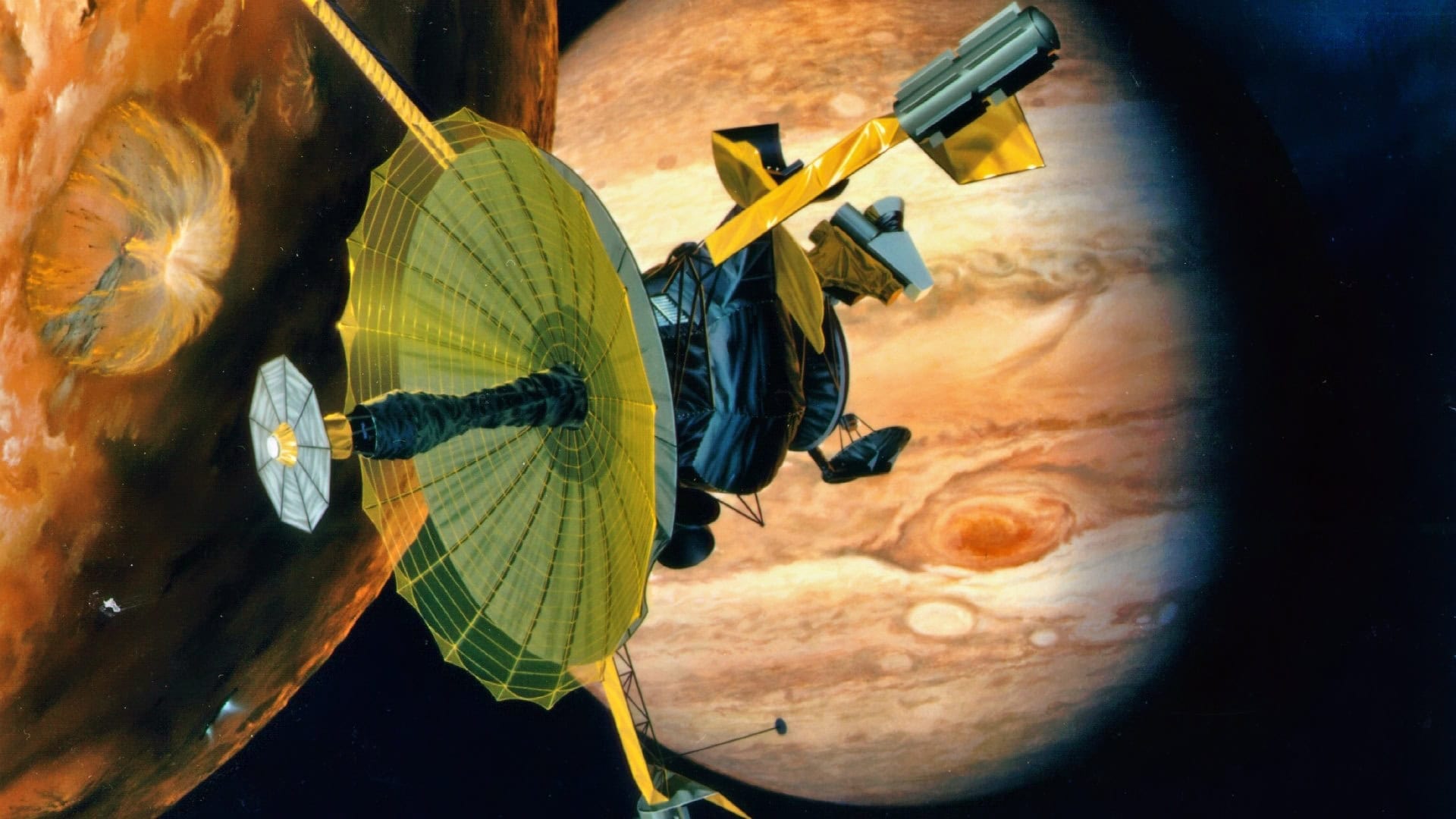
In September 2003, after fourteen years in space, NASA aimed the Galileo spacecraft straight into Jupiter and let the giant planet tear it apart. The probe was not broken. It had survived a main antenna that jammed shut on the way out, a radiation dose far beyond what it was built to take, and a decade of improvised repairs, and it had just delivered one of the most consequential findings in the history of planetary science: strong evidence that Jupiter’s moon Europa hides a salt-water ocean beneath its ice, exactly the kind of place life might exist. That discovery is the reason Galileo had to die. A spacecraft built on Earth carries Earth microbes, and a dead, uncontrollable Galileo drifting through the Jovian system could not be guaranteed never to crash into Europa and contaminate the ocean it had just found. So NASA chose the one ending that protected the discovery, steering the probe into Jupiter, where the crushing atmosphere would erase it completely, and listened as the machine sent back data while the planet pulled it apart.
The Mission That Set Records
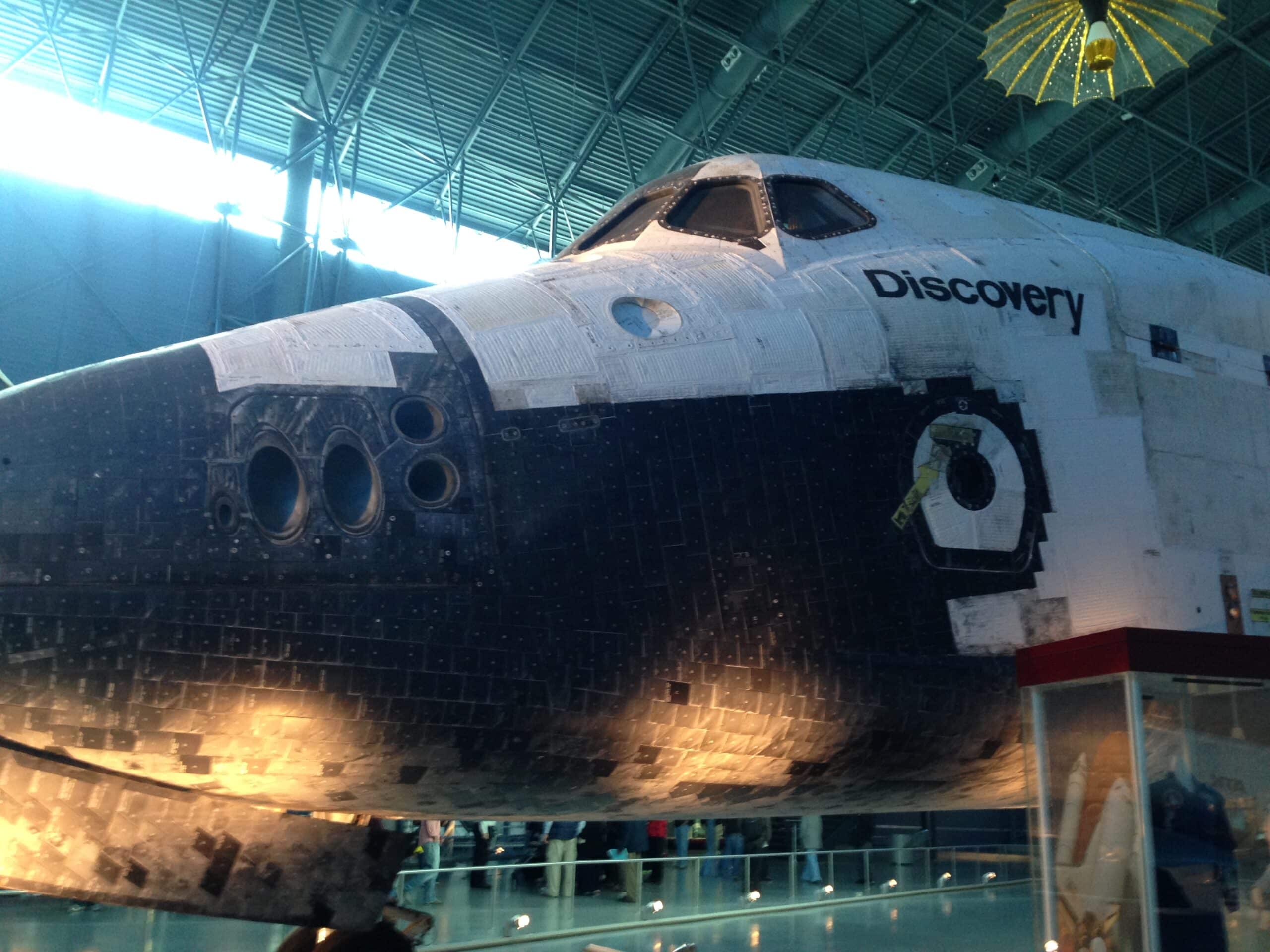
2013 Smithsonian Photo Outside of Washington, DC. Image Credit: Harry J. Kazianis.
Galileo left Earth on October 18, 1989, lofted from the cargo bay of the Space Shuttle Atlantis. It did not fly straight to Jupiter. Lacking a powerful enough upper stage, it looped once past Venus and twice past Earth, using each planet’s gravity as a slingshot to build the speed it needed, and finally arrived in December 1995 to begin orbiting the largest planet in the solar system.
The mission racked up a remarkable list of firsts along the way. Galileo was the first spacecraft to orbit an outer planet, the first to send an entry probe into a giant planet’s atmosphere, and the first to fly past and photograph an asteroid, imaging Gaspra in 1991 and Ida in 1993. It was also the only spacecraft positioned to watch directly as more than twenty fragments of Comet Shoemaker-Levy 9 slammed into Jupiter in July 1994, capturing the far side of the planet where the impacts struck.
The Antenna That Refused To Open
The mission almost never delivered any of it. On April 11, 1991, as Galileo moved far enough from the Sun to safely unfurl its main communications dish, the umbrella-like high-gain antenna failed to open.
The dish, 4.8 meters across and woven from gold-plated molybdenum mesh, opened partway and stuck, with one side more deployed than the other. A JPL “tiger team” of specialists ran exhaustive tests and concluded that three of the antenna’s eighteen ribs were held in the closed position, most likely because lubricant had worn away from the rib pins during the spacecraft’s long years in storage and the launch delays that followed the Challenger disaster. Despite repeated efforts to shake and free the ribs, the antenna would never fully deploy.
The consequences were close to catastrophic. The high-gain antenna had been designed to transmit at up to 134,000 bits per second, roughly one television image a minute. Without it, Galileo could only communicate with Earth through a small, low-gain antenna intended for housekeeping signals, at a data rate orders of magnitude slower. A flagship mission to Jupiter had been reduced to a trickle.
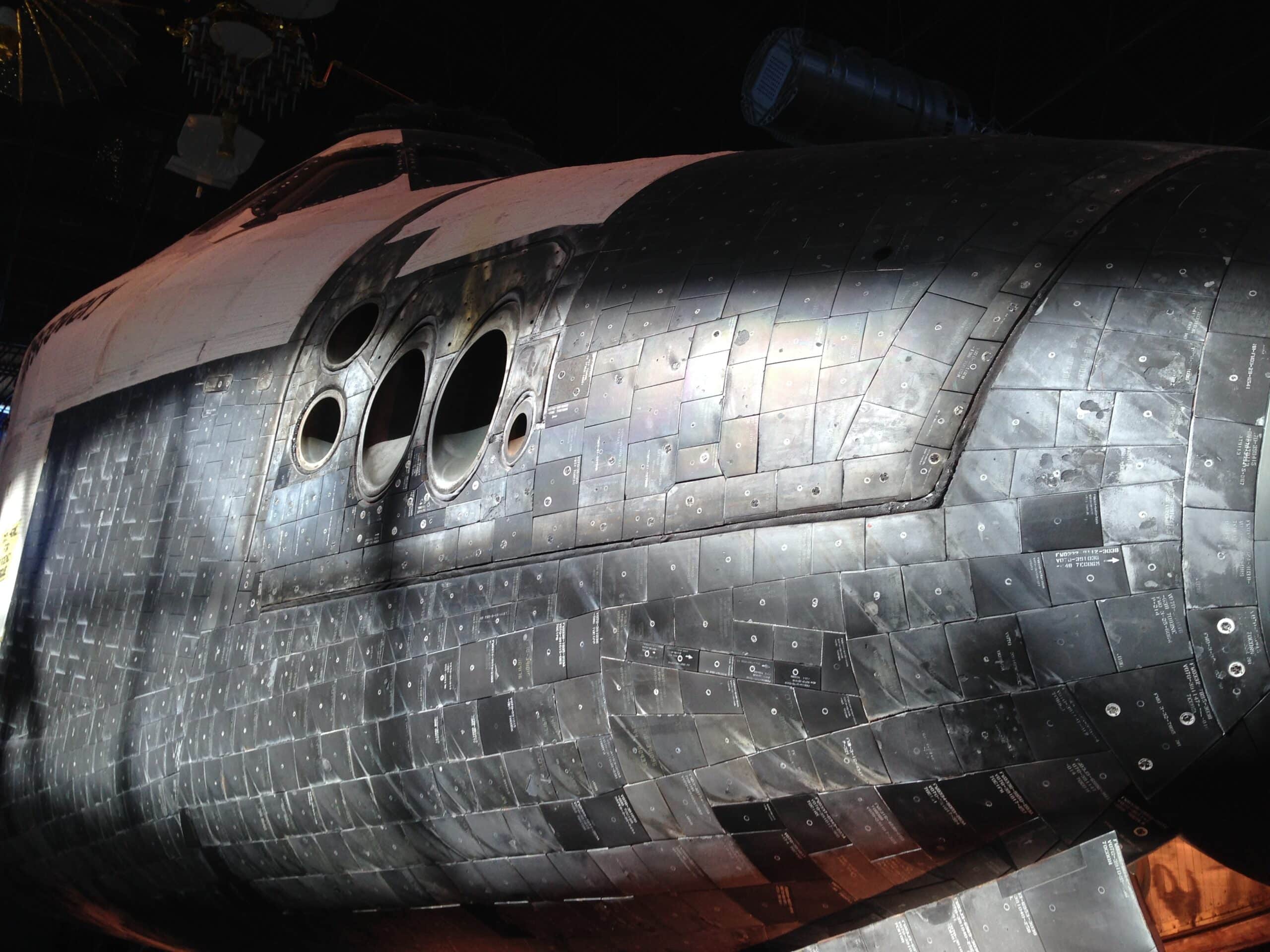
2013 Smithsonian Photo Outside of Washington, DC. Image Credit: Harry J. Kazianis.
Rather than abandon it, JPL spent the years from 1993 to 1996 rebuilding the mission around the antenna it had left. Engineers reconfigured the low-gain link with more efficient data coding, a new packet-based telemetry scheme, and aggressive onboard compression, and they upgraded the ground stations of the Deep Space Network and arrayed multiple dishes together to gather the faint signal.
The new onboard software let Galileo send back up to ten times the pictures and measurements it otherwise could have, and ground changes raised the average data rate roughly tenfold again. The mission returned far less raw data than the original plan would have allowed, but the core science came through almost intact, entirely by way of an antenna never intended to carry it.
A Probe Into The Storm
Galileo’s headline achievement upon arrival was a small probe it had carried across the solar system and released into Jupiter itself. In December 1995, the descent probe plunged into the planet’s atmosphere at about 106,000 miles per hour, survived the ferocious heating behind a heat shield, deployed a parachute, and transmitted for roughly 58 minutes as it sank, the first direct sampling of a gas giant’s atmosphere, before rising temperature and pressure silenced it.
The orbiter, meanwhile, settled in for years of work and kept finding things no one had seen up close. It documented an intense radiation belt above Jupiter’s cloud tops, measured helium at about the same concentration as the Sun, watched the moon Io resurface itself through relentless volcanism, and discovered that the moon Ganymede generates its own magnetic field, the first moon ever found to do so.
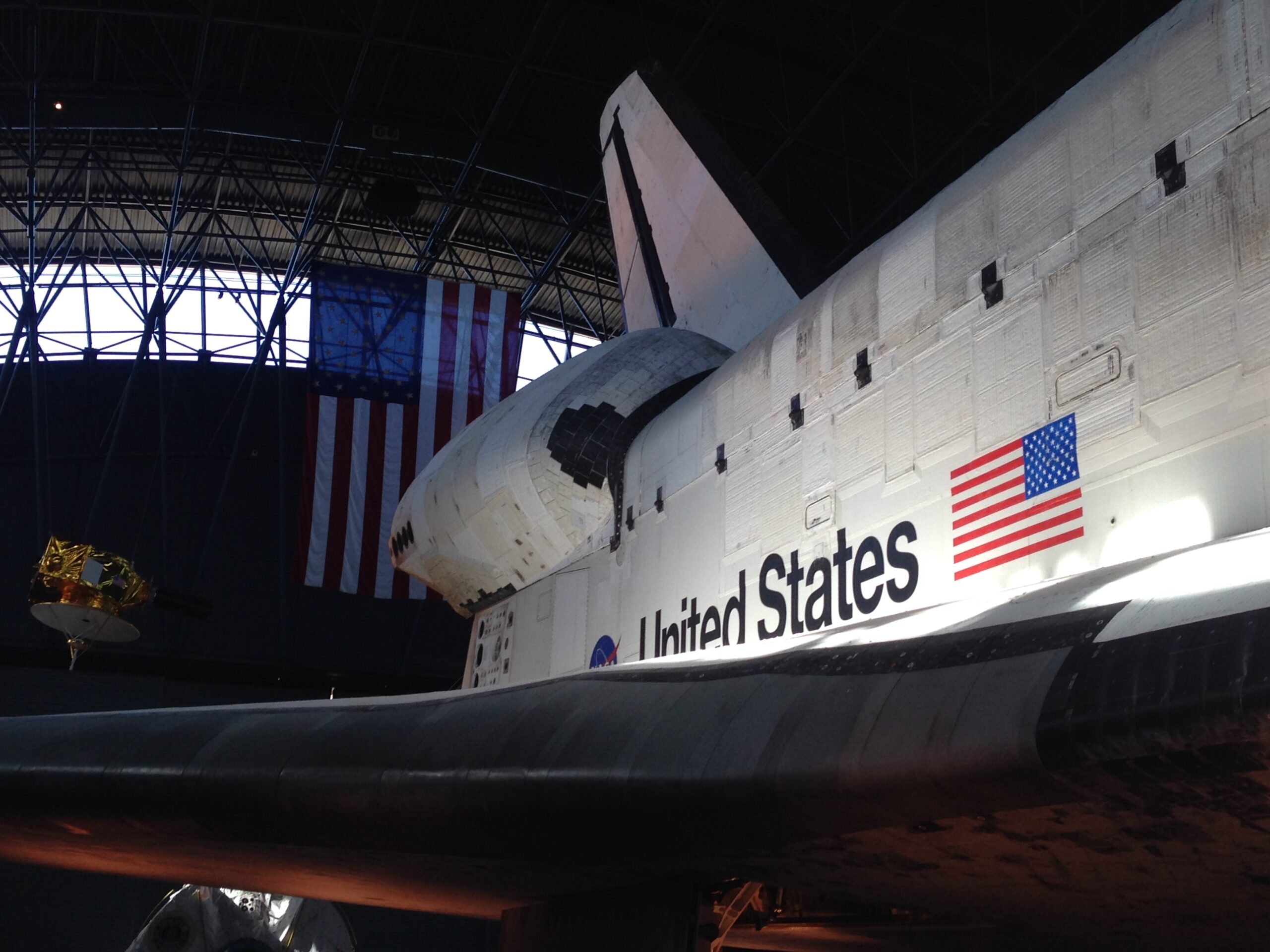
2013 Smithsonian Photo Outside of Washington, DC. Image Credit: Harry J. Kazianis.
The Discovery That Doomed It
The finding that mattered most, and that ultimately sealed the spacecraft’s fate, came from Europa. Across repeated close flybys, Galileo’s magnetometer measured how Jupiter’s powerful magnetic field was perturbed around the moon, and the signature it observed was best explained by a layer of electrically conductive fluid beneath the moon’s surface. Given Europa’s icy composition, the most likely such fluid is a global ocean of saltwater.
The spacecraft’s cameras reinforced the case, returning images of a young, fractured surface of ridged and refrozen ice, the kind of chaotic terrain expected where a liquid layer churns beneath a frozen shell. Together, the data made Europa one of the most compelling candidates for life anywhere in the solar system. NASA now describes the moon as a place where strong evidence points to a subsurface ocean that may hold more than twice as much water as all of Earth’s oceans combined. None of that proves anything lives there. It does mean the moon became a place worth protecting, and that is what turned Galileo from an asset into a liability.
Why Success Became A Liability
By 2003, Galileo was running low on the propellant it used to point its antenna and adjust its path. Once that fuel was gone, the spacecraft would become uncontrollable, a dead machine looping through a system that now contained a possible ocean world. The danger was not that Galileo would strike Europa next week, or even next decade.
It was that, over a long enough span, the trajectory of an uncontrolled probe could not be guaranteed to miss it, and that the probability need not be high to matter. Galileo had been built and assembled in clean rooms on Earth, but not sterilized to the standard required for contact with a habitable environment, and hardy microbes can survive years of vacuum, cold, and radiation. If Earth organisms ever reached Europa’s ocean, they could contaminate a possible alien biosphere and, just as damaging to science, seed false signals that would poison every future search for life there.
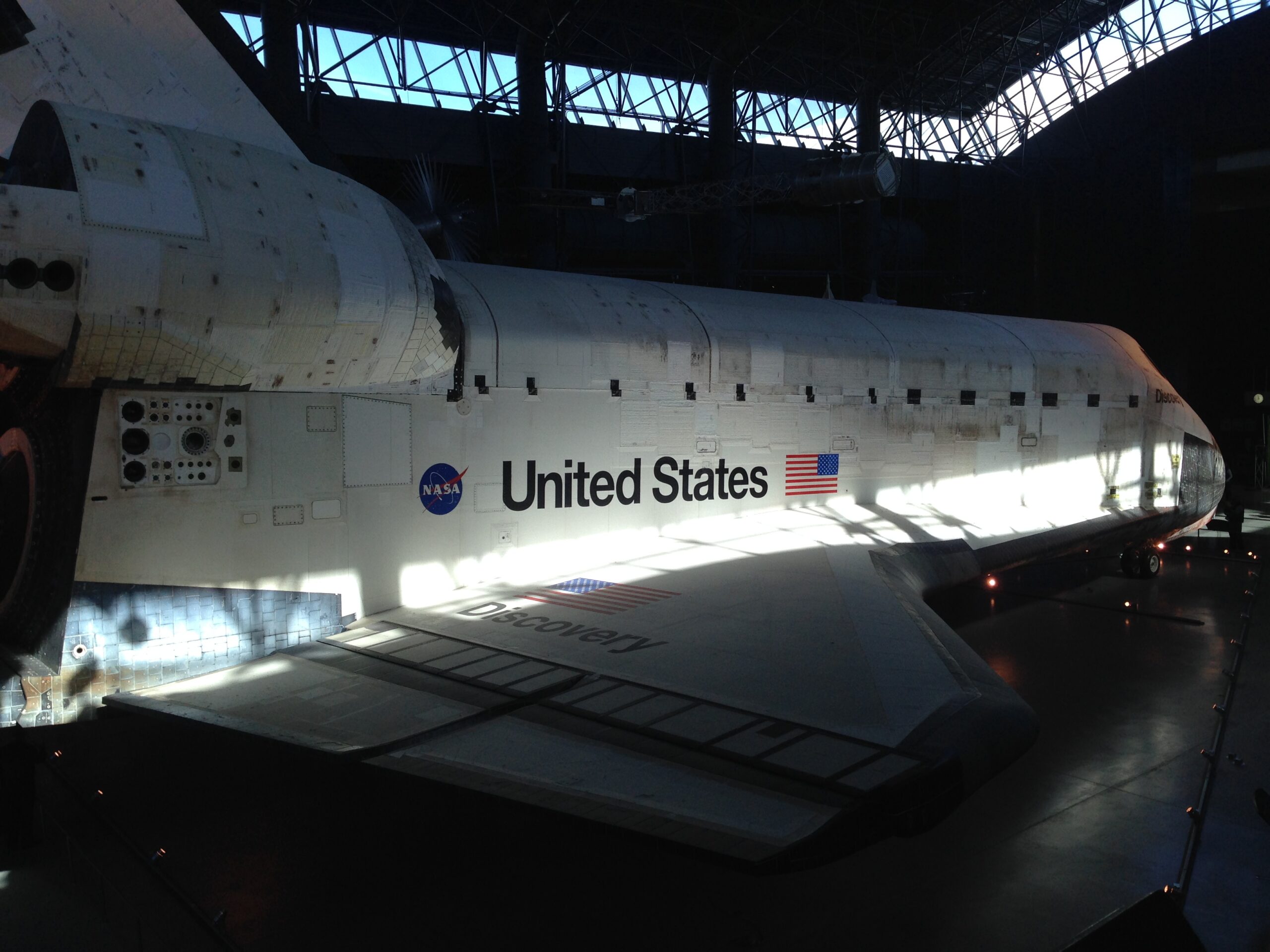
2013 Smithsonian Photo Outside of Washington, DC. Image Credit: Harry J. Kazianis.
This concern has a formal name and a formal framework. Planetary protection, governed internationally by the COSPAR policy, exists precisely to prevent Earth life from contaminating worlds that might host their own.
It is worth being precise about the worry, because it is often misstated. Galileo was powered by plutonium in its radioisotope generators, but the documented reason for its destruction was never that the plutonium would poison Europa.
The hazard was biological, an uncontrolled spacecraft carrying terrestrial microbes toward a world not prepared for them.
As far back as 2000, a National Research Council committee, responding to a request from NASA’s planetary protection officer, formally recommended crashing Galileo into Jupiter to protect Europa and Io, noting that the evidence was insufficient to confirm an ocean or native life but equally insufficient to dismiss them.
The Grave In The Clouds
NASA chose to end the mission while it still had the fuel to aim, and chose Jupiter itself as the grave. The gas giant has no solid surface, and its radiation, pressure, and heat would obliterate the spacecraft and anything living on it, in an environment far too hostile for Earth microbes to take hold. On September 21, 2003, Galileo was driven into Jupiter’s atmosphere at roughly 108,000 miles per hour, about thirty miles every second.
By then, the spacecraft was so distant that its radio signal took about 52 minutes to cross to Earth, which meant that by the time controllers received its final transmission, Galileo had already been gone for nearly an hour. It kept sending data as the atmosphere tore it apart, and then it went silent, its material crushed, heated, and mixed into the planet it had studied for eight years.
The mission had run so long that it outlived several of the people who built and flew it.
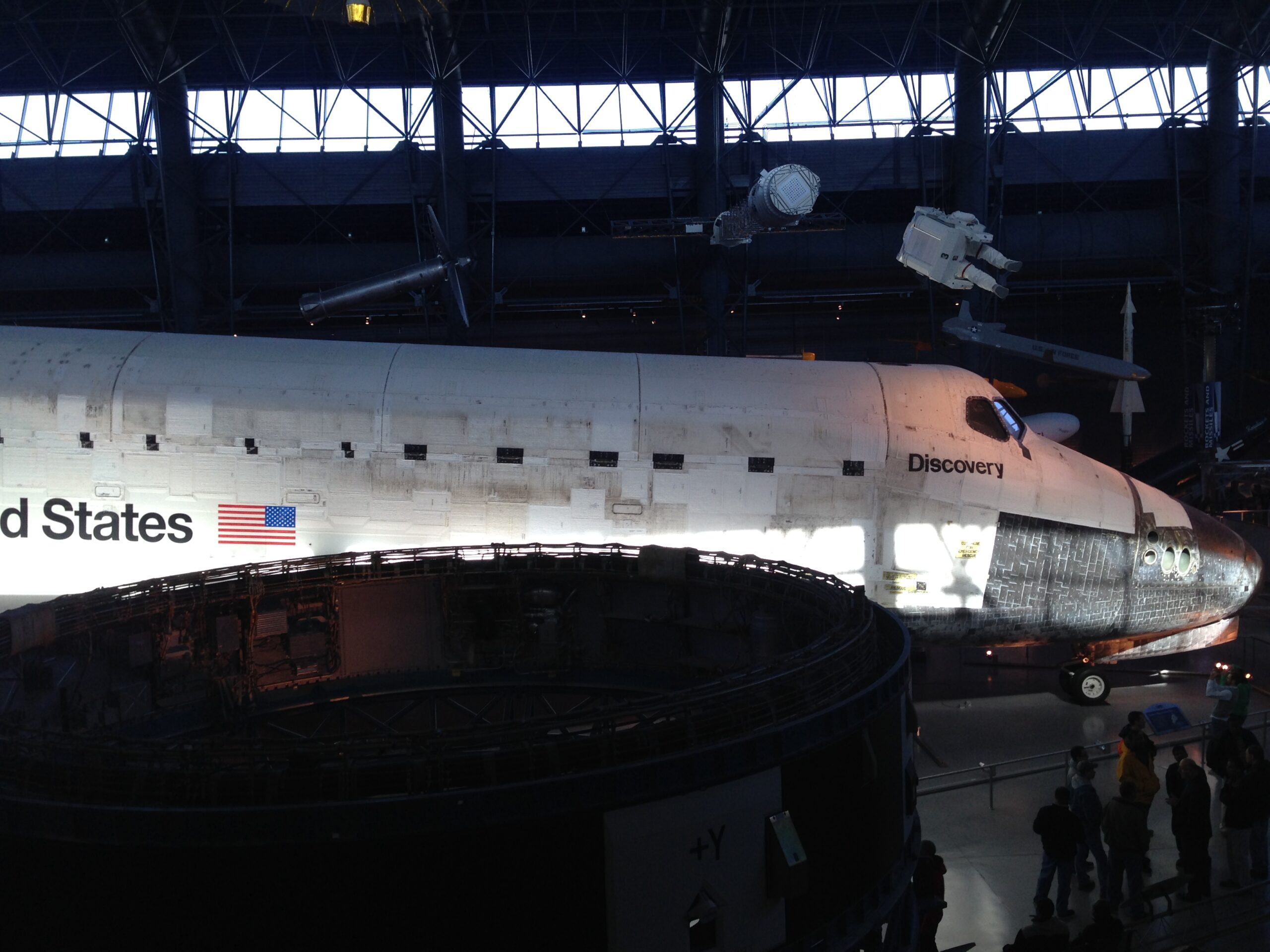
2013 Smithsonian Photo Outside of Washington, DC. Image Credit: Harry J. Kazianis.
The Galileo Problem
Galileo set a precedent that now shapes how NASA treats the outer solar system. The better spacecraft become at finding ocean worlds, the more often mission planners face the same bind, which is how to explore a place without making it harder to ever trust a search for life there. It is the hidden cost of discovery. A probe can reveal that a world is far more interesting than anyone expected, and the moment it does, the rules governing that world tighten, sometimes to the point of requiring the explorer’s own destruction.
The clearest descendant came at Saturn. On September 15, 2017, NASA deliberately flew the Cassini orbiter into Saturn at the end of its mission for the identical reason. Cassini was nearly out of fuel, and engineers refused to risk a dead spacecraft one day drifting into Enceladus, the small moon whose subsurface ocean Cassini itself had discovered by photographing geysers of water erupting through cracks near its south pole.
The lineage is explicit in the people who do this work. As one Cassini scientist put it, the Voyagers were disposed of by being flung out of the solar system, and Galileo was deliberately crashed, all to keep Earth bacteria off promising worlds, because such microbes can be tenacious. The same logic now distinguishes which worlds need the most care, with Enceladus treated more strictly than Saturn’s moon Titan because liquid water there sits closer to the surface.
That ethic is built into the missions flying right now. NASA’s Europa Clipper, launched in October 2024 and on its way to a planned arrival around 2030, is designed to orbit Jupiter rather than Europa and to study the moon through dozens of close flybys without ever landing on it, with a trajectory specifically shaped to minimize the risk of accidental impact.
The European Space Agency’s JUICE spacecraft is also en route to the Jovian system to study its icy moons. Both are products of a caution that did not exist before Galileo found what they found.
The arithmetic of Galileo’s ending is strange but not wasteful. NASA spent years and enormous ingenuity keeping a crippled spacecraft alive, salvaging a flagship mission from a jammed antenna, only to deliberately destroy the machine once it had succeeded. It was not thrown away because it had stopped mattering. It was destroyed because what it had found mattered too much to risk.
Galileo was not killed for failing. It was killed for doing its job better than anyone expected, and for revealing a world that humanity now treats as too precious to put in danger, even from the explorer who discovered it.
About the Author: Harry J. Kazianis
Harry J. Kazianis (@Grecianformula) was the former Senior Director of National Security Affairs at the Center for the National Interest (CFTNI), a foreign policy think tank founded by Richard Nixon based in Washington, DC. Harry has over a decade of experience in think tanks and national security publishing. His ideas have been published in the NY Times, The Washington Post, The Wall Street Journal, CNN, and many other outlets worldwide. He has held positions at CSIS, the Heritage Foundation, the University of Nottingham, and several other institutions related to national security research and studies. He is the former Executive Editor of the National Interest and the Diplomat. He holds a Master’s degree focusing on international affairs from Harvard University.

