
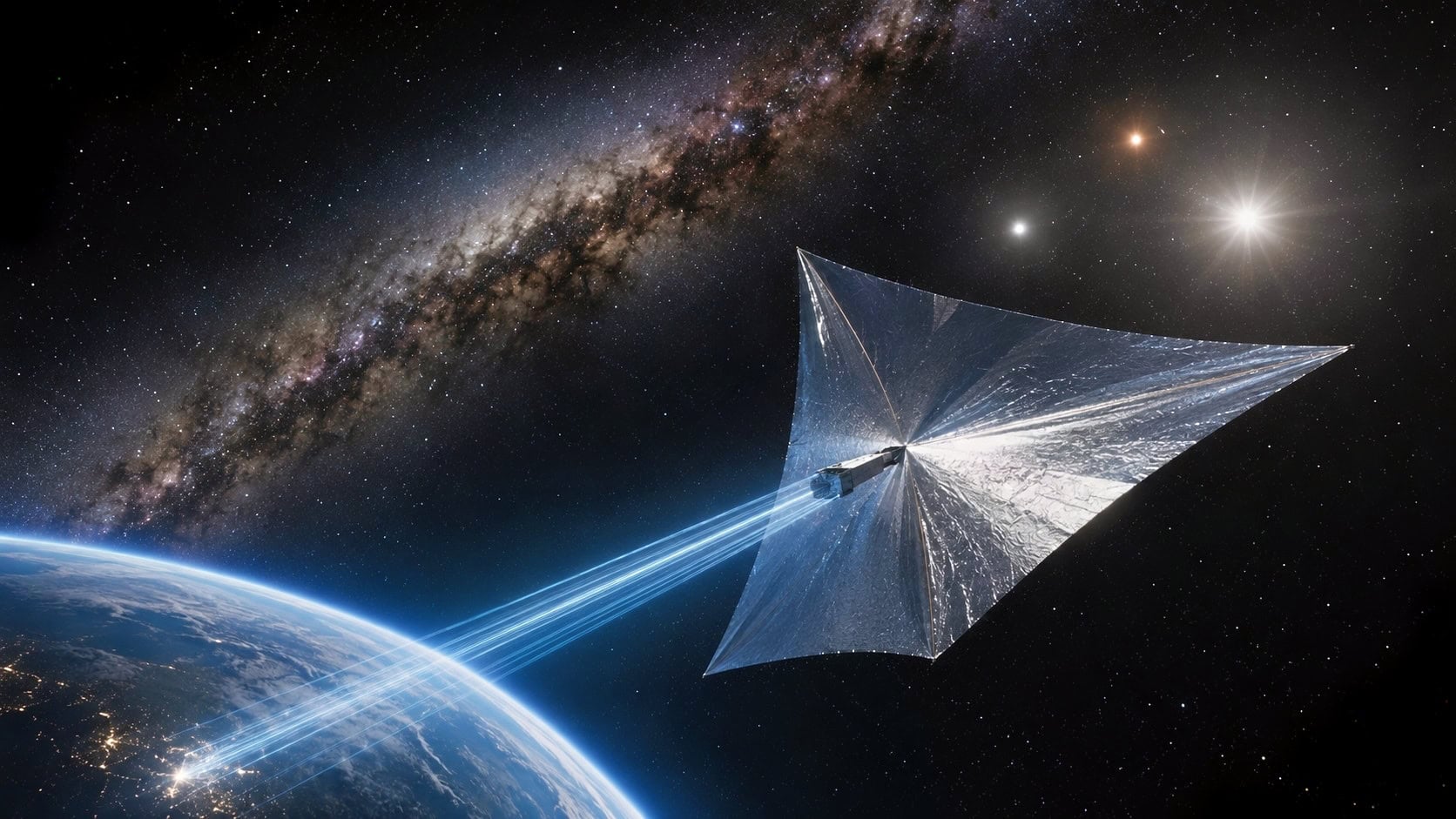
Alpha Centauri sits roughly 4.37 light-years from Earth, making it the closest star system to our own. In astronomical terms, it may seem like a manageable distance. But in practical terms, it is fascinatingly far away—roughly 25 trillion miles. To travel such distances, humanity can’t simply build a bigger rocket, but must overcome the limits of propulsion, power generation, communications, and human endurance. And while scientists have proposed several concepts, no existing spacecraft could realistically make the journey.
Current Rockets Don’t Work for Alpha Centauri
The distance between Earth and Alpha Centauri is immense. Consider Voyager 1, which is humanity’s most distant spacecraft. It travels roughly 38,000 miles per hour—quite fast—, but at that speed, it would need 75,000 years to reach Alpha Centauri.
So, to get to Alpha Centauri in practice would require traveling at much higher speeds. Laser sails could offer a solution; Breakthrough Starshot is a project that proposes using ultra-thin reflective sails, which would eliminate the need for large amounts of fuel.
Using an Earth-based laser array, the sails could be accelerated to roughly 20 percent of the speed of light. And at 20 percent of the speed of light, the trip could take about 20 years instead of tens of thousands of years.
The spacecraft being proposed in Breakthrough Starshot would be tiny—closer to computer chips than traditional probes.
But this is the most realistic near-term path to another star system.
The Human Problem
Obviously, sending probes to Alpha Centauri and sending humans represent very different problems.
Probes are easy, relatively; humans are not. Humans require food, water, radiation protection, medical care, and life support.
To get humans safely to another star system, one theoretical solution is nuclear fusion propulsion, which could propel spacecraft to 2–5 percent of the speed of light. Even then, travel times would still be measured in decades or centuries.
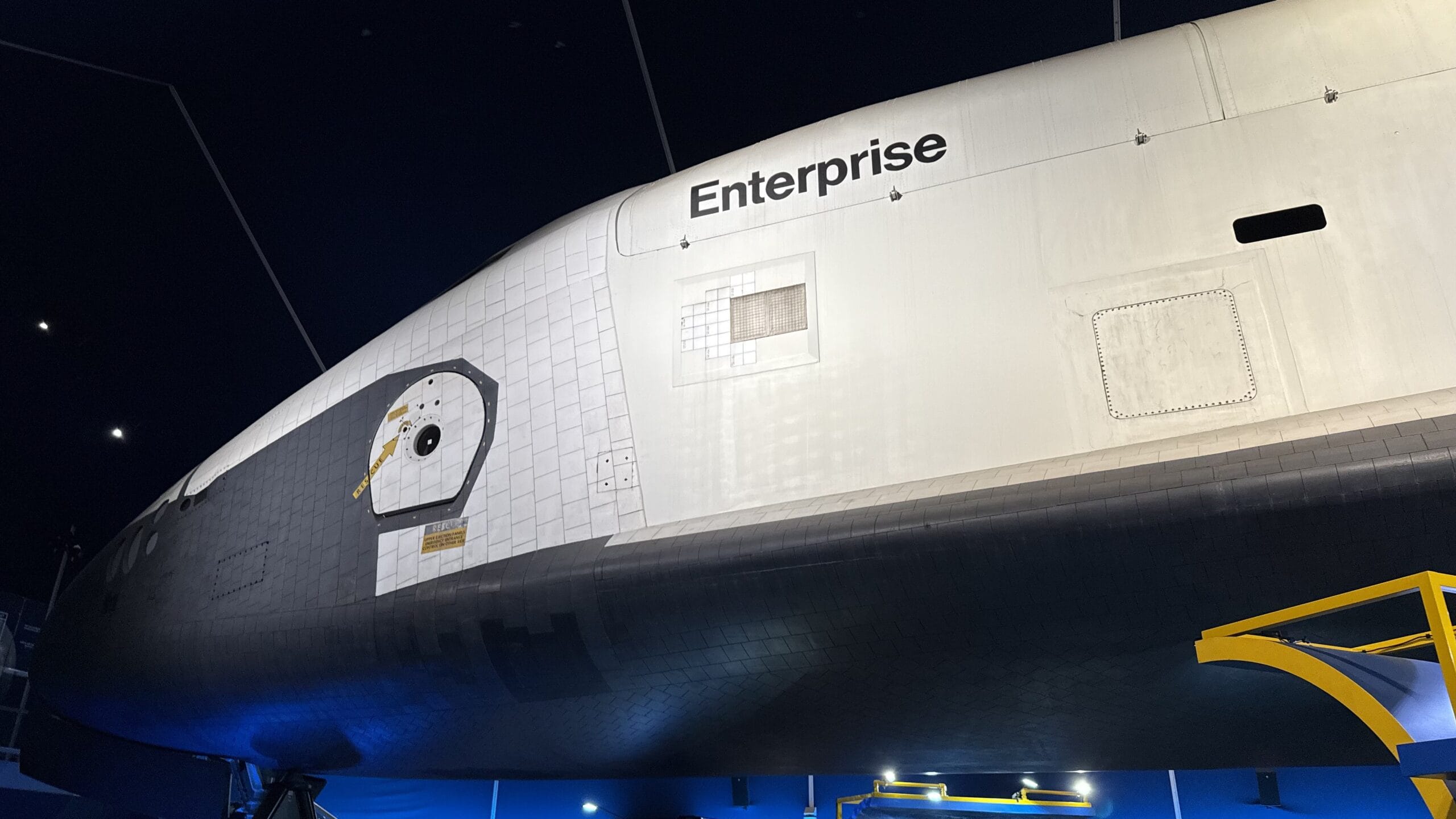
NASA Space Shuttle Enterprise 19FortyFive Original Image.
Human missions might require generation ships, suspended animation, or major breakthroughs in life-support systems. At present, none of those technologies is operational.
Potential Pitfalls
One surprising challenge about interstellar travel is that space isn’t empty—it contains dust and tiny particles. And when traveling at a significant fraction of the speed of light, even microscopic impacts become dangerous.
A tiny grain of dust striking a spacecraft at 20 percent of the speed of light carries enormous kinetic energy. Future probes would likely require specialized shielding on their leading edges to protect against such impacts.
Less surprisingly, at such interstellar distances, communication is a nightmare. Any spacecraft that travels to Alpha Centauri would need to send information back home. And because the system is 4.37 light-years away, any signal takes more than four years to reach Earth.
Even after a probe arrives, scientists would wait years to receive its findings. Placing such capable communications systems in such tiny spacecraft presents an engineering problem. Some concepts envision using the sail itself as part of a laser communication network.
Powering the missions is potentially a problem, too. Solar panels wouldn’t work because sunlight becomes too weak far from our solar system. Scientists envision advanced radioisotope power systems—similar technology already powers deep-space missions today. Future versions would need to operate reliably for decades.
What Would We Find?
Alpha Centauri matters because it is not a single star but a three-star system.
The biggest scientific prize is Proxima Centauri b. The planet orbits within the star’s habitable zone and is considered one of the most promising nearby worlds for study.
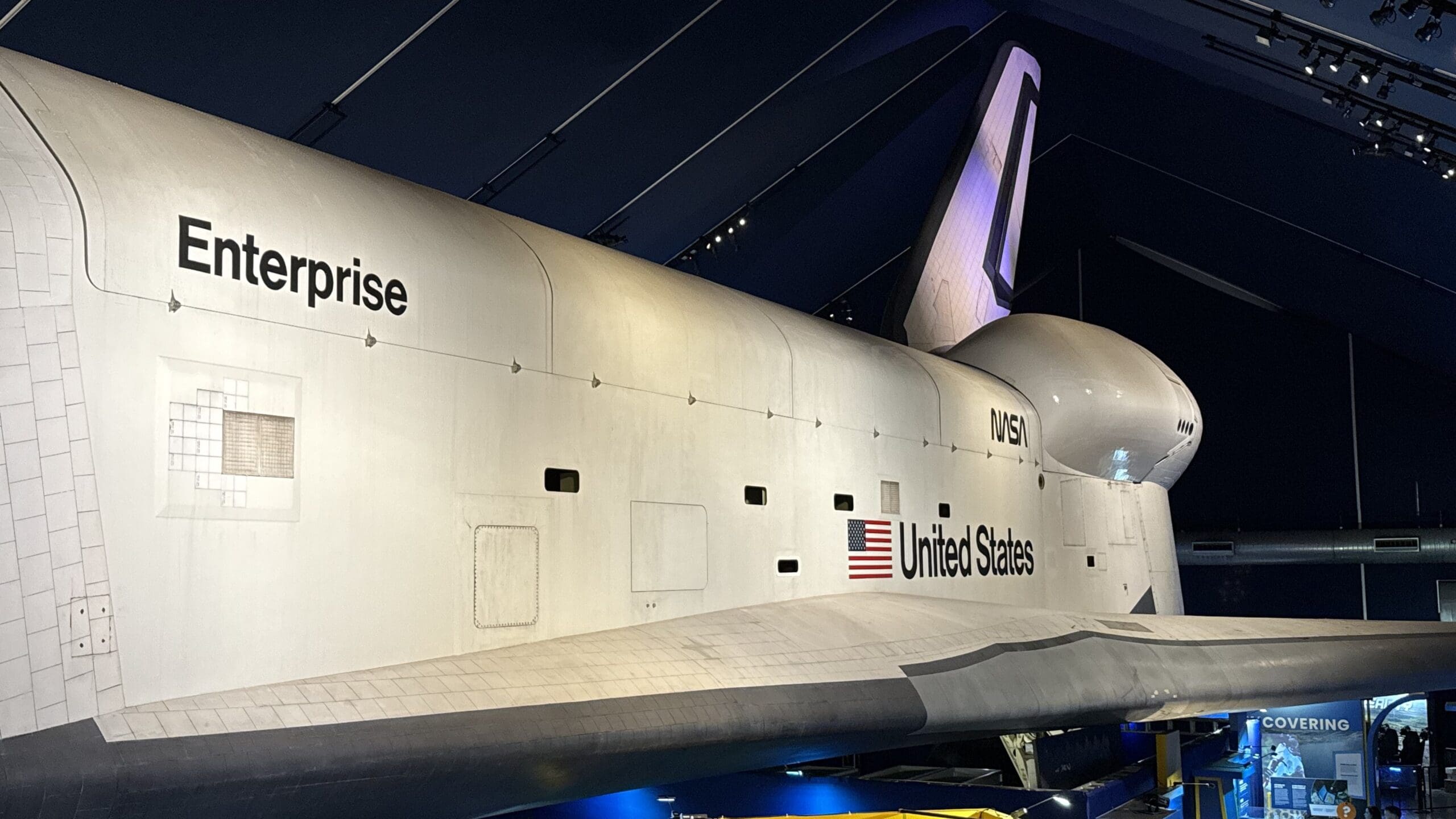
NASA Space Shuttle Enterprise 19FortyFive Original Image.
Scientists would search for liquid water, atmospheres, signs of habitability, and possible biosignatures. Even discovering microbial life would be one of the most important scientific discoveries in human history.
But getting to Alpha Centauri would also be pricey. A laser-sail system would require enormous power generation and advanced laser networks. Estimates for such infrastructure run into the tens or hundreds of billions of dollars.
The good news is that such infrastructure is physically possible. Probably.
Still, reaching Alpha Centauri remains beyond our current capabilities. But for the first time, scientists can outline plausible pathways rather than pure science fiction. Humans are not likely to go to a star anytime soon, however.
Sending robotic probes may be achievable within this century, and if it happens, Alpha Centauri will almost certainly be the first destination.
About the Author: Harrison Kass
Harrison Kass is a writer and attorney focused on national security, technology, and political culture. His work has appeared in Tablet, City Journal, The Hill, The Spectator, and The Cipher Brief. He holds a JD from the University of Oregon and a master’s in Global & Joint Program Studies from NYU. More at harrisonkass.com.

