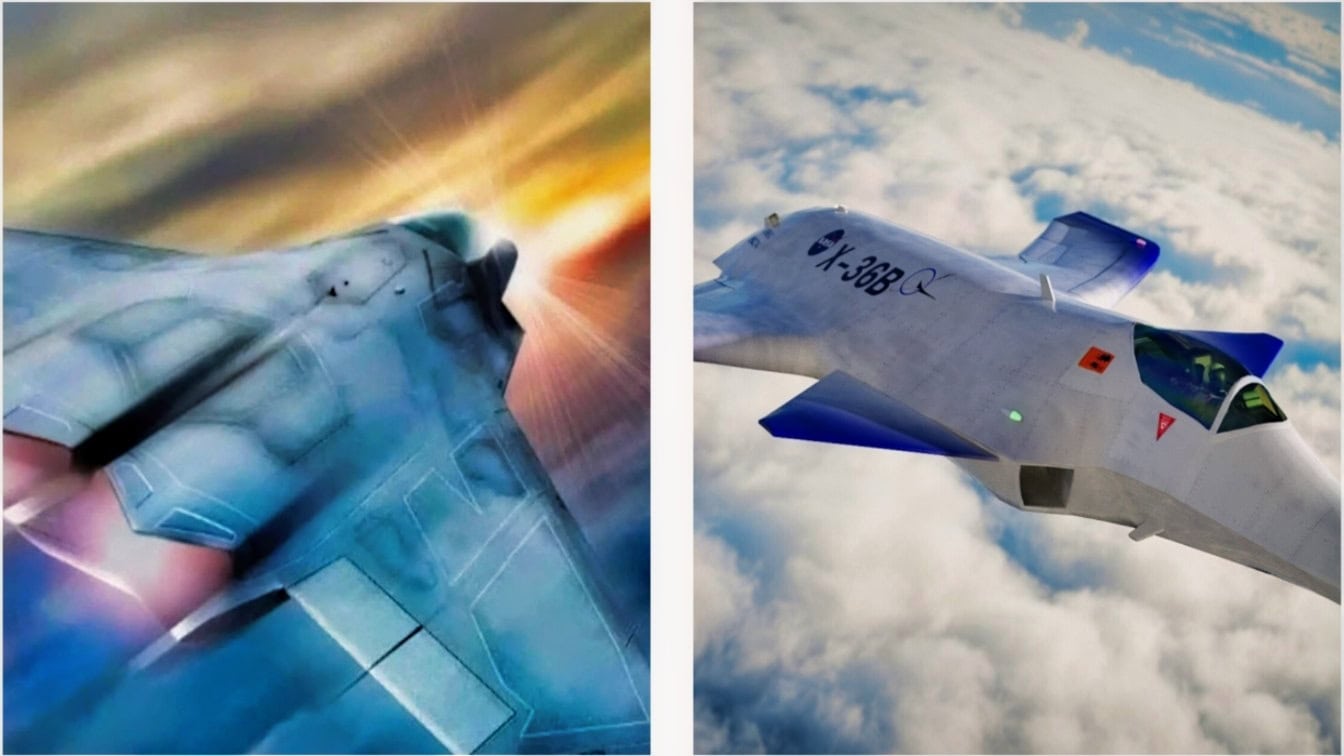
Summary and Key Points: Photographs circulating widely show a tailless, cranked-kite aircraft with canards flying at night over Area 51, and aviation journalists generally agree the aircraft is likely a demonstrator for the F-47, the United States Air Force’s sixth-generation Next Generation Air Dominance fighter. There is no official confirmation. Aerospace analyst Bill Sweetman notes the design resembles a mature version of the X-36 experimental program of the 1990s, which tested whether a stealth aircraft could fly without vertical tails, and reads the shape as optimized for supersonic cruise on adaptive-cycle engines rooted in General Electric research from the same decade. The sightings suggest America’s sixth-generation program has moved into flight testing as China advances its own.
The F-47 Might Be Doing Test Flights
Area 51 is again in the news. No, they haven’t let us in on whether they’re communicating with grey aliens from Zeta Reticuli there yet. And, thankfully, nothing like the Half-Life storyline has occurred beneath the facility. Luckily, Area 51 is back in the news because the facility is operating as intended: it’s testing experimental, high-end American warplanes.
Not Aliens! F-47 Questions
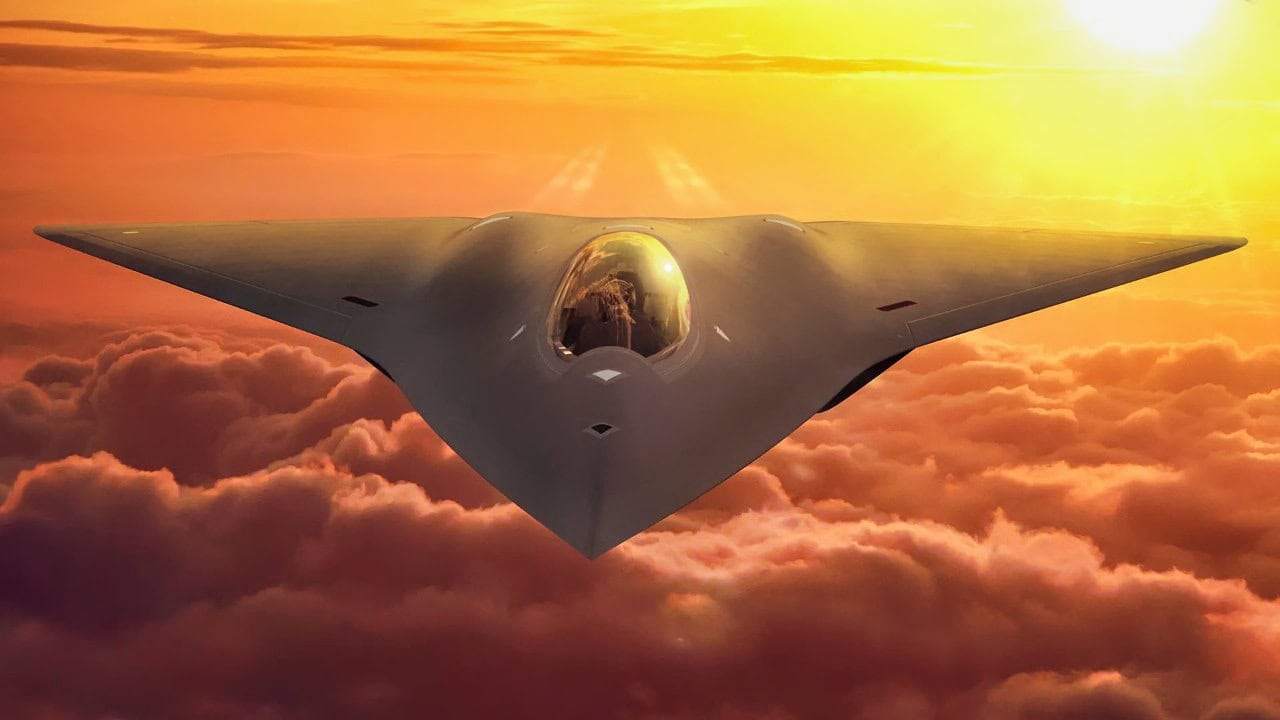
NGAD Fighter via Lockheed Martin.
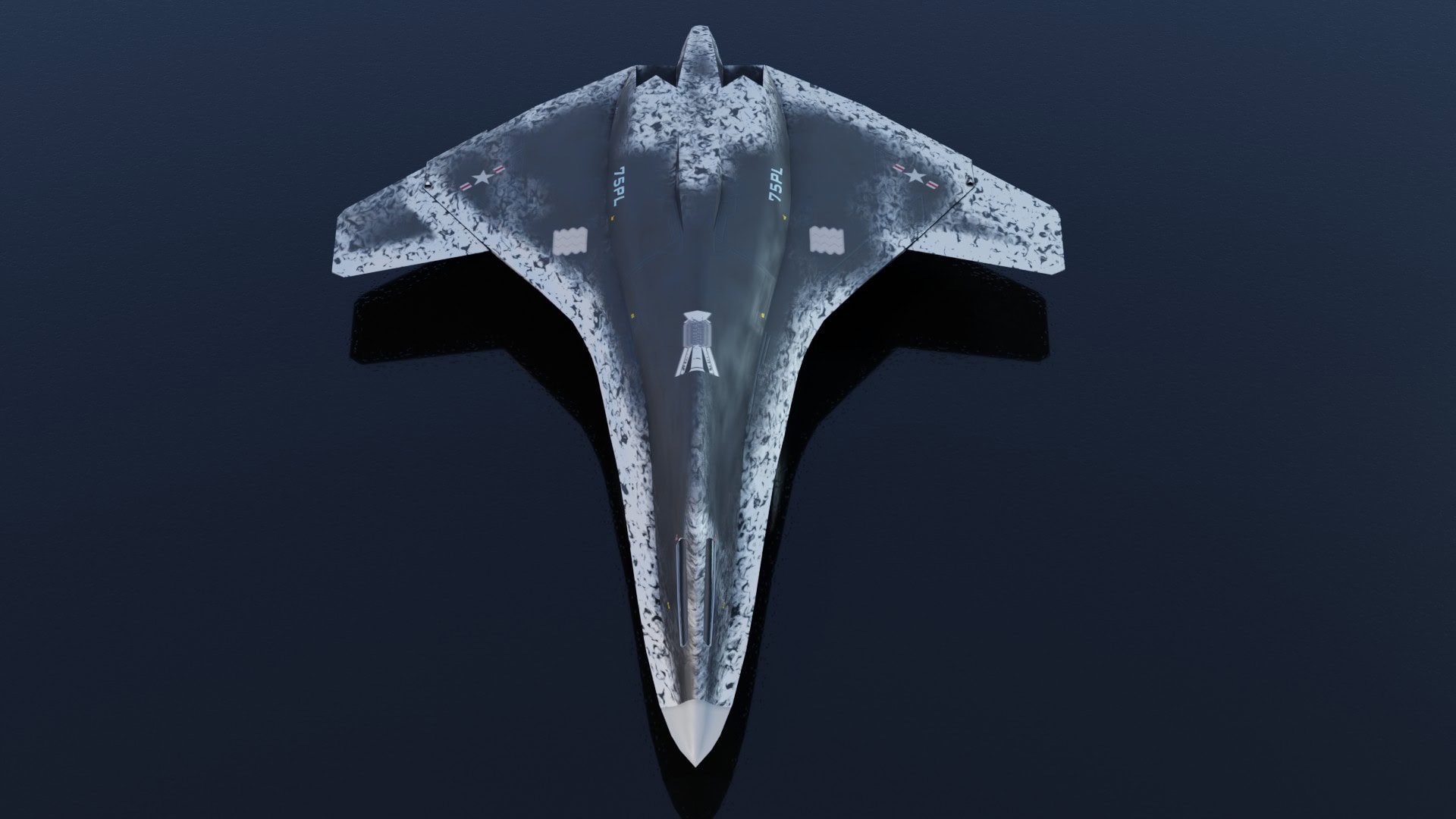
NGAD Fighter Mock Up. Image Credit: Creative Commons.
Photos recently proliferated globally of a tailless, cranked-kite plane–with canards–in the darkness of the night over the classified facility.
We have no official confirmation on precisely what the plane seen in those grainy, silhouetted pictures was. What we can see is that it is unlikely those pesky Zeta Reticulans are doing laps around the covert base. The consensus online and among aviation journalists is that the sightings are likely of the sixth-generation F-47 “Next Generation Air Dominance” (NGAD) demonstrator.
And that’s significant. Because it’s clear that the United States and the People’s Republic of China (PRC) are in a race to develop and deploy their respective sixth-generation warplanes first. Months ago, suspected demonstrators of a sixth-generation warplane were spotted circling the skies over China. Now, the Americans seem to be running flight tests of their F-47.
These developments over the skies of Area 51 are in keeping with the Air Force’s iterative design and development of other advanced warplane systems over the years. For instance, the stealth plane we’ve all become accustomed to seeing in the media didn’t just appear out of nowhere. It took years–decades–to create the final F-117 Nighthawk and B-2 Spirit long-range nuclear-capable stealth bombers.
The Iterative Design Process
Nevertheless, the military tested multiple variations of stealth technology. The US military also made various demonstrators and tested them over the nighttime skies of America’s most secretive military facilities.
Based on the admittedly limited imagery from the purported test flight of the sixth-generation bird over Area 51, experts agree that the plane shown has twin engines, highly swept wings, and a tailless configuration. These details, along with the presence of canards near the front of the plane, lead most to conclude that the plane is an F-47.
Bill Sweetman, an aerospace expert, likens the images of what may be the F-47 to those of the Air Force’s X-36 experimental plane. The X-36 tried answering a basic question that would inform next-generation stealth planes: can a stealth fighter eliminate vertical tails from its design?
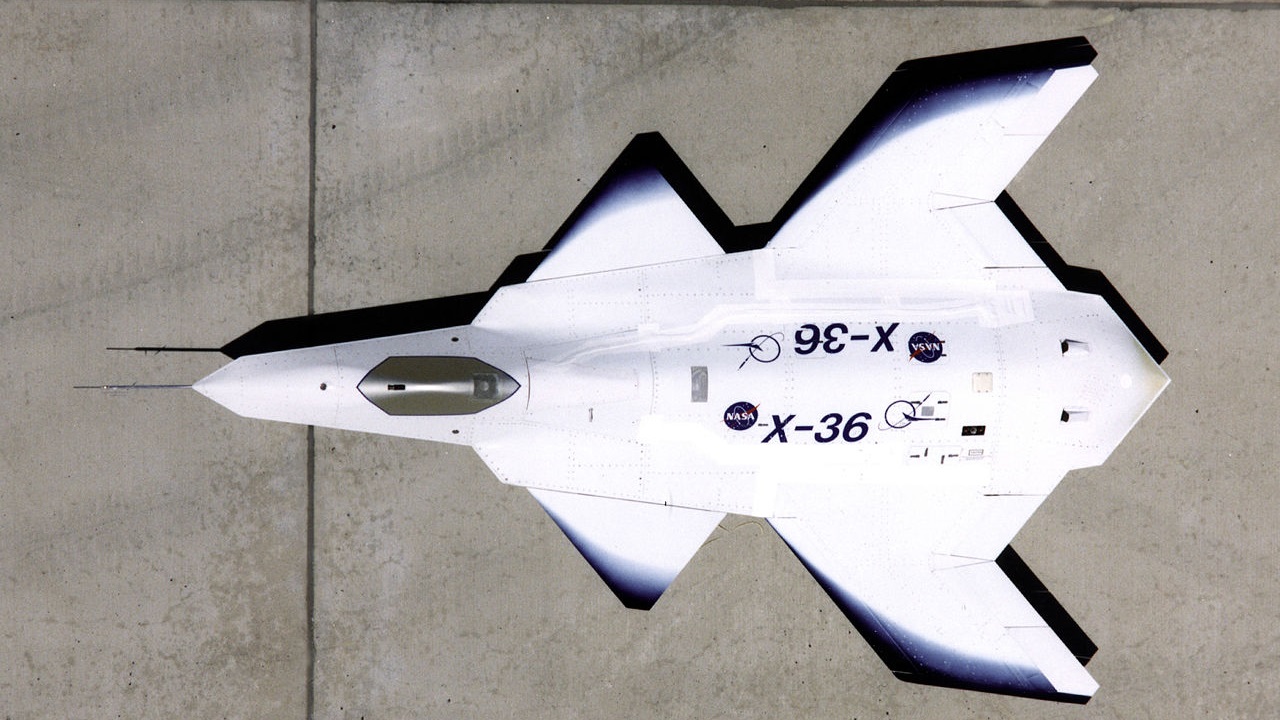
X-36 Boeing stealth aircraft. Image Credit: Creative Commons,
Normally, planes need vertical tails for yaw stability.
The old X-36 tried to replace them with fly-by-wire computers, canards, elevons, and other advanced flight controls. Removing vertical tails dramatically reduces radar cross-section (RCS). Sweetman asserts that the mystery aircraft flown over Area 51 resembles the mature version of that same design philosophy.
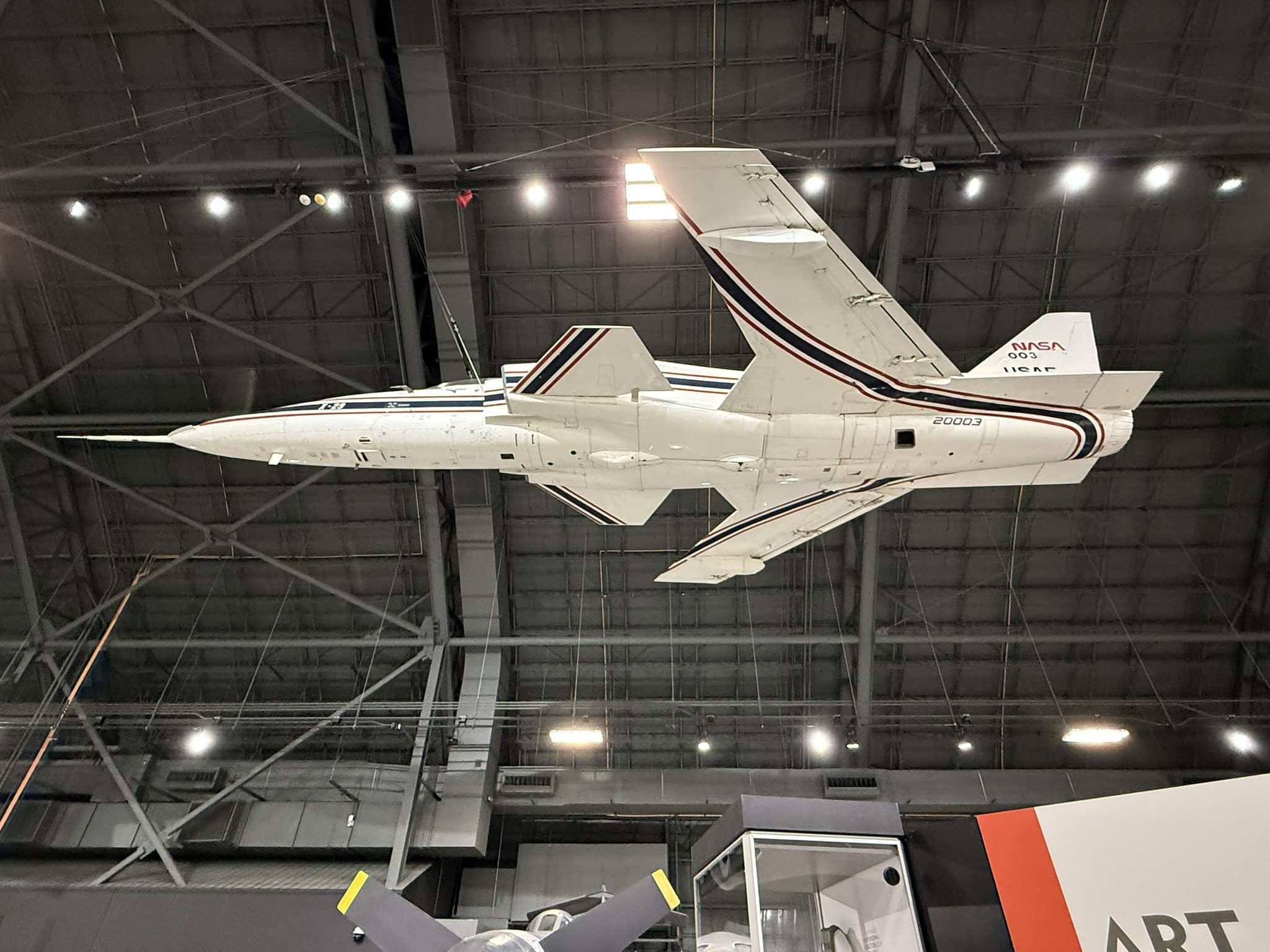
X-36 at the National Museum of the U.S. Air Force. Taken back in July of 2025 by Harry J. Kazianis.
Adaptive Engines
Channeling Sweetman’s excellent analysis once more, we must consider the experimental bird’s potential propulsion. Sweetman believes the aircraft’s shape indicates an optimization for sustained supersonic cruise (supercruise). That analysis, too, fits in well with other adaptive-cycle engines currently under development via the NGAD program.
According to the NGAD’s supporters, the adaptive-cycle engines ensure high efficiency at cruise, high thrust during combat, and increased range. Again, Sweetman highlights the evolution of these engines back to General Electric (GE) research dating back to the 1990s.
All this lends credence to the claim that the NGAD is evolutionary rather than revolutionary. So, contrary to what the internet people believe, no one’s testing anti-gravity engines at Area 51. Too bad.
Iterative Rather Than One-Shot
If what Sweetman says is true, then the US has possessed the baseline sixth-generation technologies for decades. If that’s true, and this author suspects that it is true on some level, that means that the Pentagon chose to prioritize the prolonged development of its legacy aircraft over its next-generation systems.
Shortly before he died in 1993, legendary former Lockheed Skunk Works director Ben Rich gave a speech at his alma mater, UCLA. In that speech, the man who ran some of America’s most advanced, secretive military technology development programs throughout the twentieth century stated, “We already have the means to travel among the stars, but these technologies are locked up in black projects, and it would take an Act of God ever to get them out to benefit humanity.”
The safe bet is he was exaggerating. Then again, Rich said many such cryptic things shortly before he died in 1993. “Anything you can imagine, we already know how to do.” He claimed. Whatever that means, Sweetman seems to be piggybacking, to some degree, on the former Skunkworks director’s claims regarding the alleged sixth-generation warplane sighting.
If the F-47 is truly a long-delayed, iterative system that the US military could have deployed years–or even decades–ago, one must wonder what other systems the US military is designing and developing in the secret places of America’s vast deserts.
A Secret Nexus of Advanced US Military Tech?
Given the way in which the world has become transfixed on the story of “Unidentified Aerial Phenomenon” (UAP), and the way in which there has been little explanation for whatever people are seeing, Sweetman and Ben Rich might be pointing to a much larger story than even the soft reveal of an F-47 prototype. They might be highlighting an entire ecosystem of secret technology development, potentially decades ahead of what we consider cutting-edge.
And if there is any truth to that, one must ask why the US military has not streamlined the production of these advanced systems sooner, given that America’s rivals are clearly catching up in the conventional military realm. Why continue prioritizing these legacy systems? Is it because of a secret plan to reveal only the more advanced systems in a true emergency, or is it simple bureaucratic inertia?
About the Author: Brandon J. Weichert
Brandon J. Weichert is the Senior National Security Editor at 19FortyFive.com. He also manages The Weichert Brief on Substack. Weichert also hosts “National Security Talk” on Rumble. He is the author of four bestselling national security books, the most recent of which is A Disaster of Our Own Making: How the West Lost Ukraine (Encounter Books). Follow him via Twitter/X @WeTheBrandon.