
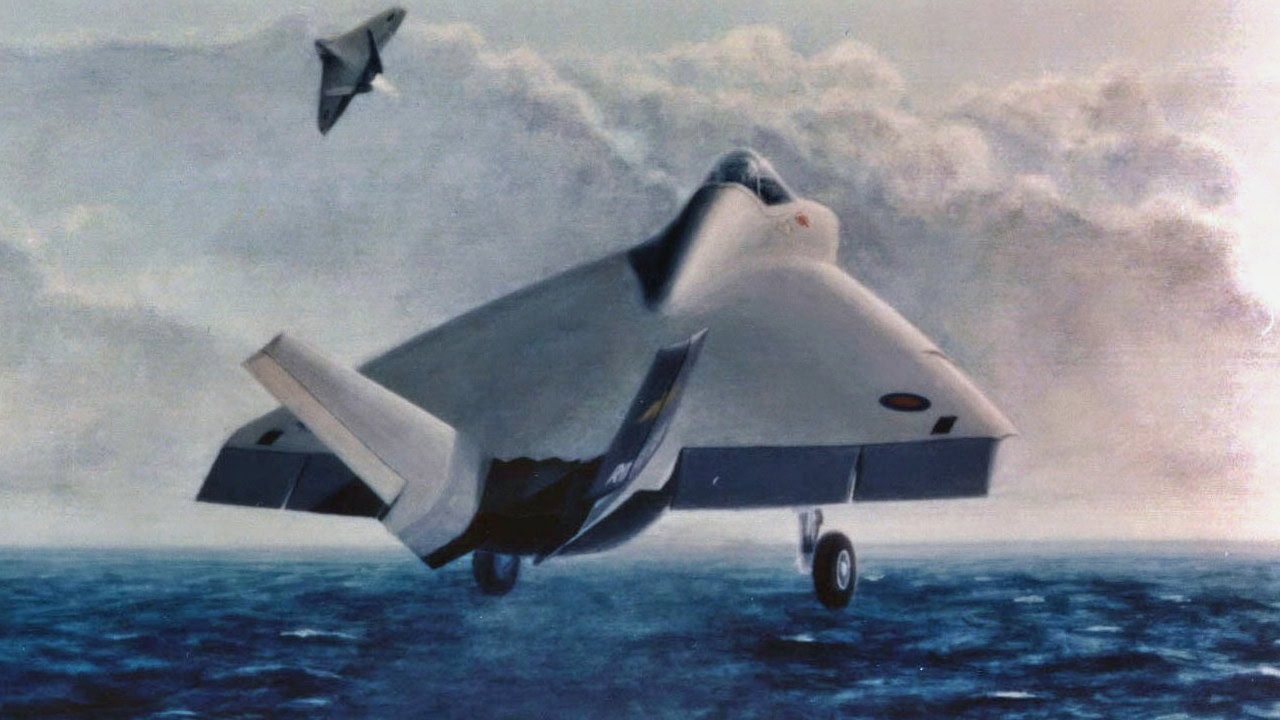
Summary and Key Points: Boeing lost the Joint Strike Fighter competition to Lockheed Martin’s X-35 on October 26, 2001, a winner-take-all award that produced the F-35 and left Boeing’s St. Louis combat-aircraft operation building McDonnell Douglas designs, the F/A-18 Super Hornet and the F-15, for more than two decades. Fixed-price programs, including the KC-46 Pegasus tanker and the T-7 Red Hawk trainer, cost the company billions, with the defense unit losing nearly $4.9 billion in 2024 alone. In March 2025, the US Air Force awarded Boeing the Next Generation Air Dominance contract for the F-47, a cost-plus deal worth more than $20 billion through 2029, with first flight targeted for 2028.
Boeing Lost the Biggest Fighter Contract in History in 2001. It Took Twenty-Four Years and Billions in Losses to Win the Next One
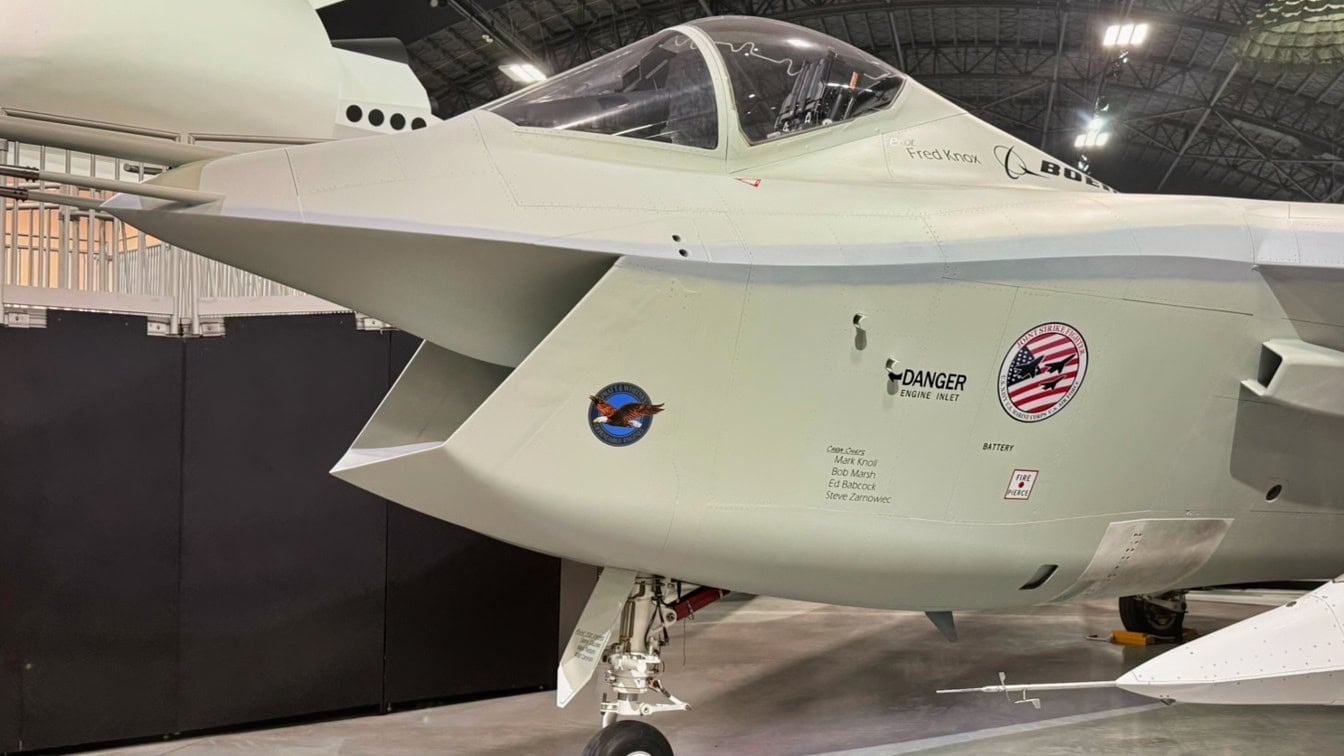
Boeing X-32 Stealth Fighter. Image Credit: 19FortyFive.com
When the Pentagon chose Lockheed Martin’s X-35 over Boeing’s X-32 for the Joint Strike Fighter in October 2001, a Boeing spokesman watching from St. Louis said the team was crushed. The loss did more than sting.
It locked Boeing out of new fighter design for a generation, left its combat-aircraft business riding aging McDonnell Douglas production lines, and set up two decades of painful losses on other military programs. Then, in March 2025, Boeing won the contract for the U.S. Air Force’s next fighter. Whether it can build the thing is now the real question.
Boeing spent the first quarter of this century learning what it costs to lose a fighter competition, and the lesson ran to billions of dollars and twenty-four years. The company that just won the contract to build the U.S. Air Force’s sixth-generation fighter, the F-47, is the same company that in 2001 lost the Joint Strike Fighter competition that produced the F-35, and the distance between those two events is the story of how close Boeing came to leaving the fighter business entirely.
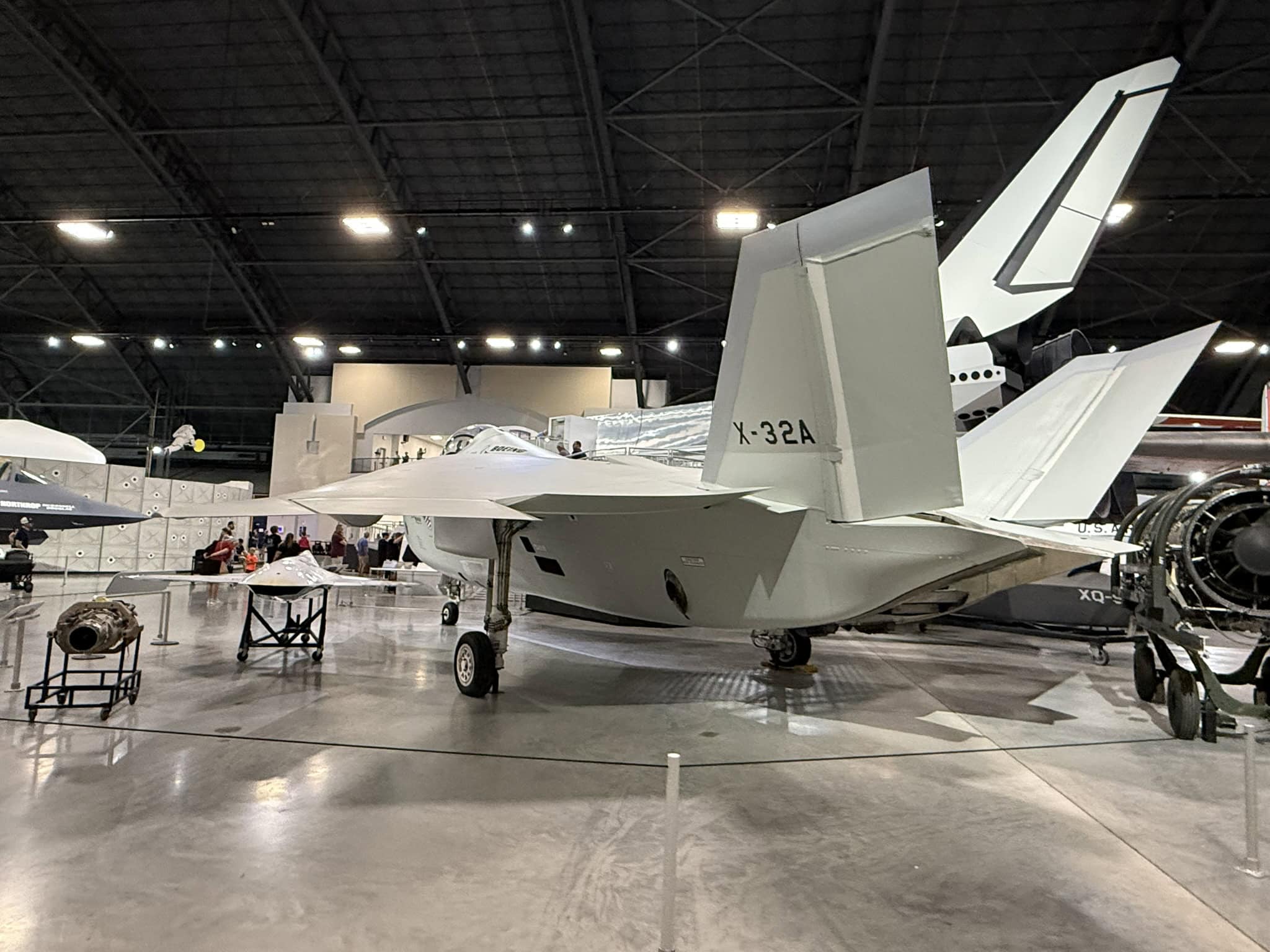
Boeing X-32A. From National Museum of the U.S. Air Force. 19FortyFive.com Image.
The X-32 that lost is a museum piece now. The consequences of its loss shaped Boeing’s defense arm for a generation, and they are the reason the F-47 win in 2025 carries the weight it does.
The 2001 Loss That Cut Boeing Out Completely
The Joint Strike Fighter was the largest fighter program in history, a contract then estimated at 3,000 to 5,000 aircraft and hundreds of billions of dollars, structured as winner-take-all. When the Department of Defense selected Lockheed Martin’s X-35 on October 26, 2001, Boeing did not get a consolation role.
Todd Blecher, a Boeing spokesman assigned to the program, watched the announcement from the company’s combat-aircraft facilities in St. Louis and said afterward that everyone there was crushed. Chairman and chief executive Phil Condit conceded that removing the program from Boeing’s planning would eliminate about $1 billion in expected revenue.

Boeing X-32 Image July 2025 19FortyFive Original Image Taken By Harry J. Kazianis.

Boeing X-32 Fighter image taken by 19FortyFive back in July 2025.
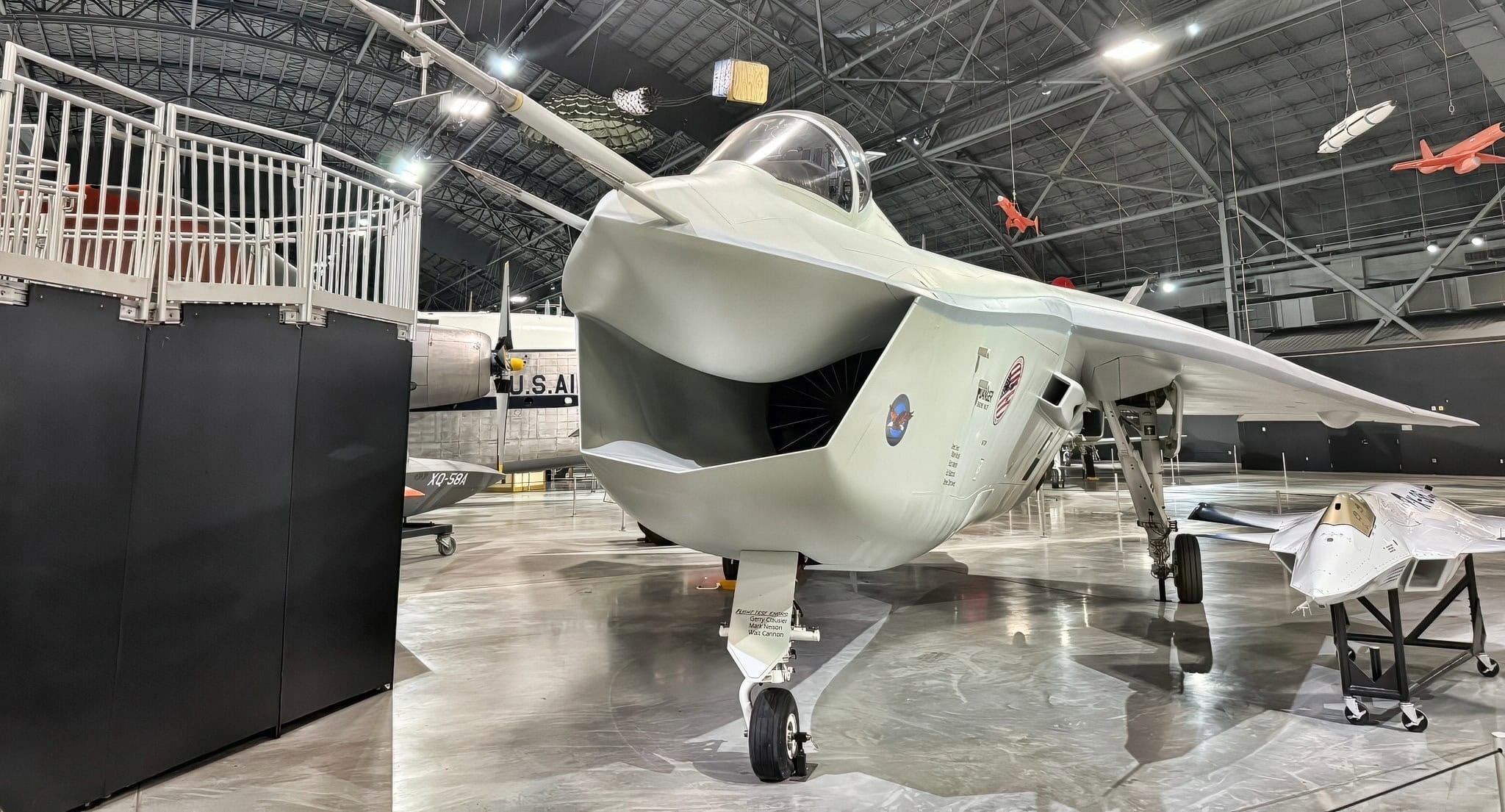
Boeing X-32 Fighter image taken by 19FortyFive back in July 2025.
The stakes were understood at the time to be existential rather than merely financial.
The loss arrived weeks after the September 11 attacks, with Boeing already facing tens of thousands of layoffs in its commercial division, and congressional backers openly worried about whether the company could retain the ability to manufacture fighter jets at all once its existing F/A-18 line finished in the early 2010s.
Aerospace analyst Richard Aboulafia later captured the era’s brutal logic for the losing side, noting that with so many fighters set to be replaced by one aircraft, the message to industry was whether it wanted a last fighter to go with its last supper.
The winner-take-all structure meant Lockheed Martin walked away with what analysts described as unquestioned dominance of the global fighter market, and Boeing walked away with nothing new to build.
Twenty-Four Years Riding Someone Else’s Airplanes
What kept Boeing in the fighter business after 2001 was not a Boeing design. It was the McDonnell Douglas inheritance, the company Boeing had absorbed in a 1997 merger. The F/A-18E/F Super Hornet and the F-15 Eagle, both McDonnell Douglas lineages, carried Boeing’s St. Louis combat-aircraft operation through the 2000s and 2010s, and both were evolutions of airframes designed decades earlier.
Boeing had no clean-sheet fighter of its own moving toward production, and the growth market analysts had predicted would compensate for the JSF loss, armed unmanned aircraft, never produced the wave of programs of record that was forecast.
The Super Hornet line was always going to run out, and the concern Congress had voiced in 2001 became real. The lifeline came in 2020, when the Air Force ordered the F-15EX, a new-build variant of the old Eagle, which kept the St. Louis line warm and denied Lockheed Martin total control of the American fighter market. Even that was a legacy design given new life rather than a new Boeing fighter.
By the middle of the 2020s, the St. Louis floor showed the strain of the transition, with Boeing delivering 14 F-15s and 11 Super Hornets in 2024 as the F-15EX ramped up and F/A-18 production wound down. For a company that had once expected to build thousands of Joint Strike Fighters, the fighter business had become a matter of sustaining airplanes conceived in another era under another company’s name.
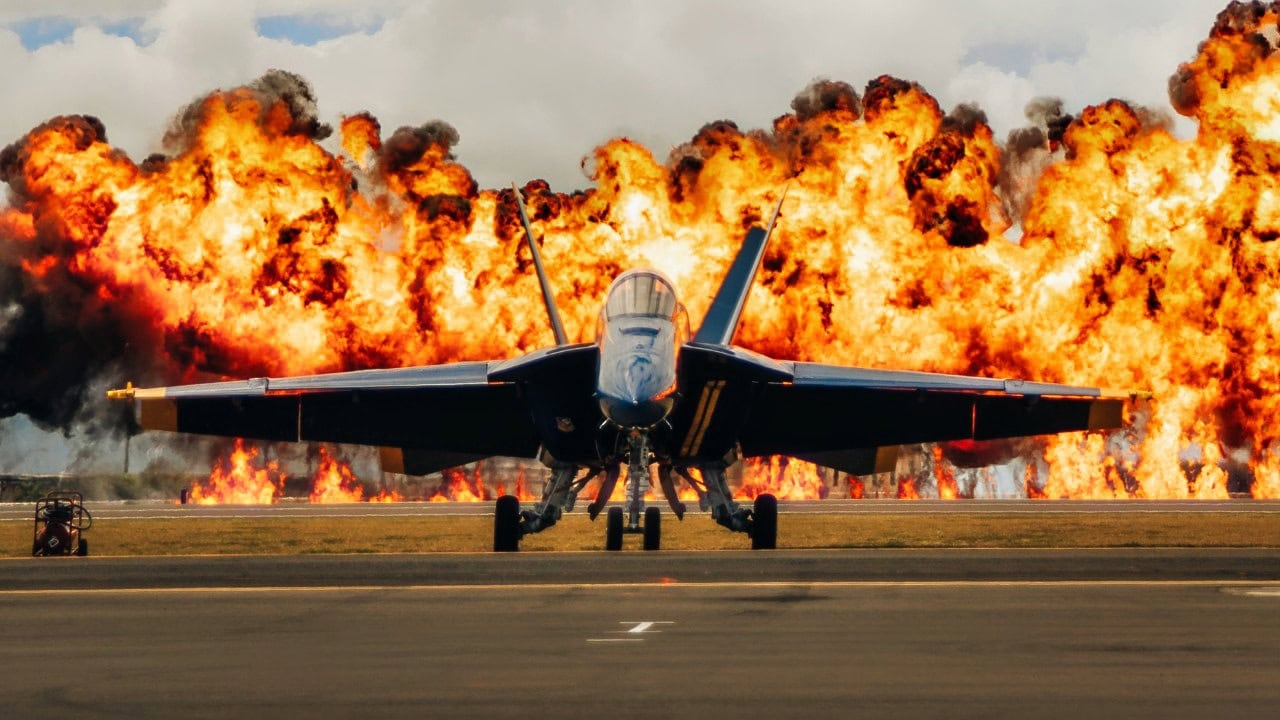
The ‘Wall of Fire” detonates behind two U.S. Navy Blue Angels F/A-18 Super Hornets during the 2022 Kaneohe Bay Air Show, Marine Corps Air Station Kaneohe Bay, Marine Corps Base Hawaii, Aug. 13, 2022. The air show provided an opportunity to demonstrate the capabilities of a Joint Force in the Indo-Pacific Region. The Kaneohe Bay Air Show, which contained aerial performances, static displays, demonstrations and vendors, was designed to express MCBH’s appreciation to the residents of Hawaii and their continued support of the installation. (U.S. Marine Corps photo by Cpl. Patrick King)
The Defense Unit That Kept Losing Money
The fighter drought coincided with a broader breakdown in Boeing’s defense arm, and the numbers were staggering. Chasing work aggressively in the 2010s, Boeing signed a series of fixed-price development contracts that put the company on the hook for any cost overruns, and the overruns came in program after program.
The KC-46 Pegasus tanker became the emblem of the problem: a deal Boeing won with a promised low-risk approach based on the 767 airliner that instead incurred roughly $7 billion in cost overruns on a contract worth about $4.9 billion. Analysts and former Pentagon officials came to call it a cautionary tale on the dangers of fixed-price development.
The KC-46 had company. The T-7 Red Hawk trainer, the VC-25B presidential aircraft, the MQ-25 carrier drone, and NASA’s Starliner all logged losses, and the totals mounted. Boeing’s defense unit recorded close to $4.9 billion in losses in 2024 alone, its largest annual defense loss on record, on top of billions more in the preceding years.

MQ-25 Boeing Drone U.S. Navy Aircraft Carriers. Image Credit: Boeing.
Chief Executive David Calhoun acknowledged that the company’s zeal to win competitions in the prior decade had led it to accept too much risk on these contracts. Layered onto the 737 MAX crashes and the questions those raised about Boeing trading engineering rigor for profit, the defense losses left the company’s military credibility at a low point precisely as the Air Force prepared to choose who would build its next fighter.
The F-47 Win and the Rebuke Buried Inside It
On March 21, 2025, President Donald Trump announced from the Oval Office that the Air Force had awarded Boeing the contract for the Next Generation Air Dominance program, the sixth-generation fighter designated the F-47, the successor to Lockheed Martin’s F-22 Raptor.
Boeing beat Lockheed Martin, its only remaining rival, after Northrop Grumman dropped out of the competition. The engineering and manufacturing development contract was worth more than $20 billion, structured as a cost-plus incentive deal rather than the fixed-price model that had bled the company, and the Air Force expects to spend that $20 billion between 2025 and 2029, with the program’s lifetime value running to hundreds of billions.
The award was, in the plain assessment of Defense One, a shot in the arm for a company that had been hemorrhaging money and struggling to deliver on programs like the KC-46, T-7, and Air Force One.
It also carried a pointed irony aimed straight back at the 2001 decision. The F-47 program uses a government-owned architecture, enabling the Air Force to update and adapt the aircraft without relying on the manufacturer.
That structure is a direct response to the friction the service experienced with Lockheed Martin over data rights on the F-35, the airplane Boeing lost to. The Air Force, having spent two decades locked into a single vendor on its last fighter, built its next one specifically to avoid the arrangement that Boeing’s 2001 defeat helped create.
Why the Pentagon Wanted Boeing Back in the Fight
Boeing’s return to fighter design was not only in Boeing’s interest. It was the Pentagon’s. A generation of consolidation had left the United States with a fighter-manufacturing base dangerously narrow, and the Joint Strike Fighter’s winner-take-all outcome had concentrated new fighter work in one company.
Congressional appropriators, reviewing the NGAD program, stressed the importance of maintaining at least two viable competitors to preserve innovation and cost discipline in the fighter industrial base. Keeping Boeing capable of designing and building a modern fighter was, from that vantage point, a national strategic interest rather than a favor to a struggling contractor.
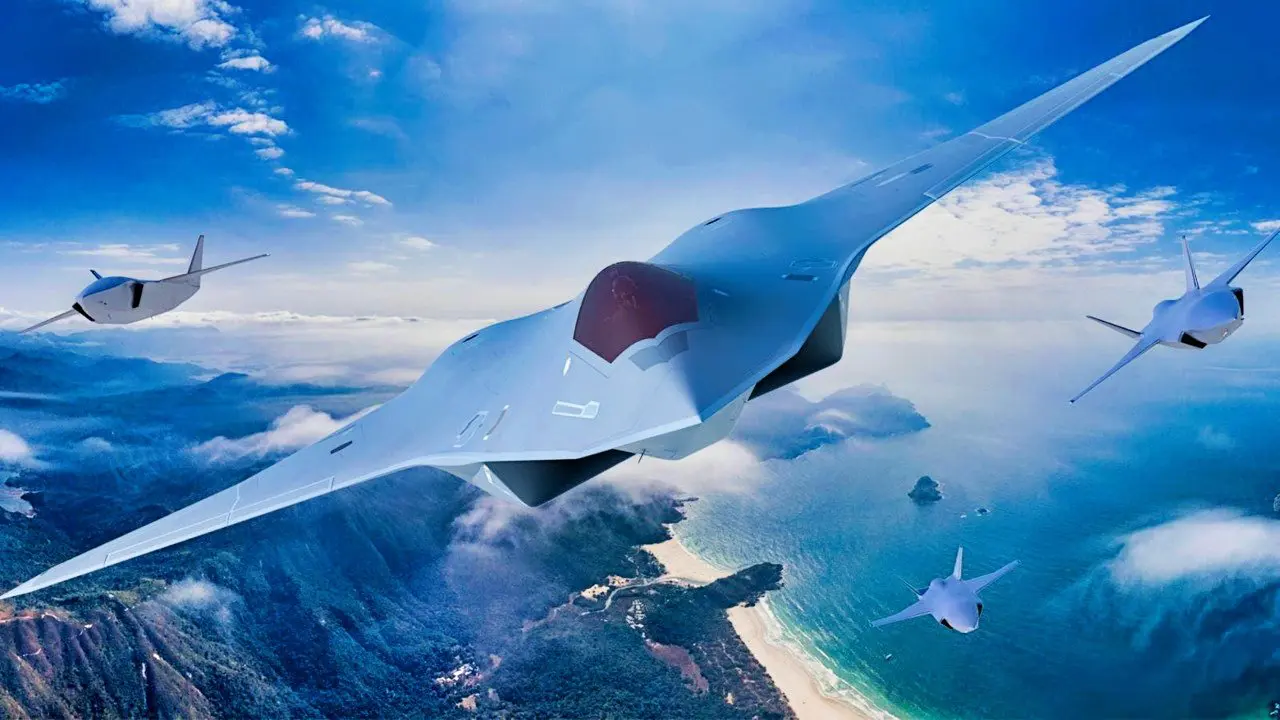
NGAD fighter from U.S. Air Force.
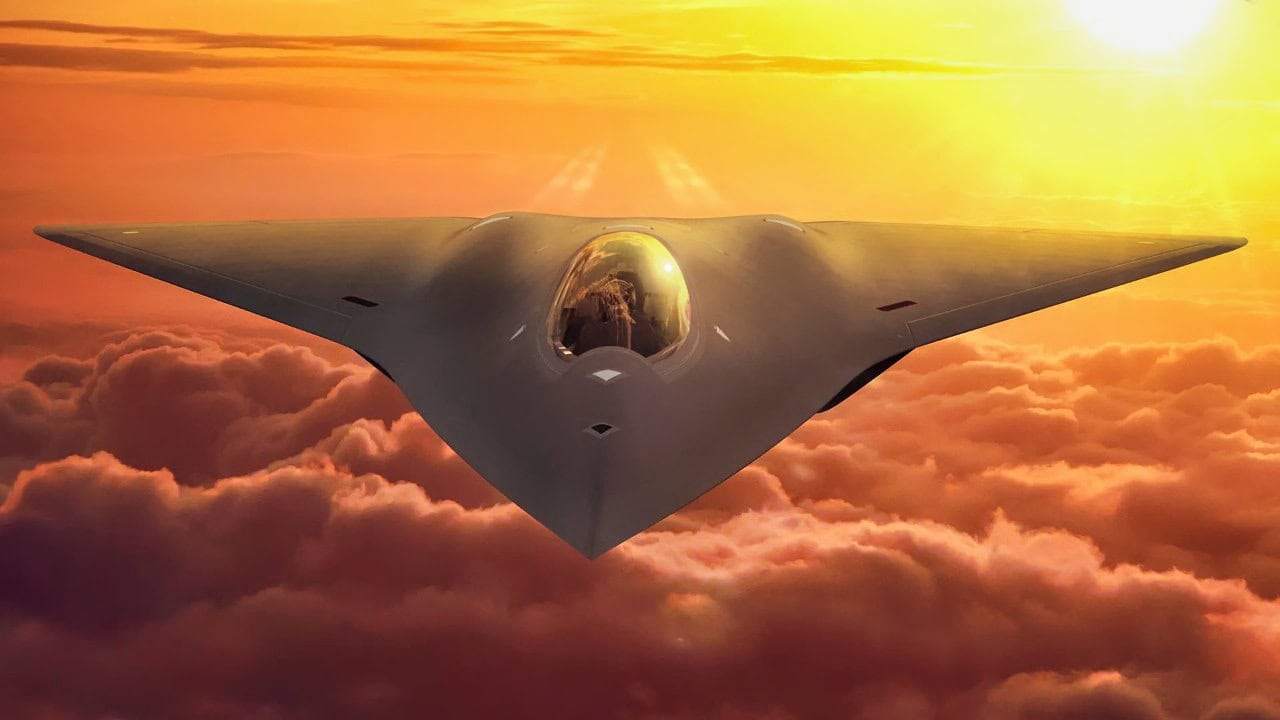
NGAD Fighter via Lockheed Martin.
The competition itself reflected years of quiet groundwork. The Air Force had been flying experimental NGAD demonstrators since 2020, and both Boeing and Lockheed Martin flew prototypes through the evaluation.
Boeing made what its defense chief called the most significant investment in the history of its defense business, building classified facilities in St. Louis on its own money before the contract was even awarded. That St. Louis investment is the same operation that traced back through the F-15EX lifeline, the McDonnell Douglas inheritance, and ultimately to the fighter franchise Boeing had been fighting to keep alive since 2001. The Pentagon’s need for a second fighter house and Boeing’s determination to remain one converged on the F-47.
Whether Boeing Can Actually Build It
The redemption arc has an unresolved ending, and it is the part that matters most.
The Boeing that won the F-47 is the same Boeing that lost billions on the KC-46 and T-7, delayed Air Force One, and spent the post-MAX years rebuilding its reputation for engineering competence.
Winning a fighter competition and delivering a fighter program are different achievements, and Boeing’s recent record in the second is grounds for caution.
The company reports the first F-47 is already in production, with Boeing Defense chief Steve Parker calling the win humbling and transformational and pointing to the maturity of a design built on years of prototype flying, with a first flight targeted for 2028.
Cost-plus contracting protects Boeing from the kind of overruns that made the KC-46 a disaster by shifting that risk back to the government, removing one of the traps that ensnared the company’s other recent programs. It does not remove the execution risk.
A sixth-generation fighter is among the most demanding engineering programs a company can undertake, and the Air Force is betting hundreds of billions of dollars and its future air superiority against China’s own sixth-generation efforts on Boeing getting it right.
The company may yet be pursuing a second fighter comeback, having submitted a proposal for the Navy’s F/A-XX carrier fighter.
Boeing has won back the franchise it lost when the X-32 was beaten in 2001, and the two decades in between serve as a warning about how much can go wrong between contract award and a finished airplane. The F-47 will prove which Boeing showed up to build it.
About the Author: Harry J. Kazianis
Harry J. Kazianis (@Grecianformula) was the former Senior Director of National Security Affairs at the Center for the National Interest (CFTNI), a foreign policy think tank founded by Richard Nixon based in Washington, DC. Harry has over a decade of experience in think tanks and national security publishing. His ideas have been published in the NY Times, The Washington Post, The Wall Street Journal, CNN, and many other outlets worldwide. He has held positions at CSIS, the Heritage Foundation, the University of Nottingham, and several other institutions related to national security research and studies. He is the former Executive Editor of the National Interest and the Diplomat. He holds a Master’s degree focusing on international affairs from Harvard University.

