
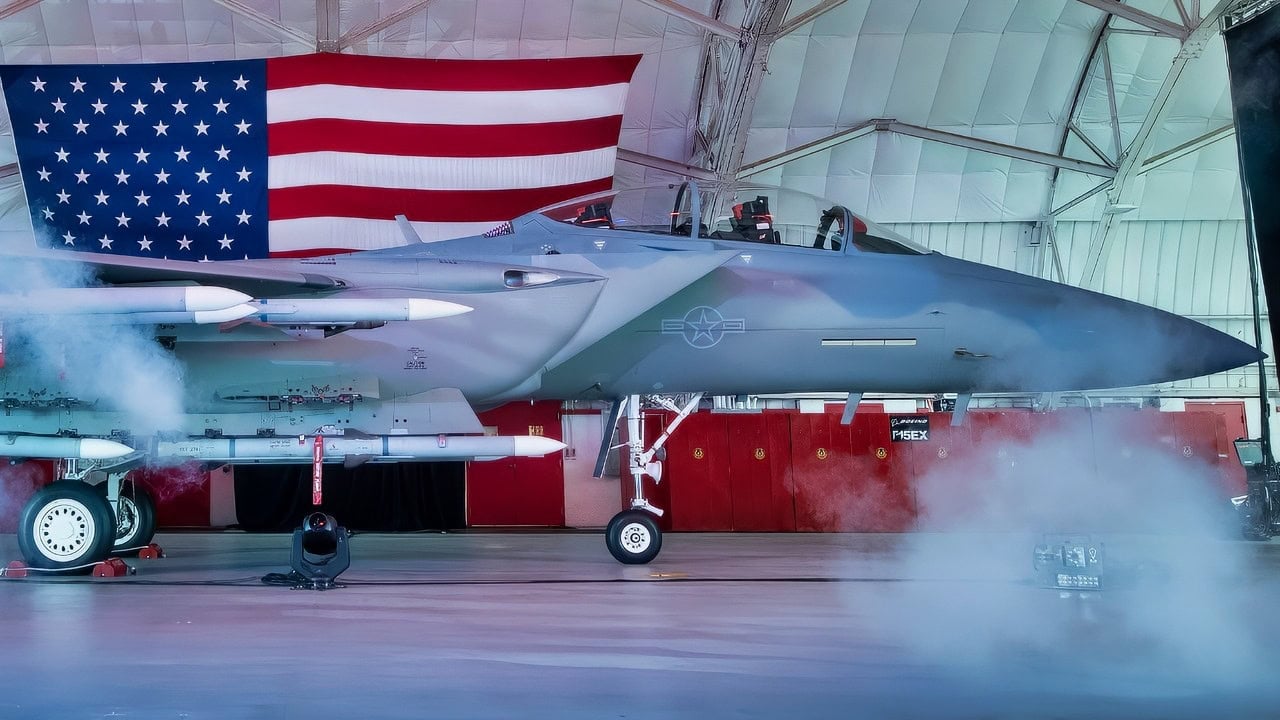
On Monday, June 29, an F-15EX Eagle II from the 85th Test and Evaluation Squadron at Eglin Air Force Base crossed the Pacific behind KC-135 tankers and landed at Kadena Air Base on Okinawa, accompanied by two of the squadron’s F-15E Strike Eagles. The wing that runs America’s most important fighter base in the Pacific greeted it with the language of a turning point. “The F-15EX represents the next chapter of airpower at Kadena,” said Brig. Gen. John Gallemore, the 18th Wing commander.
The chapter has not started yet. The jet that landed Monday belongs to a test squadron in Florida; it is at Kadena for a short-term training visit, and it will leave.
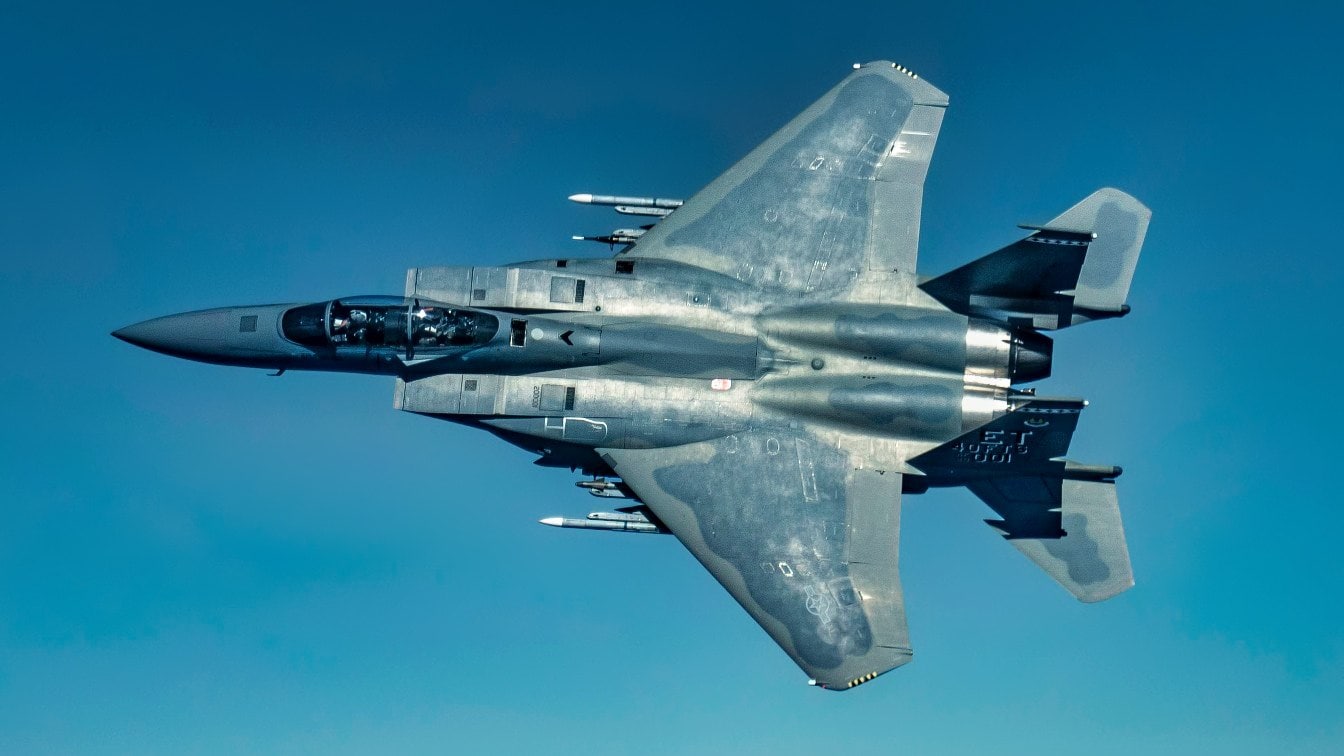
U.S. Air Force Lt. Col. Richard Turner, 40th Flight Test Squadron commander flies 40 FLTS Senior Enlisted Leader, MSgt Tristan McIntire during a test sortie in the F-15EX Eagle II over the Gulf of Mexico on Jun. 14, 2022. Assigned to the 96th Test Wing at Eglin Air Force Base, Fla., the F-15EX Eagle II is the Air Force’s newest 4th generation fighter being tested at the 40 FLTS. (U.S. Air Force photo by Tech. Sgt. John McRell)
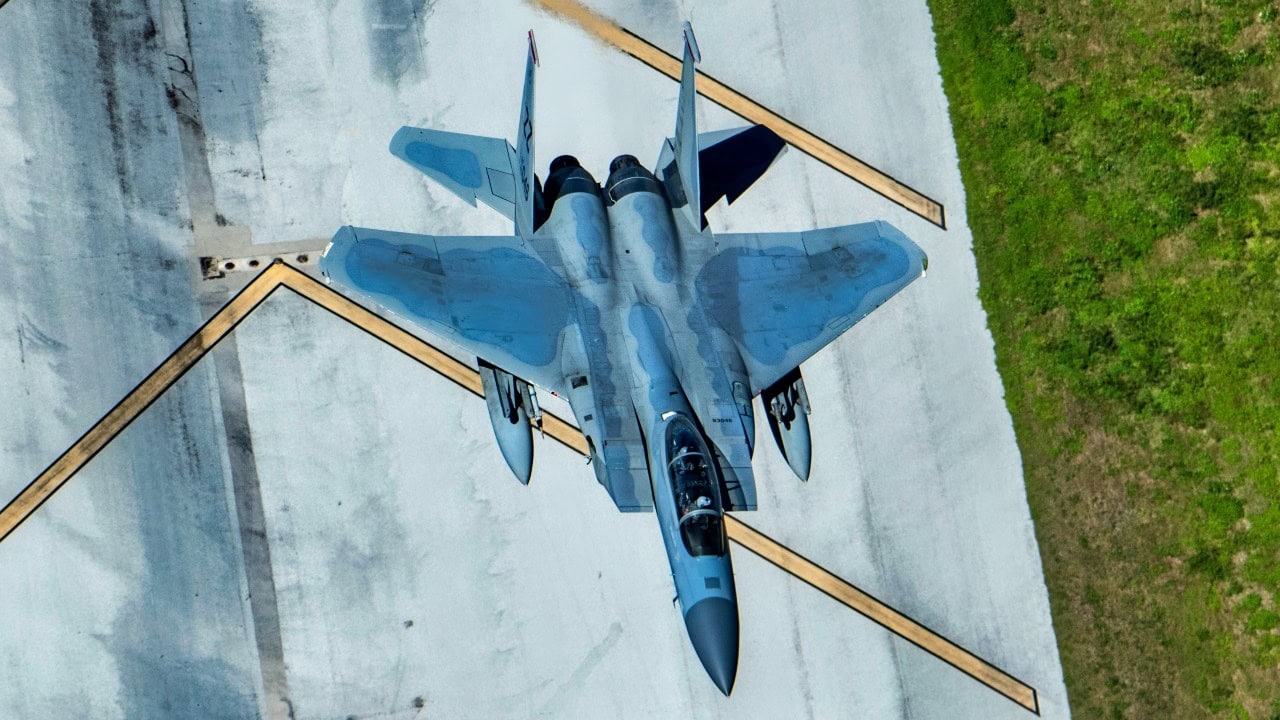
A U.S. Air Force F-15 Eagle II flies during a large show-of-force formation over Andersen Air Force Base, Guam, Mar. 6, 2019. CN19 is a long-standing exercise designed to enhance multilateral air operations amongst partner nations and includes humanitarian assistance and disaster relief airlift operations as well as large-force employment. Approximately 2,000 U.S. Airmen, Marines, and Sailors participated alongside approximately 800 RAAF and JASDF members during the exercise. (U.S. Air Force Photo by Senior Airman Xavier Navarro)
The 36 Eagle IIs that are supposed to be permanently stationed on Okinawa, replacing the 48 F-15C/D Eagles the base gave up, are now due to begin arriving next year, roughly twelve months behind schedule.
The base that sits about 400 miles from Taiwan has operated without a single permanently assigned fighter since its Eagles began leaving in late 2022, and the wait just got longer for a reason that has nothing to do with China: a strike at a Boeing plant in Missouri.
Why Kadena Air Base Has Had No Permanent Fighters Since 2022
For five decades, Kadena’s air superiority mission belonged to the F-15C/D Eagles of the 44th and 67th Fighter Squadrons.
By the time the drawdown began in December 2022, the 48 jets averaged nearly 40 years of service and were flying beyond their planned lives; at least one flew its final flight at Kadena and was dismantled there rather than flown home. In July 2024, the Air Force announced the permanent replacement: 36 F-15EX Eagle IIs, a dozen fewer airframes but carrying a modern AESA radar, fly-by-wire controls, a new electronic warfare suite, and the ability to carry more air-to-air missiles than any current US fighter.
Between the old fleet’s departure and the new one’s arrival, the Air Force has run Kadena on rotations. Squadrons of F-22s, F-35As, F-15Es, and F-16s have cycled through on roughly six-month deployments, each typically bringing 12 to 14 aircraft.
The current lineup is genuinely formidable: two Raptor squadrons, the 27th Expeditionary Fighter Squadron from Langley and the 90th from Elmendorf, arrived in May, and F-35As from Hill Air Force Base are operating there now. What the rotations cannot supply is permanence, the assigned squadrons, deep maintenance infrastructure, and settled families that anchor a fighter wing to its base, and the unbroken presence that has defined American airpower on Okinawa since the 1950s.
Business & Industrial Challenges: The Boeing Strike That Pushed the F-15EX Delivery to 2027
The first Eagle IIs were supposed to arrive between March and June of this year. In February, the Air Force confirmed a delay and named the cause: the strike at Boeing’s St. Louis plant, which ran from August 4 to November 17, 2025, halting production of the jet. A service spokeswoman said rotational forces would cover the Kadena mission until the F-15EXs arrive.
The new timeline came from the top. Testifying before the Senate Armed Services Committee on May 21, Air Force Secretary Troy Meink was asked about standing up the two Kadena squadrons and told senators, “I think we actually deliver the first aircraft next year.” He checked with Air Force Chief of Staff Gen. Kenneth Wilsbach, seated beside him, and received confirmation, adding that the transition will finish by 2028 or 2029. The base the Air Force calls the keystone of the Pacific will have waited roughly five years between permanent fighter fleets, and the final year of that gap was added not by an adversary but by a domestic labor dispute at the sole factory that builds the airplane.
Aerospace Reality: What One Visiting Eagle II Does and Does Not Change
The visit itself is real work, not a photo opportunity.
According to the wing’s release, the deployment will validate maintenance procedures, logistics requirements, and combat generation capabilities at the jet’s future home station, with airmen from across the 18th Wing working directly with the aircraft.
The release also names the unit that will live with the result: the 67th Fighter Squadron, one of the two that flew Kadena’s F-15C/Ds, will become the base’s first operational F-15EX squadron, and its future pilots and maintainers are training on the visiting jet now.
The squadron commander at Eglin said building familiarity with the aircraft today is meant to make the eventual transition seamless.
This is also the second rehearsal, not the first. Two F-15EXs from the same test squadron visited Kadena last July, when the wing was still promising the permanent fleet by spring 2026. The wing declined to answer questions about the current training, citing operational security.
Preparation of this kind is exactly what a smooth bed-down requires. It is also a year after the first rehearsal, still in preparation.
The 267-Jet Bet Behind the Kadena Wait
The delay is not a sign of fading commitment to the airplane. In April, the Air Force’s fiscal 2027 budget request more than doubled the planned F-15EX fleet from 129 to 267 aircraft, a move aimed at recapitalizing the aging F-15E force once the existing Eagle II units are filled out. Roughly 25 of the jets are in the inventory today, and Congress will have the final say on the larger target.
The service is betting heavily on a fighter that can carry up to 12 air-to-air missiles and heavy standoff weapons across Pacific distances, precisely the profile Kadena’s location demands.
The commitment and the delay are the same story told twice: a production line important enough to double down on is also one whose four-month stoppage rippled all the way to Okinawa.
As of July 1, the visiting F-15EX Eagle II sits on Kadena’s flight line, flying alongside the wing that will eventually own the type. The pilots and maintainers of the 67th Fighter Squadron, who gave up their 40-year-old Eagles four years ago, are learning the new jet on a borrowed airframe. Their own aircraft are due next year, the two squadrons should be complete by the end of the decade, and until then, the defense of the keystone of the Pacific remains a relay of visitors.
F-15EX Eagle II – A Photo Collection of Boeing’s Latest Fighter
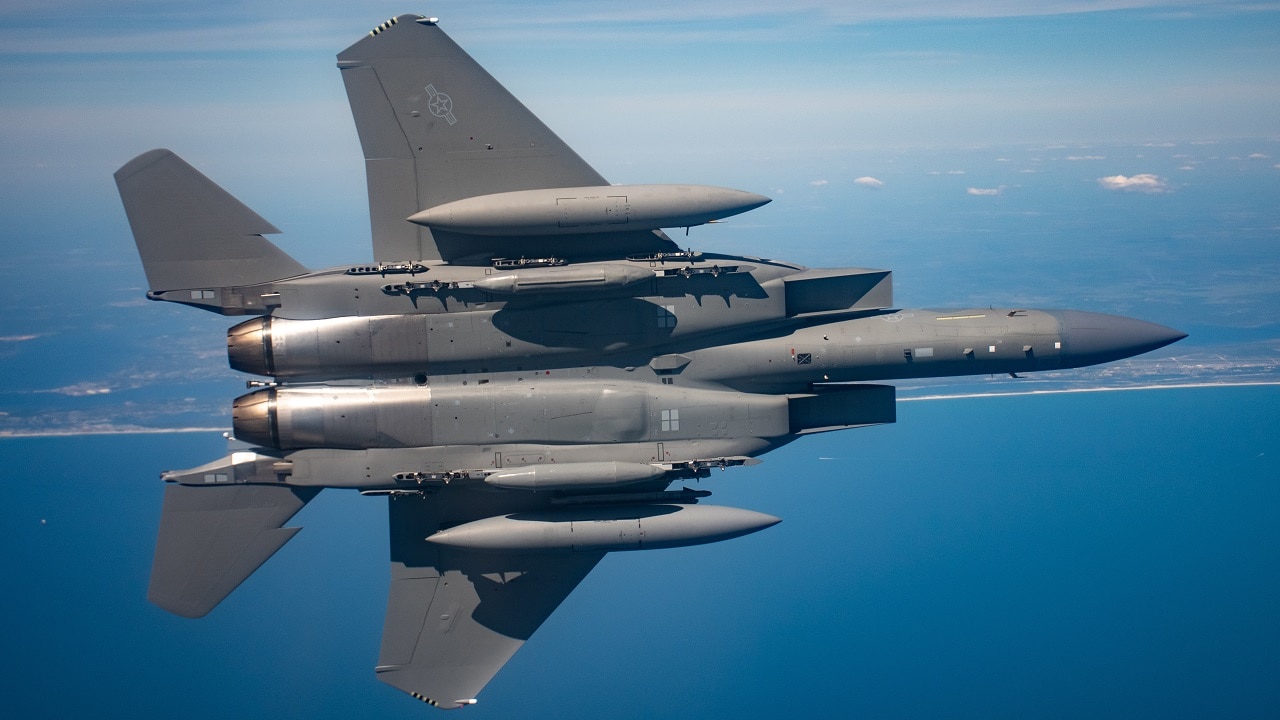
An F-15EX Eagle II from the 85th Test and Evaluation Squadron, 53rd Wing, takes flight for the first time out of Eglin Air Force Base, Fla., April 26, 2021, prior to departure for Northern Edge 2021. The F-15EX brings next-generation combat technology to a highly successful fighter airframe that is capable of projecting power across multiple domains for the Joint Force. (U.S Air Force photo by 1st Lt Savanah Bray)
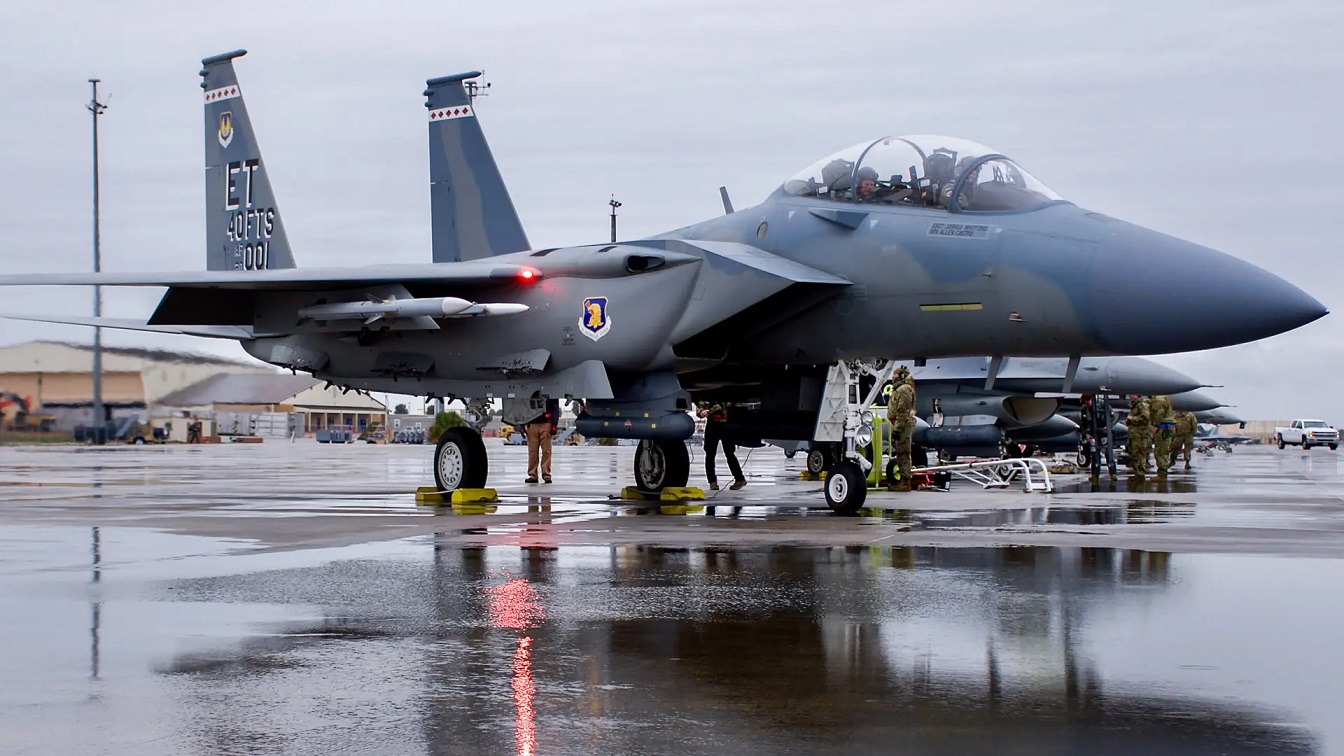
F-15EX. Image Credit: U.S. Air Force.
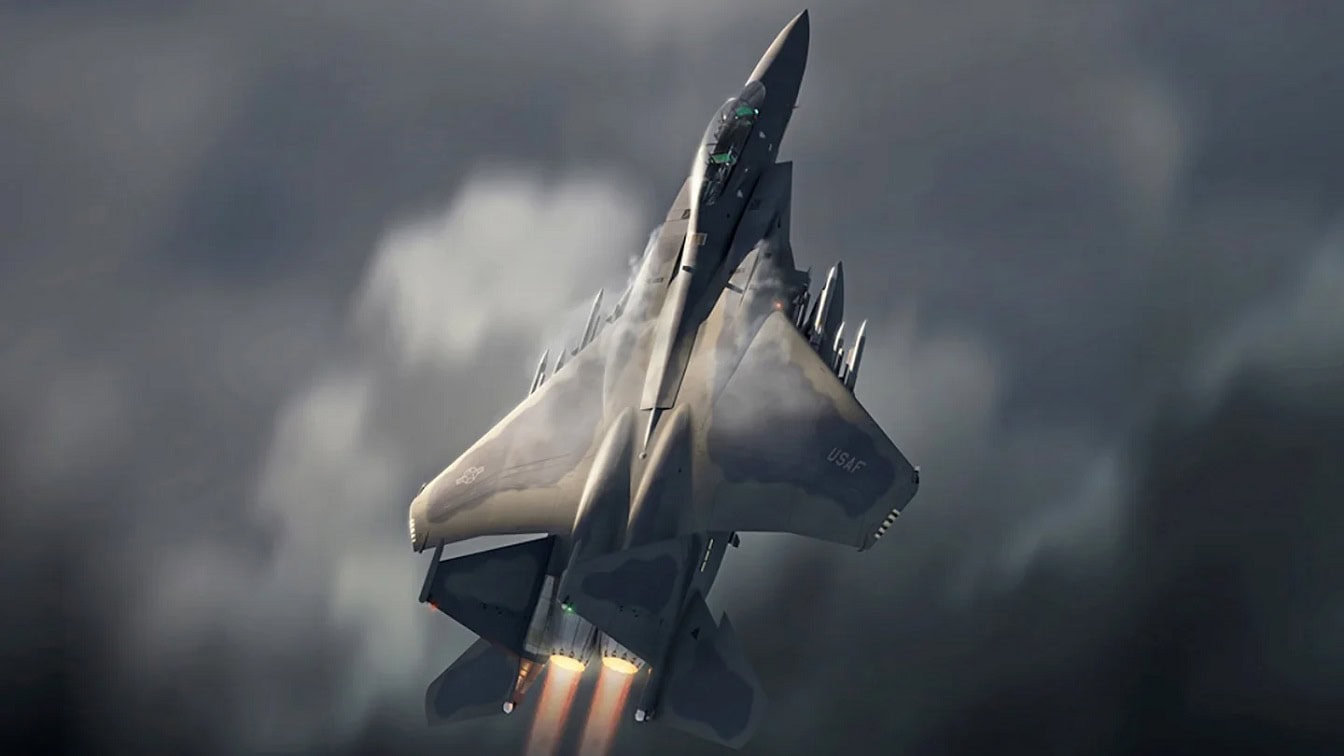
F-15EX. F-15EX. Image Credit: Boeing.
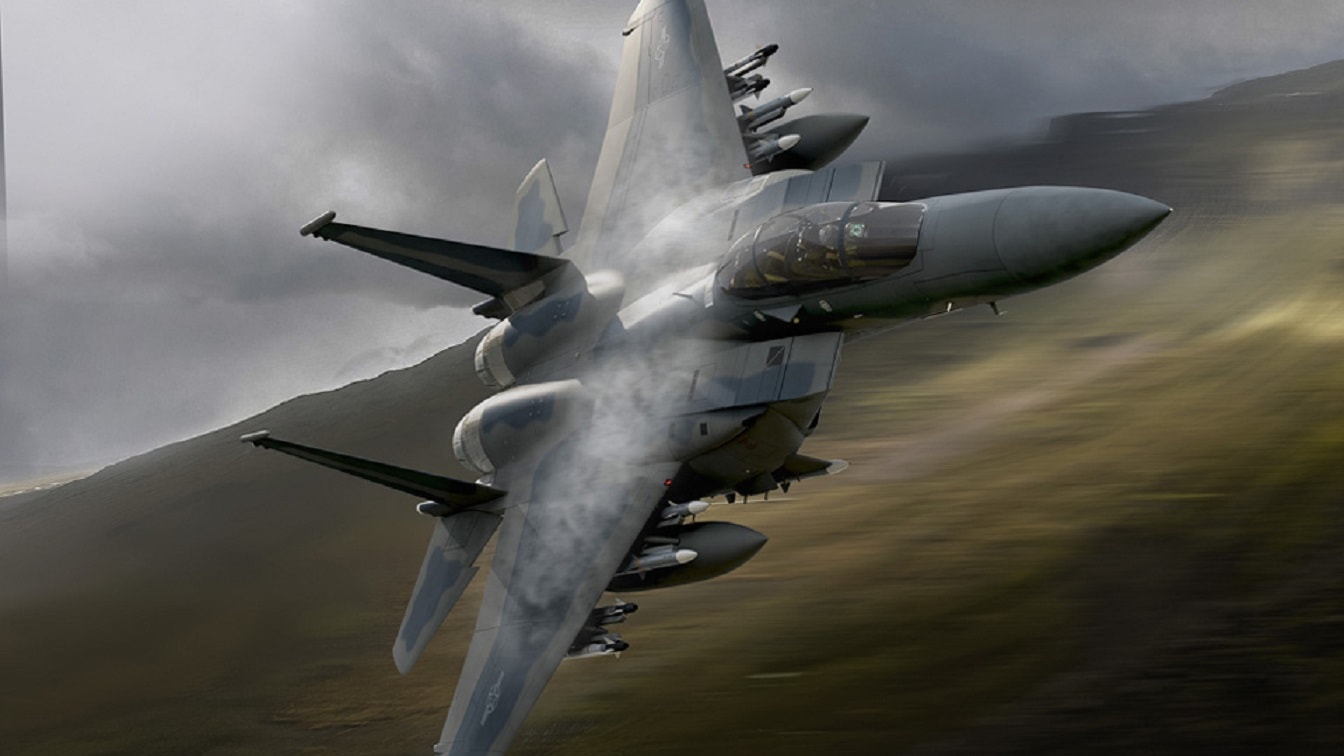
F-15EX Eagle II artist rendition. Image Credit: Boeing.
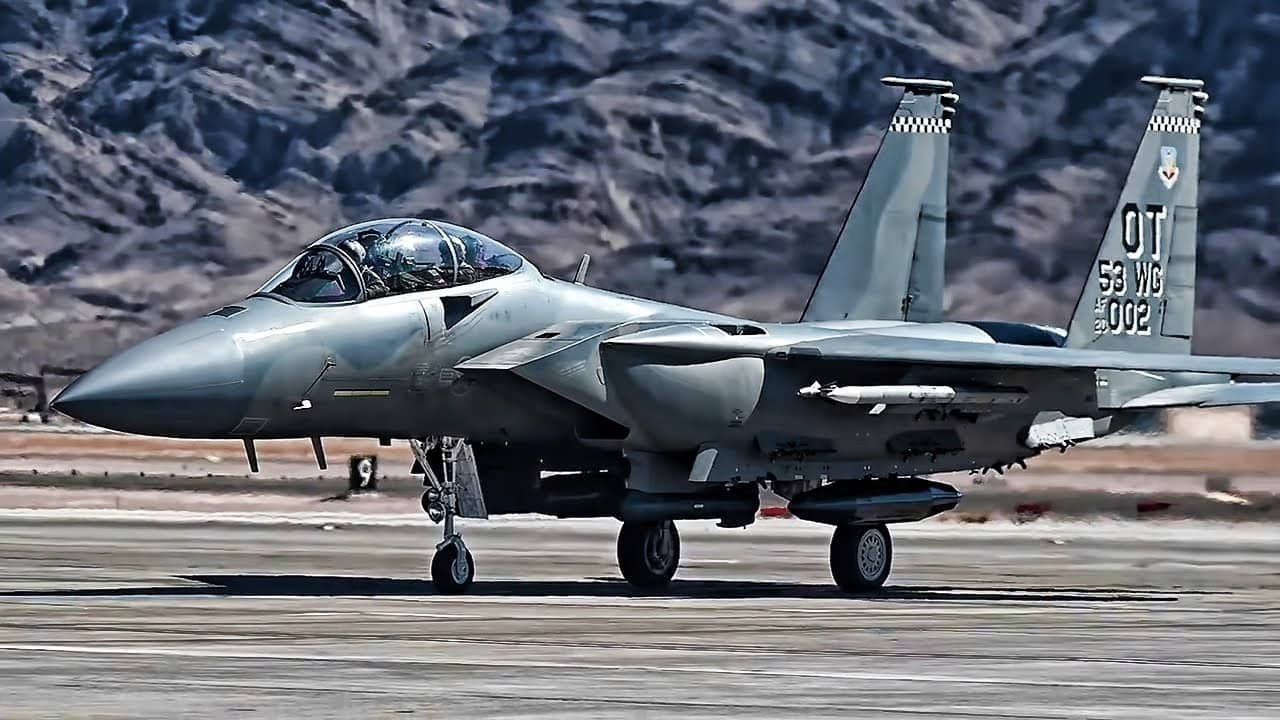
F-15EX Eagle II. Image Credit: Creative Commons.
About the Author: Harry J. Kazianis
Harry J. Kazianis (@Grecianformula) was the former Senior Director of National Security Affairs at the Center for the National Interest (CFTNI), a foreign policy think tank founded by Richard Nixon based in Washington, DC. Harry has over a decade of experience in think tanks and national security publishing. His ideas have been published in the NY Times, The Washington Post, The Wall Street Journal, CNN, and many other outlets worldwide. He has held positions at CSIS, the Heritage Foundation, the University of Nottingham, and several other institutions focused on national security research and analysis. He is the former Executive Editor of The National Interest and The Diplomat. He holds a Master’s degree focusing on international affairs from Harvard University.