
Summary and Key Points: Lockheed Martin is pitching a “Ferrari” F-35, a fifth-generation-plus upgrade that would fold sixth-generation technology into the existing jet. The idea has an obvious appeal and one large problem. The upgrade to the F-35, already called Block 4, is more than $6 billion over budget and at least five years late, and the Air Force is simultaneously funding a brand-new sixth-generation fighter and a modernized F-22. Before the Pentagon commits to a fourth stealth bill, it has to answer why it should trust a fifth upgrade when it cannot deliver the fourth.
The Next F-35 Upgrade and Headache
The case for the Ferrari F-35 is easy to make on paper. Lockheed Martin lost the Air Force’s sixth-generation fighter competition to Boeing in 2025, leaving the company with advanced technologies from its losing bid and no new aircraft to put them in. Its answer is to pour that technology into the F-35 instead, marketing a “5-plus generation” jet that the company says could deliver roughly 80 percent of a sixth-generation fighter’s capability at about half the cost of a clean-sheet design. Upgrading an enormous existing fleet sounds cheaper and faster than building something new, and the pitch has drawn real interest.
The problem is not the concept. It is the program’s demonstrated inability to finish the upgrade already underway.

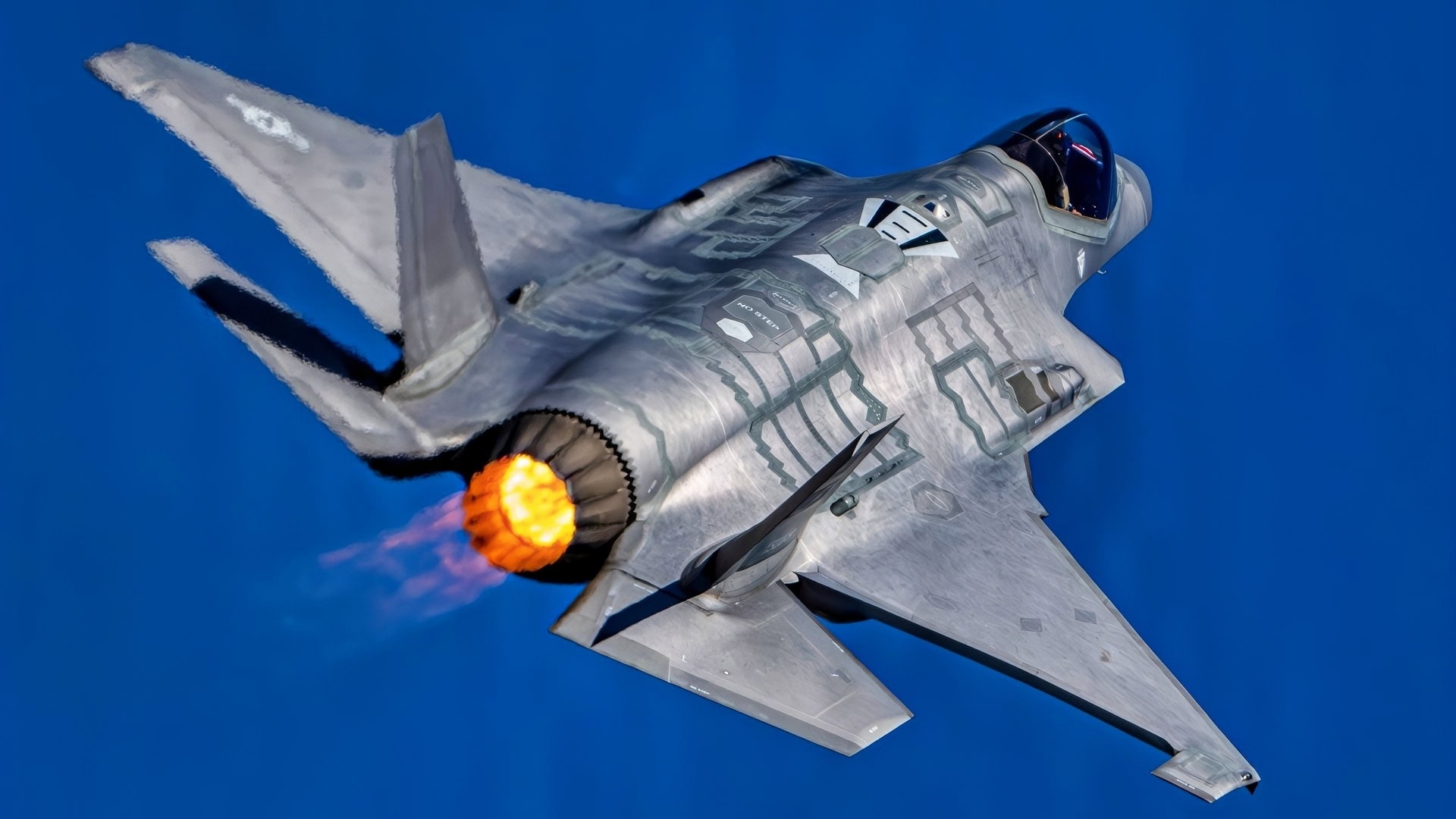
A U.S. Air Force F-35A Lightning II flies over the 56th Fighter Wing during Luke Days 2026, March 22, 2026, at Luke Air Force Base, Arizona. Luke Days 2026 highlights the precision and professionalism required to generate combat airpower and sustain the nation’s defense. Currently in operational service, the F-35A integrates stealth technology and advanced sensors to detect and defeat threats while maintaining air dominance. Opportunities for the public to see military aviation up close helps build appreciation for the readiness of the joint force. (U.S. Air Force photo by Senior Airman Belinda Guachun-Chichay)
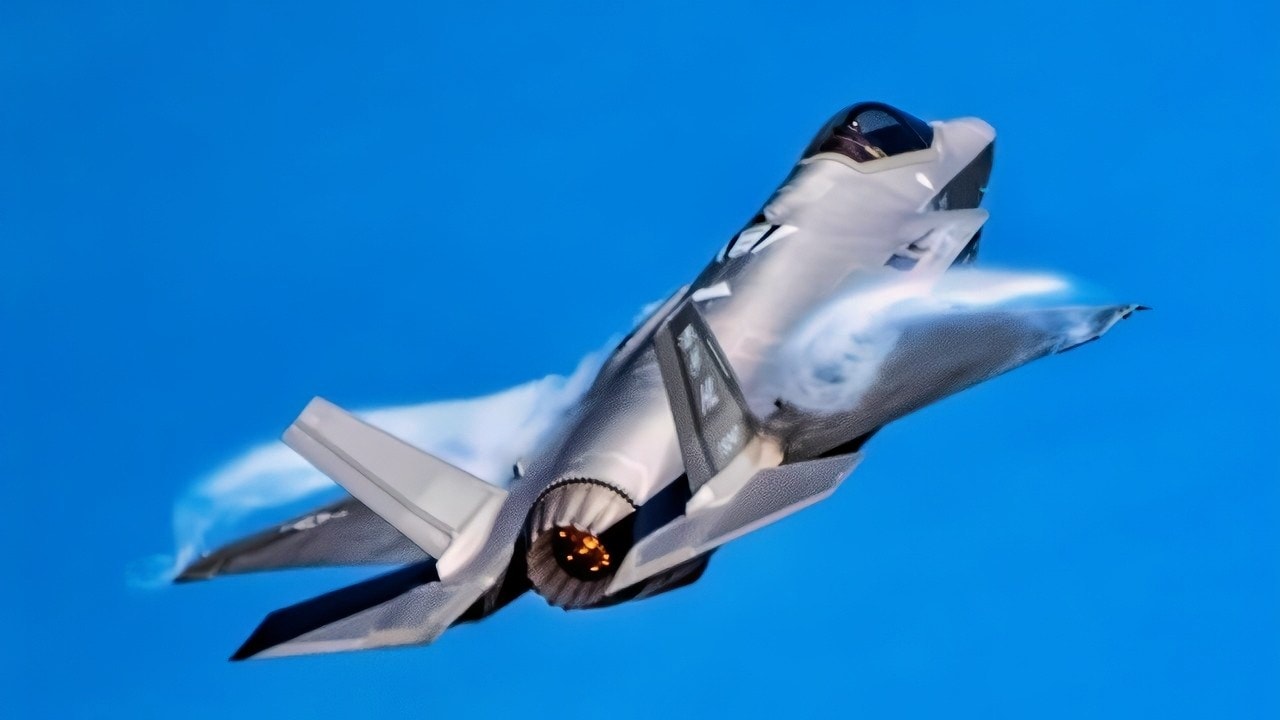
U.S. Air Force Maj. Kristin Wolfe performs a demonstration in the F-35A Lightning II during at the Reno Air Races in Reno, Nevada, September 19, 2021. The F-35 Lightning II Demonstration Team is based out of Hill Air Force Base, Utah. (U.S. Air Force photo by Tech. Sgt. Nicolas Myers)
The Upgrade the F-35 Already Has Is Years Late and Billions Over
Block 4 is the modernization that the F-35 is supposed to be receiving right now, a package meant to add weapons, sensors, and electronic-warfare improvements. It has become a case study in exactly the kind of overrun a new upgrade would risk repeating.
Block 4 is now at least $6 billion over budget and at least five years behind schedule, according to the Government Accountability Office. The program originally aimed to field 66 capabilities by 2026. That deadline slipped to 2029, then to the early 2030s, and the Pentagon has since narrowed Block 4’s scope to a reduced set of capabilities it hopes to deliver by 2031 at the earliest, deferring the rest.
The cost history is a straight climb. The Congressional Research Service records the Block 4 estimate growing from an original $10.6 billion to $16.5 billion by 2021, with further overruns identified since. Technology Refresh 3, the roughly $1.9 billion hardware-and-software foundation that Block 4 depends on, ran so far behind that its problems forced the Pentagon to halt F-35 deliveries for about a year, leaving Lockheed to park dozens of finished jets it could not hand over. The delivery record has deteriorated across the board. In 2024, Lockheed delivered all 110 of its F-35s late, by an average of 238 days, up from an average of 61 days the year before.
The accountability picture is worse than the delays alone. The GAO found that the program’s incentive fees, meant to reward on-time delivery, were structured so loosely that contractors could deliver aircraft up to 60 days late and still collect part of the fee, and the watchdog concluded the fees had been largely ineffective at holding contractors accountable. This is the track record against which a second, larger upgrade would be judged.
The Bill Is Multiplying Just as the F-35 Falters
The Ferrari pitch does not arrive in a vacuum. It arrives as the Air Force is already committing to two other high-end fighter efforts. The F-47, the Boeing-built sixth-generation fighter that beat Lockheed’s bid, is a funded program expected to cost far more per aircraft than the F-35, and it will compete directly with the F-35 for procurement dollars for the next decade.
The Air Force is also pursuing a modernization of its F-22 Raptor fleet, the informal “Super” F-22. A Ferrari F-35 would be a fourth major fifth- or sixth-generation investment layered on top of those three, at a moment when the underlying F-35 program is consuming money faster than it delivers.
The scale of that consumption is the backdrop for every one of these decisions. The overall F-35 program, including Block 4, the engine upgrade, and sustainment of the fleet, is now projected to cost more than $2 trillion across a life cycle stretching into the 2070s, making it the most expensive weapons program in history. The engine problem illustrates how these upgrades compound.
The F-35’s Block 4 improvements demand more power and cooling than the existing F135 engine was built to provide, and the resulting strain accounts for roughly $38 billion of the program’s lifetime cost growth on its own. Adding still more capability through a Ferrari upgrade would push those same power and thermal limits harder.
The Question the Pitch Skips
The Ferrari concept treats the F-35’s existing production and logistics base as a reason to move quickly.
The record suggests that base is the constraint, not the enabler. The same supply chain and management problems that have kept Block 4 years behind would not disappear with a more ambitious upgrade, and the Pentagon has not formally adopted Lockheed’s proposal.
The strain is already visible among allied buyers. Finland has been told its F-35s will arrive with fewer capabilities than its contract promised because of the Block 4 delays, and Switzerland cut its planned order as costs rose beyond what it believed it had agreed to pay.
Domestically, the Air Force has repeatedly reduced its planned annual F-35 purchases as the program’s costs climbed, hedging its bet even before a new upgrade is on the table.
None of this means the Ferrari F-35 is a bad aircraft or that upgrading the fleet is wrong in principle. It means the sequencing is backward.
An organization that cannot deliver the modernization it has already bought, on the timeline and budget it promised, has not earned the case for committing to a larger one, particularly while it is simultaneously paying for a sixth-generation fighter and an F-22 refresh out of the same shrinking pot.
The Ferrari pitch asks the Pentagon to buy the next upgrade before it has finished paying for the last one.
The more honest first step is to deliver Block 4, prove the program can execute at the price it quotes, and only then decide whether a jet that already costs $2 trillion should be asked to carry a fourth stealth bill at once.
About the Author: Harry J. Kazianis
Harry J. Kazianis (@Grecianformula) was the former Senior Director of National Security Affairs at the Center for the National Interest (CFTNI), a foreign policy think tank founded by Richard Nixon based in Washington, DC. Harry has over a decade of experience in think tanks and national security publishing. His ideas have been published in the NY Times, The Washington Post, The Wall Street Journal, CNN, and many other outlets worldwide. He has held positions at CSIS, the Heritage Foundation, the University of Nottingham, and several other institutions related to national security research and studies. He is the former Executive Editor of the National Interest and the Diplomat. He holds a Master’s degree focusing on international affairs from Harvard University.