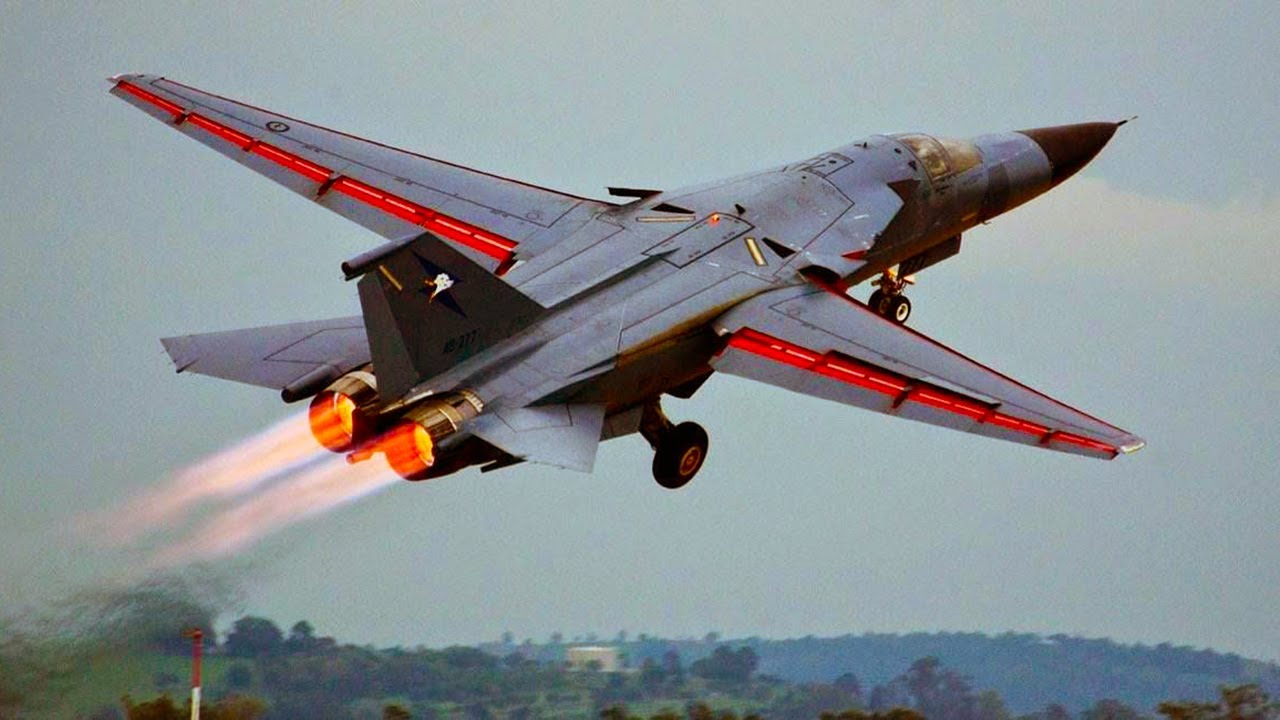
Summary and Key Points: The F-111B was General Dynamics’ attempt to build a Navy version of the F-111 under Robert McNamara’s TFX program, a single airframe meant to serve both the Air Force and the fleet. Designed as a long-range interceptor, it carried the AN/AWG-9 radar and the AIM-54 Phoenix missile, enabling carrier crews to detect and track targets at long range. Naval aviators found the aircraft too heavy and too specialized for the missions they actually flew, and the program ended in 1968. Its best features, including the radar, the missile, and the variable-sweep wing, went on to define the F-14 Tomcat.
The F-111B Fiasco
Warfare–even cold ones, like the one that dominated the last half of the twentieth century–is a dynamic event. Budgets, threats, technologies, and political realities of that era shape weapons and platforms developed for war.
But warfare forces rapid, unpredictable change upon these systems–and the industrial bases developing them.
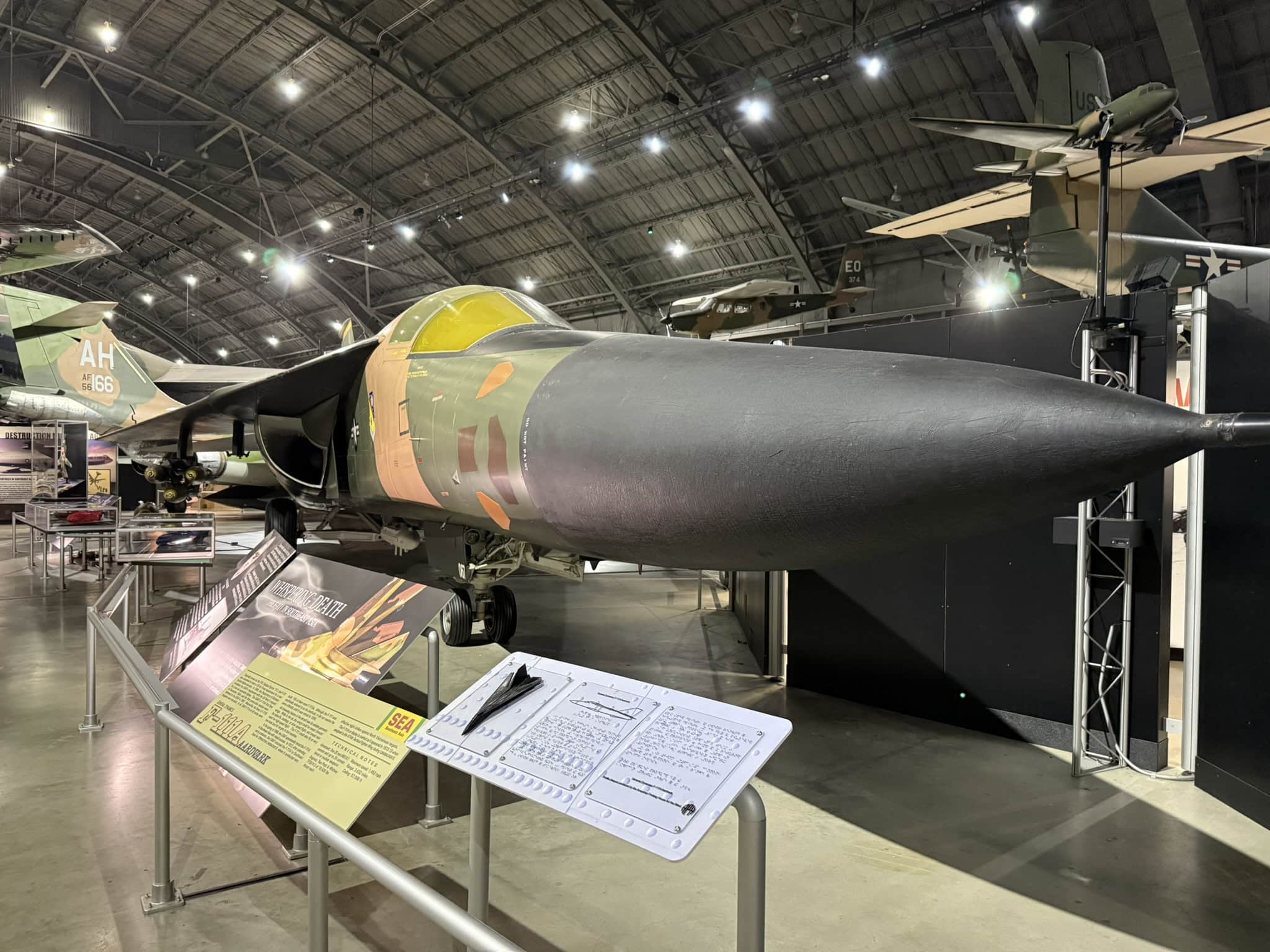
F-111 at the National Museum of the U.S. Air Force. 19FortyFive Photo by Harry J. Kazianis.
And when those changes occur, even the most ambitious programs find themselves unable to keep pace with that world.
This very scenario applied to General Dynamics’ F-111B.
Although its technical challenges have received the lion’s share of attention over the decades, the aircraft’s ultimate fate reflects far more than engineering difficulties.
Between the program’s launch in the 1960s and its subsequent cancellation in 1968, the Cold War had changed–and the systems designed to wage that war rapidly changed as well.
Within that framework of dynamic change, the United States Navy’s priorities fundamentally shifted, even as Congress grew skeptical of rising defense costs.
More importantly, the nature of the Soviet threat in the Cold War matured in ways that Washington did not predict.
And by the time the F-111B had matured into a capable prototype, the strategic environment that had inspired its original creation was largely gone. It was the wrong plane for the wrong kind of war.
Fleet Defense in an Age of Air Superiority
Secretary of Defense Robert McNamara’s Tactical Fighter Experimental (TFX) program led to the development of the F-111B.
McNamara’s vision centered on producing a common aircraft for both the US Air Force and the Navy.
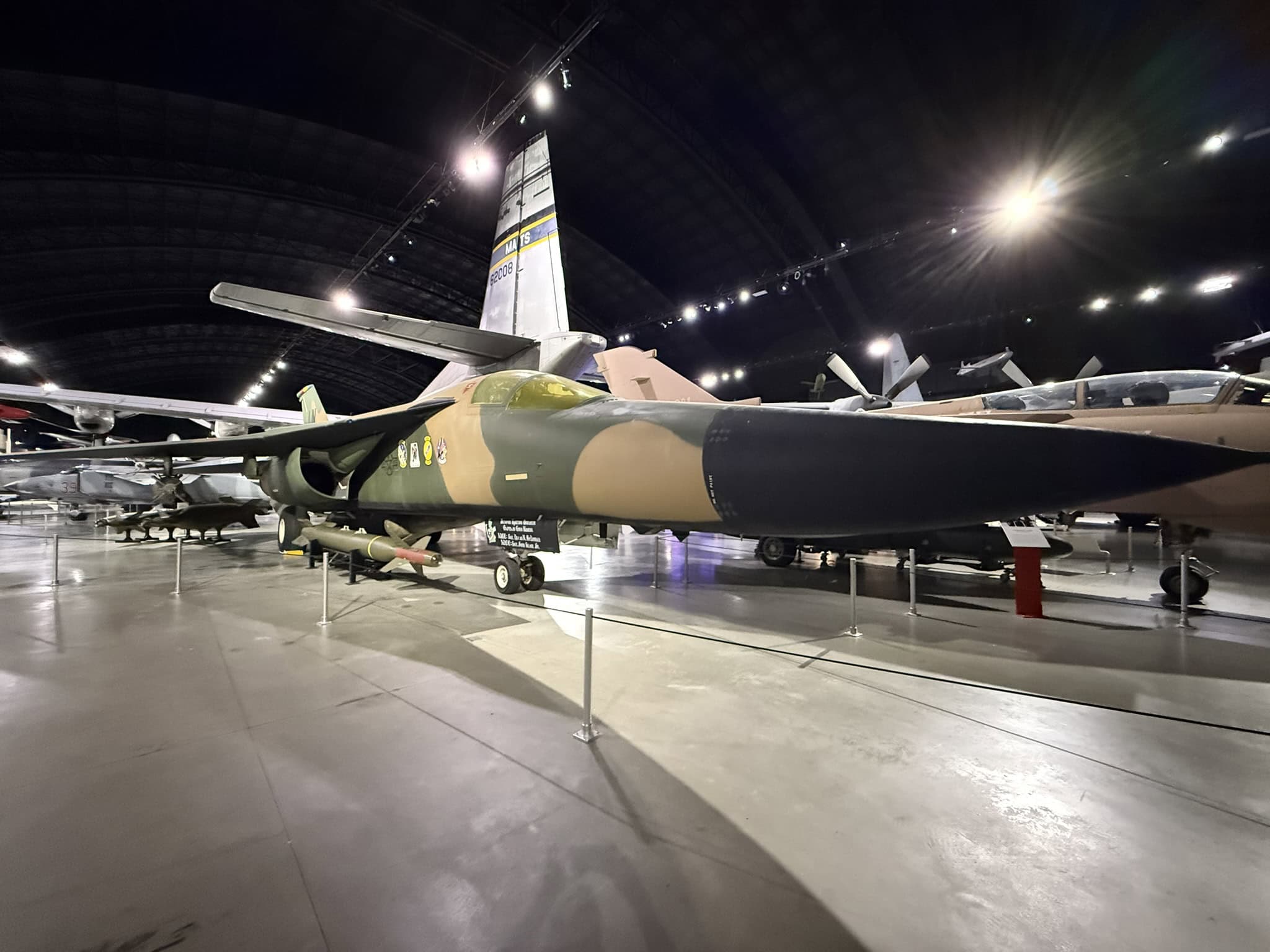
F-111 at the National Museum of the U.S. Air Force. 19FortyFive Photo by Harry J. Kazianis.
But the Air Force wanted a long-range strike aircraft capable of penetrating Soviet air defenses.
At the same time, the Navy envisioned a fleet-defense interceptor to protect aircraft carriers from large formations of Soviet bombers armed with anti-ship cruise missiles.
During the early 1960s, that mission stood at the center of naval aviation and planning.
Soviet naval aviation continued to expand its inventory of long-range bombers, including the Tupolev Tu-16 “Badger” and, later, the Tu-22 “Blinder.”
American planners anticipated massed raids launched hundreds of miles from carrier strike groups, with bombers firing standoff missiles intended to overwhelm fleet defenses.
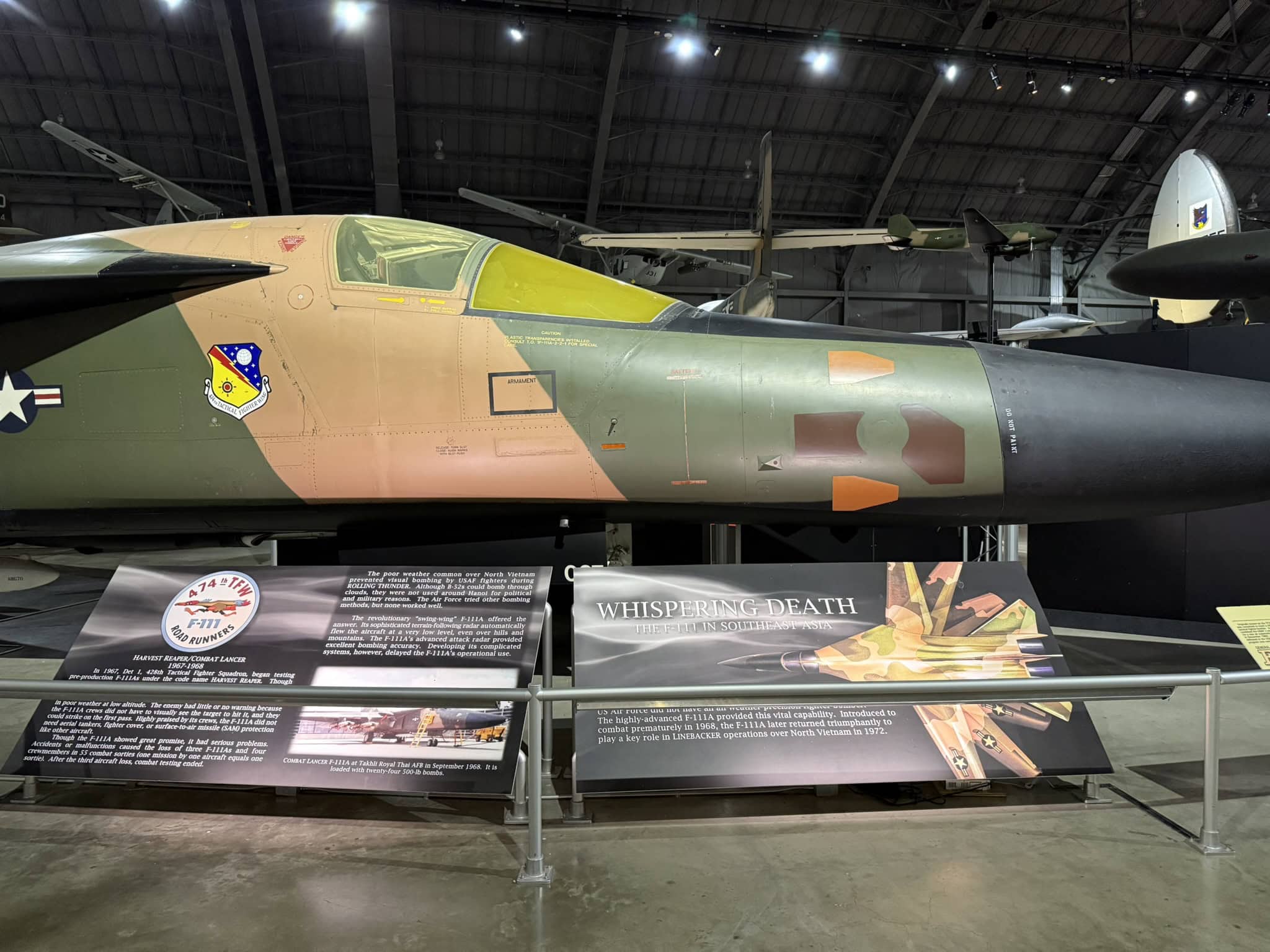
F-111 at the National Museum of the U.S. Air Force. 19FortyFive Photo by Harry J. Kazianis.
The Navy needed long-range interceptors.
So, the Navy’s F-111B incorporated powerful AN/AWG-9 radar and the revolutionary AIM-54 Phoenix missile.
These technologies allowed crews to detect, track, and engage multiple targets at unprecedented distances.
Rather than relying on close-range maneuvering combat, the aircraft focused on destroying incoming bombers long before they reached missile-launch range.
Regarding the strategic assumptions of 1962, the concept was well suited to the threat.
The Strategic Environment Shifted
Aircraft development rarely proceeds quickly. By the middle of the 1960s, several developments had reshaped American defense priorities, including the Vietnam War.
As the Vietnam War steadily consumed larger portions of the defense budget and demanded increasing attention from senior military leaders, carrier air wings spent far more time conducting strike missions over Southeast Asia than preparing for large-scale fleet defense operations against Soviet bombers.
Operational experience highlighted the importance of multirole aircraft capable of carrying bombs one day and conducting fighter patrols the next.
At the same time, Soviet military modernization was well underway. Moscow expanded submarine operations. The Reds fielded increasingly capable cruise missiles, too.
It was all part of the USSR’s broader effort to threaten US Navy forces in a more diversified way (a more varied threat being harder for the Navy to defend against).
Under these conditions, fleet defense remained important, of course. But carrier aviation required greater versatility across a broader range of missions.
The F-111B reflected a highly specialized philosophy developed at the beginning of the decade, before the Vietnam War kicked off and before the significant advances in Soviet threats intensified.
When the F-111B Met Operational Realities
Because carrier operations impose rigorous engineering demands (unlike those faced by land-based aviation), naval aircraft endure constant stress.
One cannot just place an Air Force plane on a carrier.
While test programs demonstrated meaningful progress, and engineers managed to reduce some of the weight on the F-111B–all as they improved performance–many naval aviators disliked the aircraft.
In the minds of naval planners and aviators, the F-111B did not address the serious challenges they faced at that time.
What’s more, carrier commanders increasingly valued fighters capable of combining fleet defense with air superiority and strike missions rather than merely concentrating on long-range interception.
The discussion surrounding the aircraft extended well beyond technical specifications. It reflected changing ideas about what naval aviation should accomplish during the next generation of Cold War competition.
The Navy Needed Speed
Because of the F-111B’s failure, the F-14 Tomcat was born. This iconic plane retained the potent AN/AWG-9 radar and its concomitant AIM-54 Phoenix missiles.
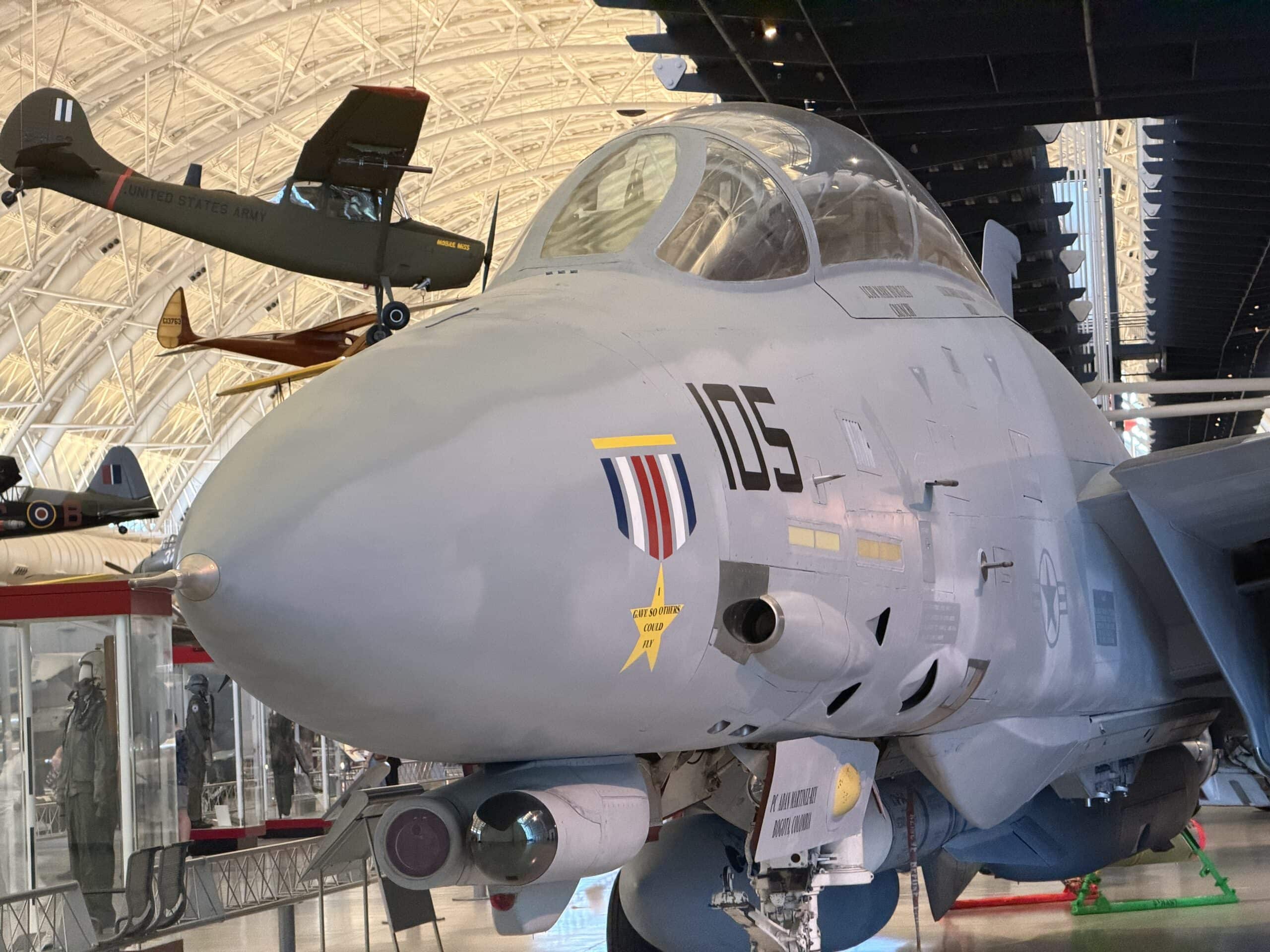
F-14 Tomcat at the Smithsonian. 19FortyFive Photo.
The Tomcat, too, had the variable-sweep wings of the F-111B, and it retained a two-person crew for greater situational awareness.
Even better than the F-111B, though, the F-14 provided greater maneuverability, lower weight, and characteristics better suited to the increasingly diverse missions expected of carrier aviation.
That transition from the problematic F-111B to the F-14 Tomcat demonstrated an important distinction. The Navy did not abandon the fleet-defense concept at all.
It merely expanded it by integrating long-range interception into a fighter capable of performing a much broader range of tasks.
In other words, the F-111B shows how rapidly changing strategic circumstances can reshape military requirements.
Was it a total failure, though?
That doesn’t seem likely. After all, we got the F-14 Tomcat out of it.
About the Author: Brandon J. Weichert
Brandon J. Weichert is the Senior National Security Editor at 19FortyFive.com. He also manages The Weichert Brief on Substack. Weichert also hosts “National Security Talk” on Rumble. He is the author of four bestselling national security books, the most recent of which is A Disaster of Our Own Making: How the West Lost Ukraine (Encounter Books). Follow him via Twitter/X @WeTheBrandon.