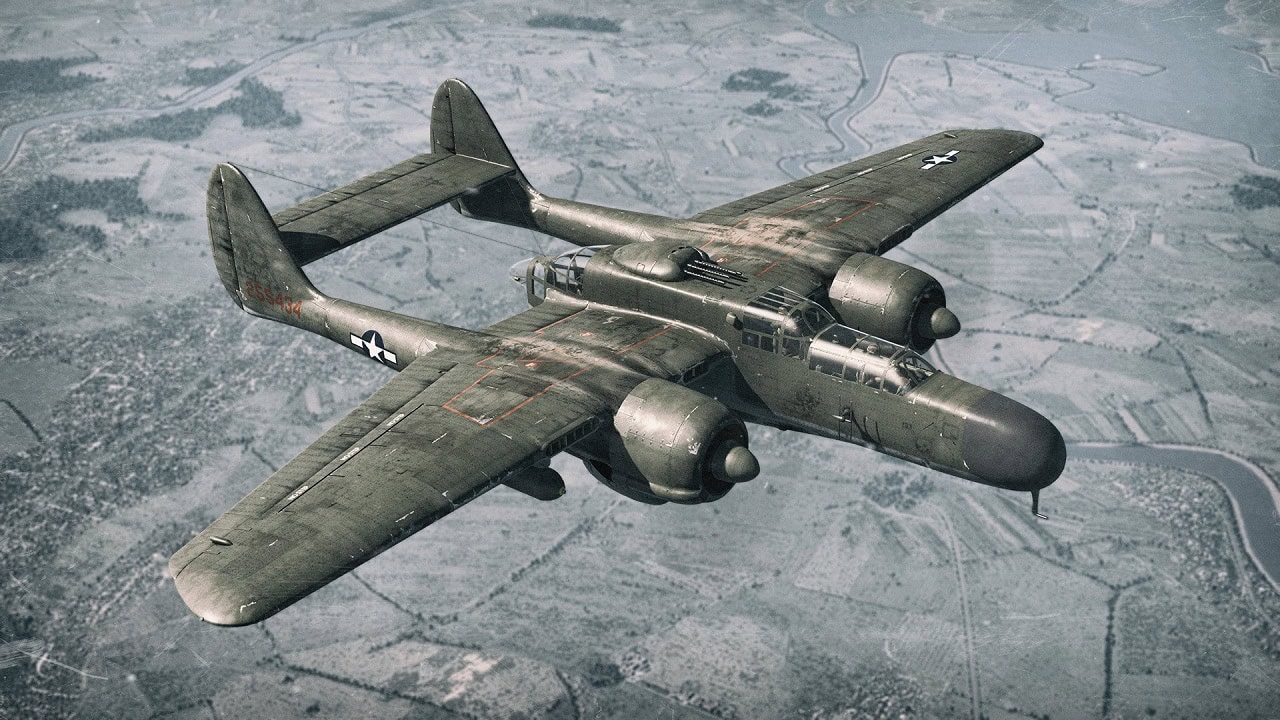
During the Second World War, American military aviation underwent an explosive period of innovation. The Americans constantly perfected new systems and routinely tested new air warfare concepts.
One such system, which many called the best and most revolutionary US warplane of WWII, was the Northrop P-61 Black Widow.
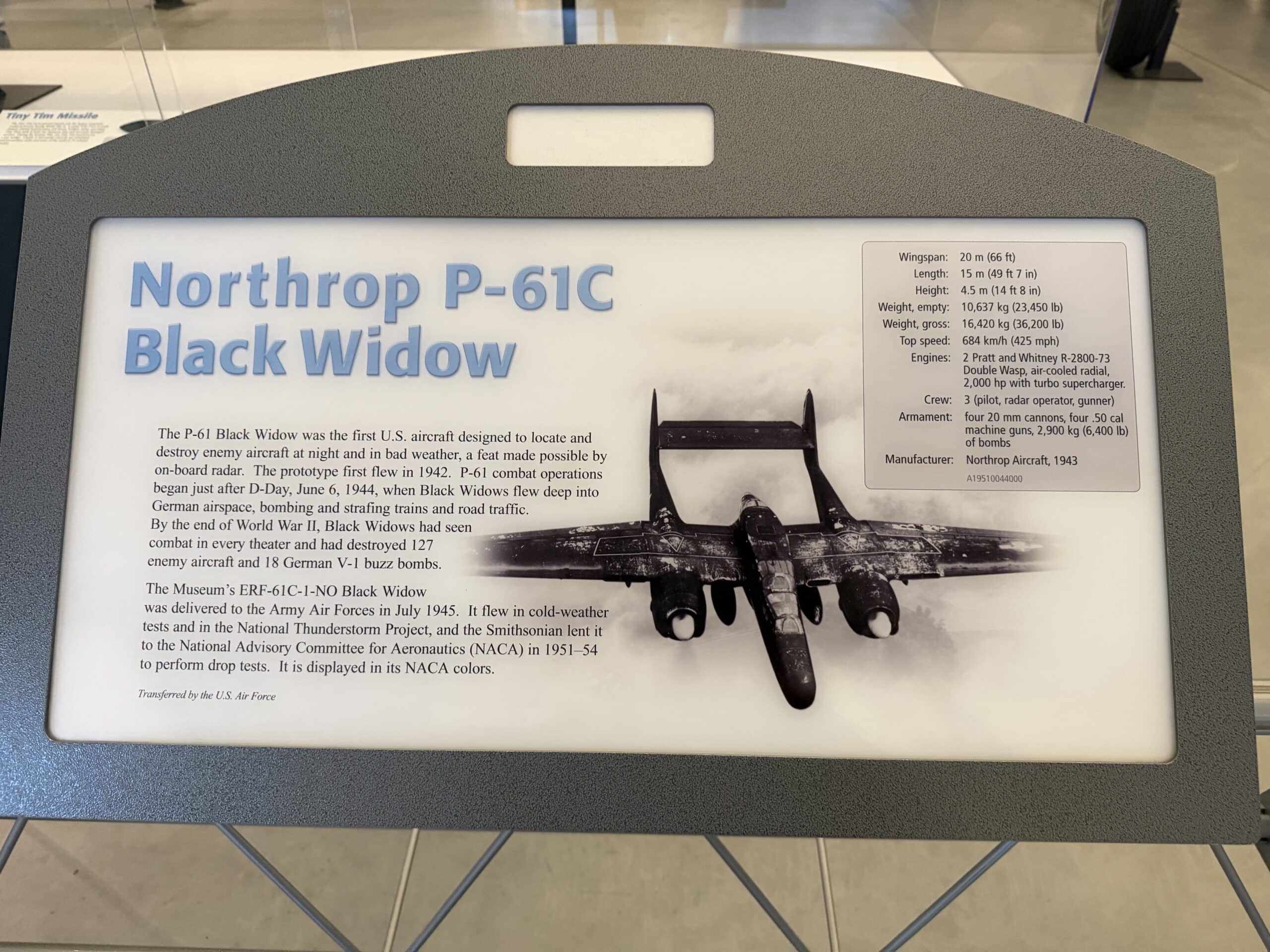
Northrop P-61 Black Widow. Image taken by 19FortyFive staff on July 8, 2026 at the Smithsonian.
The P-61 was the first American combat aircraft designed from the outset to be a true night fighter. Mind you, this was before the era of advanced GPS and night vision.
It was also before truly advanced instrumentation inside cockpits–meaning pilots had to trust their skills and be fully comfortable in their planes to fight (and survive) combat scenarios.
Our reporters here at 19FortyFive recently visited the Black Widow at the Smithsonian. As a bonus, we have included a good number of original photos from that visit yesterday.
One advancement the P-61 had, though, was that the entire plane was built around the radar (rather than having it tacked on after its initial design and production phase).
That design requirement was born out of America having witnessed Britain’s struggle against German nighttime bombing raids during the Blitz.
US air war strategists understood that visual interception of enemy bombers at night was insufficient.
What’s more, the P-61 was a precursor to more sophisticated planes, such as the Grumman F-14 Tomcat, a long-range fleet interceptor for the United States Navy that could engage dozens of enemy bombers at once, thanks to its advanced radar and weapons systems.
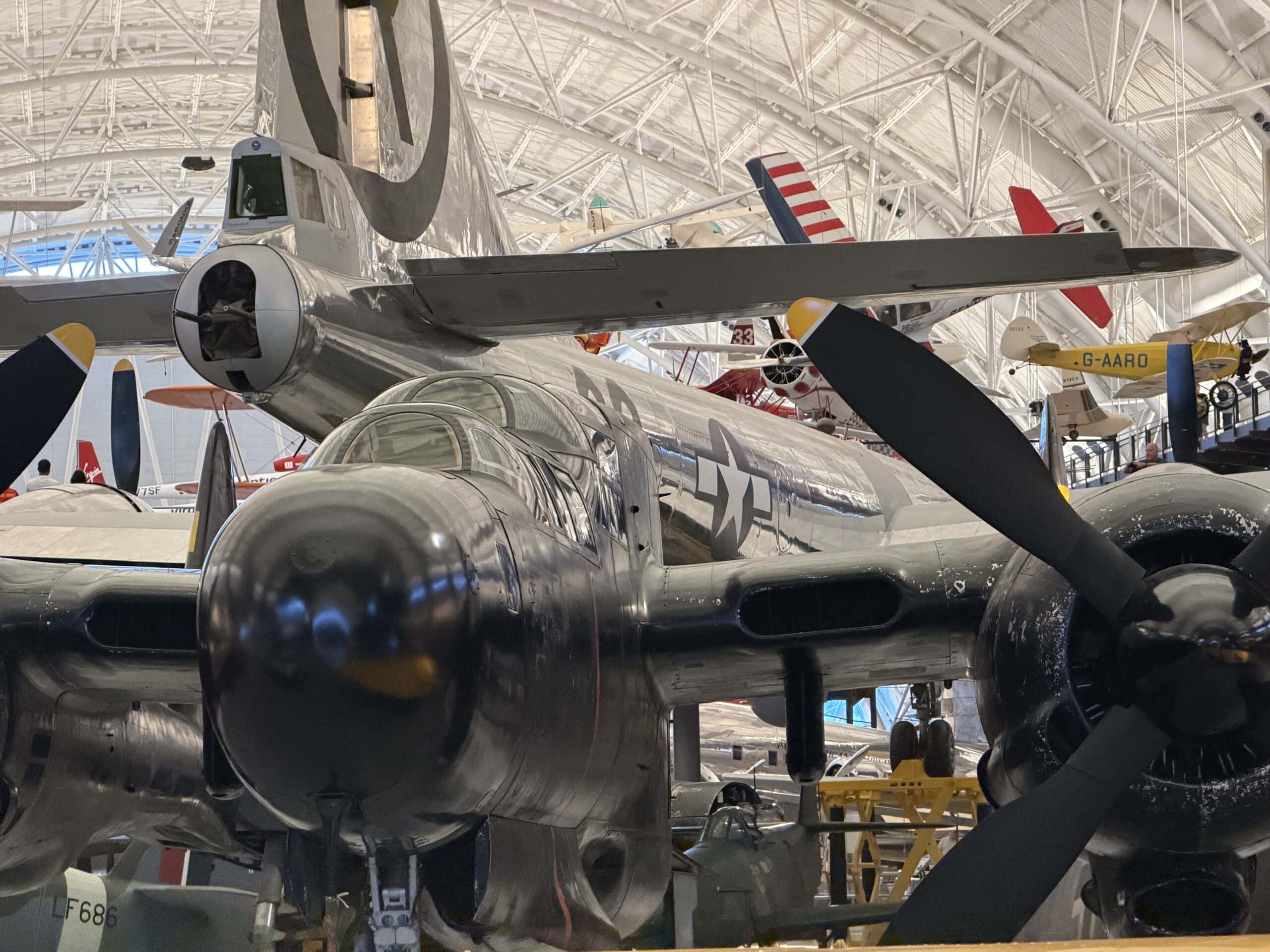
Northrop P-61 Black Widow. Image taken by 19FortyFive staff on July 8, 2026 at the Smithsonian.
And like the future F-14, the P-61 required an entire crew (in the case of the P-61, the bird needed a pilot, radar operator, and gunner).
In fact, the radar operator sat behind the pilot and guided the aircraft toward targets shrouded in the nighttime sky. For 1944, the P-61 was not just a new, advanced plane. It was truly revolutionary.
The SCR-720 Made the P-61 a Night Raider Extraordinaire
What made the P-61 such an air war dynamo was its SCR-720 radar. That system was one of the most sophisticated radars of World War II.
Originally developed from Britain’s Al Mk. X-band radar, but with American refinements, the SCR-720 operated in the 3 GHz microwave band, using a cavity magnetron to provide much higher resolution than earlier radar sets.
It could typically detect bomber-sized aircraft up to eight miles away, with larger targets sometimes visible at even farther distances.
A separate crew member, who sat directly behind the P-61’s pilot, controlled the radar.
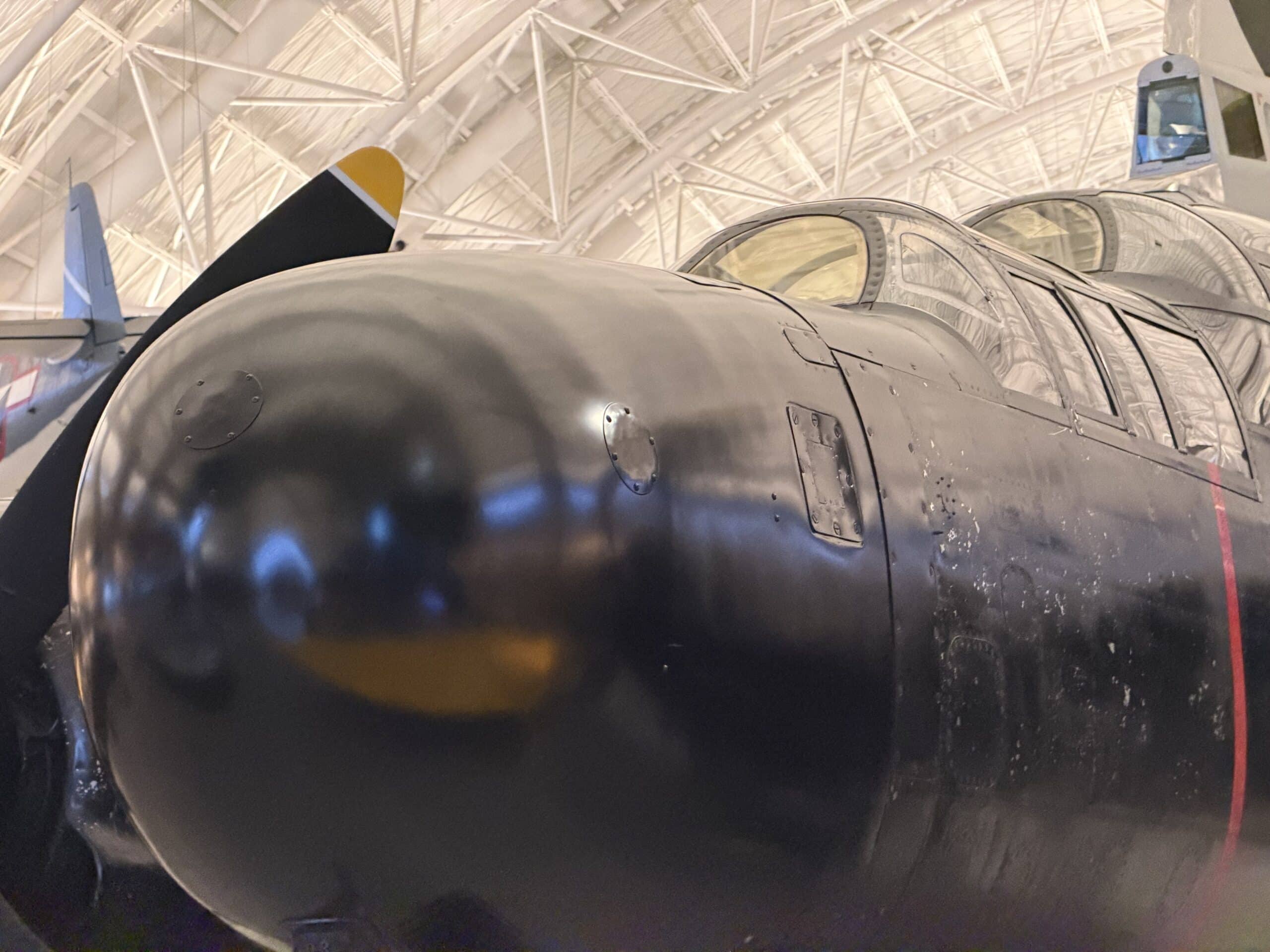
Northrop P-61 Black Widow. Image taken by 19FortyFive staff on July 8, 2026 at the Smithsonian.
That radar operator watched a cathode-ray tube display and directed the pilot toward the target by issuing verbal commands. Once the P-61 closed to within visual range (within a mile), the pilot took over for the attack.
The SCR-70 enabled the P-61 to detect, track, and intercept enemy aircraft in total darkness and/or inclement weather.
The success of the SCR-70 as part of the P-61 program ensured that airborne radar systems would become a permanent fixture in the postwar era (again, with planes like F-14 Tomcats eventually coming into the picture during the last stages of the Cold War).
A Big Beast
Beyond the technological accouterments that made this late-stage WWII fighter one history won’t soon forget, there was its massive size (for a fighter). The P-61 was not as nimble as the P-51 Mustang because of its extraordinary size for a fighter.
The Black Widow came in at about 50 feet long with a wingspan of 66 feet.
Two Pratt & Whitney R-2800 engines powered the plane, enabling it to reach an impressive speed of around 366 miles per hour. It had a range greater than 1,300 miles, too.
This plane weighed twice as much as most single-engine fighters in America’s arsenal during the war.
Yet, crews loved piloting the bird. Northrop’s former test pilot, Moye Stephens, claimed that the Black Widow “didn’t have a wicked bone in its body” when asked how the plane handled.
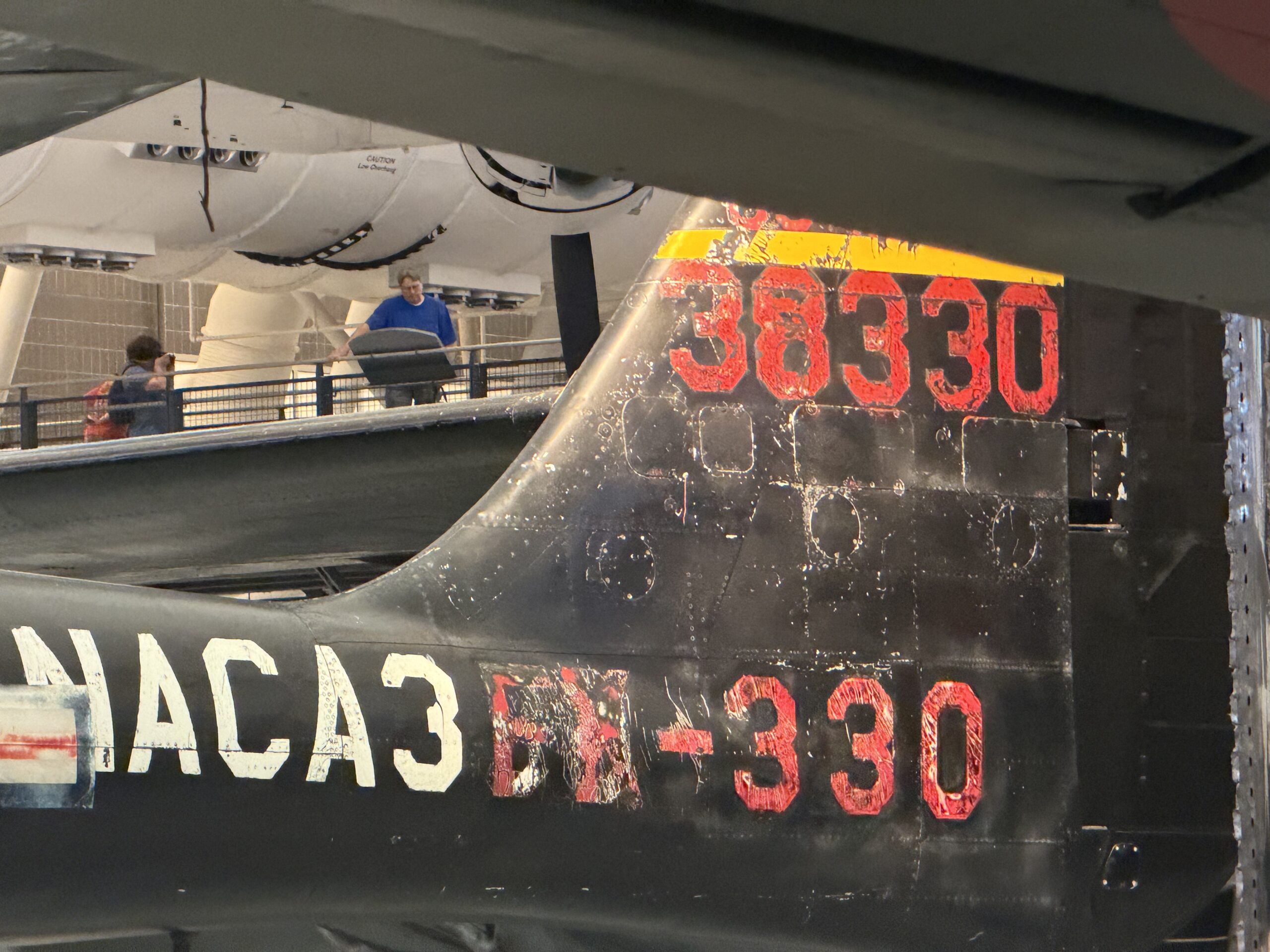
Northrop P-61 Black Widow. Image taken by 19FortyFive staff on July 8, 2026 at the Smithsonian.
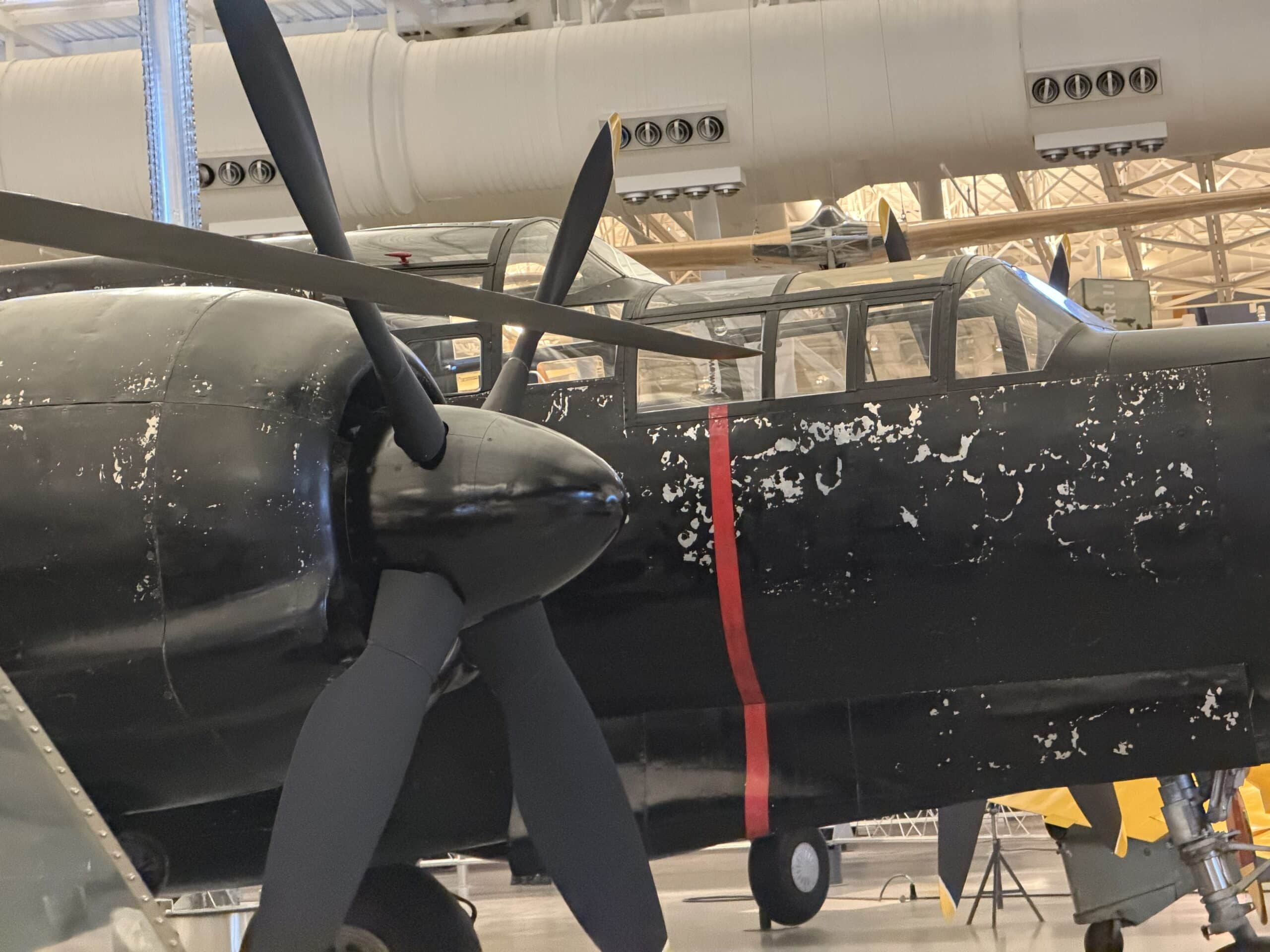
Northrop P-61 Black Widow. Image taken by 19FortyFive staff on July 8, 2026 at the Smithsonian.
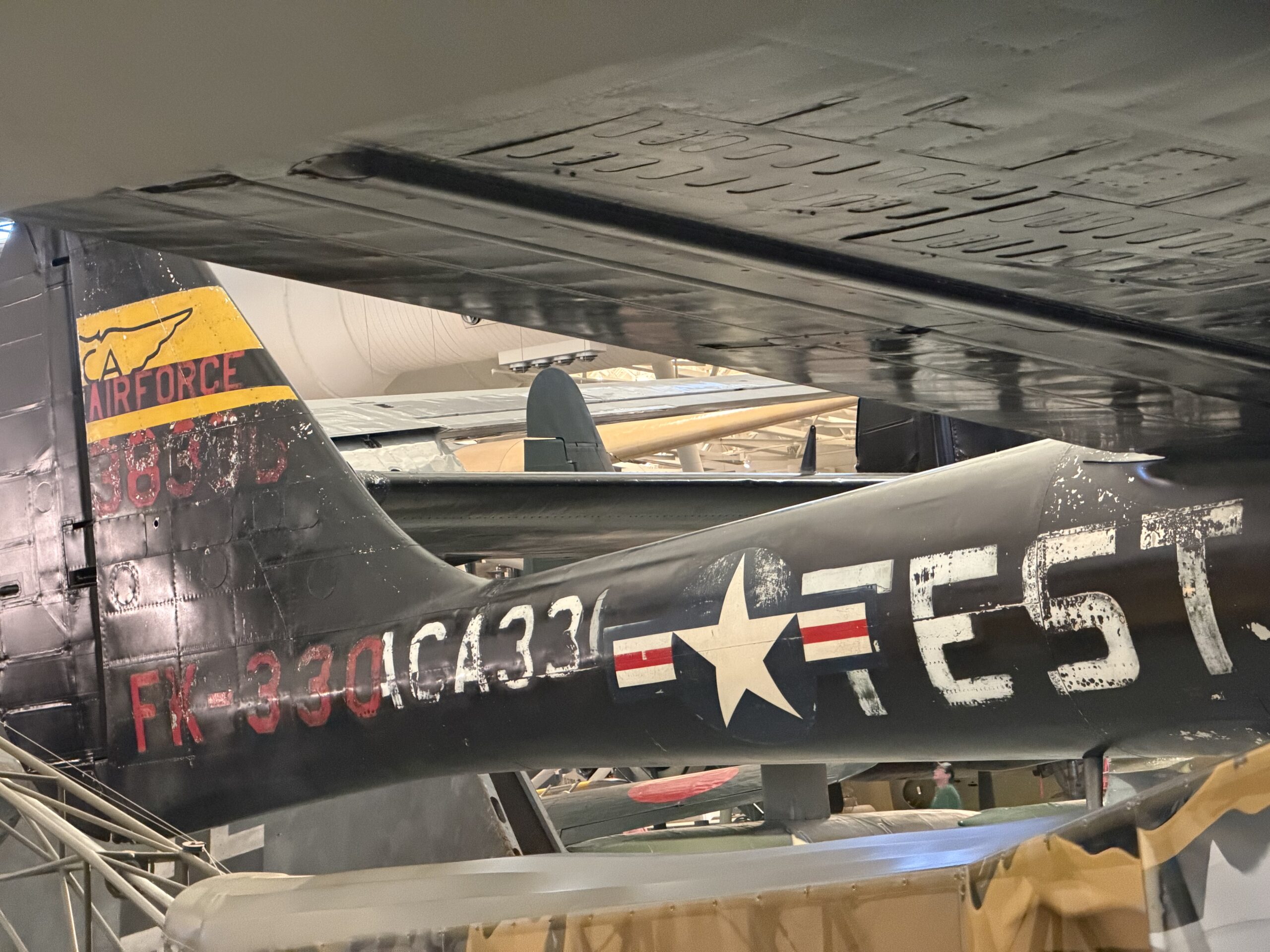
Northrop P-61 Black Widow. Image taken by 19FortyFive staff on July 8, 2026 at the Smithsonian.
A Wicked Armament
What’s more, the P-61 Black Widow packed a punch. Most of these birds carried four forward-firing 20mm cannons beneath their fuselage. They possessed an additional remotely controlled .50-caliber machine gun in a dorsal turret (though some later aircraft lost the turret).
A short burst from eight heavy weapons typically shredded any bomber or fighter within range.
Combat Success
The P-61 is interesting because it entered combat rather late in the war (around 1944).
The final phases of both the European and Pacific Theaters were coming into bloody view by the time these night stalkers took to the unfriendly skies.
Yet, the P-61 served in every combat theater in the final year or so of the war.
By the end of the conflict, Black Widow crews successfully downed 127 enemy aircraft and even 18 German V-1 Flying Bombs.
These planes conducted intruder missions, ground attacks, train strafing, convoy attacks, reconnaissance support, and dynamic nighttime raids.
Most commanders during the war were shocked by the versatility of the P-61 Black Widow.
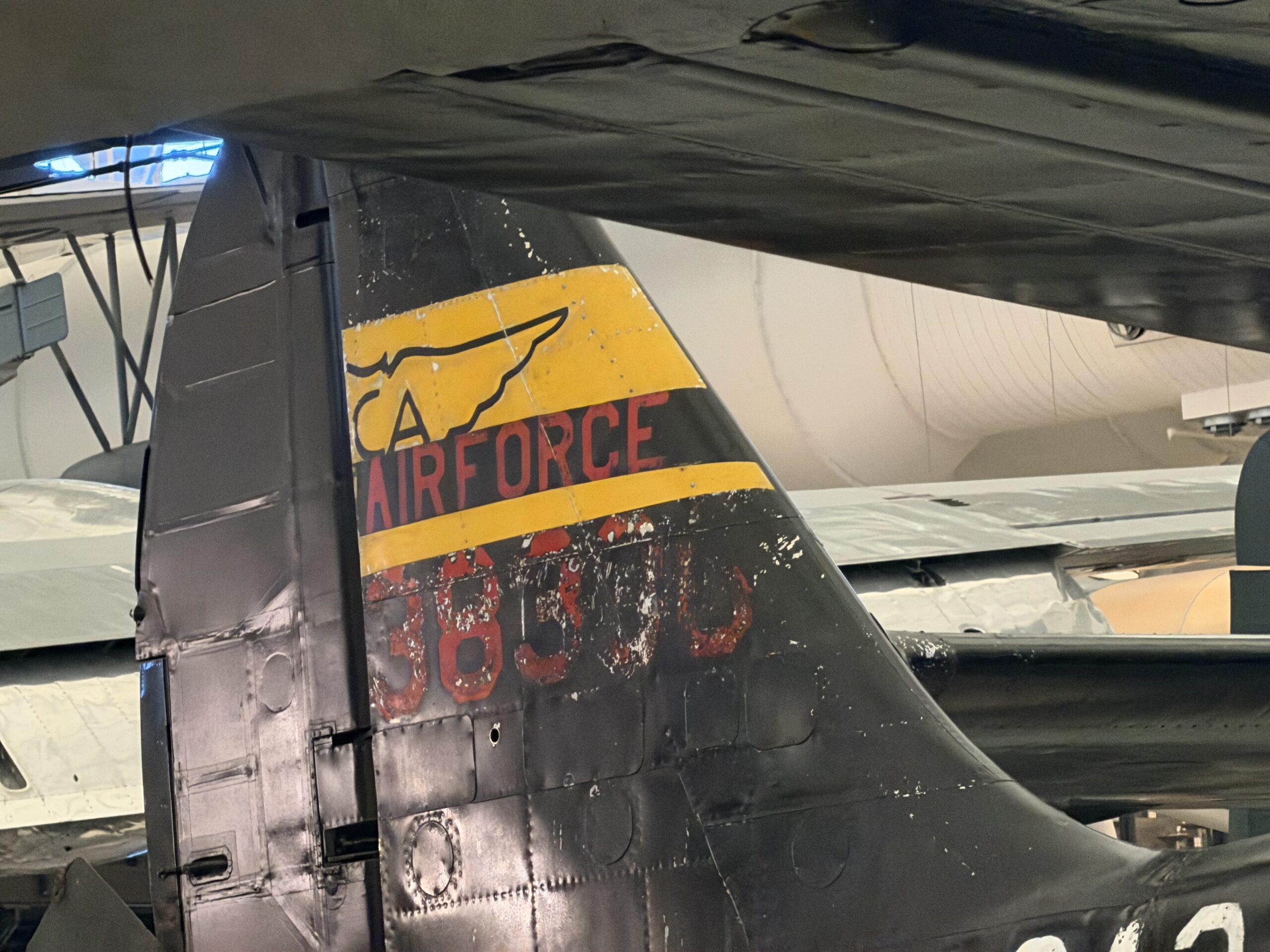
Northrop P-61 Black Widow. Image taken by 19FortyFive staff on July 8, 2026, at the Smithsonian.
The Pacific Was the P-61’s Starring Role
Japanese Mitsubishi G4M “Betty” bombers loved attacking US positions in the Pacific Theater at night. In that expansive environment, US Black Widows excelled in defending American and allied forces from these nighttime Japanese attacks because Japanese bombers generally lacked speed.
And without speed, once the SCR-70 radars of the Black Widows entered the equation, Japan’s tactic of using darkness at night to their advantage faded away.
Given the P-61’s endurance, the Pacific Theater’s large distances played into the Black Widow’s inherent strengths.
In fact, multiple successful interceptions occurred before the Japanese crews knew that the Americans had seen them.
The P-61 earned the title “Lady in the Dark” after scoring one of the war’s last air victories and achieving the last two Allied air-to-air kills.
P-61’s Postwar Career
Today, you can still see the P-61 at the Smithsonian—specifically, the P-61C (it never saw combat). After the war, the P-61C became a research aircraft that participated in cold-weather testing.
It conducted high-altitude drop experiments, too. The Black Widow helped with thunderstorm research as well as NACA aerodynamic studies.
Once it entered the Smithsonian collection, the P-61C became one of the finest examples of the type. It was a model for many future concepts that came around to fight the Soviets in the Cold War, too.
MORE – The B-2 Spirit Stealth Bomber Can Sink China’s Navy
About the Author: Brandon J. Weichert
Brandon J. Weichert is the Senior National Security Editor at 19FortyFive.com. He also manages The Weichert Brief on Substack. Weichert also hosts “National Security Talk” on Rumble. He is the author of four bestselling national security books, the most recent of which is A Disaster of Our Own Making: How the West Lost Ukraine (Encounter Books). Follow him via Twitter/X @WeTheBrandon.