The United States is deeply committed to producing its sixth-generation warplane, the Boeing F-47. Recently, photos were released from the skies above Area 51, showing what many believe to be the F-47. What surprised everyone was how different the plane appeared. They were anticipating a tailless “flying arrowhead” design.
According to The War Zone, an excellent online trade publication, analysts had assumed that the Next Generation Air Dominance (NGAD) fighter would be more like China’s J-36 sixth-generation warplane or Northrop’s YF-23. Essentially, it would be a flying arrowhead because that configuration maximizes stealth, range, and internal payload.
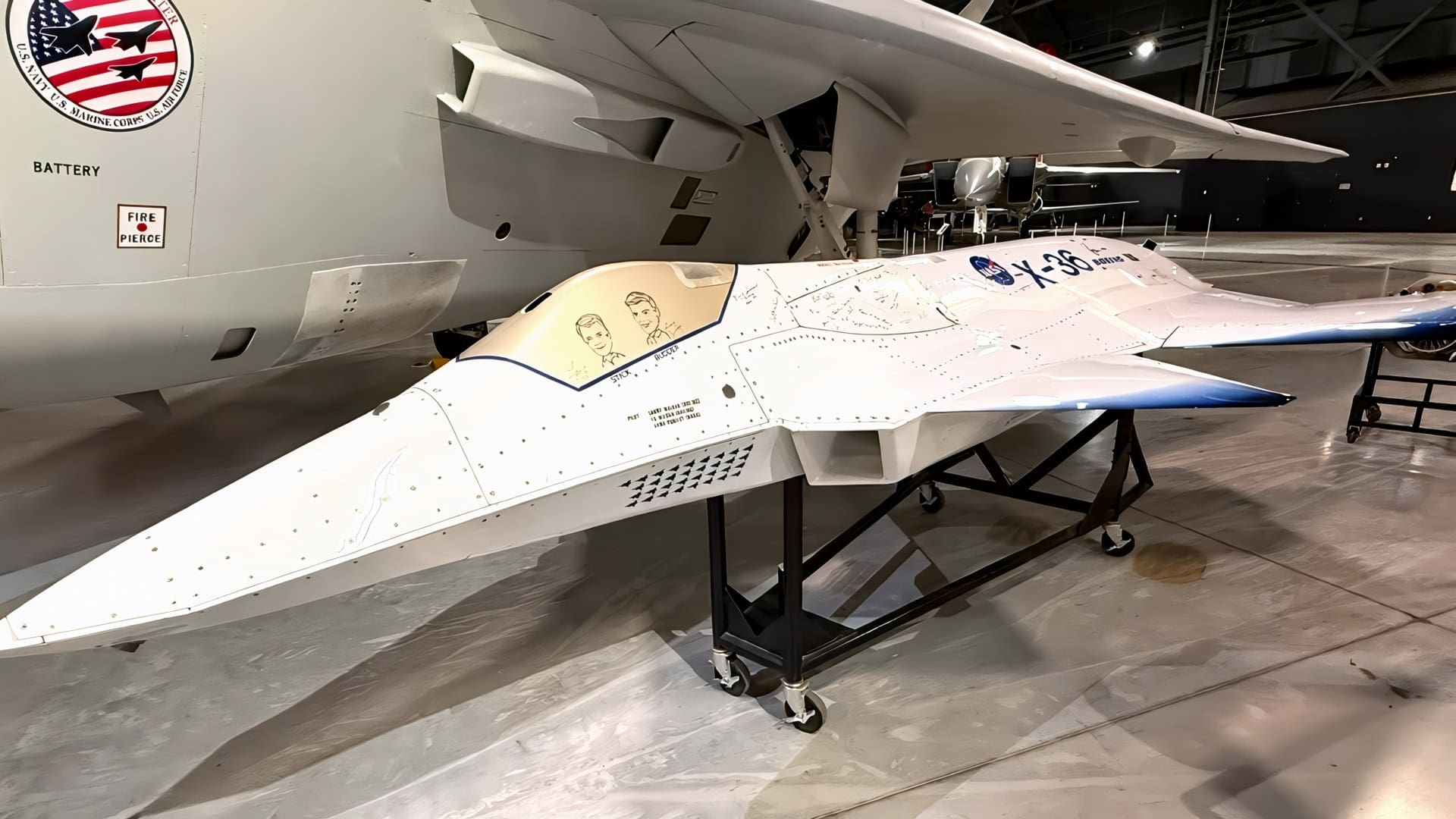
Instead, the aircraft seen near Area 51 has canards, swept rear wings, a long, narrow nose, no traditional vertical tail, and features reminiscent of Boeing’s X-36 and Bird of Prey technology demonstrators from decades ago. So, why would Boeing make their sixth-generation plane radically different from what most experts believed it would make it like?
Well, lucky for us, we visited the X-36 and the Bird of Prey at the National Museum of the U.S. Air Force, and we will include some photos from this visit in this essay.
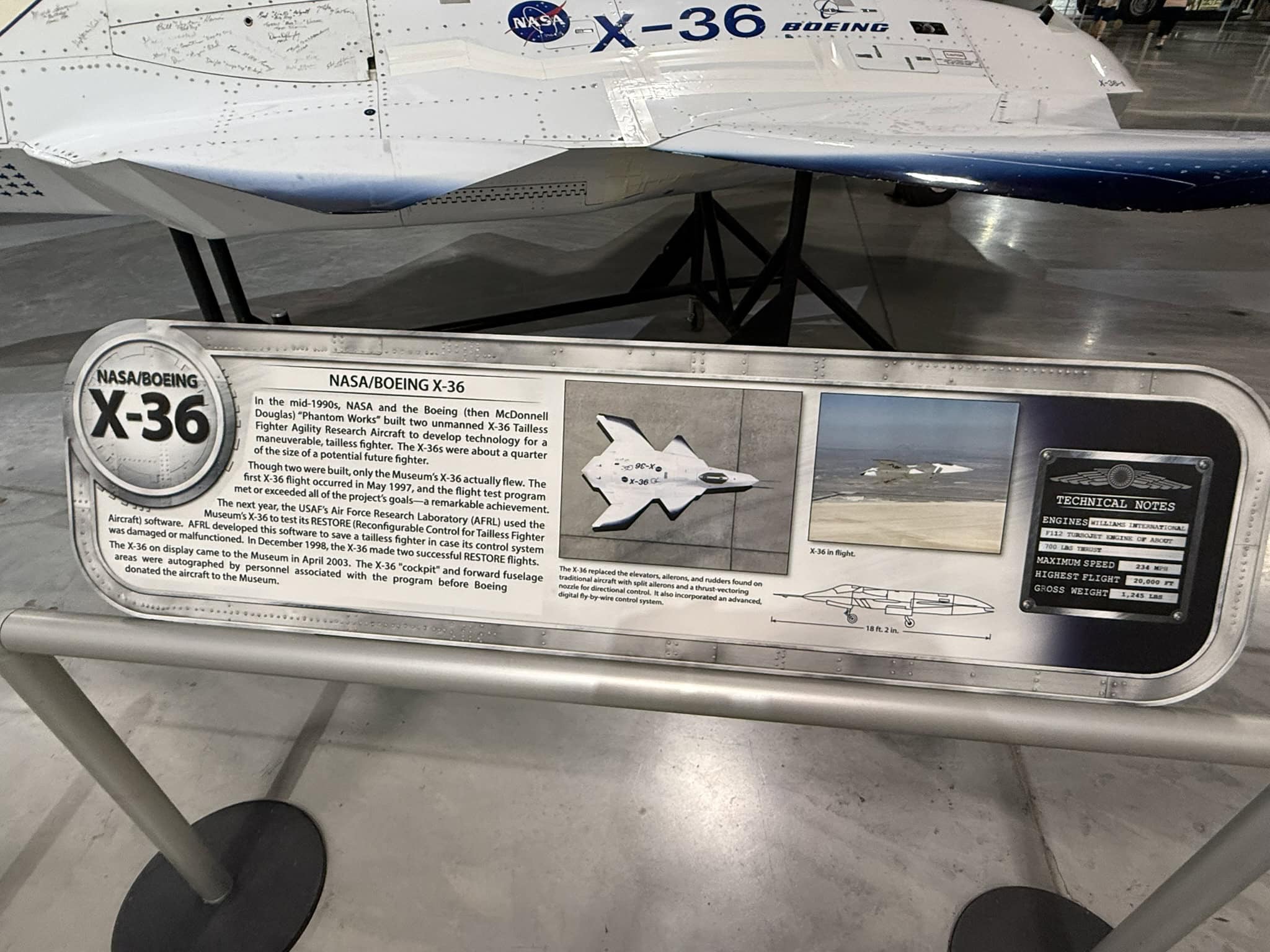
X-36 at the National Museum of the U.S. Air Force. Image Credit: Harry J. Kazianis.
Why the F-47 Uses Canards
The placement of canards gives the F-47 greater agility. Basically, canards generate more lift and enhance maneuverability at high angles of attack. Experts argued that canards were undesirable because they reduced the plane’s stealth. But modern computer design and radar shielding may have reduced those penalties enough for Boeing to decide the maneuverability benefits outweighed the stealth-capability reductions.
Boeing intends for the F-47 to fly alongside Collaborative Combat Aircraft. These systems are known as “Loyal Wingmen.” And they carry loads of weapons. Indeed, they might be deemed flying unmanned “missile trucks.”
Having this capability would allow the F-47 to pack a mighty punch.
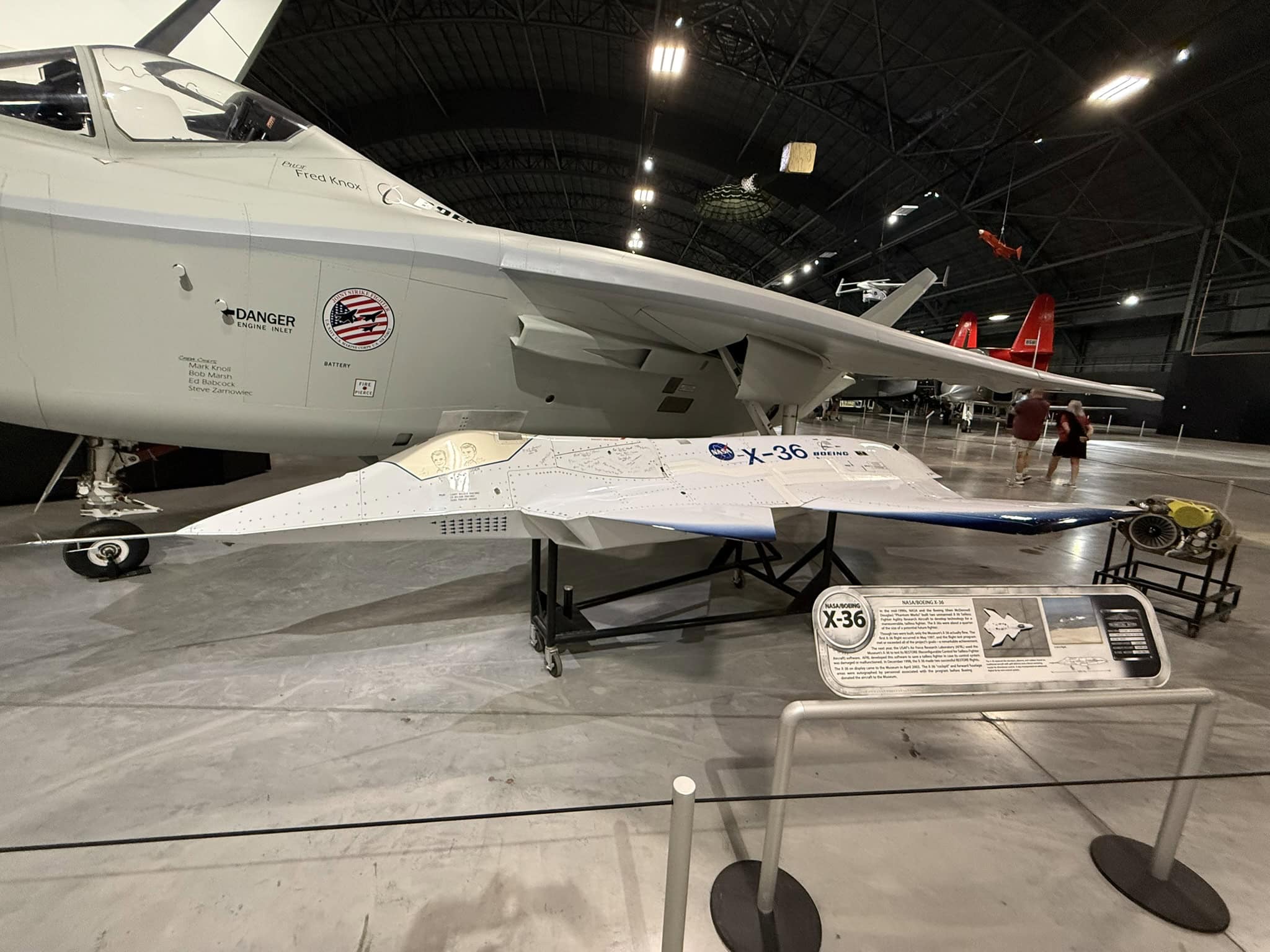
X-36 at the National Museum of the U.S. Air Force. Image Credit: Harry J. Kazianis.
Longer Range for a Fight With China
Meanwhile, Aviation Week released the first substantive official performance graphic for the Boeing F-47 in May. Per that graphic, the plane has more than 1,000 nautical miles of combat radius, compared to 590-600 nautical miles for the F-22 Raptor. That’s a 70 percent increase in operational reach. A tailless plane, such as the one seen near Area 51, would carry an immense amount of fuel, confirming claims that the F-47 will have a shockingly large combat radius.
That is a key feature because warfare is increasingly becoming both automated and fought beyond visual range (BVR). By having a plane that possesses extremely long-range systems, from missiles to drones, the most advanced sensors, and now a combat range that exceeds 1,000 nautical miles, Boeing is striving to give US warplanes as many advantages as possible in the increasingly contested battlefields of modern warfare.
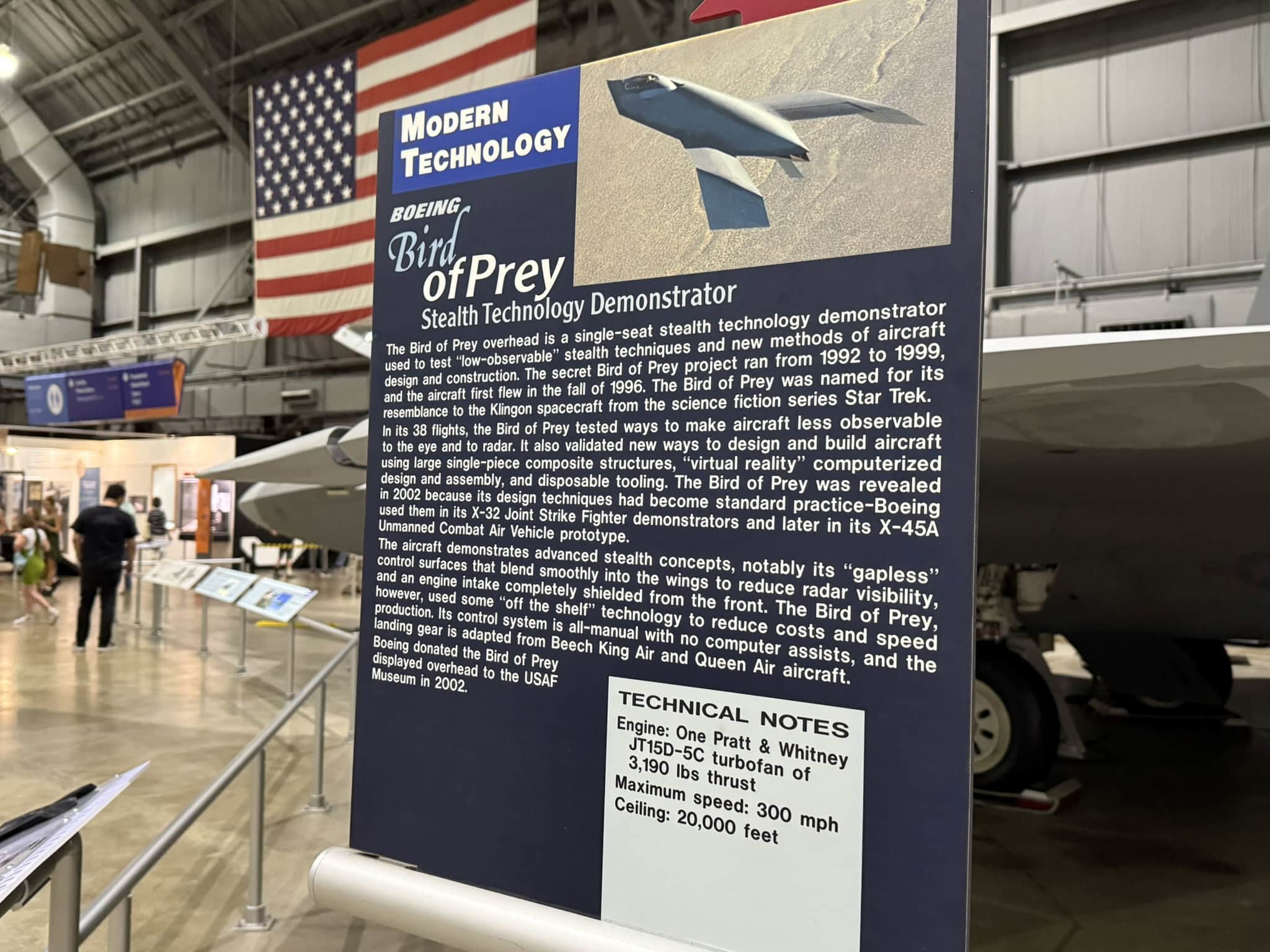
Bird of Prey at the National Museum of the U.S. Air Force. Image Credit: Harry J. Kazianis.
As for the plane’s speed, that remains greater than Mach 2. In other words, the F-47 is a true high-performance air-superiority fighter rather than a slow-strike aircraft. Under those conditions, therefore, speed is valuable despite the advances in stealth.
Every major US tactical aircraft program today emphasizes longer reach because today’s conflicts have demonstrated the importance of BVR attack.
With Washington transfixed by the prospect of war with China, Boeing’s F-47 appears primed to lead that fight. After all, the Americans must travel vast distances across the expansive Indo-Pacific region before reaching potential targets and combat zones in what’s known as the First Island Chain (the regions extending from Russia’s Kamchatka Peninsula down through Japan and Taiwan and into the Philippines and the South China Sea).
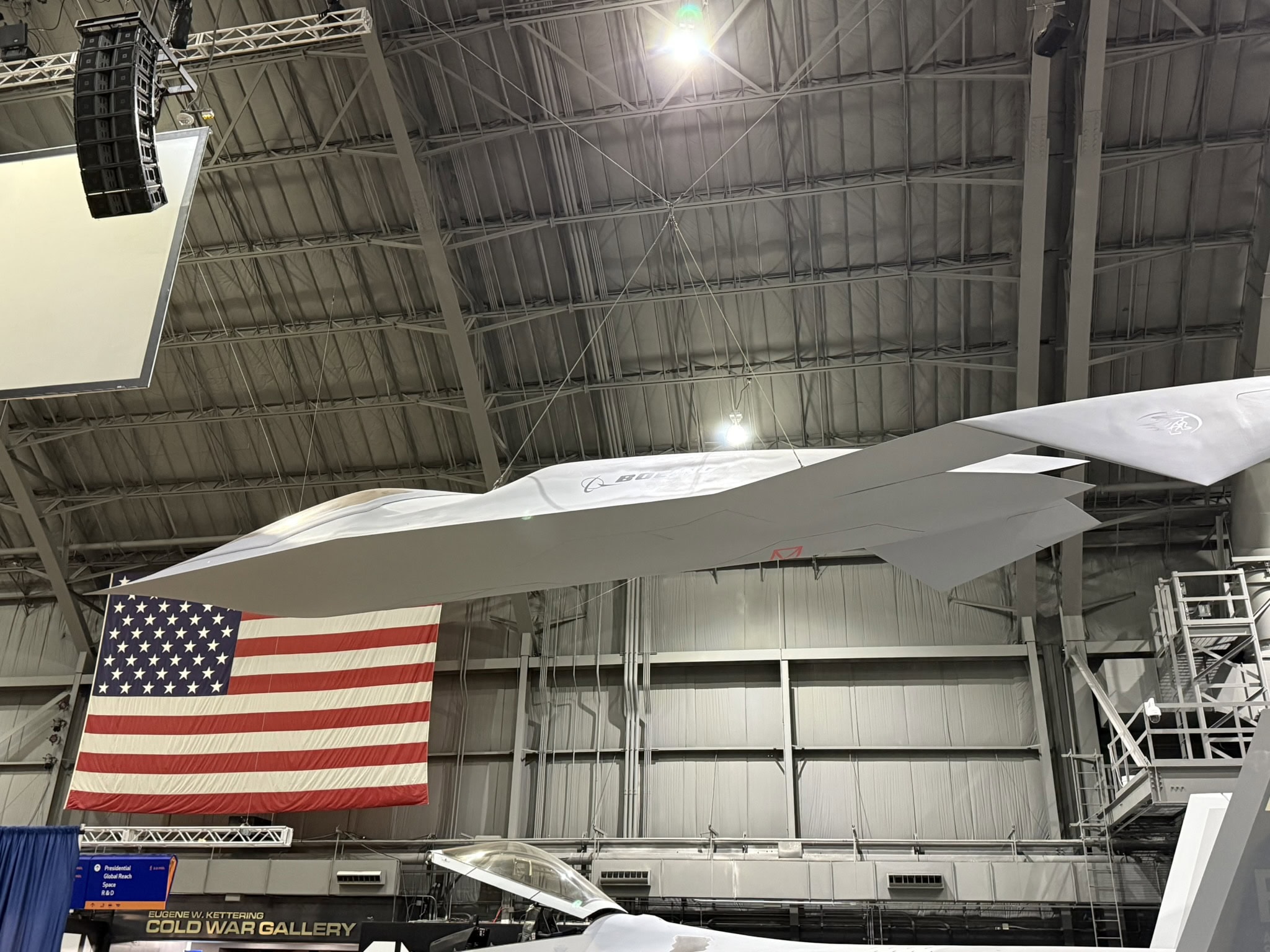
Bird of Prey at the National Museum of the U.S. Air Force. Image Credit: Harry J. Kazianis.
Stealth Is No Longer the Only Priority
Of course, basing any assessments on graphics handed down by an Air Force that is purposely evasive about the realities of this new bird, or on thermal images snapped above Area 51 in the dead of night, is hardly conclusive. There’s a lot of disinformation out there these days.
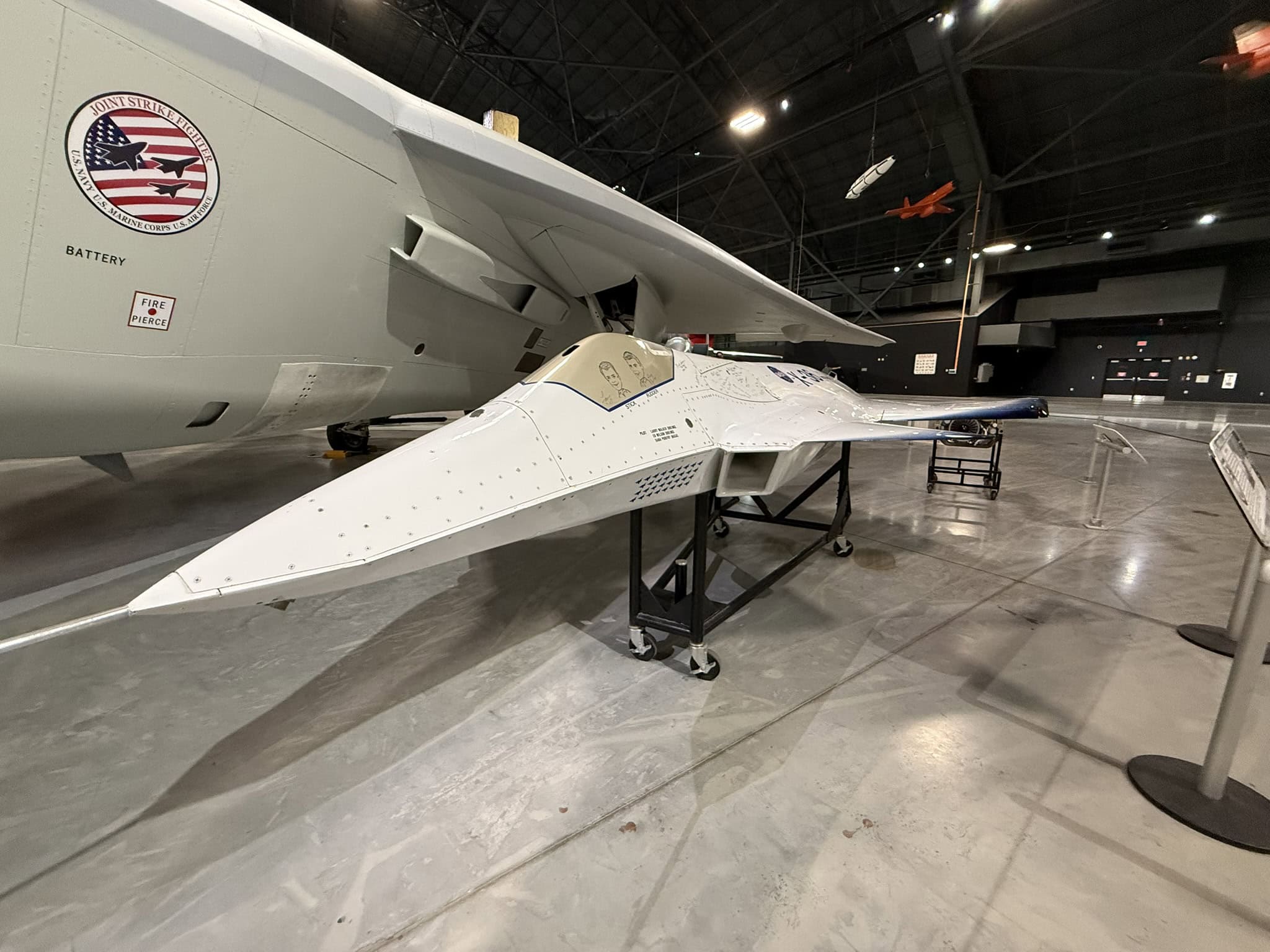
X-36 at the National Museum of the U.S. Air Force. Image Credit: Harry J. Kazianis.
Nevertheless, if these reports are true, the Air Force has finally realized that stealth is not the ultimate objective for their new planes. In an era of proliferating low-frequency radars, passive detection networks, infrared search-and-track systems, and space-based sensors, designers have finally accepted larger radar signatures on their planes in exchange for better kinematics, endurance, or operational flexibility.
Since the F-47 is not a standalone fighter but rather a “system of systems,” its effectiveness will depend heavily on successful integration with CCA drones, long-range weapons, and distributed sensing.
The Air Force is working hard to build a plane that both defies expectations and meets the many requirements of modern warfare. Ultimately, however, the success of this program will not depend on engineering alone. It will almost entirely rely upon the scalability of these systems and their replaceability. Thus far, modern American warplanes have struggled in these key areas, whereas Chinese fighters have not.
And that, more than anything, will determine both the F-47’s success and the US’s ability to win a near-future air war.
About the Author: Brandon J. Weichert
Brandon J. Weichert is the Senior National Security Editor at 19FortyFive.com. He also manages The Weichert Brief on Substack. Weichert also hosts “National Security Talk” on Rumble. He is the author of four bestselling national security books, the most recent of which is A Disaster of Our Own Making: How the West Lost Ukraine (Encounter Books). Follow him via Twitter/X @WeTheBrandon.