
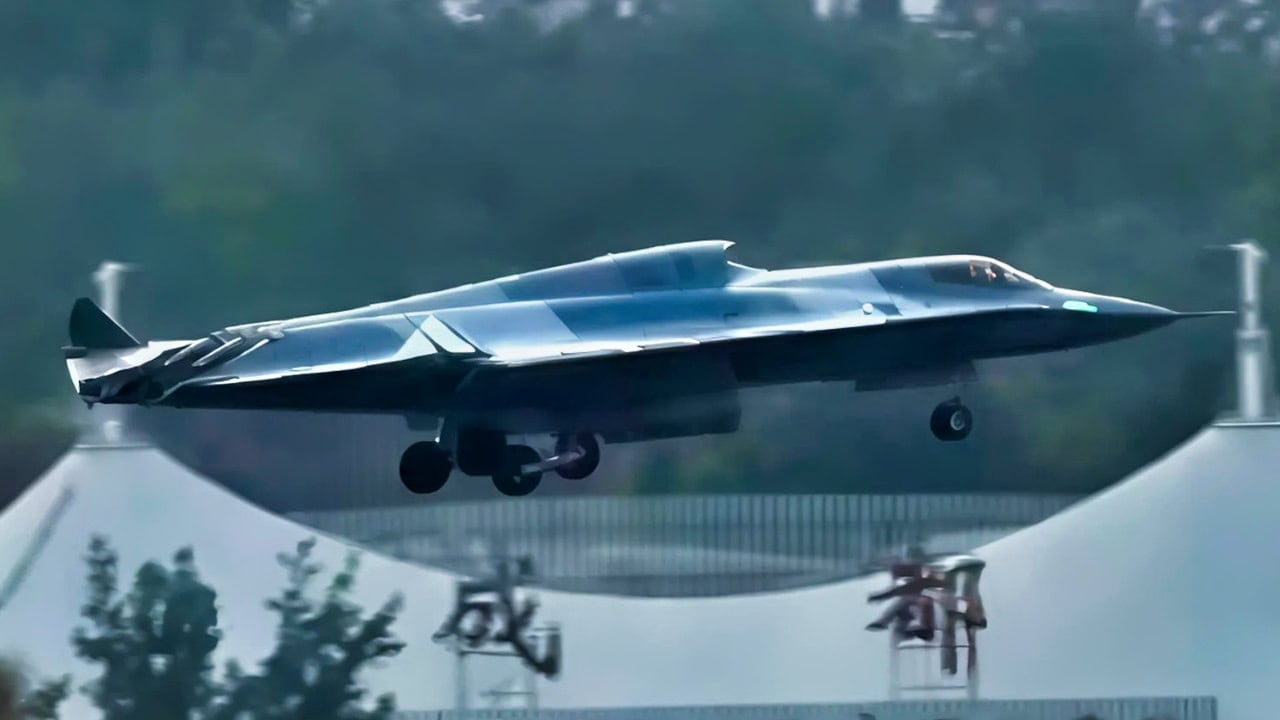
Summary and Key Points: China and the United States are now in an open race to field the world’s first sixth-generation fighter, and over the weekend Beijing made a move: it put its most secretive next-generation warplane on official video for the first time. The one-second cameo told the Pentagon almost nothing about the aircraft itself — and almost everything about how confident China wants its rivals to think it is. Both nations expect their sixth-generation jets to reach service in the early 2030s, and the contest is already reshaping how Washington, Tokyo, and Beijing plan for the next decade of air power.
China Just Put Its J-36 Sixth-Generation Fighter On Official Video For The First Time. Here Is What We Actually Know
China’s military let its most secretive aircraft appear on camera over the weekend, and it lasted barely a second. In a promotional film marking ten years of the Y-20 transport, the camera cuts from the cockpit of a tanker to a fleeting tailless silhouette pulling alongside, the shape widely associated with the next-generation jet that analysts call the J-36. After 18 months in which everything the public knew about the aircraft came from grainy photos snapped by enthusiasts, it was the first time Beijing itself put the plane on screen. Strip away the speculation that followed, though, and what is actually confirmed about the jet remains far thinner than the headlines imply.
China’s First Official Glimpse Of The J-36
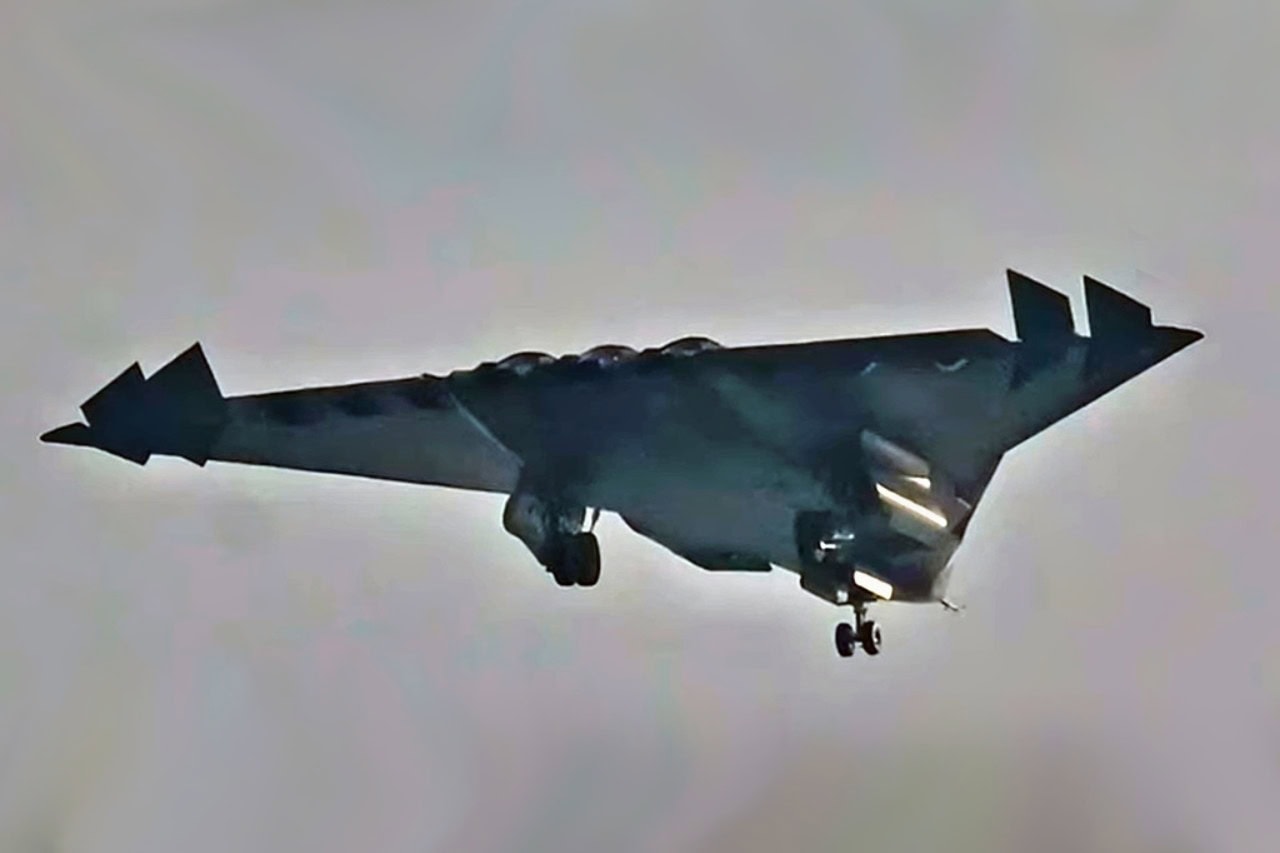
J-36 Fighter from China. Image Credit: Creative Commons.
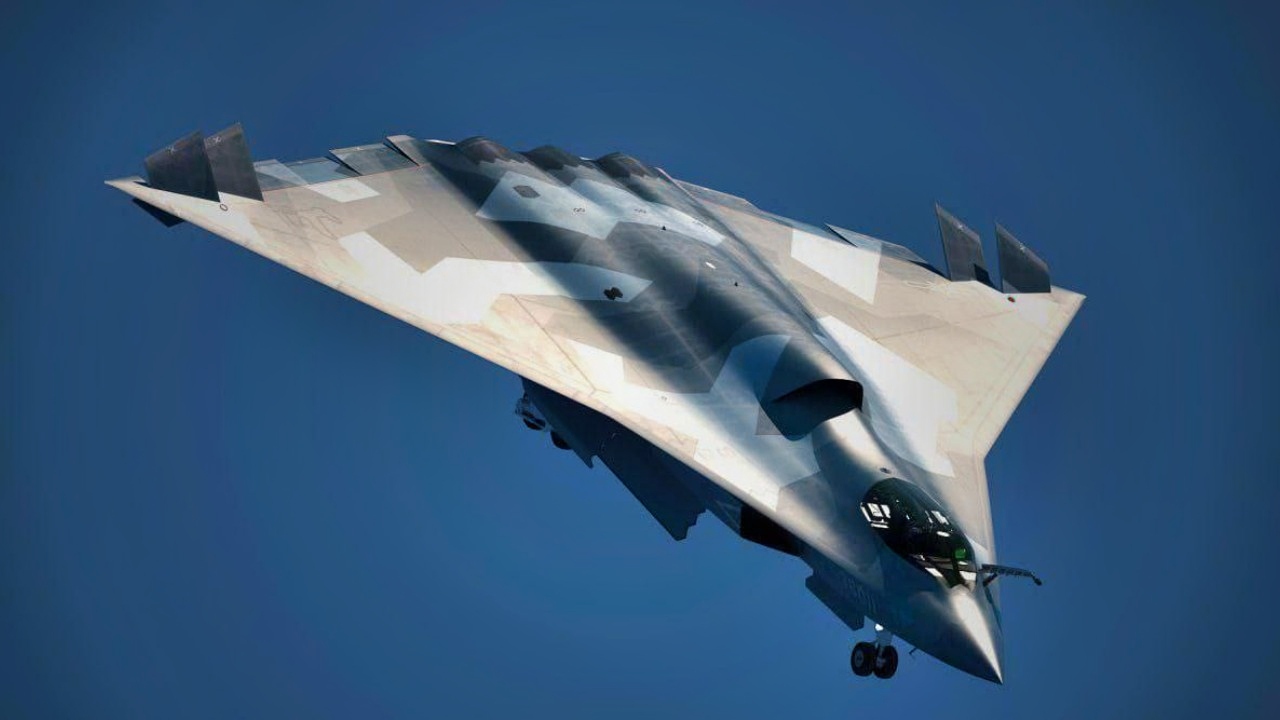
J-36 Fighter Artist Rendition. X Screenshot.
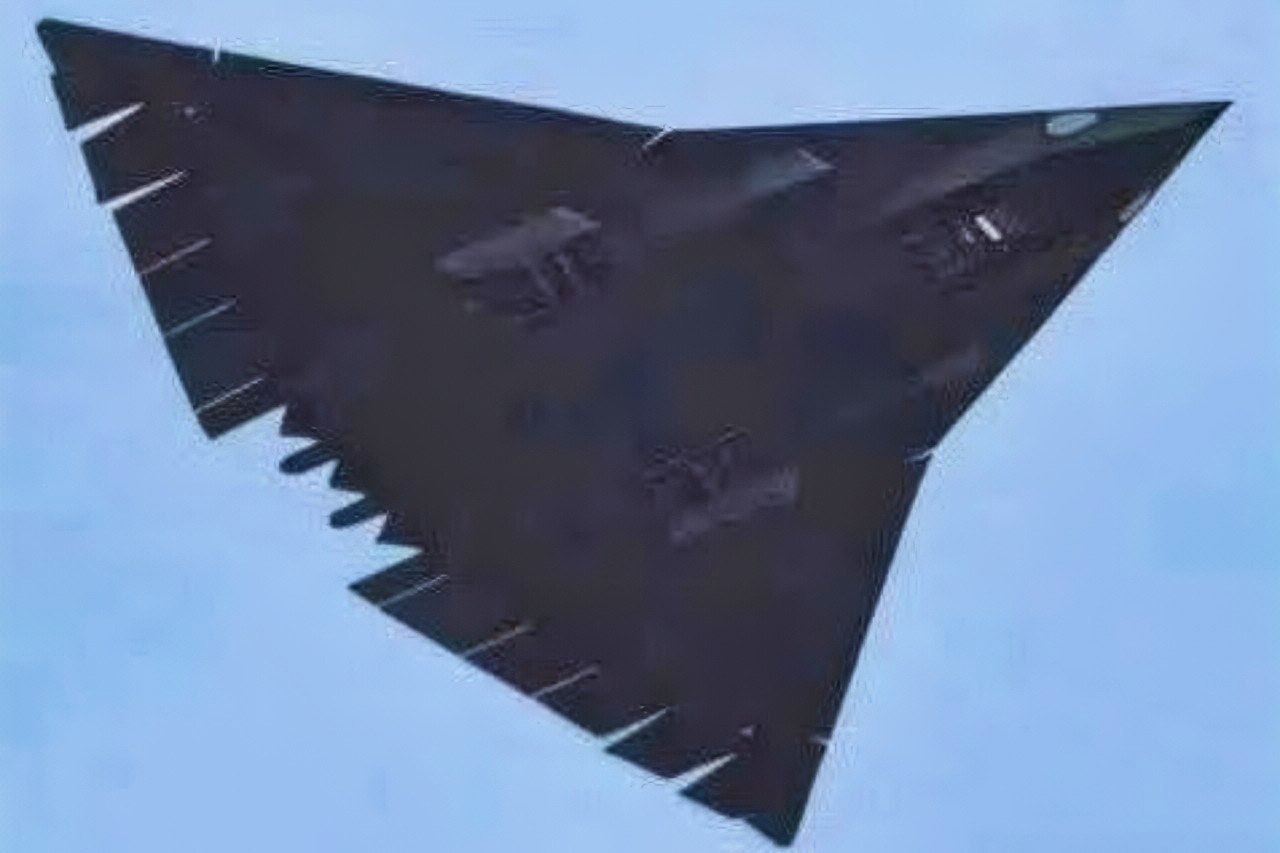
J-36 X Screenshot
The clip came from China Military Bugle, the official press account of the People’s Liberation Army, in a four-minute video released Sunday to mark the tenth anniversary of the Y-20 heavy transport entering service.
In the closing sequence, a crew member aboard the tanker variant asks who they are refueling that day and is told, “first the ‘Master Six,’ then the ‘Little Six.'” “Master Six” is an enthusiast nickname for the H-6 bomber, and “Little Six” points to the sixth-generation fighter. The camera then shifts to the view outside the window, showing a blurry tailless aircraft with the rounded planform Chinese commentators have nicknamed the ginkgo leaf.
The footage drew immediate attention because of who released it. Analysts described the sequence as the first official footage of the aircraft and the first implicit acknowledgment of the program in official Chinese military media, a marked shift from the silence that has surrounded it.
The clip itself reveals little in technical terms, a brief and indistinct shape, but the decision to show it at all is being read as a deliberate signal that Beijing wants its progress seen.
What Is Actually Known About The J-36
The aircraft first flew on December 26, 2024, which coincided with Mao Zedong’s birthday, near the Chengdu Aircraft Corporation facility in Sichuan, trailed by a two-seat J-20S as a chase plane.
The “J-36” designation is not official. It was assigned by analysts after photographs showed the number 36 on the forward fuselage, following the pattern of earlier Chinese fighter names. Chinese state media first referred to it obliquely as the ginkgo leaf jet in March 2025.
What can be seen in the images is a large, tailless aircraft with an unusual three-engine layout and three air intakes, a broad diamond or double-delta wing, and a wide nose with electro-optical sensor windows on the sides.
Reviewing one of the clearest videos to emerge in 2025, the aviation analyst David Cenciotti described the trijet arrangement, with two intakes under the wings and one mounted behind the cockpit, as a departure from the twin-engine layout of most modern fighters, and noted that space on the aircraft’s belly appeared to leave room for internal bays carrying long-range strike missiles.
Later photographs showed a cockpit with side-by-side seating and three internal weapons bays, a larger central one flanked by two smaller bays. As one detailed survey of the evidence noted, the heavy tandem main landing gear points to a substantial aircraft, and the exhausts are recessed into the upper surface in a way intended to reduce its infrared signature, an arrangement that analysts have likened to the American YF-23, which lost the competition to build the F-22.
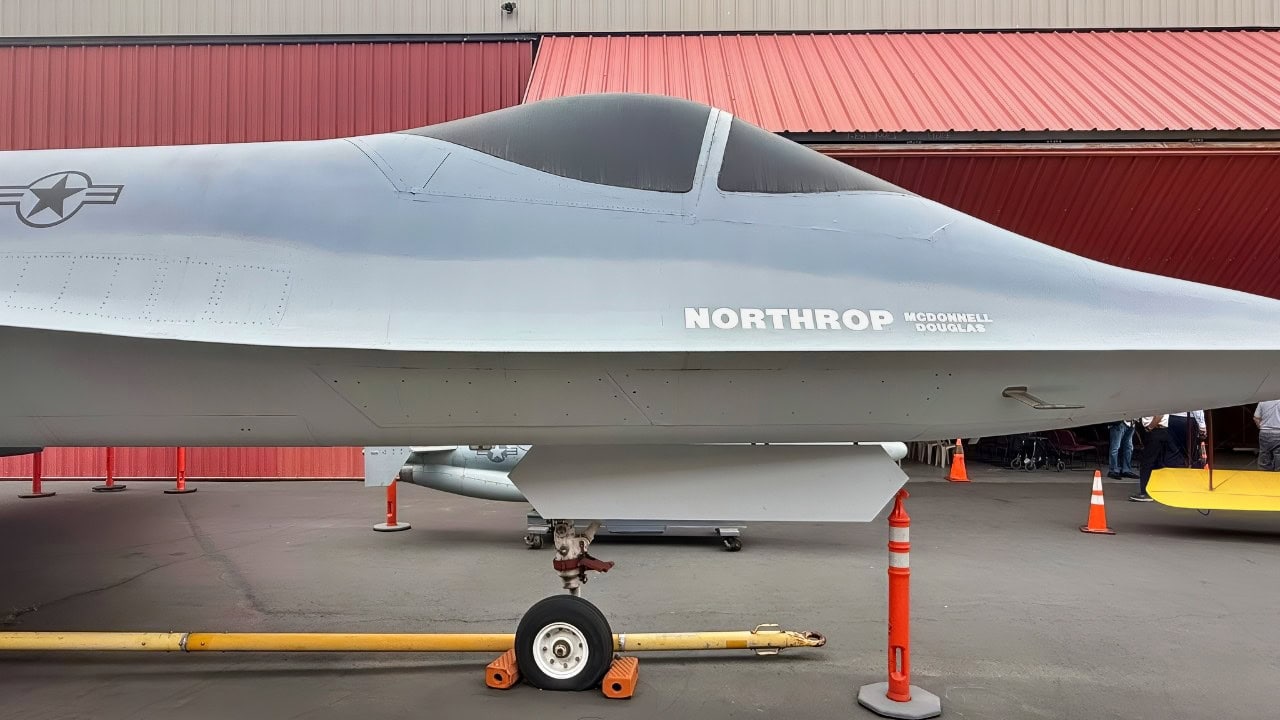
YF-23A Black Widow II 19FortyFive Image Taken by Harry J. Kazianis.
Our earlier reporting traced how much the configuration has shifted between prototypes.
Three Prototypes And A Fast-Changing Design
The program has moved quickly and visibly. A second prototype began flight testing in October 2025 with several changes, redesigned exhausts fitted with two-dimensional thrust-vectoring petals in place of the recessed troughs, revised side intakes adopting a diverterless supersonic design, and an altered landing-gear arrangement. A third prototype was reportedly seen flying around Christmas 2025.
Having multiple airframes in the air within a year of the first flight has led analysts to argue the effort has moved past the technology-demonstrator stage into something closer to a serious engineering program.
The pace should not be mistaken for certainty about the outcome. China has shown it can move fast on combat aircraft, but the reported delays in its H-20 stealth bomber are a reminder that ambitious designs can still slip, and the J-36’s repeated redesigns are as consistent with an aircraft still searching for its final form as with one nearing it.
What We Do Not Know
The most honest summary of the J-36 is how much remains guesswork, and this is where the louder coverage tends to overreach.
The aircraft’s basic role is unsettled. Since it first appeared, analysts have variously assessed it as a heavy fighter, an interceptor, a regional bomber resembling the long-rumored JH-XX concept, or a strike platform, and some have cautioned that forcing it into a category like fighter or bomber may misread what it is meant to do.
Its size and long internal bays suggest an emphasis on range and payload over close-in maneuvering, but that is an inference from shape, not a confirmed mission.
The numbers that circulate should be treated with the same caution. Estimates of the jet’s combat radius and weapons capacity vary widely from one analyst to another, and the more dramatic figures trace back to exactly the kind of unsourced write-ups worth ignoring. No official specifications exist.
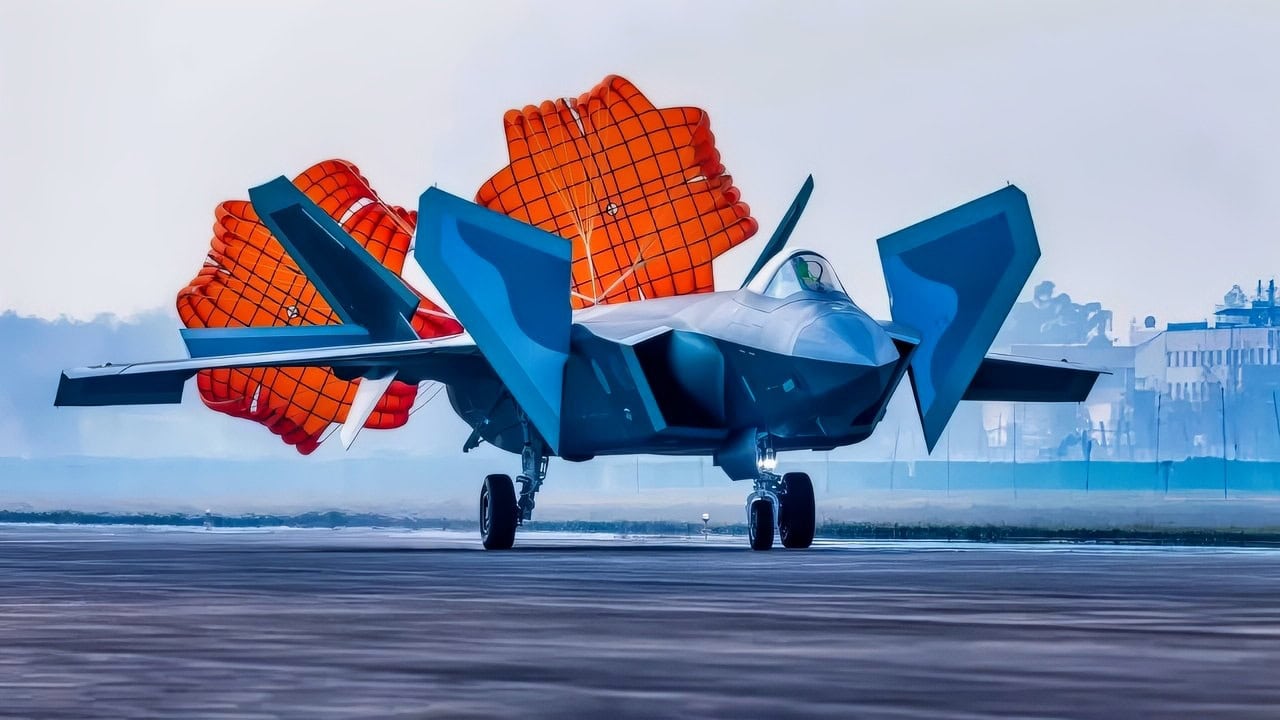
J-20S Fighter from China. Image Credit: Creative Commons.
Even the engines are guesswork. Reporting on the aircraft has speculated that it uses the WS-10C or the supercruise-capable WS-15 built for the J-20, but The Aviationist, among the outlets that have studied the images most closely, stresses that the engine maker is speculative at best.
The sensors it carries, the degree of its networking and sensor fusion, and what its cockpit looks like inside are all unknown from the outside, and without that information, there is no way to judge whether it would meet any rigorous definition of a sixth-generation aircraft. The candid conclusion reached by careful observers is that, in their inner workings, they simply cannot say.
Why China Keeps Revealing It
The pattern of disclosure is itself telling. From the first flight on a symbolic date through more than a year of photographs that spread without official interference, and now an on-screen cameo in a military film, the releases have looked deliberate rather than accidental.
Letting unofficial imagery circulate allows Beijing to fuel discussion and signal progress while admitting nothing to pin it to. A deputy commander of the PLAAF has publicly described the aircraft as the air force’s interpretation of a sixth-generation design, which is about as far as any Chinese official has gone. The effect is to put China’s timeline into the global conversation and to shape how rivals plan, without Beijing confirming a single capability.
What It Means For The Race With The United States
The J-36 landed in the middle of an accelerating contest. The United States is pursuing its own sixth-generation fighter, the Boeing F-47, under the Next Generation Air Dominance program meant to replace the F-22, while the Navy works on a separate carrier-based design known as F/A-XX.
American officials reacted to the J-36’s debut with a mix of concern and confidence, acknowledging that the Chinese jet might reach initial operational capability sooner, betting that the eventual US aircraft would be the better machine, and using the development as an argument to keep their own program funded. Both the American and Chinese fighters are generally expected to enter service in the early 2030s.
The strategic logic behind a large, long-range design fits the geography of the Pacific, where distances are vast and bases are few. China’s current top fighter, the J-20, is estimated to have a combat radius of just over 2,000 kilometers, compared with roughly 1,000 kilometers for the F-35, though these figures are analyst estimates rather than published specifications.
A larger aircraft capable of flying farther and carrying more would extend Chinese airpower deeper into the region. It is worth keeping the two Chinese programs distinct; the J-36 is the heavier Chengdu trijet, while a separate, smaller, twin-engine aircraft attributed to the Shenyang Aircraft Corporation is being developed in parallel, most likely with a naval role in mind. Allied air forces are watching closely, including Japan, which is counting on the British-Italian-Japanese GCAP fighter to field a comparable aircraft of its own by the mid-2030s.
Eighteen months after that first flight on Mao’s birthday, China has flown at least three prototypes of a large tailless trijet, reshaped its design more than once, and now allowed it a one-second appearance in an official film.
The cockpit, the engines, the true range, and the mission it is built for are still matters of inference drawn from blurry photographs, and until Beijing shows more, that is where the honest account of the J-36 has to end.
About the Author: Harry J. Kazianis
Harry J. Kazianis (@Grecianformula) was the former Senior Director of National Security Affairs at the Center for the National Interest (CFTNI), a foreign policy think tank founded by Richard Nixon based in Washington, DC. Harry has over a decade of experience in think tanks and national security publishing. His ideas have been published in the NY Times, The Washington Post, The Wall Street Journal, CNN, and many other outlets worldwide. He has held positions at CSIS, the Heritage Foundation, the University of Nottingham, and several other institutions related to national security research and studies. He is the former Executive Editor of the National Interest and the Diplomat. He holds a Master’s degree focusing on international affairs from Harvard University.