
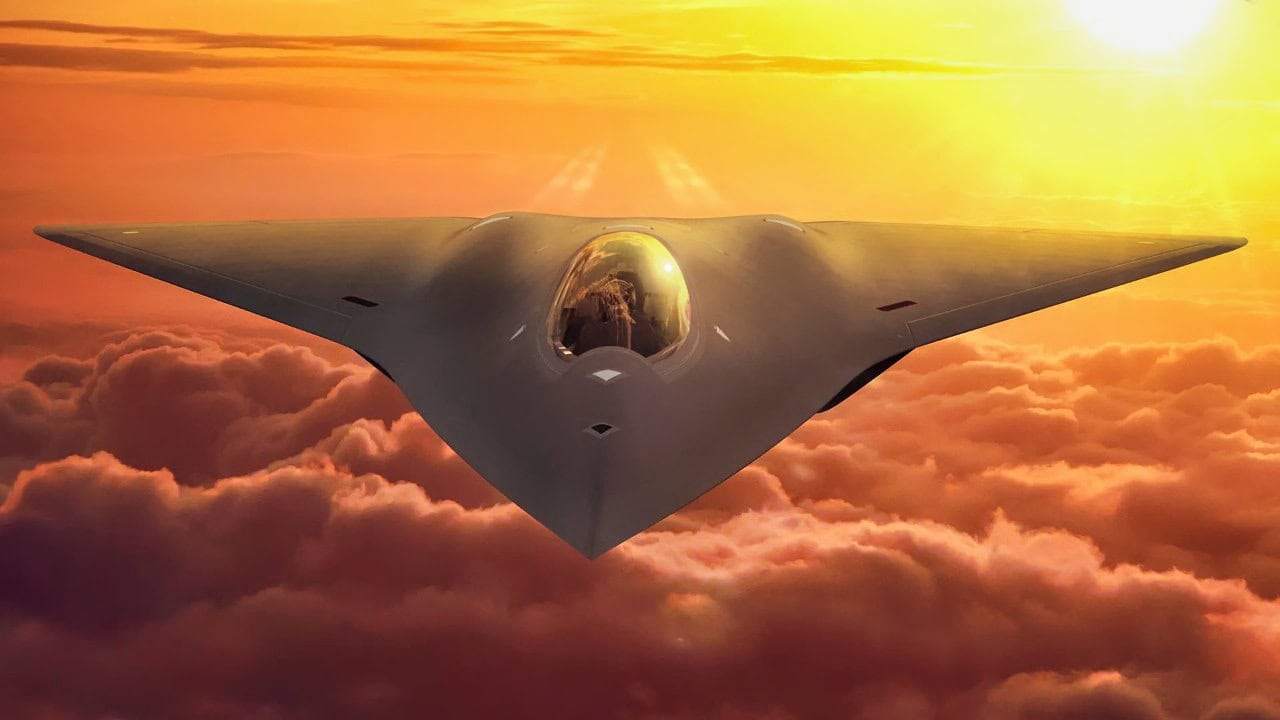
When one discusses 6th-generation fighter jets, the conversation usually focuses on high stealth, the potential use of hypersonic weapons, and artificial intelligence in the cockpit.
But when it comes time to analyze next-generation warbirds such as the American F-47 NGAD and the Chinese J-36, military analysts are concerned about another feature: range.
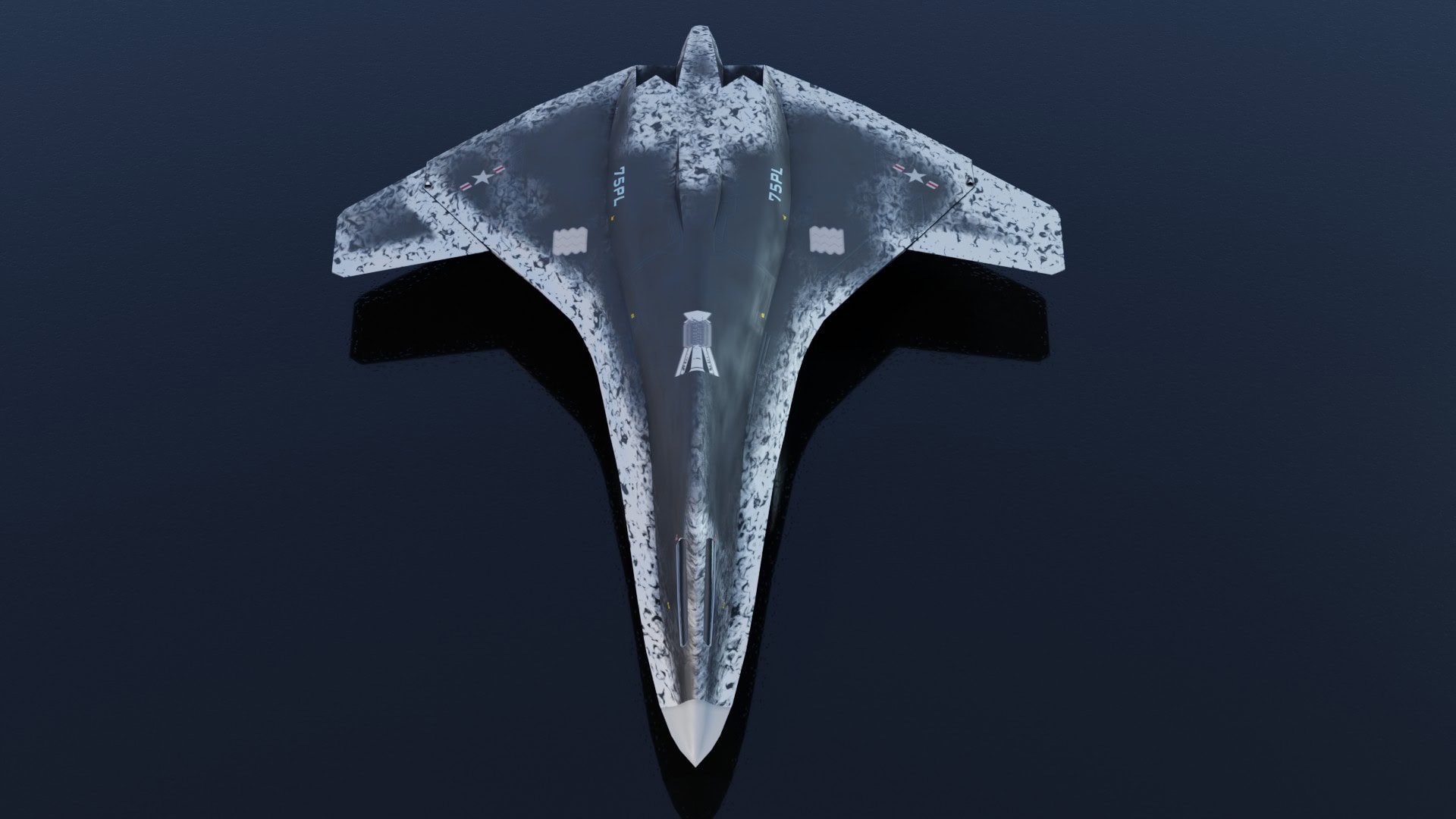
NGAD Fighter Mock Up. Image Credit: Creative Commons.
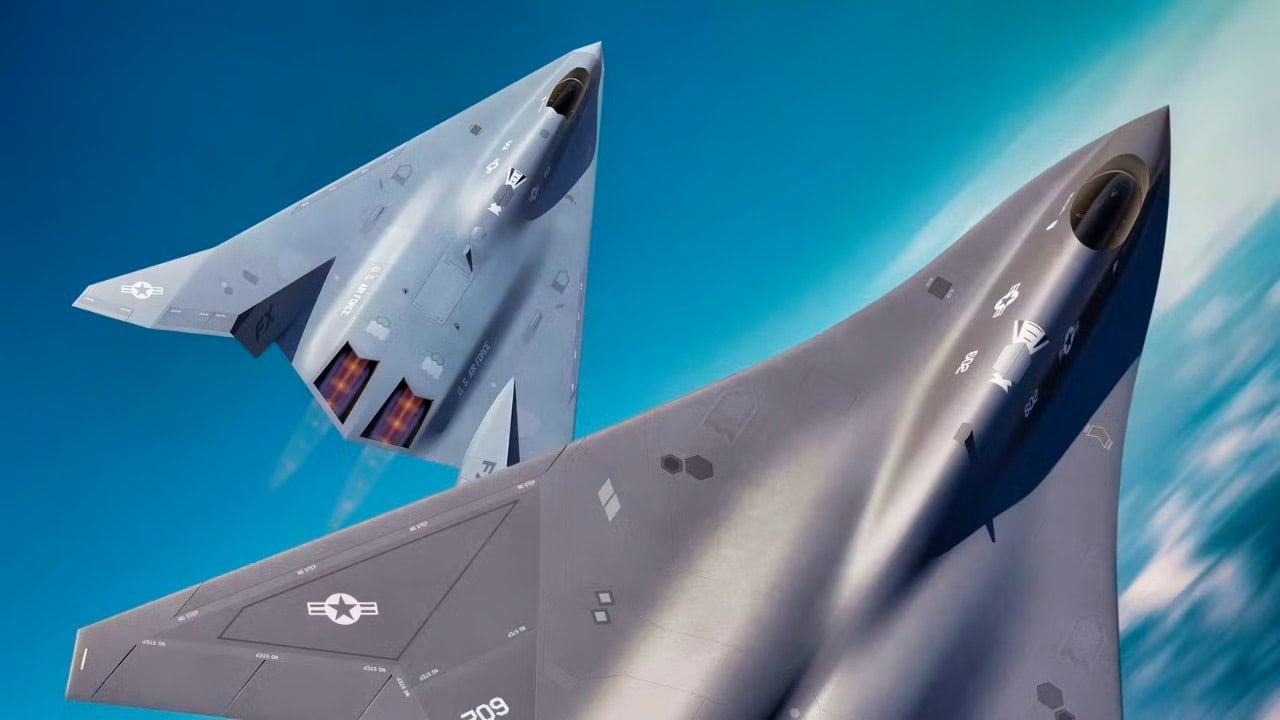
U.S. NGAD Fighter. Artist Rendering.
The Indo-Pacific is vast, and U.S. bases such as Guam and Okinawa are widely dispersed. A coordinated American attack on China would not be like Operation Epic Fury against Iran.
The United States was aided by a tightly bound network of air bases across the Middle East, enabling U.S. Air Force fighter jets to strike at will.
The Name of the Game is Range in the Western Pacific
If aerial combat were to ever break out in East Asia, jets with a greater combat radius are likely to be more successful in dogfights or bombing runs. So, the range, or lack thereof, of different airplanes is paramount.
As Aaron Spray of Simple Flying admits, little is known about China’s new J-36 beyond photos that have appeared on social media. It is difficult to discern just how far the airplane can operate away from air bases.
Some Specs of the F-47 Are Unclear
Meanwhile, the F-47 NGAD is still in the design phase and will not be ready for active duty or produced in numbers until the early 2030s.
Its first flight could happen in 2027 or 2028, but at this point, we still do not know exact specifications such as top speed, altitude, and range.
Don’t Forget the F-47 as a Drone Quarterback
Another wild card with the F-47, as Spray points out, is the use of the manned-unmanned teaming arrangement. The F-47 will likely serve as the quarterback for a drone called the Collaborative Combat Aircraft (CCA).
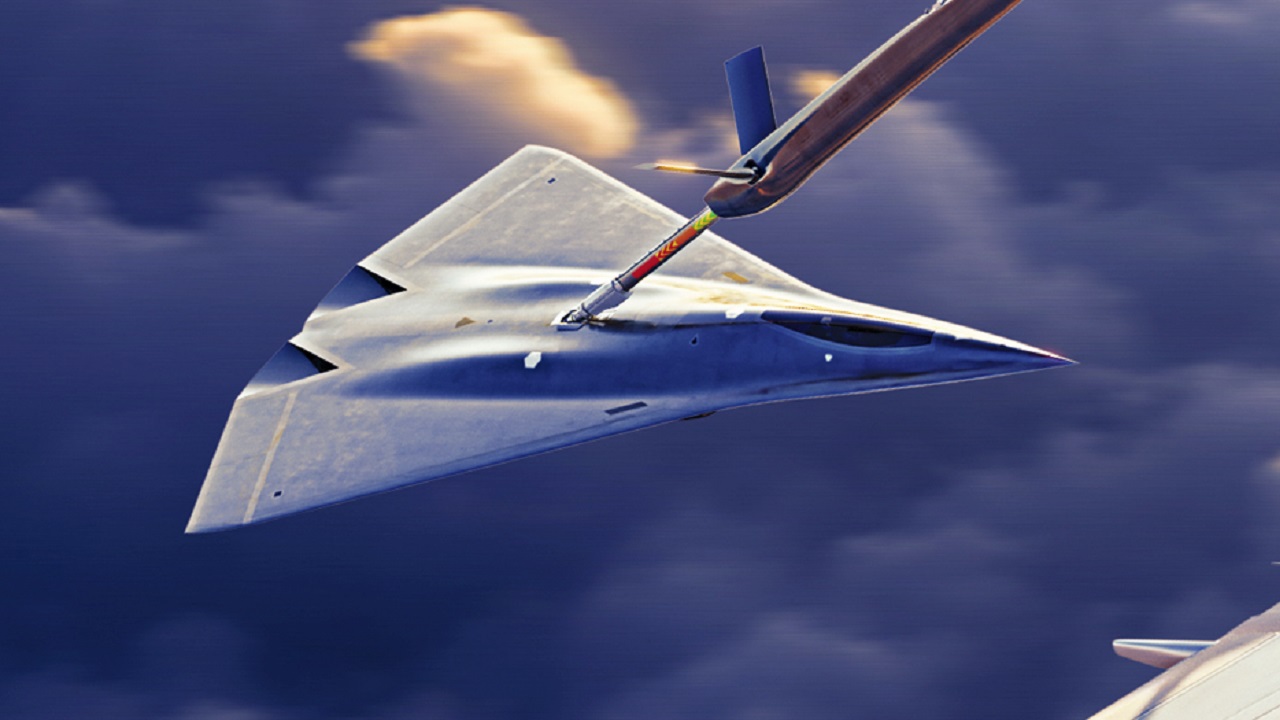
Lockheed Martin NGAD Fighter. Image Credit: Lockheed Martin.
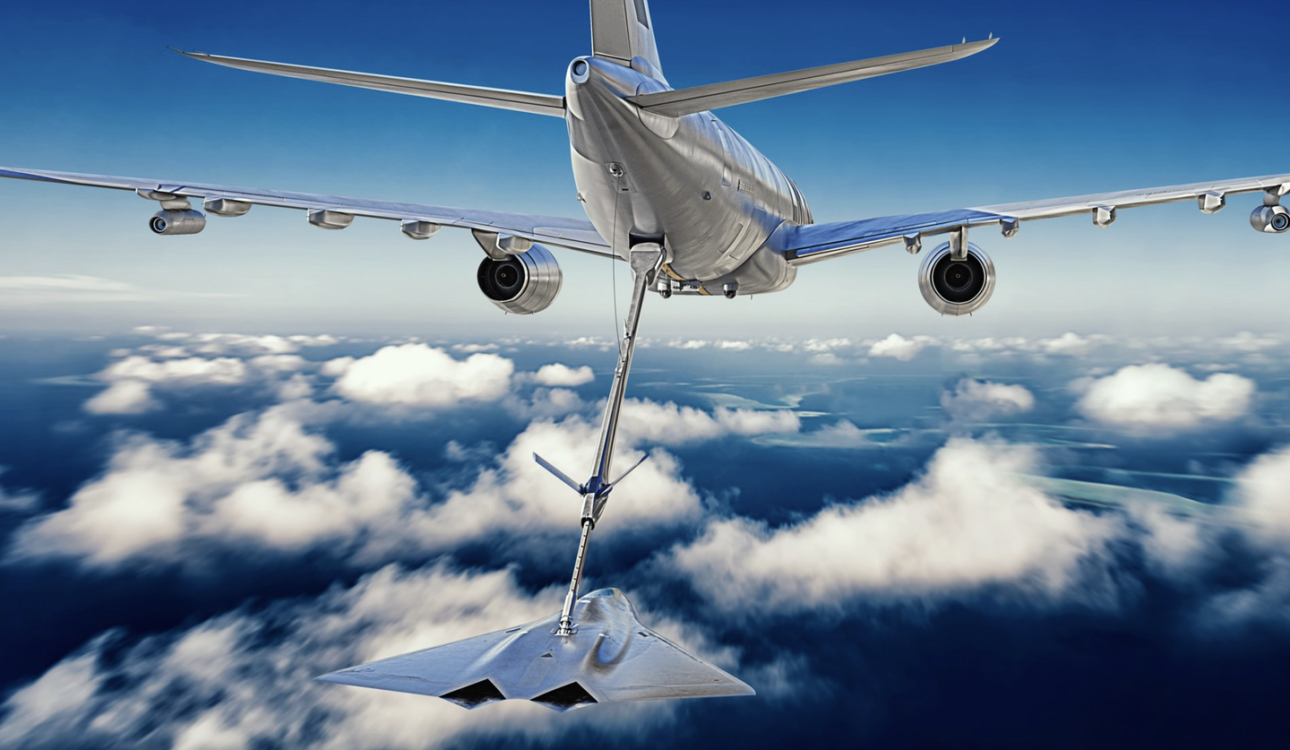
Image: Lockheed Martin showing a refueling NGAD fighter.
The “loyal wingman” CCA can collect intelligence, surveillance, and reconnaissance data. It will also be armed and can suppress enemy air defenses before the F-47 sneaks in to destroy more critical targets.
While the United States has defense contractors like Anduril assigned to build the CCA prototypes and lead production efforts, we don’t yet know the drone’s range.
Will This Teaming Arrangement Actually Work?
This means we also aren’t sure whether the F-47 NGAD and its loyal wingman can make a difference in the Indo-Pacific without ample aerial refueling to cover the region.
This could be a problem with the entire program and keep the F-47 from replacing the F-22 as planned.
The Tanker Battle Is Front and Center
China has an interesting battle concept. It would like the J-20 Mighty Dragon to destroy U.S. tankers, hampering aerial refueling.
Or the Chinese could take out American tankers on the ground in the same way that Iran was able to do during the war.
The fifth-generation fighter definitely has the stealth and firepower to make U.S. aerial refueling more difficult than ever before.
This would crimp the range of the F-47 and CCA. If these aircraft cannot reach the battle, they will be combat-ineffective.
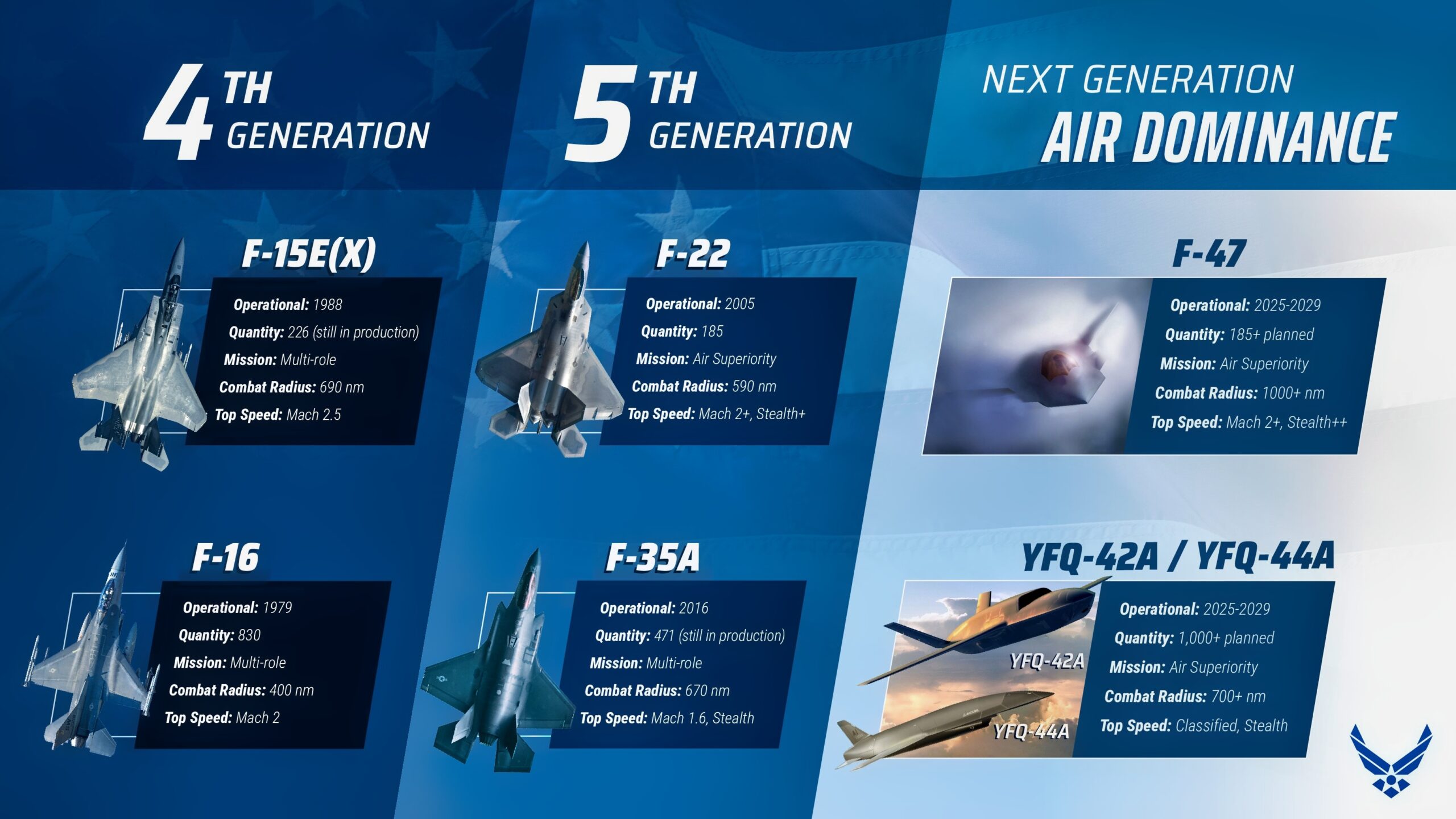
F-47 Infographic. Image Credit: U.S. Air Force
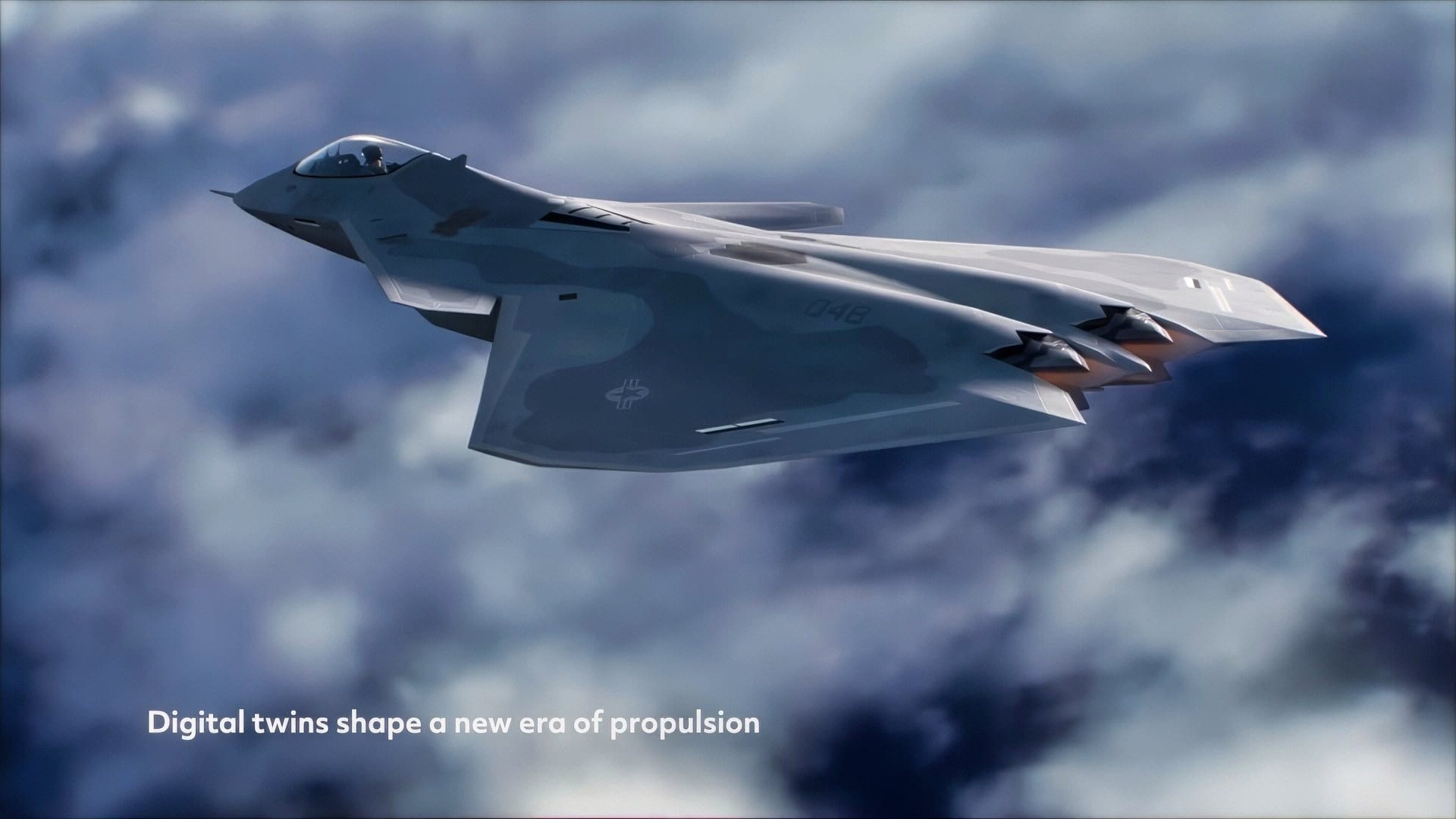
F-47 NGAD Fighter Possible Image. Image Credit: Screenshot.
China Has a Vote In This Fight
The Air Force has said that the F-47 could have a maximum range of more than 1,000 miles, but since the airplane is still in development, it is not certain that the objective will be met.
China knows this and is making sure its aircraft carriers, missile defenses, and intercepting aircraft can rise to the challenge and blast away at the F-47 and CCA before they can reach the battlespace for a dogfight.
If China can make this happen, it will have a leg up on the Americans in the Indo-Pacific, and the F-47 may not be as mission-capable as thought.
This would be a disappointment for a fighter that could cost as much as $300 million each.
Lawmakers Will Be Interested
The range question could be a topic for a Congressional hearing, and the acquisition officers assigned to the sixth-generation fighter may have to address it before lawmakers on Capitol Hill. The F-47 must be able to reach its intended targets with only one or two aerial refuelings.
The order of battle the Chinese deploy could challenge the NGAD, even if the NGAD has superior stealthiness and speed.
F-47 Has Better Range Than Other U.S. Jets
However, the F-47, if the program is successful, could turn that 1,000-mile range into a specification that bests other fighter jets in the U.S. fleet. The F-22 has a combat radius of 590 nautical miles, and the F-35 has a range of 670 nautical miles.
Both would have to refuel at least once during combat operations.
While we don’t know the range of the next-generation J-36, the Chinese are expected to make the airplane large to carry more fuel and use an efficient three-engine design, as Spray points out.
New Powerplant for the F-47 Plans to Be Robust
The F-47 will also have powerful engines. The Next-Generation Adaptive Propulsion (NGAP) program is developing the propulsion system for the F-47, and the potential range will be important to NGAP.
This project reportedly uses an adaptive-cycle engine with a third airflow channel, which is state-of-the-art and will deliver the speed, range, and thrust so badly needed in modern aerial combat.
We have covered the F-47 for years now, and we will strive to provide more details about NGAD as they are released.
The power plants will be important in determining the airplane’s range and whether it could be a force in combat.
The future of the airplane is riding on its ability to fly great distances, be refueled in the air, and dominate the fight. Let’s see if this means it could also outclass China’s J-36.
About the Author: Brent M. Eastwood, PhD
Author of now over 3,500 articles on defense issues, Brent M. Eastwood, PhD, is the author of Don’t Turn Your Back On the World: A Conservative Foreign Policy and Humans, Machines, and Data: Future Trends in Warfare, plus two other books. Brent was the founder and CEO of a tech firm that predicted world events using artificial intelligence. He served as a legislative fellow for US Senator Tim Scott and advised the senator on defense and foreign policy issues. He has taught at American University, George Washington University, and George Mason University. Brent is a former US Army Infantry officer. He can be followed on X @BMEastwood.