Back in 2023, some of the first murmurs of Australia’s plans and future intentions with its fledgling F-35 fleet came to light in the form of that year’s Defence Strategic Review paper, a document outlining the course of Canberra’s anticipated geopolitical environment and what course the country would take.
Though it may feel like an eternity ago, the document explained that the F-35, along with older F/A-18F Super Hornet aircraft operated by Australia, should integrate the Long-Range Anti-Ship Missile onto their F-35As and Super Hornets, and that the Joint Strike Missile should also be integrated onto the fifth-generation fighter. Both moves were “agreed in principle.”
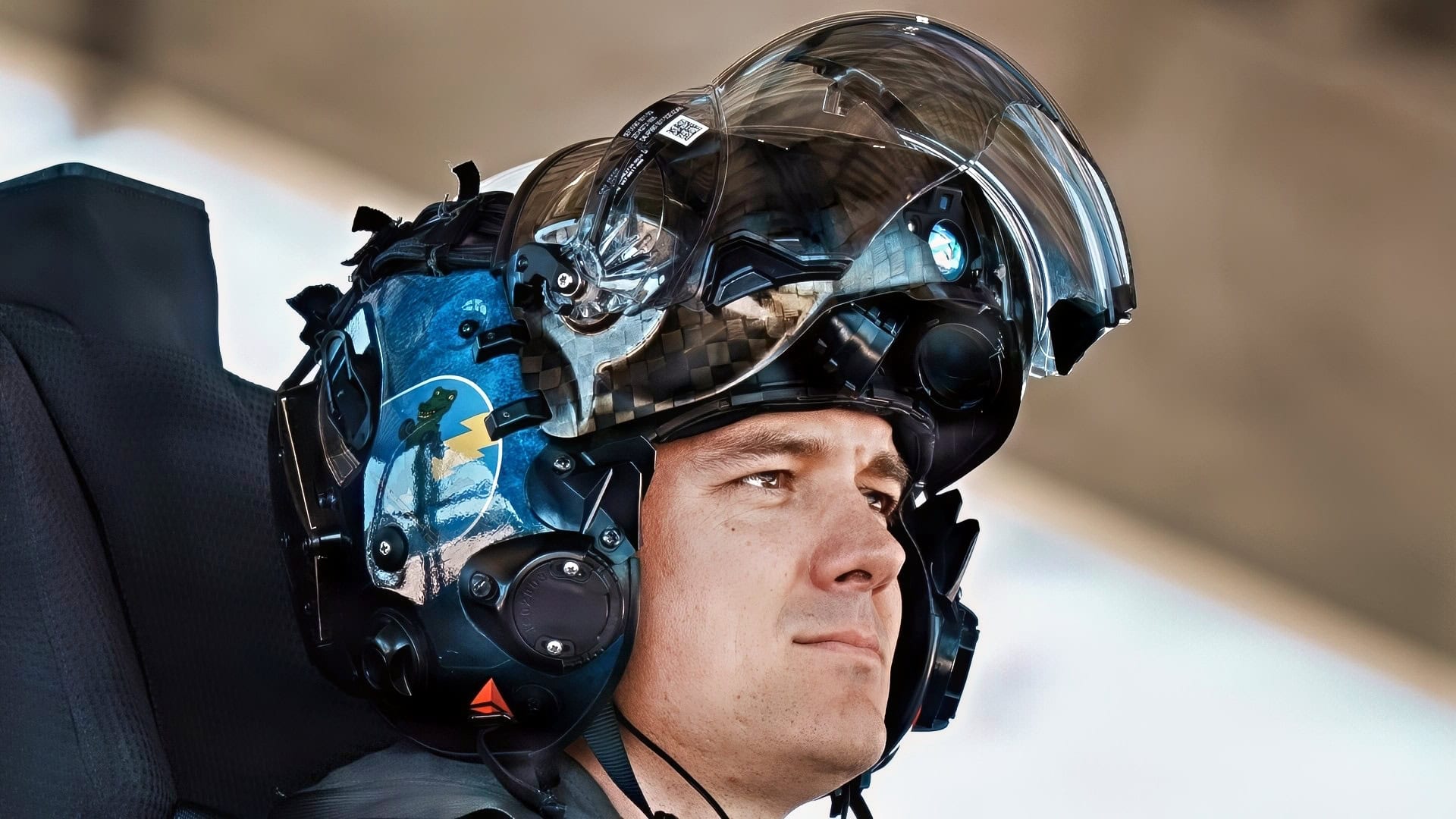
An F-35A Lightning II pilot assigned to the 125th Fighter Wing conducts a preflight maintenance check at Jacksonville Air National Guard Base, Florida, April 15, 2026. Coordination between pilots and maintainers ensures aircraft are mission-ready to execute aerospace control and air defense missions under Air Combat Command. The 125th FW sustains readiness to support federal and state missions, including combat operations, humanitarian assistance, and disaster response. (U.S. Air National Guard photo by Staff Sgt. N.W. Huertas)
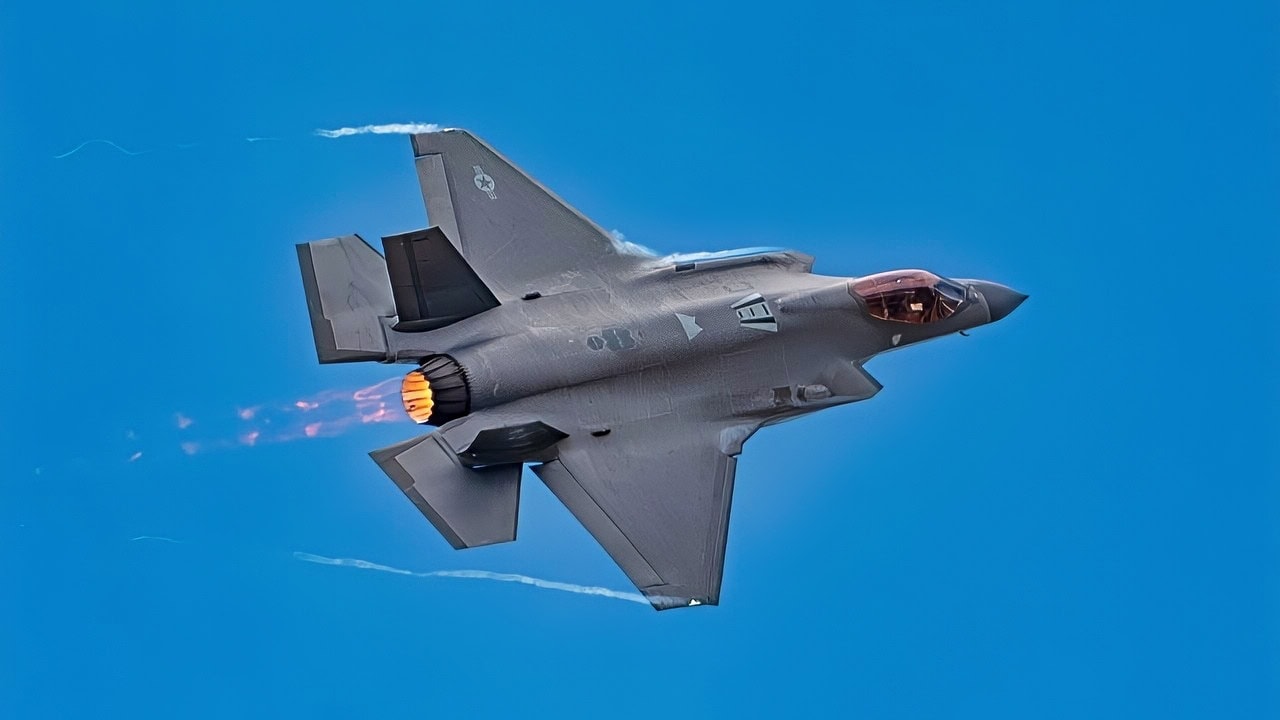
A U.S. Air Force F-35 Lighting II from the 62nd Fighter Squadron at Luke AFB, AZ, performs during the Fairchild SkyFest 2024 airshow and open house at Fairchild Air Force Base, Washington, June 22, 2024. Team Fairchild hosted the Fairchild SkyFest 2024 airshow June 22 and 23 to thank the local community for their support and partnerships. The airshow included the A-10 Thunderbolt II Demonstration team, Wings of Blue parachute team, UH-1N Huey and several other aerial acts and static displays. (U.S. Air Force photo by Airman 1st Class Stephanie Orta Carranza)
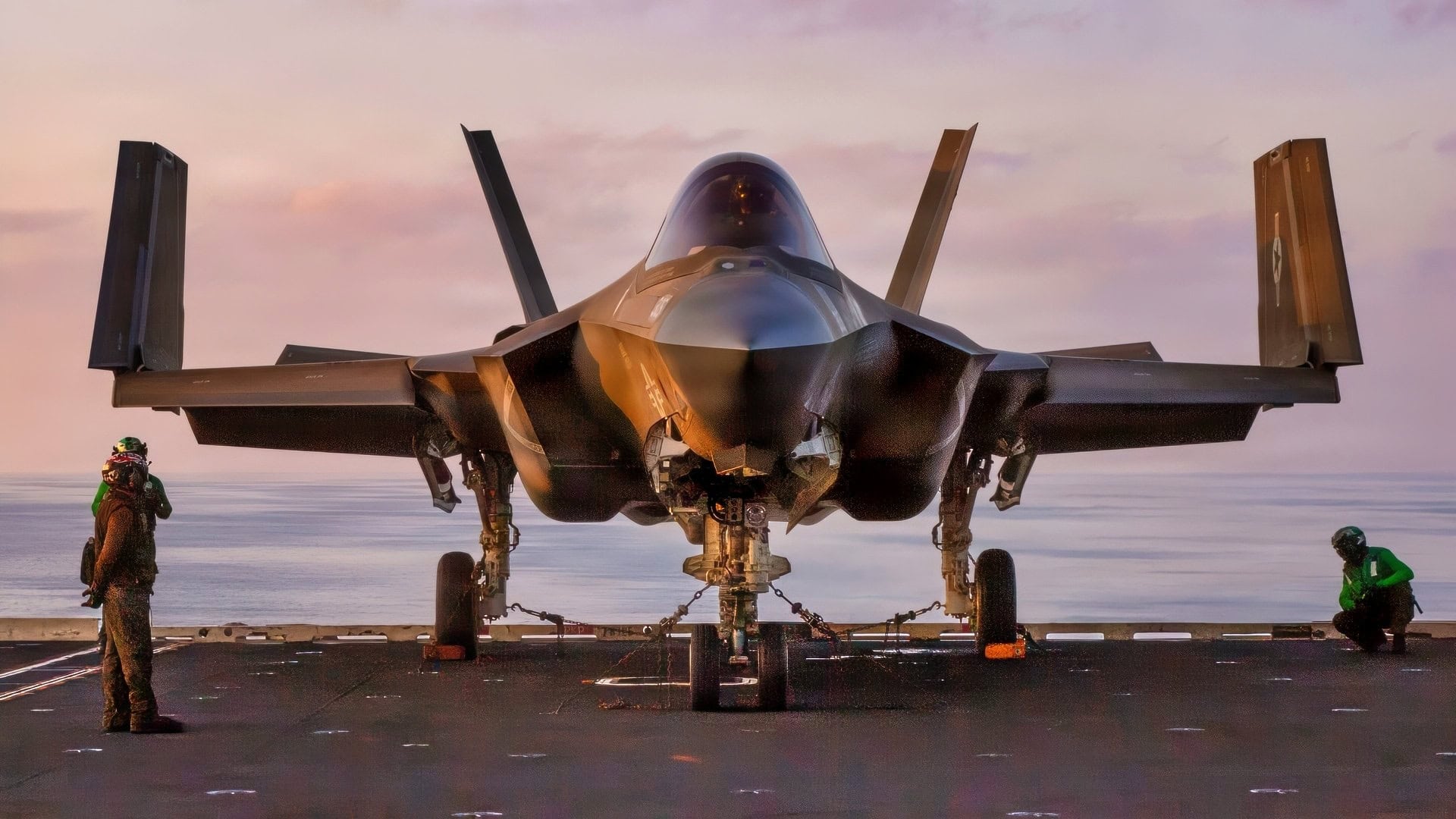
An F-35C Lightning II, attached to Marine Fighter Attack Squadron (VMFA) 314, is chained down on the flight deck of Nimitz-class aircraft carrier USS Abraham Lincoln (CVN 72) in support of Operation Epic Fury, Mar. 3, 2026. (U.S. Navy photo)
The F-35, a stealthy, radar-defeating fighter, is the world’s most-produced stealth aircraft and arguably one of the world’s most capable. But a year after the defence paper was published, in 2024, Australia decided to retain its Super Hornets for longer than anticipated, holding off on acquiring an additional 100 F-35As.
Relying on a Cold War Workhorse
In a televised interview with the Australian Broadcasting Corporation back in 2024, Minister for Defence Industry Pat Conroy explained that Canberra would be doubling down on its fleet of Super Hornets by extending their service lives while also retaining the F-35s the country had already acquired.
When queried about the Australian F-35 fleet in light of the Super Hornets Australia already operates, Conroy explained that “we’ve got 72 Joint Strike Fighters and we’ve got a number of Super Hornets, and we’ve decided to keep the Super Hornets in service for two reasons. One, they’re doing great work. Secondly, the Joint Strike Fighter is even more capable than we initially thought. So we can delay the replacement of the Super Hornet, which frees up funding to invest in more long‑range missiles, for example.”
But when asked pointedly whether Australia would end its participation in the F-35 program with just 72 F-35s, Conroy said, “No, not necessarily.”
“The last government had a plan of prematurely retiring the Super Hornets when they’re perfectly good aircraft doing really good work. So we’re going to continue with the Super Hornets. They complement the Joint Strike Fighter, and we will evaluate possible replacements of them a bit further down the path. That frees up money, as I said, for long‑range missiles to equip both platforms as well as reequipping the Army and Navy.”
The original Australian defense plan would have seen 100 F-35s ultimately delivered to Australia. But Australia’s Labour government opted to shift funding from the F-35 program to fund other initiatives, leaving the Australian F-35A fleet at 72.
Unsure of One Hundred
The decision to crimp the Australian F-35 fleet came at a particularly sensitive political moment. At the time, over a year and a half ago, an immense amount of bellicosity emanated from the White House, and President Donald Trump had launched trade wars against even friends and close allies around the globe, including Australia.
Concurrently with the damaging trade war, speculation about the F-35 and Washington’s rumored ability to engage a kill switch embedded in the aircraft ran rampant. However, both the Pentagon and a number of defense analysts have denied that such a switch exists.
But while the United States may not have an actual physical or electronic kill switch buried within each and every F-35, Washington does have the privilege of the last say over the materiel needed to sustain F-35 fleets around the globe: engines and related components, stealth coating materials, spare parts, and other necessary consumables without which F-35 operations would grind to a halt.
But, as some Lockheed Martin executives have pointed out, those fears should be assuaged by the F-35 evaluations conducted by countries like Switzerland and Finland, which prioritized independent F-35 operations in conflict scenarios where an uninterrupted supply of parts and spares could not necessarily be guaranteed.
As one Lockheed official explained to Breaking Defense, a website, last year, Helsinki and Geneva “ran very sophisticated competitions with very stringent sovereign capability requirements for closed border operations for extended periods of time” and determined that the F-35 met their specification.
“The way we were able to prove that closed border operations are 100 percent within the capabilities of this asset so long as you plan for it correctly, I think the proof’s in the pudding right there with Finland and Switzerland saying ‘yes, F-35,’ and I believe I have sufficient sovereign capability,” the Lockheed official explained.
MORE – Iran Wanted 1,000 Russian T-72 Tanks
About the Author: Caleb Larson
Caleb Larson is an American multiformat journalist based in Berlin, Germany. His work covers the intersection of conflict and society, focusing on American foreign policy and European security. He has reported from Germany, Russia, and the United States. Most recently, he covered the war in Ukraine, reporting extensively on the war’s shifting battle lines from Donbas and writing on the war’s civilian and humanitarian toll. Previously, he worked as a Defense Reporter for POLITICO Europe. You can follow his latest work on X.