
Canada’s Defense Minister has explained why his government’s review of fighter jet procurement is taking so long. Speaking to the press on Monday, David McGuinty admitted that the process of deciding whether to proceed with a purchase of American F-35 fighter jets was a “point of debate or dialogue.”
Trade ‘Not Sole Factor’
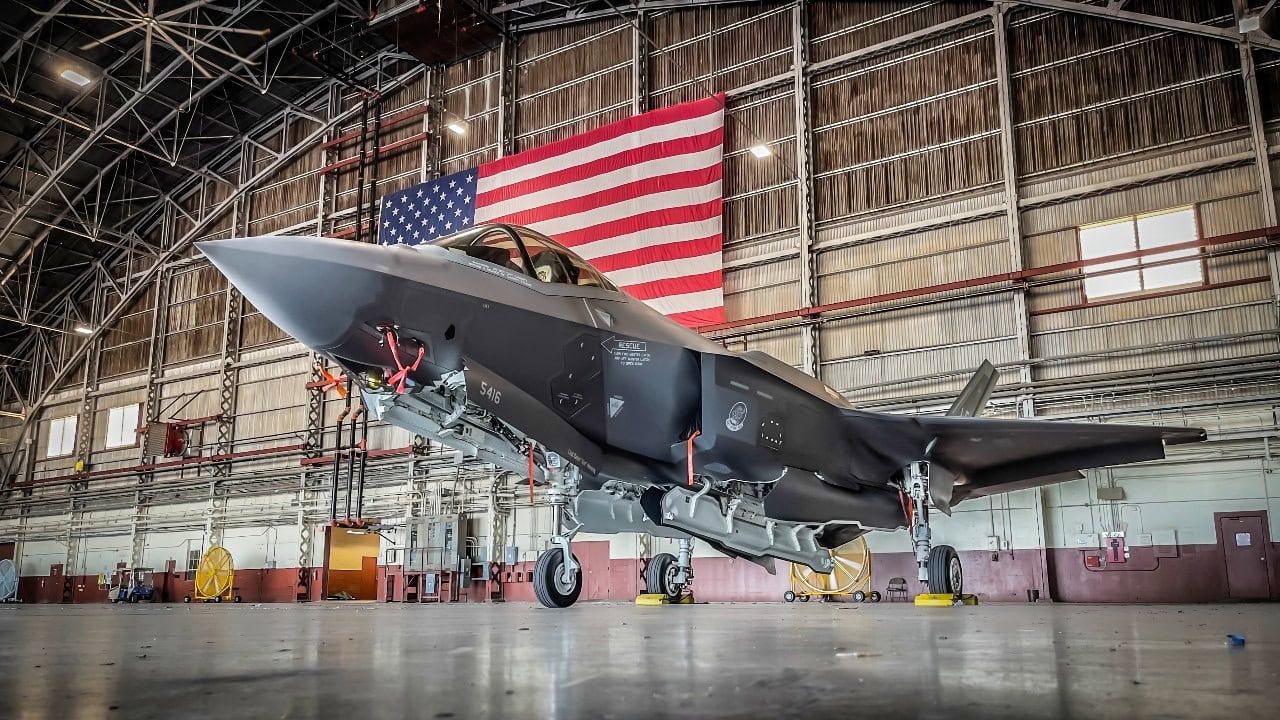
An F-35 Lightning II assigned to the 62nd Fighter Squadron, Luke Air Force Base, Ariz., sits in a hangar ahead of operations for the F-35 Lightning II TDY, Oct. 28, 2021, at Joint Base San Antonio-Kelly Field, Texas. The 62nd FS will be training with F-16s from the 149th Fighter Wing and the 301st Fighter Wing, along with T-38s from the 301st Fighter Wing. The multi-role capabilities of the F-35 allows them to perform missions which traditionally required numerous specialized aircraft. The complimentary air superiority capabilities of the F-35 will augment our air superiority fleet and ensure we continue to “own the skies” over future battlefields. (U.S. Air Force photo by Brian G. Rhodes)
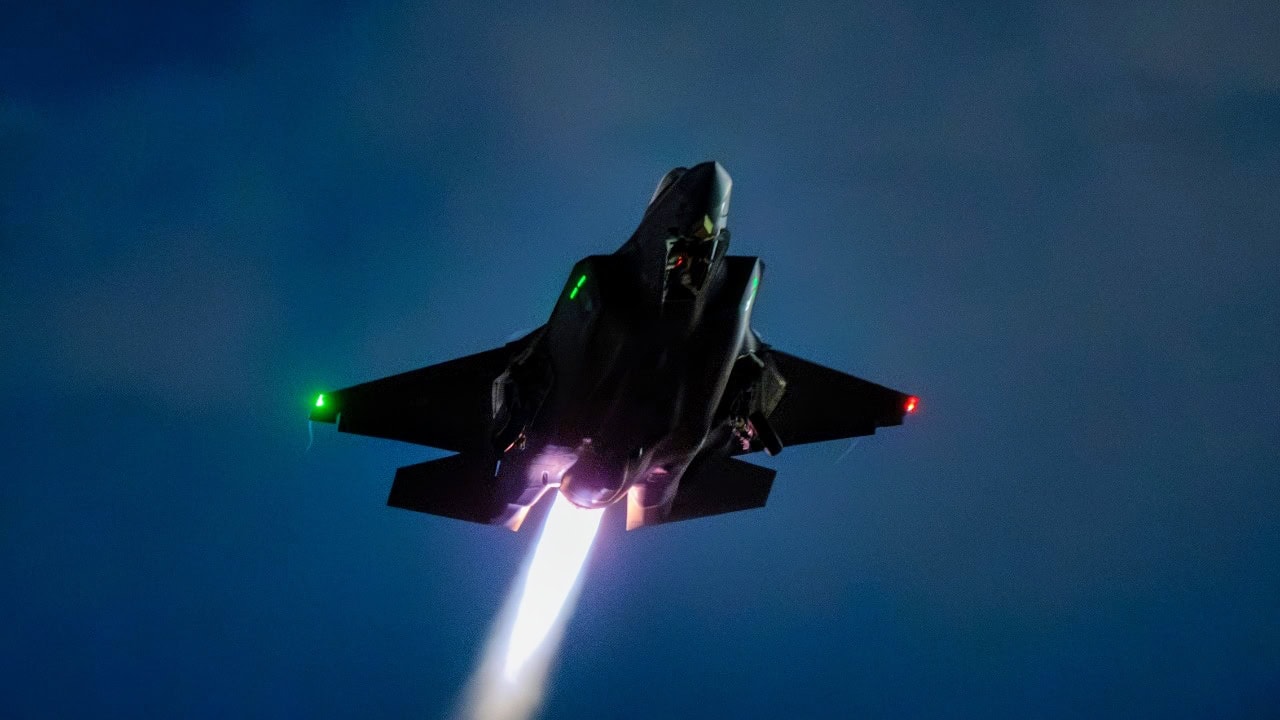
An F-35A Lighting II takes off for a Red Flag-Nellis 24-2 night mission at Nellis Air Force Base, Nevada, March 18, 2024. The presence of the F-35s offers the U.S., Allies, and partners a versatile and highly capable system, enhancing collective defense measures while reinforcing the NATO Alliance’s commitment to leveraging top-tier military capabilities for regional security and deterrence. (U.S. Air Force photo by 1st Lt. Jimmy Cummings)
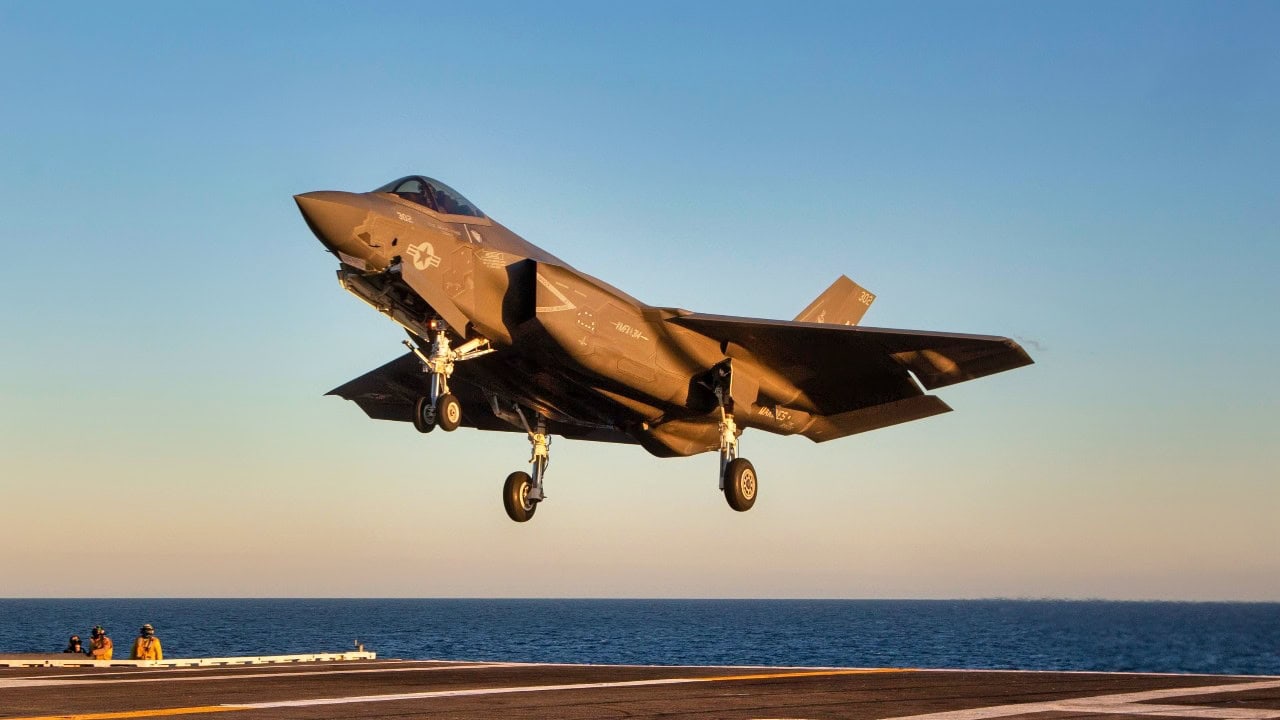
F-35 Fighter.
When quizzed over whether the tense talks qualified as a “trade war,” McGuinty argued that “acquisition of that size would normally be a point of debate or dialogue between two sovereign nations.”
“This is not the only factor involved in a multi-party, multi-element, multi-stakeholder type of negotiation. This negotiation with the United States is extremely complex,” he went on.
Carney ‘Won’t Be Hurried’
He also repeated Canadian Prime Minister Mark Carney’s assertion that Ottawa will “not be hurried” on the issue, amid concerns Canada is too reliant on American military and security infrastructure.
In 2023, Canada signed a deal to purchase 88 fighter jets from Lockheed Martin. 16 of these jets are already under construction, with 8 slated for delivery by late 2026.
Carney kick-started a review into the $27.7-billion plans last Spring in the wake of public disagreements with Washington.
It came after President Donald Trump imposed a 25% tariff on most imports, including a 10% tariff on Canadian energy products.
The F-35 purchase review was initially scheduled to be wrapped up last September, but it has carried on far beyond that, as have the tariffs.
The U.S. Supreme Court struck down several of Trump’s emergency tariffs at the beginning of 2026.
In any case, those tariffs expired on July 24, with Trump subsequently announcing a fresh, temporary 10% tariff on all imports. However, these restrictions broadly exempt CUSMA-compliant Canadian goods.
Could a ‘Mixed Fleet’ Work?
Canada has recently mulled over operating a mixed fleet of fighter jets in which Swedish Gripen fighters would replace some of the F-35s.
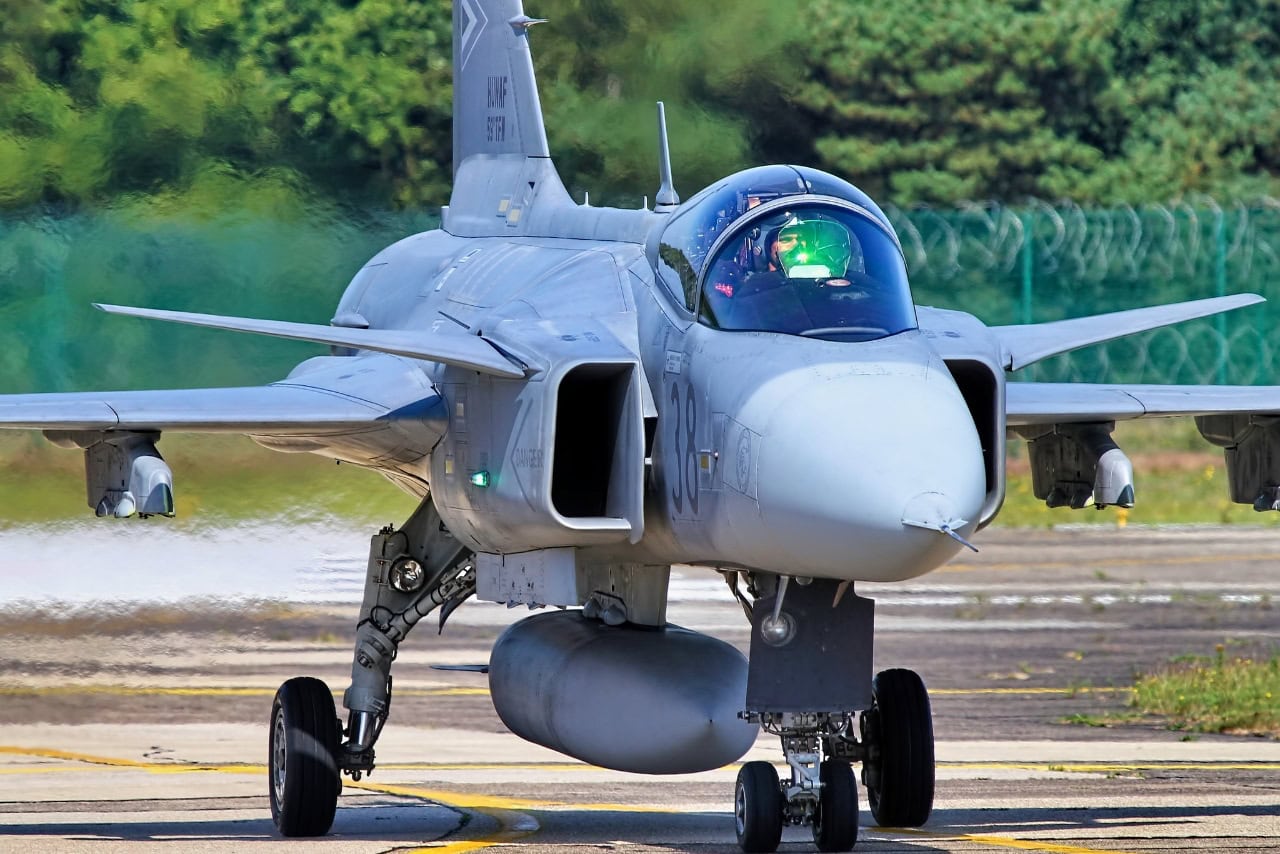
JAS 39 Gripen. Image Credit: Creative Commons.
The U.S. has criticized this idea, with the U.S. Ambassador to Canada Pete Hoekstra stating that a “mixed fleet” could endanger the North American Aerospace Defense Command (NORAD) by complicating interoperability.
Trade Tensions Soar
In recent weeks, tensions have soared, with the Trump Administration threatening to slap fresh 50 percent tariffs on around US$20 billion worth of Canadian goods from Aug. 19.
Talks are heating up ahead of this deadline, with Canada-U.S. Trade Minister Dominic LeBlanc and Chief Trade Negotiator Janice Charette set to visit Washington this week.
Last Thursday, they held a 90-minute meeting with the U.S. Trade Representative Jamieson Greer.
The White House has argued that the measures it wishes to roll out via Section 338 of the Tariff Act of 1930 are retaliating to Canada’s “discriminatory” strictures, including dairy supply management and the ban on U.S. alcohol in eight Canadian provinces.
Sources close to the negotiations told CTV News that compromises with Washington were up for debate.
These reportedly include eliminating counter-tariffs on autos and persuading certain provinces to lift their bans on U.S. alcohol.
The process by which some dairy quotas operate will also be on the negotiating table, as will threats to end preferential access for Americans to critical minerals, energy, and large procurement projects.
Last April, Carney told the Liberal Party of Canada’s annual convention that “the days of our military sending 70 cents of every dollar to the United States are over.”
He has also announced a Defense Industrial Strategy in which Canada’s federal government will invest more in domestic military equipment. McGuinty also noted that he was “sure” these plans would be considered as leverage by the negotiating team.
In a letter shared over the weekend, Canadian Conservative Leader Pierre Poilievre accused Carney of having “backed down to one American demand after another.”
He said that Canada should continue pushing for tariff-free access for its lumber, steel, aluminum, and cars rather than oversee a policy of “managed decline.”
About the Author: Georgia Gilholy
Georgia Gilholy is a journalist based in the United Kingdom who has been published in Newsweek, The Times of Israel, and the Spectator. Gilholy writes about international politics, culture, and education.