Perhaps one of the most contentious Canadian procurement projects of the last decade is still ongoing: the search for a replacement for the Royal Canadian Air Force’s CF-18 Hornets.
That Cold War-era fighter is decades old, and while Canada appeared to have settled the question of what comes after the Hornets, the debate resurfaced, seemingly unsettled.
The CF-18 replacement competition that Canada originally ran selected the F-35A, built by American defense prime Lockheed Martin.
But growing political tension with Canada’s southern neighbor has threatened to unravel a deal that was seen as settled.
On account of the now-acrimonious relationship with Washington, almost single-handedly caused by American President Donald Trump’s trade war, the two countries have exchanged more than just bitter words.
Last year, the Canadians announced they would reevaluate their decision on the F-35.
And while the Royal Canadian Air Force has committed to purchasing 16 of the original 88 F-35As it was initially interested in, the government has raised the possibility of branching out and completing the makeup of its fleet with other aircraft rather than just the F-35.
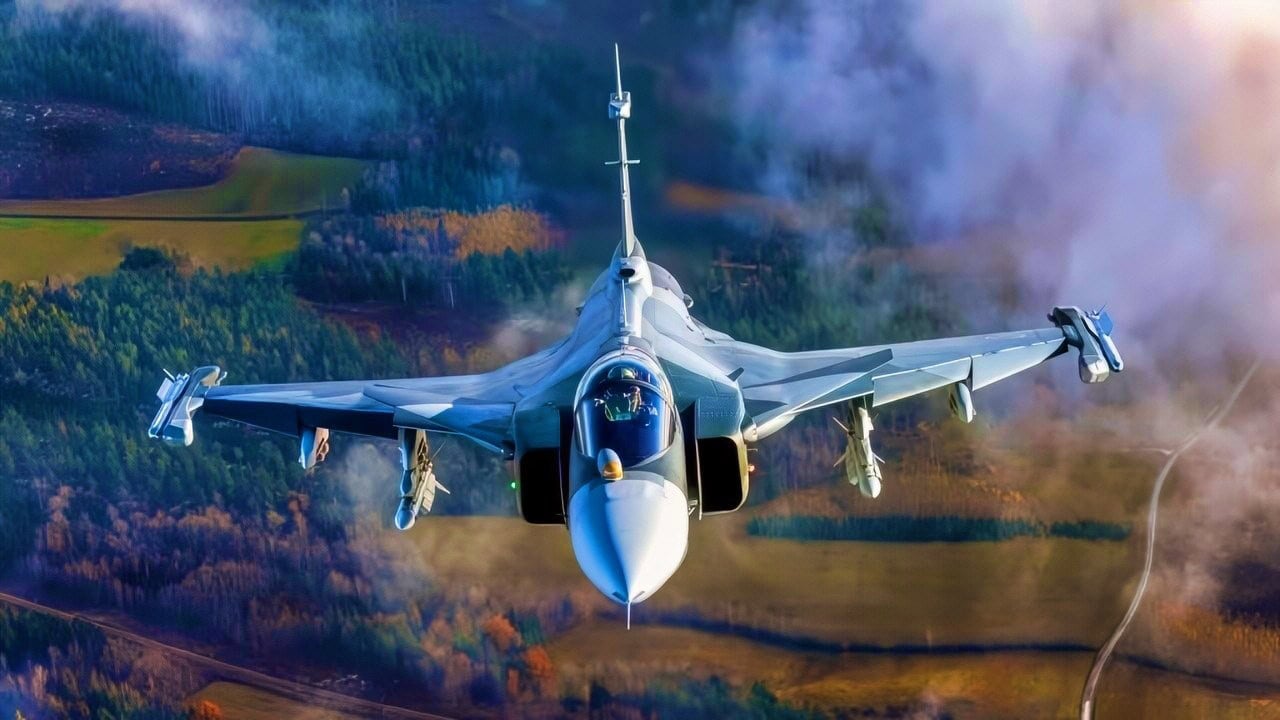
The Gripen E
The original Canadian competition ran the Gripen E, built by Saab, a Swedish firm, against the F-35A. And while the F-35A outperformed the Gripen E in every category of evaluation — sometimes by significant margins — that fighter is being reassessed.
One potential advantage of the Gripen E, on paper at least, is its cost, both to operate and to purchase.
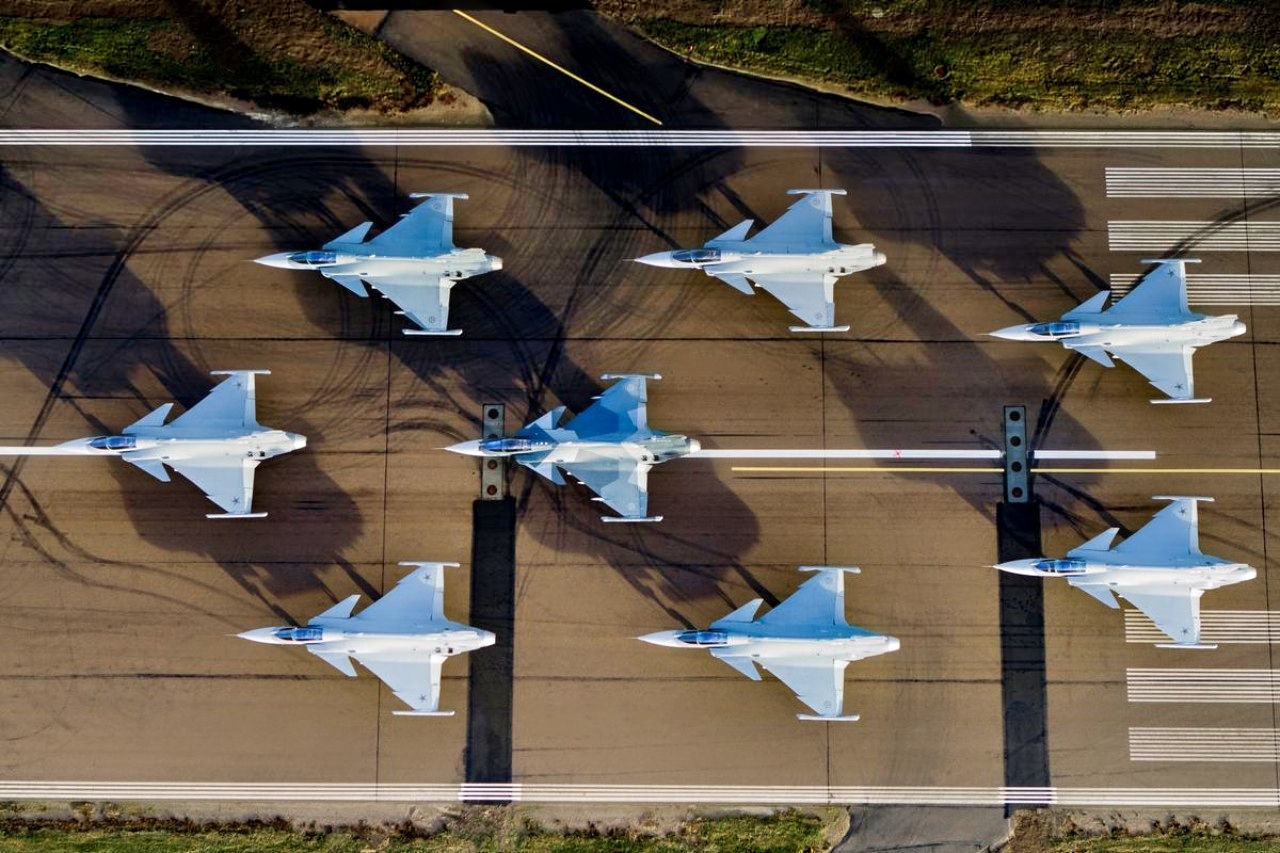
JAS 39 Gripen E. Image Credit: Creative Commons.
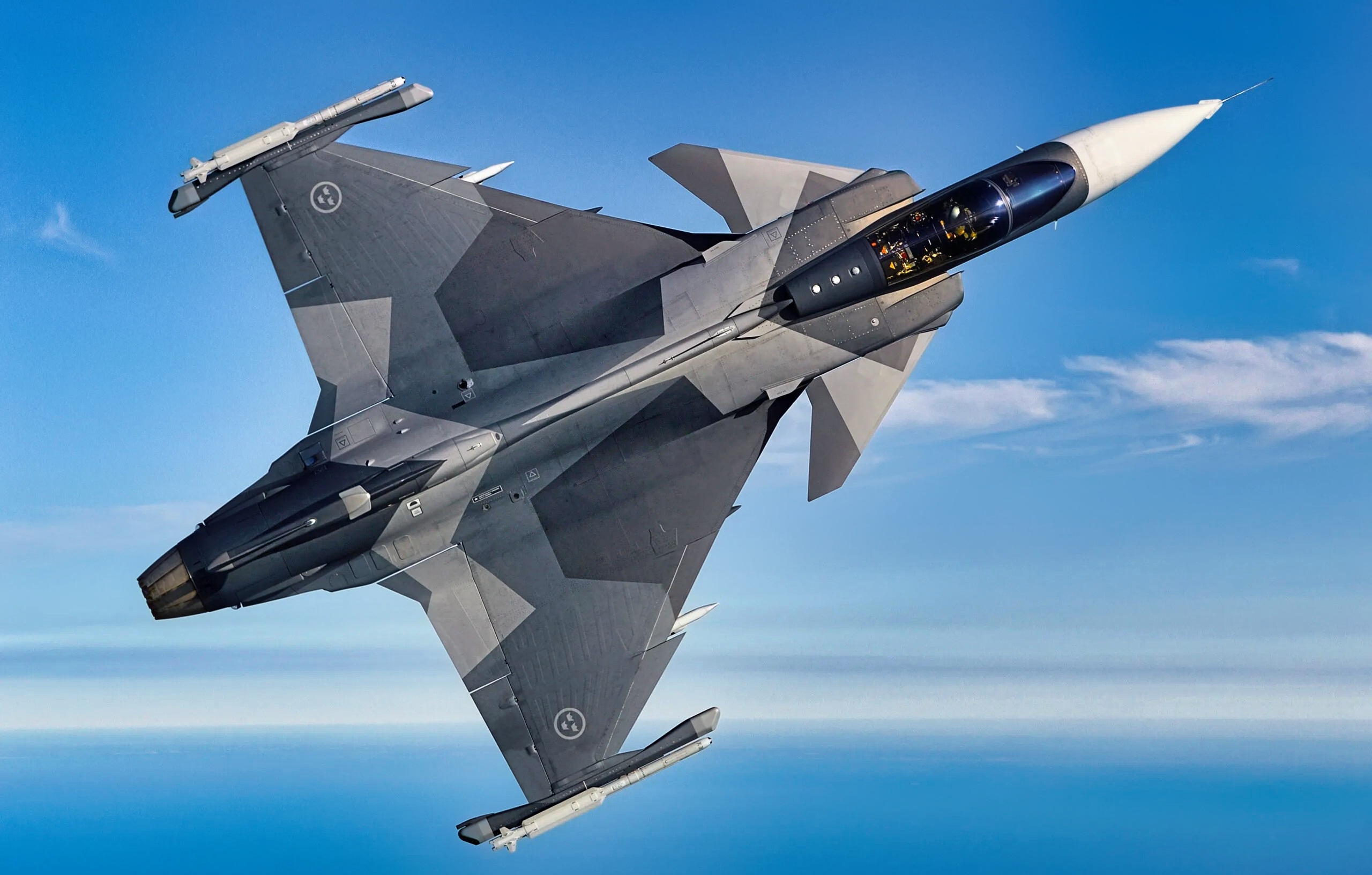
JAS 39 Gripen E Fighter. Image Credit: Saab.
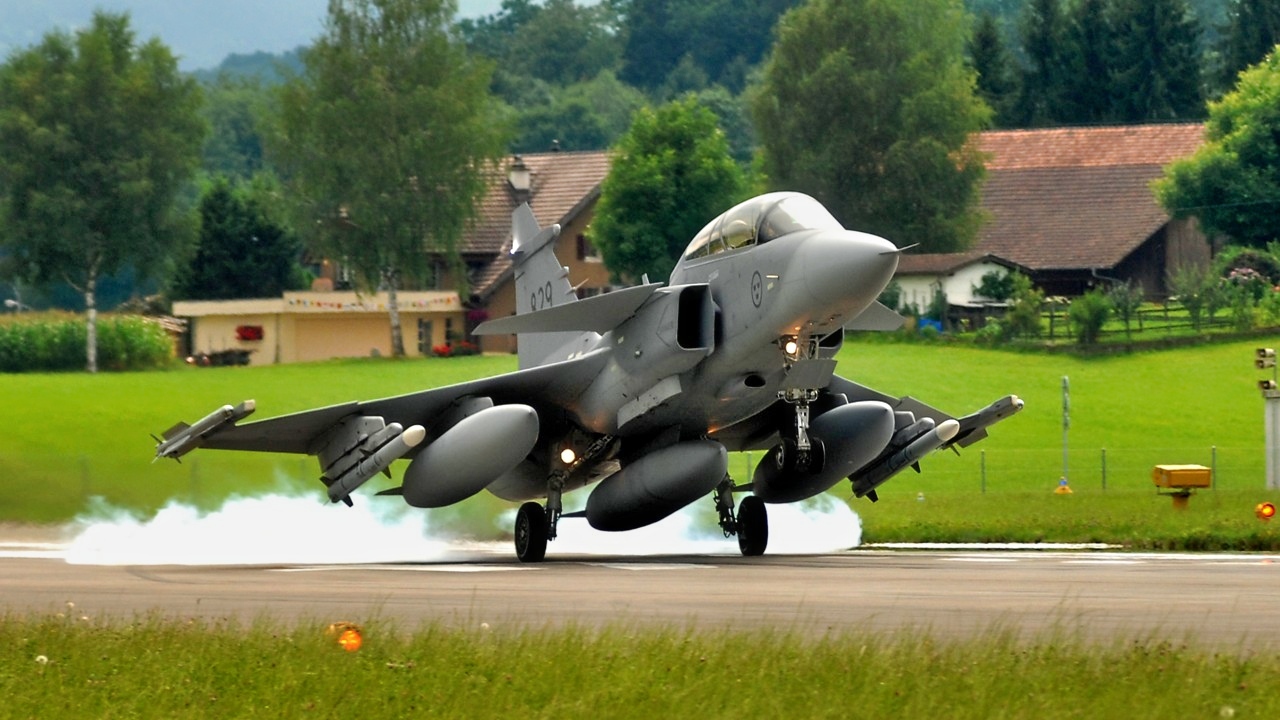
JAS 39 Gripen Fighter. Image Credit: Creative Commons.
Designed during the Cold War, the Swedish fighter was built to operate from remote, austere airfields dispersed across Sweden.
Simplicity was built into the Gripen E’s design, a nod to the Swedish military’s reliance on largely conscripted manpower.
But the Gripen E is very much a Cold War-era fighter, with a design based entirely on fourth-generation fighter technology.
It lacks any of the radar-mitigating stealth features that proponents of the F-35 platform laud, a factor that the Canadians acknowledged when they ran the two fighters head-to-head.
The platform also has limited ability to expand its capabilities.
While it could conceivably perform domestic defense and Arctic patrols, Saab’s fighter would be unlikely to survive in a high-end fight against a rival with fifth-generation fighters.
The idea of operating a fleet of Gripen E fighters alongside the F-35 platform — in essence, a mixed fleet of warplanes — has been suggested as a solution to give Ottawa a measure of independence from the American F-35 program.
But it also comes with risks too.
Operating a pair of fighters would complicate warplane sustainment, and separate training would have to be established for logistics, spare parts, pilot qualification and training, maintenance, and support infrastructure.
But while this question is not yet settled, Ottawa is peering into the future too, and already looking for the successor to the Gripen E and F-35: a sixth-generation fighter that will emerge from the Global Combat Air Programme.
Canada and the Global Combat Air Programme
Late last month, Canada joined the Global Combat Air Programme. This trilateral grouping is designing and building a sixth-generation fighter and includes the British, Italians, and Japanese.
Canada, however, joined the initiative as an Observer Nation. This appellation grants Ottawa insight into the program’s plan and provides the country with “enhanced insight into GCAP and an opportunity to deepen its understanding of the Programme’s governance, capabilities and industrial framework, as well as the related security requirements and wider partnering opportunities.” Crucially, however, Canada is under no financial commitment to the GCAP program, and will not be required to pay anything unless the country chooses to deepen its GCAP involvement.
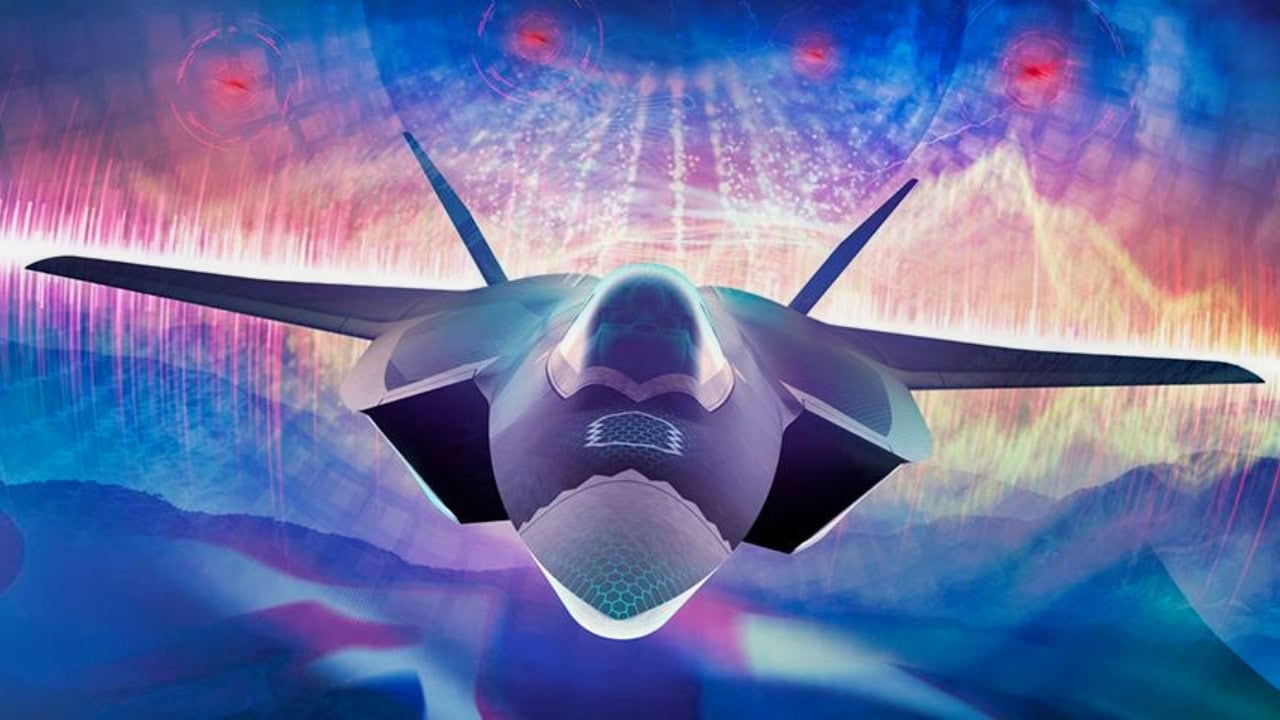
GCAP Fighter. Industry Handout Image.
“This is an important moment for Canada as an observer, if and when there is a decision on that front,” Defence Minister David McGuinty explained to attendant journalists during the Farnborough International Airshow, an annual aerospace show.
But, Minister McGuinty added, the issue of F-35 stealth fighter jets and the Global Air Combat Programme should be considered “separate” initiatives without bearing on each other.
“There are many initiatives in which we are participating in research and development, which is a smart play for our future,” the defence minister added.
Flying into Future Skies
The F-35 is, for all intents and purposes, the more capable fighter — but defense procurement decisions must also contend with political factors that do not necessarily align with questions of capabilities and performance.
What decision Ottawa ultimately makes on the F-35, the Gripen E, and the Global Combat Air Programme remain to be seen.
About the Author: Caleb Larson
Caleb Larson is an American multiformat journalist based in Berlin, Germany. His work covers the intersection of conflict and society, focusing on American foreign policy and European security. He has reported from Germany, Russia, and the United States. Most recently, he covered the war in Ukraine, reporting extensively on the war’s shifting battle lines from Donbas and writing on the war’s civilian and humanitarian toll. Previously, he worked as a Defense Reporter for POLITICO Europe. You can follow his latest work on X.