
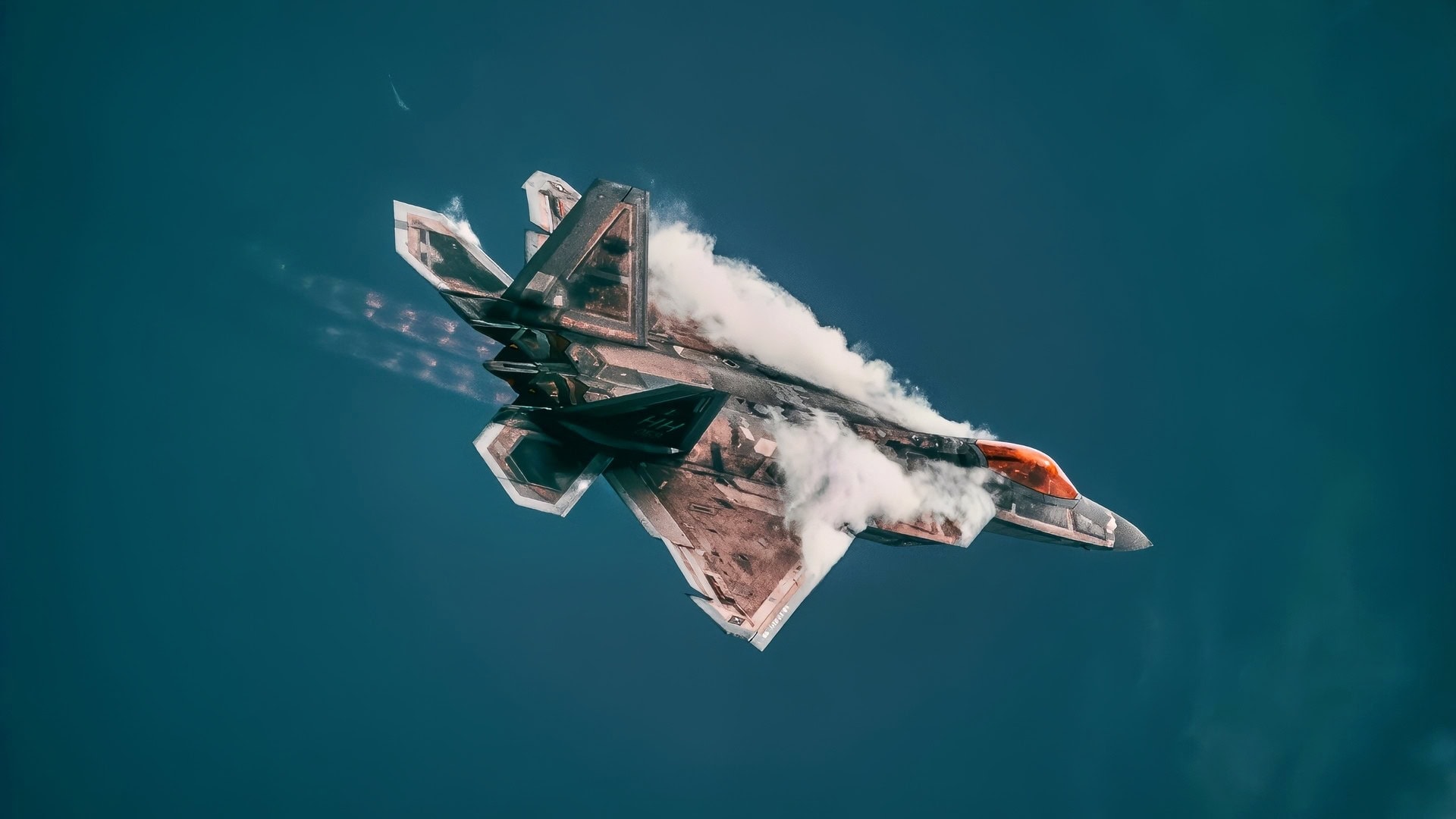
Some of the most important aircraft in the U.S. Air Force’s fleet recently practiced a key procedure.
F-22 Raptor stealth fighter jets paired with MC-130J Commando II special operations aircraft to practice “hot pit” refueling in Japan.
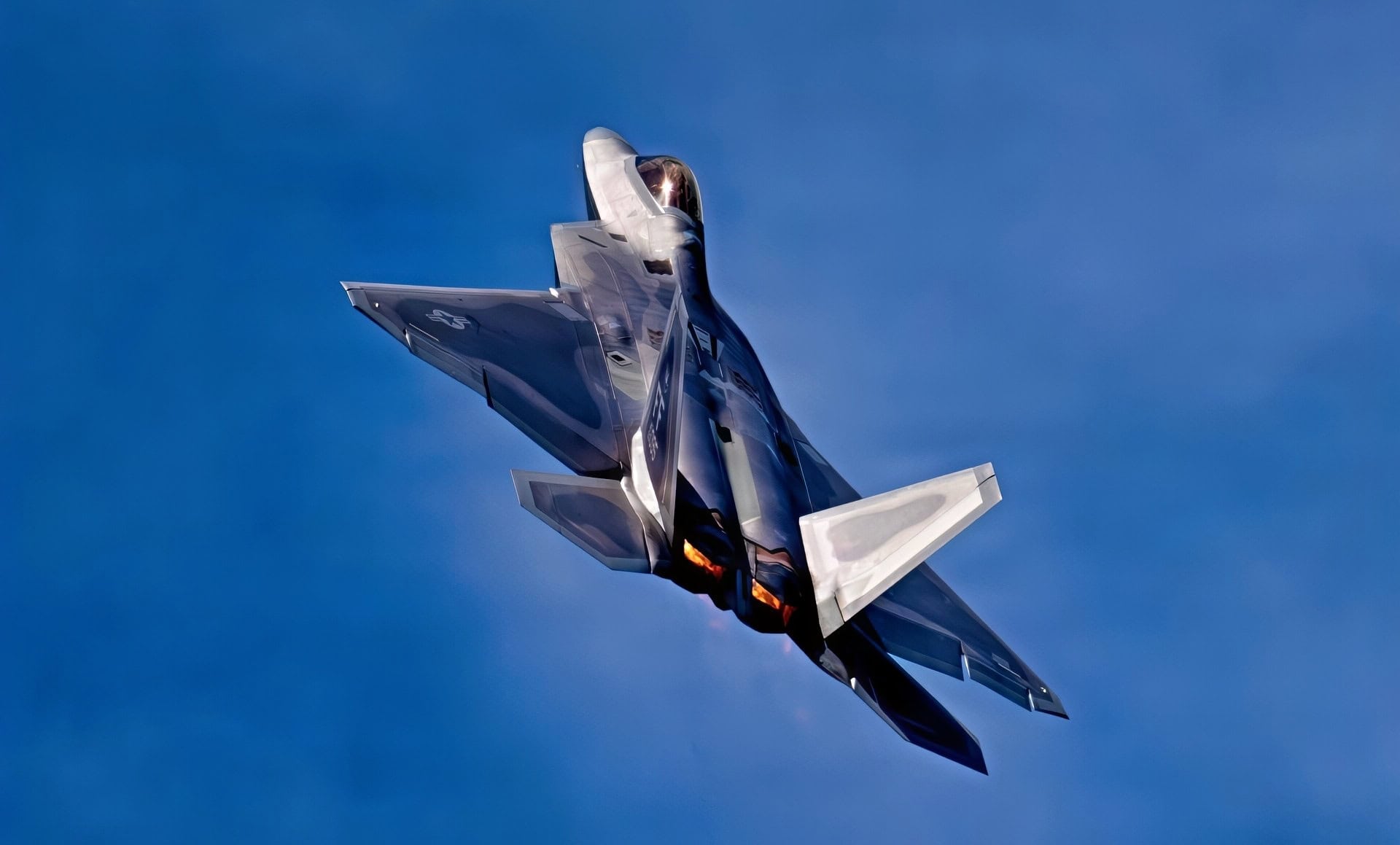
U.S. Air Force Capt. Nick “Laz” Le Tourneau, F-22 Raptor Aerial Demonstration Team pilot and commander, performs at the Airpower Over Hampton Roads Airshow 2025, Joint Base Langley-Eustis, VA, April 27th, 2025. The F-22 Raptor Aerial Demonstration showcases the unmatched maneuverability of the airframe by executing a series of combat maneuvers to inspire Americans and their allies, and deter foreign adversaries. (U.S. Air Force video by Staff Sgt. Michael Bowman)
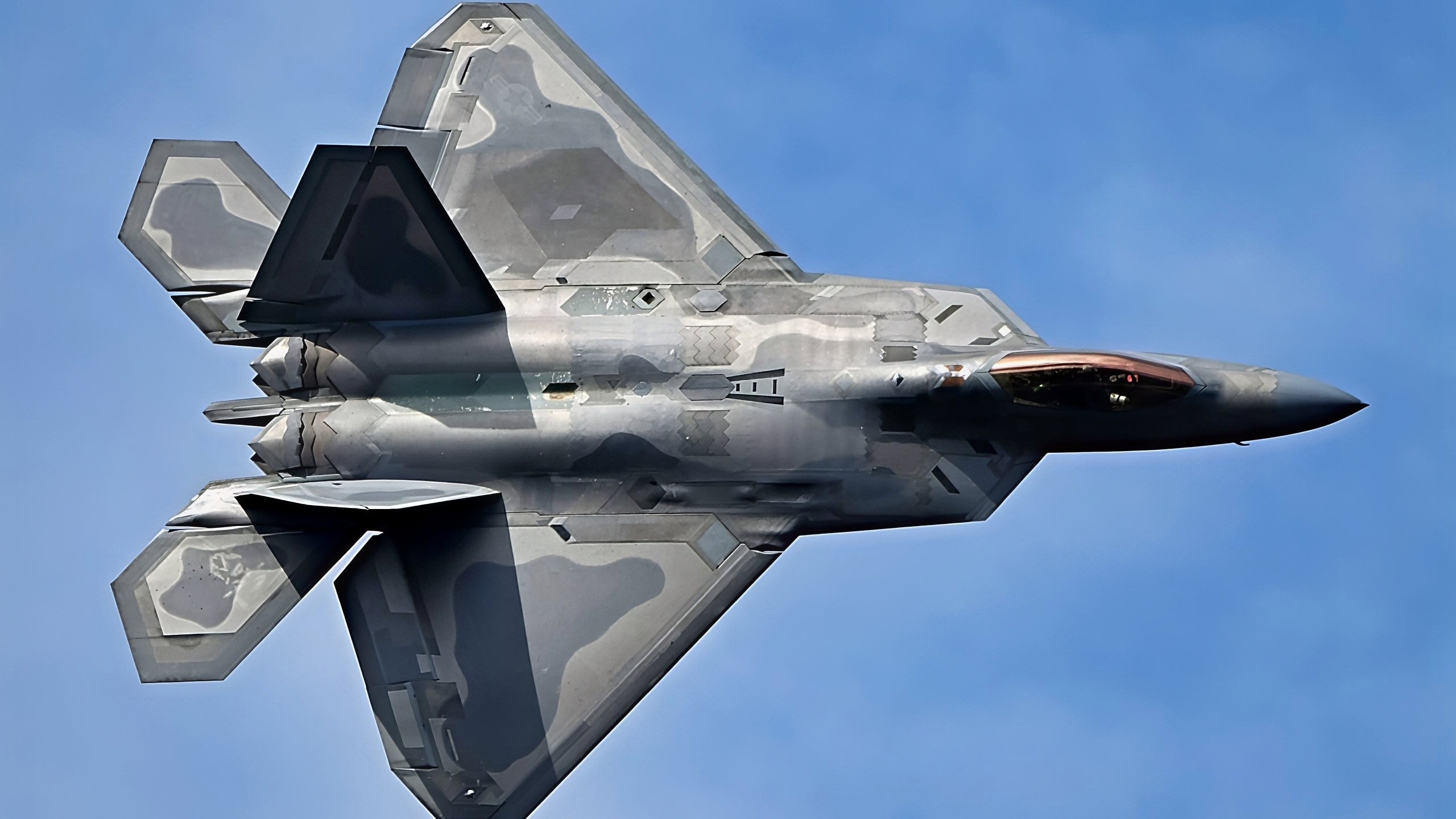
U.S. Air Force Maj. Josh ‘Cabo’ Gunderson, F-22 Raptor Demonstration Team pilot, flies during the Lockheed Martin Sace and Air Show in Sanford, Florida, Nov. 1, 2020. The F-22 possesses a sophisticated sensor suite allowing the pilot to track, identify, shoot and kill air-to-air threats before being detected. (U.S. Air Force photo by Staff Sgt. Sergio A. Gamboa)
The hot-pit refueling took place during a recent exercise at Kadena Air Force Base in Japan.
Forward Arming and Refueling Point (FARP) operations – under which hot-pit refueling falls – enable aircraft to rapidly refuel and rearm in forward operating bases. In this case, fuel was transferred from the MC-130J to an F-22.
“Hot-pit refueling allows us to fuel an aircraft while its engines are still running,” Air Force Senior Airman Cameron Brown, 18th Logistics Readiness Squadron fuels distribution operator, said in a service press release.
“As soon as the aircraft lands, we refuel it so it can quickly return to its mission. It’s all about reducing turnaround time and getting the aircraft back in the air safely and efficiently,” he added.
F-22 Meets Formula One
Similar to Formula One’s pit stops, when the thundering cars enter the pits for a change of tires and refueling, hot-pit stops allow fighter jets and other aircraft to stop, usually at a forward operating base, for much-needed fuel and ammunition. During intense and sustained operations, hot-pit operations allow aircraft to remain active over the battlefield for longer periods, providing ground troops with key support.
“Fuel is the lifeblood of these aircraft,” Air Force Staff Sergeant Alexis Aragon, 18th LRS fuels distribution supervisor, added. “Without fuel, the mission cannot get done. Our priority is to fuel these aircraft as safely and efficiently as possible so they’re ready to get back into the fight and complete the mission.”
For example, during the recent operation to save the F-15 weapon systems officer shot down over Iran, the special operations task force involved established a forward operations base inside enemy territory to refuel and rearm aircraft supporting the combat search-and-rescue mission. Otherwise, supporting aircraft would have to fly scores if not hundreds of miles, increasing the risk of additional aircraft being shot down and worsening the situation.
The MC-130J Commando II, which paired with the F-22, is the most advanced special operations variant of the venerable C-130 Hercules. It is designed to resupply and support special operations and conventional troops, including by conducting FARP operations behind enemy lines.
The F-22 Raptor is a fifth-generation air superiority stealth fighter jet.
Entering service in 2005, the F-22 is the first operational stealth fighter jet in the world. As an air superiority aircraft, the F-22 has a simple mission: find and destroy any adversary aircraft, thus opening the way for other friendly aircraft to attack targets on the ground.
The F-22 Raptor Cut
Initially, the Air Force planned to procure as many as 750 F-22s to ensure American air superiority against any adversary for decades to come. However, not long after the F-22 made its operational debut, the Air Force and Congress decided to discontinue the program, opting instead to divert F-22 funds and production resources toward the emerging F-35 Lightning II stealth fighter jet.
As a result, Lockheed Martin only delivered 186 F-22s to the Air Force. A much smaller number remains operational today. Nonetheless, the F-22 will remain operational several years since Congress has greenlighted funding for upgrades.
MORE – The M10 Booker Light Tank Is New But Already in a Museum
About the Author:
Stavros Atlamazoglou is a seasoned defense journalist specializing in special operations and a Hellenic Army veteran (national service with the 575th Marine Battalion and Army HQ). He holds a BA from the Johns Hopkins University and an MA from the Johns Hopkins’ School of Advanced International Studies (SAIS). His work has been featured in Business Insider, Sandboxx, and SOFREP. This first appeared in Sandboxx.