
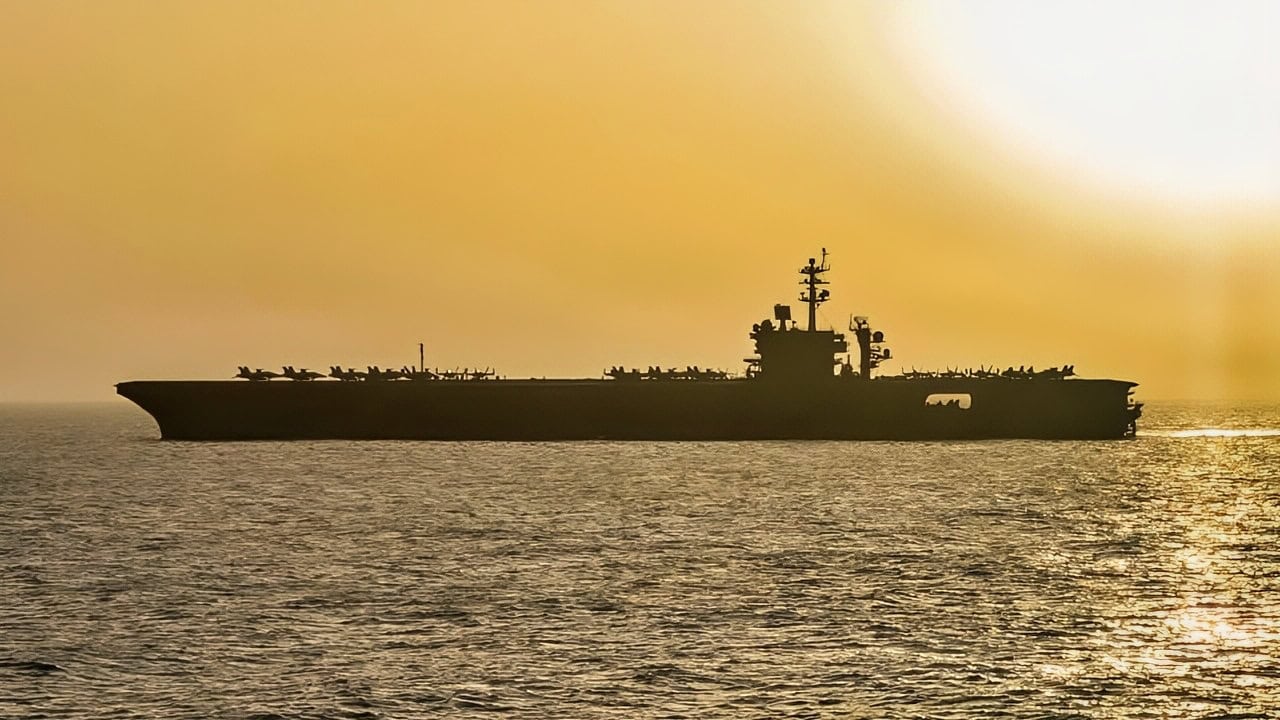
Summary and Key Points: In the spring of 2026, the U.S. Navy suffered four warship casualties in six weeks, most seriously, a fire aboard its newest carrier, the USS Gerald R. Ford, which sent nearly 200 sailors for smoke-inhalation treatment and forced a diversion for repairs. Fires followed aboard the carrier USS Dwight D. Eisenhower and the destroyer USS Zumwalt, both in shipyards, while the destroyer USS Higgins briefly lost power in the Pacific. The cluster continues a documented pattern. A 2023 Government Accountability Office review found the Navy sustained more than $4 billion in fire damage aboard ships in maintenance from 2008 to 2022, and identified maintenance periods, when firefighting systems are down, and hot work throws sparks, as the core vulnerability. The deeper failure, the GAO found, is that the Navy repeatedly identifies lessons from each fire but fails to institutionalize them, allowing the losses to recur.
The U.S. Navy’s Great Fear Is Fire
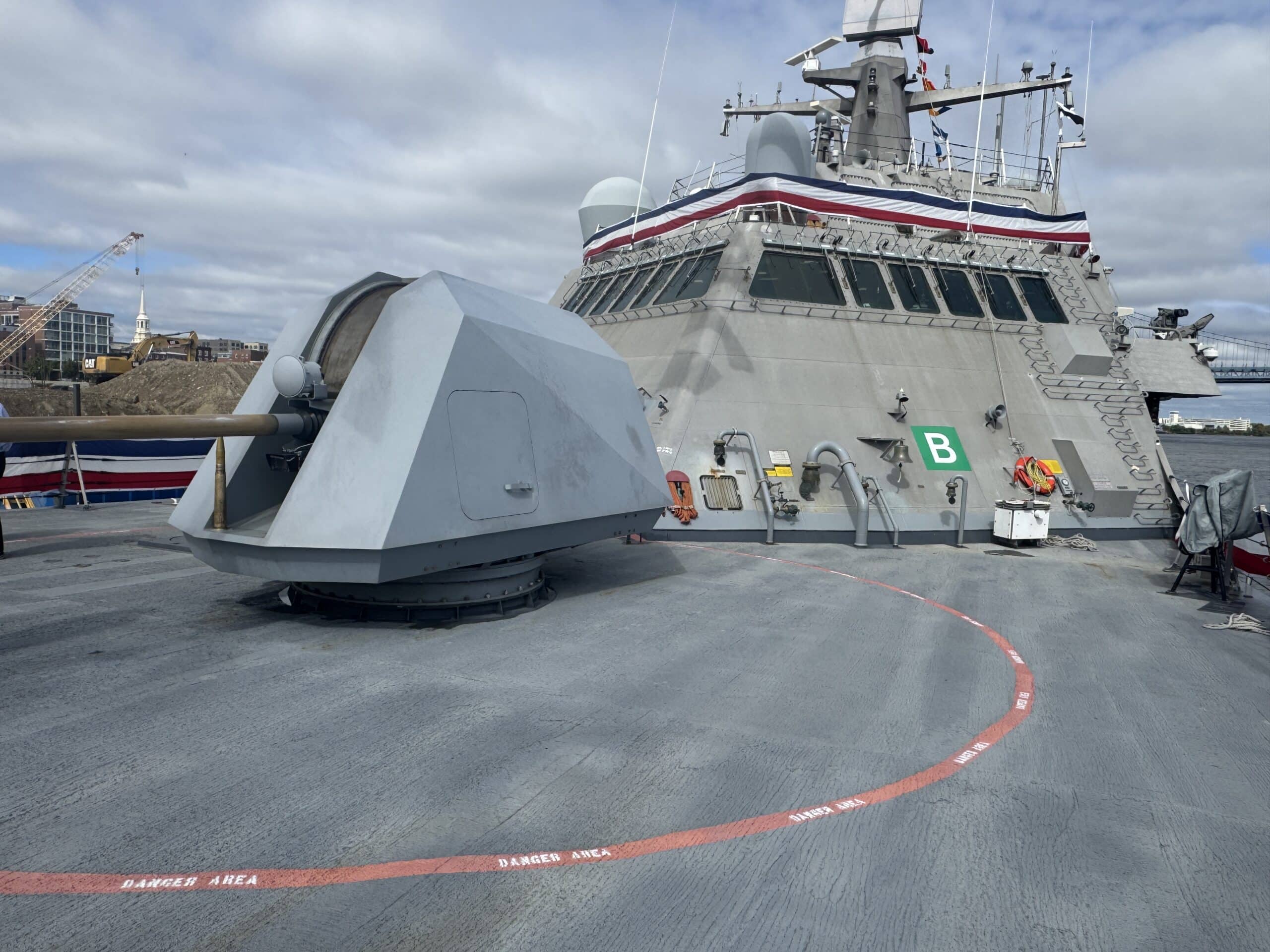
USS Cooperstown during Fleet Week 2025. 19FortyFive.com Photo.
The question worth asking is not why warships catch fire. Ships are floating industrial plants packed with fuel, high-voltage electrical systems, and munitions, and fire has been the sailor’s oldest enemy for as long as navies have existed. The real question is why the United States Navy, the most powerful and best-resourced naval force in history, keeps having the same fire over and over, and why the lessons written in blood and steel after one disaster so rarely prevent the next. The answer is uncomfortable and documented.
A Six-Week Cluster
The spring of 2026 delivered a run of casualties that alarmed the fleet. The most serious struck the Navy’s newest and most expensive warship. On March 12, a fire broke out in the laundry area of the $13 billion USS Gerald R. Ford while the carrier was operating in the Red Sea during Operation Epic Fury, the campaign against Iran. The blaze burned for hours and spread through the ventilation system into berthing areas, and nearly 200 sailors were treated for smoke inhalation, with at least one medically evacuated and hundreds displaced from their bunks. The carrier diverted to Crete for repairs, and analysts have estimated it could ultimately require as much as 12 to 14 months in the yard to address the fire damage along with its deferred maintenance backlog.
The others followed in quick succession. On April 14, the Nimitz-class carrier USS Dwight D. Eisenhower suffered a fire while moored at Norfolk Naval Shipyard, where it had been undergoing a Planned Incremental Availability since January 2025. The Navy confirmed the small blaze was quickly contained, with several sailors treated and returned to duty. Five days later, on April 19, a fire broke out aboard the guided-missile destroyer USS Zumwalt while it was pierside at a shipyard in Pascagoula, Mississippi, undergoing its conversion to carry hypersonic missiles, injuring three sailors. Then, on April 28, the destroyer USS Higgins, forward-deployed to Japan, lost power and propulsion in the Indo-Pacific to an electrical distribution failure, briefly leaving the ship immobile before power was restored. Four ships, four casualties, six weeks.
The Pattern Is Older Than the Cluster
The 2026 cluster is dramatic, but it is a continuation of a problem the Navy has been documenting for years without solving. In 2023, the Government Accountability Office examined fires aboard ships undergoing maintenance and reported a staggering figure: the Navy sustained more than $4 billion in fire damage aboard ships in maintenance from May 2008 through December 2022, and lost two ships to fire during that span. The GAO identified the core vulnerability plainly, noting that ships undergoing maintenance face a high risk of fire because repairs involve sparks and welding in confined spaces packed with flammable materials.
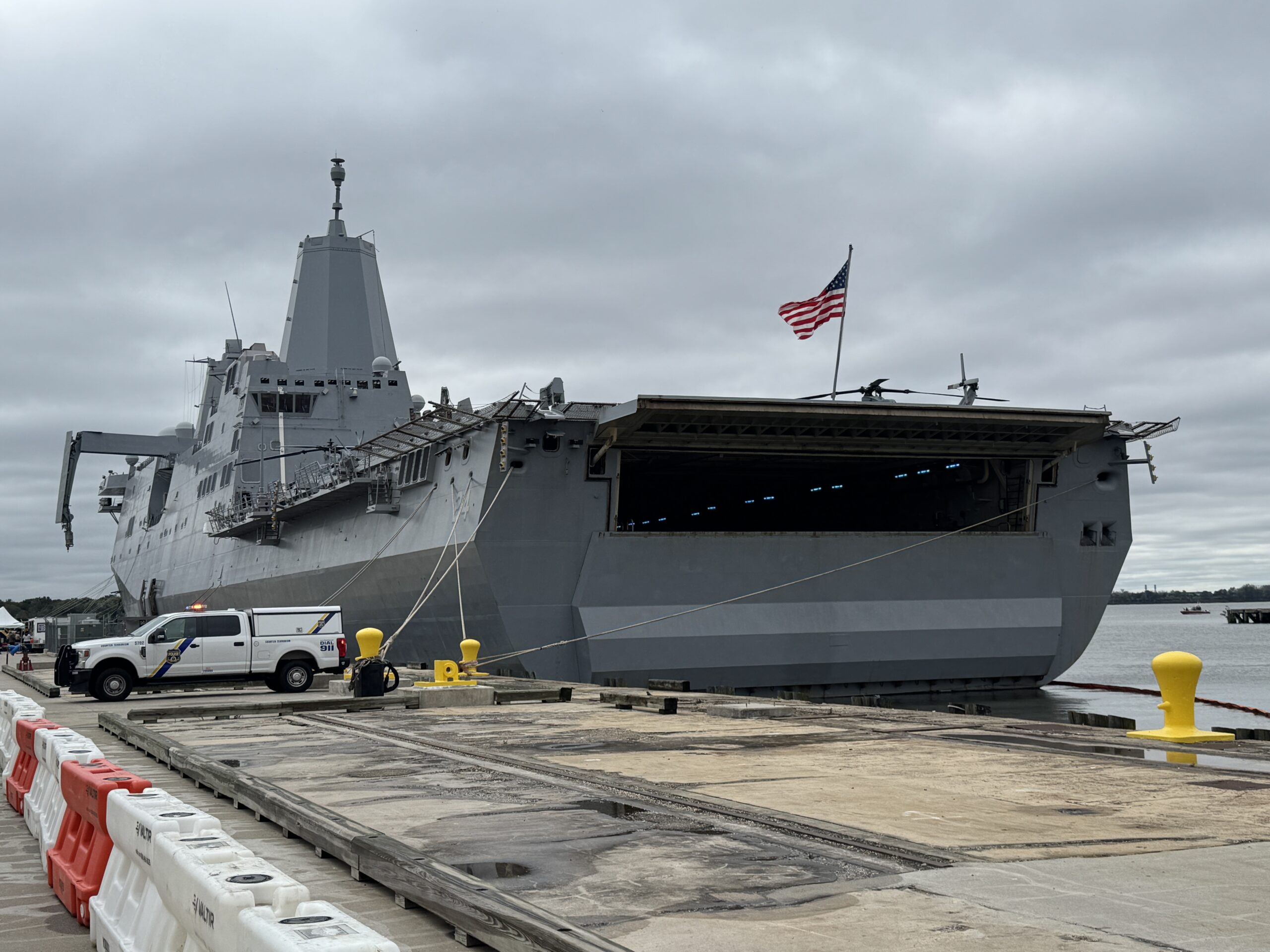
USS Arlington at 2025 Fleet Week. Image Credit: 19FortyFive.com
That is the physical heart of the problem. A warship in maintenance availability is a fundamentally different and more dangerous place than one at sea. Watertight integrity and fire boundaries are breached to allow work; the ship’s own firefighting systems are frequently shut down; hatches are left open; combustible material accumulates; and hot work throws sparks in spaces designed to contain none. The crew, meanwhile, is often reduced and distracted by the surrounding industrial chaos. Nearly every catastrophic Navy fire of the past 15 years happened not in combat but during maintenance, and the pattern is so consistent that it can no longer be treated as a coincidence.
The Navy Wrote the Lessons Down and Didn’t Follow Them
Here is where the story turns from misfortune to institutional failure. In 2012, an arsonist set fire to the attack submarine USS Miami while it was in a shipyard, and the Navy scrapped the vessel. In response, the service implemented a set of special fire-safety procedures designed to prevent a recurrence. Eight years later, in July 2020, the amphibious assault ship USS Bonhomme Richard caught fire during a maintenance period in San Diego and burned for days until it was declared a total loss, a warship worth well over a billion dollars destroyed at the pier.
The investigation into that disaster, reviewed by USNI News, reached a conclusion that should have shaken the Navy to its core. Although arson started the fire, the ship was lost because the crew could not extinguish it. On the morning of the blaze, the vast majority of the ship’s fire stations were in inactive status, the crew did not know how to operate the main firefighting foam system, and the alarm was not sounded for roughly ten minutes. And critically, the investigation found that the very reforms adopted after the Miami fire had not been followed. The Navy had correctly identified the lessons in 2012 and then failed to implement them, so the same failures recurred in 2020. A Navy Times account of the investigation described a cascade of “repeated failures” at every level. The response was so disorganized that, as Task & Purpose reported, when commanders sought to establish a firefighting chain of command, one fleet staff replied that the ship was “in maintenance, it’s not our problem.”
This is precisely what the GAO flagged as the deepest issue. The Navy, it found, has no consistent process for collecting, analyzing, and sharing the lessons learned from fires, and as a result, it loses those lessons over time and repeats mistakes. The service investigates each fire thoroughly, produces detailed findings, and then fails to institutionalize them, so the next crew, at the next shipyard, relearns the same lesson at the same cost. NAVSEA itself has acknowledged that shipboard fire is a constant threat that demands perpetual vigilance, yet the mechanism for translating that vigilance into fleet-wide practice remains broken.
Why It Keeps Happening
Layered on top of the maintenance-phase danger and the failure to learn are two aggravating pressures. The first is operational tempo. The Ford fire happened at the tail end of the longest American carrier deployment since Vietnam, with a crew strained by months at sea and maintenance deferred because the Navy’s carrier shortage left no replacement available. Exhausted crews and postponed upkeep both raise fire risk. The second is complexity. The Navy’s newest ships, the Ford and the Zumwalt, pack enormous electrical loads, dense automation, and novel systems into their hulls, and that sophistication can increase fire vulnerability rather than reduce it, while smaller crews have fewer hands to fight a blaze.
The 2026 cluster sits at the intersection of all of it: dangerous maintenance conditions, an institution that does not reliably learn, crews worn thin by overuse, and warships more complex than any before them.
The Honest Counterweight
None of this means the Navy is uniquely incompetent or that every fire is preventable. Most of the 2026 fires were small and were contained quickly by well-trained crews, exactly as the system is supposed to work, and the Eisenhower and Zumwalt blazes caused limited damage and no lasting injuries.
Fire is an inherent hazard of operating warships; other navies suffer it too, and the sheer size of the U.S. fleet means that even a low per-ship rate produces headlines.
The Navy has also made genuine reforms after each disaster, including compliance checks and revised training. The problem is not that the Navy does nothing. The service keeps generating the right lessons but fails to make them stick across the fleet and over time.
That is the thread connecting Miami in 2012, Bonhomme Richard in 2020, and the 2026 cluster.
The fires have different causes, arson in some cases, electrical faults or hot work in others, but the underlying vulnerability is the same, and so is the institutional failure to close the gap between knowing and doing.
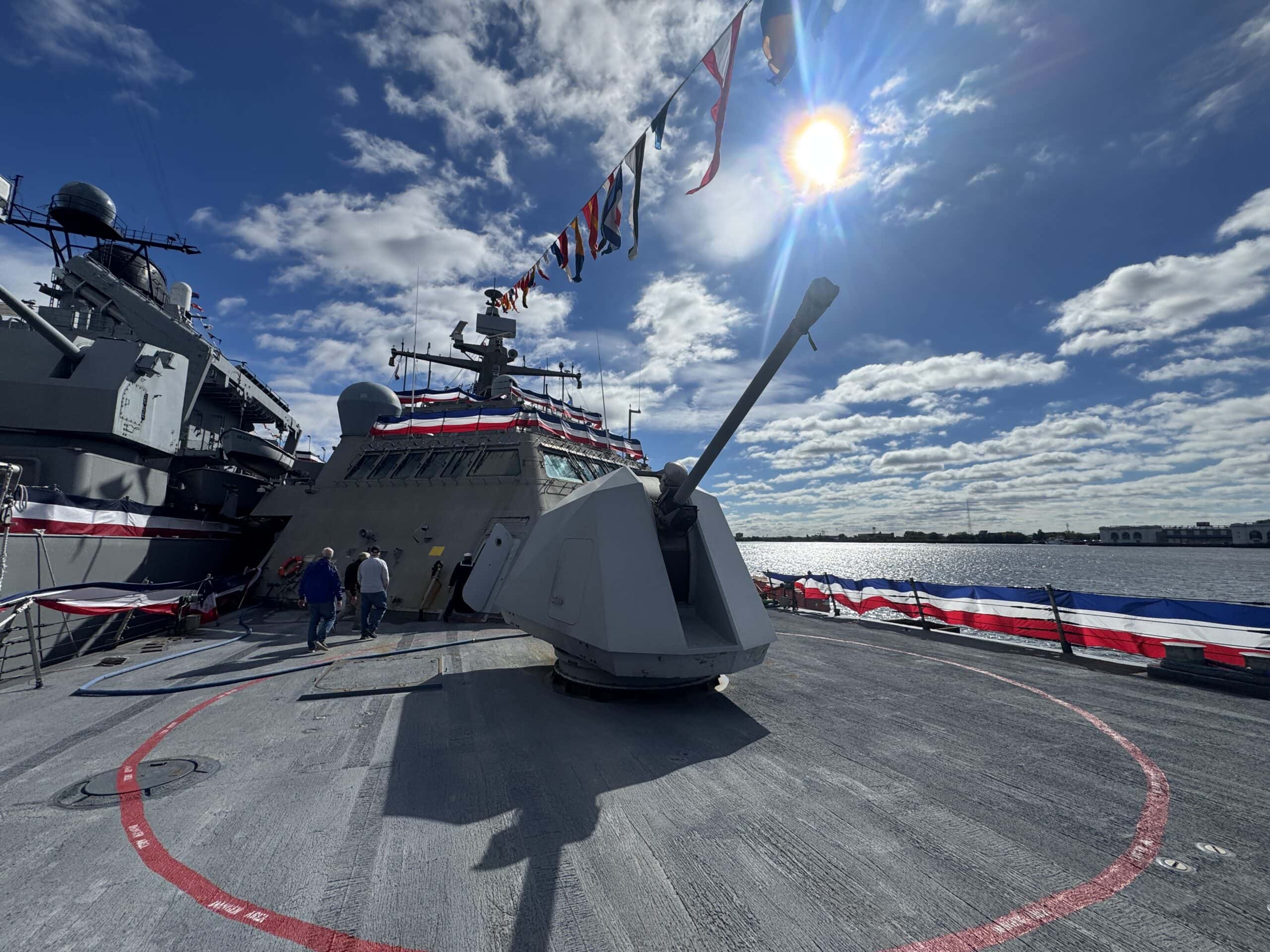
USS Billings. Fleet Week 2025 Image from 19FortyFive Ship Tour.
Until the Navy builds a durable system to capture what each fire teaches and enforce it everywhere, the next cluster is only a matter of time, and the service will keep paying for the same lesson in dollars, in ships, and in the safety of the sailors sent to fight the flames.
About the Author: Harry J. Kazianis
Harry J. Kazianis (@Grecianformula) is the former Senior Director of National Security Affairs at the Center for the National Interest (CFTNI), a foreign policy think tank founded by Richard Nixon based in Washington, DC. Harry has over a decade of experience in think tanks and national security publishing. His ideas have been published in the NY Times, The Washington Post, The Wall Street Journal, CNN, and many other outlets. He has held positions at CSIS, the Heritage Foundation, the University of Nottingham, and several other institutions related to national security research and studies. He is the former Executive Editor of the National Interest and the Diplomat. He holds a Master’s degree focusing on international affairs from Harvard University. Harry Is Editor-In-Chief of 19FortyFive.

