
Could the USS Gerald R. Ford Be Sidelined for A Year Or More?
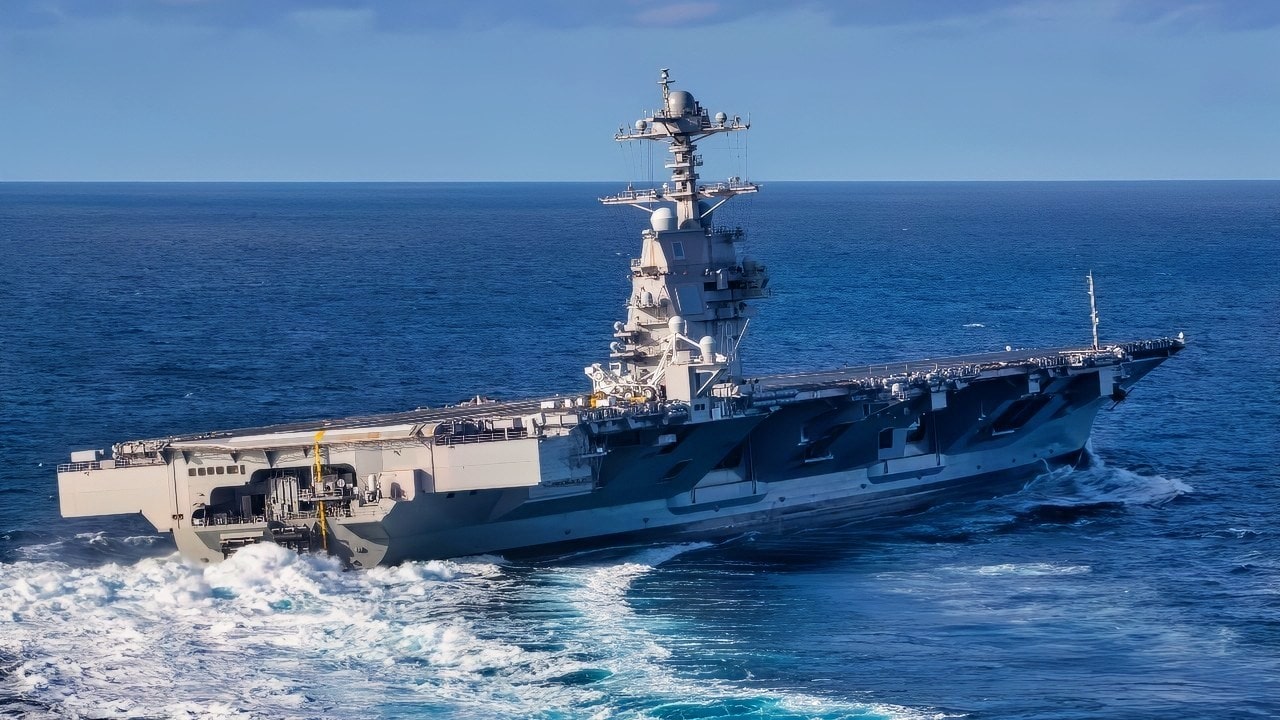
The U.S. Navy’s newest aircraft carrier, USS Gerald R. Ford (CVN-78), has been pulled from active operations in the Red Sea and sent to Naval Support Activity Souda Bay in Crete following a March 12 onboard fire and mounting system strain after months of sustained combat operations.
The fire, which broke out in the ship’s main laundry area, injured sailors, damaged living spaces, and required hours of firefighting and recovery efforts.
After nearly nine months at sea – one of the longest and most demanding deployments in recent Navy history – there is growing concern that the Ford could now enter an extended maintenance period.
Between fire damage and deferred maintenance, on top of the long deployment, there is a real risk that the carrier could be out of action for an extended period of time – potentially as long as 12 to 14 months.
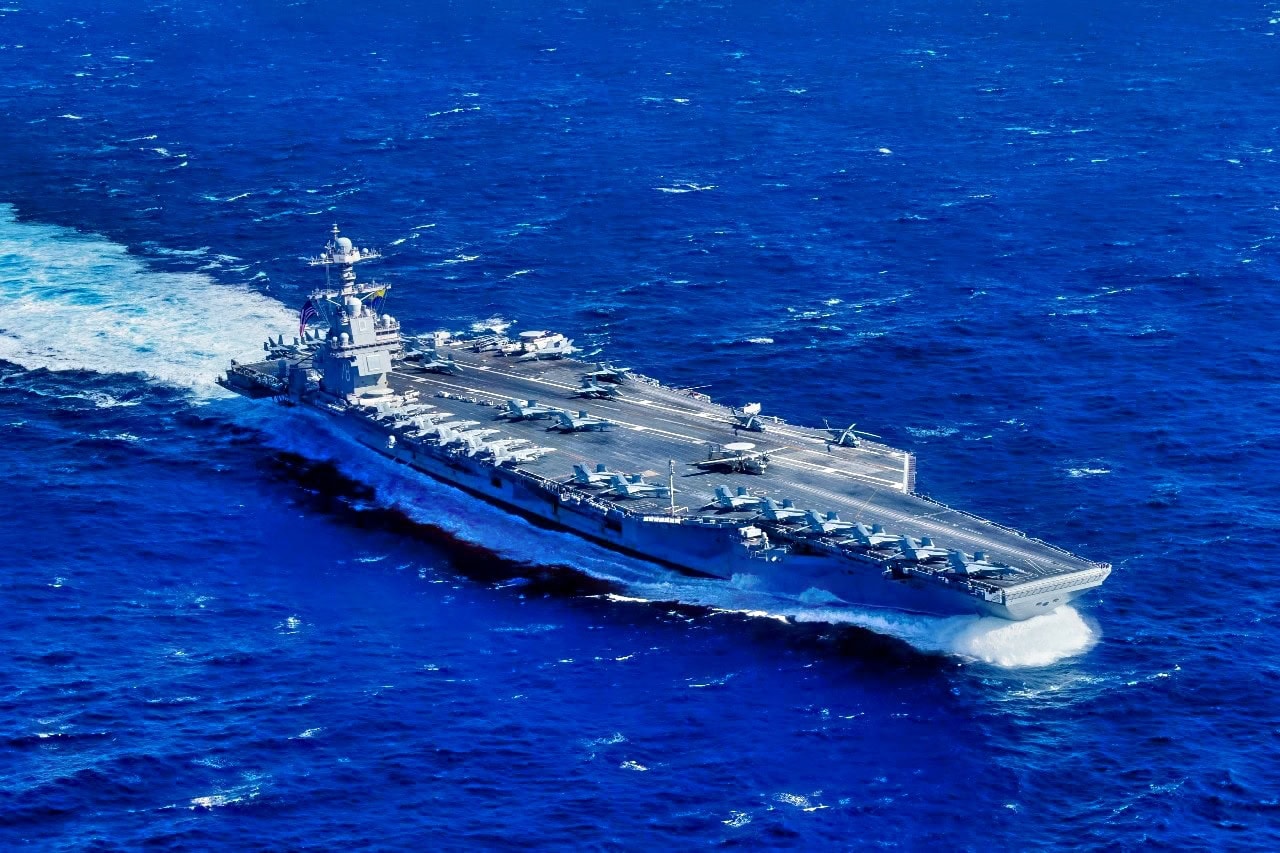
The world’s largest aircraft carrier, USS Gerald R. Ford (CVN 78), sails in formation with the Arleigh Burke-class guided missile destroyers USS Winston Churchill (DDG 81), USS Mitscher (DDG 57), USS Mahan (DDG 72), USS Bainbridge (DDG 96), and USS Forrest Sherman (DDG 98) in the Atlantic Ocean, Nov. 12, 2024. The Gerald R. Ford Carrier Strike Group is underway in the Atlantic Ocean completing Group Sail. Group Sail is the first at-sea integrated phase training event during a routine deployment training cycle. It is designed to challenge the Gerald R. Ford CSG’s ability to use the capabilities of the USS Gerald R. Ford (CVN 78), USS Winston S. Churchill (DDG 81), Carrier Air Wing (CVW) 8, Destroyer Squadron (DESRON) 2, and embarked Information Warfare team as a cohesive Strike Group to meet Navy and Joint Warfighting requirements that increases warfighting capability and tactical proficiency across all domains. (U.S. Navy photo by Mass Communication Specialist 2nd Class Maxwell Orlosky)
At a time when U.S. carrier availability is already under pressure, the potential loss of the Navy’s most advanced platform could prove to be a significant problem.
USS Gerald R. Ford and Its Role
USS Gerald R. Ford is the lead ship of the Navy’s Ford-class aircraft carriers, a next-generation design intended to replace the Nimitz-class and define the future of U.S. naval aviation.
Commissioned in 2017, the roughly 100,000-ton nuclear-powered carrier is designed to carry more than 75 aircraft and over 5,000 personnel.
The ship incorporates major technological changes, including the Electromagnetic Aircraft Launch System (EMALS) and Advanced Arresting Gear (AAG), both designed to increase sortie generation rates and reduce manpower requirements compared to legacy systems.
These innovations are central to the Navy’s long-term carrier strategy but have also introduced complexity and reliability challenges since the ship entered service.
Any extended downtime for the Ford is far from ideal, carrying implications beyond a single hull. This is, after all, the first vessel of its platform, and any extended downtime might affect confidence in the class as a whole.
A Demanding Deployment in the Iran Conflict
The Ford has had a demanding deployment so far. The carrier has been active for roughly nine months, operating first in the Caribbean before being redirected to the Middle East, where it has supported sustained U.S. operations against Iran.
Since February 28, U.S. forces have conducted more than 7,000 strikes as part of the campaign, with the Ford playing a central role in launching air operations and maintaining a continuous presence in the region.
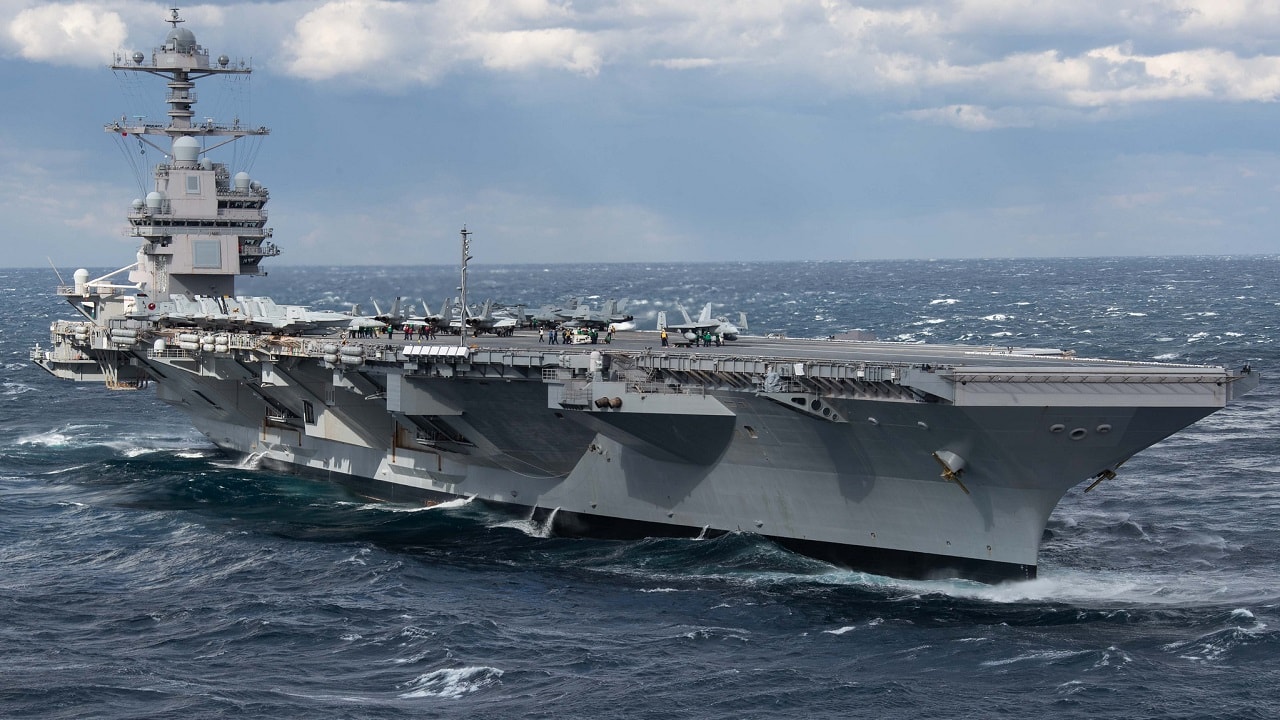
The aircraft carrier USS Gerald R. Ford (CVN 78) transits the Atlantic Ocean, March 26, 2022. Gerald R. Ford is underway in the Atlantic Ocean conducting flight deck certification and air wing carrier qualifications during the ship’s tailored basic phase before operational deployment.
There has been no regular deployment, either. The ship has been required to sustain high sortie generation and integrate with other U.S. air assets, and there has been continuous operational pressure placed on the platform in a clearly high-threat environment. The deployment has also been extended multiple times, pushing the ship toward what may become one of the longest deployments in modern Navy history.
That has all taken a measurable toll on the vessel, with persistent issues with onboard systems like its plumbing, along with broader concerns about crew fatigue and equipment wear after months without full maintenance. Put simply, the Ford has been operating at a level that accelerates degradation across its mechanical systems, but also human performance.
The Fire and Why the Aircraft Carrier Is Set to Receive Repairs
The immediate trigger for the ship’s withdrawal was the March 12 fire, which originated in the ship’s laundry facilities and spread through adjacent areas. The incident affected roughly 100 berths and resulted in nearly 200 sailors being treated for smoke exposure, with at least one requiring evacuation.
Although the Navy confirmed that propulsion systems were unaffected and the carrier remained operational, the scale of the incident forced a reassessment of the ship’s condition.
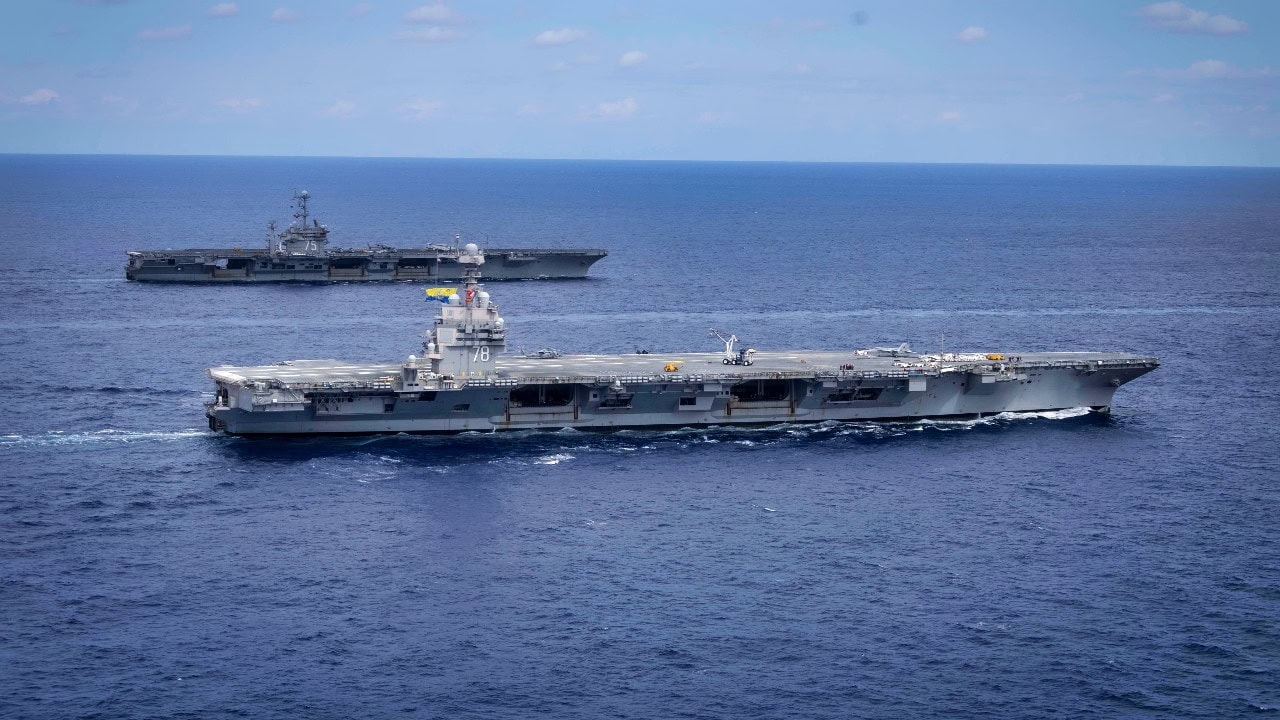
ATLANTIC OCEAN. (Aug. 24, 2024) The Nimitz-class aircraft carriers USS Harry S. Truman (CVN 75), back, and the world’s largest aircraft carrier, USS Gerald R. Ford (CVN 78), sail in formation in the Atlantic Ocean, Aug. 24, 2024. USS Gerald R. Ford is the flagship of the Gerald R. Ford Carrier Strike Group. The aircraft carrier is underway in the Atlantic Ocean to further develop core unit capabilities and skills such as fuels certification and ammunition on-load during its basic phase of the optimized fleet response plan. (U.S. Navy photo by Mass Communication Specialist 2nd Class Maxwell Orlosky).
The fire isn’t the only reason the repairs are required – it’s really just the straw that broke the camel’s back. It came after months of high operational tempo and known system issues, with no chance for maintenance.
Could It Be 14 Months of Repairs?
Under normal conditions, post-deployment maintenance for a nuclear-powered aircraft carrier can take several months, even without major damage. Historical examples show that complex overhauls or major repair periods can extend well beyond a year, depending on scope and system upgrades.
In the case of Ford, several factors point to it being a longer timeline. First, the ship is a first-in-class platform with known challenges across multiple systems, meaning maintenance is already going to be more complex. Second, the extended deployment has created a backlog of deferred work that must now be addressed in a single maintenance period. Third, the fire itself caused structural and habitability damage that will require repair alongside the routine engineering work. Nothing about this is routine.
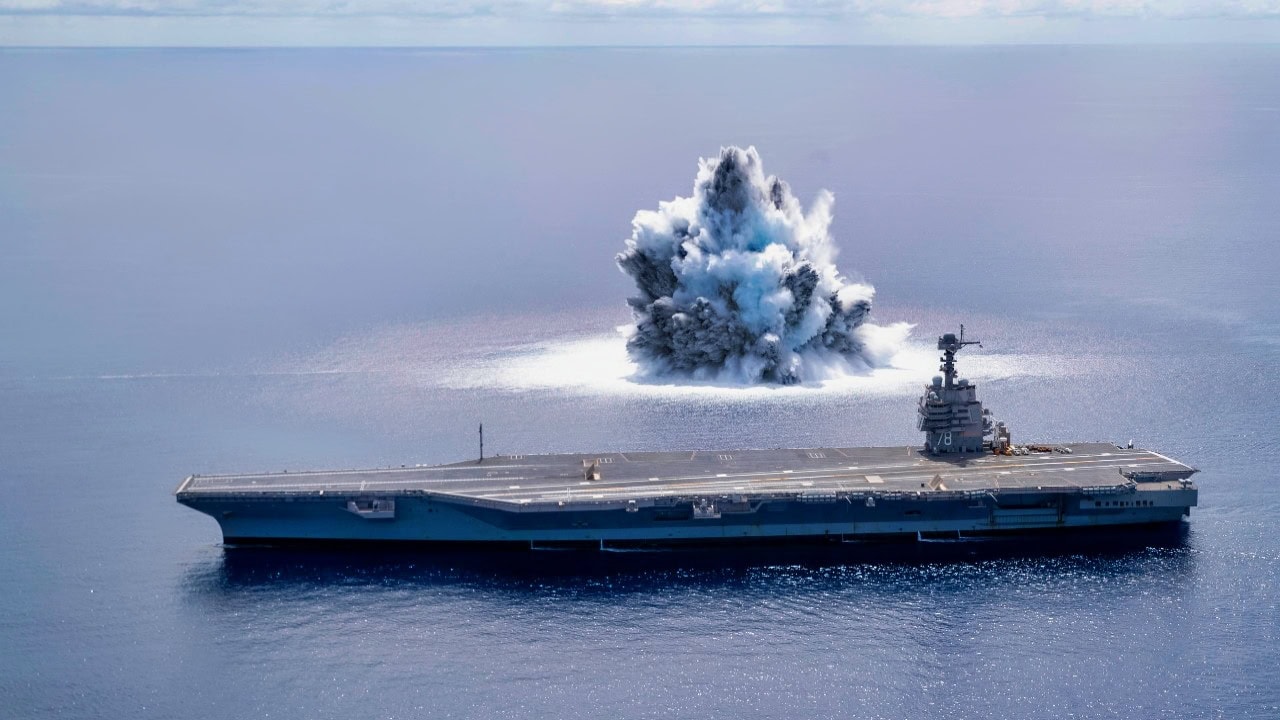
The aircraft carrier USS Gerald R. Ford (CVN 78) completes the first scheduled explosive event of Full Ship Shock Trials while underway in the Atlantic Ocean, June 18, 2021. The U.S. Navy conducts shock trials of new ship designs using live explosives to confirm that our warships can continue to meet demanding mission requirements under harsh conditions they might encounter in battle. (U.S. Navy photo by Mass Communication Specialist 3rd Class Riley B. McDowell)
When these factors are combined, the possibility of a 12-14 month downtime seems perfectly plausible, even if it hasn ot been officially confirmed. Prolonged deployments come with a cost, and this could be it.
READ MORE – Iran Claims to Have Hit a Navy Aircraft Carrier With a Missile
READ MORE – Iran Came Close to Hitting a Navy Super Hornet
About the Author: Jack Buckby
Jack Buckby is a British researcher and analyst specialising in defence and national security, based in New York. His work focuses on military capability, procurement, and strategic competition, producing and editing analysis for policy and defence audiences. He brings extensive editorial experience, with a career output spanning over 1,000 articles at 19FortyFive and National Security Journal, and has previously authored books and papers on extremism and deradicalisation.