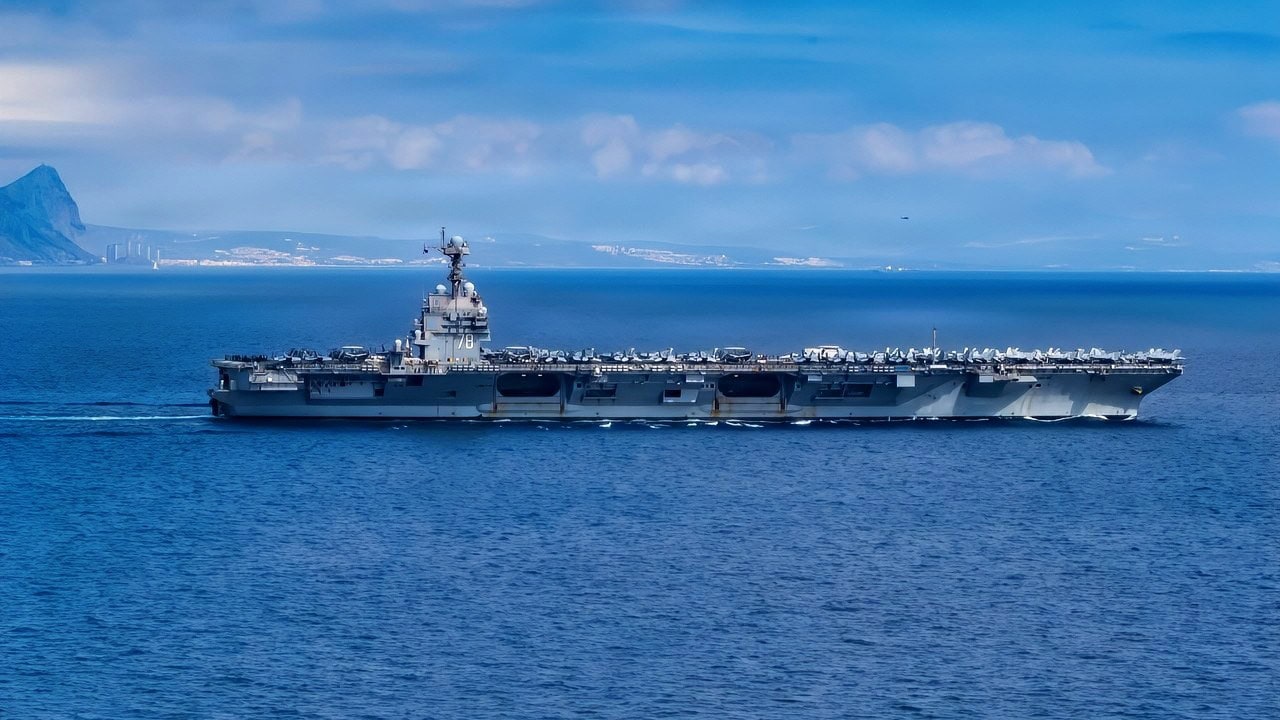
Summary and Key Points: Brandon J. Weichert, Senior National Security Editor and author of Winning Space, evaluates the USS Gerald R. Ford’s return to the Middle East.
-Despite its A1B nuclear reactors and EMALS launch system, the carrier faces significant “readiness debt” after 230+ days at sea.
-This 19FortyFive report analyzes the threat posed by Iranian Anti-Ship Ballistic Missiles (ASBMs)—potentially guided by Chinese satellite tracking—while examining the mental health toll on the 4,550 crew members and the maintenance bottlenecks at overstretched U.S. naval shipyards that could delay the ship’s return to service for years.
-After running over budget and over time, the USS Gerald R. Ford, the namesake of America’s newest (and most expensive) class of aircraft carrier, is sure being put through the wringer.
The World’s Most Advanced Carrier—and Its Next Mission
Having conducted extensive training operations in the North Sea last year with NATO, then operating near the Middle East during the 12-Day War, serving as the flagship of the US Navy’s flotilla off the coast of Venezuela (which ultimately captured Nicolas Maduro and his wife in the early hours of the morning on January Third), the Trump administration has now ordered America’s most expensive and advanced flat top back to the Middle East.
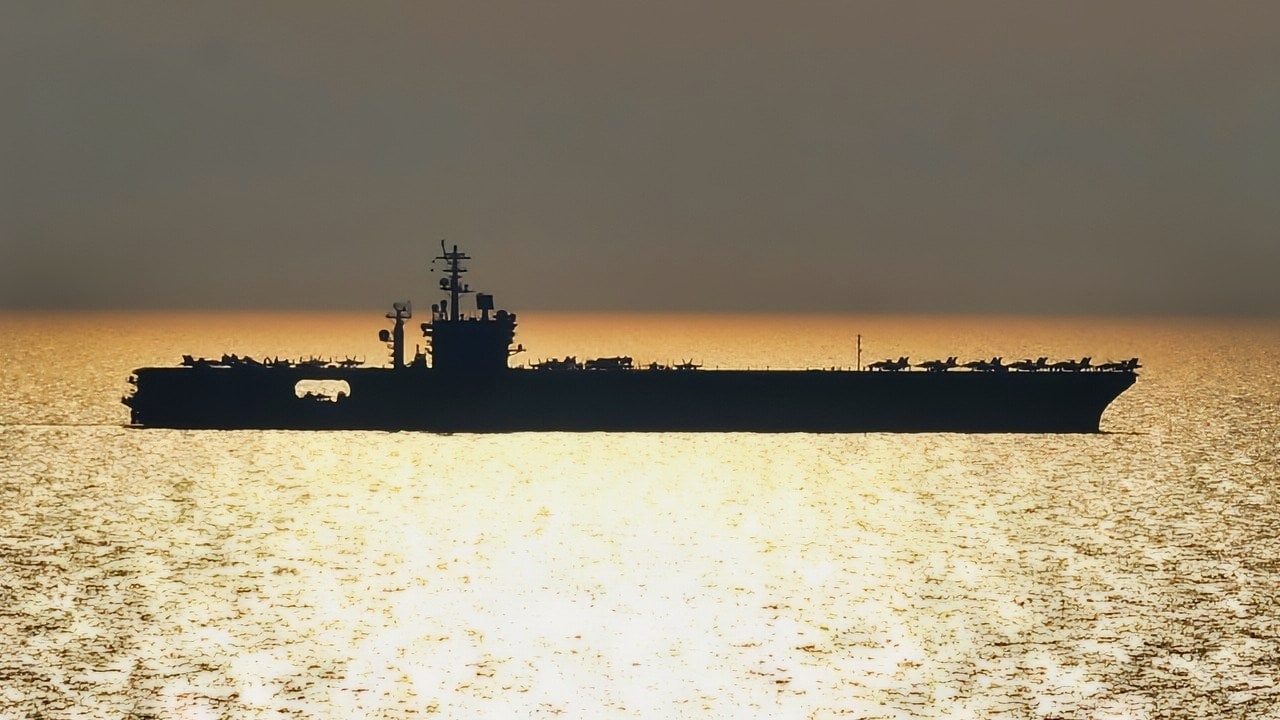
(Oct. 17, 2017) The aircraft carrier USS Nimitz (CVN 68) transits the Arabian Gulf, Oct 17, 2017. Nimitz is deployed in the U.S. 5th Fleet area of operations in support of Operation Inherent Resolve. While in this region, the ship and strike group are conducting maritime security operations to reassure allies and partners, preserve freedom of navigation, and maintain the free flow of commerce. (U.S. Navy photo by Mass Communication Specialist Seaman David Claypool/Released)
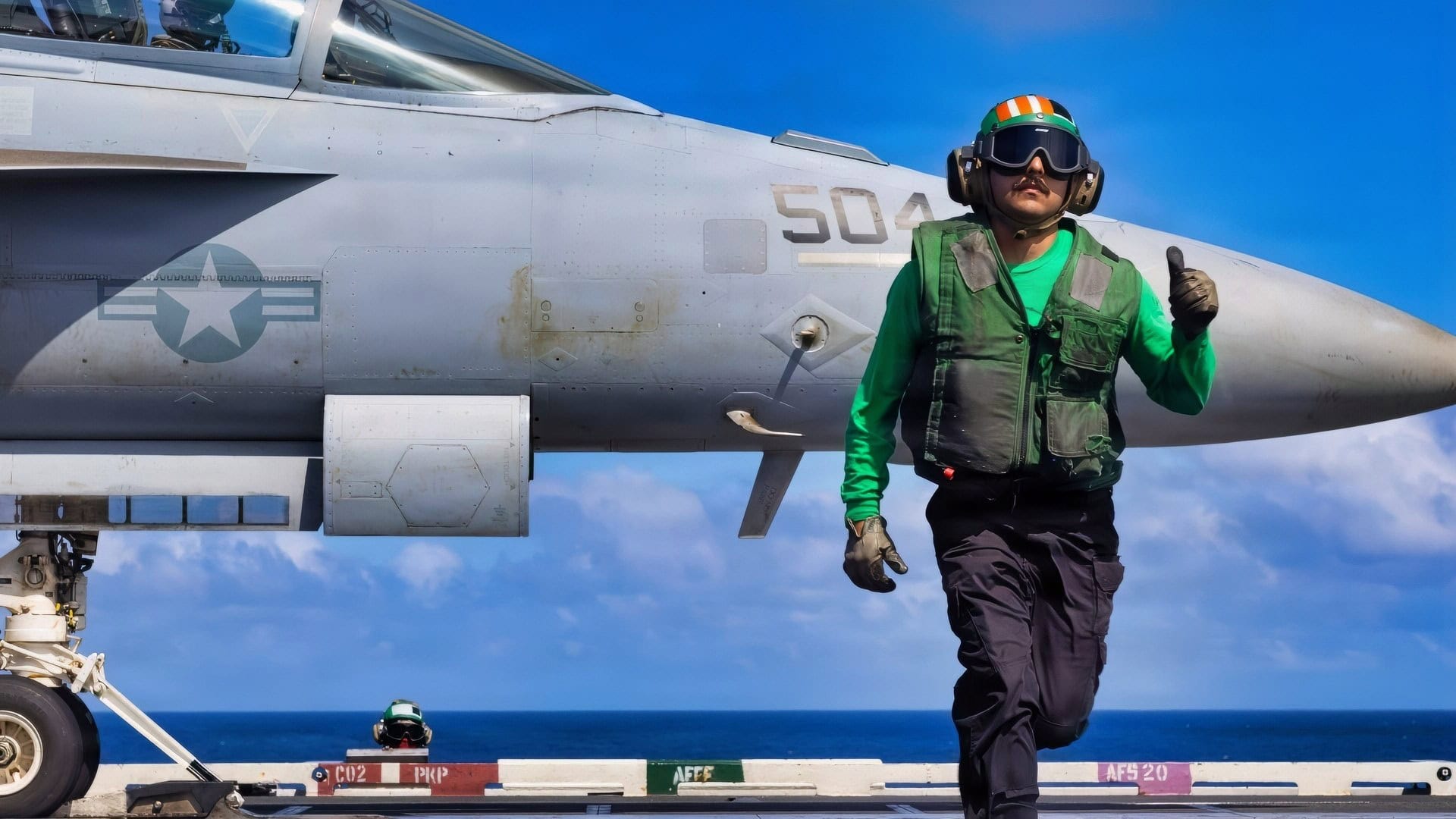
A U.S. Sailor signals the launch of an E/A-18G Growler aircraft, attached to Electronic Attack Squadron 142, from the flight deck of the world’s largest aircraft carrier, Ford-class aircraft carrier USS Gerald R. Ford (CVN 78), while underway in the Caribbean Sea, Jan. 31, 2026. U.S. military forces are deployed to the Caribbean in support of the U.S. Southern Command mission, Department of War-directed operations, and the president’s priorities to disrupt illicit drug trafficking and protect the homeland. (U.S. Navy photo)
Is this the best choice for the United States Navy?
Supercarrier: A Nuclear-Powered Leviathan Built for Air Dominance
Yes, the Ford is the greatest aircraft carrier ever built.
It displaces around 100,000 tons, measures 1,106 feet long and 256 feet wide (with a draft of 39 feet).
The leviathan is powered by two A1B nuclear reactors and can achieve a top speed of more than 30 knots (which is around 35 miles per hour).
The carrier has an airwing has more than 75 aircraft, including F-35C Lightning II, F/A-18E/F Super Hornet, and the E-2D Advanced Hawkeye.
To deploy these aircraft into the unfriendly skies, the Ford utilizes the troublesome Electromagnetic Aircraft Launch System (EMALS). For recovering those aircraft, the carrier has Advanced Arresting Gear (AAG). This system purportedly allows for higher rates of sorties.
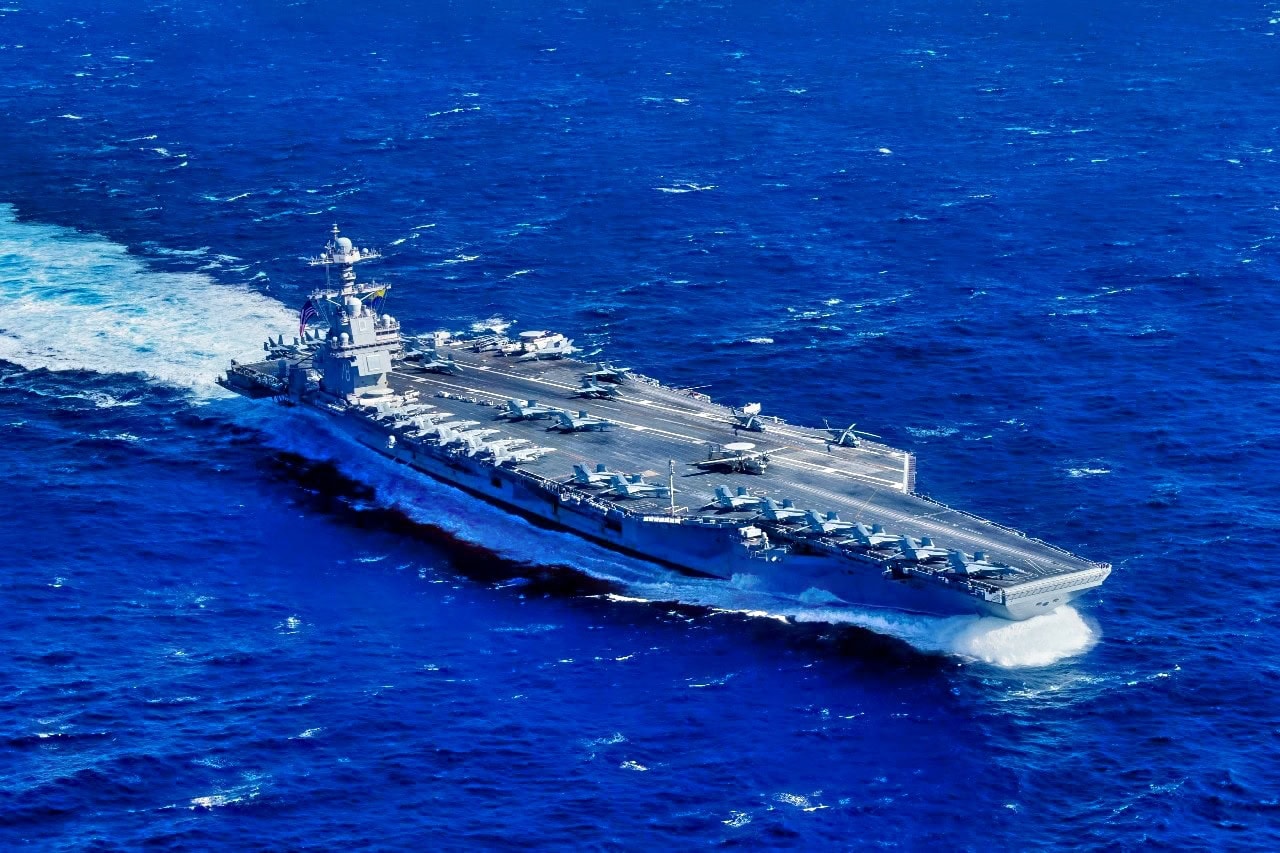
The world’s largest aircraft carrier, USS Gerald R. Ford (CVN 78), sails in formation with the Arleigh Burke-class guided missile destroyers USS Winston Churchill (DDG 81), USS Mitscher (DDG 57), USS Mahan (DDG 72), USS Bainbridge (DDG 96), and USS Forrest Sherman (DDG 98) in the Atlantic Ocean, Nov. 12, 2024. The Gerald R. Ford Carrier Strike Group is underway in the Atlantic Ocean completing Group Sail. Group Sail is the first at-sea integrated phase training event during a routine deployment training cycle. It is designed to challenge the Gerald R. Ford CSG’s ability to use the capabilities of the USS Gerald R. Ford (CVN 78), USS Winston S. Churchill (DDG 81), Carrier Air Wing (CVW) 8, Destroyer Squadron (DESRON) 2, and embarked Information Warfare team as a cohesive Strike Group to meet Navy and Joint Warfighting requirements that increases warfighting capability and tactical proficiency across all domains. (U.S. Navy photo by Mass Communication Specialist 2nd Class Maxwell Orlosky)
High-Tech Systems, High-Risk Glitches for Ford-Class
But the problem with these systems is that they have had multiple technical glitches and other complications. Thus far, these systems have operated well since 2025. Although these launching systems were highly problematic from the time they were installed. Let us hope that all the kinks truly have been worked out.
Ford comes equipped with RIM-162 ESSM (surface-to-air) missiles, RIM-116 Rolling Airframe Missiles (RAMs), and the ubiquitous Phalanx Close-In Weapon System (CIWS) used to defend the carrier against incoming anti-ship ballistic missiles (ASBMs). The ship carries a crew of around 4,550 personnel (comprising ship personnel, the airwing members, and staff).
These defensive systems, however potent, are simply insufficient when faced with the kind of anti-ship ballistic missiles (ASBMs) that the Iranians have arrayed in their domain.
Those missiles, mind you, are likely, at least, I would theorize, backed up, by powerful Chinese satellites in Earth orbit which are already skilled at both tracking US carriers in real-time and helping weapons—like those of Iran’s ASBM arsenal—to more accurately target those massive carriers.
If true, the U.S. Navy has a clear problem on its hands.
230 Days at Sea
Then there’s the added problem of Ford’s crew. You see, the carrier has been on deployment for more than 230 days. This ranks as the third-longest deployment of any US aircraft carrier in the history of the US Navy.
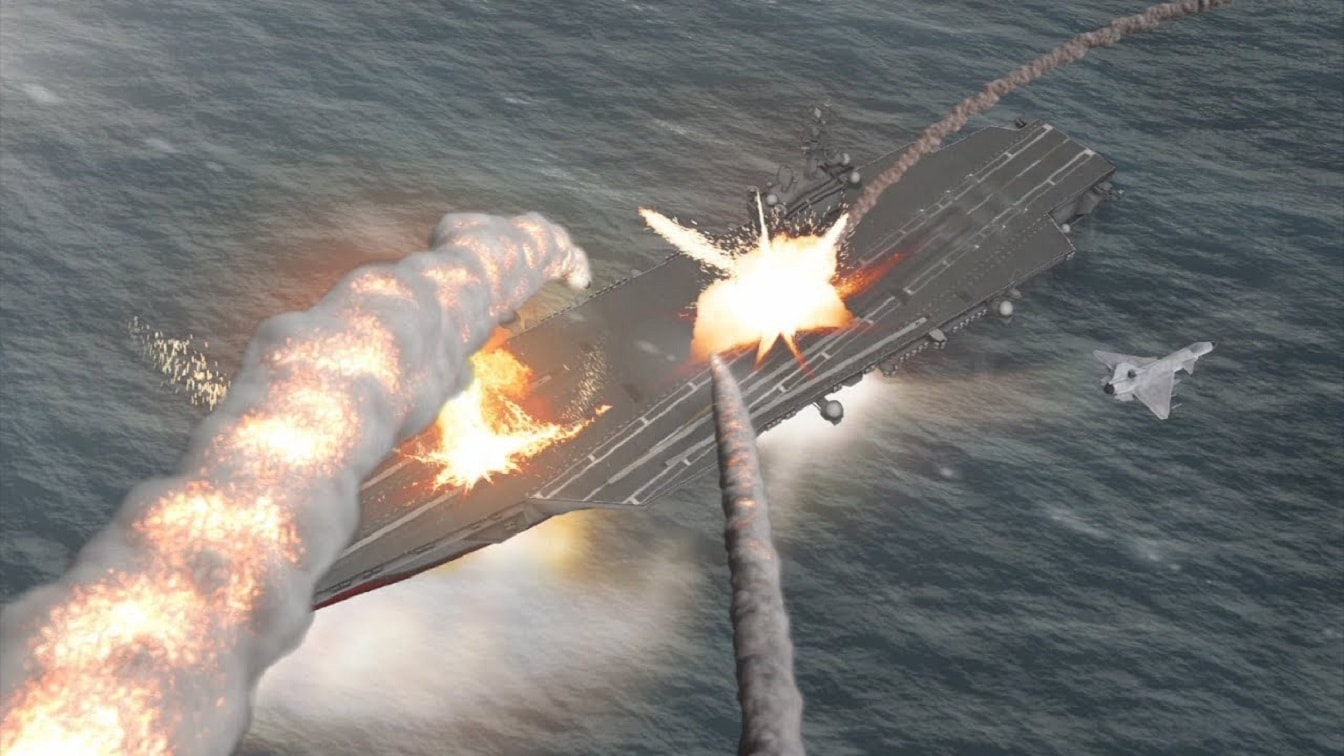
YouTube Screenshot of a Simulation of China Firing a DF-21 ASBM.
The USS Nimitz (CVN-68) holds the record for having lasted 321 days (from 2020-21) on deployment with the second record being held by the USS Abraham Lincoln (CVN-72) which lasted 295 days.
Here’s what a long deployment does to any carrier (even the mighty Gerald R. Ford), it disrupts the rigid Optimized Fleet Response Plan (OFRP), meaning that the carrier bypasses scheduled maintenance, leading to what experts refer to as “readiness debt” where mechanical systems become unreliable by the time they reach the shipyard, prompting costlier repairs than what would have been required had the ship set in to port on schedule.
Non-skid flight deck coatings might be a funny thing to bring up here, but it’s essential. That coating allows continuous flight operations from the carrier. The higher the operational tempo, the longer it takes to get into port for touch-ups, and the more significant the wearing down of the non-skid flight deck coatings becomes. Other critical systems, like elevators and landing systems, wear down much faster than the Navy planned.
The Mental Health Factor
What’s more, there’s the wear-and-tear placed on the aircraft of the airwing. By extending the operational tempo of the carrier, that means the carrier’s air wing is stretched and strained.
Relatedly, crew fatigue and mental health issues become a real concern.
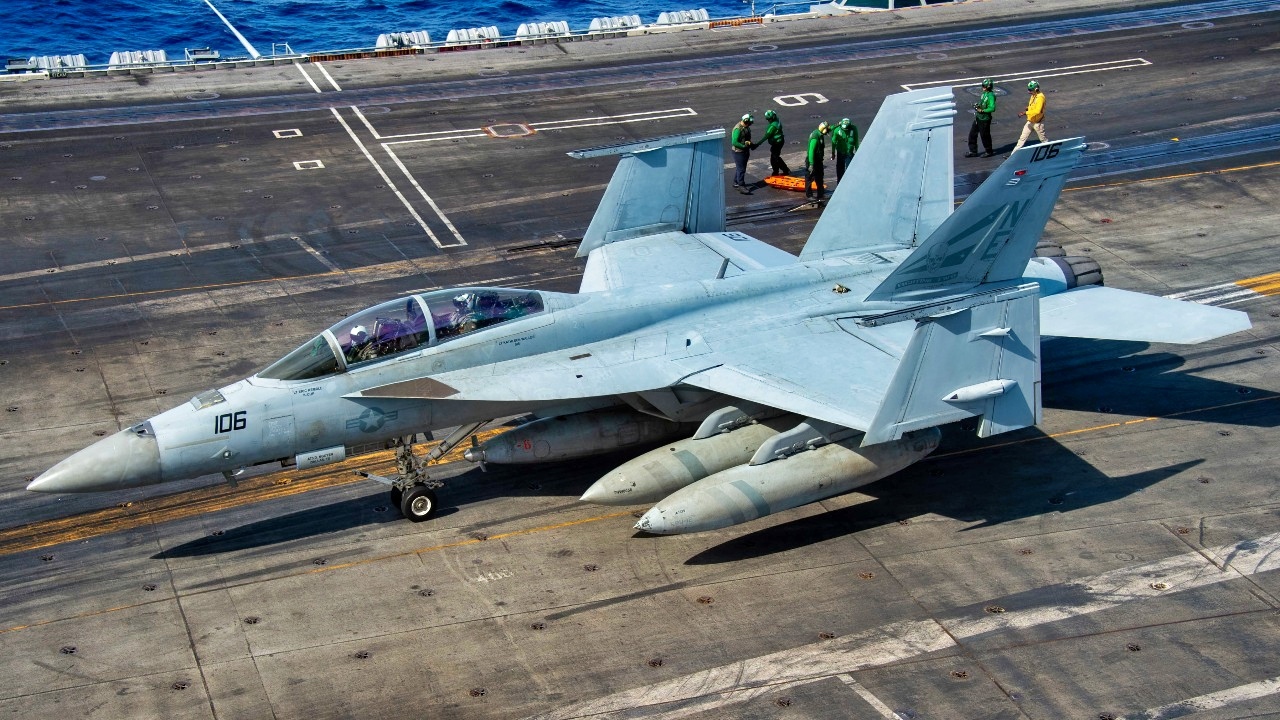
(Dec. 30, 2021) An F/A-18F Super Hornet, assigned to the “Bounty Hunters” of Strike Fighter Squadron (VFA) 2, taxis on the flight deck of Nimitz-class aircraft carrier USS Carl Vinson (CVN 70), Dec. 30, 2021. Carl Vinson Carrier Strike Group is on a scheduled deployment in the U.S. 7th Fleet area of operations to enhance interoperability through alliances and partnerships while serving as a ready-response force in support of a free and open Indo-Pacific region. (U.S. Navy photo by Mass Communication Specialist 3rd Class Jeff D. Kempton)
Exhaustion is a key factor in long deployments. That increases the likelihood of lethal accidents on the flight deck. There are also associated emotional factors for the large crew connected to their missing family for prolonged periods and the emotional cycle of deployment that could lead to burnout.
Double-Pumped and Running on Borrowed Readiness
There’s the concern of what a “double-pump” (deploying a carrier twice in one cycle as has been done with the Ford) will do for the Navy’s surge capacity. If a real geopolitical crisis breaks out, carriers will be needed to address it. But the Ford will not be available because it simply must return to port sooner rather than later.
Saying that a carrier—even one as new as the Ford—goes through wear-and-tear on an extended deployment doesn’t quite capture the technical burdens imposed upon the great ship. When it returns to port and needs to undergo a maintenance cycle, that process will be far more involved than it ordinarily would be.
Aircraft Carriers: From Symbol of Power to Prime Target
Here’s the problem: the US naval shipyards are stretched to their breaking points already.
Getting bogged down in a major repair effort for a carrier, especially an advanced one like the USS Gerald R. Ford, will create massive bottlenecks in the defense supply chain.
These bottlenecks, if the carrier survives a possible encounter with those Iranian anti-ship missiles (ASBM) built to attack aircraft carriers, will jam up the shipyards even more. In other words, the carrier’s return to service will be drastically delayed.
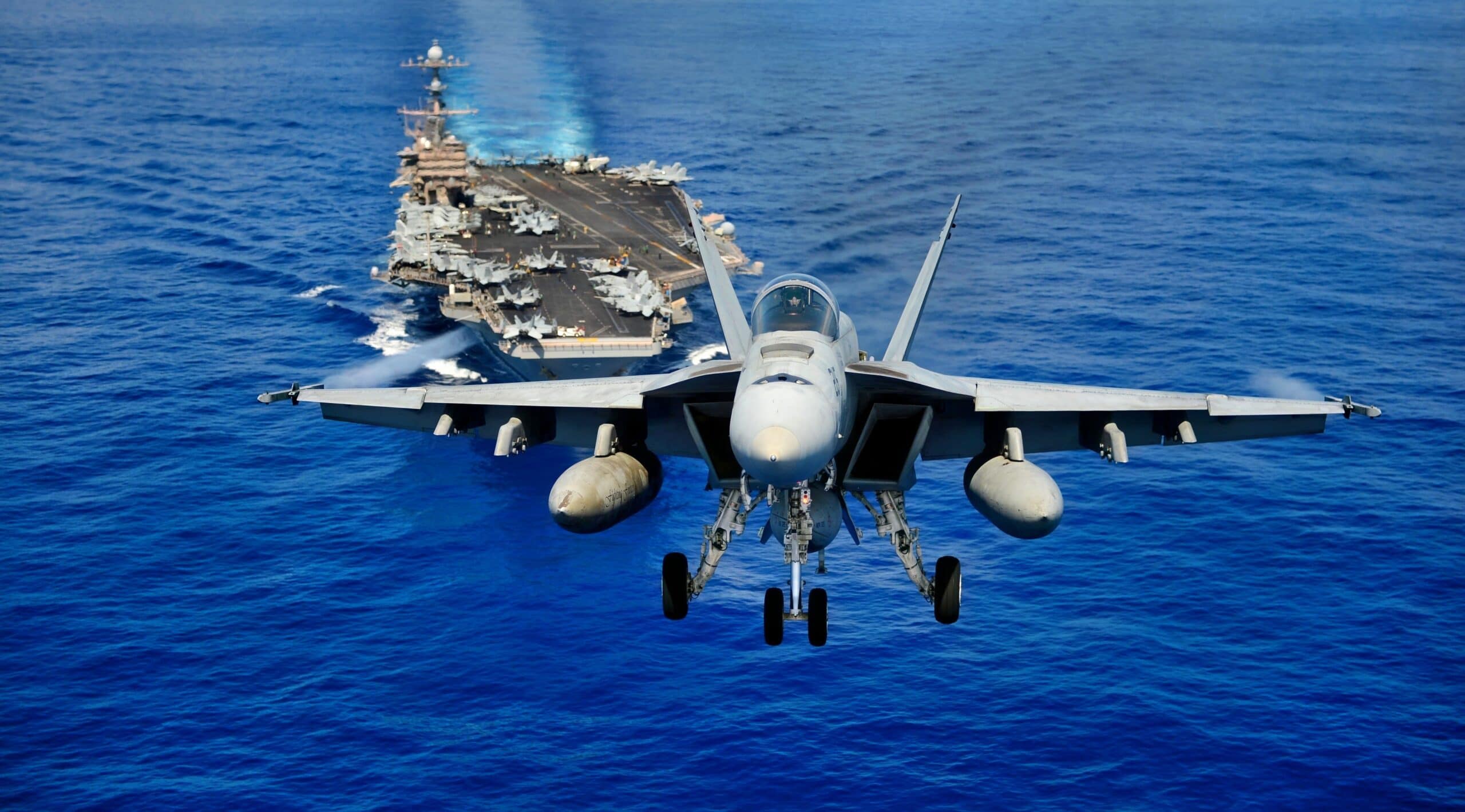
Aircraft Carrier. Image Credit: U.S. Navy.
The USS Gerald R. Ford may be the most advanced carrier ever built, but in the shadow of Iran’s ASBMs, size and sophistication don’t guarantee survival.
A massive, overworked carrier operating within range of precision-guided missiles—and under the watch of Chinese-backed tracking—is not threatening the Iranians at all. It is, in fact, inviting a major test. In the era of advanced ASBMs, the danger from an American carrier is greatly diminished.
Indeed, that carrier, such as the wildly expensive and large USS Gerald R. Ford, becomes a big, visible, and increasingly vulnerable target for those Iranian ASBMs.
Therefore, the probability is high that if Trump orders airstrikes on Iran, the Islamic Republic will try to either sink or disable one of the two American carriers set to be operating in the Mideast (the Abraham Lincoln is currently on-station, and the Fordis purportedly on its way).
It will be the end of both the Trump presidency and the image of America as a competent (and dominant) military power.
About the Author: Brandon J. Weichert
Brandon J. Weichert is the Senior National Security Editor at 19FortyFive.com. He was previously the senior national security editor at The National Interest. Weichert is the host of The National Security Hour on iHeartRadio, where he discusses national security policy every Wednesday at 8pm Eastern. He hosts a companion show on Rumble entitled “National Security Talk.” Weichert consults regularly with various government institutions and private organizations on geopolitical issues. His writings have appeared in numerous publications, among them Popular Mechanics, National Review, MSN, and The American Spectator. And his books include Winning Space: How America Remains a Superpower, Biohacked: China’s Race to Control Life, and The Shadow War: Iran’s Quest for Supremacy. Weichert’s newest book, A Disaster of Our Own Making: How the West Lost Ukraine, is available for purchase wherever books are sold. He can be followed via Twitter/X @WeTheBrandon.