
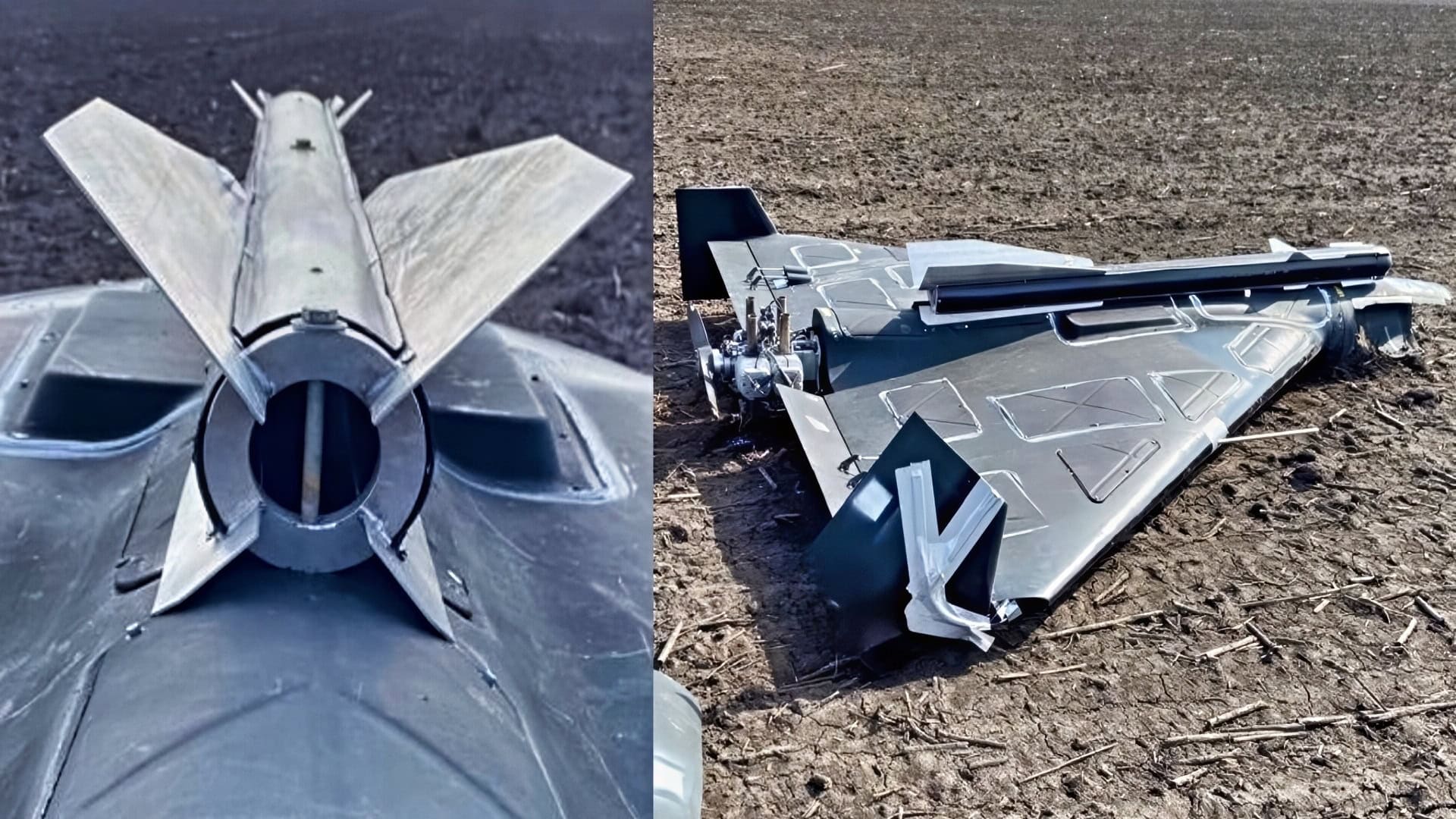
Russia Just Answered Ukraine’s Billion-Dollar Jamming War With a $2 Compass, and the Joke Is on Everyone Laughing: A Ukrainian defense ministry advisor reported Friday that Russia has fitted its cheap Molniya attack drones with an ordinary magnetic compass, read by the drone’s own camera, to keep flying when satellite navigation is jammed. The internet treated it as a punchline. The serious read is worse: it is the fourth jam-proof navigation fix Russia has fielded on this one plywood airframe in about six months, and the speed of that iteration loop, not any single gadget, is the real weapon Ukraine and NATO are struggling to answer.
The $2 Part on Russia’s Drones That No Jammer on Earth Can Beat
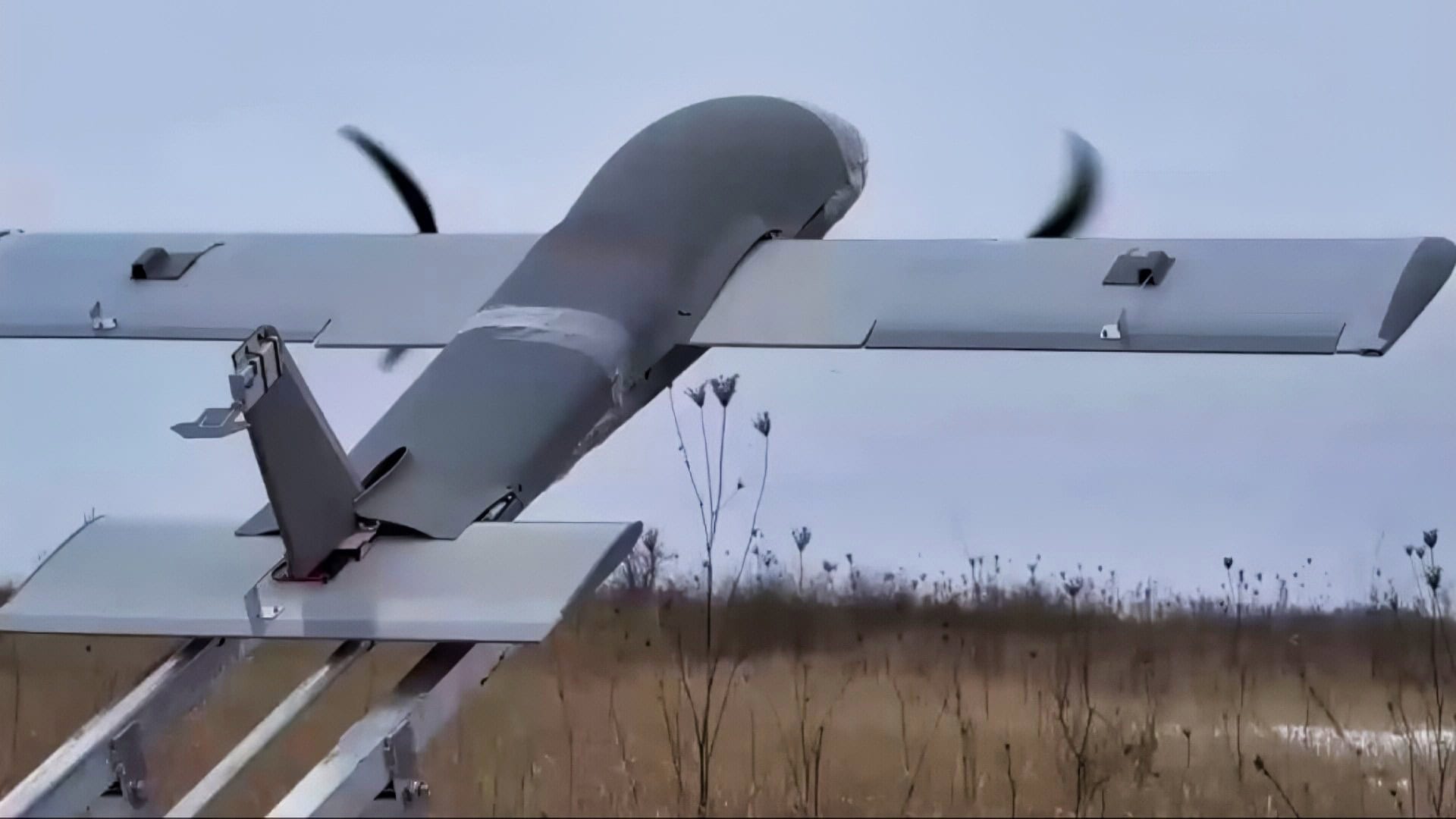
Russian Molniya Drone. Screenshot from Russian Military Video.
The report arrived Friday morning the way most news about Russia’s cheap drones now arrives: in a post from Serhii “Flash” Beskrestnov, the electronic-warfare specialist and advisor to Ukraine’s defense minister who has become the war’s de facto coroner for downed Russian hardware. Russia, he reported, has begun mounting a simple magnetic compass on its Molniya attack drones, positioned so the onboard camera can glance down and read it, and his deadpan opener, “Skolkovo technologies continue to develop,” a jab at the Kremlin’s showcase innovation hub, set the tone for the mockery that followed. Russian military analyst Ian Matveev supplied the inevitable joke about how the part will read in procurement paperwork: “Navigation equipment based on the principles of Earth’s magnetism.”
The laughter is understandable, and it is aimed at the wrong target. A two-dollar compass on a plywood drone is not evidence that Russia’s drone war is a joke. It is the newest artifact of the fastest weapons-adaptation cycle either side has produced, and it deserves to be read the way Ukraine’s own specialists read it, which is not with a smirk.
Why a Compass, of All Things
The logic is brutally sound. Nearly every drone in this war navigates by satellite signal, GPS or Russia’s GLONASS, and both sides have spent fortunes jamming and spoofing exactly those signals; entire categories of Ukrainian and Russian electronic warfare exist to make a drone forget where it is. A magnetic compass defeats all of it by refusing to participate.
It listens to nothing, emits nothing, and reads only the planet’s own magnetic field, which no jammer on Earth can switch off. Pairing the oldest navigation instrument in human history with a camera that already rides on the drone costs almost nothing, adds no new electronics to interfere with, and gives a jammed Molniya what it most needs: the ability to keep holding a bearing toward its target area while every radio in the sky screams static at it. Crude is the point. Crude is what cannot be broken.
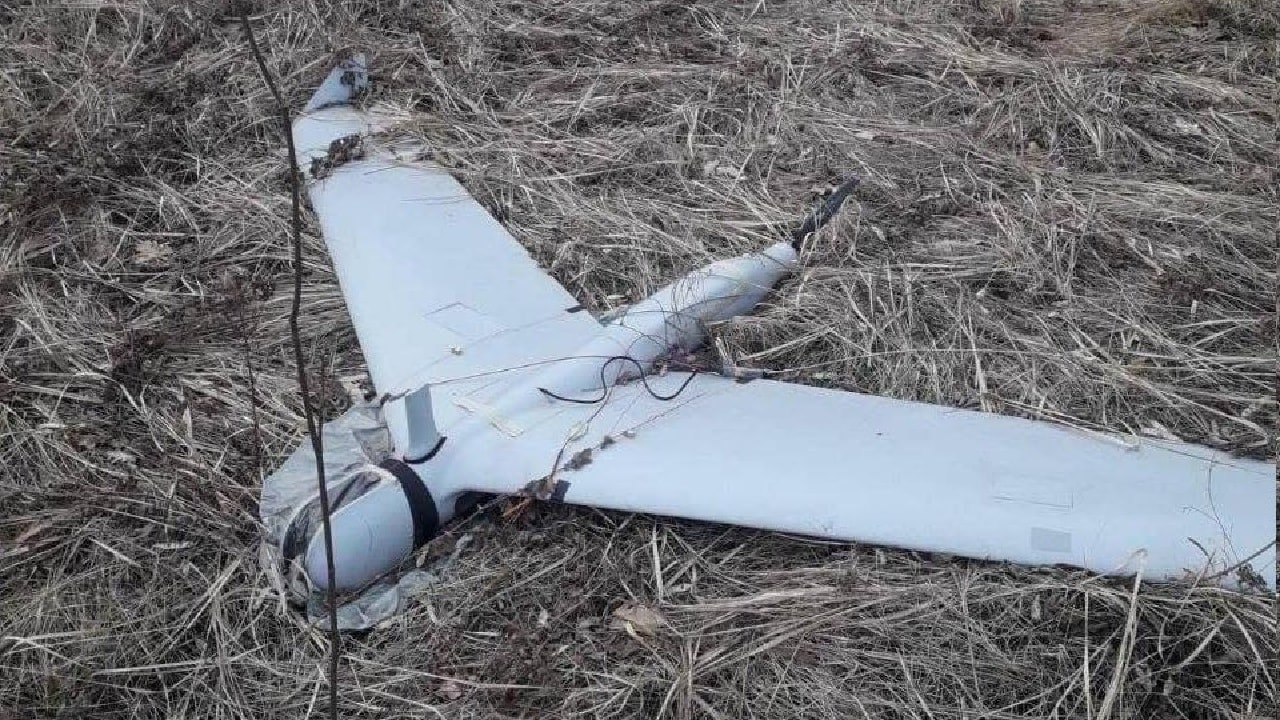
Russian Drone in Ukraine. Creative Commons Image
Four Answers in Six Months
What makes the compass matter is the sequence it completes. In January, CNN reported Ukraine had documented hundreds of attacks by Russian drones fitted with Starlink terminals, Beskrestnov estimating that one in three of the Starlink-guided Molniyas was reaching its target, satellite internet defeating the GPS jammers outright. Before that came the fiber-optic variants, controlled through a physical cable that no radio jamming can touch, at the price of range and payload. Then, on July 1, came the leap: a Molniya struck a Ukrainian facility carrying no control antenna at all, only a camera and an onboard computer, navigating and attacking on its own. The independent analysts at Calibre Defence, examining Beskrestnov’s photos of the wreckage, identified a FlyCore single-board computer, a platform built for AI flight autonomy, and noted Beskrestnov’s assessment that Russia had trained the targeting software on an earlier drone before porting it to the disposable Molniya fleet, a development he called a “bad sign.”
And now, this week, the compass covers the one failure mode the other three fixes left open.
Look at the pattern rather than the parts: Starlink beats satellite-navigation jamming, fiber beats control-link jamming, autonomy removes the operator link entirely, and the compass gives the cheapest variants an unjammable heading when everything else fails. Four different attacks on four different links in Ukraine’s electronic-warfare kill chain, fielded on one bargain airframe in roughly half a year. The tempo is now so fast that Ukrainian defense media publish a weekly review just to catalog new Russian variants; the same early-July edition that logged the autonomous Molniya also recorded a jet-powered Geran, Gerbera decoys with extended fuel tanks, and a target-hunting Geran variant called Seeker.
The Factory Behind the Plywood
None of this is garage improvisation anymore, and that is the detail the mockery misses most. The Molniya began as a crude first-person-view strike drone assembled from plywood, foam, and aluminum tube near the front, with a declared range around 40 kilometers, cheap enough that Beskrestnov has estimated Russia can build ten to fifteen of them for the price of a single Supercam reconnaissance drone that runs near $100,000. It has since become a family: reconnaissance versions, up-gunned variants that can haul an anti-tank mine or act as a mothership for smaller FPV drones, and, as of last month, an export product, with the state conglomerate Rostec showing the drone at a Belarus arms exhibition under the brand name Lightning 13 and advertising its use across five of Russia’s front-line groupings. The two-dollar compass, in other words, is being bolted on by an industrial system that mass-produces the airframe, iterates it weekly, and now markets the philosophy abroad.
The Limits, and Ukraine’s Answer
Honesty requires the counterweights. A compass glanced at by a camera is heading-hold, not precision; it keeps a jammed drone pointed the right way, it does not restore accuracy, and the Molniya family carries reported reliability problems along with its virtues. Electronic warfare still downs a great many of these drones, even as Beskrestnov has detailed why it keeps getting harder, the Molniyas fly too low for radar and hop frequencies too fast for broad-spectrum jamming, he warned this spring, in remarks he gave after Russia tried to kill him, a strike that destroyed his house and put him in the hospital, a measure of exactly how much Moscow values the man who reads its drones.
And Ukraine adapts in kind. When the autonomous Molniya appeared, jamming was useless by design, so Ukraine shot one down instead, the first confirmed intercept of the AI variant, brought down over Zaporizhzhia by domestically built General Cherry and Bullet interceptor drones, with Euromaidan Press summarizing the new reality in nine words: “Ukraine’s answer is no longer electronic warfare, it’s a bullet.”
What the $2 Part Really Means
Set the punchline aside, and the compass tells you three things. Russia’s cheap-drone complex iterates at a speed no Western procurement system currently matches, measured in weeks from battlefield problem to fielded fix. It solves billion-dollar problems with two-dollar parts because its design philosophy treats the airframe as disposable and the production line as the weapon.
And it forces the defender onto the expensive side of every exchange, burning interceptors, jammers, and engineering talent against plywood.
That is the same industrial logic behind the Geran barrages, the pattern this author has examined before, in which the country that cannot mass-produce its showpiece tanks and stealth fighters has become brutally good at mass-producing the cheap and simple.
The compass is not the story. The loop that produced it is, and nothing in the Western arsenal currently turns that fast.
About the Author: Harry J. Kazianis
Harry J. Kazianis (@Grecianformula) was the former Senior Director of National Security Affairs at the Center for the National Interest (CFTNI), a foreign policy think tank founded by Richard Nixon based in Washington, DC. Harry has over a decade of experience in think tanks and national security publishing. His ideas have been published in the NY Times, The Washington Post, The Wall Street Journal, CNN, and many other outlets worldwide. He has held positions at CSIS, the Heritage Foundation, the University of Nottingham, and several other institutions related to national security research and studies. He is the former Executive Editor of the National Interest and the Diplomat. He holds a Master’s degree focusing on international affairs from Harvard University.