
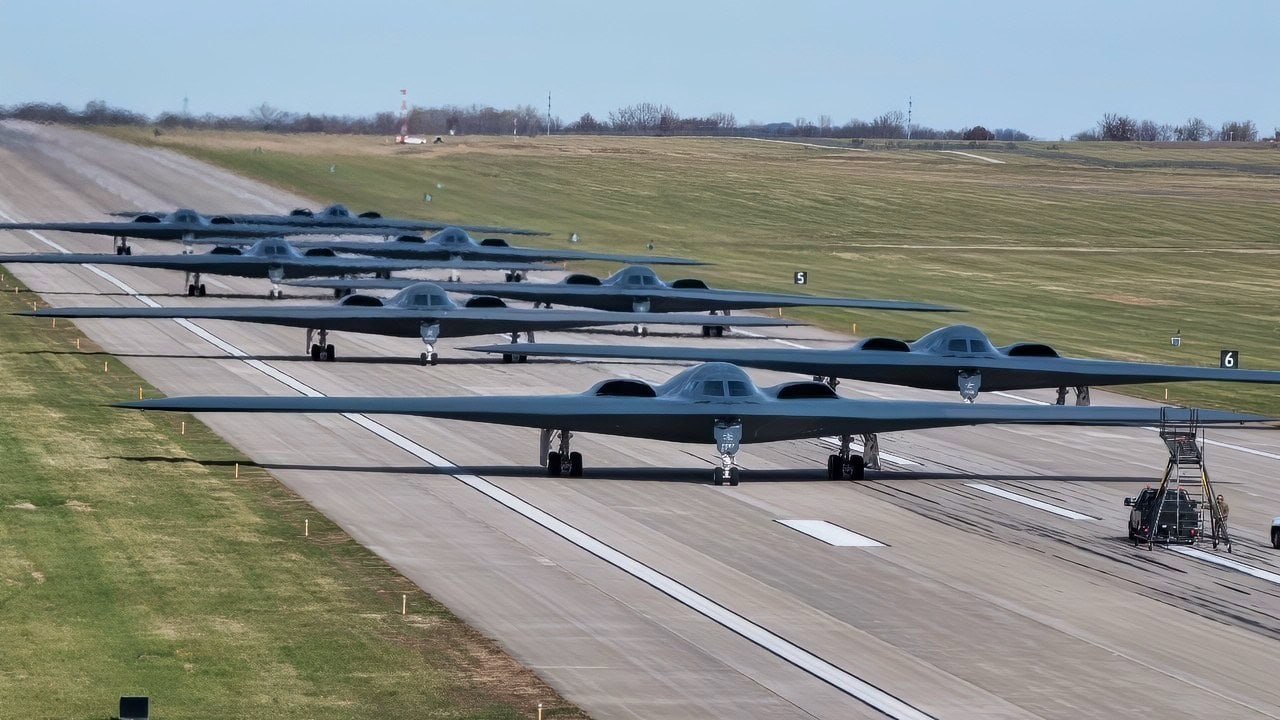
Three-and-a-half decades after its controversial beginnings (a controversy that, objectively speaking, was at least somewhat understandable, given the huge price tag involved), the Northrop (later Northrop Grumman) B-2 Spirit stealth bomber is one of America’s (and the world’s) most battle-proven and respected warbirds.
Its deadly efficacy was most dramatically demonstrated last year during Operation Midnight Hammer, the precision strike against the Islamic Republic of Iran’s nuclear facilities.
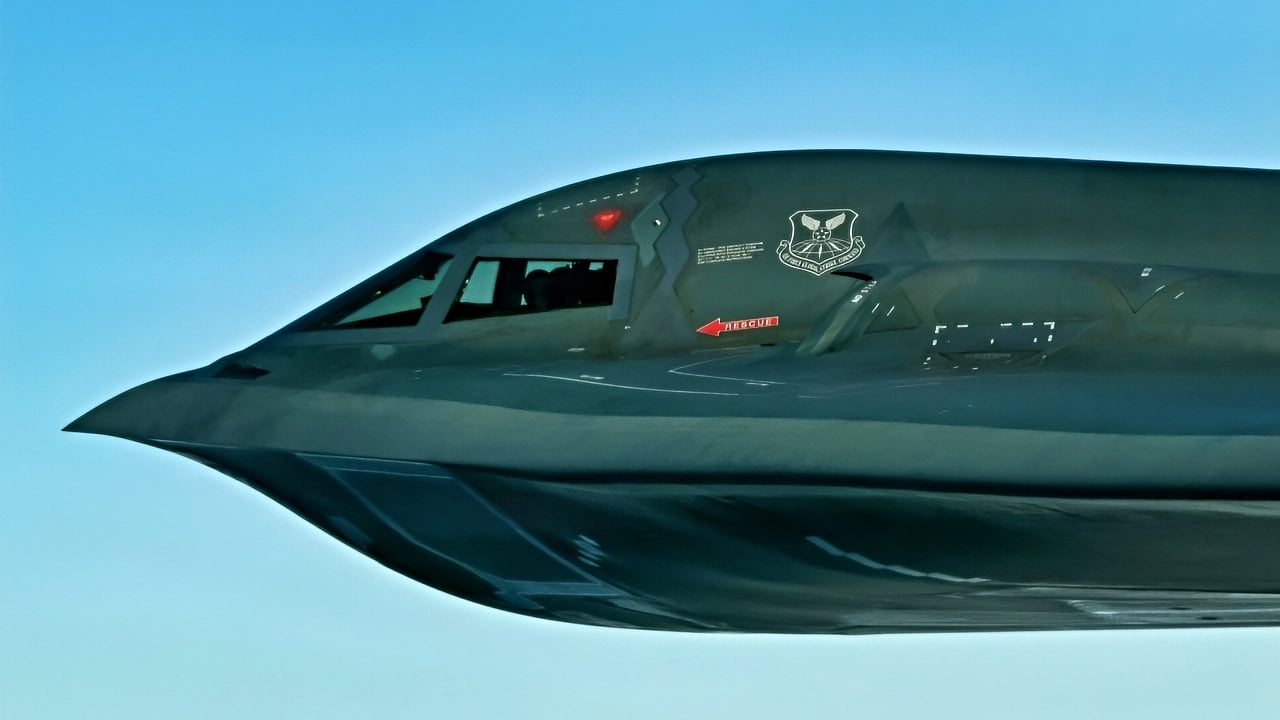
A U.S. Air Force B-2 Spirit conducts an integrated maritime strike training exercise with U.S. Navy F-35C Lightning II and F/A-18E Super Hornets from Carrier Air Wing Eleven (CVW-11) off the coast of California, on Feb. 10-11, 2026. Practicing innovative methods to employ and integrate strategic bombers like the B-2 with Navy carrier strike groups enhances combat capabilities through synchronized, integrated power projection. (U.S. Navy photo by Katie Archibald)
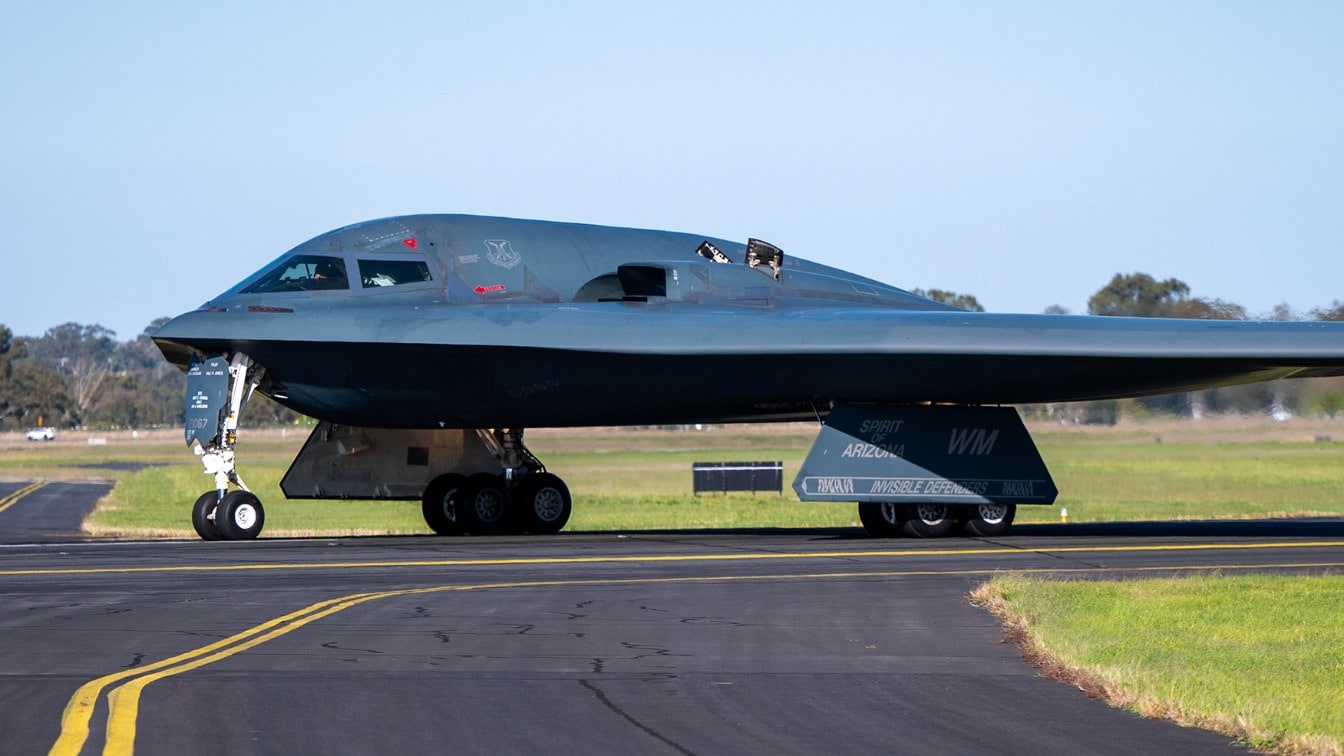
A U.S. Air Force B-2 Spirit stealth bomber arrives after a Bomber Task Force mission at Royal Australian Air Force Base Amberley, Australia, Sept. 5, 2024. U.S. Indo-Pacific Command routinely and visibly demonstrates commitment to its allies and partners through the employment of military forces, demonstrating strategic predictability, while becoming more operationally unpredictable to adversaries. (U.S. Air National Guard photo by Staff Sgt. Whitney Erhart)
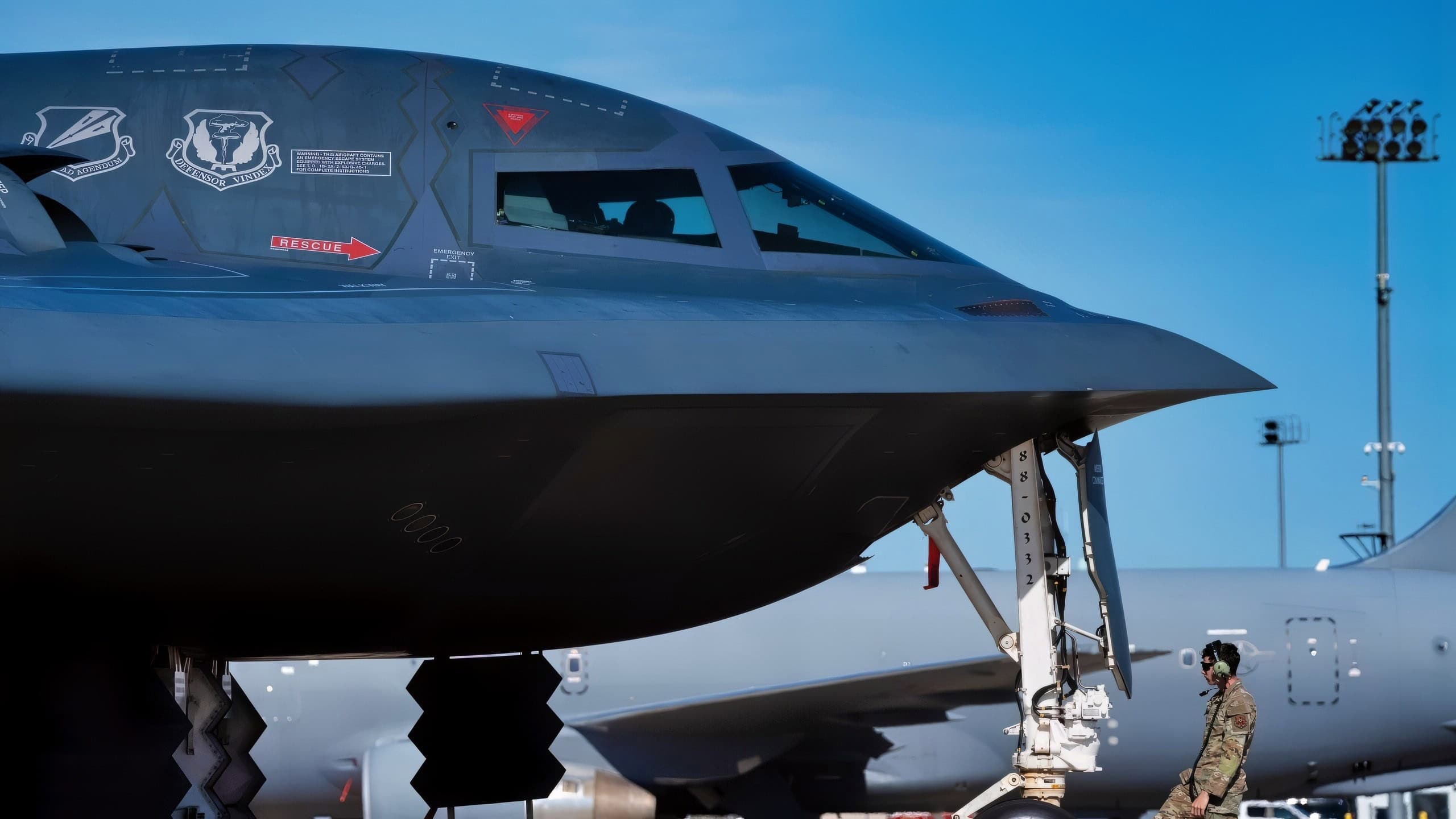
U.S. Air Force Staff Sgt. Hunter Kaloci, 393rd Bomber Generation Squadron crew chief, adjusts a wheel chock in front of a parked B-2 Spirit aircraft at Pease Air National Guard Base, New Hampshire, Sept. 20, 2025. The 393rd BGS provides worldwide combat capability by planning and conducting all aspects of on-aircraft maintenance, launch and recovery of B-2 aircraft in direct support of Joint Chiefs of Staff nuclear and conventional taskings. (U.S. Air Force photo by Staff Sgt. Joshua Hastings)
Besides the precision involved, one of the impressive aspects of Operation Midnight Hammer was the fact that the B-2 crews flew 36 hours nonstop and more than 13,000 miles round trip to accomplish the mission, according to U.S. Air Force Gen. Dan “Raisin’” Caine, Chairman of the Joint Chiefs of Staff.
But that begs the question: How did those Spirit crewdogs manage to stay awake for that long without crashing their planes due to sheer fatigue?
After all, it’s challenging enough to drive 3.6 (as in three-point-six) hours in a motor vehicle without falling asleep at the wheel, let alone 36 (as in thirty-six) hours at the stick, rudder, and throttle of a multibillion-dollar aircraft.
Well, our readers can rest easy (pun intended) with the knowledge that the B-2 does, in fact, have crew rest areas.
Bottom Line Up Front (BLUF)
Our chief source of information on this welcome respite & relief comes to us from the publication Simple Flying (which this writer used to work for), more specifically, a July 9, 2026 article by Aaron Spray titled “Inside The B-2 Spirit Bomber’s Secret Crew Rest Areas.”
To wit, my former colleague notes that “B-2 Spirits feature rudimentary combat rest facilities behind the cockpit to support the crew during these ultra-long-haul operations. There is a basic toilet for the pilots. Privacy is minimal on these flights, with other crew members being able to hear the pilot using the toilet and even see him if they turn their heads. The chemical toilet is portable and is a sealed system…The B-2 features a fold-down sleep cot located behind the cockpit area, mounted along the cockpit bulkhead, and is only enough for one pilot at a time. It is fairly limited and isn’t long enough for tall pilots to fully stretch out. It is not designed for deep rest, only functional naps. The pilots also bring pre-packed meals on board.”
To point out an additional mini-creature comfort that exemplifies why the Air Force is so envied by the sister services (who express that envy via the derisively humorous label of “Chair Force”). Aaron quotes B-2 pilot Lt. Col. Tim Sutton as saying, “we got an upgrade to a microwave so… we have a microwave on board for food.”
Digging Deeper
Though the cot and the microwave may be relatively small items, as the one saying goes, “A little goes a long way,” and in the case of B-2 Spirit missions, that rings true literally as well as figuratively.
Besides Midnight Hammer, the stealth bomber crews’ history of super-long missions includes:
-A 70-hour mission during Operation Enduring Freedom against terrorist targets in Afghanistan in October 2001
-A 34-hour mission during Operation Odyssey Dawn against then-Libyan dictator Muammar Gaddafi’s regime in 2011
-A 31-hour mission to Kosovo and back (protecting ethnic Albanians against the ravages of the Serb forces of Slobodan Milosevic) during Operation Allied Force in 1999
-A 33-hour mission in support of Operation Iraqi Freedom in 2003
Additional Safety Precautions
Besides getting a halfway decent sleep in flight, what other tools and tactics can help ensure combat aviators are well-rested for deadly missions?
For one thing, there are pre-flight precautions, as per Chapter 3 of AIR FORCE MANUAL 11-202 Volume 3, first published in June 2020 and recertified in January 2025: “Commanders and supervisors will ensure aircrew are provided a 12-hour rest opportunity prior to beginning the flight duty period. (T-3). Crew rest is free time and includes time for meals, transportation, and an opportunity for at least 8 hours of uninterrupted sleep. Crew rest cannot begin until after the completion of official duties. Crew rest is compulsory for aircrew members prior to performing any duties involving aircraft operations and is a minimum of 12 non-duty hours before the flight duty period (FDP) begins.”
And then, there are the so-called “go pills.” These are stimulants that the USAF has approved in two forms:
-Dextroamphetamine (the active ingredient in Dexedrine), the older and more potent of the pair, which works by flooding the brain with dopamine and norepinephrine, producing a sharp increase in wakefulness, focus, and reaction speed, thus restoring alertness to roughly 70 percent of normal levels in sleep-deprived individuals
-Modafinil (sold commercially as Provigil), which carries a lower risk of the jitteriness, euphoria, and crash associated with amphetamines, with the tradeoff being a less potent alertness restoration level of 55 percent of normal in sleep-deprived people
MORE – USS Kentucky: The Lost Iowa-class Battleship
About the Author: Christian D. Orr
Christian D. Orr is a Senior Defense Editor. He is a former Air Force Security Forces officer, Federal law enforcement officer, and private military contractor (with assignments worked in Iraq, the United Arab Emirates, Kosovo, Japan, Germany, and the Pentagon). Chris holds a B.A. in International Relations from the University of Southern California (USC) and an M.A. in Intelligence Studies (with a concentration in Terrorism Studies) from American Military University (AMU). He is also the author of the book “Five Decades of a Fabulous Firearm: Celebrating the 50th Anniversary of the Beretta 92 Pistol Series,” the second edition of which was recently published.