

A mind-boggling 74 years after making its maiden flight, the Boeing B-52 Stratofortress, AKA the “BUFF” (“Big Ugly Fat F****r,” or “Big Ugly Fat Fellow” if you’re in polite company), is still going strong as the most battle-proven member of the United States Air Force’s strategic bomber triumvirate.
This was most recently demonstrated during the BUFF’s participation in Operation Epic Fury against the Islamic Republic of Iran.
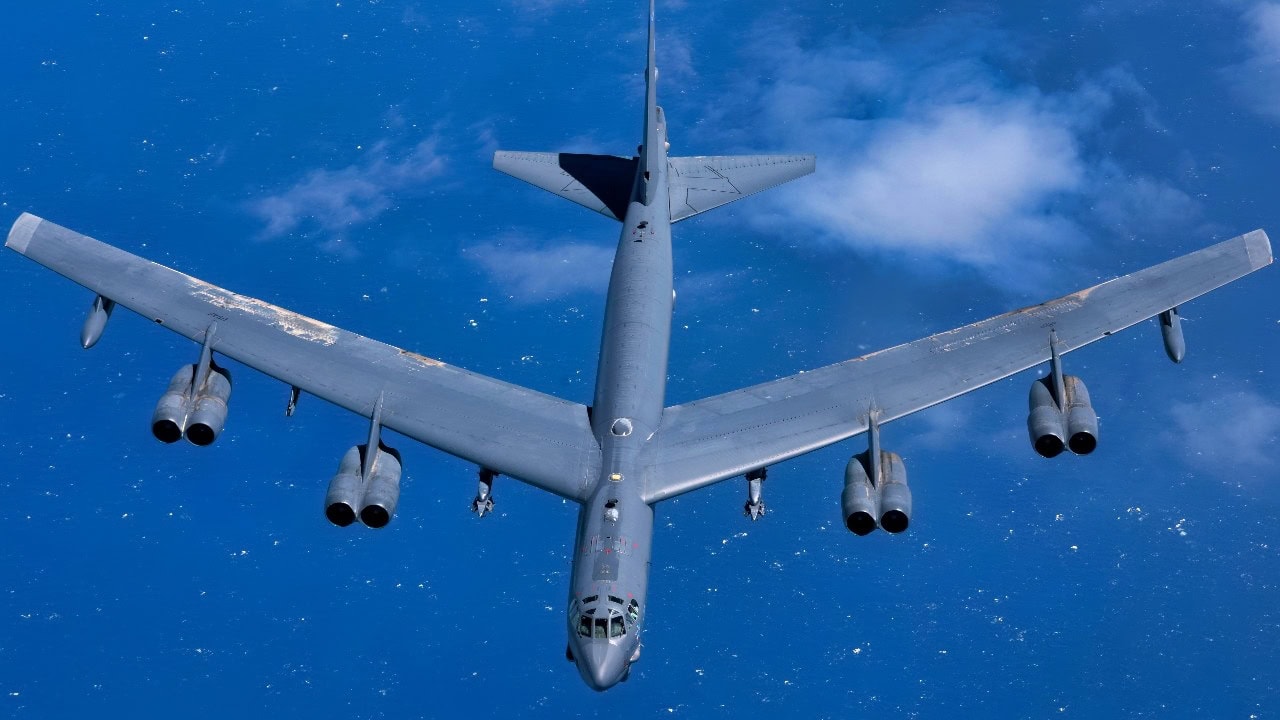
A U.S. Air Force B-52 Stratofortress, from the 5th Bomb Wing at Minot Air Force Base, N.D., breaks away after receiving fuel from a U.S. Air Force KC-135 Stratotanker from RAF Mildenhall, England, over the Mediterranean Sea April, 9, 2018. A formation of four KC-135s refueled two B-52s. Each KC-135 offloaded more than 80,000 pounds of fuel. (U.S. Air Force photo by Airman 1st Class Benjamin Cooper)
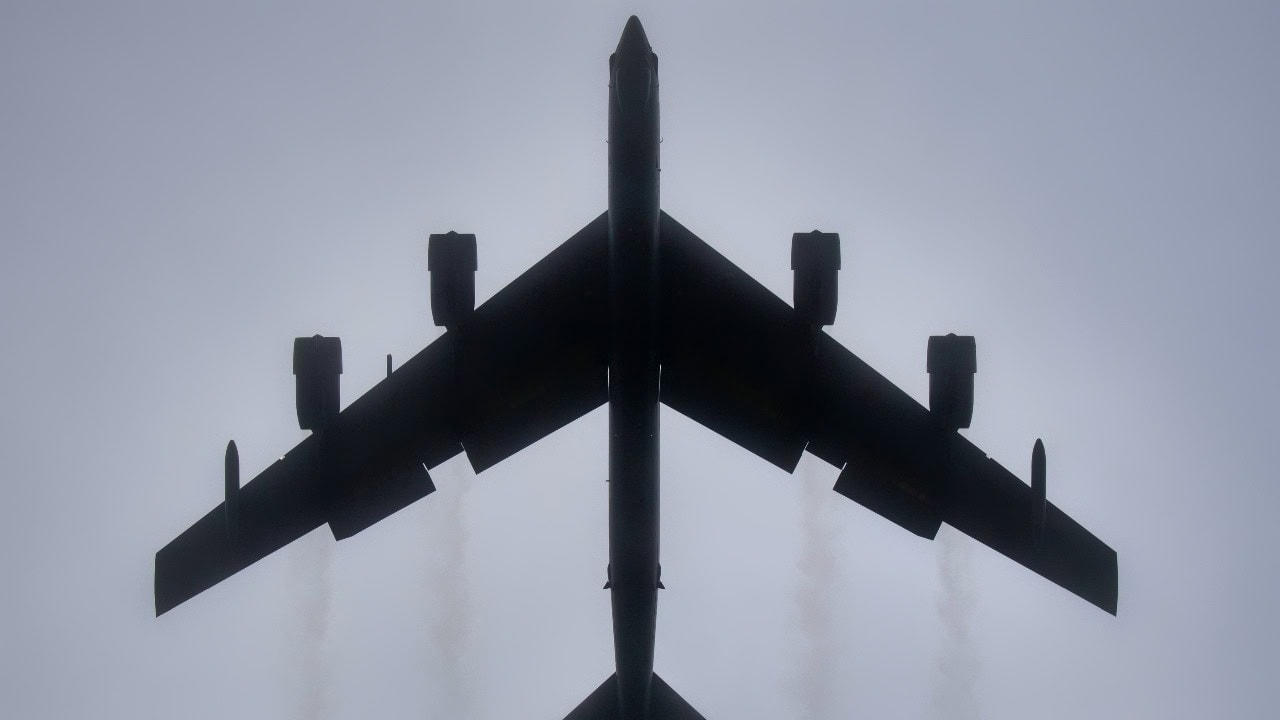
A B-52 Stratofortress takes off during Global Thunder 2019 at Barksdale Air Force Base, La., Nov. 5, 2018. Global Thunder is an annual U.S. Strategic Command (USSTRATCOM) exercise designed to provide training opportunities to test and validate command, control and operational procedures. The training is based on a notional scenario developed to drive execution of USSTRATCOM and component forces’ ability to support the geographic combatant commands, deter adversaries and, if necessary, employ forces as directed by the President of the United States. (U.S. Air Force photo by Airman 1st Class Lillian Miller)
However, “going strong” does not equate to “invincible” or “indestructible.”
All too many B-52s have been involved in fatal crashes, some due to enemy action (particularly during the Vietnam War), others due to mechanical failure or pilot error.
And the most recent such tragedy, in addition to the human cost, has also dealt a serious setback to the BUFF’s much-needed radar modernization program.
Bottom Line Up Front (BLUF)
Our chief source of information on this double-whammy of human tragedy and technological setback comes to us courtesy of Defense One senior reporter Thomas Novelly via a July 27, 2026 article titled ” Air Force will resume B-52 radar testing with second bomber after deadly crash.” To wit, the crash took place back on June 15, killing the entire eight-person crew that had embarked from Edwards AFB, California.
According to the official press release published on June 17 by the 412th Test Wing Public Affairs Office, the casualty list consisted of:
Col. Gregory Watson, 53, weapon systems officer, Boeing (Air Force reservist, assigned 10th Air Force, Naval Air Station Joint Reserve Base Fort Worth, Fort Worth, Texas), Shreveport, La.
Lt. Col. Gabriel Estrella, 40, weapon systems officer, Air Force Operational Test and Evaluation Center, Detachment 5, Edwards AFB, Calif.
-Retired Lt. Col. Miles Middleton, 50, pilot, Boeing, Tehachapi, Calif.
-Maj. Alexander Davis, 34, weapon systems officer, 419th Flight Test Squadron, Lancaster, Calif.
-Maj. Robert Dee, 40, pilot, 419th Flight Test Squadron, Edwards AFB, Calif.
-Maj. Brad Hovey, 35, pilot, 419th Flight Test Squadron, Edwards AFB, Calif.
-Jeromy Smith, 32, flight test engineer, 419th Flight Test Squadron, Rosamond, Calif.
-Christopher Rischar, 41, flight test engineer, JT4 contractor, Lancaster, Calif.
The ill-fated test flight was conducted as part of the USAF’s radar modernization program, which is intended to keep the service’s 75 Cold War-era bombers flying & fighting until at least the 2050s (at which point the venerable warbird will have attained centenarian status).
One Official’s Comments
Mr. Novelly thusly quotes Col. Spencer Turner, the B-52 system program manager: “’ The original acquisition plan and execution strategy was always to have two test aircraft…[the] modification effort on that second aircraft is ongoing… Obviously, the crash was not in our original schedule. So we need to look at our schedule and adjust as necessary.’”
Despite the godawful occurrence, Col. Turner outwardly expresses confidence that the Air Force will still complete the installation of the full radar suite onto the Stratofortresses “this year.”
Backstory: The B-52J’s (Prospective) Radar Renaissance and Why It’s Needed
The upgraded BUFF has been designated the B-52J. First and foremost on the laundry list of upgrades that it’s slated to receive is the Radar Modernization Program (RPM), which will be fulfilled by the AN/APQ-188.
This is a hybrid sensor system, built by Raytheon and already used by two other big-name Boeing-built birds, namely the F-15 Eagle and F/A-18 Super Hornet supersonic fighter jets (thus providing a fine example of cooperation between competing defense firms in the spirit of “One Team, One Fight”).
The radar system being used by the currently operational B-52H variants is the AN/APQ-166, which uses mechanical scanning and (like the B-52H itself) is of 1960s vintage; by contrast, the new Raytheon product is a far more sophisticated active electronically scanned array (AESA).
Whilst the older radar system relies on mechanical rotation or a single large transmitter, AESA operates by electronically steering its radar beam, thus allowing it to scan faster, track multiple targets simultaneously, and resist jamming more effectively than its predecessors.
These improvements are intended for completion by 2033.
Additional Challenges
As if the fatal crash weren’t bad enough, the B-52J has faced additional challenges, including those of a monetary and political nature.
Last year, the RPM ran afoul of those oh-so-dreaded cost overruns, which in turn triggered a breach of the Nunn-McCurdy Act.
Named for now-retired Sen. Sam Nunn (D-GA) and retired Rep. Dave McCurdy (D-OK), this piece of legislation was born within the 1982 Defense Authorization Act, and it requires the armed services to inform Congress when a program’s cost or schedule estimate has increased substantially from its approved level.
More specifically, the Government Accountability Office (GAO) warned in a report released earlier this month that the production design for the RPM was “planned with very little development flight testing completed” and “beginning production with limited testing of a fully integrated system often results in costly and time-intensive rework if the program discovers issues later.”
If and when the B-52J program clears all of these hurdles, the BUFFs will have to be upgraded at the rate of eight airframes per annum in order to meet the 2033 target completion date.
Time will tell. Stay tuned, dear readers.
About the Author: Christian D. Orr
Christian D. Orr is a Senior Defense Editor. He is a former Air Force Security Forces officer, Federal law enforcement officer, and private military contractor (with assignments worked in Iraq, the United Arab Emirates, Kosovo, Japan, Germany, and the Pentagon). Chris holds a B.A. in International Relations from the University of Southern California (USC) and an M.A. in Intelligence Studies (with a concentration in Terrorism Studies) from American Military University (AMU). He is also the author of the book “Five Decades of a Fabulous Firearm: Celebrating the 50th Anniversary of the Beretta 92 Pistol Series,” the second edition of which was recently published.