Summary and Key Points: Iran recently fired a hypersonic anti-ship ballistic missile at USS George Washington, and the Navy now has two carriers in the Middle East with a third nearly inside the CENTCOM area. The best evidence on what it takes to sink one dates to April 2005, when the Navy towed the decommissioned USS America 300 miles off Virginia and spent several weeks hitting her with controlled explosions above and below the waterline. The 80,000-ton Kitty Hawk-class carrier, commissioned in 1965 and retired in 1996, stayed afloat through all of it. The Navy scuttled her on May 14, 2005, and she lies three miles down. The lesson for Iran’s missiles and drone swarms is double-edged: sinking a carrier is very hard, but an enemy only has to keep it from launching aircraft to win.
Could Iran Sink a Navy Aircraft Carrier? History Has Answers
As the Iran War continues, with fears that massive escalation is coming soon, the United States Navy has two aircraft carriers in the Middle East, with a third nearly in the CENTCOM area of responsibility (AOR).
These three leviathans will be key to any military move by the Americans against the Islamic Republic of Iran.
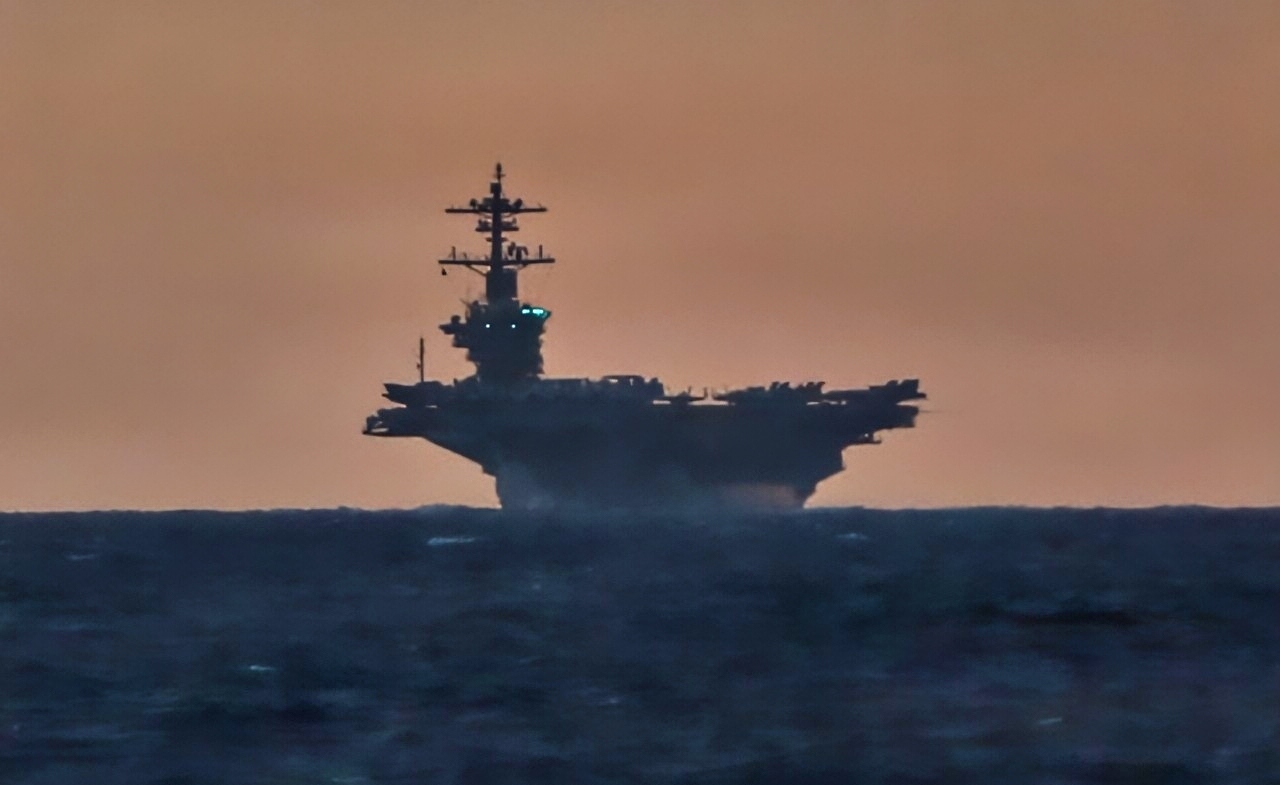
Nimitz-class aircraft carrier USS Abraham Lincoln (CVN 72), right, and Ticonderoga-class guided-missile cruiser USS Robert Smalls (CG 62) sail in the South China Sea, Sept. 14, 2026. Frank E. Petersen Jr. is underway conducting routine operations in the U.S. 7th Fleet area of operations. Units assigned to 7th Fleet conduct continuous patrols to deter aggression, strengthen alliances and partnerships, and advance peace through strength. (U.S. Navy photo by Mass Communication Specialist 2nd Class Nathaly Cruz)
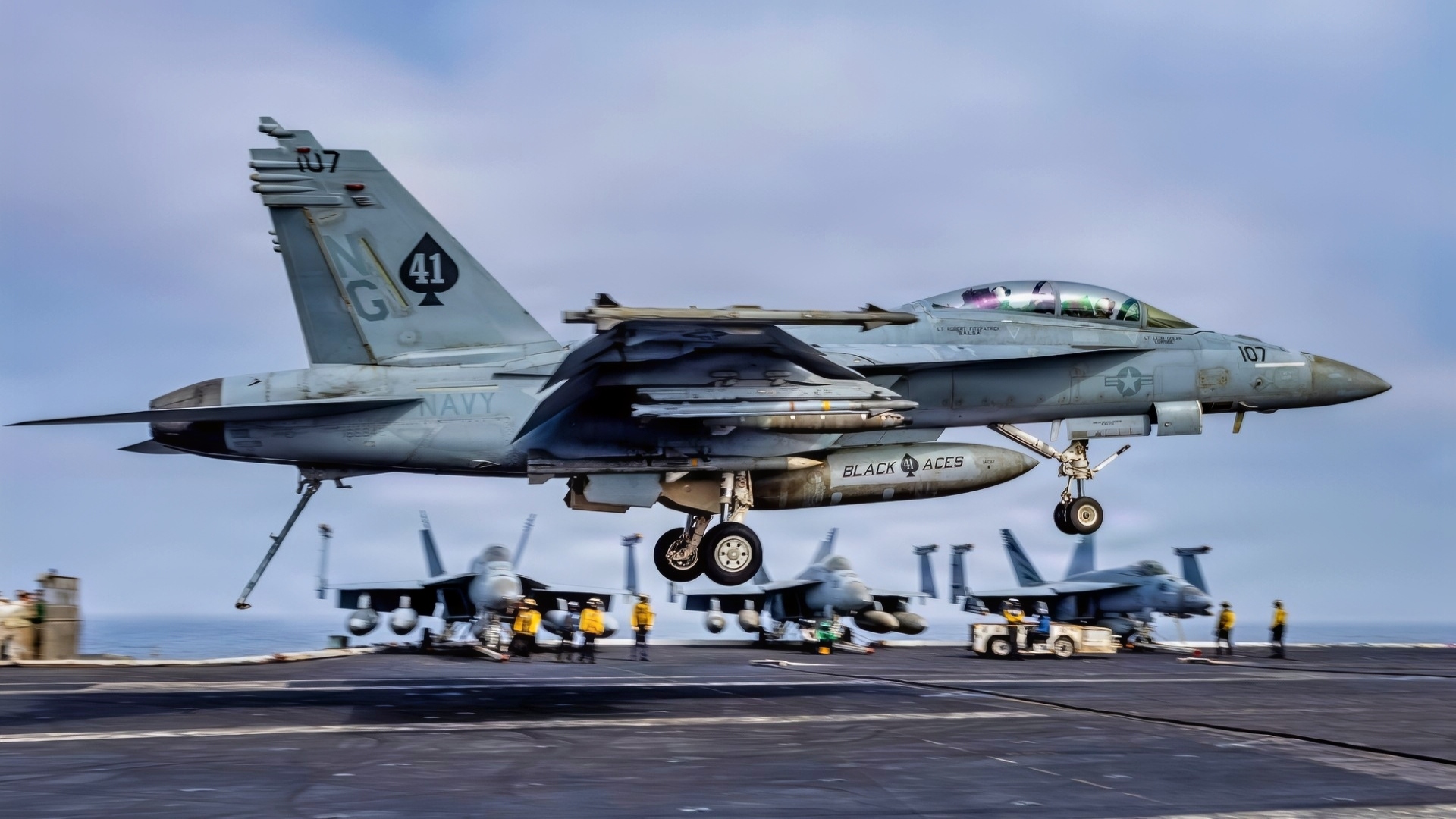
An F/A-18F Super Hornet, assigned to Strike Fighter Squadron (VFA) 41, prepares to make an arrested landing on the flight deck of Nimitz-class aircraft carrier USS Abraham Lincoln (CVN 72), Aug. 4, 2026. Abraham Lincoln is deployed to the U.S. 5th Fleet area of operations to support maritime security and stability in the Middle East. (U.S. Navy photo)
But the Pentagon worries that the Iranians might have significant anti-ship ballistic missile and drone swarming capabilities that will significantly threaten the American carriers, even as a protective envelope of carrier escorts surrounds them.
In the age of anti-access/area-denial (A2/AD), even the most powerful warships protected by a robust escort are vulnerable to swarming tactics.
This was a warning that the Iranians sent to the US Navy when they fired a hypersonic ASBM at the USS George Washington recently.
Experts in the United States insist that sinking an aircraft carrier is a far harder task than what many in the media, or the Iranians, think.
And they point to the deliberate sinking of the aging, decommissioned Kitty Hawk-class conventionally powered aircraft carrier, the USS America (CV-66).
The USS America
The America had served for 30 years before being decommissioned.
Rather than turn the great ship into a museum, the Navy wanted to use her for target practice, to determine how an adversary might conceivably sink an American flat top.
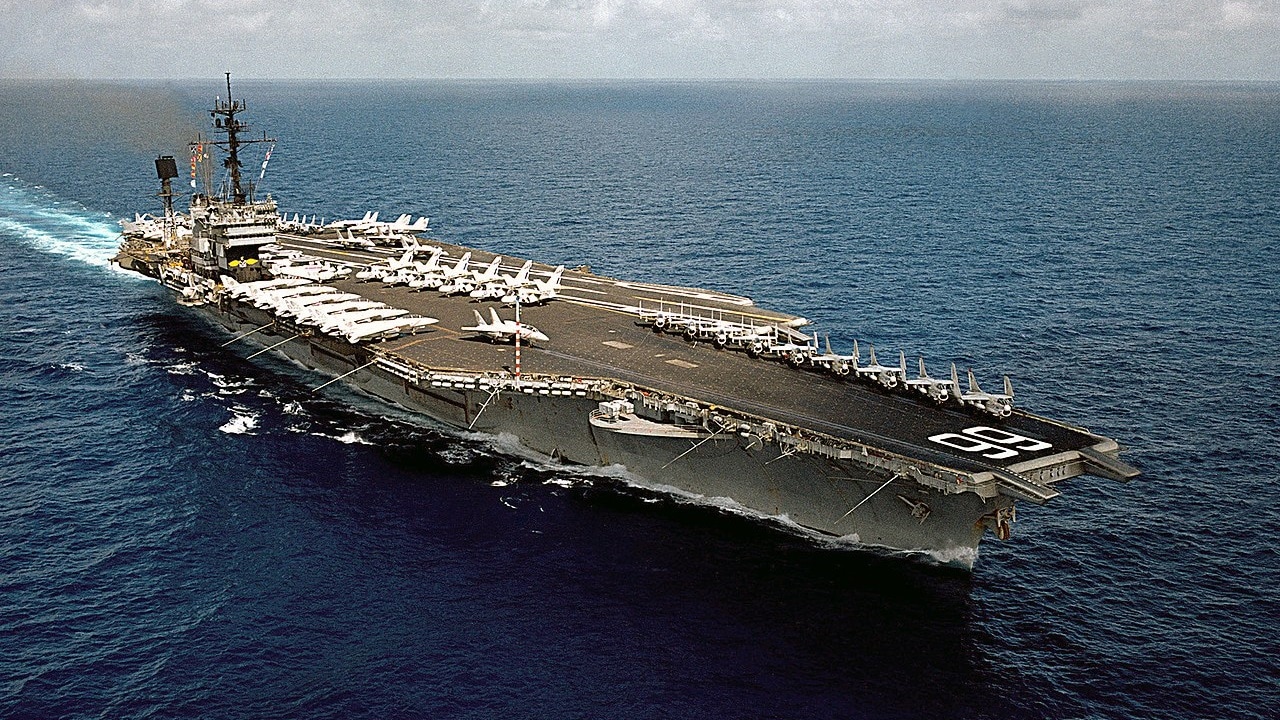
An aerial starboard bow view of the aircraft carrier USS AMERICA (CV-66) underway.
The Navy learned that even a decommissioned, old aircraft carrier rigged for sinking could take a wallop.
America was commissioned on January 23, 1965.
At the time of its commissioning, the USS America was among the largest warships of its day.
Newport News Shipbuilding in Virginia built the ship. America could displace roughly 80,000 tons (depending on its configuration).
Eight boilers powered four steam turbines and four shafts, driving the great ship forward at speeds that could exceed 30 knots. She carried an air wing of up to 90 aircraft and 5,000 personnel, including the embarked air wing.
USS America served from 1965 to 1996.
Sinking America
In April 2005, the America was towed into the Atlantic Ocean by the Navy and subjected to a series of destructive tests.
Positioned 300 miles off the Virginia coast, the Navy conducted these devastating experiments far from commercial shipping routes and populated areas.
The Navy took several weeks to complete the task.
Controlled explosions were intended to reveal how a large aircraft carrier’s structure responded to severe damage.
Engineers studied the carrier’s response to explosive shock and structural stress.
Then, the Navy focused on tests highlighting how the ship could endure underwater detonations.
These explosions are especially dangerous because water transmits shock waves with even greater destructive force on a targeted ship than air explosions.
Such an explosion can deform the hull, damage internal machinery, and turn off key electrical systems.
So the Navy wanted to know how underwater blast forces could affect a supercarrier’s massive superstructure and how future carrier designs could better withstand these attacks.
Navy engineers determined that the USS America remained afloat throughout the testing.
Once the Navy acquired the data it needed, it scuttled the carrier on May 14, 2005.
The ship finally sank into the Atlantic, coming to a rest three miles below the surface.
While the tests showed how difficult it is to sink a carrier, the Navy must distinguish between controlled-environment test results and what may happen in conflict.
Iranian (or Chinese) swarming tactics mean the enemy can overwhelm the traditional defenses surrounding an aircraft carrier.
What’s more, the Iranians have a cluster of diesel-electric submarines that could conceivably get a lucky torpedo shot at one of the American carriers operating near Iranian territory.
Carriers are astonishingly fast and maneuverable for a ship their size.
So, even under swarm attack, if the carrier had enough time to react, it could conceivably flee the engagement area and avoid significant damage.
Then again, the point of A2/AD attacks is less about sinking ships and more about denying those ships the ability to get within range of their targets; to prevent the launch and recovery of aircraft from those carriers, forcing warplanes to rely upon midair refueling–and those midair refuelers are vulnerable to attack.
So, if the goal of either Iran’s or China’s A2/AD attacks is to sink the carrier, all an adversary needs to do is threaten the carrier’s safe operation to neuter its ability to launch and recover aircraft effectively, and the attack will have succeeded.
Many advocates for aircraft carriers are confused by those of us who believe the carrier’s utility is decreasing in the age of drone swarms and missile barrages because of its engineering.
To be fair to carrier supporters, these ships are remarkable feats of engineering. And America maintains 11 nuclear-powered supercarriers (though only a few are ever available).
Damage Control
Because of the carrier’s sheer size, it can sustain substantial damage while retaining buoyancy. A second component is the carrier’s compartmentalization.
Massive ships have watertight spaces separated by bulkheads and decks.
These compartments can reduce the risk of massive flooding that would normally sink a ship if its superstructure is threatened.
A third important element on a carrier is redundancy.
The ships employ multiple electrical distribution systems, as well as firefighting networks, pumps, and other damage-control stations.
As long as the carrier’s superstructure maintains some degree of integrity after being struck in combat, the crew is trained enough and familiar with the ship’s systems to contain the damage before it spreads.
If, however, multiple hull breaches do occur–combined with progressive flooding, uncontrolled fires, or a loss of critical systems–even the skilled crew could be overwhelmed.
That doesn’t even include the massive amounts of aviation fuel, ordnance, and other hazardous materials that could be set off in a combat situation.
Can a Carrier Survive Swarming Tactics?
The swarming tactics America’s enemies have developed are meant to overwhelm the carrier’s crew and ship’s impressive damage-control capabilities.
That’s why the Navy has been so hesitant to put the carriers close to Iran’s shores.
Even though carriers are impressive feats of engineering, they remain vulnerable to the kind of attack Iran and China plan to subject them to if the carriers get within range of ASBM systems.
Aircraft carriers remain engineering marvels.
But their combat utility is decreasing (at least until the military can devise workarounds to the A2/AD networks that US rivals have created for themselves).
The USS America shows that sinking a carrier, even in controlled conditions, is hard. But damaging it is another matter entirely.
A rival does not have to sink a carrier to defeat it.
About the Author: Brandon J. Weichert
Brandon J. Weichert is the Senior National Security Editor at 19FortyFive.com. He also manages The Weichert Brief on Substack. Weichert is the co-host for The Mario Nawfal Show on Twitter/X. He is the author of four bestselling national security books, most recently A Disaster of Our Own Making: How the West Lost Ukraine (Encounter Books). His next book, Fortress Americas: A New Monroe Doctrine (Tucker Carlson Books), is due out December 8. Follow him via Twitter/X @WeTheBrandon.