
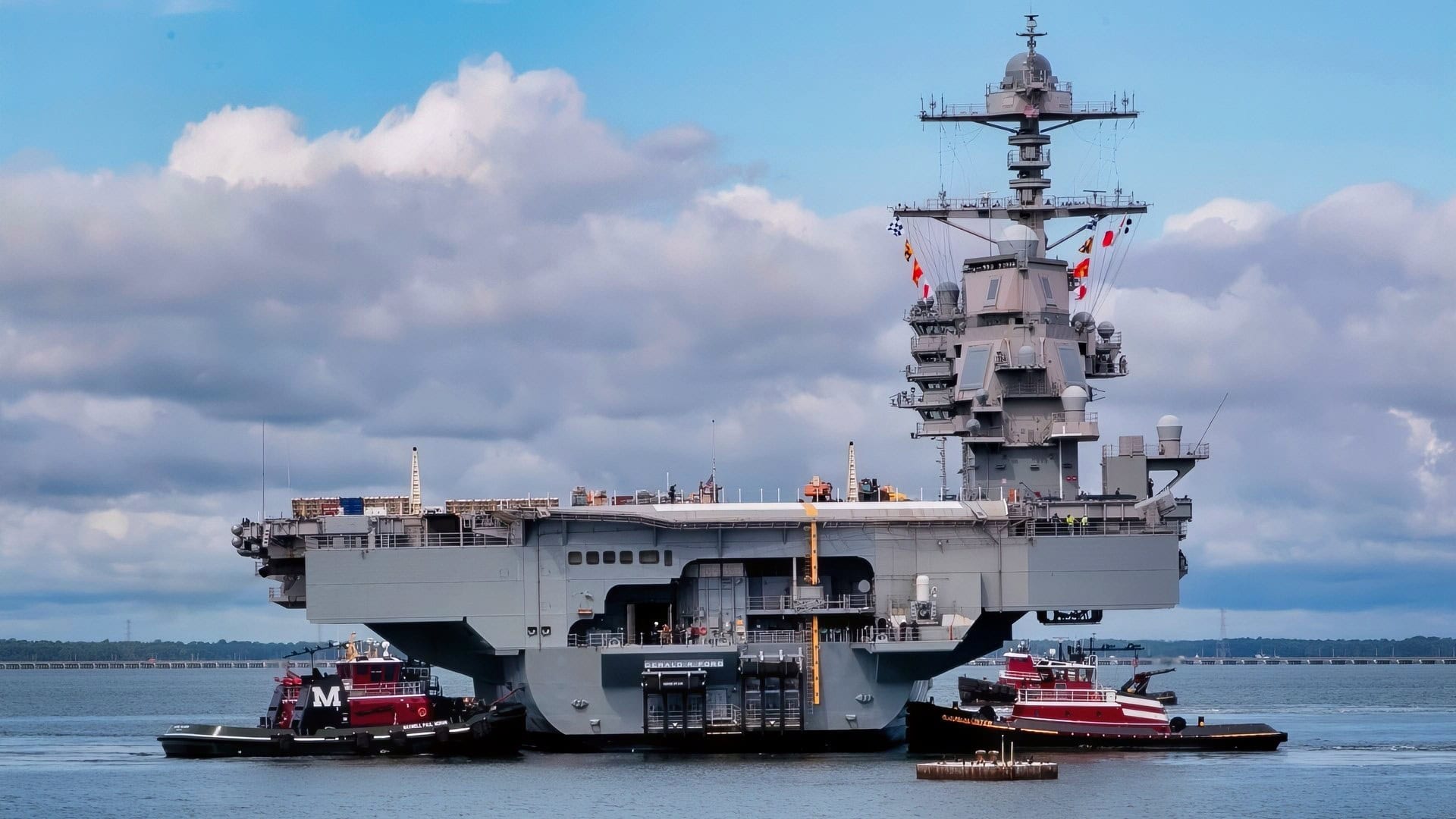
Whilst the merits of the all-too-brief term of service by John Fitzgerald Kennedy as the 35th President of the United States—”1,000 Days,” as per the title of the Pulitzer Prize-wining book by Dr. Arthur M. Schlesinger—can be debated by political scholars until they’re blue in the face, there is very little if any doubt about the tremendous heroism displayed by then-U.S. Navy LTJG Jack Kennedy as skipper of PT-109 during World War II.
Therefore, it’s highly apropos that JFK would have one or more USN warships named in his honor.
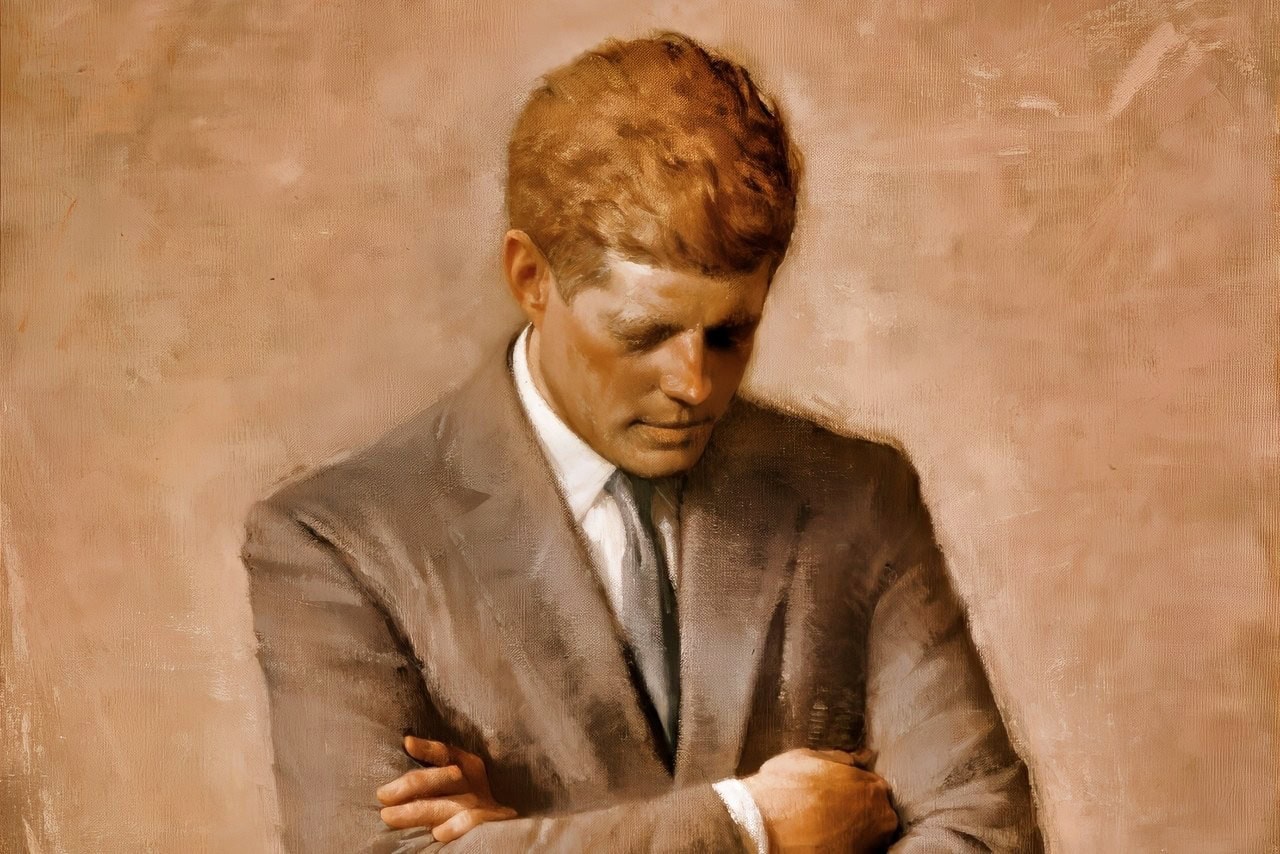
John F. Kennedy U.S. President. Image Credit: Creative Commons.
The latest such warship bearing his namesake just got the latest round of Navy approvals, which is kind of a big deal.
Bottom Line Up Front (BLUF)
More specifically, it has been reported that the Gerald R. Ford-class nuclear-powered supercarrier USS John F. Kennedy (CVN-79) completed her acceptance sea trials this past Saturday, 15 August 2026; those trials began three days earlier.
Thus, this mighty vessel is being nudged ever closer to its scheduled 2027 delivery and thereby helping to at least partially alleviate the USN’s ever-concerning shortage of operational “flattops.”
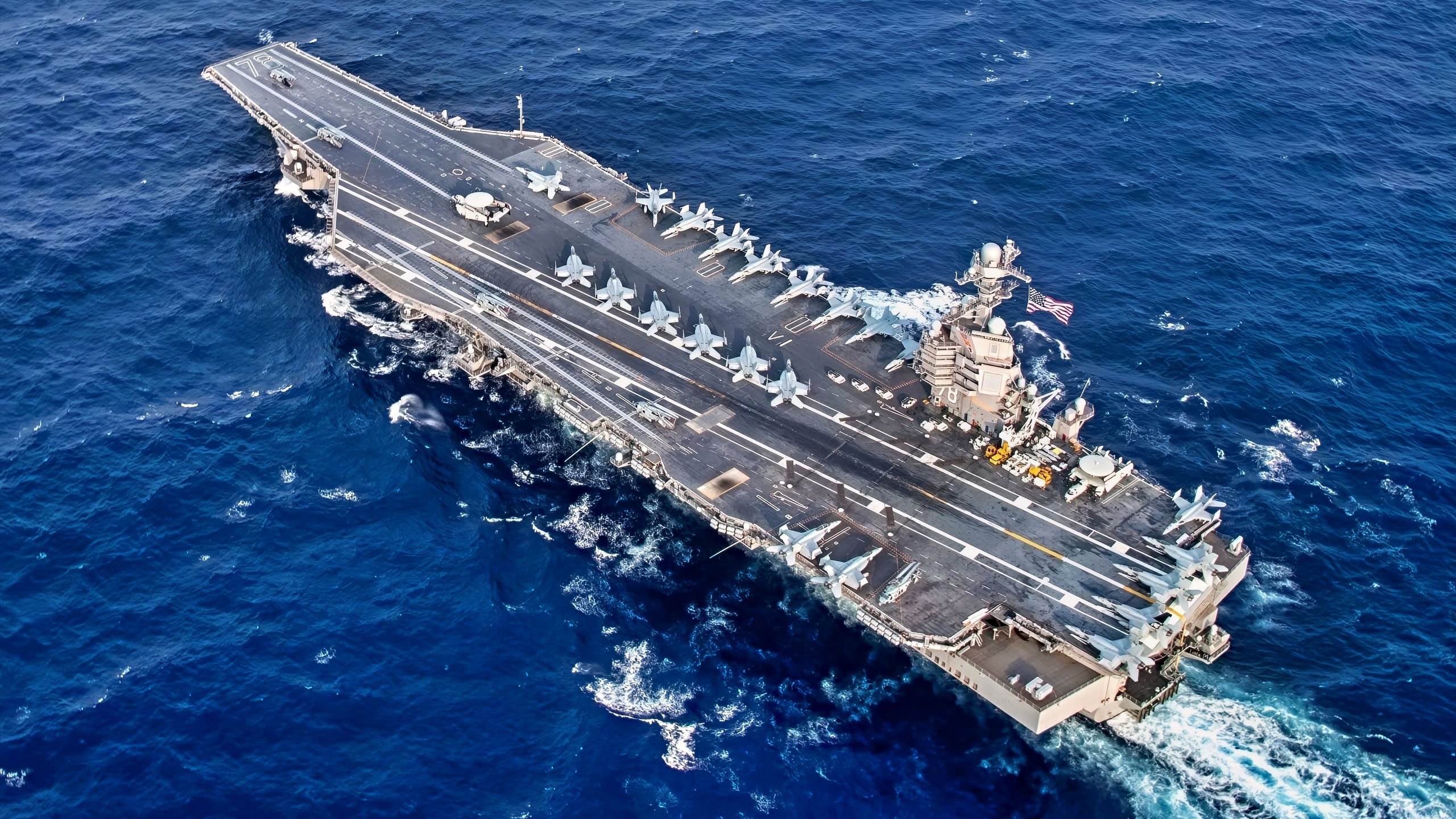
The Ford-class aircraft carrier USS Gerald R. Ford (CVN 78) and the Nimitz-class aircraft carrier USS Harry S. Truman (CVN 75) transit the Atlantic Ocean June 4, 2020, marking the first time a Ford-class and a Nimitz-class aircraft carrier operated together underway. Ford is underway conducting integrated air wing operations, and the Harry S. Truman Carrier Strike Group remains at sea in the Atlantic as a certified carrier strike group force ready for tasking in order to protect the crew from the risks posed by COVID-19, following their successful deployment to the U.S. 5th and 6th Fleet areas of operation. (U.S. Navy photo by Mass Communication Specialist Seaman Riley McDowell)
Back in late January, CVN-79 set sail under her own power from Newport News, Virginia, for the first time, subsequent to a flattop fast-tracking announcement by the Navy in the first week of that month. Those particular trials were completed in February.
Why Is It a Big Deal?
Well, for one thing, there’s that aforementioned shortage of carriers, Ford-class and Nimitz-class alike. Set featured image
USN logisticians apply a “rule of thirds” to carriers: at any given time, one-third of these warships are deployed, one-third are preparing for deployment, and one-third are undergoing maintenance.
With 11 carriers in the fleet, this means only three to four are typically on sea duty.
Moreover, nuke-powered supercarriers must undergo a refueling and complex overhaul (RCOH) every 25 years, which entails cutting a massive hole in the hull and replacing everything from catapult systems to water purifiers.
It’s also a big deal because USS John F. Kennedy will be just the second of the long-awaited Ford-class carriers to get underway.
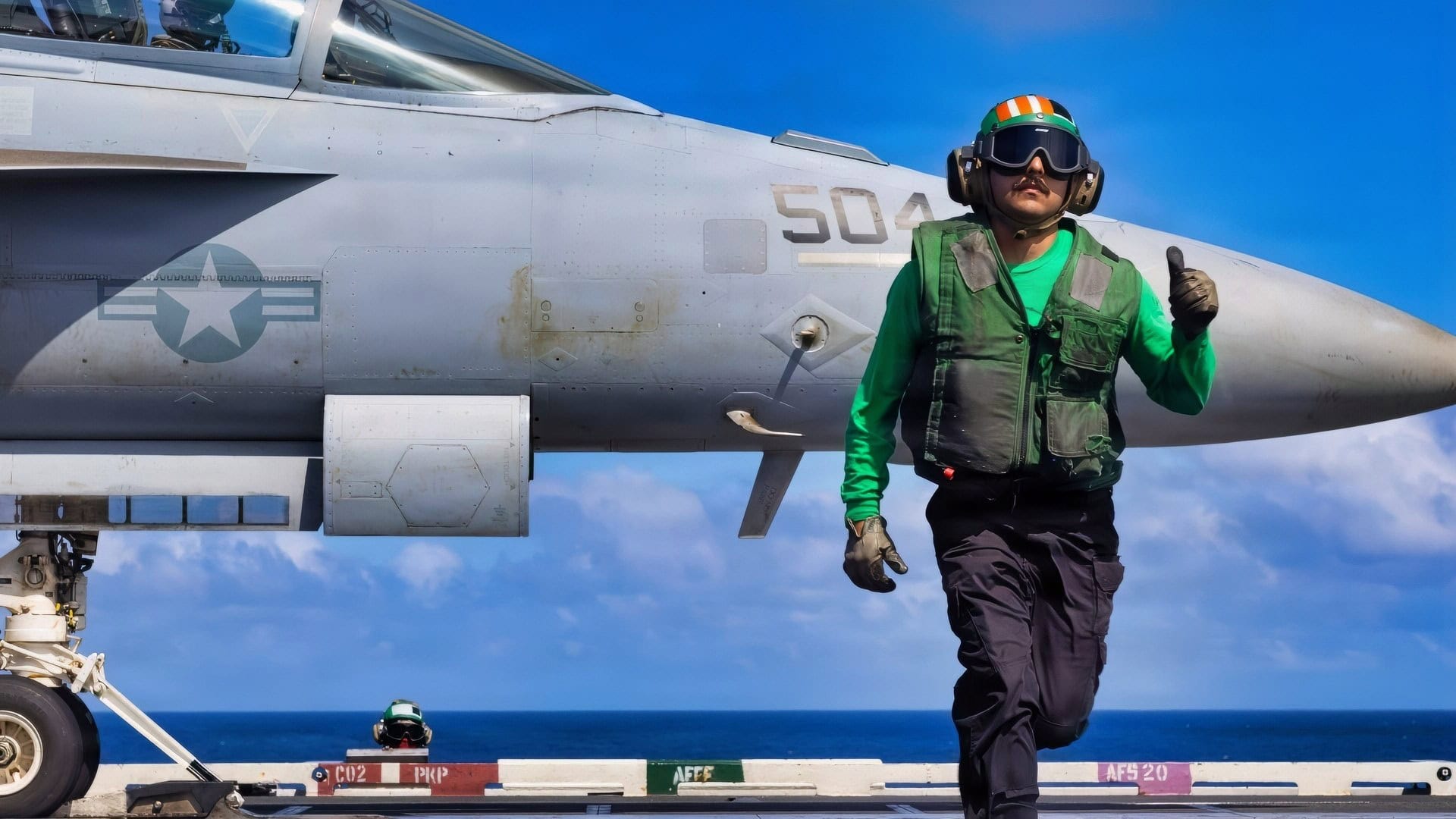
A U.S. Sailor signals the launch of an E/A-18G Growler aircraft, attached to Electronic Attack Squadron 142, from the flight deck of the world’s largest aircraft carrier, Ford-class aircraft carrier USS Gerald R. Ford (CVN 78), while underway in the Caribbean Sea, Jan. 31, 2026. U.S. military forces are deployed to the Caribbean in support of the U.S. Southern Command mission, Department of War-directed operations, and the president’s priorities to disrupt illicit drug trafficking and protect the homeland. (U.S. Navy photo)
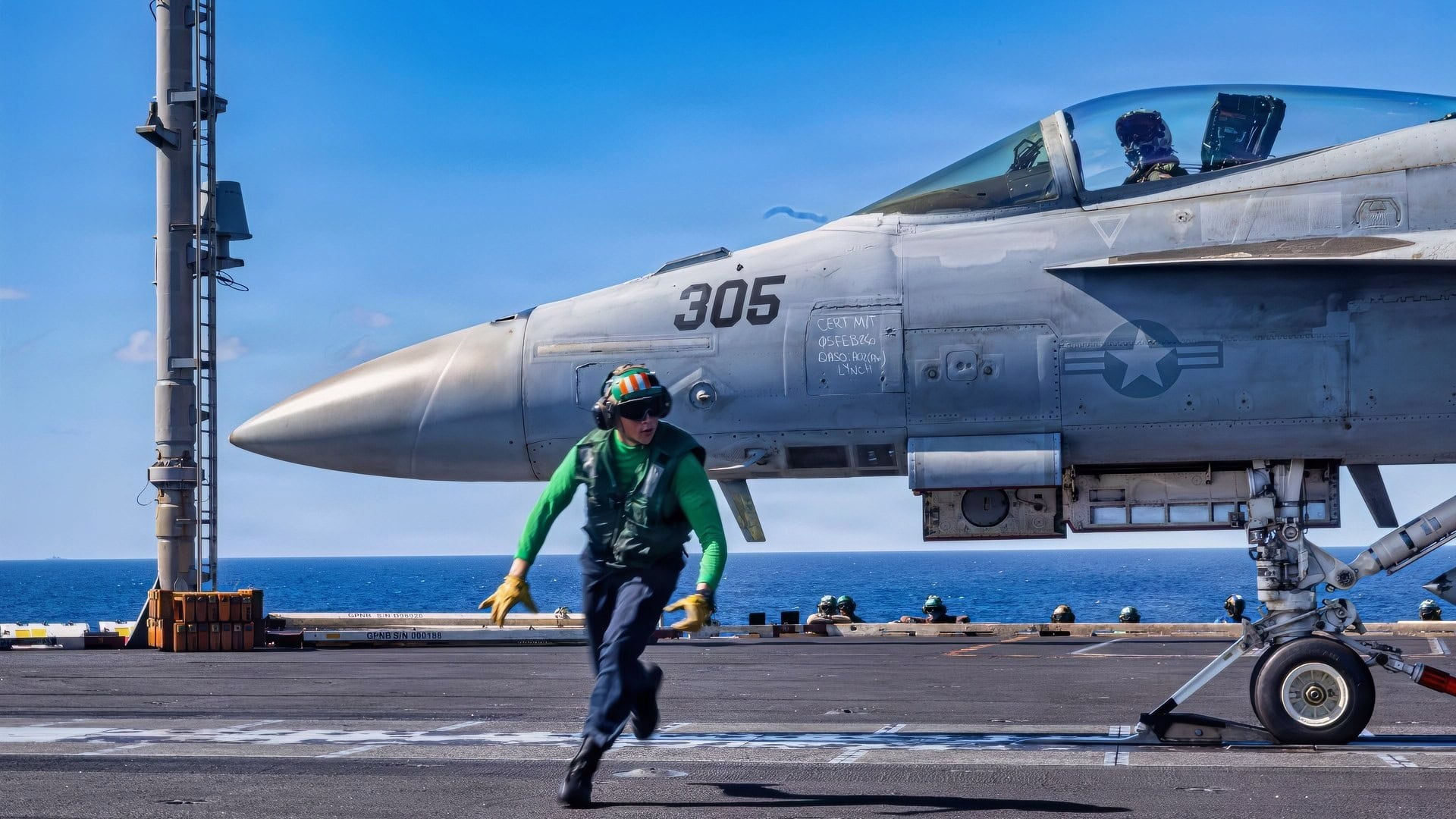
A U.S. Sailor moves behind a flight deck foul line before the launch an F/A-18E Super Hornet aircraft, attached Strike Fighter Squadron 31, from the flight deck of the world’s largest aircraft carrier, Ford-class aircraft carrier USS Gerald R. Ford (CVN 78), while underway in the Caribbean Sea, Feb. 5, 2026. U.S. military forces are deployed to the Caribbean in support of the U.S. Southern Command mission, Department of War-directed operations, and the president’s priorities to disrupt illicit drug trafficking and protect the homeland. (U.S. Navy photo)
And it’s a big deal because it’s a tangible symbol of overcoming the setbacks that the JFK has had to overcome just to make it to this point:
-Her delivery, originally slated for July 2025, was, according to the Navy’s FY2026 budget documents, delayed due “to support completion of Advanced Arresting Gear (AAG) certification and continued Advanced Weapons Elevator (AWE) work.”
-Just two months ago, a crewmember, Boatswain’s Mate Seaman Jesse Braswell, was fatally shot aboard the vessel; according to an official Navy statement, “The situation is currently under investigation and further information will be provided once available.”
Tech Specs, Vital Stats, and Capabilities
The term “supercarrier” is not mere hyperbole. Built by Huntington Ingalls Industries (HII)-laid down on 22 August 2015 and christened on 7 December 2019 by the late President’s own daughter Caroline Kennedy—USS John F. Kennedy sports some super stats indeed, from an overall length of 1,092 feet and a flight deck width of 252 feet to a fully laden displacement of 100,000 tons.
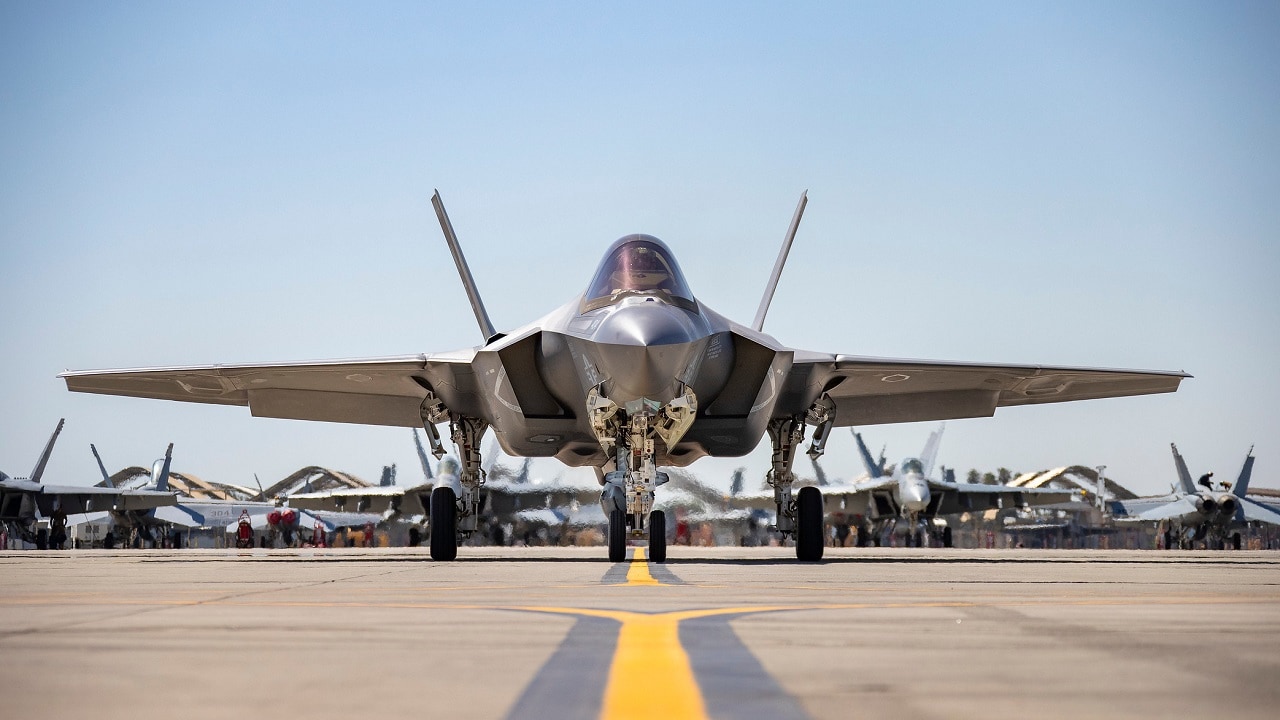
F-35C. Image Credit: Lockheed Martin.
Those dimensions will be needed to accommodate the warship’s crew of 508 commissioned officers and 3789 enlisted seamen, as well as the carrier’s raison d’etre, her 90 fixed-wing aircraft and helicopters. Those 90 airframes would presumably consist of the following:
-F-35C Lightning II – The Navy’s player in the 5th Generation stealth fighter game
-E-2D Advanced Hawkeye – Long-range airborne early warning and control aircraft, in the same vein as the U.S. Air Force’s E-3 Sentry AWACS platform
-EA-18G Growler – The go-to for electronic warfare (EW), particularly suppression of enemy air defenses (SEAD)
-F-A-18E/F Super Hornet – The air-to-air and air-to-ground combat platform immortalized by “Top Gun 2: Maverick”
-MH-60R/S Seahawk – The Navy’s anti-submarine warfare (ASW) and search and rescue (SAR) helicopter
-MV-22B Osprey – Both fish and fowl metaphorically speaking, this hybrid tiltrotor aircraft serves amphibious assault missions
Presumably, if and when the 6th Generation F/A-XX fighter program becomes a reality, CVN-79 will be able to accommodate it as well.
Whatever the specific aircraft platform, the JFK’s warbirds will be sent skyward via the vessel’s highly sophisticated EMALS Electromagnetic Catapults.
The vessel’s motto is “Serve With Courage!” which is presumably an homage to the ship’s namesake’s bestselling 1955 book “Profiles In Courage.”
Backstory and Postscript
The original USS John F. Kennedy (CV-67) was the last conventionally powered USN aircraft carrier—indeed a variant of the Kitty Hawk-class carriers—as every supercarrier since then has been nuclear-powered, hence the “CVN” portion of the alphabetic portion of the ships’ alphanumeric hull numbers as opposed to merely “CV.” Serving from 1968 to 2007, CV-67 was also christened by Caroline Kennedy.
Methinks it is appropriate to conclude this article with a quote from Jack Kennedy himself.
We shall go with the most famous snippet from his speech made at the U.S. Naval Academy in Annapolis, Maryland, back on August 1, 1963: “And any man who may be asked in this century what he did to make his life worthwhile, I think can respond with a good deal of pride and satisfaction: ‘I served in the United States Navy.’”
About the Author: Christian D. Orr
Christian D. Orr is a Senior Defense Editor. He is a former Air Force Security Forces officer, Federal law enforcement officer, and private military contractor (with assignments worked in Iraq, the United Arab Emirates, Kosovo, Japan, Germany, and the Pentagon). Chris holds a B.A. in International Relations from the University of Southern California (USC) and an M.A. in Intelligence Studies (with a concentration in Terrorism Studies) from American Military University (AMU). He is also the author of the book “Five Decades of a Fabulous Firearm: Celebrating the 50th Anniversary of the Beretta 92 Pistol Series,” the second edition of which was recently published.