
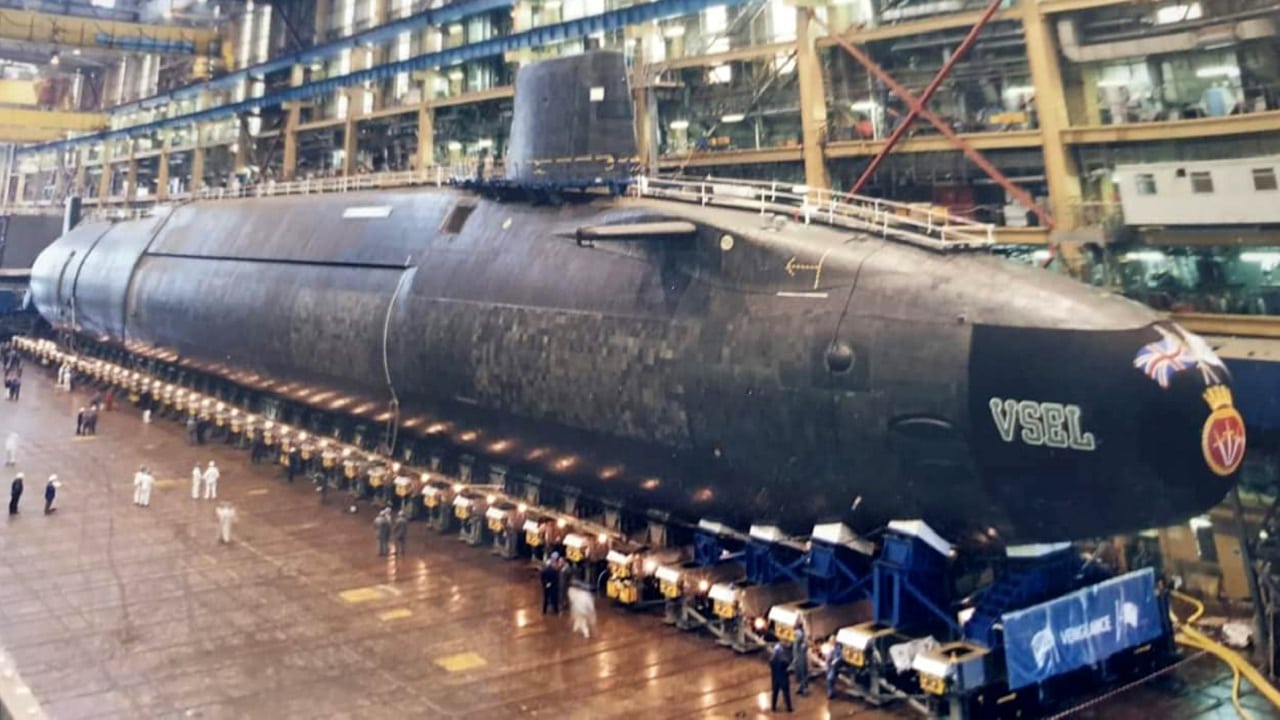
Summary and Key Points: The Royal Navy’s Vanguard-class SSBN submarines are among the most powerful weapons ever designed by man, able to destroy cities at will thanks to long-range missiles carrying nuclear weapons. And yet, their age is showing.
The Royal Navy’s Vanguard-class Troubles
Britain’s nuclear deterrent rests on four submarines that should already be retired. Operation Relentless, the Royal Navy’s continuous at-sea deterrent, has kept a British missile boat on patrol every day since April 1969. For three decades, the Vanguard class has done that job: HMS Vanguard, Victorious, Vigilant and Vengeance.
However, the boats are old, overworked, and carrying a track record of failures that would get anyone’s attention. That’s of secret anymore.
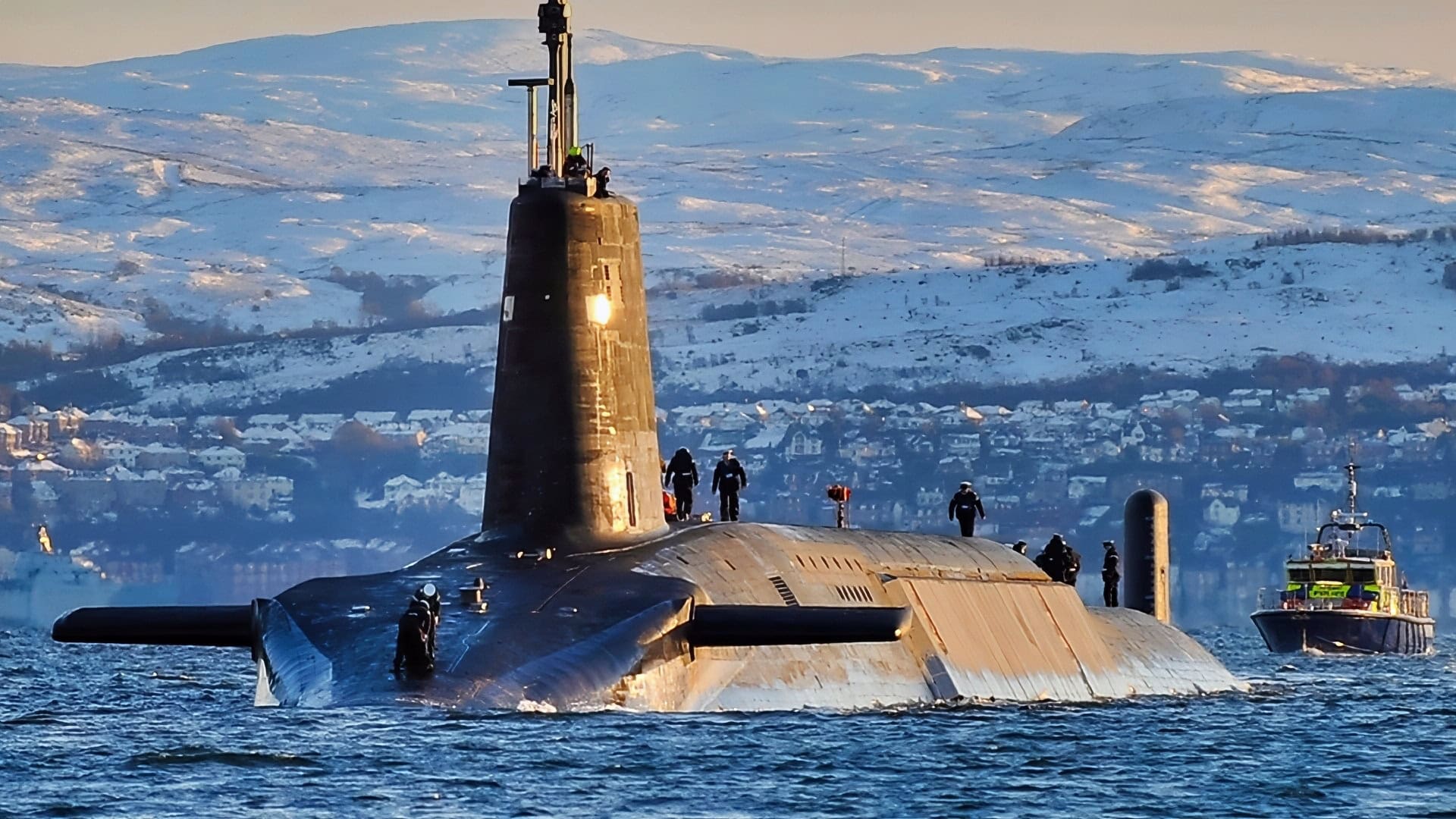
HMS Vanguard Royal Navy SSBN Submarine
Built For 25 Years, But The Vanguard Class Is Pushing 40
HMS Vanguard was commissioned in 1993, and the class was built for roughly 25 years of service. The plan was to hand the mission to a new class sometime in the 2020s.
Then in 2010, the government pushed back approval of the successor program, now Dreadnought, by five years. Navy Lookout estimates that this saved around £750 million in the short term and has cost billions since.
First steel for HMS Dreadnought was cut in 2016. The MoD now says she’ll enter service in the early 2030s, and she probably won’t start a first patrol before 2032. By then, the Vanguard will be 39 years old.
Two Tests, Two Failures Firing The Trident II D5 Missiles
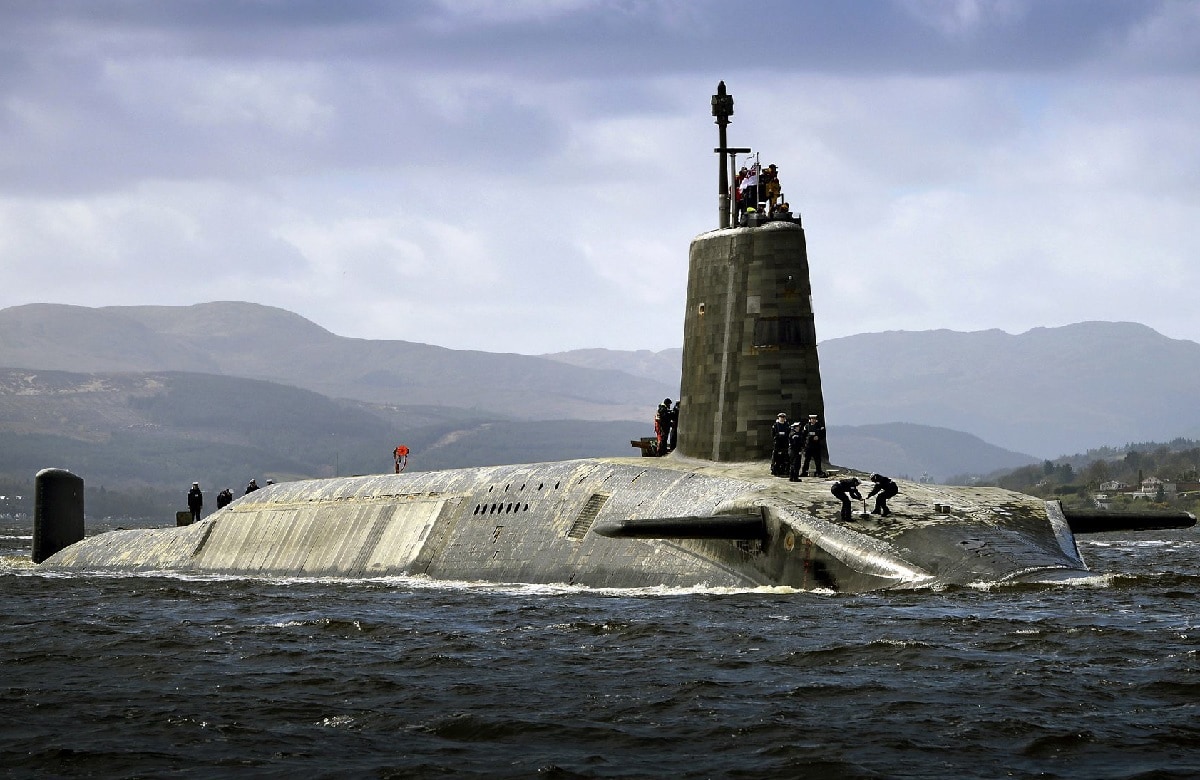
Vanguard-class. Image: Creative Class.

HMS Victorious, one of the Royal Navy’s four strategic missile submarines. Departs HM Naval Base Clyde, Faslane, for a major refit at Devonport. Object Name: 04115848 Organization: Royal Navy Supplemental Categories: Equipment, Submarines, Ballistic Keywords: Submarine, Vanguard Class, Clyde, Royal Navy, SSBN, HMS Victorious, Faslane, Mountains Country: Scotland.
In June 2016, HMS Vengeance fired an unarmed Trident II D5 off Florida during her post-refit shakedown.
The missile reportedly veered off course toward the U.S. East Coast.
The MoD insisted the test was a success and the boat was certified for patrol.
However, Parliament was kept in the dark before the July 18, 2016 vote to replace the Vanguards.
When the story broke the following January, Prime Minister Theresa May declined four times to say whether she knew beforehand.
Fast forward to January 30, 2024. HMS Vanguard, fresh out of a refit lasting more than seven years, fired a Trident in the Atlantic with the Defense Secretary reportedly aboard.
Reports say compressed gas pushed the missile out of the tube, the first-stage motor never lit, and it dropped into the sea near the submarine.
The MoD called it an “anomaly” and said it was specific to the event.
Two consecutive British test launches.
Two failures.
For a deterrent that runs entirely on dependability, that’s a problem.
Collisions, Depth Gauges, And Cocaine Usage With The Crew
On February 3, 2009, HMS Vanguard collided with the French missile submarine Le Triomphant in the middle of the Atlantic.
“The incident raised serious concerns about naval safety protocols and the lack of communication between allied nations operating stealth vessels in proximity,” Brandon Weichert wrote.
Two allied boats, both loaded with nuclear missiles, both so quiet that neither knew the other was there.
No one was hurt, and nothing leaked.
A whistleblower later alleged the damage was far worse than the Navy let on.
In 2017, HMS Vigilant became a tabloid fixture.
Her captain was relieved over an alleged relationship with a crew member, the executive officer was removed over another, and nine sailors were discharged after failing drug tests, reportedly for cocaine.
Then came the depth gauge.
A Vanguard-class boat’s main gauge failed while she was diving ahead of a patrol in 2022, and the crew caught it with the backup.
Armed Forces Minister James Heappey later told MPs the second gauge averted what was reported to be an imminent incident.
Heappey never named the missile boat.
The Vanguard-class subs appear to be running on fumes, as equipment problems and discipline problems tend to go hand in hand.
Neither one shows up by accident.
Seven Years In Dock
HMS Vanguard entered Devonport in December 2015 for a refit planned at about three and a half years. She didn’t sail again until 2023, and the bill topped £500 million.
Part of the reason was a reactor coolant leak found in 2012, traced to a microscopic breach in the fuel cladding of her PWR2 core.
That forced an early refuel.
The public didn’t hear about the leak until 2014.
While one boat sits in dock, the others pay for it at sea, an issue that has plagued the US Navy’s carrier strike groups as well.
In April 2026, a Vanguard boat returned to Faslane after 205 days on patrol, a Royal Navy record.
Its previous patrol lasted 203 days.
Every one of the last nine has run longer than five months.
HMS Victorious has been in deep maintenance at Devonport since May 2023, and another boat has sat at Faslane outside the rotation for more than 19 months.
That leaves two boats carrying the load.
The crews are bearing the brunt of the long deployments.
They get one vetted email a week.
Some report trouble with their eyesight and distance perception, and others say they can’t sleep at home without the hum of the boat’s ventilation.
The Trade-Off Between Deterrence And Running Old Boats
Britain kept its deterrence unbroken.
That’s the good news.
The trade-off is that it did so by running old boats and tired crews longer and harder, and by sending the Vanguards to the front of the line at the only nuclear-certified docks while the Astute attack boats waited.
While that was the right priority, the Royal Navy has paid for it elsewhere.
Every extra month at sea is another month for a 30-year-old boat to develop a serious defect on patrol.
Say what you will about the MoD’s assurances.
That’s beside the point.
The Dreadnought class is still years away, and the Vanguards have to hold the line until she arrives.
They were supposed to be retired by now.
The Royal Navy’s HMS Vanguard and the rest of the Vanguard-class nuclear submarines are aging badly, having long exceeded their original 25-year design life while enduring severe maintenance bottlenecks and record-breaking operational strain.
About the Author: Steve Balestrieri
Steve Balestrieri is a National Security Columnist. He served as a US Army Special Forces NCO and Warrant Officer. In addition to writing on defense, he covers the NFL for PatsFans.com and is a member of the Pro Football Writers of America (PFWA).