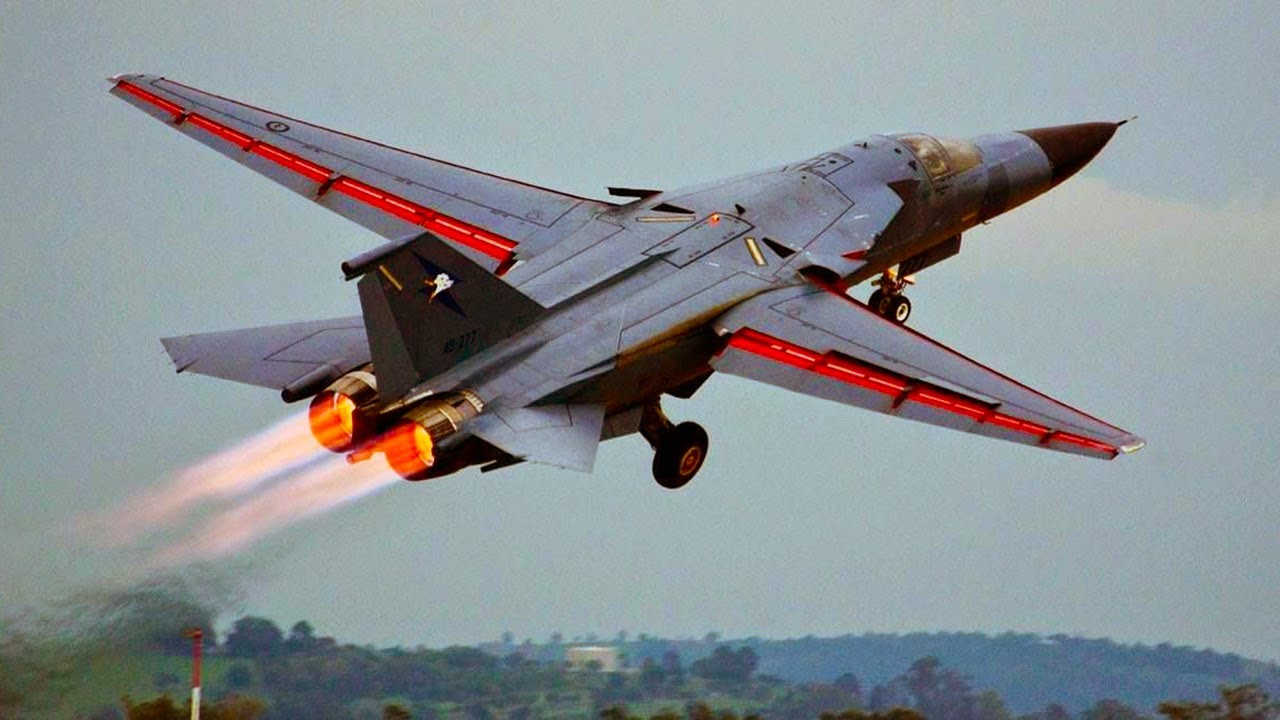
Summary and Key Points: In the 1960s, the Pentagon made the Navy and Air Force share the General Dynamics F-111. The Air Force’s F-111A performed; the Navy’s F-111B, nicknamed the Sea-Pig, weighed up to 90,000 pounds against a 50,000-pound goal, too heavy for carrier elevators and arresting cables.
The F-111B Gave Birth To the F-14 Tomcat
In the early 1960s, the Air Force needed a medium-range interdiction and strike aircraft, while the Navy needed a long-range fleet defense fighter.
Secretary of Defense Robert McNamara needed to save money.

F-111. Image Credit: Creative Commons.

F-111. Image Credit: Creative Commons.
He told the two services they could have what they wanted, but both would have to get it from a single aircraft.
That aircraft was the F-111A by General Dynamics.
McNamara didn’t understand that the Navy and the Air Force are different services with different missions, cultures, and bureaucracies.
The Air Force wanted a strike bomber that could skim over the terrain at supersonic speed and deliver a significant payload on a target.
That payload might include nuclear weapons.
The Navy needed a high-altitude, supersonic fleet defense fighter that could intercept Soviet bombers trying to attack its carrier with cruise missiles.
McNamara asked the two services to share a tool that could be both a hammer and a saw.
For The Air Force, The F-111A Was Just What They Wanted
For the Air Force, the F-111A performed magnificently.
Its swept wing and two afterburning turbofan engines let it reach Mach 2, and the terrain-following radar worked perfectly.
The F-111 could take off and land from short runways, and the bomb load was spectacular.
The F-111A could deliver 25-30,000 lbs. of ordnance on a target.
For The Navy, The F-111B Became The Sea-Pig.
The Navy quickly realized its F-111B would have to become a very different airplane to serve as a fleet-defense fighter. It was too long to fit on aircraft carrier elevators, so they shortened it by almost nine feet.
The wings were too short for low-speed carrier approaches at high angles of attack, so they made the swept-back wings 3.5 feet longer, increasing the wingspan by 7 feet overall.
The side-by-side seating configuration ruined rear visibility; in a dogfight, the pilot couldn’t see what was behind his aircraft.
The Engines Of The F-111B Struggled to Lift Its Hefty Weight
Then there were the engines, a pair of Pratt and Whitney TF-30s.
As long as you didn’t apply too much power too quickly or exceed safe angles of attack, these engines were very good, but in a dogfight or when landing on a carrier, yanking the throttles or disturbing airflow into the TF-30s during high-angle-of-attack maneuvers could stall the engines.
The Navy’s F-111B was also too heavy.
Aircraft have their design specifications and limits, but so do aircraft carriers.
Fully loaded, the F-111B weighed between 80,000 and 90,000 lbs.
This was too heavy for aircraft carrier elevators.
It was also too heavy for the arresting gear cables.
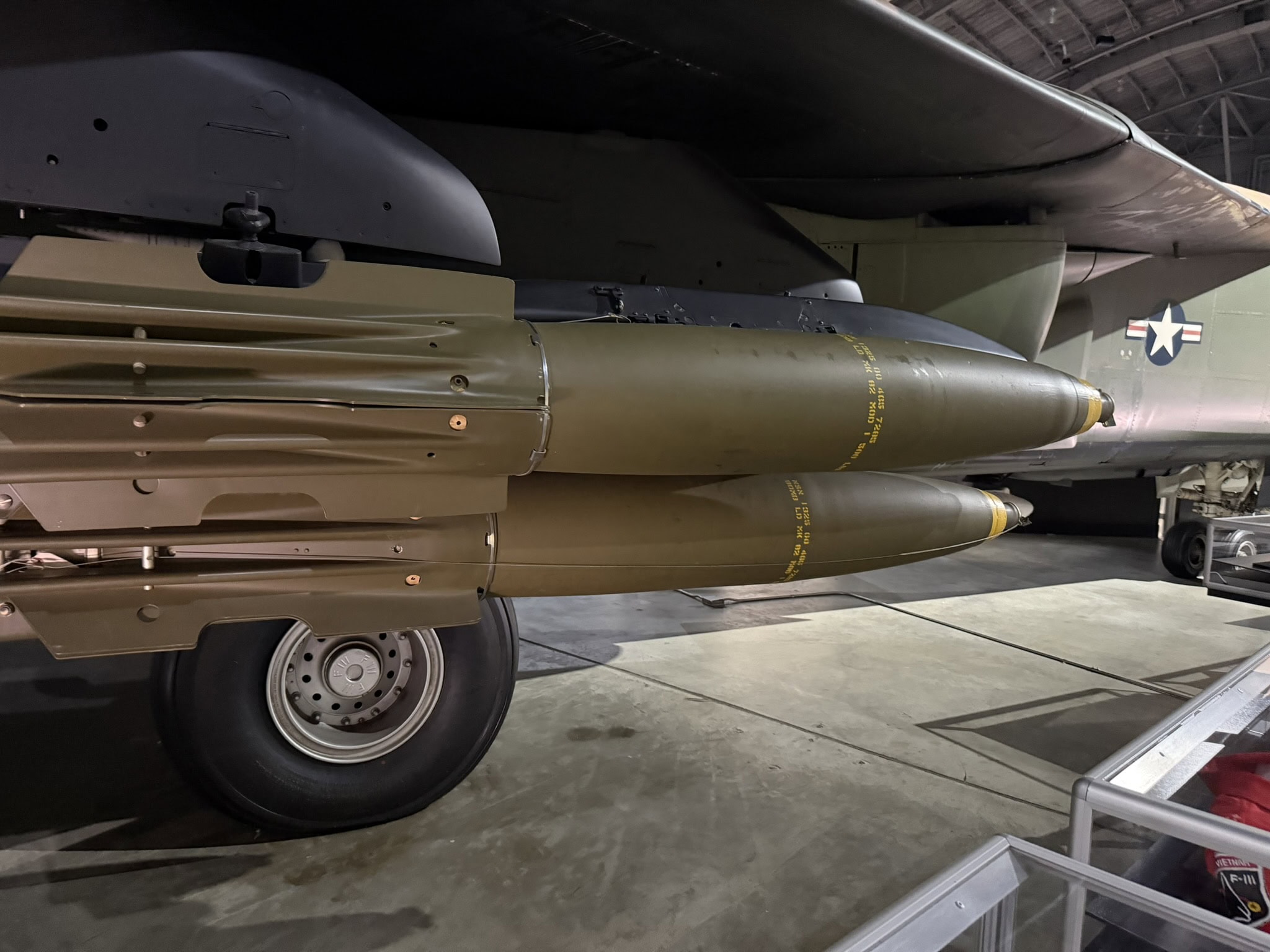
F-111 On Display at the National Museum of the U.S. Air Force. Take on July 19, 2025 by Harry J. Kazianis for 19FortyFive.com
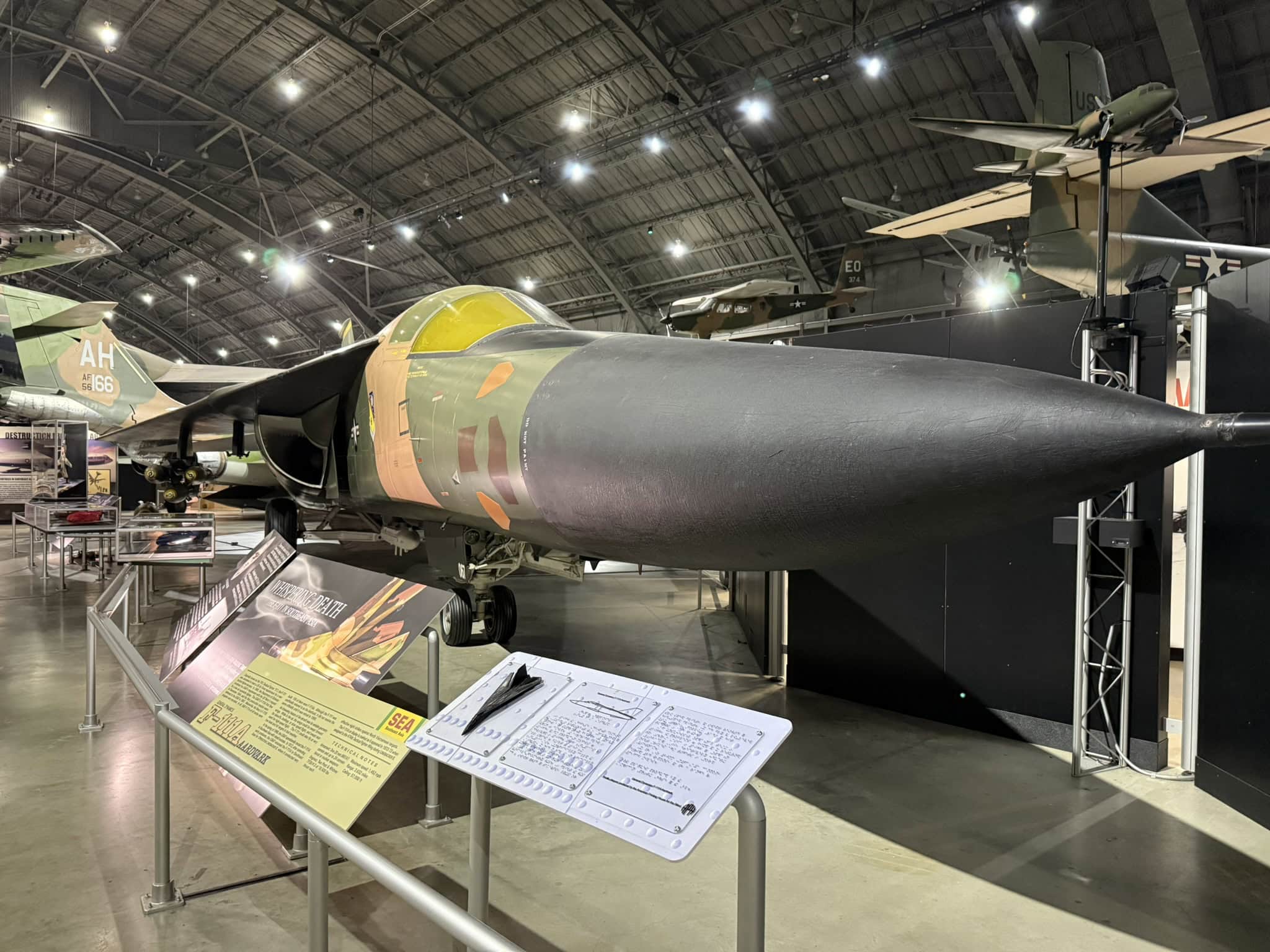
F-111 On Display at the National Museum of the U.S. Air Force. Take on July 19, 2025 by Harry J. Kazianis for 19FortyFive.com
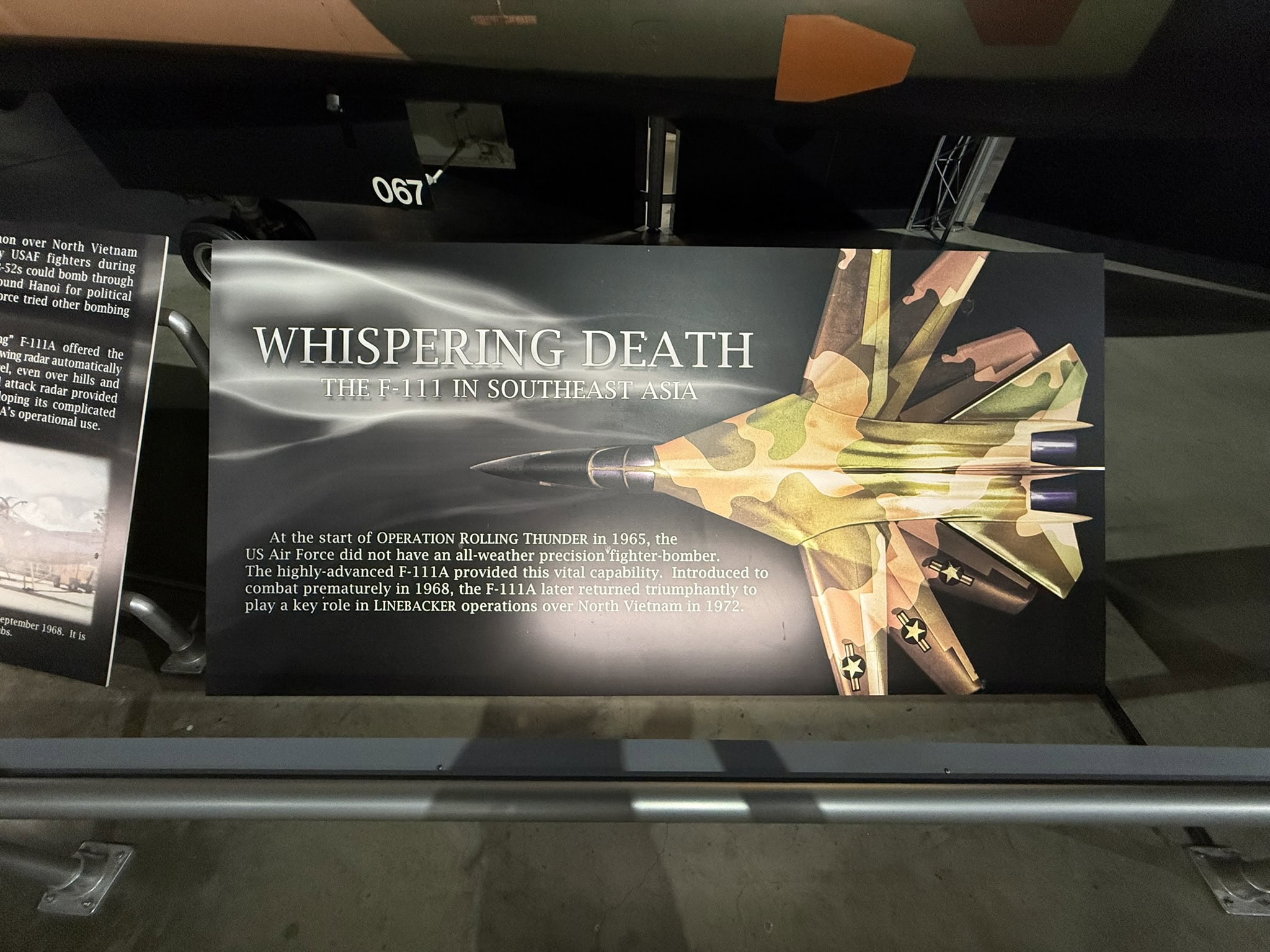
F-111 On Display at the National Museum of the U.S. Air Force. Take on July 19, 2025 by Harry J. Kazianis for 19FortyFive.com
The fear was that a landing F-111B would simply break the nearly 2-inch braided steel cable and careen off the bow into the water.
For the F-111B to land safely aboard an aircraft carrier, it would have to lose 20,000 lbs. This weight caused another serious problem.
The F-111B was supposed to come in at 50,000 lbs., but at 70,000-80,000 lbs., the TF-30 engines strained to lift the big fighter into the air.
Congress Cancels The F-111B Program After Years Of Development And Tons Of Money
After $375 million ($3.6 billion in 2026) and years of development, the straw that broke the F-111B’s back came in March 1968 during congressional hearings about problems getting the plane into Navy service.
An exasperated Deputy Chief of Naval Operations, Vice-Admiral Thomas Connoly, testified, “There isn’t enough power in all Christendom to make that airplane what we want!” (This accurate quote comes directly from the transcripts of that Senate hearing)
Congress canceled the Navy program.
The Air Force got 159 F-111A strike bombers; the Navy got 7 F-111B prototypes it couldn’t safely operate from an aircraft carrier.
Grumman Was Quietly Working Behind The Scenes On A New Fighter
Grumman Aerospace in Long Island, New York, stood somewhat in the shadow of these events.
General Dynamics had no experience building Navy aircraft with the specific requirements for operating off aircraft carriers, so they brought Grumman into the program to help with the structural design, especially the heavy landing gear the F-111B would need to withstand being slammed down on a carrier deck.
Grumman had built more than 20 different aircraft for the Navy and were subject-matter experts on naval aviation design.
In their own work on the F-111B, they admired much.
They admired the swept-back wings, the Hughes AN/AWG-9 Radar married to the AIM-54 Phoenix missile, and the TF-30 engine on a smaller, lighter aircraft.
Working on their own drawing boards, they developed a concept that would incorporate all these elements and present it to the Navy once the dust of the F-111B “Sea-Pig” cancellation had settled.
The Navy Wanted The Grumman Fighter Even As It Invited Other Bids
This did not happen suddenly.
As far back as 1966, the Navy knew it was in trouble with the F-111B and had given Grumman a design-concept contract to explore a potential replacement.
By 1968, Grumman had its “Model-303” ready to show the Navy on paper.
It would retain the two TF-30 engines (awaiting a Pratt & Whitney engine in the works).
It would be supersonic with swept-back wings; it would use the Hughes radar and Phoenix missiles, and while it would be large for a Navy fighter, it could operate safely off aircraft carriers.
While the Navy went through the motions in 1969 of inviting bids and designs for a new fighter from Ling-Temco-Vought, McDonnell Douglas, North American Rockwell, and General Dynamics, the specifications seemed to perfectly match the Model 303 that Grumman had proposed to them almost a year earlier.
10 months after the Senate hearings that doomed the F-111B program, the Navy awarded Grumman a contract in January 1969 to build the new fighter.
Grumman was far enough ahead of its own concept design that the Navy skipped the prototype phase and moved straight to full-scale development.
In The End, Both The F-111A and F-14 Tomcat Made Their Mark On Aviation History
Just 22 months after being awarded the contract, the first Grumman F-14 Tomcat took to the air on December 21st, 1970, and reached initial operational capacity by 1973.
The US Navy went on to buy and fly about 638 F-14 Tomcats, which were continuously upgraded with engines, avionics, radars, and weaponry over their 34 years of service, finally retiring them in 2006.
Coincidentally, the heavy F-111A/D/E/F served almost as long, 31 years, proving both were exceptionally successful in the roles they were designed for.
About the Author: Sean Spoonts
Sean Spoonts is the former Editor-In-Chief of SOFREP.com. He is a military analyst, writer, and commentator whose work has appeared in Newsweek, CNS News, Ukrinform, and various military/veteran media networks and professional publications, including the Military Intelligence Professional Bulletin. He is a U.S. Navy veteran, having served as an Aviation Anti-Submarine Warfare Operator and Search and Rescue Helicopter Aircrewman.