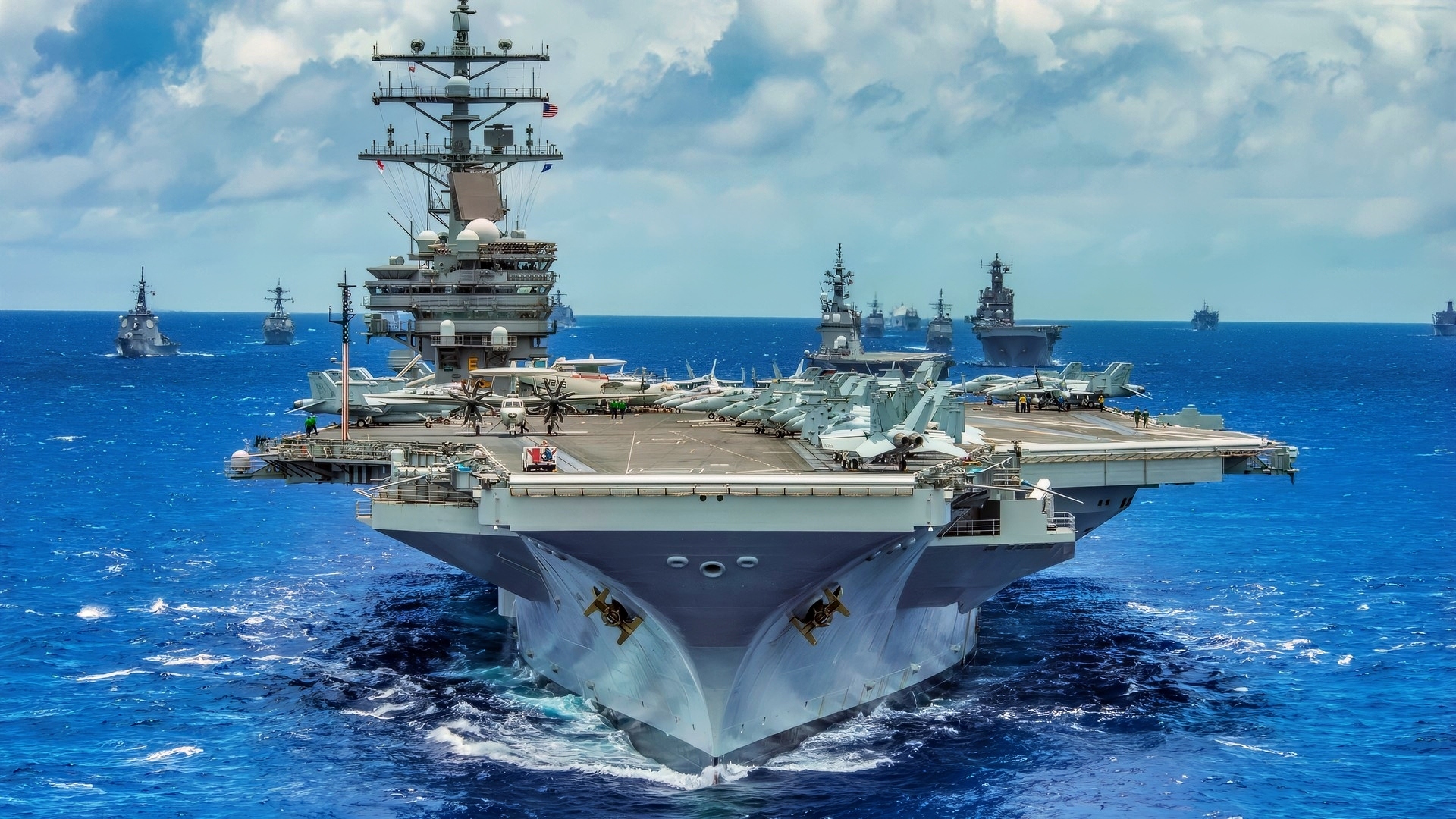
Summary and Key Points: China has three aircraft carriers in service and a fourth taking shape. The Liaoning was commissioned in September 2012. The Shandong followed in December 2019, and the Fujian, the first with electromagnetic catapults, in November 2025. The next is the Type 004, believed to be China’s first nuclear-powered carrier, displacing up to 120,000 tons and possibly launching from Dalian by 2027, with fitting out, trials, and crew training still to come. The Pentagon’s latest China Military Power Report says Beijing plans nine carriers by 2035. The arithmetic is one new supercarrier every 18 months.
China’s Quest for More Aircraft Carriers
China has been progressing steadily in its ability to threaten the United States and its allies militarily.
Just a decade ago, it had only one aircraft carrier: an augmented old Soviet carrier with a ski jump.
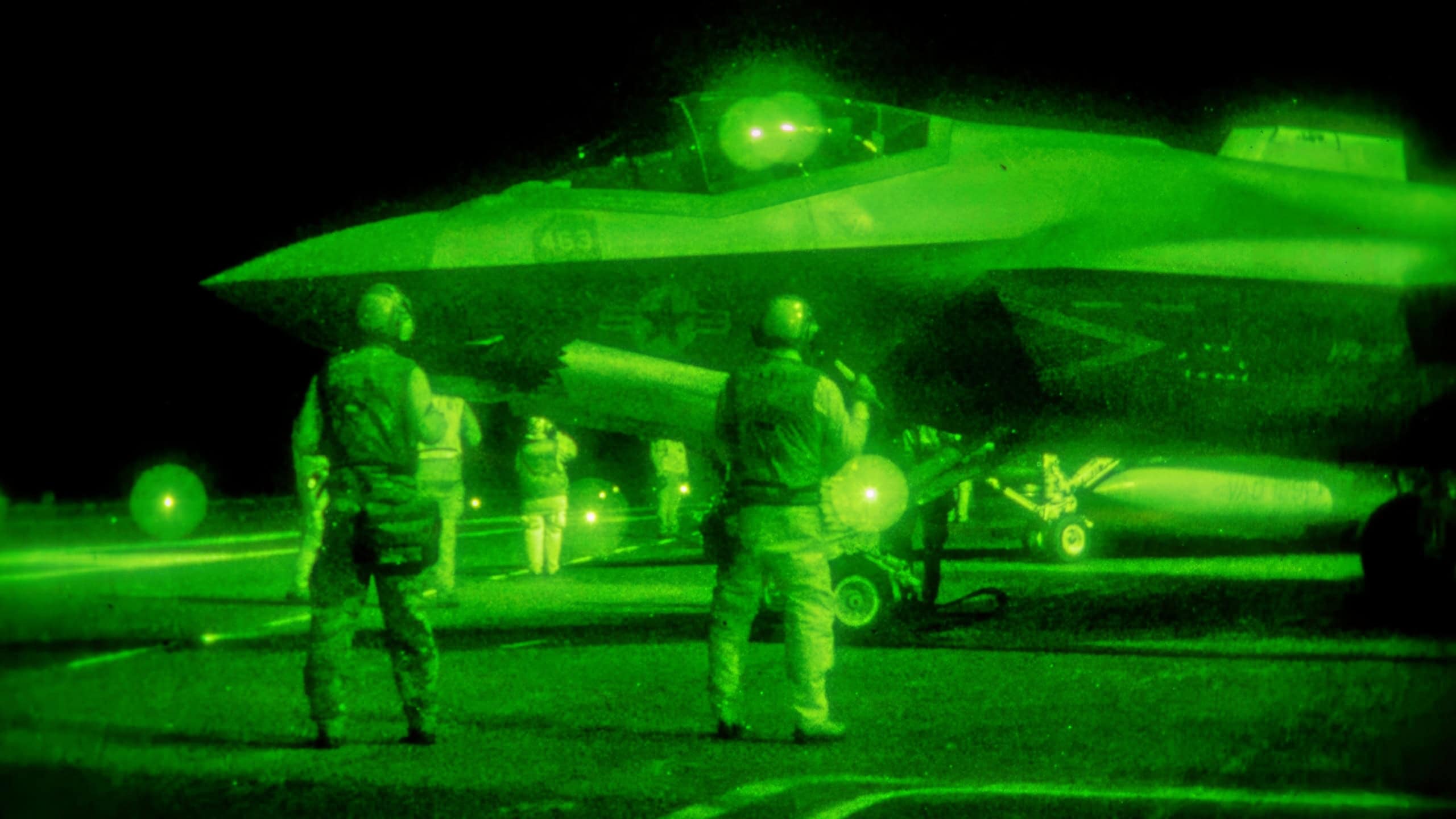
PACIFIC OCEAN (Jan. 23, 2026) –U.S. Navy Sailors conduct routine flight operations on the flight deck of the Nimitz-class aircraft carrier USS Theodore Roosevelt (CVN 71) Jan. 23, 2026. Theodore Roosevelt, flagship of Carrier Strike Group (CSG) 9, is underway conducting exercises to bolster strike group readiness and capability in the U.S. 3rd Fleet area of operations. (U.S. Navy photo by Mass Communication Specialist 2nd Class Ryan Holloway)
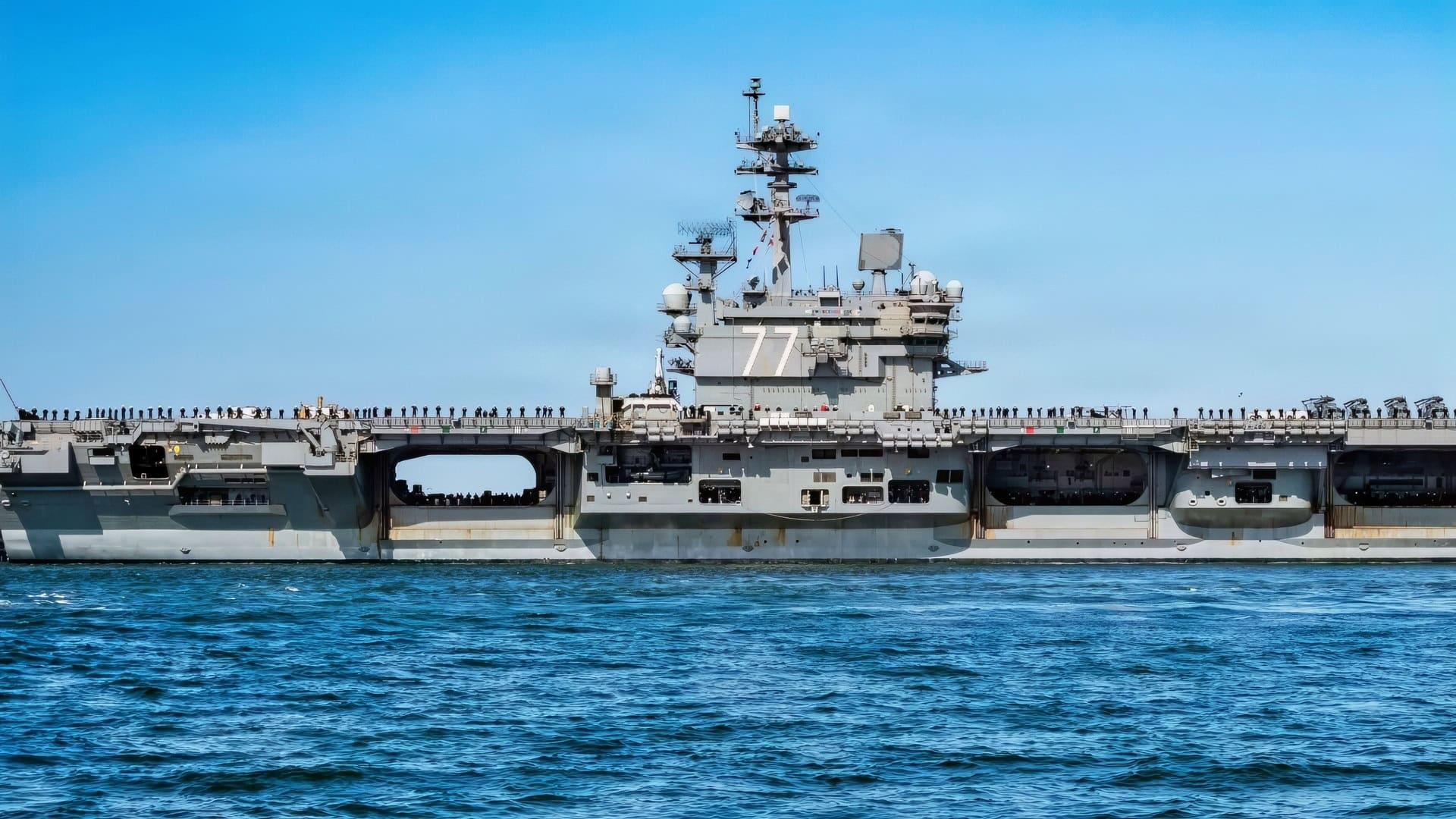
NAVAL STATION NORFOLK (March 31, 2026) The Nimitz-class aircraft carrier USS George H.W. Bush (CVN 77), the flagship of the George H.W. Bush Carrier Strike Group, departs Naval Station Norfolk to begin operations in support of its scheduled deployment, March 31, 2026. More than 5,000 personnel are assigned to the George H.W. Bush Carrier Strike Group. The George H.W. Bush Carrier Strike Group provides combatant commanders and America’s civilian leaders increased capacity to underpin American security and economic prosperity, deter adversaries, and project power on a global scale through sustained operations at sea. (U.S. Navy photo by Mass Communication Specialist 2nd Class Derek Cole)
That ship was a Kuznetsov-class vessel renamed the Liaoning. From its commissioning in the People’s Liberation Army Navy (PLAN) in 2012 to 2026, the PLAN acquired three more carriers, each more sophisticated than the last.
The final carrier in that group is believed to be under construction.
Known as the Type 004, this new carrier will be China’s first indigenously made nuclear-powered aircraft carrier and will likely serve as the basis for the future fleet of aircraft carriers that China plans to build.
An Ambitious Goal
Per the Pentagon’s China Military Power Report, released last December, the PLAN plans to operate nine aircraft carriers by 2035.
The United States Navy maintains 11 nuclear-powered aircraft carriers by Congressional mandate. However, the Navy cannot deploy anywhere near that many at once.
Right now, the PLAN has three deployable carriers.
Once the Type 004 makes it to sea, they’ll have four.
So, at the very least, China can presently match the number of deployable American carriers at one time (depending on the state of readiness the Chinese force is in).
For Beijing to acquire nine total carriers (adding six to the cluster they now have) in nine years would make China the undisputed master of industrial-scale military development projects.
Consider the pace at which China developed its aircraft carrier program from the Liaoning in September 2012 to the Shandong in December 2019.
This second carrier, by the way, was China’s first indigenously produced, conventionally powered carrier that was more of an enhanced variant of the Liaoning and less of a unique Chinese design.
But the third carrier, the Fujian, was commissioned in November 2025, and that carrier was a real technological leap for China’s carrier force.
Unlike its predecessors, the Fujian uses electromagnetic aircraft launch systems (EMALS), which means it can deploy heavier aircraft in greater numbers.
American designers first proposed EMALS, and it was viewed as a revolutionary advance over the conventional steam-powered catapults of the Nimitz-class nuclear-powered aircraft carriers.
The new Gerald R. Ford-class aircraft carriers have this system because it increases the sortie rates for the carriers.
But the American EMALS has been plagued by technical problems that are only now being overcome, since it was first introduced on the first Ford-class carrier nearly a decade ago.
Electromagnetic Aircraft Launch Systems That Work?
The fact that China not only has an EMALS on its most recently deployed carrier, but that it works fine, is stunning.
Especially when US intelligence constantly accuses Beijing of having stolen the designs for the EMALS.
If China stole the plans from the US, how is it China’s version never glitched the way the US version did?
Anyway, Fujian, China’s third carrier, has a planned air wing that includes the fifth-generation multirole warplane Shenyang J-35, some fourth-generation J-15 variants, and the KJ-600 airborne early warning aircraft.
As for the fourth carrier still under construction at the Dalian Shipyards, it is believed that the ship will displace up to 120,000 tons and could be launched from Dalian by 2027.
After the ship launches, work will still be required, including fitting out, systems integration, sea trials, aviation certification, and crew training.
Still, the rate of speed at which China’s first nuclear carrier is being produced and possibly deployed from the shipyard is another feat–especially when compared to how slow it takes for US shipyards to maintain their existing fleet of carriers, let alone build more of them.
Here’s what you need to understand about carrier operations.
They’re comprehensive. Not only are these leviathans incredibly complex to operate and maintain–and expensive–but they require support ships.
Multiple destroyers, frigates, submarines, and logistics vessels are needed to make carrier operations viable (especially beyond the horizon).
For China to possess nine carriers, it’d need at least enough support vessels to deploy many of them (if Beijing intended to operate multiple carriers at once).
Then again, China’s Navy has focused on dominating the First Island Chain.
To complement that mission, China has built a vast, comprehensive anti-access/area-denial (A2/AD) network with extended range that threatens even parts of the Second Island Chain.
So, if China intended to wage a carrier war within the First Island Chain, Beijing might get away with fewer support ships if the PLAN believed it had enough A2/AD capabilities to better defend its carriers in combat there.
Can China Make This Possible On Time?
Setting that aside, China clearly dominates manufacturing and can produce even advanced nuclear-powered platforms at scale.
Still, to meet its 2035 deadline, China must commission one additional carrier every 18 months.
And by 2035, the Liaoning, China’s original conventional aircraft carrier based on an even older Soviet hull, will be decades old and will likely require either retirement or extensive modernization.
Regardless of whether China gets up to nine carriers within nine years, they already have three, with a fourth nuclear-powered ship on the way within the next year or so.
Even if Beijing falls short of the nine-carrier target, the number of carriers it has now makes it a serious naval power in the Indo-Pacific.
And if they could deploy more than three at one time, then the Americans would be checkmated when it came to carrier operations in the Indo-Pacific–especially considering the “homefield advantage” that Chinese carriers would enjoy in the First Island Chain.
The Pentagon is not ready for the day when China has half a dozen carriers, many of them nuclear-powered, operating in the Indo-Pacific.
About the Author: Brandon J. Weichert
Brandon J. Weichert is the Senior National Security Editor at 19FortyFive.com. He also manages The Weichert Brief on Substack. Weichert is the co-host for The Mario Nawfal Show on Twitter/X. He is the author of four bestselling national security books, most recently A Disaster of Our Own Making: How the West Lost Ukraine (Encounter Books). His next book, Fortress Americas: A New Monroe Doctrine (Tucker Carlson Books), is due out December 8. Follow him via Twitter/X @WeTheBrandon.