
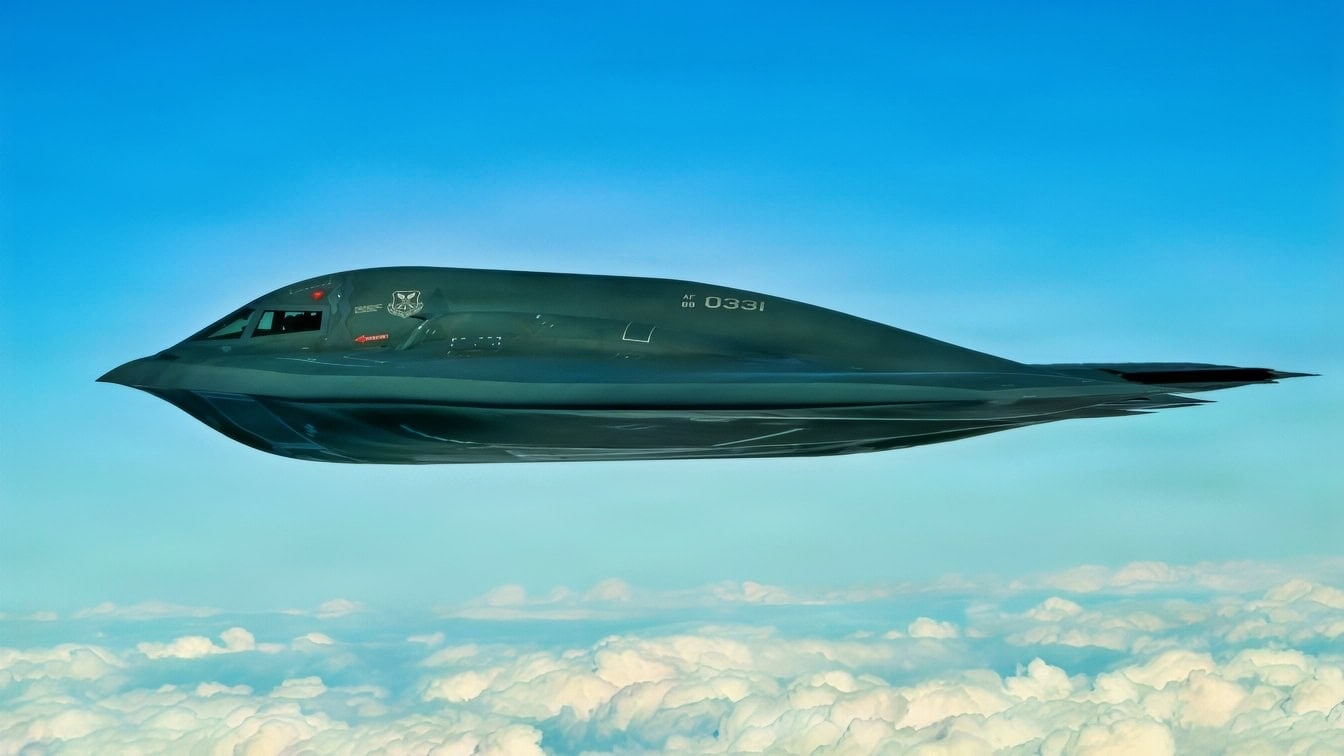
China’s H-20 Stealth Bomber Would Force the U.S. to Defend the Pacific Differently: China acknowledged work on a new long-range bomber in 2016 and has spent the following decade revealing almost nothing about it. In March 2024, People’s Liberation Army Air Force deputy commander Wang Wei said the H-20 faced “no bottleneck” and would be shown publicly soon, according to the state-run Global Times. Public evidence through July 2026 does not confirm a completed aircraft or first flight.
The Pentagon’s most detailed open estimate describes a stealth bomber with a range exceeding 10,000 kilometers, enough to operate beyond the Second Island Chain and into the western Pacific. The 2024 China Military Power Report expects the aircraft to carry conventional and nuclear weapons, with aerial refueling extending its reach.
The H-20 would not give Beijing its first way to strike Guam. China already fields ballistic missiles able to reach the island, while the H-6K carries six land-attack cruise missiles and threatens targets in the Second Island Chain from mainland bases. The difference would be a reusable aircraft designed to enter defended airspace and carry weapons internally.
A credible H-20 force would add choices China does not have in the same form today. Bombers change routes, shift targets, return without releasing weapons and fly again. Stealth would reduce warning time, while a dual conventional-nuclear role would make every detected sortie harder to interpret.
The H-20 Would Add Another Attack Path Toward Guam
Guam already sits inside China’s missile and H-6 strike envelope. An operational H-20 would add a low-observable threat able to approach from less predictable directions, release weapons closer to defended targets or follow missile salvos after radars and runways had taken damage. That is the operational meaning behind the projected range driving concern around the bomber. It would also end the long American monopoly on fielding a stealth bomber, the central issue behind the H-20’s strategic importance.
Washington is already building defenses for a multidirectional attack. The fiscal 2026 Pacific Deterrence Initiative funds a 360-degree air and missile defense architecture on Guam. The Air Force’s Agile Combat Employment concept disperses aircraft across smaller locations. A working H-20 would increase demand for fighter patrols, hardened shelters, decoys, runway repair and fuel stored away from exposed hubs.
A Stealth Bomber Would Change a Taiwan Campaign After the First Salvos
China’s missile force is built to hit fixed bases, command centers and ports quickly. A bomber force offers persistence after the opening attack. H-20 crews would receive new target information, carry different weapon loads and return for follow-on missions without expending an entire launch vehicle on every strike.
That would place more pressure on Japan, the Philippines and other locations supporting American operations around Taiwan. The United States is already trying to strengthen a dispersed chain of Pacific operating sites. A long-range stealth bomber would force planners to protect more approaches and preserve fighters for base defense.
The H-20 would still depend on China’s targeting network. Low observability does not locate a mobile missile launcher, find a ship in a large ocean or keep a datalink working under electronic attack. Satellites, airborne-warning aircraft and maritime sensors would have to supply usable targeting information throughout the mission.
The Nuclear Effect Would Be Larger Than the Conventional Upgrade
China already has an airborne nuclear delivery platform in the H-6N. The Pentagon says the tanker-capable bomber restored the air leg of China’s nuclear triad, and its 2025 report documented a nuclear-capable H-6N patrol with Russia. The H-20 would make that leg harder to detect and give Beijing a more survivable signaling tool.
An aircraft also offers an option ballistic missiles do not. It can be launched visibly, redirected or recalled before weapon release. The U.S. Air Force describes the bomber leg as visible, tailorable and recallable. China would gain the same basic tool, strengthening concern over the H-20’s role in a more mature nuclear deterrent.
The dual mission also creates danger. A defender seeing an H-20 launch would not necessarily know whether it carried conventional cruise missiles or a nuclear weapon. That uncertainty would encourage earlier dispersal and higher alert levels before the bomber’s target became clear.
Building the Aircraft Would Be Only the First Step
A June 2026 China Aerospace Studies Institute assessment said operational service had likely slipped to at least 2030. It also emphasized the learning curve in low-observable maintenance, mission planning and tailless-aircraft operations. Air Force Global Strike Command chief Gen. Stephen Davis said in February that China was “just not there yet”.
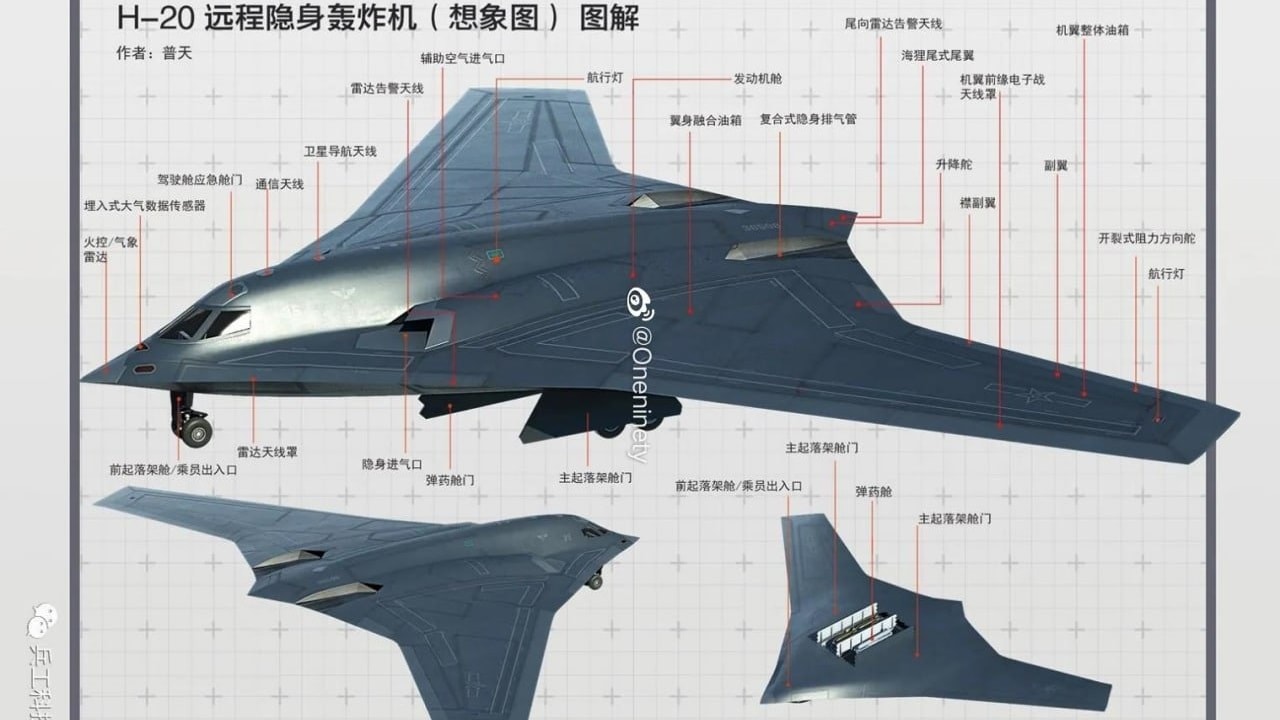
Artist Rendering of China’s H-20 Stealth Bomber. Image Credit: Chinese Internet.
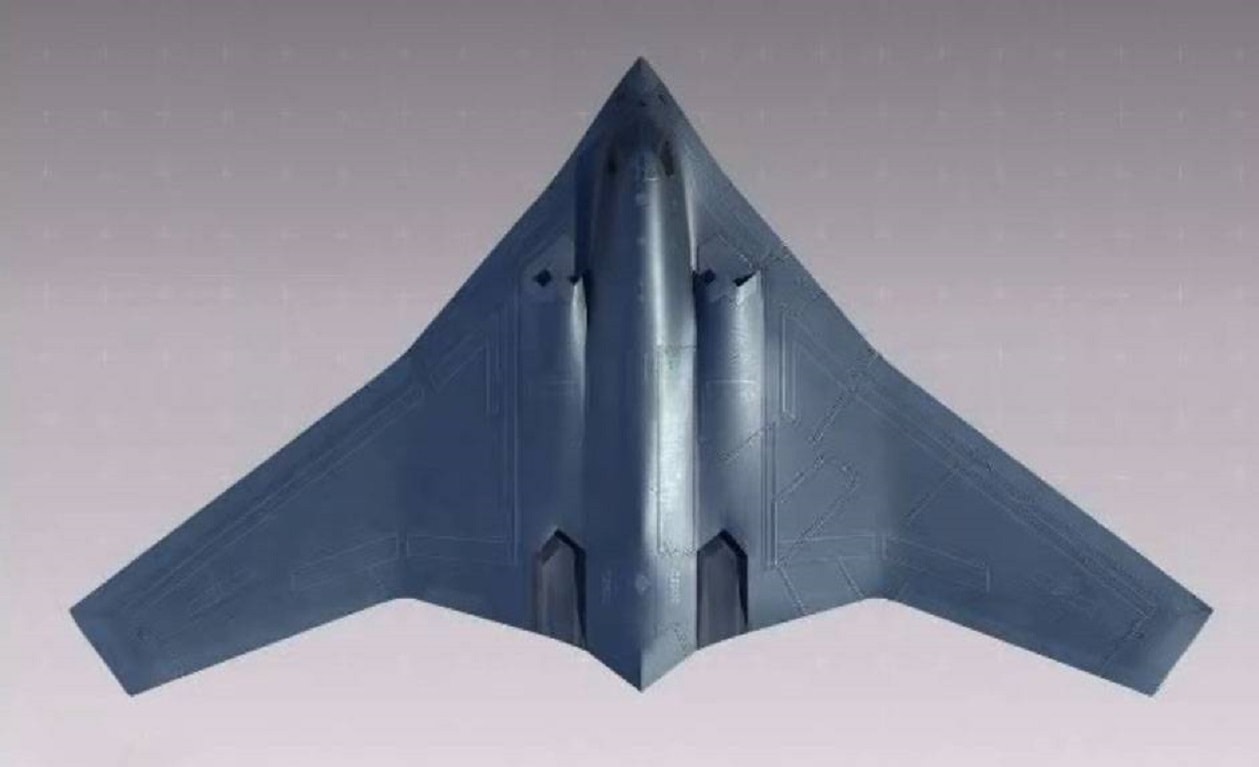
Computer-Generated Image of China’s Xian H-20 Stealth Bomber. Image Credit: Creative Commons.
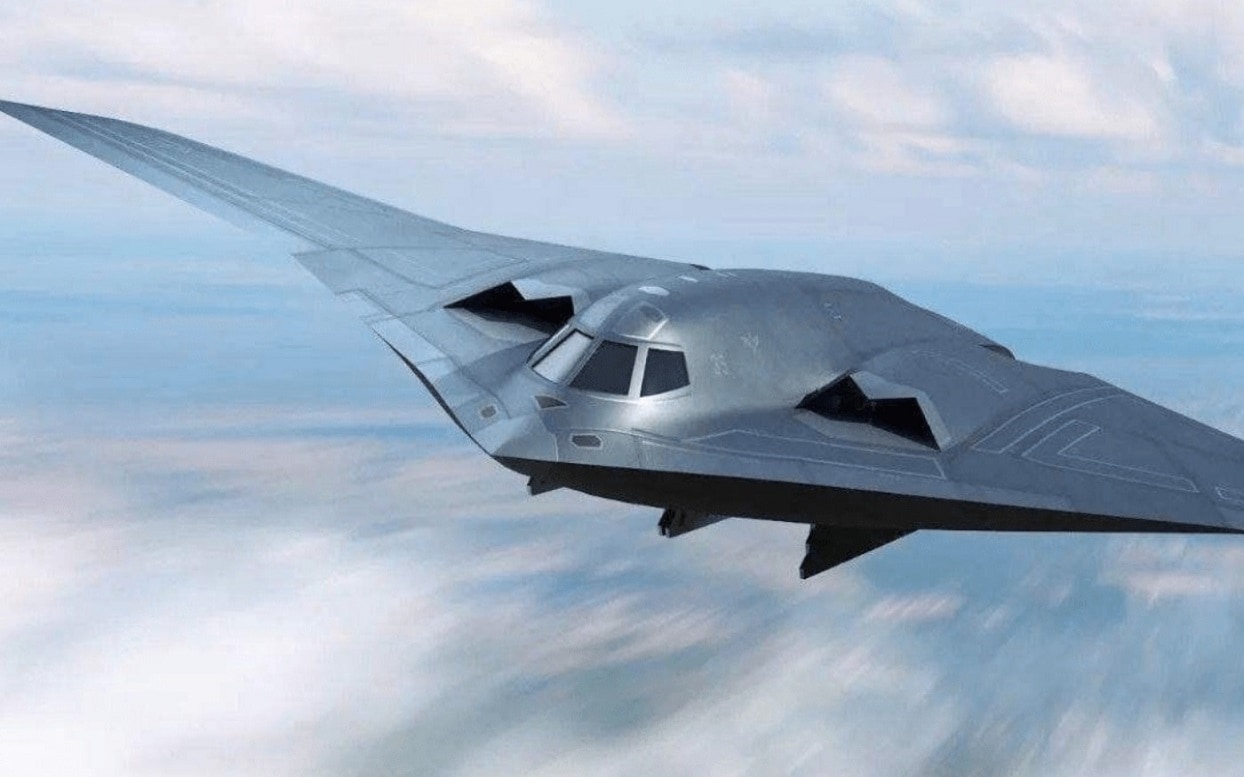
H-20. Image Credit: Chinese Internet.
China still needs reliable engines, large composite structures, radar-absorbent materials, secure mission software and trained maintainers able to generate sorties. Those demands help explain the absence of a visible production line. Global missions would also rely on a tanker force smaller and less experienced than the American system, a constraint examined in the H-20’s refueling problem.
The United States is expanding its own bomber force at the same time. In February 2026, the Air Force increased planned B-21 production capacity by 25 percent. The pressure for as many as 145 Raiders reflects the demand for long-range penetrating aircraft as China expands its missile and bomber forces.
The PLAAF has not publicly shown a completed H-20, identified a test unit, or confirmed a first flight.
About the Author: Harry J. Kazianis
Harry J. Kazianis (@Grecianformula) was the former Senior Director of National Security Affairs at the Center for the National Interest (CFTNI), a foreign policy think tank founded by Richard Nixon based in Washington, DC. Harry has over a decade of experience in think tanks and national security publishing. His ideas have been published in the NY Times, The Washington Post, The Wall Street Journal, CNN, and many other outlets worldwide. He has held positions at CSIS, the Heritage Foundation, the University of Nottingham, and several other institutions related to national security research and studies. He is the former Executive Editor of the National Interest and the Diplomat. He holds a Master’s degree focusing on international affairs from Harvard University.

