
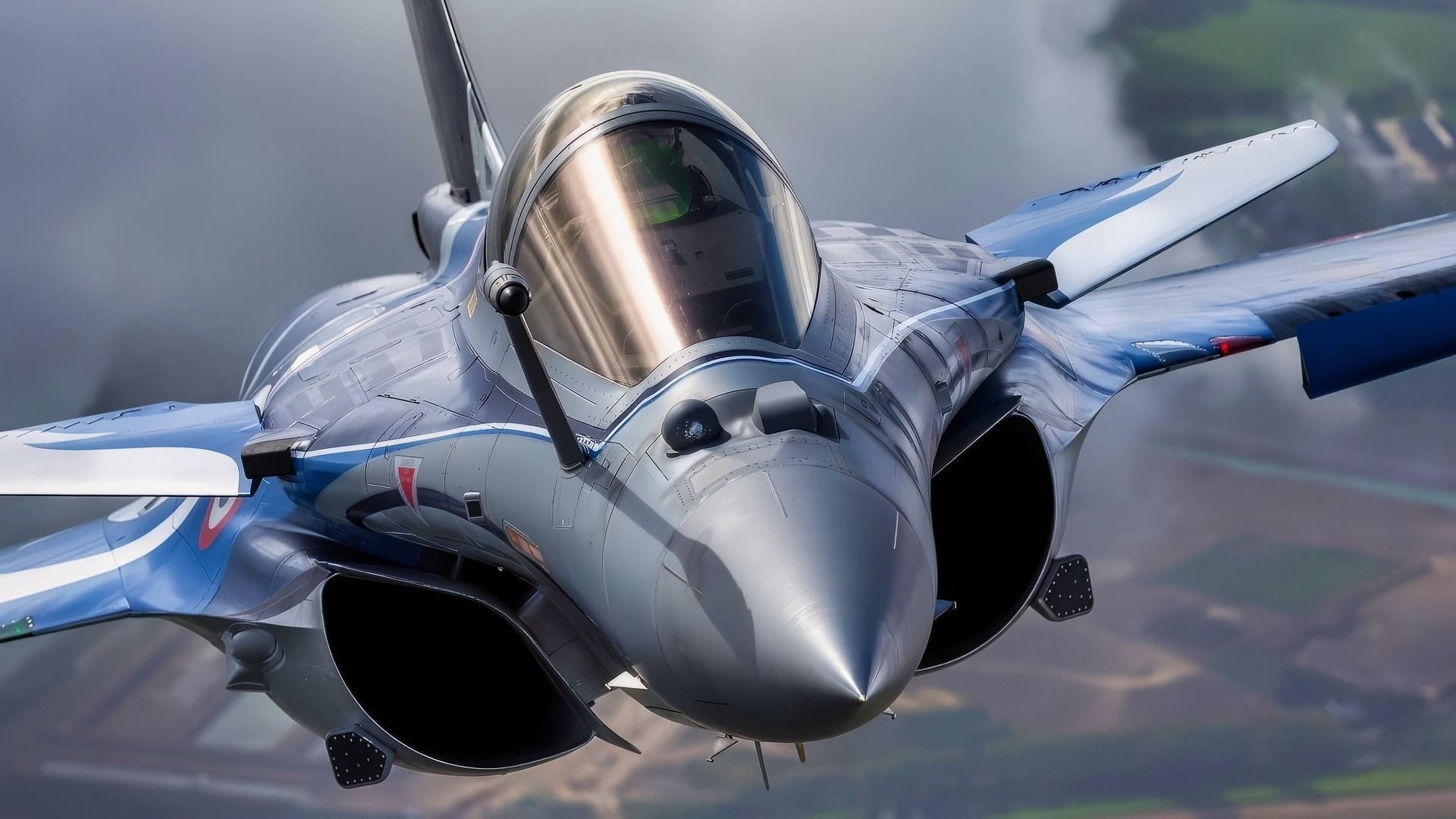
France’s “Super Rafale” Will Pair a Non-Stealth Fighter With a Stealth Drone: “Super Rafale” is not an official French military designation. As of July 31, 2026, the phrase covers the Rafale F5 modernization now in risk reduction and a broader post-FCAS concept floated by Dassault Aviation chief executive Éric Trappier after France and Germany halted their joint fighter effort.
F5 is farther away than many earlier descriptions suggested. Dassault’s July 22 program update said the company was preparing the F5 contract award and targeted entry into service between 2033 and 2035.

Dassault Rafale Fighter from France. Image Credit: Creative Commons.
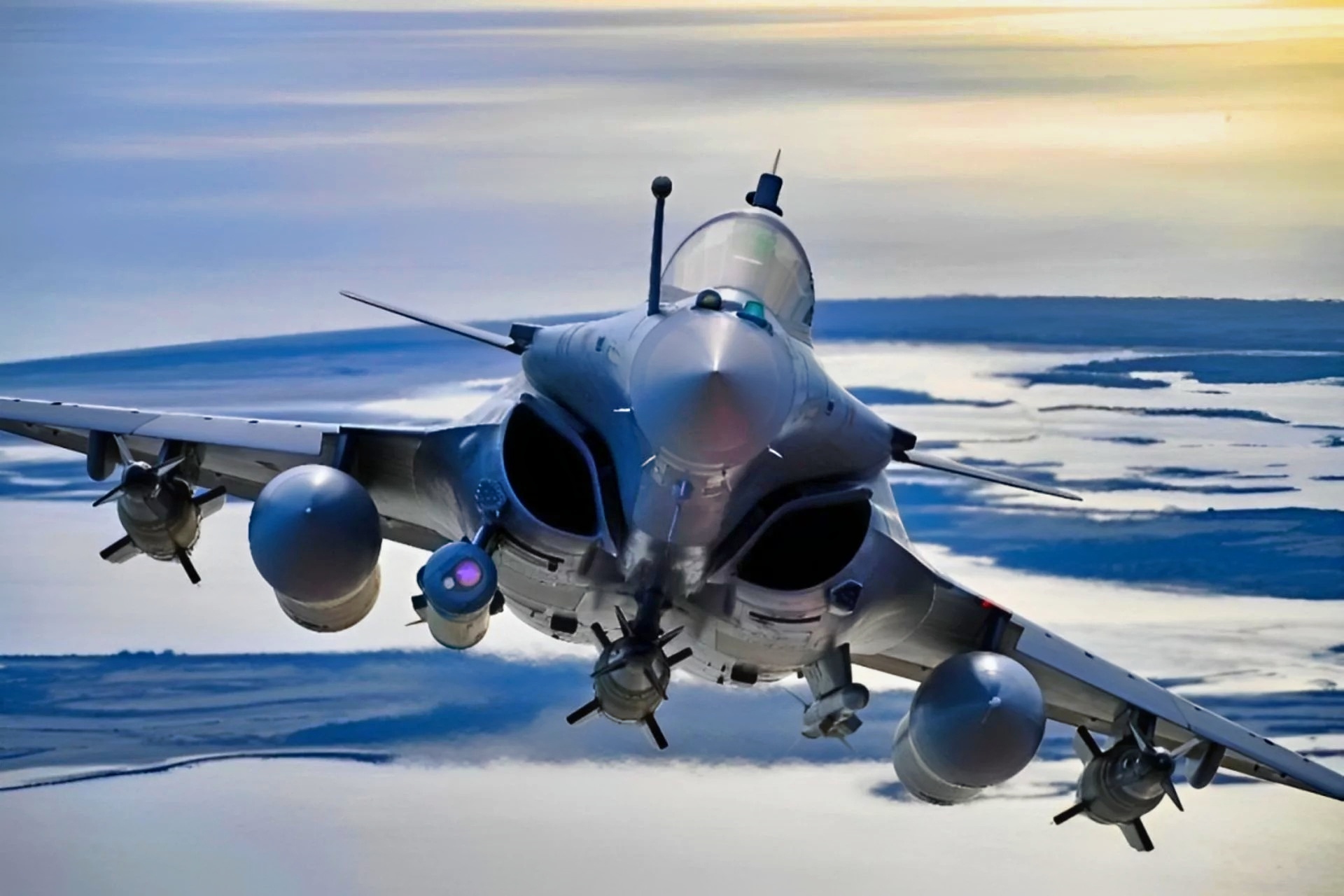
Dassault Rafale Fighter. Image Credit: Creative Commons.
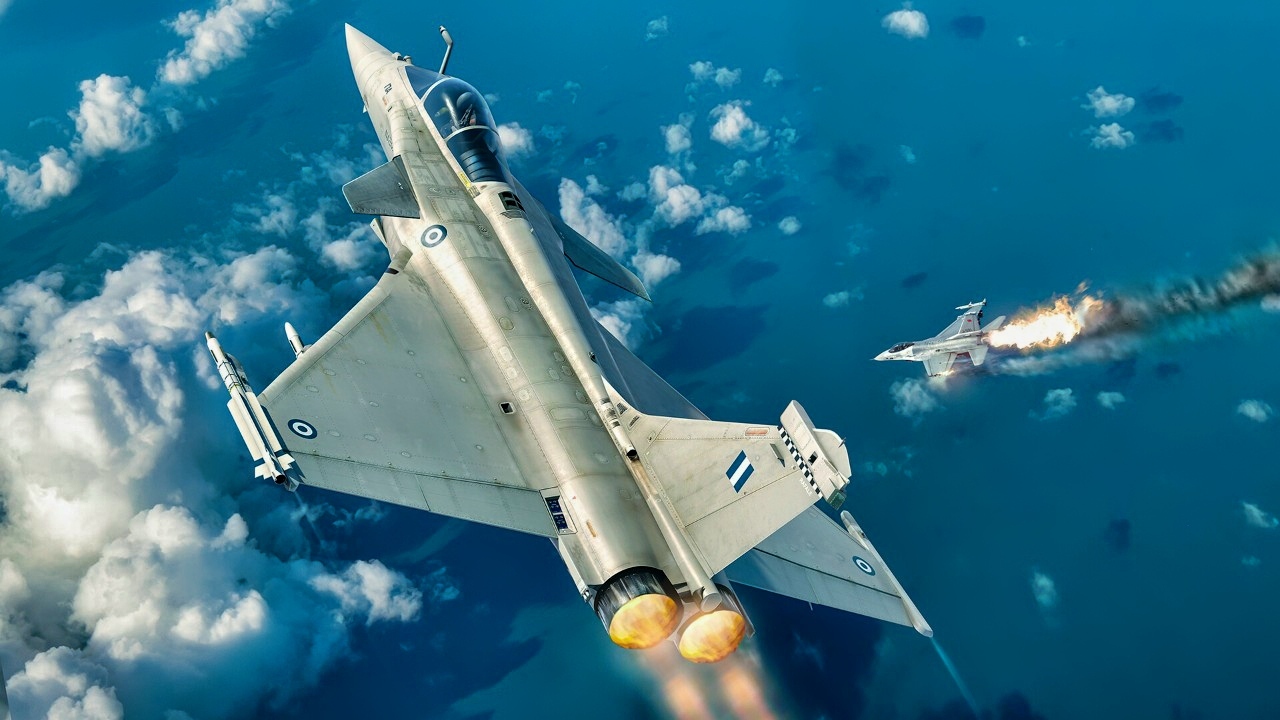
Dassault Rafale Fighter. Artist Created Image/Creative Commons.
The roadmap includes a new radar, expanded electronic warfare, artificial-intelligence assistance, improved weapons, higher-thrust engines and a stealth uncrewed combat aircraft. France wants the Rafale to remain operational beyond 2060 while retaining a smaller, carrier-capable design suited to air force, naval and nuclear missions.
The result should be a highly capable non-stealth combat-air system. It will not duplicate the F-35’s low-observable airframe, while the F-15EX retains greater payload capacity. F5’s advantage lies in combining a mature fighter with electronic warfare, long-range weapons and a stealth drone able to approach hostile defenses.
The F5 Program Is Less Mature Than the Nickname Suggests
France operates F4.1, and Dassault continues work on F4.3. F5 sits beyond both. The exact configuration, purchase quantity and fleetwide conversion plan remain unpublished.
That uncertainty limits claims about a finished Rafale F5 capability. Thales is developing the RBE2 XG radar, Safran is studying the M88 T-REX engine and Dassault has a contract for the accompanying uncrewed aircraft. Several major elements remain in development or risk reduction.
Trappier introduced a second meaning in July. Asked about a plan B after the core FCAS fighter effort was halted, he called it a “Super Rafale” while leaving open a future clean-sheet aircraft. Reuters reported that he released no design or schedule. France is separately discussing a new combat-aircraft demonstrator.
The Stealth Drone Changes the Rafale’s Mission
The uncrewed combat aircraft is the most consequential part of F5. Dassault says it will draw on the nEUROn demonstrator, carry weapons internally, incorporate stealth technology and retain a human in the decision loop. The Rafale would direct the mission while the drone scouts, jams or strikes closer to the threat.
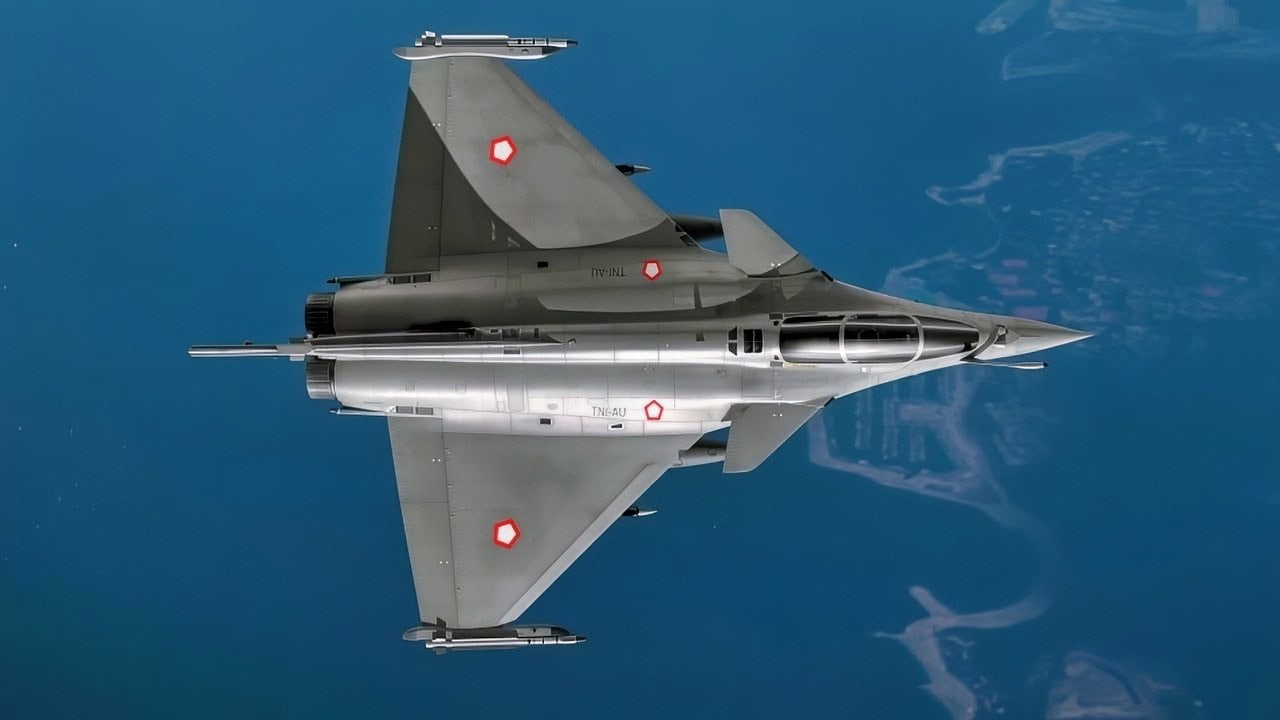
Dassault Rafale Overhead. Image Credit: Industry Handout.
France demonstrated a simpler version on July 13. A Rafale F4 received the location of an air-defense radar from a drone carrying the NAMIB electronic-warfare payload, then simulated a strike. The drone geolocated the radar from several dozen kilometers away.
That flight shows the logic behind the F5 and combat-drone combination. Uncrewed aircraft push sensors, jammers and weapons forward while the Rafale stays farther back. France still has to define the control links, force structure and cost of the larger stealth UCAS.
Radar, Weapons and Engine Power Will Carry More of the Load
Thales is developing the RBE2 XG as the F5 radar. Public records do not disclose detection range, electronic-attack output or performance against low-observable targets. Exact comparisons with American fighter radars remain speculative.
MBDA completed a second MICA NG development firing from a Rafale on June 5, the first from a supersonic aircraft. The missile offers up to 40 percent more range than the current MICA and uses either an active AESA radar seeker or imaging infrared seeker. France is also developing the ASN4G hypersonic nuclear missile.
Safran’s M88 T-REX is intended to raise afterburning thrust from 7.5 to 9 metric tons per engine, a 20 percent increase. The extra power would help a heavier Rafale accelerate and carry new equipment. Safran was still conducting risk-reduction studies.
Dassault is also developing an F5 virtual assistant involving autonomous functions and human-machine interaction. The Rafale’s established multirole design provides a strong base, but software integration will determine whether sensor, weapons and drone control remain manageable for the crew.
The F-35 Retains the First-Night Advantage
The F-35 was designed around stealth and fused sensors. Internal weapons and a low-observable airframe reduce opportunities for an advanced defense to detect and track it. Rafale relies more on electronic warfare, standoff weapons and tactics; external stores increase its radar return.
F5 does not erase the Rafale’s survivability tradeoff. New sensors and jammers should improve its defenses, while the drone accepts some penetration risk. The crewed aircraft remains easier to detect than an internally armed F-35.
That difference matters most during opening attacks against an intact integrated air-defense system. Rafale F5 should remain formidable in air defense, standoff strike, maritime operations, nuclear deterrence and electronic support, a role split examined in comparisons with the F-35.
The F-15EX Is the Closer Comparison
Both aircraft modernize proven non-stealth airframes with advanced sensors, electronic warfare, new weapons and uncrewed partners. Boeing lists a 29,500-pound payload and capacity for as many as 12 AMRAAMs. Today’s Rafale carries up to 21,000 pounds externally across 14 stations.
T-REX will improve performance under load, but Dassault has not published a larger F5 payload figure. The F-15EX should remain the better missile truck and heavy standoff-weapons carrier. The comparison turns on mission requirements.
Rafale answers with a smaller airframe, carrier service, a French nuclear role and a planned stealth UCAS. The F-15EX is also moving toward human-machine teaming: an Eagle II flew with an MQ-28 Ghost Bat over the Philippine Sea during Valiant Shield in June 2026.
France Has Not Yet Bought the Complete “Super Rafale”
The collapse of the FCAS fighter project gives F5 more strategic weight and encourages a larger Rafale derivative. Trappier’s broader proposal has no published requirement, approved budget or configuration.
Dassault’s July 22 update still listed F5 under risk reduction and contract award preparation. The company’s stated entry-into-service objective is 2033 to 2035.
MORE – Come Visit the US Navy’s Aircraft Carrier Graveyard
About the Author: Harry J. Kazianis
Harry J. Kazianis (@Grecianformula) was the former Senior Director of National Security Affairs at the Center for the National Interest (CFTNI), a foreign policy think tank founded by Richard Nixon based in Washington, DC. Harry has over a decade of experience in think tanks and national security publishing. His ideas have been published in the NY Times, The Washington Post, The Wall Street Journal, CNN, and many other outlets worldwide. He has held positions at CSIS, the Heritage Foundation, the University of Nottingham, and several other institutions related to national security research and studies. He is the former Executive Editor of the National Interest and the Diplomat. He holds a Master’s degree focusing on international affairs from Harvard University.

