
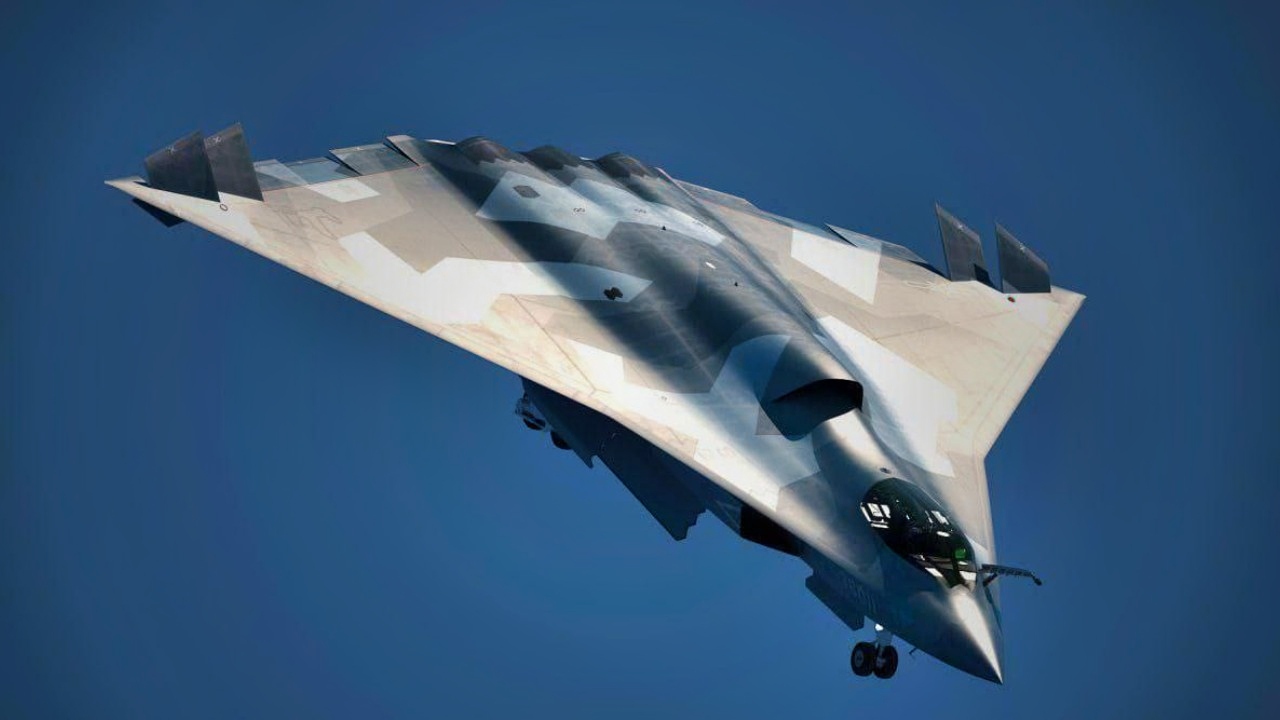
China May Be Flying a Fifth J-36 Prototype as Its Sixth-Generation Design Changes Again: Late-July imagery appears to show a fifth J-36 airframe and the third major configuration seen since the aircraft emerged over Chengdu on December 26, 2024. The latest jet retains the diverterless lower intakes introduced on later test aircraft while returning to recessed exhausts resembling those on the original prototype, according to an assessment published July 30.
The second visible configuration moved in another direction. It replaced the first aircraft’s caret-style lower intakes and buried exhaust channels with diverterless supersonic intakes, apparent two-dimensional thrust-vectoring nozzles, and redesigned main landing gear. The July airframe looks less like a routine serial number and more like Chengdu comparing solutions for stealth, propulsion, and control.
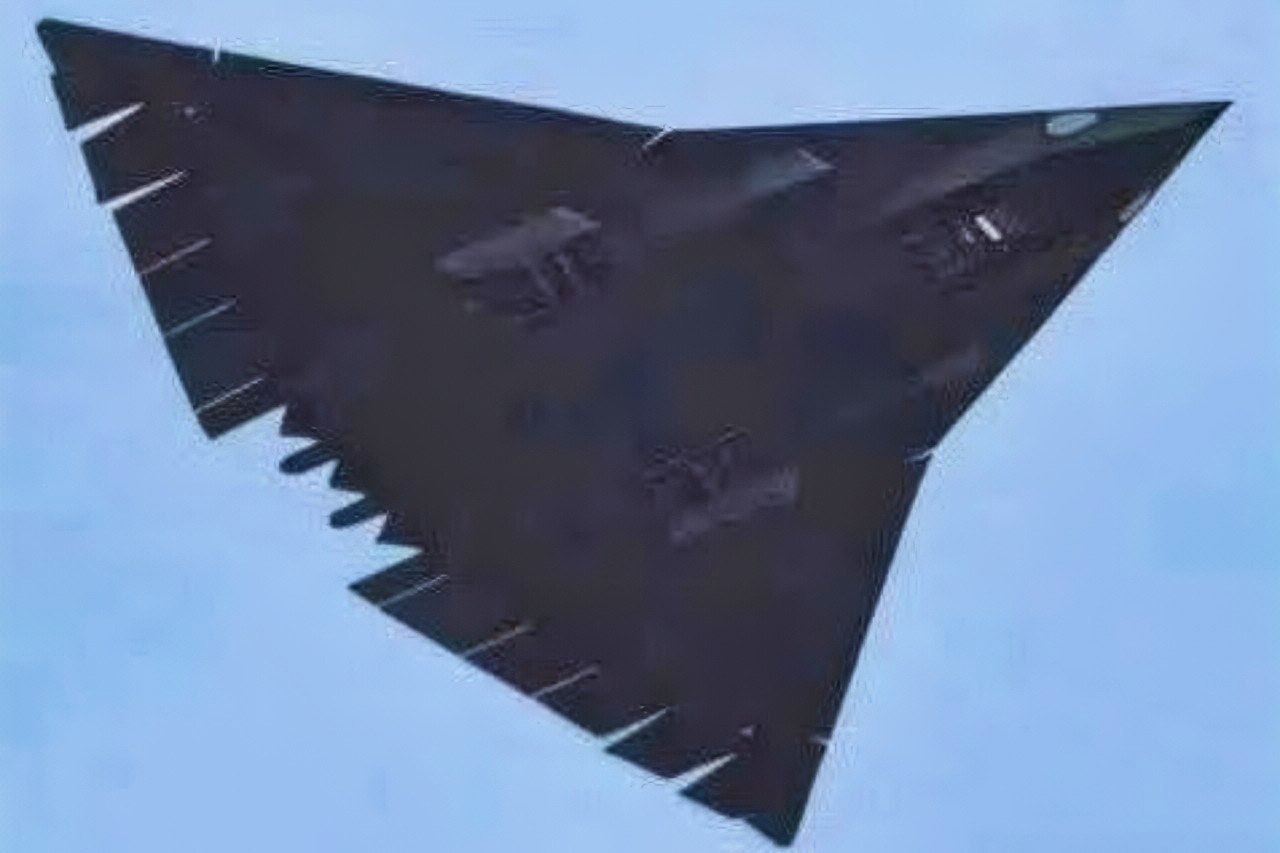
J-36 X Screenshot
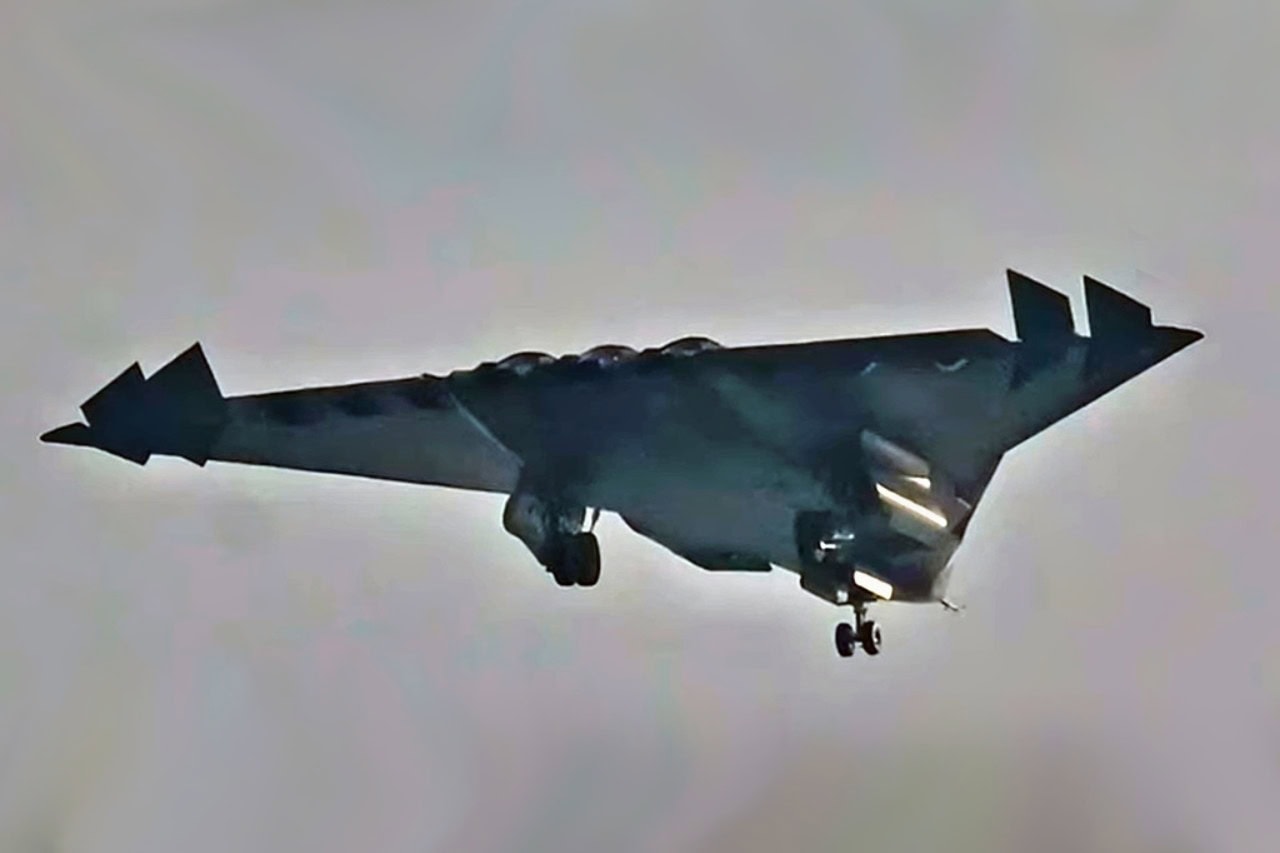
J-36 Fighter from China. Image Credit: Creative Commons.
The count remains uncertain. China has not confirmed the J-36 designation, published a prototype inventory, or identified the aircraft’s intended service role. Aviation analyst Andreas Rupprecht said the structural differences make it unlikely that all sightings involve a single airframe repeatedly modified, but the evidence still comes from imagery rather than an official program record.
Beijing moved closer to acknowledging it on June 28, 2026, when official military media featured a tailless silhouette and a reference to “Little Six” in a Y-20 anniversary video. It was the first implicit official glimpse of the aircraft, but the brief sequence disclosed no specifications or schedule. The test tempo is fast. It does not establish a finished combat aircraft or serial production.
China Publicly Set a 2035 Goal in 2019
The J-36’s public history begins years before anyone photographed it. In February 2019, Chengdu Aircraft Research and Design Institute chief architect Wang Haifeng said China expected a next-generation fighter by 2035 or earlier. He listed possible features including drone control, artificial intelligence, stronger stealth, adaptive propulsion, lasers, hypersonic weapons, and swarm operations.
Those remarks described a technology menu, not a confirmed specification. Chengdu, responsible for the J-10 and J-20, was already thinking beyond fifth-generation fighters. The later emergence of two separate Chinese next-generation aircraft from Chengdu and Shenyang suggests Beijing funded more than one design path.
A 2025 paper by Chengdu designer Yang Shuifeng offered an explanation for the pace. Yang argued that rapid development depends on an established design team, production facilities, suppliers, materials knowledge, and testing infrastructure. Chengdu did not start from zero; the J-20 program had already created a stealth aircraft workforce and industrial base.
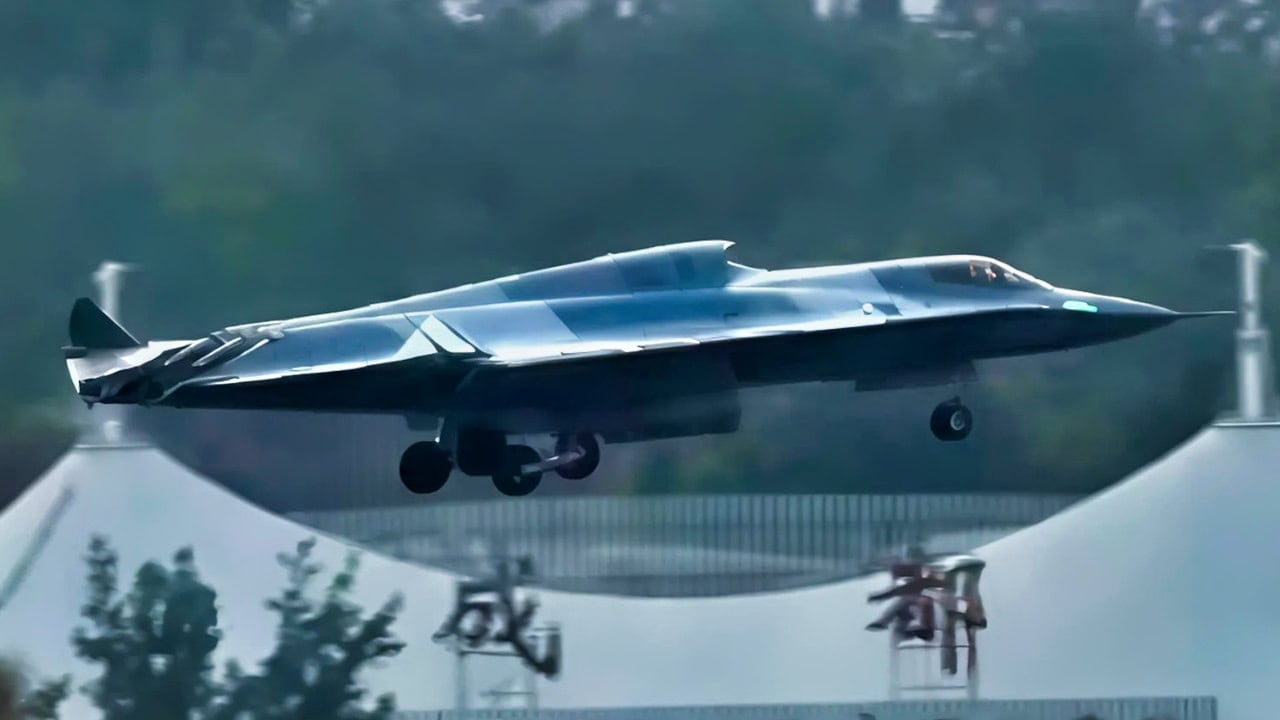
J-36 Fighter from X/Screenshot.
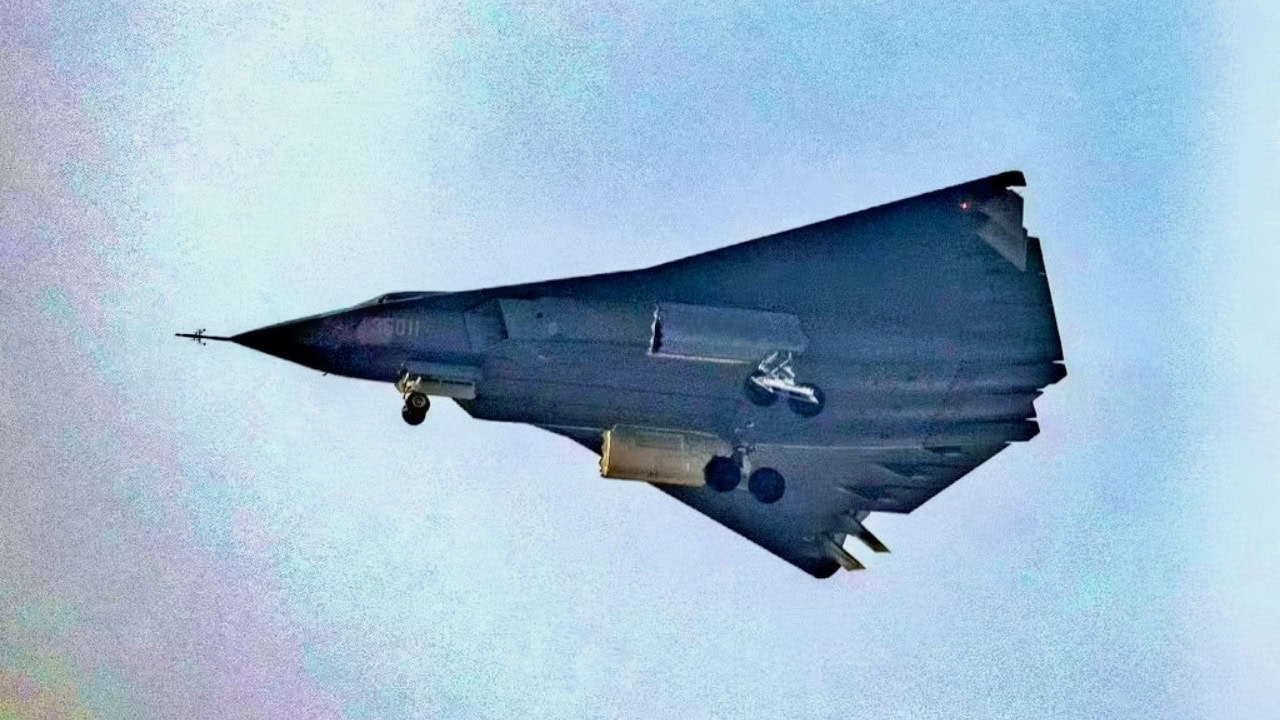
China J-36 Fighter. X Screenshot.
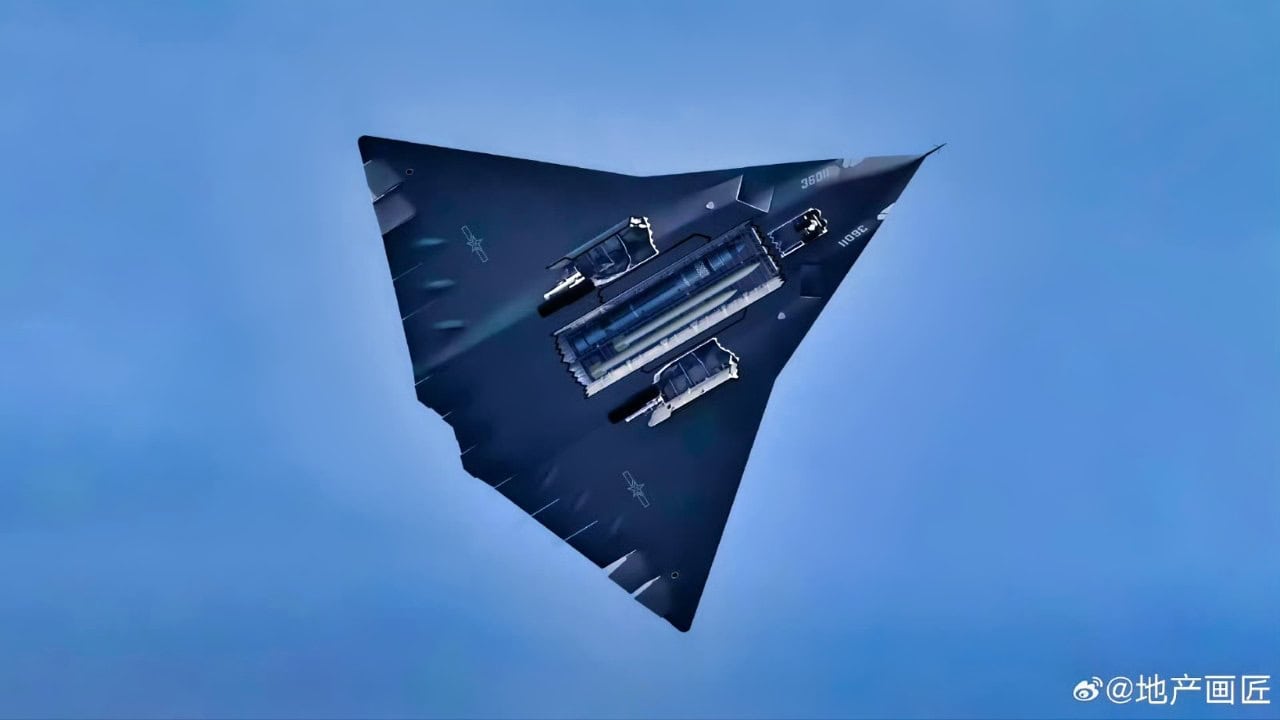
J-36 or JH-XX from China. Screenshot for Chinese Social Media.
The First J-36 Configuration Favored Range and Rear-Aspect Stealth
The aircraft first appeared on December 26, 2024, accompanied by a two-seat J-20S chase plane. Early imagery showed a broad tailless planform, three apparent engines, two lower intakes, and a third dorsal intake. The number “36011” on the nose produced the unofficial J-36 designation. Janes initially assessed that the aircraft was larger than the J-20 and carried one large central weapons bay with two smaller bays.
Later imagery supported a side-by-side cockpit and a heavy internal payload. The design’s scale, three engines, and unusual diamond-double-delta wing separated it from a normal air-superiority fighter. Commercial satellite imagery from August 2025 placed the aircraft at roughly 62 feet long with a 65-foot wingspan, though open-source size estimates remain imprecise.
The first configuration’s exhausts sat forward of the trailing edge inside recessed channels. That arrangement shielded hot engine components and reduced direct radar and infrared exposure from the rear. Its lower caret intakes suggested an emphasis on high-speed airflow, while the buried exhausts limited direct control from an aircraft without vertical tails.
The Second Configuration Changed the Intakes, Exhausts, and Landing Gear
A second revised airframe appeared in October 2025. Its lower intakes used diverterless shaping closer to the J-20’s approach. The main landing gear changed from tandem two-wheel bogies to side-by-side wheel trucks, reducing the required door area while changing the internal volume needed for stowage.
The larger change came at the rear. The images showed three angular nozzles resembling two-dimensional thrust-vectoring exhausts. Such nozzles give flight-control computers another way to manage pitch and stability, a valuable feature on a large tailless aircraft. They also move hot engine hardware closer to the trailing edge and appear to surrender some rear-aspect signature control found on the first prototype. The alterations showed that the original aircraft was not a settled production design.
That development sharpened the debate over whether the J-36 is a heavy fighter, a regional strike aircraft, or both. Thrust vectoring points toward high-altitude flight and fighter-like control, while its fuel and weapons volume point toward long-range penetration. The design may combine missions that smaller fighters divide across several aircraft.
Three More Possible Airframes Followed in Seven Months
A possible third aircraft flew around the first anniversary of the original sighting in December 2025. It appeared to retain the second configuration’s intakes and exhausts while deleting the prominent nose test probe. Footage posted on January 30, 2026, was then described as a fourth possible prototype, only 14 months after the first public appearance.
The July imagery would bring the visible total to five. It appears to combine later diverterless intakes and revised gear with an exhaust treatment closer to the first aircraft. That does not necessarily make it a third linear step toward production. Chengdu may be flying alternative configurations in parallel, using each airframe to test different aerodynamic, propulsion, and low-observable choices.
The aircraft also left Chengdu. Planet Labs imagery showed a J-36 at a remote airfield near Lop Nur on August 27, 2025. The base has a runway longer than 16,400 feet. Its appearance there suggests work beyond basic factory flights, potentially involving performance, sensors, weapons, or signature testing.
The J-36 Looks Built to Attack the Support System Behind U.S. Air Power
The China Aerospace Studies Institute describes the J-36 as a heavier, longer-range stealth platform blending fighter and strike characteristics. Its analysis places the aircraft inside a sixth-generation concept centered on range, networked operations, and cooperation with stealth fighters, drones, and space-based sensors.
That mission fits Pacific geography. American combat aircraft depend on tankers, airborne warning aircraft, maritime patrol planes, and communications nodes operating behind the forward edge of the battle area. An Air Force mobility official said in 2026 that adversaries are building long-range kill chains because a tanker is easier to target than an F-35 or F-47. A large, stealthy aircraft with substantial fuel and long-range missiles would be suited to hunting those support platforms.
The side-by-side cockpit supports a broader mission. A second crew member could manage sensors, electronic warfare, weapons and uncrewed teammates during long sorties. China has revealed no certified loadout, but the internal bays appear large enough for several weapon classes. The aircraft resembles an airborne combat node rather than a direct replacement for a J-20 squadron.
China’s Public Pace Is Fast, but the Final Aircraft Is Not Set
Calling the J-36 the world’s first sixth-generation fighter requires qualification. It is the most visible crewed next-generation combat-aircraft program in flight. The United States flew classified Boeing and Lockheed Martin NGAD demonstrators in 2019 and 2022, with each logging several hundred hours before Boeing won the F-47 development contract in March 2025.
Public imagery does not settle the competition in engines, sensors, software, signature control or weapons integration. It shows that China is willing to build several full-size airframes and compare major configurations quickly. The J-20 moved from its first public flight in 2011 to initial service in 2017, giving Chengdu a recent model for converting a prototype into a fleet aircraft.
The J-36 still has no official name, published engine type, confirmed radar, declared weapons package or announced service date. The latest July aircraft has not been identified by serial number, and Chinese authorities have not confirmed whether it is the fifth prototype or an extensively rebuilt earlier airframe.
About the Author: Harry J. Kazianis
Harry J. Kazianis (@Grecianformula) was the former Senior Director of National Security Affairs at the Center for the National Interest (CFTNI), a foreign policy think tank founded by Richard Nixon based in Washington, DC. Harry has over a decade of experience in think tanks and national security publishing. His ideas have been published in the NY Times, The Washington Post, The Wall Street Journal, CNN, and many other outlets worldwide. He has held positions at CSIS, the Heritage Foundation, the University of Nottingham, and several other institutions related to national security research and studies. He is the former Executive Editor of the National Interest and the Diplomat. He holds a Master’s degree focusing on international affairs from Harvard University.

