
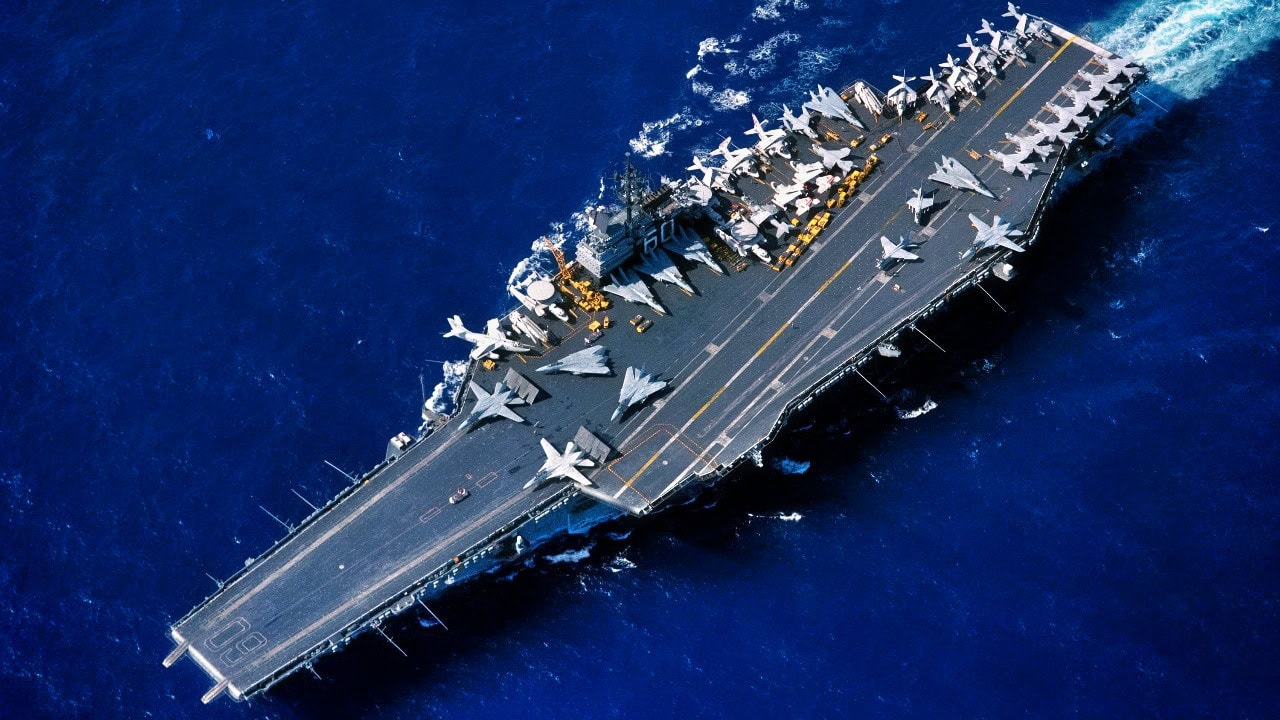
USS Saratoga by the Numbers: $209.7 Million, 81,101 Tons and a Four-Acre Flight Deck – USS Saratoga cost a commonly recorded $209.7 million in 1950s dollars. A contemporary account from the New York Naval Shipyard rounded the bill to about $200 million and placed the labor at more than 2.3 million man-days. Commissioned on April 14, 1956, CV-60 served for more than 38 years.
The Navy’s final technical record lists Saratoga at 61,235 long tons standard and 81,101 tons fully loaded. She measured 1,067 feet overall, carried a 129.5-foot waterline beam and drew 37 feet.
Eight Babcock & Wilcox boilers fed four Westinghouse geared turbines driving four shafts. The machinery produced 280,000 shaft horsepower and pushed the carrier to about 33 knots. That was enough speed to keep a ship longer than three football fields with fast carrier task forces.
The flight deck stretched roughly 1,039 feet, widened to 252 feet and covered about four acres. The original Forrestal-class design supported a normal air group of around 100 aircraft. Later wings usually carried 70 to 90 as individual jets grew larger and more capable.
USS Saratoga Carried Air Wings From Skyraiders to Tomcats
Four steam catapults, four deck-edge elevators and the angled landing area allowed Saratoga to launch, recover and reposition aircraft at high tempo. Her early decks held AD Skyraiders, F9F Cougars and F2H Banshees. F8U Crusaders and F-4 Phantoms followed. By the final decade, the ship operated F-14 Tomcats, F/A-18C Hornets, A-6E Intruders, EA-6B Prowlers, E-2C Hawkeyes, S-3 Vikings and SH-3 Sea Kings. The photographic record tracks that transformation across four decades.
The ship carried weapons of her own. As built, Saratoga had eight 5-inch/54-caliber Mark 42 guns. Modernization removed them and added three Mark 29 Sea Sparrow launchers and three Phalanx close-in weapon systems. Her real offensive power came from the air wing, a model that defined the first jet-age supercarriers.
Those aircraft carried AIM-7 Sparrow, AIM-9 Sidewinder and AIM-54 Phoenix air-to-air missiles; AGM-88 HARM and AGM-84 Harpoon missiles; general-purpose and laser-guided bombs; Rockeye cluster weapons and torpedoes. The exact magazine changed by deployment. A late-career Saratoga air wing could fight enemy aircraft, attack ships, suppress air defenses, strike land targets and hunt submarines.
USS Saratoga Went to War Over Vietnam
Saratoga left Mayport for Southeast Asia in April 1972 after receiving only 60 hours’ notice. Carrier Air Wing Three spent 175 days in combat and dropped more than 14,000 tons of ordnance. The deployment turned a carrier associated mainly with the Mediterranean into a sustained strike platform over North and South Vietnam.
On June 21, two Saratoga F-4Js attacked three MiG-21s and shot down one. Another fighter destroyed a MiG at night on Aug. 10 with an AIM-7 Sparrow. During one line period, Saratoga aircraft flew 708 missions. During another, they exceeded 800 combat strikes. The carrier earned one battle star for Vietnam service.
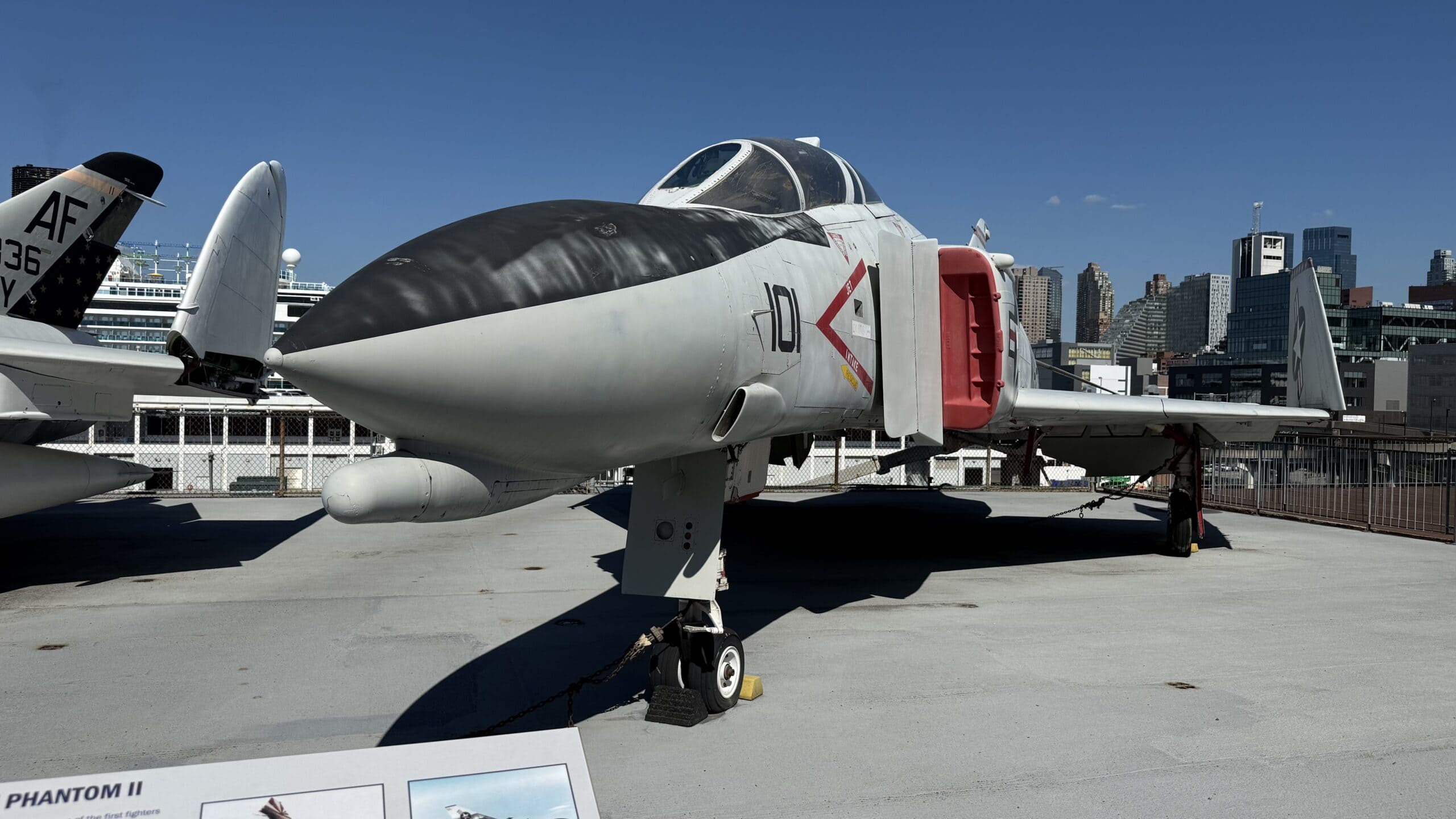
F-4 Phantom. 19FortyFive.com Photo.
The air wing attacked petroleum storage, transportation routes, troop concentrations and air-defense positions. On Oct. 20, Saratoga aircraft flew 83 close-air-support sorties in six hours to help a surrounded South Vietnamese force. The official 1972 chronology captured the pace, while the ship’s deployment remains part of Saratoga’s wider combat record.
Libya and Desert Storm Brought USS Saratoga Back Into Combat
Saratoga spent much of her career with the Sixth Fleet. In March 1986, Libyan surface-to-air missiles were fired at American aircraft over international waters in the Gulf of Sidra. Saratoga-based A-7E Corsair IIs answered with anti-radiation missiles that disabled an SA-5 battery during Operation Prairie Fire.
Her final major war came five years later. Saratoga deployed with Carrier Air Wing Seventeen to the Red Sea for Desert Storm. The wing delivered 4,047,000 pounds of ordnance and flew 2,694 combat missions. On the first night, F/A-18Cs from VFA-81 shot down two Iraqi MiG-21s, the Navy’s only fixed-wing air-to-air victories of the campaign.
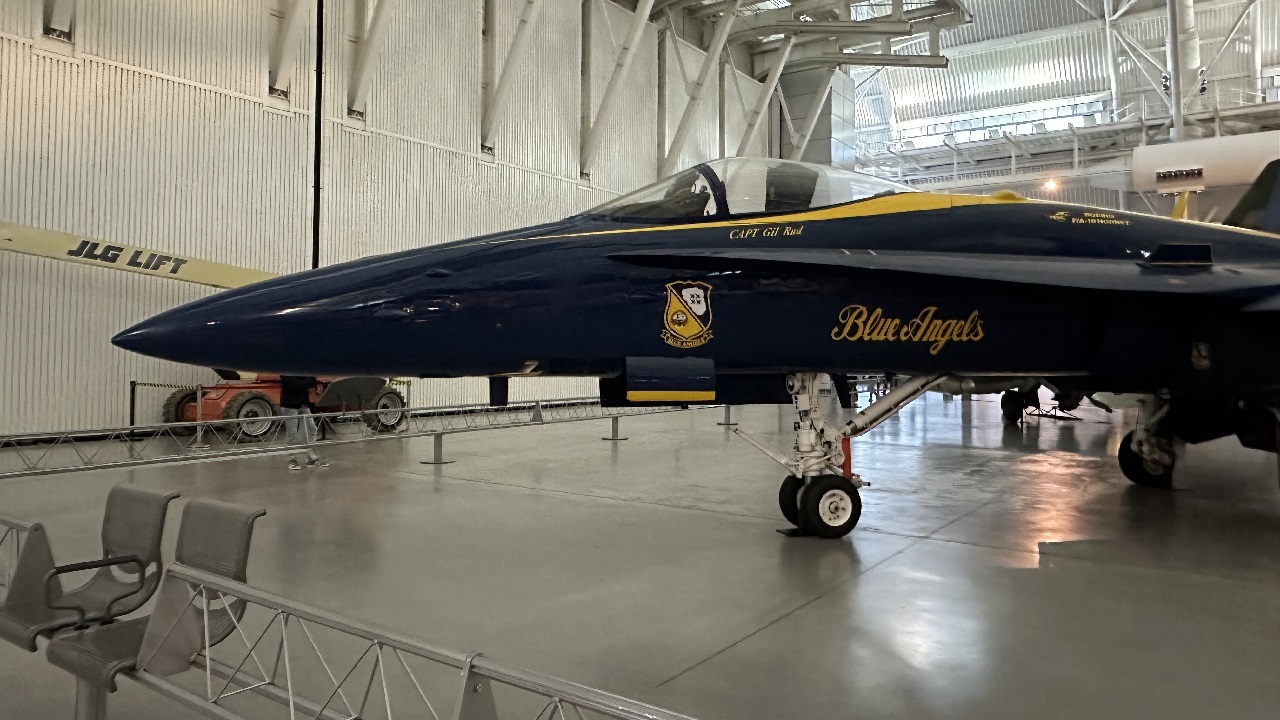
F/A-18 Hornet. Image taken at National Air and Space Museum on October 1, 2022. Image by 19FortyFive.
The same night brought a loss. Lt. Cmdr. Scott Speicher was killed when his F/A-18C went down over Iraq. Saratoga continued launching strikes with Tomcats, Hornets, Intruders, Prowlers, Hawkeyes and Vikings, showing why the Forrestal-class remained relevant long after its original aircraft disappeared.
Retirement Ended USS Saratoga’s 38-Year Career
The Navy decommissioned Saratoga at Mayport on Aug. 20, 1994, and struck her from the Naval Vessel Register the same day.
She moved to Philadelphia and later Newport, Rhode Island, while preservation groups tried to secure financing and a permanent museum berth.
The proposals failed. The Navy eventually awarded ESCO Marine a one-cent procurement contract to tow and dismantle the ship.
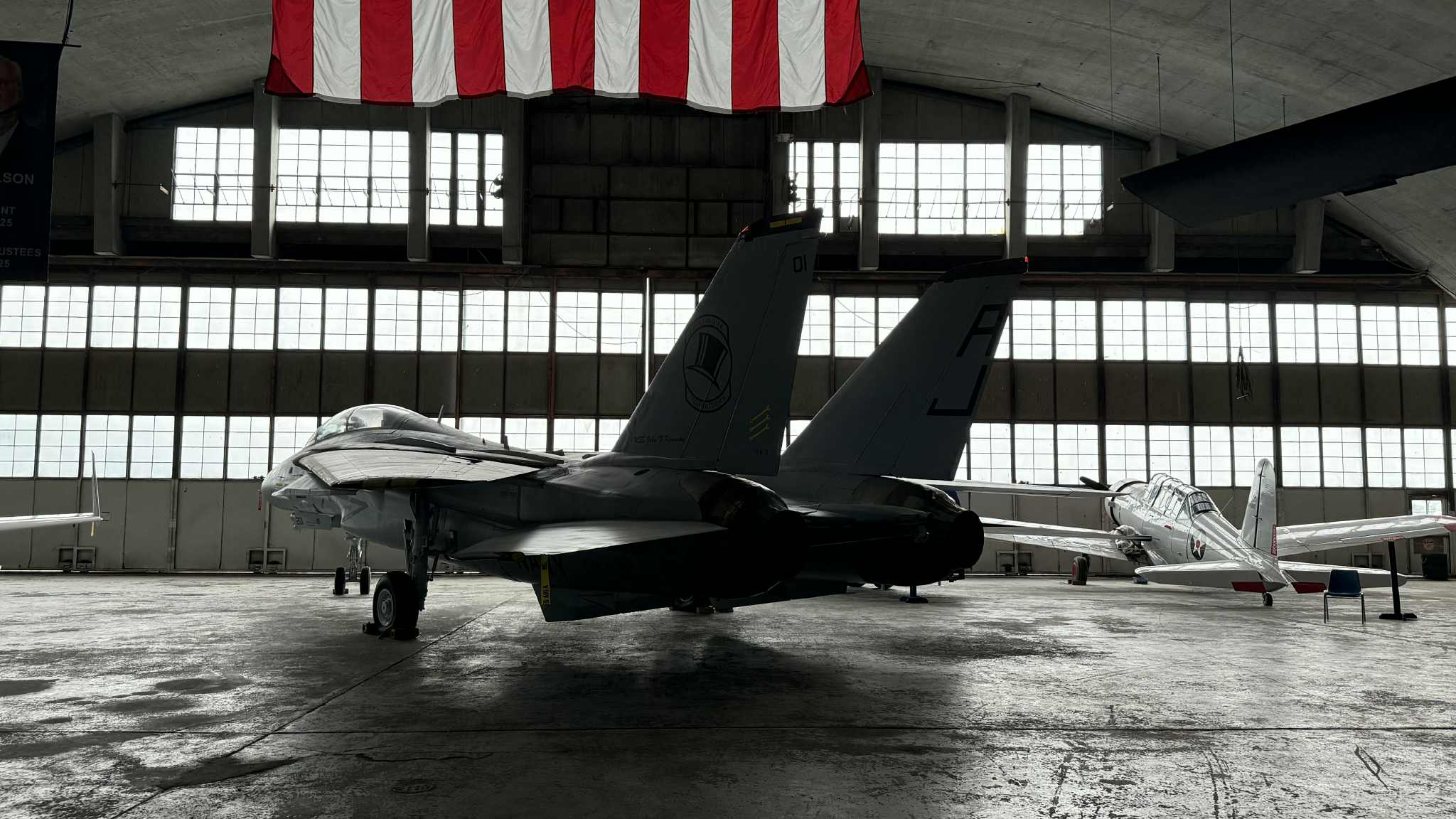
F-14 Tomcat. Image Taken by 19FortyFive.com
The price was not a sale of an operational carrier. The contractor expected recovered steel to offset towing, environmental cleanup, and demolition costs, the same logic behind other one-cent carrier disposal deals.
Saratoga left Newport under tow on Aug. 21, 2014, and reached Brownsville, Texas, the following month.
By March 31, 2019, the flight deck that had launched Skyraiders, Phantoms, Tomcats, and Hornets had disappeared into the recycling yard.
MORE – USS Alabama: You Can Visit This Battleship Right Now
About the Author: Harry J. Kazianis
Harry J. Kazianis (@Grecianformula) was the former Senior Director of National Security Affairs at the Center for the National Interest, a foreign policy think tank founded by Richard Nixon in Washington, D.C. Harry has more than a decade of experience in think tanks and national security publishing. His ideas have been published in The New York Times, The Washington Post, The Wall Street Journal, CNN and many other outlets worldwide. He has held positions at CSIS, the Heritage Foundation, the University of Nottingham and several other institutions related to national security research and studies. He is the former Executive Editor of The National Interest and The Diplomat. He holds a master’s degree focusing on international affairs from Harvard University.

