
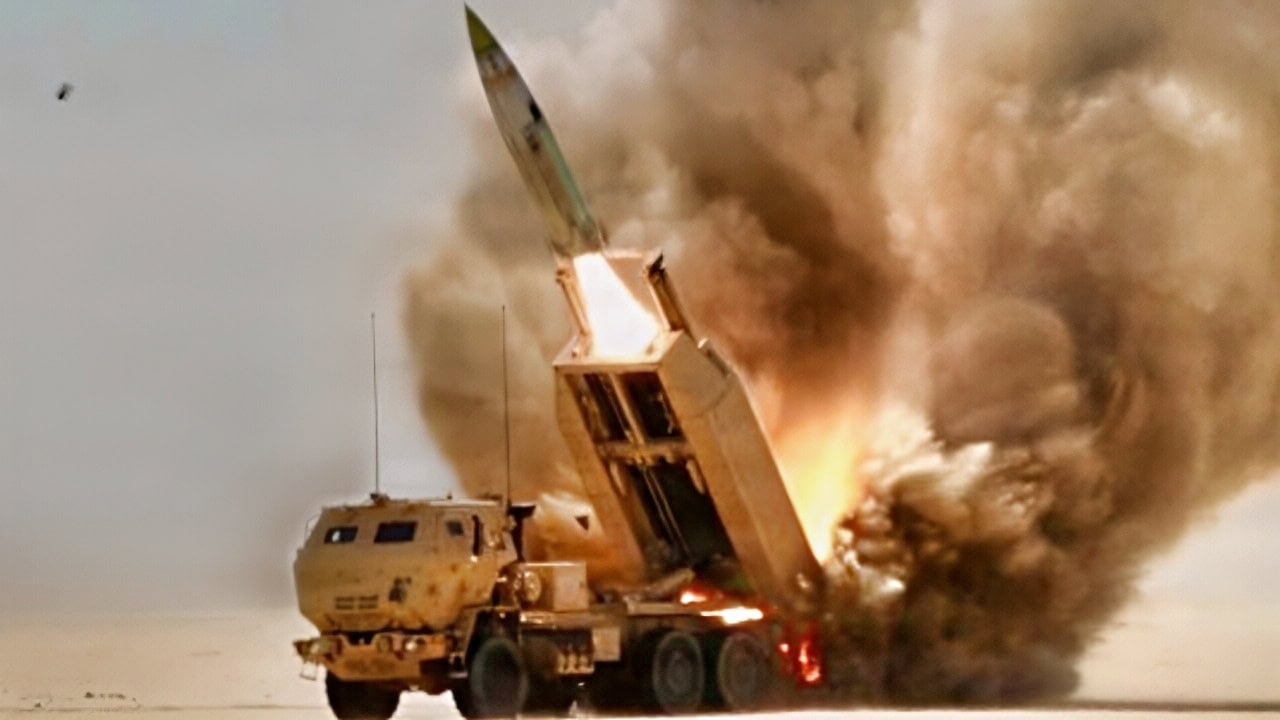
The US military is running out of missiles, but Iran is not running out of resolve. If the latter outlasts the former, the Trump administration may need to make some hard decisions to end the conflict.
Stocks of defensive munitions, most notably interceptor missiles, have been a concern for some time.
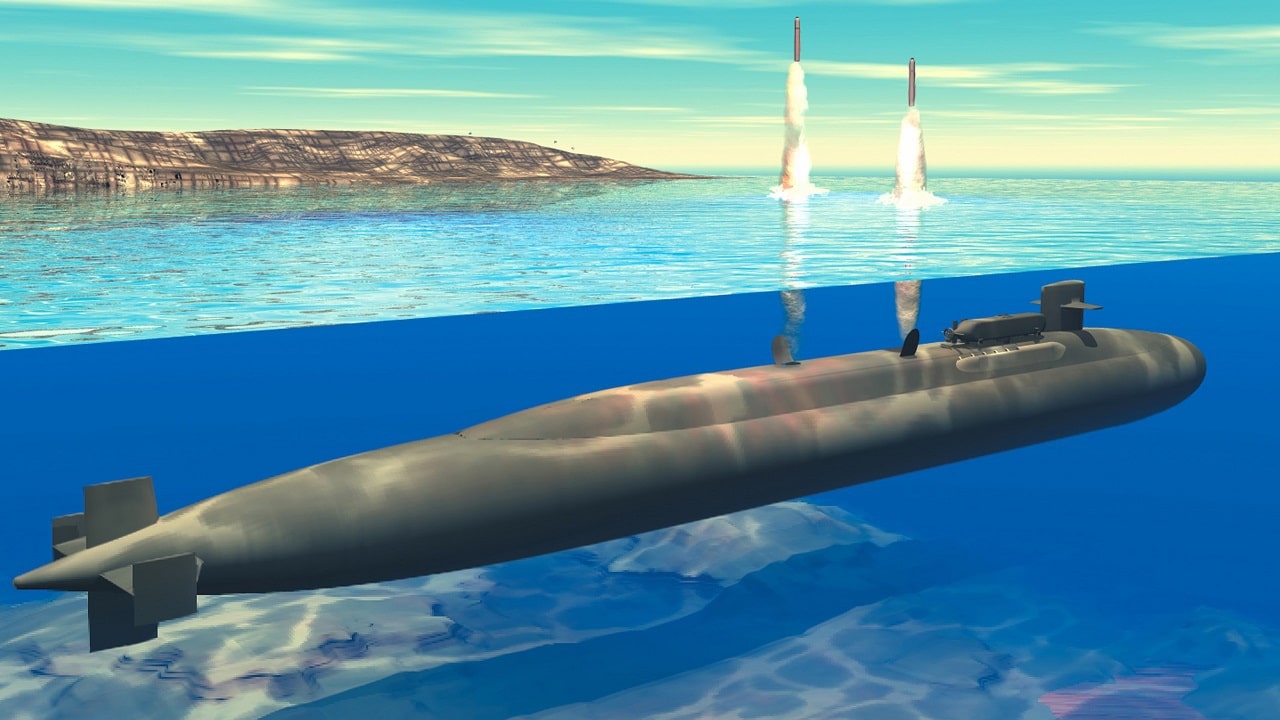
Artist’s concept of an Ohio-class SSGN launching Tomahawk Land Attack Missiles.
Now, offensive precision munitions appear to be running short, with reports indicating that short-range ballistic missile inventories have been nearly exhausted and Tomahawk cruise missile stockpiles badly depleted.
As with most crises, the munitions shortage has both deep and shallow causes.
The deep causes run back to decisions made about defense budgeting and weapons procurement at the end of the Cold War.
The shallow causes result from the decision of the Trump administration to commit to a pointless war against Iran, on top of previous commitments off the Horn of Africa and to the Russia-Ukraine War.
Whatever the causes, the situation has left Trump with little latitude and few options for ending the war with Iran on advantageous terms.
The Defense Industrial Base
The economics of munitions stockpiles have always been fraught, and the increasing sophistication of missiles has made calculations even more difficult.
Missiles are not the same as 155mm artillery rounds, which are simple to mass-produce when infrastructure is available.
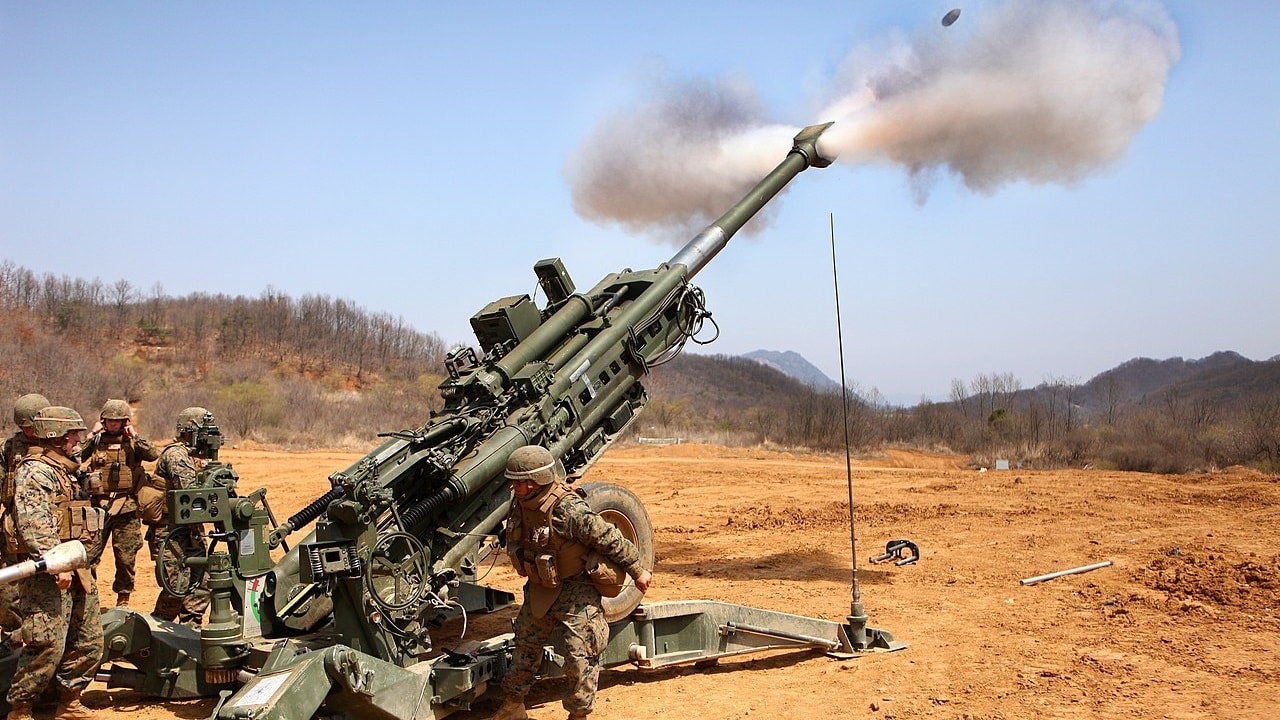
U.S. Marines with Alpha Battery, 1st Battalion, 12th Marine Regiment, 3rd Marine Division, III Marine Expeditionary Force attached to 3rd Marine Regiment, 3rd MarDiv, III MEF, fire the M777A2 155mm howitzer in support of a combined arms live-fire exercise at Rodriguez Live-Fire Complex during Korean Marine Exchange Program 13-5, part of Ssang Yong 13 in the Republic of Korea April 17, 2013. The CALFEX illustrates how the annual exercise Ssang Yong supports ongoing efforts to strengthen combat readiness in both U.S. and ROK forces. (U.S. Marine Corps photo by Lance Cpl. Jose D. Lujano III MEF PAO/Released)
Patriot missiles, for example, can take more than two years to build, and other munitions can take even longer.
Ramping up from peacetime production can cut the time between order and delivery, but much work on capacity investment needed to happen yesterday, rather than today or tomorrow.
More fundamentally, munitions will always struggle against other priorities for the services and for the Department of War.
Munition stocks are lovely to have when a war has outlasted its welcome, but in peacetime they can be a liability.
Older weapons degrade without use, a phenomenon that is as true for the chemicals in artillery shells as it is for the advanced components in interceptor missiles.
Stockpiles must be organized, warehoused, and guarded, an unwelcome expense for both government and the corporate world.
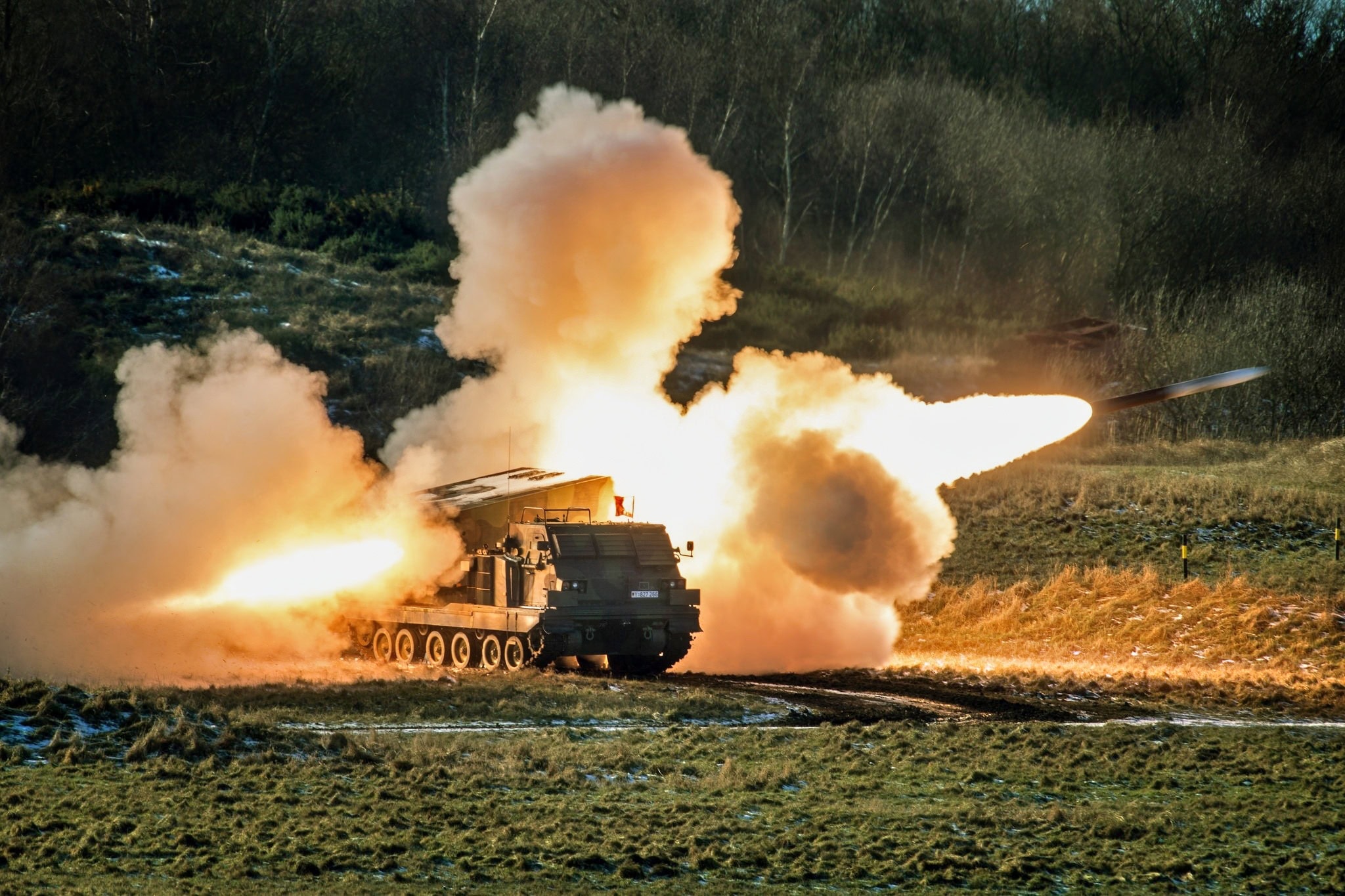
Artillery Attack. Image Credit: Creative Commons.
Worst of all, munitions stockpiles risk becoming obsolete over time. When launchers are retired, older missiles become piles of unwanted junk.
The development of new countermeasures, or new tactics to achieve the same goal, can similarly turn a well-stocked military depot into an expensive recycling center in no time flat.
Both industry and government understand this, which is why they approach the stockpile issue with care.
The Wars
Whatever the long-term concerns, the proximate cause of the crisis has been the Trump administration’s decision to blow through its stockpiles in a poorly conceived war against Iran.
By April, the Trump administration had plowed through huge percentages of several key missiles, missiles that sometimes have production timelines stretching to years.
The tit-for-tat exchanges that have characterized the last month of the war haven’t helped matters, as Iranian missiles chew through interceptor stockpiles and the reconstitution of Iranian air defense forces forces the use of standoff weapons.
The math doesn’t match; it is easier for Iran to build drones and ballistic missiles (and even to reconstitute its ballistic missile industry) than for the US to rapidly ramp up production of its most sophisticated weapons.
Impact on the War
For a long time, advocates of increasing missile production pointed to the prospect of war with China, which would likely consume the entire inventory of weapons in a few short weeks.
However, the munitions shortage is no longer a speculative, future concern.
Several news reports over the last week suggest that the Trump administration has altered strategic and operational planning because of shortages of both offensive and defensive munitions.
While the administration has made half-hearted efforts to deny the shortages, and has even attacked news outlets which report on them, the Iranians are not blind.
They can follow the news in the United States, understand the long- and short-term problems associated with munitions stockpiles, and alter their strategies in response.
Iran’s bargaining position in negotiations is undoubtedly strengthened by knowledge that the United States has limited assets for protecting its allies and for inflicting damage upon the Islamic Republic.
What Happens Now?
Industry and the Department of War are both taking steps to ease the situation.
Lockheed Martin is undertaking massive investments to increase munitions production, efforts that should pay off in the next few years.
The Department of War has shifted its contracting procedures in order to stimulate munitions production by signaling long-term demand.
Nevertheless, CSIS projects that missile stockpiles will not recover in most categories until 2029 or 2030. Continued conflict will, of course, exacerbate the problem.
There are deep causes for the munitions shortage, some based on mistakes, others in bureaucratic conflict, and still others in the fundamental economic realities of the defense industrial base.
But fundamentally, the reason why the munitions shortfall matters right now is the Trump administration’s decision to embark on two wars of choice against Iran without taking sufficient steps to prepare for those wars or to reduce commitments elsewhere.
The Pentagon was keenly aware of the state of US stockpiles before the war began, as well as of the bottlenecks in the procurement system.
Choosing to launch an open-ended war anyway was flat strategic malpractice, a mistake that Trump is now struggling to wiggle his way out of.
About the Author: Robert Farley, PhD
Dr. Robert Farley has taught security and diplomacy courses at the Patterson School since 2005. He received his BS from the University of Oregon in 1997 and his Ph.D. from the University of Washington in 2004. Dr. Farley is the author of Grounded: The Case for Abolishing the United States Air Force (University Press of Kentucky, 2014), the Battleship Book (Wildside, 2016), Patents for Power: Intellectual Property Law and the Diffusion of Military Technology (University of Chicago, 2020), and most recently Waging War with Gold: National Security and the Finance Domain Across the Ages (Lynne Rienner, 2023). He has contributed extensively to a number of journals and magazines, including the National Interest, the Diplomat: APAC, World Politics Review, and the American Prospect. Dr. Farley is also a founder and senior editor of Lawyers, Guns and Money.