
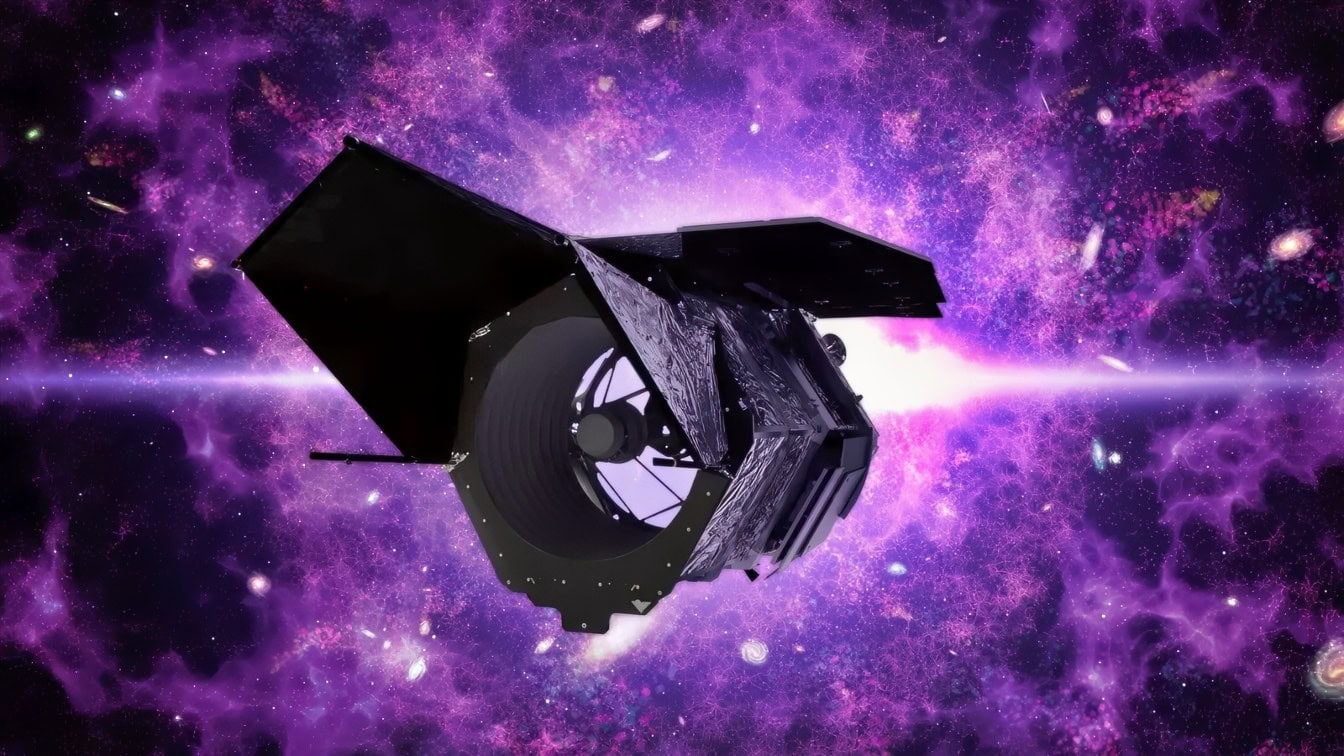
On August 30, 2026, NASA plans to launch the Nancy Grace Roman Space Telescope aboard a SpaceX Falcon Heavy from Kennedy Space Center. Named after Dr. Nancy Grace Roman, who is often called the “Mother of Hubble,” the observatory represents NASA’s next flagship astrophysics mission. While comparisons between Roman, Hubble, and James Webb are inevitable, Roman isn’t designed to replace either telescope, but rather to supplement them both. Roman fills a different niche; it combines Hubble-like image quality with an enormous field of view capable of surveying the universe at unprecedented speeds, thereby accelerating image collection.
Who Was Nancy Grace Roman
Nancy Grace Roman was NASA’s first Chief of Astronomy. She was instrumental in establishing the agency’s space astronomy program during the 1960s. She also helped champion what would ultimately become the Hubble Space Telescope. Her leadership transformed space telescopes from ambitious concepts into core scientific infrastructure, so naming NASA’s newest flagship observatory after her recognizes that contribution to modern astronomy.
The Roman Hardware
The Roman telescope uses a primary mirror measuring 7.9 feet, which is the same diameter as Hubble’s and delivers a similarly sharp optical resolution. The true technological leap with the new Roman platform, however, is the Wide Field Instrument—an approximately 300-megapixel camera with a field of view roughly 100 times larger than Hubble’s. Instead of studying tiny patches of the sky, Roman can rapidly survey enormous sections of the cosmos all at once.
The result is that tasks that would require centuries of Hubble observations can now be completed in a dramatically shorter time frame. Roman is expected to return hundreds of terabytes of scientific data every single year. This creates an unprecedented and remarkable database for astronomers to consult.
Roman will not compete with Hubble or Webb. Instead, NASA will now have three flagship observatories performing three different jobs. Hubble boasts exceptional visible-light imaging through a narrow field of view, ideal for detailed observations of individual targets.
James Webb, on the other hand, has a large 6.5-meter segmented mirror optimized for infrared astronomy and designed to study the earliest galaxies, stellar nurseries, and planetary atmospheres.
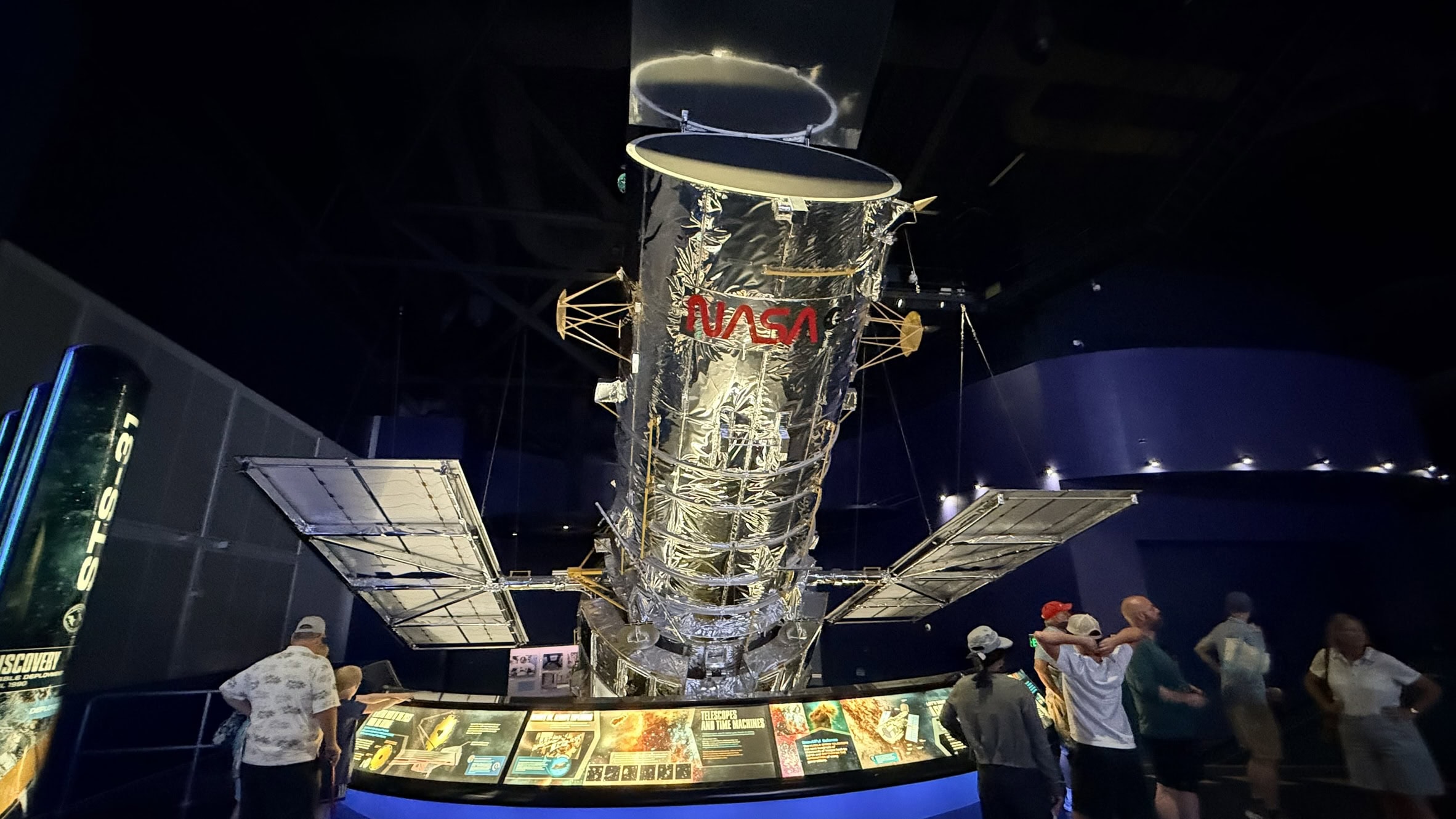
NASA Hubble Telescope Mock-Up. 19FortyFive Original Photo.
Now Roman will combine high-resolution imaging with wide-area surveys to function as astronomy’s wide-angle camera, so to speak. The new telescope should be able to discover targets that Webb or Hubble can later study in extraordinary detail. In fact, Roman will hand off points of interest to the observational platforms capable of more targeted viewings.
The Mission Set
One of Roman’s primary scientific goals is to understand the universe’s biggest mystery: mapping the invisible universe. Scientists estimate that roughly 5% of the universe is ordinary matter, 27% is dark matter, and another 68% is dark energy. Roman, accordingly, will observe billions of galaxies, measure subtle gravitational lensing effects, monitor thousands of supernovae, and produce detailed three-dimensional maps of cosmic structure. The ultimate objective here is to better understand why the universe’s expansion continues to accelerate.
Roman will also conduct the largest exoplanet survey ever attempted, using gravitational microlensing. It will continuously monitor a star field near the center of the Milky Way and detect tiny changes in starlight caused by foreground planets.
With this method, Roman is expected to discover thousands of new planets, potentially planets similar to Earth and even rogue planets drifting through interstellar space without parent stars. This mission set will complement existing missions such as Kepler and TESS by probing planetary populations that are difficult to detect with other techniques.
Roman will also carry an advanced coronagraph instrument, designed to suppress overwhelming starlight and enable the direct imaging of nearby planets.
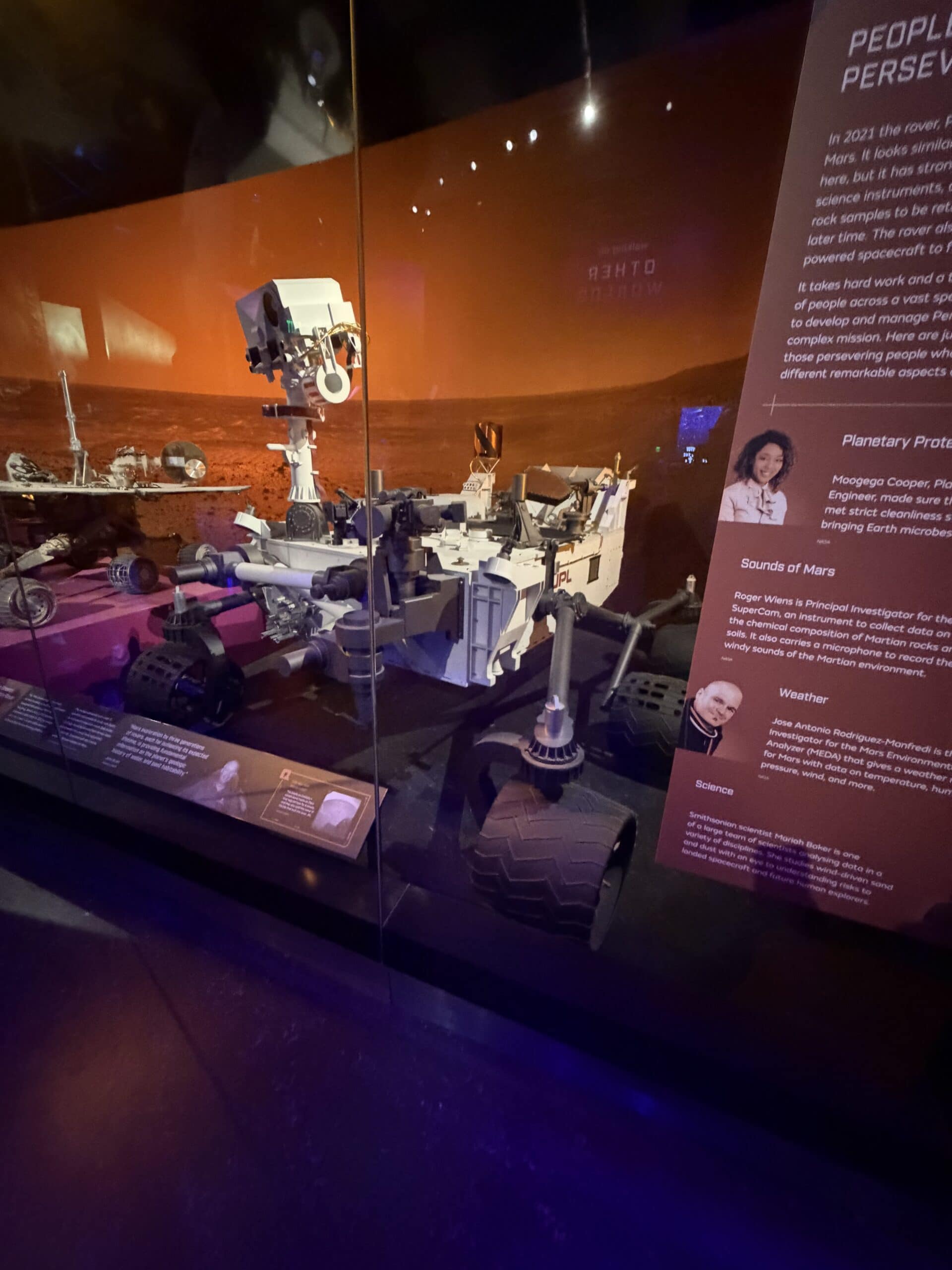
Mars Pathfinder at the Smithsonian on July 1, 2026 image taken by 19FortyFive.
The coronagraph serves as a technology demonstration for future missions seeking Earth-like planets; if successful, it will pave the way for observatories capable of imaging potentially habitable worlds around nearby stars.
After launch, Roman will travel for approximately one month to the Sun-Earth L2 Lagrange Point, located roughly one million miles from Earth.
This is the same gravitational region occupied by James Webb, where the environment is thermally stable, allowing for uninterrupted observations and minimal interference from Earth and the Sun. This is an ideal location for long-duration astronomical surveys.
About the Author: Harrison Kass
Harrison Kass is a writer and attorney focused on national security, technology, and political culture. His work has appeared in Tablet, City Journal, The Hill, The Spectator, and The Cipher Brief. He holds a JD from the University of Oregon and a master’s in Global & Joint Program Studies from NYU. More at harrisonkass.com.